
Galway Kinnell (1927–2014)
Author of The Book of Nightmares
About the Author
Galway Kinnell was born on February 1, 1927 in Providence, Rhode Island. During World War II, he served in the Navy. He received a B.A. from Princeton University in 1948 and a M.A. from the University of Rochester in 1949. He taught writing at many schools around the world, including universities show more in France, Australia, and Iran, and served as director of the creative writing programs at New York University. He wrote several collections of poetry including Body Rags, The Book of Nightmares, Walking down the Stairs, When One Has Lived a Long Time, Imperfect Thirst, and Mortal Acts, Mortal Words. He won the Pulitzer Prize for Poetry and a National Book Award for Selected Poems in 1983. He also wrote one novel entitled Black Light. He died from leukemia on October 28, 2014 at the age of 87. (Bowker Author Biography) show less
Works by Galway Kinnell
The Avenue Bearing the Initial of Christ into the New World: Poems 1946-1964 (1974) 115 copies, 1 review
The Burn 1 copy
Fergus falling 1 copy
The Shoes of Wandering. 1 copy
Blackberry Eating {poem} 1 copy
Poetry and Conversation 1 copy
Associated Works
The Making of a Poem: A Norton Anthology of Poetic Forms (2000) — Contributor — 1,474 copies, 9 reviews
A Book of Luminous Things: An International Anthology of Poetry (1996) — Contributor — 945 copies, 12 reviews
Against Forgetting: Twentieth-Century Poetry of Witness (1993) — Contributor — 376 copies, 2 reviews
Teaching with Fire: Poetry That Sustains the Courage to Teach (2003) — Contributor — 226 copies, 1 review
Poetry Speaks Expanded: Hear Poets Read Their Own Work from Tennyson to Plath (2007) — Contributor — 158 copies, 2 reviews
The Sophisticated Cat: A Gathering of Stories, Poems, and Miscellaneous Writings About Cats (1992) — Contributor — 112 copies, 1 review
A Controversy of Poets: An Anthology of Contemporary American Poetry, (1965) — Contributor — 83 copies
The Poets' Grimm: 20th Century Poems from Grimm Fairy Tales (2003) — Contributor — 70 copies, 1 review
Buzz Words: Poems About Insects (Everyman's Library Pocket Poets Series) (2021) — Contributor — 56 copies
Possibilities of Poetry: An Anthology of American Contemporaries (1970) — Contributor — 17 copies, 1 review
New World Writing: Third Mentor Selection - Poetry, Fiction, Drama, Criticism (1953) — Contributor — 8 copies
Tagged
Common Knowledge
- Canonical name
- Kinnell, Galway
- Legal name
- Kinnell, Galway Mills
- Birthdate
- 1927-02-01
- Date of death
- 2014-10-28
- Gender
- male
- Education
- Princeton University
University of Rochester - Occupations
- poet
- Organizations
- American Academy of Arts and Letters (Literature ∙ 1980)
CORE (Congress of Racial Equality) - Awards and honors
- Shelley Memorial Award (1971/1972)
Frost Medal (2002)
Amy Lowell Travelling Fellowship in Poetry (1969-1970)
American Academy of Arts and Letters Academy Award ( [1962])
Poet Laureate of Vermont (1989-1993)
Wallace Stevens Award (2010) - Nationality
- USA
- Birthplace
- Providence, Rhode Island, USA
- Places of residence
- Providence, Rhode Island, USA
Pawtucket, Rhode Island, USA - Place of death
- Sheffield, Vermont, USA
- Associated Place (for map)
- Rhode Island, USA
Members
Discussions
Rainer Maria Rilke in Someone explain it to me... (April 2015)
Reviews
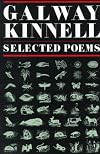
Whitmanesque, yep, though like if Walt had been infected with a strain of Southern Gothic. "The nagleria eating the convolutions from the black pulp of thought", yech.
Brothers and sisters;
lovers and children;
great mothers and grand fathers
whose love-times have been cut
already into stone; great
grand foetuses spelling
the past again into the flesh's waters:
can you bless - or not curse -
whatever struggles to stay alive
on this planet of struggles?
The nagleria eating the convolutions
from the black show more pulp of thought,
or the spirochete rotting down
the last temples of Eros, the last god?
- from There Are Things I Tell to No One show less
Brothers and sisters;
lovers and children;
great mothers and grand fathers
whose love-times have been cut
already into stone; great
grand foetuses spelling
the past again into the flesh's waters:
can you bless - or not curse -
whatever struggles to stay alive
on this planet of struggles?
The nagleria eating the convolutions
from the black show more pulp of thought,
or the spirochete rotting down
the last temples of Eros, the last god?
- from There Are Things I Tell to No One show less

Like the mythological Persian king he's named for, Jamshid, the carpet repairer, restoring the burned rug fibers of the head of a bird of paradise when we meet him on his knees working, thinks he's better and more brilliant than everybody else. It's not pure diabolical arrogance per se, but pride the murky result of his unprocessed pain (his wife is recently deceased and his daughter, Leyla—unmarried and without a single suitor at the age of sixteen!—might as well be) has made him bitter show more to the point of apostasy. As his faith fades, he comes dangerously close to losing everything, not unlike his unfaithful namesake from the hallowed Persian epic, Shahnameh:
Jamshid surveyed the world, and saw none there
Whose greatness or whose splendor could compare
With his: and he who had known God became
Ungrateful, proud, forgetful of God's name
Even before we meet Jamshid in Galway Kinnell's novella, originally published in 1966, and revised in 1980, shortly after the Shah of Iran's overthrow, we know from the opening line—"Jamshid kept sliding forward as he worked, so that the patch of sunlight would remain just ahead of him, lighting up the motion of his hands"—that light and what light signifies in Kinnell's context—heaven's wisdom, favor, and rewards—will probably elude Jamshid, yet remain ineluctably visible, all too close, O so nearly within his grasp, as if he were in Hell gazing up at Paradise, imploring Abraham with outstretched fingertip for just one mere drop of water.... Black Light's evocative, symbolic opening is also fitting foreshadowing for this fable riffing off the downslide of Persia's once omnipotent king.
Jamshid, the poor but not so humble man of Meshen, Iran, only feels "a little ashamed that he had never made a pilgrimage to Mecca or for that matter to the Shrine of Fatima at Qum." On the precipice of his spiritual abyss, so far gone in his rage over his life that didn't turn out right, Jamshid internally snubs those journeying to Mecca, the faithful Hajis, and can barely stomach their contemptuous, Afghani glances cast his way. As if they're so self-controlled, so holy, "getting married for the few weeks of their sojourn," in order to make easier the supposed "spiritual rigors" required in their once-in-a-lifetime quest. Their false piety makes Jamshid laugh. Maybe his last. For in an impulsive instant, in a furious fit of pent-up pique upon hearing the news that his daughter's rumoured indiscretions have made her unfit for marriage—unfit unless Jamshid agrees to the local mullah's "assistance" in the delicate matter (i.e., a bribe veiled in the white robes of religious duty), he lashes out with all the force in him.... Suddenly, Jamshid's carpet shears that just moments before moved in mindless attendance upon a charred rug, trimming the kaleidoscopic plumage of a bird of paradise into shape, now lie next to a corpse, inexplicably bloodied. He snapped, cracked, and murdered.
And so begins Jamshid's anti-pilgrimage whose terminus is destitution, whose life sentence might be despair. Roaming a hard desert road as far removed from Mecca as the crescent from the cross, haunts the frail figure of Jamshid, wandering his nomad existence. His destination is nowhere. Transformed into a tramp like so many infidels before him, he seeks he knows not what, maybe an oasis, anyplace he can create some token mirage of purpose out of killing more time. He meets Ali out in the endless sands somewhere, a grizzled old man who's traveled back and forth himself for decades on the run, fleeing a crime as unforgivable as Jamshid's, but likewise finding no freedom in his flight from one fringe settlement to another, bartering trinkets from whatever weathered sacks his decrepit camel still manages to haul, for bare necessities. Yet the supplies and the shelter and the sex never last. When Jamshid's pursuers capture Ali by mistake, Jamshid thereafter carries an even weightier albatross of irrevocable loss with him.
What can Jamshid possibly do to escape the constant eclipse that's become of his tortured past? A past, sad and meager as it was, a virtual Eden compared to what's now left of his life: Haunting scars that bleed their darkness into his every successive step, and the steps he'll trudge tomorrow. Will Jamshid ever chance upon potential refuge with his vision veiled in black light? Is redemption even possible for a man as accursed as he, who "could always sense the blackness of vultures in the sky. Never visible ... a constant presence."? One may wonder too ... exactly what became of Persia's ancient king, legendary Jamshid? Did he suffer the same fall and fate?
Galway Kinnell spent a year in Iran during 1959 and 1960, half the time as a lecturer at the University of Tehran, the other as a journalist for an English language newspaper, exploring as much as he could every corner of the country he'd come to love. In Black Light's mid-section, with its vast outdoor scenery set under stars, "an ultimate landscape of desolation," we get a glimpse of how the ruggedness and isolation of Iran's arid geography impacted Kinnell's imagination. We get a sense too that maybe Kinnell got lost in the mountains and deserts of Iran often, as in his narrative there's an unspoken feeling in Jamshid that he likes being lost, enjoys the spontaneity of adventure and perceived freedom his "lostness" inspires, the adrenaline rush he gets never knowing one night to the next what cave or ancient ruin he'll lay his weary head in. If Jamshid embraces though never fully accepts being lost as his life's ultimate destiny, his process of self-discovery in his desert wilderness of pain makes the bleak existentialism of Black Light all the more fascinating—and oddly fun.
Escape with Jamshid from the many consequences of his crime like some vicarious Persian Raskolnikov along for the camel ride, outpost to outpost, palm grove to palm grove, swathed in the paradox that is Black Light's luminescence. It's a reading experience at times reminiscent of what The Sheltering Sky invoked. Mystery. Meaning. Wondering. Why?
While Kinnell is better known as a poet (The Book of Nightmares) and translator (The Poems of François Villon), his rare digression into prose in Black Light is certainly one to savor and reflect upon, like enjoying time and again the myriad gradations of illumination in a radiant poem. show less
Jamshid surveyed the world, and saw none there
Whose greatness or whose splendor could compare
With his: and he who had known God became
Ungrateful, proud, forgetful of God's name
Even before we meet Jamshid in Galway Kinnell's novella, originally published in 1966, and revised in 1980, shortly after the Shah of Iran's overthrow, we know from the opening line—"Jamshid kept sliding forward as he worked, so that the patch of sunlight would remain just ahead of him, lighting up the motion of his hands"—that light and what light signifies in Kinnell's context—heaven's wisdom, favor, and rewards—will probably elude Jamshid, yet remain ineluctably visible, all too close, O so nearly within his grasp, as if he were in Hell gazing up at Paradise, imploring Abraham with outstretched fingertip for just one mere drop of water.... Black Light's evocative, symbolic opening is also fitting foreshadowing for this fable riffing off the downslide of Persia's once omnipotent king.
Jamshid, the poor but not so humble man of Meshen, Iran, only feels "a little ashamed that he had never made a pilgrimage to Mecca or for that matter to the Shrine of Fatima at Qum." On the precipice of his spiritual abyss, so far gone in his rage over his life that didn't turn out right, Jamshid internally snubs those journeying to Mecca, the faithful Hajis, and can barely stomach their contemptuous, Afghani glances cast his way. As if they're so self-controlled, so holy, "getting married for the few weeks of their sojourn," in order to make easier the supposed "spiritual rigors" required in their once-in-a-lifetime quest. Their false piety makes Jamshid laugh. Maybe his last. For in an impulsive instant, in a furious fit of pent-up pique upon hearing the news that his daughter's rumoured indiscretions have made her unfit for marriage—unfit unless Jamshid agrees to the local mullah's "assistance" in the delicate matter (i.e., a bribe veiled in the white robes of religious duty), he lashes out with all the force in him.... Suddenly, Jamshid's carpet shears that just moments before moved in mindless attendance upon a charred rug, trimming the kaleidoscopic plumage of a bird of paradise into shape, now lie next to a corpse, inexplicably bloodied. He snapped, cracked, and murdered.
And so begins Jamshid's anti-pilgrimage whose terminus is destitution, whose life sentence might be despair. Roaming a hard desert road as far removed from Mecca as the crescent from the cross, haunts the frail figure of Jamshid, wandering his nomad existence. His destination is nowhere. Transformed into a tramp like so many infidels before him, he seeks he knows not what, maybe an oasis, anyplace he can create some token mirage of purpose out of killing more time. He meets Ali out in the endless sands somewhere, a grizzled old man who's traveled back and forth himself for decades on the run, fleeing a crime as unforgivable as Jamshid's, but likewise finding no freedom in his flight from one fringe settlement to another, bartering trinkets from whatever weathered sacks his decrepit camel still manages to haul, for bare necessities. Yet the supplies and the shelter and the sex never last. When Jamshid's pursuers capture Ali by mistake, Jamshid thereafter carries an even weightier albatross of irrevocable loss with him.
What can Jamshid possibly do to escape the constant eclipse that's become of his tortured past? A past, sad and meager as it was, a virtual Eden compared to what's now left of his life: Haunting scars that bleed their darkness into his every successive step, and the steps he'll trudge tomorrow. Will Jamshid ever chance upon potential refuge with his vision veiled in black light? Is redemption even possible for a man as accursed as he, who "could always sense the blackness of vultures in the sky. Never visible ... a constant presence."? One may wonder too ... exactly what became of Persia's ancient king, legendary Jamshid? Did he suffer the same fall and fate?
Galway Kinnell spent a year in Iran during 1959 and 1960, half the time as a lecturer at the University of Tehran, the other as a journalist for an English language newspaper, exploring as much as he could every corner of the country he'd come to love. In Black Light's mid-section, with its vast outdoor scenery set under stars, "an ultimate landscape of desolation," we get a glimpse of how the ruggedness and isolation of Iran's arid geography impacted Kinnell's imagination. We get a sense too that maybe Kinnell got lost in the mountains and deserts of Iran often, as in his narrative there's an unspoken feeling in Jamshid that he likes being lost, enjoys the spontaneity of adventure and perceived freedom his "lostness" inspires, the adrenaline rush he gets never knowing one night to the next what cave or ancient ruin he'll lay his weary head in. If Jamshid embraces though never fully accepts being lost as his life's ultimate destiny, his process of self-discovery in his desert wilderness of pain makes the bleak existentialism of Black Light all the more fascinating—and oddly fun.
Escape with Jamshid from the many consequences of his crime like some vicarious Persian Raskolnikov along for the camel ride, outpost to outpost, palm grove to palm grove, swathed in the paradox that is Black Light's luminescence. It's a reading experience at times reminiscent of what The Sheltering Sky invoked. Mystery. Meaning. Wondering. Why?
While Kinnell is better known as a poet (The Book of Nightmares) and translator (The Poems of François Villon), his rare digression into prose in Black Light is certainly one to savor and reflect upon, like enjoying time and again the myriad gradations of illumination in a radiant poem. show less
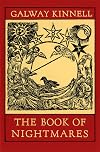
Galway’s Kinnell requires all of you to show up when reading his work. This isn’t a book of poetry you can glance through while watching a TV show. Kinnell commands attention. He scoops up all he sees and boils it into a black mass, alive and writhing. His poetry exists in the space right before you express disgust, before fear and hate have words. Kinnell is like the cat who catches a beast in the woods and drops it at the feet of the reader. It’s tough not be poetic when describing show more poetry of this magnitude. Kinnell will have a hard time rivaling Whitman and Stevens as American Grandmasters of verse, but he tries. And it shows. show less
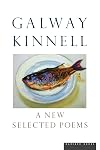
I remember as well as one can after 43 years when Galway Kinnell gave a poetry reading at the University of Michigan in Ann Arbor. I was stunned, not just by his reading, but more by the poetry. I went immediately to the Centicore Bookstore and bought what they had available at the time, I think Body Rags.
This collection affirms in my mind that he wrote some of the finest verse during the last half of the 20th Century. In "The Bear" he reveals the unity of all being even as he vividly and show more grimly describes the awfulness of the way of tracking and killing a bear from the inside out.
In "Little Sleep's-Head Sprouting Hair in the Moonlight" he bares the tender love of a father who sees hope and mortality in the growth of a child.
He writes passionate love poems that feel the bones beneath his lover's face. He weaves himself into nature and nature into his flesh. And his language is real, unadorned eloquence:
"In the human heart
There sleeps a green worm
That has spun the heart about itself,
And that shall dream itself black wings
One day to break free into the black sky."
or again::
"In the forest I discover a flower.
The invisible life of the thing
Goes up in flames that are invisible,
Like cellophane burning in the sunlight.
It burns up. Its drift is to be nothing."
If you only read one collection by Kinnell, this is a great one. But I guarantee it will leave you want to read more. show less
This collection affirms in my mind that he wrote some of the finest verse during the last half of the 20th Century. In "The Bear" he reveals the unity of all being even as he vividly and show more grimly describes the awfulness of the way of tracking and killing a bear from the inside out.
In "Little Sleep's-Head Sprouting Hair in the Moonlight" he bares the tender love of a father who sees hope and mortality in the growth of a child.
He writes passionate love poems that feel the bones beneath his lover's face. He weaves himself into nature and nature into his flesh. And his language is real, unadorned eloquence:
"In the human heart
There sleeps a green worm
That has spun the heart about itself,
And that shall dream itself black wings
One day to break free into the black sky."
or again::
"In the forest I discover a flower.
The invisible life of the thing
Goes up in flames that are invisible,
Like cellophane burning in the sunlight.
It burns up. Its drift is to be nothing."
If you only read one collection by Kinnell, this is a great one. But I guarantee it will leave you want to read more. show less
Lists
Awards


You May Also Like


Associated Authors
Statistics
- Works
- 30
- Also by
- 43
- Members
- 2,422
- Popularity
- #10,585
- Rating
- 3.9
- Reviews
- 20
- ISBNs
- 63
- Languages
- 2
- Favorited
- 10