
George Plimpton (1927–2003)
Author of Truman Capote
About the Author
George Ames Plimpton was born March 18, 1927. He was educated first at Phillips Exeter Academy in New Hampshire, and then spent four years at Harvard majoring in English and editing the Harvard Lampoon, followed by two at King's College, Cambridge. Before he left for Cambridge, he served as a tank show more driver in Italy for the U.S. Army from 1945 through 1948. After graduation, at about 27 years of age, Plimpton went with his friends to Paris. There they founded the Paris Review in 1953 and published poetry and short story writers and did interviews. In the '50s, Plimpton and staff came to New York, where they kept the Review going for half a century. The Review has published over 150 issues. Plimpton also served as a volunteer for Robert Kennedy's 1968 presidential run and was walking in front of him as the candidate was assassinated in the kitchen of a Los Angeles hotel. Plimpton was known as a "participatory journalist". In order to research his books and articles, he quarterbacked in a pre-season NFL game, pitched to several all-stars (retiring Willie Mays and Richie Ashburn) in an exhibition prior to Baseball's 1959 All-Star game, performed as a trapeze artist for the Clyde Beatty-Cole Brothers Circus, and fought boxers Archie Moore and Sugar Ray Robinson. Plimpton was alson known by the nickname the Prince of Cameos for the amount of work he did in films, playing small parts and screenwriting. He was inducted into the American Academy of Arts and Letters in 2002. Within a month of the academy induction, the French made him a Chevalier, the Legion of Honor's highest rank. The Guild, an arts organization based on Long Island, gave him a lifetime achievement award. Plimpton was also a member of PEN; the Pyrotechnics Guild International; the National Football League Alumni Association; and the Mayflower Descendants Society. In 2003, Plimpton decided to write his memoirs, signing a $750,000 deal with Little, Brown and Co. Before he could finish, George Plimpton died, on September 26, 2003 of natural causes at the age of 76. (Bowker Author Biography) show less
Image credit: MDCarchives
Series
Works by George Plimpton
As Told at The Explorers Club: More Than Fifty Gripping Tales of Adventure (Explorers Club Classic) (2003) 97 copies
The Paris Review 108 1988 Fall 3 copies
The Paris Review 112 1989 Winter — Editor — 3 copies
The Paris Review 68 1976 Winter 3 copies
The Paris Review 34 1965 Spring-Summer — Editor — 2 copies
The American literary anthology 2 copies
The Paris Review 24 1960 Summer-Fall — Editor — 2 copies
The Paris Review 71 1977 Fall 2 copies
The Paris Review 55 1972 Fall 2 copies
The Paris Review 75 1979 Spring 2 copies
The Paris Review 109 1988 Winter — Editor — 2 copies
The Paris Review 152 1999 Fall 2 copies
The Paris Review 64 1975 Winter — Editor — 2 copies
The Paris Review 81 1981 Fall — Editor — 2 copies
The Paris Review 118 1991 Spring — Editor — 1 copy
The Paris Review 101 1986 Winter — Editor — 1 copy
The Best of George Plimpton 1 copy
The Paris Review 10 1955 Fall — Editor — 1 copy
The Paris Review 62 1975 Summer — Editor — 1 copy
How to make a speech 1 copy
The Paris Review 83 1982 Spring — Editor — 1 copy
The Paris Review 36 1966 Winter — Editor — 1 copy
The Paris Review 44 1968 Fall — Editor — 1 copy
The Paris Review 45 1968 Winter — Editor — 1 copy
The Paris Review 4 1953 Winter — Editor — 1 copy
The Paris Review 33 1965 Winter-Spring — Editor — 1 copy
The Paris Review 47 1969 Summer — Editor — 1 copy
The Paris Review 17 1957 Fall-Winter — Editor — 1 copy
The Paris Review 6 1954 Summer — Editor — 1 copy
The Paris Review 5 1954 Spring — Editor — 1 copy
The Paris Review 25 1961 Winter-Spring — Editor — 1 copy
The Paris Review 14 1956 Fall — Editor — 1 copy
Associated Works
The Paris Review Book of Heartbreak, Madness, Sex, Love, Betrayal, Outsiders, Intoxication, War, Whimsy, Horrors, God, Death, Dinner, Baseball, Travels, the Art of Writing, and… (2003) — Introduction — 341 copies, 1 review
An American Album: One Hundred and Fifty Years of Harper's Magazine (2000) — Contributor — 146 copies, 1 review
Above New York: A Collection of Historical and Original Aerial Photographs of New York City (1988) — Introduction — 113 copies
Best Of Bad Hemingway: Vol 1: choice entries from the harry's bar & american grill imitation hemingway competition (1989) — Introduction, some editions — 104 copies, 1 review
Baseball, the Perfect Game : An All-Star Anthology Celebrating the Game's Greatest Players, Teams, and Moments (2005) — Contributor — 23 copies
Tagged
Common Knowledge
- Canonical name
- Plimpton, George
- Legal name
- Plimpton, George Ames
- Birthdate
- 1927-03-18
- Date of death
- 2003-09-25
- Gender
- male
- Education
- Harvard University (BA|1950)
University of Cambridge (BA|1952) - Occupations
- journalist
actor
editor
writer - Organizations
- American Academy of Arts and Letters (Literature ∙ 2002)
United States Army (WWII)
The Paris Review
Sports Illustrated - Relationships
- Plimpton, Taylor (son)
- Cause of death
- heart attack
- Nationality
- USA
- Birthplace
- New York, New York, USA
- Places of residence
- New York, New York, USA
- Place of death
- New York, New York, USA
- Associated Place (for map)
- New York, New York, USA
Members
Reviews
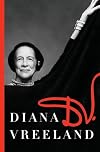
This autobiography is one of those books that grows on you. It is very entertaining and charmingly told. Diana Vreeland, fashion editor of Harper's Bazaar and editor in chief at Vogue, lived a charmed life in many ways. She hobnobbed with celebs, designers, royalty, etc her whole life. She knew how to get in the door just about anywhere. Of course, she is known to have used hyberbole regularly and to tell stories that were questionable in their veracity. You can take a cynical view of that show more character or you can relax and enjoy the tales she tells. There isn't much substance in this memoir, but its good waiting room reading, if you know what I mean.
Diana is a captivating character..almost fictional. Yet her stories are of encounters with real people, commentary that you might not otherwise hear. Born in Paris to wealthy socialite family, she was exposed to a wide variety of people in the fashion, literary and and performance art scene at the turn of the centruy.
"Naturally, I've always been mad about clothes. You don't get born in Paris to forget about clothes for a minute.And what clothes I saw in the Bois! I realize now I saw the whole beginning of our centruy there. Everythig was new."
My favorite chapter is her discussion of color. Looking for a green background she once described her imagined color as billiard-table green. When she was unsatisfied with all the attempts to produce the "right" color, including an actual table felt, she reportedly said "Not a billiard table, the idea of a billiard table." Those of us who work with color daily totally get this statement. The idea of a color is what we try to communicate when writing copy for our fabrics. To me color is a very living concept, not a flat chip on a piece of paper. I had a virtual "moment" with Diana when I read this part of the book.
I also loved her descriptions of her trips to Chanel, her commentary on fashion in the 30's and her remembrances of other fashion icons, especially Balenciaga.
Being recognized in the street for my involvement in fashion is truly fantastic. It amazes me every time. I mean, I've been recognized by cab drivers. I just can't get over it. I've given this a lot of thought, and I think that it's because fashion must be even stranger than the lure of the stage. i really have come to that conclusion. Fashion must be the most intoxicating release form the banality of the world." show less
Diana is a captivating character..almost fictional. Yet her stories are of encounters with real people, commentary that you might not otherwise hear. Born in Paris to wealthy socialite family, she was exposed to a wide variety of people in the fashion, literary and and performance art scene at the turn of the centruy.
"Naturally, I've always been mad about clothes. You don't get born in Paris to forget about clothes for a minute.And what clothes I saw in the Bois! I realize now I saw the whole beginning of our centruy there. Everythig was new."
My favorite chapter is her discussion of color. Looking for a green background she once described her imagined color as billiard-table green. When she was unsatisfied with all the attempts to produce the "right" color, including an actual table felt, she reportedly said "Not a billiard table, the idea of a billiard table." Those of us who work with color daily totally get this statement. The idea of a color is what we try to communicate when writing copy for our fabrics. To me color is a very living concept, not a flat chip on a piece of paper. I had a virtual "moment" with Diana when I read this part of the book.
I also loved her descriptions of her trips to Chanel, her commentary on fashion in the 30's and her remembrances of other fashion icons, especially Balenciaga.
Being recognized in the street for my involvement in fashion is truly fantastic. It amazes me every time. I mean, I've been recognized by cab drivers. I just can't get over it. I've given this a lot of thought, and I think that it's because fashion must be even stranger than the lure of the stage. i really have come to that conclusion. Fashion must be the most intoxicating release form the banality of the world." show less

I really adored this book. It's not written. Instead, it's rather obvious that the editors, George Plimpton and Christopher Hemphill, just sat down with Mrs. Vreeland and let her talk, and then pretty much transcribed the conversation as it had happened. And, boy, can she talk! A mile a minute is a conservative estimate. You zip through this book because you find yourself reading it as quickly as it was said. And it's full of italics! Vreeland's excitement and enthusiasm for whatever it is show more she's talking about are evident on the page.
What a life she led. Raised in a rawther social family, in London and Paris and New York, she married banker Reed Vreeland at the age of nineteen, and he was clearly the love of her life. She knew everyone, from Josephine Baker to Jacqueline Onassis with the Windsors in between, practically invented red, was fashion editor at Harper's Bazaar for twenty-six years and editor-in-chief at Vogue for eight, and ended her career at the Metropolitan Museum of Art's Costume Institute.
Remarks like "Unshined shoes are the end of civilization" and the famous "Pink is the navy blue of India" make Vreeland seem superficial. And, indeed, she herself said that she adored artifice. But she was also a very insightful, practical, intelligent and hard-working woman. She rightly says that the books one has read are the way you find out about a person. And although she says, "I stopped reading -- seriously reading -- years ago", she can talk about Tolstoy and kept The Pillow Book of Sei Shonagon next to her bed. (More on Vreeland's books.)
If Chanel brought fashion kicking and screaming into the 20th-century, it was Vreeland (who adored and patronized Chanel) who made it part of the life of the woman-on-the-street. show less
What a life she led. Raised in a rawther social family, in London and Paris and New York, she married banker Reed Vreeland at the age of nineteen, and he was clearly the love of her life. She knew everyone, from Josephine Baker to Jacqueline Onassis with the Windsors in between, practically invented red, was fashion editor at Harper's Bazaar for twenty-six years and editor-in-chief at Vogue for eight, and ended her career at the Metropolitan Museum of Art's Costume Institute.
Remarks like "Unshined shoes are the end of civilization" and the famous "Pink is the navy blue of India" make Vreeland seem superficial. And, indeed, she herself said that she adored artifice. But she was also a very insightful, practical, intelligent and hard-working woman. She rightly says that the books one has read are the way you find out about a person. And although she says, "I stopped reading -- seriously reading -- years ago", she can talk about Tolstoy and kept The Pillow Book of Sei Shonagon next to her bed. (More on Vreeland's books.)
If Chanel brought fashion kicking and screaming into the 20th-century, it was Vreeland (who adored and patronized Chanel) who made it part of the life of the woman-on-the-street. show less
Out of My League: The Classic Hilarious Account of an Amateur's Ordeal in Professional Baseball by George Plimpton
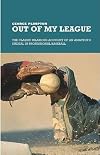
This is perhaps Plimpton’s first experience in participatory journalism. In the autumn of 1958, Plimpton arranges with Sports Illustrated to pitch against both lineups prior to a major league all-star game exhibition in Yankee Stadium. It begins with a few chapters of Plimpton arranging the deal and then how woefully inadequate his preparations are for pitching. On the day of the game, Plimpton arrives at Yankee Stadium and has the odd outsider feeling, finding it hard to interact with the show more players to warm up as well as perform his duties as a journalist. The actual game starts well as Plimpton retires the first two NL batters. When future Met Frank Thomas hits a long homerun into the bleachers, Plimpton can even appreciate the collaborative effort between him and Thomas in creating that homerun. But things turn progressively worse. There is no umpiring for this event so the batters feel no need to swing at bad pitches, and thus stand there letting Plimpton wear himself down throwing pitch after pitch. Finally Yankee coach Ralph Houk takes Plimpton off the mound before he can he even finish pitching to the NL lineup. The experience is both physically exhausting and humiliating for Plimpton and perhaps gives an appreciation of athletic endeavor. The book also works as an interesting snapshot of the ballplayers of that time and eavesdropping on their conversations.
“I knew then that the pitcher’s pleasure is a fragmentary thing, that the dugouts, like sausage machines, eject an unending succession of hitters to destroy any momentary complacency a pitcher may feel during an afternoon of work.” p. 96 show less
“I knew then that the pitcher’s pleasure is a fragmentary thing, that the dugouts, like sausage machines, eject an unending succession of hitters to destroy any momentary complacency a pitcher may feel during an afternoon of work.” p. 96 show less

A second look at football by author George Plimton, and interesting to read today in light of the talk of football's violence and concussions 43 years later. Looking at two Lions player John Gordy on offense and Alex Karras on defense Plimpton shows the tolls of playing football openly and honestly. I do not think you could find this honesty with today's players while they are still playing. Also interesting reading about players before the advent of big money contracts and the work to get a show more retirement fund for older players. show less
Lists
Read These Too (1)
Awards


You May Also Like


Associated Authors
Statistics
- Works
- 215
- Also by
- 24
- Members
- 4,655
- Popularity
- #5,418
- Rating
- 3.9
- Reviews
- 59
- ISBNs
- 214
- Languages
- 5
- Favorited
- 3