
David Sedaris
Author of Me Talk Pretty One Day
About the Author
David Sedaris was born in Binghamton, New York on December 26, 1956, but he grew up in Raleigh, North Carolina. Much of Sedaris' humor is autobiographical and self-deprecating, and it often concerns his family life, his middle class upbringing in the suburbs of North Carolina. He graduated from the show more Art Institute of Chicago in 1987. He is a popular radio commentator, essayist, and short story writer. He held many part-time and odd jobs before getting a job reading excerpts from his diaries on National Public Radio in 1992. His first collection of essays and short stories, Barrel Fever, was published in 1994. His other works include Naked, Holidays on Ice, Dress Your Family in Corduroy and Denim, When You Are Engulfed in Flames, Squirrel Seeks Chipmunk: A Modest Bestiary, Theft by Finding: Diaries (1977-2002), and Calypso. Me Talk Pretty One Day won the Thurber Prize for American Humor in 2001. He has also written several plays with his sister Amy Sedaris including Stump the Host, Stitches, and The Little Frieda Mysteries. In 2014 her title, Let's Explore Diabetes with Owls, made The New York Times Best Seller List. (Bowker Author Biography) show less
Series
Works by David Sedaris
Children Playing Before a Statue of Hercules (2005) — Editor; Introduction — 1,299 copies, 16 reviews
Rooster at the Hitchin' Post {essay} 2 copies
Meet David Sedaris, Series 1 2 copies
Letting Go [memoir/essay] 2 copies
[Title missing] 1 copy
Jesus Shaves {essay} 1 copy
Farm #4: Farm Boys 1 copy
Associated Works
The 50 Funniest American Writers: An Anthology of Humor from Mark Twain to The Onion (2011) — Contributor — 286 copies, 3 reviews
Not So Funny When It Happened: The Best of Travel Humor and Misadventure (2000) — Contributor — 247 copies, 8 reviews
Touchstone Anthology of Contemporary Creative Nonfiction: Work from 1970 to the Present (2007) — Contributor — 219 copies, 3 reviews
This Is My Best: Great Writers Share Their Favorite Work (2004) — Contributor — 175 copies, 3 reviews
Funny Times: A Monthly Newspaper of Humor, Politics & Fun, Volume 16, Issue 2 (2001) — Contributor — 1 copy
Tagged
Common Knowledge
- Legal name
- Sedaris, David Raymond
- Birthdate
- 1956-12-26
- Gender
- male
- Education
- Kent State University
Art Institute of Chicago (BA|1987) - Occupations
- writer
- Organizations
- New Yorker
NPR - Awards and honors
- Honorary Doctorate (Binghamton University, 2008)
American Academy of Arts and Letters (2019)
Terry Southern Prize for Humor (2018)
Thurber Prize for American Humor (2001)
Jonathan Swift – Internationaler Literaturpreis für Satire und Humor (2019)
Time Humorist of the Year Award (2001) (show all 7)
American Academy of Arts and Letters Medal for Spoken Language (2018) - Agent
- Steven Barclay Agency
- Relationships
- Sedaris, Amy (sister)
Hamrick, Hugh (partner) - Short biography
- David Raymond Sedaris (born December 26, 1956) is an American humorist, comedian, author, and radio contributor. He was publicly recognized in 1992 when National Public Radio broadcast his essay "Santaland Diaries". He published his first collection of essays and short stories, Barrel Fever, in 1994. He is the brother and writing collaborator of actor Amy Sedaris.
Much of Sedaris's humor is ostensibly autobiographical and self-deprecating and often concerns his family life, his middle-class upbringing in the suburbs of Raleigh, North Carolina, his Greek heritage, homosexuality, jobs, education, drug use, and obsessive behaviors, and his life in France, London, and the English South Downs - Nationality
- USA
- Birthplace
- Johnson City, New York, USA
- Places of residence
- Raleigh, North Carolina, USA
New York, New York, USA
Paris, Île-de-France, France
London, Middlesex, England, UK
Rackham, West Sussex, England, UK - Associated Place (for map)
- USA
Members
Reviews
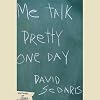
Pretty in Paris
Oh to be the partner of Hugh Hamrick and to explore Paris. I’m jealous.
David Sedaris is the funniest humorist I’ve come across in years. I can listen to him narrate his short stories again and again and they never lose their humor. Sheer genius.
Me Talk Pretty Some Day needs to be listened to. Sedaris narrares the short stories in this collection which won the Thurber Prize for American Humor in 2001. I’m not sure how it would come across in print, but Sedaris is clearly show more a performer.
While the stories range from learning French in situ, to family matters to living in New York, those revolving around his attempt at fluency in French are the best. Sedaris is completely incapable of learning French. He just doesn’t get the language. He’s flummoxed by the nouns having genders for example. He tries all sorts of gimmicks to try to remember the sex of various objects.
‘Hoping to learn by repetition, I tried using nouns’ gender in my everyday English. ‘Hi guys,” I’d say, opening a new box of paperclip, or “Hey you, have you seen my belt? I can’t find her anywhere.”.’
He joins a French beginners class, with immigrants from countries in Bosnia and Middle Eastern war zones. The teacher is sarcastic and belittles her hapless charges.
‘My only comfort was that I was not alone. Hurdled in the doorways and making the most of our pathetic French my fellow students and I engaged in conversation currently overheard in refugee camps.
“Sometime me cry alone at night.”
“That be common for me also.”
“But be more strong you. Much work and some day you talk pretty. People start love you too, maybe tomorrow, OK.”’
The French stories are interspersed with 19th century French carousel music. The book is a gem.
I highly recommend this book for anyone suffering illness or depression, for first-time visitors to Paris, for those of us who notice those Americans who think there are two syllables in “pen”.
And for lovers everywhere. show less
Oh to be the partner of Hugh Hamrick and to explore Paris. I’m jealous.
David Sedaris is the funniest humorist I’ve come across in years. I can listen to him narrate his short stories again and again and they never lose their humor. Sheer genius.
Me Talk Pretty Some Day needs to be listened to. Sedaris narrares the short stories in this collection which won the Thurber Prize for American Humor in 2001. I’m not sure how it would come across in print, but Sedaris is clearly show more a performer.
While the stories range from learning French in situ, to family matters to living in New York, those revolving around his attempt at fluency in French are the best. Sedaris is completely incapable of learning French. He just doesn’t get the language. He’s flummoxed by the nouns having genders for example. He tries all sorts of gimmicks to try to remember the sex of various objects.
‘Hoping to learn by repetition, I tried using nouns’ gender in my everyday English. ‘Hi guys,” I’d say, opening a new box of paperclip, or “Hey you, have you seen my belt? I can’t find her anywhere.”.’
He joins a French beginners class, with immigrants from countries in Bosnia and Middle Eastern war zones. The teacher is sarcastic and belittles her hapless charges.
‘My only comfort was that I was not alone. Hurdled in the doorways and making the most of our pathetic French my fellow students and I engaged in conversation currently overheard in refugee camps.
“Sometime me cry alone at night.”
“That be common for me also.”
“But be more strong you. Much work and some day you talk pretty. People start love you too, maybe tomorrow, OK.”’
The French stories are interspersed with 19th century French carousel music. The book is a gem.
I highly recommend this book for anyone suffering illness or depression, for first-time visitors to Paris, for those of us who notice those Americans who think there are two syllables in “pen”.
And for lovers everywhere. show less
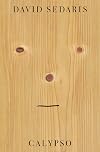
If you are not familiar with David Sedaris's writing, please do me a favor and stop reading this review. Do yourself a favor and run out and buy yourself a copy of any one of his books. Really. Any book Sedaris has written would be good. It really doesn't matter with which one you start your introduction.
But probably the best way to experience Sedaris is to hear him read his own work. He has a comedic timing that is impeccably smart. Coupled this with his sarcastic wit and he will have you show more laughing and crying at the same time. I don't know how he makes feeding a defrosted human tumor (his own) to a snapping turtle funny, or his mother's alcoholism, or his sister's suicide but really truly, he does. You find yourself in awe of how he chooses to see each situation. That viewpoint translates into a keen sense of the bigger picture and the world around him. From fashion from Japan to trash picking in England, Sedaris invites you to never see life the same way again. show less
But probably the best way to experience Sedaris is to hear him read his own work. He has a comedic timing that is impeccably smart. Coupled this with his sarcastic wit and he will have you show more laughing and crying at the same time. I don't know how he makes feeding a defrosted human tumor (his own) to a snapping turtle funny, or his mother's alcoholism, or his sister's suicide but really truly, he does. You find yourself in awe of how he chooses to see each situation. That viewpoint translates into a keen sense of the bigger picture and the world around him. From fashion from Japan to trash picking in England, Sedaris invites you to never see life the same way again. show less
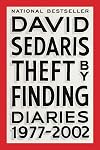
David Sedaris has such a unique way of seeing the world, and his humor is one of the things I love most about his writing. He can take ordinary moments, awkward encounters, and observations from daily life and turn them into something unexpectedly funny and memorable. I found myself laughing, smiling, and appreciating his wit throughout the book.
That said, Theft by Finding includes some content and personal details that I could have done without. Because this book is made up of his diary show more entries, it feels more raw and unfiltered than some of his other work, and there were moments that weren’t really for me.
Still, I’ve always believed in the saying: “Take what you like and leave the rest.” I don’t have to love every page to appreciate an author’s talent, humor, and storytelling style. I took what resonated with me, enjoyed Sedaris’s sharp observations and humor, and simply left behind the parts that didn’t connect with me.
Overall, if you enjoy David Sedaris’s humor and want a more personal, behind-the-scenes look into his life and creative mind, this one is worth picking up.
⭐️⭐️⭐️⭐️/5 show less
That said, Theft by Finding includes some content and personal details that I could have done without. Because this book is made up of his diary show more entries, it feels more raw and unfiltered than some of his other work, and there were moments that weren’t really for me.
Still, I’ve always believed in the saying: “Take what you like and leave the rest.” I don’t have to love every page to appreciate an author’s talent, humor, and storytelling style. I took what resonated with me, enjoyed Sedaris’s sharp observations and humor, and simply left behind the parts that didn’t connect with me.
Overall, if you enjoy David Sedaris’s humor and want a more personal, behind-the-scenes look into his life and creative mind, this one is worth picking up.
⭐️⭐️⭐️⭐️/5 show less

Having had, like many, my initial exposure to David Sedaris's wit on public radio (in the initial 1992 airing of "The Santaland Diaries," in fact) it is nearly impossible for me to read his essays without hearing his voice. I'm not sure if that makes them funnier or not--it's just a condition of my reading. There are plenty of laugh-out-loud moments in this collection, even if the general tone is fairly dark.
My Other Reader says she wouldn't bother to re-read any of these essays, because show more the value of their effect is rooted in shock and surprise. I don't think I agree. Partly, I go for the extreme contrast between the feeling shown in his insightful reflection on human limitations, and his callous exploitation of those limitations for yucks in practically the same paragraph. For sheer entertainment, I like the deadpan frankness, whether it's honest or blankfaced lying.
It's certainly difficult to know what a reader can credit as fact. The sustained use of the subjunctive mood at the end of an essay on the development of the author's sexual identity leaves an attentive reader inferring a bleak reality. And on the very next page, he launches into the hyperbolically fictitious account of his studies at Princeton during the Stone Age. (71-73) If my dad had struck me on the head with a big spoon at the dinner table because I had laughed at my grandmother's flatulence, I'd like to think that I or anyone else would quit laughing long before the spoon drew blood. (227)
At any rate, all of these essays are eminently readable, and the book is full of characters too odd to be entirely fictitious, not least Sedaris himself. show less
My Other Reader says she wouldn't bother to re-read any of these essays, because show more the value of their effect is rooted in shock and surprise. I don't think I agree. Partly, I go for the extreme contrast between the feeling shown in his insightful reflection on human limitations, and his callous exploitation of those limitations for yucks in practically the same paragraph. For sheer entertainment, I like the deadpan frankness, whether it's honest or blankfaced lying.
It's certainly difficult to know what a reader can credit as fact. The sustained use of the subjunctive mood at the end of an essay on the development of the author's sexual identity leaves an attentive reader inferring a bleak reality. And on the very next page, he launches into the hyperbolically fictitious account of his studies at Princeton during the Stone Age. (71-73) If my dad had struck me on the head with a big spoon at the dinner table because I had laughed at my grandmother's flatulence, I'd like to think that I or anyone else would quit laughing long before the spoon drew blood. (227)
At any rate, all of these essays are eminently readable, and the book is full of characters too odd to be entirely fictitious, not least Sedaris himself. show less
Lists
Best Satire (6)
Christmas Books (1)
Phoebe Bridgers (1)
Five star books (1)
Best Beach Reads (1)
Read (1)
French Books (1)
Best Audiobooks (1)
2000s decade (1)
Big tags (1)
1990s (2)
To Read (3)
Unread books (3)
100 New Classics (1)
Awards


You May Also Like


Associated Authors
Statistics
- Works
- 62
- Also by
- 32
- Members
- 92,310
- Popularity
- #101
- Rating
- 3.9
- Reviews
- 2,003
- ISBNs
- 478
- Languages
- 23
- Favorited
- 583


