

David Rakoff (1964–2012)
Author of Don't Get Too Comfortable
About the Author
David Rakoff was born in Montreal, Canada on November 27, 1964. He received a bachelor's degree in East Asian studies from Columbia University in 1986. He briefly worked in Japan as a translator before being diagnosed with Hodgkin's lymphoma. He moved back to Canada for more than a year of show more treatment and remained free of cancer for two decades. Before becoming a full-time writer, he worked as an editor and publicist for various publishers. His essays appeared in numerous publications including The New York Times, GQ, Details, Salon, and Slate. He also wrote three essay collections. Fraud and Don't Get Too Comfortable received Lambda Literary Awards and Half Empty received the Thurber Prize for American Humor. He appeared frequently on This American Life. He also acted in several stage plays written by David Sedaris. He wrote the screen adaptation for, and starred in, a 20-minute film, The New Tenants, which won the Academy Award for best live-action short film in 2009. He died from cancer on August 9, 2012 at the age of 47. (Bowker Author Biography) show less
Image credit: © 2006 Larry D. Moore
Works by David Rakoff
The Uncollected David Rakoff: Including the entire text of Love, Dishonor, Marry, Die, Cherish, Perish (Anchor Books Original) (2015) 60 copies, 2 reviews
J.D.V., M.I.A. 1 copy
Associated Works
America (The Book): A Citizen's Guide to Democracy Inaction (2004) — Narrator, some editions — 7,772 copies, 63 reviews
The 50 Funniest American Writers: An Anthology of Humor from Mark Twain to The Onion (2011) — Contributor — 286 copies, 3 reviews
America (The Audiobook): A Citizen's Guide to Democracy Inaction, Part 1 of 2 — Narrator — 1 copy
America (The Audiobook): A Citizen's Guide to Democracy Inaction, Part 2 of 2 — Narrator — 1 copy
Tagged
Common Knowledge
- Legal name
- Rakoff, David Benjamin
- Birthdate
- 1964-11-27
- Date of death
- 2012-08-09
- Gender
- male
- Education
- Columbia University
- Occupations
- essayist
journalist
actor - Awards and honors
- Thurber Prize for American Humor
- Relationships
- Rakoff, Ruth (sister)
- Cause of death
- cancer
- Nationality
- Canada (birth, dual citizen)
USA (dual citizen) - Birthplace
- Montreal, Quebec, Canada
- Places of residence
- New York, New York, USA
- Place of death
- New York, New York, USA
- Associated Place (for map)
- New York, USA
Members
Reviews
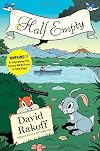
I don’t generally read nonfiction, but the description of this book won me over. (When I do read it, it’s either quirky memoirs like AJ Jacobs or snarky essays like David Sedaris.)
“In this deeply funny (and, no kidding, wise and poignant) book, David examines the realities of our sunny, gosh-everyone-can-be-a-star contemporary culture and finds that, pretty much as a universal rule, the best is not yet to come, adversity will triumph, justice will not be served, and your dreams won’t show more come true.
“The book ranges from the personal to the universal, combining stories both reportorial and from David’s own experiences: the moment when being a tiny child no longer meant adults found him charming but instead meant other children found him a fun target; the perfect late evening in Manhattan when he was young and the city seemed to brim with such possibility that the street shimmered in the moonlight–as he drew closer he realized the streets actually flickered with rats in a feeding frenzy. He also weaves in his usual brand of Oscar Wilde-worthy cultural criticism (the tragedy of Hollywood’s Walk of Fame, for instance.”
As someone who has ALSO discussed the shenanigans behind the Walk of Fame, I knew I’d have to read this. (Note: anyone can get a star; you just have to pay for it.)
If you like snarky, sarcastic essays, you’ll like this book. It’s incredibly witty (and yes, at times wise and poignant) and I literally laughed out loud several times.
But I also liked this paragraph:
“But here’s the point I want to make about what people say [after you're diagnosed with a potentially fatal disease]. Unless someone looks you in the eye and hisses, `You fucking asshole, I can’t wait until you die of this,’ people are really trying their best. Just like being happy and sad, you will find yourself on both sides of the equation many times over your lifetime, either saying or hearing the wrong thing. Let’s all give each other a pass, shall we?”
It’s funny and it’s true.
Absolutely recommended. :) show less
“In this deeply funny (and, no kidding, wise and poignant) book, David examines the realities of our sunny, gosh-everyone-can-be-a-star contemporary culture and finds that, pretty much as a universal rule, the best is not yet to come, adversity will triumph, justice will not be served, and your dreams won’t show more come true.
“The book ranges from the personal to the universal, combining stories both reportorial and from David’s own experiences: the moment when being a tiny child no longer meant adults found him charming but instead meant other children found him a fun target; the perfect late evening in Manhattan when he was young and the city seemed to brim with such possibility that the street shimmered in the moonlight–as he drew closer he realized the streets actually flickered with rats in a feeding frenzy. He also weaves in his usual brand of Oscar Wilde-worthy cultural criticism (the tragedy of Hollywood’s Walk of Fame, for instance.”
As someone who has ALSO discussed the shenanigans behind the Walk of Fame, I knew I’d have to read this. (Note: anyone can get a star; you just have to pay for it.)
If you like snarky, sarcastic essays, you’ll like this book. It’s incredibly witty (and yes, at times wise and poignant) and I literally laughed out loud several times.
But I also liked this paragraph:
“But here’s the point I want to make about what people say [after you're diagnosed with a potentially fatal disease]. Unless someone looks you in the eye and hisses, `You fucking asshole, I can’t wait until you die of this,’ people are really trying their best. Just like being happy and sad, you will find yourself on both sides of the equation many times over your lifetime, either saying or hearing the wrong thing. Let’s all give each other a pass, shall we?”
It’s funny and it’s true.
Absolutely recommended. :) show less
Don't Get Too Comfortable: The Indignities of Coach Class, The Torments of Low Thread Count, The Never- Ending Quest for Artisanal Olive Oil, and Other First World Problems by David Rakoff
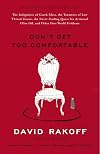
It's fair to say that David Rakoff is a charter member of the gay Rat Pack, composed, more or less, of Rakoff, David Sedaris, Dan Savage, Augusten Burroughs, and Henry Alford. Unfortunately for Rakoff, he's often compared unfavorably to Sedaris, presumably because they're both gay, both named David, and both humor writers. Rakoff, however, is actually funnier, smarter, and a far better writer than Sedaris. (I should say that not only do I find Sedaris utterly unfunny, but I don't think I can show more name another writer, apart from John Seabrook, whose boundless self-regard is quite so evident in every sentence. Yeah, yeah, like everyone else, I liked the Macy's elf essay, but have you read his recent stuff? It's mostly about how much money he's made from his work and how everyone adores him. Who gives a fuck? He'd probably make a good topic for an essay in a book like Rakoff's, actually, what with his constant essays in the New Yorker about his forays to France.)
I will confess that as I read, I became a wee bit confused by the title of this book, as it gives the impression that Rakoff discusses, well, the indignities of coach class, the torments of low thread count, artisinal olive oil, and the like. In fact, none of those things shows up in the book. However, Rakoff does take on high-end Florida hotels, organic dining (at an unnamed restaurant that's obviously Chez Panisse), fasting, high fashion, and cryogenics (yep, there are people still interested in cryogenics), and other instruments of upper middle-class self-obsession.
Like a lot of the Gay Rat Pack's work the book is often embarrassing to read on the subway because you'll laugh too much. (New Yorkers have a more or less undeserved reputation for being surly, but they really will give you odd looks if you start giggling too much. Although you're probably safe if you don't giggle and mumble about The End of the World at the same time. Yes, I have actually seen someone doing that on the 6 train.) Rakoff's writing is also smart and pointed -- he takes apart the Log Cabin Republicans in an especially satisfying and effective way, and boy, does he destroy the vile Karl Lagerfeld. So ignore the weird cover copy and enjoy the essays. show less
I will confess that as I read, I became a wee bit confused by the title of this book, as it gives the impression that Rakoff discusses, well, the indignities of coach class, the torments of low thread count, artisinal olive oil, and the like. In fact, none of those things shows up in the book. However, Rakoff does take on high-end Florida hotels, organic dining (at an unnamed restaurant that's obviously Chez Panisse), fasting, high fashion, and cryogenics (yep, there are people still interested in cryogenics), and other instruments of upper middle-class self-obsession.
Like a lot of the Gay Rat Pack's work the book is often embarrassing to read on the subway because you'll laugh too much. (New Yorkers have a more or less undeserved reputation for being surly, but they really will give you odd looks if you start giggling too much. Although you're probably safe if you don't giggle and mumble about The End of the World at the same time. Yes, I have actually seen someone doing that on the 6 train.) Rakoff's writing is also smart and pointed -- he takes apart the Log Cabin Republicans in an especially satisfying and effective way, and boy, does he destroy the vile Karl Lagerfeld. So ignore the weird cover copy and enjoy the essays. show less
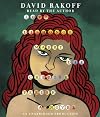
This is the definition of a swan song. That unmistakable Rakoff voice (whether written or spoken) nearly sings these verses, his last writing on earth. Hearing this rhyme, I suddenly realized what has bugged me about Rakoff all these years - he was born to narrate Seuss. And now he takes the Seussian rhyme to places it was meant to be - sarcasm, cynicism, with compassion and a calm urgency - that Seuss did not take it. Reading this book, or hearing it read by Rakoff himself, is a joyous show more farewell to a unique and loving writer.
You must have this book in your library. Lend it out, but demand that it be read and heard and cared for, then returned to you, because you will need it again. Rakoff should not be able to disappear from your life - not that easily.
Os (yes, I'm a fan) show less
You must have this book in your library. Lend it out, but demand that it be read and heard and cared for, then returned to you, because you will need it again. Rakoff should not be able to disappear from your life - not that easily.
Os (yes, I'm a fan) show less

This is the definition of a swan song. That unmistakable Rakoff voice (whether written or spoken) nearly sings these verses, his last writing on earth. Hearing this rhyme, I suddenly realized what has bugged me about Rakoff all these years - he was born to narrate Seuss. And now he takes the Seussian rhyme to places it was meant to be - sarcasm, cynicism, with compassion and a calm urgency - that Seuss did not take it. Reading this book, or hearing it read by Rakoff himself, is a joyous show more farewell to a unique and loving writer.
You must have this book in your library. Lend it out, but demand that it be read and heard and cared for, then returned to you, because you will need it again. Rakoff should not be able to disappear from your life - not that easily.
Os. show less
You must have this book in your library. Lend it out, but demand that it be read and heard and cared for, then returned to you, because you will need it again. Rakoff should not be able to disappear from your life - not that easily.
Os. show less
Lists
Awards


You May Also Like


Associated Authors
Statistics
- Works
- 9
- Also by
- 8
- Members
- 4,034
- Popularity
- #6,237
- Rating
- 3.9
- Reviews
- 115
- ISBNs
- 46
- Languages
- 2
- Favorited
- 16
