
Dave Eggers
Author of A Heartbreaking Work of Staggering Genius / Mistakes We Knew We Were Making
About the Author
Dave Eggers was born on March 12th, 1970, in Boston, Massachusetts. His family moved to Lake Forest, Illinois when he was a child. Eggers attended the University of Illinois at Urbana-Champaign, until his parents' deaths in 1991 and 1992. The loss left him responsible for his eight-year-old brother show more and later became the inspiration for his highly acclaimed memoir "A Heartbreaking Work of Staggering Genius". Published in 2000, the memoir was nominated for a nonfiction Pulitzer the following year. Eggers edits the popular "The Best American Nonrequired Reading" published annually. In 1998, he founded the independent publishing house, McSweeney's which publishes a variety of magazines and literary journals. Eggers has also opened several nonprofit writing centers for high school students across the United States. Eggers has written several novels and his title, A Hologram for the King, was a finalist for the 2012 National Book Award. His most recent work of fiction, entitled The Circle, was published in 2013. His recent nonfiction books are The Monk of Mokha (January 2018) and What Can a Citizen Do? (Illustrated by Shawn Harris)(September 2018). (Bowker Author Biography) show less
Disambiguation Notice:
Please do not combine this author page with "Doris Haggis-On-Whey" books. Dr. and Mr. Doris Haggis-on-Whey are a joint pseudonym of Dave Eggers and his brother Christopher Eggers. Please note that reviews of The Wild Things and Zeitoun have become confused on the Wild Things review thread.
Series
Works by Dave Eggers
A Heartbreaking Work of Staggering Genius / Mistakes We Knew We Were Making (2000) 14,104 copies, 213 reviews
Created in Darkness by Troubled Americans: The Best of McSweeney's Humor Category (2004) — Editor & Introduction — 889 copies, 16 reviews
McSweeney's 14: McSweeney's at War for the Foreseeable Future and He's Never Been So Scared (2004) — Editor — 412 copies, 5 reviews
McSweeney's 19: Old Facts, New Fiction, and a Novella by T.C. Boyle (2006) — Editor — 404 copies, 4 reviews
McSweeney's 23: Still Going Strong Like Castro (We Meant Ramón) (2007) — Editor — 303 copies, 5 reviews
Your Disgusting Head: The Darkest, Most Offensive and Moist Secrets of Your Ears, Mouth and Nose (2004) — Author — 272 copies, 2 reviews
McSweeney's 27: With Lots of Things Like This/Autophobia (2008) — Contributor — 229 copies, 4 reviews
McSweeney's 05: Sometimes Not Believing How Great This All Is (2012) — Editor — 189 copies, 2 reviews
Tomorrow Most Likely (Read Aloud Family Books, Mindfulness Books for Kids, Bedtime Books for Young Children, Bedtime Picture Books) (2019) 188 copies, 8 reviews
McSweeney's 31: Vikings, Monks, Philosophers, Whores: Old Forms Unearthed (2009) 183 copies, 4 reviews
Out of Exile: Narratives from the Abducted and Displaced People of Sudan (2008) — Interviews & Introduction — 64 copies
Most of the Better Natural Things in the World: (Juvenile Fiction, Nature Book for Kids, Wordless Picture Book) (2019) 52 copies, 4 reviews
McSweeney's Books Sampler No. 1 3 copies
Dave Eggers Contrapposto /anglais 3 copies
The Alaska of Giants and Gods 3 copies
The Book Makers 1 copy
The Very Best of McSweeney's 1 copy
Hizimizi Tadacaksiniz 1 copy
زيتون 1 copy
Chapter One [short story] 1 copy
Phoenix 1 copy
What Is the What / How We Are Hungry / You Shall Know Our Velocity / A Heartbreaking Work of Staggering Genius (2009) 1 copy
[Title missing] 1 copy
Associated Works
My Bookstore: Writers Celebrate Their Favorite Places to Browse, Read, and Shop (2012) — Contributor — 621 copies, 16 reviews
Fight of the Century: Writers Reflect on 100 Years of Landmark ACLU Cases (2020) — Contributor — 261 copies, 5 reviews
Object Lessons: The Paris Review Presents the Art of the Short Story (2012) — Introduction — 255 copies, 9 reviews
One Hundred and Forty Five Stories in a Small Box: Hard to Admit and Harder to Escape, How the Water Feels to the Fishes, and Minor Robberies (2007) — Contributor — 230 copies, 1 review
Kingdom of Olives and Ash: Writers Confront the Occupation (2017) — Contributor — 166 copies, 5 reviews
An Innocent Abroad: Life-Changing Trips from 35 Great Writers (2014) — Contributor — 87 copies, 4 reviews
Voices from the Storm: The People of New Orleans on Hurricane Katrina and Its Aftermath (2006) — Series editor — 78 copies, 1 review
Can You Hear Me Now?: The Inspiration, Wisdom, and Insight of Michael Eric Dyson (2009) — Introduction — 45 copies
McSweeney's 52: In Their Faces a Landmark: Stories of Movement and Displacement (2018) — Founding Editor — 44 copies, 3 reviews
Don't Forget to Write for the Secondary Grades: 50 Enthralling and Effective Writing Lessons, Ages 11 and Up (2011) — Foreword — 35 copies
Beyond the Possible: 50 Years of Creating Radical Change in a Community Called Glide (2013) — Foreword — 29 copies
Thomas Demand: L'Esprit d'Escalier — Contributor — 1 copy
Tagged
Common Knowledge
- Canonical name
- Eggers, Dave
- Legal name
- Eggers, David
- Birthdate
- 1970-03-12
- Gender
- male
- Education
- University of Illinois, Urbana-Champaign
- Occupations
- writer
author
novelist
publisher - Organizations
- McSweeney's
826 Valencia
Might - Awards and honors
- Addison M. Metcalf Award in Literature (2001)
Brown University honorary Doctor of Letters (2005)
Heinz Award (Arts and Humanities, 2007)
TED Prize (2008)
Utne Reader 50 Visionaries Who Are Changing the World (2008)
Courage in Media Award (2009) (show all 13)
Literarian Award (2009)
Prix Médicis (2009)
Dayton Literary Peace Prize (2010)
Albatros Literaturpreis (2012)
American Academy of Arts and Letters (2015)
Carl Sandburg Literary Award (2017)
Muhammad Ali Humanitarian Award (2018) - Relationships
- Vida, Vendela (wife)
Eggers, Christopher (brother)
Demby, Constance (aunt)
Eggers, William D. (brother) - Nationality
- USA
- Birthplace
- Boston, Massachusetts, USA
- Places of residence
- Chicago, Illinois, USA
San Francisco, California, USA - Disambiguation notice
- Please do not combine this author page with "Doris Haggis-On-Whey" books. Dr. and Mr. Doris Haggis-on-Whey are a joint pseudonym of Dave Eggers and his brother Christopher Eggers.
Please note that reviews of The Wild Things and Zeitoun have become confused on the Wild Things review thread. - Associated Place (for map)
- USA
Members
Discussions
The Circle: Theological undertones in "The Circle" in One LibraryThing, One Book (January 2015)
The Circle: Introduce Yourself! in One LibraryThing, One Book (March 2014)
The Circle: Explicit References to 1984 Could Have Helped in Book talk (February 2014)
The Circle: General Likes/Dislikes in One LibraryThing, One Book (January 2014)
The Circle: First Impressions in One LibraryThing, One Book (December 2013)
The Circle: A Horror Novel? in One LibraryThing, One Book (December 2013)
The Circle: How did it go? in One LibraryThing, One Book (December 2013)
The Circle: What rang true for you? in One LibraryThing, One Book (December 2013)
The Circle: Author's Style in One LibraryThing, One Book (November 2013)
The Circle: Non-spoiler Oddities in One LibraryThing, One Book (November 2013)
Reviews
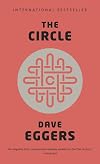
I often feel the need to think things through slowly, to go through each step, starting with assumptions, to explore them one after the next. I know people find this annoying. What I first liked about Eggers, years ago, was a recognition of that process in his writing. I view his books as journals - he is writing it out for himself, at whatever pace it takes, working through a thought, a sloughing; and my reading of the finished work is welcome, but not the point.
So when just a few chapters show more into the Circle I started saying "Yes, and...? Yes, AND...?" it interested me. I stopped thinking about the narrative and started thinking about the thought process, the tangents, the triggers for further contemplation. The exasperating things about the story itself stopped bothering me as much.
I don't know, I don't think I have a rating yet, so I'll stick to the middle. I read a few reviews and I agree as much with the 1-stars as the 5-stars. That interests me too. There's a lot I could almost dismiss as already going over ground that's been widely discussed. But then, so many people have said to me some variation of "if you're not doing anything wrong, you have nothing to fear", that I want to encourage any new discussion on this topic, at whatever level. And there's a lot of fair criticism about characterization and narrative, which I won't dispute - I just feel that way about a lot of his writing, and I'm ok with it.
I'm going to let it sit for a while. I'm going to see what, if any, moments come back into my thoughts, add into other musings, wake me up in the middle of the night. Because the parts that got my mind wandering weren't about the main narrative. They were about the language of advertising, the endless search for balance between safety and freedom, the constant question of how we can know a person, and how we can know ourselves. The moment Mae deals with emotional turmoil by going back to a mindless task, the solace of routine and structure and clear answers with immediate rewards. How readers, as much as Mae, take the responses of people who comment to her as the response of all people everywhere. The interaction where a client uses the need to be positive and friendly and responsive to bully her into doing him a favor. What I would say if someone dared ask me why I thought a moment of moonlight on an empty beach belonged just to me. The memories of every moment of moonlight on an empty beach that do, in fact, belong just to me.
I read most of this book on a cool breezy day, cocooned in my garden without phone, laptop, camera, visitors. I am thankful for the book, and I am thankful for the garden. show less
So when just a few chapters show more into the Circle I started saying "Yes, and...? Yes, AND...?" it interested me. I stopped thinking about the narrative and started thinking about the thought process, the tangents, the triggers for further contemplation. The exasperating things about the story itself stopped bothering me as much.
I don't know, I don't think I have a rating yet, so I'll stick to the middle. I read a few reviews and I agree as much with the 1-stars as the 5-stars. That interests me too. There's a lot I could almost dismiss as already going over ground that's been widely discussed. But then, so many people have said to me some variation of "if you're not doing anything wrong, you have nothing to fear", that I want to encourage any new discussion on this topic, at whatever level. And there's a lot of fair criticism about characterization and narrative, which I won't dispute - I just feel that way about a lot of his writing, and I'm ok with it.
I'm going to let it sit for a while. I'm going to see what, if any, moments come back into my thoughts, add into other musings, wake me up in the middle of the night. Because the parts that got my mind wandering weren't about the main narrative. They were about the language of advertising, the endless search for balance between safety and freedom, the constant question of how we can know a person, and how we can know ourselves. The moment Mae deals with emotional turmoil by going back to a mindless task, the solace of routine and structure and clear answers with immediate rewards. How readers, as much as Mae, take the responses of people who comment to her as the response of all people everywhere. The interaction where a client uses the need to be positive and friendly and responsive to bully her into doing him a favor. What I would say if someone dared ask me why I thought a moment of moonlight on an empty beach belonged just to me. The memories of every moment of moonlight on an empty beach that do, in fact, belong just to me.
I read most of this book on a cool breezy day, cocooned in my garden without phone, laptop, camera, visitors. I am thankful for the book, and I am thankful for the garden. show less
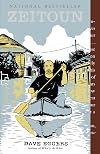
Eggers is a master of weaving together various threads and bringing personalities to life--here, in this book set up primarily against the aftermath of Hurricane Katrina, his talents are on full display.
In focusing in on a single man and his family, Zeitoun tells the story of a family of New Orleans, taking us through their history, their separation during the storm, and the Kafka-esque days they faced after the storm passed. Pulling together everything from religion to racism, not to show more mention immigration and the socio-political forces at work at every turn, Eggers manages to bring to life not just the hurricane that ravaged New Orleans (which he does masterfully), but to bring to life a number of men and women who lived through it. The result is at turns heartbreaking and terrifying, though there's a fair bit of humor thrown in, and it's sometimes difficult to remember that this is a true history of a family and a storm, it reads so much like a suspenseful drama.
I don't think this book can be compared to any other piece of nonfiction regarding immigration or natural disaster, because its scope is so wide and its detailing so careful, but there is no question that it is worth reading--perhaps now more than ever for US residents especially, considering the environmental and socio-political obstacles in the future.
Absolutely recommended. show less
In focusing in on a single man and his family, Zeitoun tells the story of a family of New Orleans, taking us through their history, their separation during the storm, and the Kafka-esque days they faced after the storm passed. Pulling together everything from religion to racism, not to show more mention immigration and the socio-political forces at work at every turn, Eggers manages to bring to life not just the hurricane that ravaged New Orleans (which he does masterfully), but to bring to life a number of men and women who lived through it. The result is at turns heartbreaking and terrifying, though there's a fair bit of humor thrown in, and it's sometimes difficult to remember that this is a true history of a family and a storm, it reads so much like a suspenseful drama.
I don't think this book can be compared to any other piece of nonfiction regarding immigration or natural disaster, because its scope is so wide and its detailing so careful, but there is no question that it is worth reading--perhaps now more than ever for US residents especially, considering the environmental and socio-political obstacles in the future.
Absolutely recommended. show less

We live in an age of escalating surveillance--one in which personal privacy is increasingly rare, and more and more of our lives are shared publicly on the Internet. So perhaps it's no surprise that The Circle, by Dave Eggers, takes things a few steps further with his novel, introducing us to a very Google-like company named The Circle, in which they are at the forefront of technology, with seemingly endless resources available to make their bold visions a reality. The Circle's goal is to show more capture all human knowledge and make it available to the masses. But this type of all-encompassing information-gathering comes with a high cost.
The Circle by Dave EggersThe Circle focuses on Mae Holland, a newly-hired employee, as she begins her career with the technology company. It's immediately obvious that The Circle is an analogy to modern-day Google, with its over-the-top benefits, campus-wide parties, and nearly anything employees could desire available to them--day or night. As Mae settles into her new position, she's overwhelmed by how lucky she is to be part of this amazing group, especially after spending her first two years out of college working in a drab cubicle at a utility company in her tiny home town. She not only feels incredibly lucky to be part of The Circle, but somehow undeserving of the job. The first few chapters are a whirlwind of introductions to resources available on the campus, and to how much information the company collects--and expects their employees to contribute. At first, the comparisons to Google are obvious, but the novel quickly moves beyond even what Google currently provides, into a different level entirely. Oddly, this is both one of the novel's strengths, as well as its weakness; as more and more statistics get introduced, it nearly overpowers the narrative of the story, becoming instead a list of social media "to-dos", rather than a functional story.
Much of the book is spent introducing concept after concept; TrueYou, SeeChange, ChildTrack, SoulSearch, PastPerfect, Demoxie, and countless other names are thrown around, with each new program introducing increasingly pervasive levels of surveillance, until there's no such thing as privacy any longer. Politicians are forced to wear cameras at all times, streaming their entire lives to the world, or face persecution for failing to do so. All of these programs are well-intentioned, but the ramifications of them are far-reaching and disturbing beyond measure. Indeed, a totalitarianism is hinted at, as politicians who voice criticisms of The Circle suddenly are found to have child-porn on their computers, or some skeleton in their closet--buried in their past--is suddenly uncovered, leading to their ruin. Perhaps these events are coincidental, but people seem to accept the explanations as fact. After all, The Circle is incapable of fault, right?
What makes this novel so intriguing isn't the outlandish invasions of privacy that The Circle is able to obtain, but that Eggers paints a portrait of Orwellian society in-the-making--one that is all too believable, considering the current state of technology. Already, today's Internet companies have extraordinary access to data, and the ramifications of this is just beginning to come to the public consciousness. The Circle takes current events just a little bit further, and serves as a cautionary tale to show what might happen if these companies' aren't reigned in before it's too late.
Despite the intrigue, the novel does have its share of faults. The main character, Mae Holland is rather naive,and her idealism leads the reader to question her sanity from time to time. It's often a frustrating read, to have the author point out more and more disturbing revelations, only to have Mae rationalize things and accept the latest egregious assaults against civil liberties. She seems forgetful of things that are rather crucial, and even cold-hearted as she turns her back on her past to embrace The Circle wholeheartedly. Eggers introduces so many concepts and spends so much time detailing how many 'screens' the characters use, that it sometimes feels like a diary of going to work each day--albeit at an amazingly generous company--to the point of feeling mundane. Entire plot points get left out, like the treatment of her father's illness, and their lack of participation in the newest programs of The Circle. There are times it's particularly unbelievable that society as a whole is embracing what The Circle has to offer, yet they seem to do so--in increasing numbers.
Despite its shortcomings, however, The Circle is a must-read novel, if only to highlight the strange nature of today's society, and how the information we share can be used. Internet companies probably know more about us than we do ourselves, and the more we share, the more they learn about not only us, but our friends and loved-ones as well. It's a thought-provoking adventure into a what-if future. It's one of today's 1984-style novels that should be read, discussed, and argued. After all, that's what makes a good book transcend the genre and become a great book. show less
The Circle by Dave EggersThe Circle focuses on Mae Holland, a newly-hired employee, as she begins her career with the technology company. It's immediately obvious that The Circle is an analogy to modern-day Google, with its over-the-top benefits, campus-wide parties, and nearly anything employees could desire available to them--day or night. As Mae settles into her new position, she's overwhelmed by how lucky she is to be part of this amazing group, especially after spending her first two years out of college working in a drab cubicle at a utility company in her tiny home town. She not only feels incredibly lucky to be part of The Circle, but somehow undeserving of the job. The first few chapters are a whirlwind of introductions to resources available on the campus, and to how much information the company collects--and expects their employees to contribute. At first, the comparisons to Google are obvious, but the novel quickly moves beyond even what Google currently provides, into a different level entirely. Oddly, this is both one of the novel's strengths, as well as its weakness; as more and more statistics get introduced, it nearly overpowers the narrative of the story, becoming instead a list of social media "to-dos", rather than a functional story.
Much of the book is spent introducing concept after concept; TrueYou, SeeChange, ChildTrack, SoulSearch, PastPerfect, Demoxie, and countless other names are thrown around, with each new program introducing increasingly pervasive levels of surveillance, until there's no such thing as privacy any longer. Politicians are forced to wear cameras at all times, streaming their entire lives to the world, or face persecution for failing to do so. All of these programs are well-intentioned, but the ramifications of them are far-reaching and disturbing beyond measure. Indeed, a totalitarianism is hinted at, as politicians who voice criticisms of The Circle suddenly are found to have child-porn on their computers, or some skeleton in their closet--buried in their past--is suddenly uncovered, leading to their ruin. Perhaps these events are coincidental, but people seem to accept the explanations as fact. After all, The Circle is incapable of fault, right?
What makes this novel so intriguing isn't the outlandish invasions of privacy that The Circle is able to obtain, but that Eggers paints a portrait of Orwellian society in-the-making--one that is all too believable, considering the current state of technology. Already, today's Internet companies have extraordinary access to data, and the ramifications of this is just beginning to come to the public consciousness. The Circle takes current events just a little bit further, and serves as a cautionary tale to show what might happen if these companies' aren't reigned in before it's too late.
Despite the intrigue, the novel does have its share of faults. The main character, Mae Holland is rather naive,and her idealism leads the reader to question her sanity from time to time. It's often a frustrating read, to have the author point out more and more disturbing revelations, only to have Mae rationalize things and accept the latest egregious assaults against civil liberties. She seems forgetful of things that are rather crucial, and even cold-hearted as she turns her back on her past to embrace The Circle wholeheartedly. Eggers introduces so many concepts and spends so much time detailing how many 'screens' the characters use, that it sometimes feels like a diary of going to work each day--albeit at an amazingly generous company--to the point of feeling mundane. Entire plot points get left out, like the treatment of her father's illness, and their lack of participation in the newest programs of The Circle. There are times it's particularly unbelievable that society as a whole is embracing what The Circle has to offer, yet they seem to do so--in increasing numbers.
Despite its shortcomings, however, The Circle is a must-read novel, if only to highlight the strange nature of today's society, and how the information we share can be used. Internet companies probably know more about us than we do ourselves, and the more we share, the more they learn about not only us, but our friends and loved-ones as well. It's a thought-provoking adventure into a what-if future. It's one of today's 1984-style novels that should be read, discussed, and argued. After all, that's what makes a good book transcend the genre and become a great book. show less
"I want to thank all the watchers who sent frowns to the government there, both for their persecution of this artist, and for their restrictions on internet freedoms. We've sent over 180 million frowns from the U.S. alone, and you can bet that has an effect on the regime."
(Mae in Dave Eggers' The Circle)
---
When it comes to hyperbole in his parable The Circle, Dave Eggers isn't sparing his reader. The message is clear: a dystopia isn't something that only originates with malevolent tyrants. show more It can originate from benevolence and good will. It will be as terrifying as your favorite stereotype resident evil.
Reading The Circle left me with some ambiguity. What's more important? The message of Eggers to the reader, or the unrealistic way he formulates it? Both have the subtlety of a sledgehammer. And yet, the message arrives.
The Circle is the amalgam of Facebook, Google, Twitter, Apple, Microsoft, you name it, every successful West Coast tech company dictating our online lives. And increasingly our offline lives as well. It's a company enclosed on a campus full of happy employees doing happy things, developing happy ideas for the betterment of mankind. Mae Holland is glad to be a newbie at the company that everyone wants to work for. Leaving a dull job, she gets help from her old university friend Annie. Annie is one of the forty leaders at the Circle (The Gang of Forty). These forty are under the leadership of the Three Wise Men: Ty Gospodinov, Eamon Baily and Tom Stenton. As you can see, even the Bible is an inspiration. Jesus and his forty days in the desert. Mozes and forty years before reaching the promised land, and the holy trinity mixed in. In the end, Mae will be the prophet.
Ty is the mysterious technical genius, rarely seen, and of course there's more to that in the story. Eamon Baily is the visionary, with a happy public demeanor of Steve Jobs - and the cold-bloodedness behind the screen. Tom Stenton is the hard boiled money maker. He is completing the triumvirate of money, image and ideas. Mae starts working for The Circle and is rapidly consumed by it. She'll become the spokeswoman for the ideas the Circle wants to bestow upon the world. They are many, they seem benign, but they predict hell.
That's where I felt ambiguity coming up. To some extent you can believe Mae's descent into the cesspool that the Circle turns out to be. Her father has MS and can't afford his medicine. The Circle takes care of that. Mae is thankful. Soon it's no worker's benefit anymore, but a tool for blackmailing her into conformity. And in the end, Mae abides - more than that. Her parents, her ex-boyfriend, they all disappear from her life, and not all go without a bang. Mae doesn't seem to be bothered by it. She disposes them all like you bring your old stuff to the recycle station. Is she real?
The occasional voice trying to bring Mae to her senses sounds often way too pedantic and preachy. The regular voices convincing Mae that he who has something to hide is a criminal are quite familiar. Especially to those reading the papers and their comment section about new anti-privacy laws. But the arguments against them have been done better in real life than in The Circle.
Because Mae turns out to be such a stereotype and a cipher most of the time, I felt no real connection to her. At the turning point in the story, involving an arrest, her fate left me cold. On the other hand her life at the Circle made me feel more anxious and stressed than any book or movie ever was able to. Sometimes I almost felt the need to stop for a moment. Mae is constantly flooded with everything the Circle has: zings, frowns, smiles, reactions, friend requests and a dozen more. Eggers is precise: when Mae looks at the growing and ridiculous number of screens on her desk (and her wrists) she isn't flooded with " thousands" of messages, but with 8,094 messages, 1,245 Zings and 3,257 requests. She is able to answer them all - and more. It makes your head burst at the seams.
Eggers shows the tyranny of social media, the fake world of good people not so good at all. He shows what it is like to be unable to have your own time, your own private moments. And in the end maybe not even your own dreams. Even Mae has to take refuge in toilets to speak freely - yet doesn't understand the meaning of it. With it Eggers gives a strong signal to the reader: not all tyranny starts with bad people. Not all that is called better is best. The way to hell is paved with good intentions - and hell they get in The Circle. show less
(Mae in Dave Eggers' The Circle)
---
When it comes to hyperbole in his parable The Circle, Dave Eggers isn't sparing his reader. The message is clear: a dystopia isn't something that only originates with malevolent tyrants. show more It can originate from benevolence and good will. It will be as terrifying as your favorite stereotype resident evil.
Reading The Circle left me with some ambiguity. What's more important? The message of Eggers to the reader, or the unrealistic way he formulates it? Both have the subtlety of a sledgehammer. And yet, the message arrives.
The Circle is the amalgam of Facebook, Google, Twitter, Apple, Microsoft, you name it, every successful West Coast tech company dictating our online lives. And increasingly our offline lives as well. It's a company enclosed on a campus full of happy employees doing happy things, developing happy ideas for the betterment of mankind. Mae Holland is glad to be a newbie at the company that everyone wants to work for. Leaving a dull job, she gets help from her old university friend Annie. Annie is one of the forty leaders at the Circle (The Gang of Forty). These forty are under the leadership of the Three Wise Men: Ty Gospodinov, Eamon Baily and Tom Stenton. As you can see, even the Bible is an inspiration. Jesus and his forty days in the desert. Mozes and forty years before reaching the promised land, and the holy trinity mixed in. In the end, Mae will be the prophet.
Ty is the mysterious technical genius, rarely seen, and of course there's more to that in the story. Eamon Baily is the visionary, with a happy public demeanor of Steve Jobs - and the cold-bloodedness behind the screen. Tom Stenton is the hard boiled money maker. He is completing the triumvirate of money, image and ideas. Mae starts working for The Circle and is rapidly consumed by it. She'll become the spokeswoman for the ideas the Circle wants to bestow upon the world. They are many, they seem benign, but they predict hell.
That's where I felt ambiguity coming up. To some extent you can believe Mae's descent into the cesspool that the Circle turns out to be. Her father has MS and can't afford his medicine. The Circle takes care of that. Mae is thankful. Soon it's no worker's benefit anymore, but a tool for blackmailing her into conformity. And in the end, Mae abides - more than that. Her parents, her ex-boyfriend, they all disappear from her life, and not all go without a bang. Mae doesn't seem to be bothered by it. She disposes them all like you bring your old stuff to the recycle station. Is she real?
The occasional voice trying to bring Mae to her senses sounds often way too pedantic and preachy. The regular voices convincing Mae that he who has something to hide is a criminal are quite familiar. Especially to those reading the papers and their comment section about new anti-privacy laws. But the arguments against them have been done better in real life than in The Circle.
Because Mae turns out to be such a stereotype and a cipher most of the time, I felt no real connection to her. At the turning point in the story, involving an arrest, her fate left me cold. On the other hand her life at the Circle made me feel more anxious and stressed than any book or movie ever was able to. Sometimes I almost felt the need to stop for a moment. Mae is constantly flooded with everything the Circle has: zings, frowns, smiles, reactions, friend requests and a dozen more. Eggers is precise: when Mae looks at the growing and ridiculous number of screens on her desk (and her wrists) she isn't flooded with " thousands" of messages, but with 8,094 messages, 1,245 Zings and 3,257 requests. She is able to answer them all - and more. It makes your head burst at the seams.
Eggers shows the tyranny of social media, the fake world of good people not so good at all. He shows what it is like to be unable to have your own time, your own private moments. And in the end maybe not even your own dreams. Even Mae has to take refuge in toilets to speak freely - yet doesn't understand the meaning of it. With it Eggers gives a strong signal to the reader: not all tyranny starts with bad people. Not all that is called better is best. The way to hell is paved with good intentions - and hell they get in The Circle. show less
Lists
To Read (5)
Read in 2016 (1)
Review 1 (1)
New Orleans (1)
Hurricane Books (1)
Deathreads (1)
Floods (1)
2000s decade (1)
4th Grade Books (1)
Disaster Books (1)
Our digital age (1)
Tour of Africa (1)
Florida (1)
Rising water (1)
First Novels (1)
00 (2)
Favourite Books (2)
Overdue Podcast (1)
100 New Classics (2)
to get (2)
Unread books (3)
Best Dystopias (1)
Five star books (1)
. (1)
2010s (1)
My TBR (1)
Tagged Storms (1)
Obama Reads (1)
Awards


You May Also Like


Associated Authors
Statistics
- Works
- 170
- Also by
- 49
- Members
- 73,464
- Popularity
- #172
- Rating
- 3.8
- Reviews
- 1,930
- ISBNs
- 864
- Languages
- 24
- Favorited
- 171


