
Jennifer Egan
Author of A Visit from the Goon Squad
About the Author
Jennifer Egan was born in Chicago, Illinois on September 6, 1962. She attended the University of Pennsylvania and St. John's College, Cambridge. She is the author of The Invisible Circus, Look at Me, Emerald City and Other Stories, The Keep, and Manhattan Beach, which won the Andrew Carnegie Medal show more for Excellence in Fiction in 2018. Her title, A Visit from the Goon Squad, won both the 2011 Pulitzer Prize and the 2011 National Book Critics Circle Award for fiction. Her short stories have appeared in numerous publications including The New Yorker, Harpers, and Granta. She is a recipient of a Guggenheim Fellowship, a National Endowment for the Arts Fellowship, and a Dorothy and Lewis B. Cullman Fellowship. Her non-fiction articles appear frequently in the New York Times Magazine and have won a number of awards. (Bowker Author Biography) show less
Image credit: 2018 National Book Festival By Avery Jensen - Own work, CC BY-SA 4.0, https://commons.wikimedia.org/w/index.php?curid=72641787
Series
Works by Jennifer Egan
Thalia Book Club: Rereading Middlemarch with Jennifer Egan, Siri Hustvedt and Margot Livesey (2011) 2 copies
Twenty-Minute Stories 1 copy
Safari 1 copy
Ask Me If I Care 1 copy
Associated Works
McSweeney's 12: Unpublished, Unknown, and/or Unbelievable (2003) — Contributor — 290 copies, 4 reviews
Fight of the Century: Writers Reflect on 100 Years of Landmark ACLU Cases (2020) — Contributor — 261 copies, 5 reviews
Why We Write: 20 Acclaimed Authors on How and Why They Do What They Do (2013) — Contributor — 211 copies, 10 reviews
The Worst Years of Your Life: Stories for the Geeked-Out, Angst-Ridden, Lust-Addled, and Deeply Misunderstood Adolescent in All of Us (2007) — Contributor — 94 copies, 1 review
Going Hungry: Writers on Desire, Self-Denial, and Overcoming Anorexia (2008) — Contributor — 86 copies, 1 review
Tagged
Common Knowledge
- Birthdate
- 1962-09-07
- Gender
- female
- Education
- University of Pennsylvania (BA|1985)
University of Cambridge (St John's College|MA)
Lowell High School - Occupations
- novelist
short story writer - Awards and honors
- Guggenheim Fellowship (Literary Creation)
National Endowment for the Arts Fellowship
Pulitzer Prize for Fiction (2011)
National Books Critics Circle Award (2011)
Thouron Award (1986)
Los Angeles Times Book Prize (2011) (show all 7)
Andrew Carnegie Medal (2018) - Agent
- Amanda Urban (ICM)
- Relationships
- Herskovits, David (husband)
- Nationality
- USA
- Birthplace
- Chicago, Illinois, USA
- Places of residence
- Brooklyn, New York, USA
San Francisco, California, USA - Associated Place (for map)
- USA
Members
Discussions
Jennifer Egan in Other People's Libraries (October 2023)
Reviews
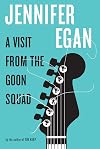
This was an astonishing book. Every single chapter from a different character's POV. Chapters written in 1st person, in 2nd person, in 3rd person. Jumping around in time, in place, in tone. Every chapter could stand alone, but they did mesh together, sometimes directly, sometimes tangentially. And despite all this high-degree-of-difficulty stuff, the writing was just FANTASTIC. Most Pulitzer Prize-winning books are big and important and boring, but this one was fun and engaging. Highly, show more highly recommended. show less
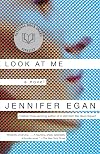
I struggled a little to get into this book, but once I did I was wholly immersed. It's fascinating to see that Egan is already, in the 1990's, thinking about the themes that will make Goon Squad and Candy House so compelling. Look At Me makes me appreciate Egan's brilliance even more; she essentially anticipates so many elements of our modern culture, the fascinations and the traumas. I found the epigraph especially illuminating, and kept the idea that whoever we are looking at, we always show more see ourselves in mind as I was reading. It added a meditative layer to my reading, a purpose that I relished. That layer, on top of the compelling stories and mysteries of Egan's characters, made this a deeply satisfying and somewhat unsettling read. show less
Four and a half stars.
Jennifer Egan's novel starts out in fairly typical New York City Novel fashion, which had me a little bit worried at first -- Oh my god, is this going to be yet another novel about sad New York City souls who pass in the night looking for that elusive meaningful connection? groan -- but Egan soon quells any fears that this is the 744th iteration of Slaves of New York or, even worse, Sex and the City.
Goon Squad is quasi-novel, quasi-short stories, going back and forth show more in time from the late 70s to a near and dystopian future. The characters recur, shown at different points in their lives, sometimes before they're even born. The backdrop to this narrative is music -- how it accompanies our lives, informs our lives, and brings back sharp, sometimes painful memories.
The novel will probably not be much beloved by readers to want to "care about the characters." Egan's characters are flawed, often selfish, and often do reprehensible things. (It is set in New York, after all.) Nonetheless, Egan's greatest accomplishment in this book is how thoroughly and richly she portrays each character, even the relatively minor ones. And despite the book's diffuse structure, Egan manages to keep the narrative strong and clear.
People have complained that the book is gimmicky, not only because of its unusual form, but because there's a chapter done entirely in PowerPoint. Yes, that's also potentially groan-worthy, but the PowerPoint chapter actually works, probably because of Egan's brilliance at getting the reader into her characters' heads. show less
Jennifer Egan's novel starts out in fairly typical New York City Novel fashion, which had me a little bit worried at first -- Oh my god, is this going to be yet another novel about sad New York City souls who pass in the night looking for that elusive meaningful connection? groan -- but Egan soon quells any fears that this is the 744th iteration of Slaves of New York or, even worse, Sex and the City.
Goon Squad is quasi-novel, quasi-short stories, going back and forth show more in time from the late 70s to a near and dystopian future. The characters recur, shown at different points in their lives, sometimes before they're even born. The backdrop to this narrative is music -- how it accompanies our lives, informs our lives, and brings back sharp, sometimes painful memories.
The novel will probably not be much beloved by readers to want to "care about the characters." Egan's characters are flawed, often selfish, and often do reprehensible things. (It is set in New York, after all.) Nonetheless, Egan's greatest accomplishment in this book is how thoroughly and richly she portrays each character, even the relatively minor ones. And despite the book's diffuse structure, Egan manages to keep the narrative strong and clear.
People have complained that the book is gimmicky, not only because of its unusual form, but because there's a chapter done entirely in PowerPoint. Yes, that's also potentially groan-worthy, but the PowerPoint chapter actually works, probably because of Egan's brilliance at getting the reader into her characters' heads. show less
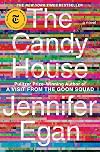
The Candy House by Jennifer Egan is a very highly recommended imaginative novel of our world, but different. The story is told through an interlocking narrative structure by multiple and inter-generational characters. This novel is brilliant!
Remember: Nothing is free! Only children expect otherwise, even as myths and fairy tales warn us: Rumpelstiltskin, King Midas, Hansel and Gretel. Never trust a candy house! It was only a matter of time before someone made them pay for what they thought show more they were getting for free.
Bix Bouton is a wildly successful tech giant of Mandala. What he is searching for now is eluding him; he is seeking a new idea or advancement. When he encounters a conversation group meeting after a talk at Columbia, he joins while disguised and finds the direction his next advancement will take. "Own Your Unconscious" allows people to download their memories giving them access to every memory they have ever had. They are stored in a Mandala Cube. This evolves into the ability to upload your memories to "the Collective Consciousness" which then gives you access to the thoughts and memories of everyone in the world who has also shared with the collective.
Millions are seduced, but not everyone. There is a problem that emerges about what to do with so much information. Additionally, not everything or every story needs to be told. There is a counter group of "eluders" who understand the temptation of the candy house and resist it while "counters" are those who track and exploit the measurable tendencies of people.
This is an ingenious, brilliantly written novel, technically accomplished and stylistically masterful. The three parts of the novel are titled: Build, Break, Drop. The chapters are all like interconnected short stories that build the narrative and plot through the voices of a variety of characters and narrative styles. Chapters range from omniscient to first person plural to a duet of voices, an epistolary chapter, an exchange of emails and a chapter of tweets. Characters from A Visit From the Goon Squad (2010) reappear here, but The Candy House is a stand-alone novel.
The characters and their children are all developed as complex individuals as the novel covers a large span of time. The voices and points-of-view of the characters are all unique. The advancement of the plot is told through the voices of all these characters in the unique chapters. It is impressive how the narrative threads in each chapter begin to coalesce to create a complex plot and compelling accomplished novel. I am in awe. One of the best books of the year!
Disclosure: My review copy was courtesy of Simon & Schuster via NetGalley.
http://www.shetreadssoftly.com/2022/03/the-candy-house.html
https://www.goodreads.com/review/show/4632834854 show less
Remember: Nothing is free! Only children expect otherwise, even as myths and fairy tales warn us: Rumpelstiltskin, King Midas, Hansel and Gretel. Never trust a candy house! It was only a matter of time before someone made them pay for what they thought show more they were getting for free.
Bix Bouton is a wildly successful tech giant of Mandala. What he is searching for now is eluding him; he is seeking a new idea or advancement. When he encounters a conversation group meeting after a talk at Columbia, he joins while disguised and finds the direction his next advancement will take. "Own Your Unconscious" allows people to download their memories giving them access to every memory they have ever had. They are stored in a Mandala Cube. This evolves into the ability to upload your memories to "the Collective Consciousness" which then gives you access to the thoughts and memories of everyone in the world who has also shared with the collective.
Millions are seduced, but not everyone. There is a problem that emerges about what to do with so much information. Additionally, not everything or every story needs to be told. There is a counter group of "eluders" who understand the temptation of the candy house and resist it while "counters" are those who track and exploit the measurable tendencies of people.
This is an ingenious, brilliantly written novel, technically accomplished and stylistically masterful. The three parts of the novel are titled: Build, Break, Drop. The chapters are all like interconnected short stories that build the narrative and plot through the voices of a variety of characters and narrative styles. Chapters range from omniscient to first person plural to a duet of voices, an epistolary chapter, an exchange of emails and a chapter of tweets. Characters from A Visit From the Goon Squad (2010) reappear here, but The Candy House is a stand-alone novel.
The characters and their children are all developed as complex individuals as the novel covers a large span of time. The voices and points-of-view of the characters are all unique. The advancement of the plot is told through the voices of all these characters in the unique chapters. It is impressive how the narrative threads in each chapter begin to coalesce to create a complex plot and compelling accomplished novel. I am in awe. One of the best books of the year!
Disclosure: My review copy was courtesy of Simon & Schuster via NetGalley.
http://www.shetreadssoftly.com/2022/03/the-candy-house.html
https://www.goodreads.com/review/show/4632834854 show less
Lists
Which house? (1)
Favourite Books (1)
Our digital age (1)
Europe (1)
Allie's Wishlist (1)
Best of 2022 (1)
MysteryCAT 2014 (1)
. (1)
Netgalley Reads (1)
My TBR (1)
Metafiction (1)
Gen X Library (2)
Overdue Podcast (2)
Obama Reads (1)
A Novel Cure (1)
Awards


You May Also Like


Associated Authors
Statistics
- Works
- 14
- Also by
- 19
- Members
- 20,225
- Popularity
- #1,073
- Rating
- 3.9
- Reviews
- 967
- ISBNs
- 277
- Languages
- 22
- Favorited
- 33


