
Claire Messud
Author of The Emperor's Children
About the Author
Claire Messud is the author of six works of fiction. A recipient of Guggenheim and Radcliffe Fellowships and the Strauss Living Award from the American Academy of Arts and Letters, she lives in Cambridge, Massachusetts, with her family.
Image credit: Claire Messud, en 2012
Works by Claire Messud
Kant's Little Prussian Head and Other Reasons Why I Write: An Autobiography in Essays (2020) 101 copies, 1 review
Messud Claire 1 copy
Associated Works
David Golder / The Ball / Snow in Autumn / The Courilof Affair (2008) — Introduction — 326 copies, 7 reviews
The Use of Man (New York Review Books Classics) (1976) — Introduction, some editions — 181 copies, 1 review
Light the Dark: Writers on Creativity, Inspiration, and the Artistic Process (2017) — Contributor — 165 copies, 5 reviews
Eat Joy: Stories and Comfort Food from 31 Celebrated Writers (2019) — Contributor — 84 copies, 3 reviews
Death by Pad Thai and Other Unforgettable Meals (2015) — Author, some editions — 84 copies, 1 review
And We Came Outside and Saw the Stars Again: Writers from Around the World on the COVID-19 Pandemic (2020) — Contributor — 16 copies
My Town: Writers on American Cities — Introduction — 3 copies
Tagged
Common Knowledge
- Canonical name
- Messud, Claire
- Birthdate
- 1966-10-08
- Gender
- female
- Education
- Yale University
University of Cambridge - Occupations
- novelist
creative writing teacher - Awards and honors
- Addison M. Metcalf Award in Literature (2002)
- Relationships
- Wood, James (husband)
- Nationality
- USA
France
Canada - Birthplace
- Greenwich, Connecticut, USA
- Places of residence
- Cambridge, Massachusetts, USA
Toronto, Ontario, Canada
Toulon, France
Members
Reviews

This is another book that seems to divide opinions into love it or hate it camps. I didn’t react that strongly to it, but it wasn’t a bad book and I enjoyed the slow burn of the narrative. I think it had a lot to say about a subject not easily made into the dramatic without venturing into the cliched. That is womens’ anger. Usually in fiction an angry woman quickly becomes a crazy one. A criminal one. A violent one. One to be feared, pitied and locked away. Maybe Nora isn’t angry show more enough to become those things, but she has a perfect right to be so. As soon as certain elements came into play, I knew what the upshot would be and the form of Sirena’s betrayal. Because we aren’t told how Nora’s anger will manifest itself, who knows, maybe she does become the madwoman in the attic instead of just the woman upstairs, but I like imagining what she might do.
Chances are though, she’ll do nothing. And if she did attempt to right the wrong or even just get a bit of her own back, I can’t imagine it will upset Sirena and Skandar. Nora’s vision of them makes me think they probably laughed behind her back a lot, which makes me angry. Granted, Sirena is an artist who dares. Who thinks big and creates out loud. Nora’s art is quiet and so introverted it might as well not even exist at all. Comparing it to Persian Miniatures is a bit of a stretch, because diorama boxes are pretty childish, as if she’s showing her students what their art projects could be if they just spent a little more time inside that Kleenex box. They suit her though and the confined life she’s led. Circumstances or not, she’s allowed this to happen. Nora’s world is small and proscribed and correct. She’s just not cut out for loud and angry and so that’s what makes me doubt she did anything at all while it possessed her.
Some reviewers wonder if the friendship Nora described was even real. For her, I think it was, and even if it was faked on Sirena’s part, the illusion of it was there and so I think that validates Nora’s feeling of betrayal. If Sirena just fed her a line and made her act the fool for the sake of her ego and her art, it was a shame Nora couldn’t spot it. The babysitting was the real indicator of Nora’s status; a servant. Also the fact that no one called her to follow up after Reza’s run-in with the bully. She should have taken the hint. She wasn’t a collaborator or a partner even if that’s how Sirena used her in the studio or over coffee. Nora yearned to be the center of someone’s life so much that she couldn’t see she was really kept at arm’s length and that was sad and frustrating at the same time. I wanted her to stop being so available to these people. To not schedule her life around them, but she couldn’t help herself. Each individual represented something she wanted for herself; to be a stunning artist, to have an attractive and accomplished husband, to have a child as luminous and sensitive as Raza. Having each of them vicariously was as close as she could come. In the end, it was her undoing. show less
Chances are though, she’ll do nothing. And if she did attempt to right the wrong or even just get a bit of her own back, I can’t imagine it will upset Sirena and Skandar. Nora’s vision of them makes me think they probably laughed behind her back a lot, which makes me angry. Granted, Sirena is an artist who dares. Who thinks big and creates out loud. Nora’s art is quiet and so introverted it might as well not even exist at all. Comparing it to Persian Miniatures is a bit of a stretch, because diorama boxes are pretty childish, as if she’s showing her students what their art projects could be if they just spent a little more time inside that Kleenex box. They suit her though and the confined life she’s led. Circumstances or not, she’s allowed this to happen. Nora’s world is small and proscribed and correct. She’s just not cut out for loud and angry and so that’s what makes me doubt she did anything at all while it possessed her.
Some reviewers wonder if the friendship Nora described was even real. For her, I think it was, and even if it was faked on Sirena’s part, the illusion of it was there and so I think that validates Nora’s feeling of betrayal. If Sirena just fed her a line and made her act the fool for the sake of her ego and her art, it was a shame Nora couldn’t spot it. The babysitting was the real indicator of Nora’s status; a servant. Also the fact that no one called her to follow up after Reza’s run-in with the bully. She should have taken the hint. She wasn’t a collaborator or a partner even if that’s how Sirena used her in the studio or over coffee. Nora yearned to be the center of someone’s life so much that she couldn’t see she was really kept at arm’s length and that was sad and frustrating at the same time. I wanted her to stop being so available to these people. To not schedule her life around them, but she couldn’t help herself. Each individual represented something she wanted for herself; to be a stunning artist, to have an attractive and accomplished husband, to have a child as luminous and sensitive as Raza. Having each of them vicariously was as close as she could come. In the end, it was her undoing. show less
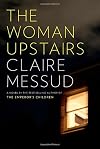
"In our lives of quiet desperation, the woman upstairs is all we are, with or without a goddamn tabby or a pesky lolloping Labrador, and not a soul registers that we are furious. We're completely invisible. I thought it wasn't true, or not true of me, but I've learned that I am no different at all. The question now is how to work it, how to use that invisibility, to make it burn." Her anger, her pain, her postponed dreams almost took me down even though the writing is skillful. I love a show more bleak book but this one found me racing through just to leave her world. The touches of Lebanese politics were welcome diversions but the tenor of this story is fury and the character unsympathetic. show less

I was on the fence with this one (3 or 4 stars) until the end.
I picked up _The Woman Upstairs_ after hearing about it in a critical article about _The Goldfinch_. TWU was recommended as a great book from this past year that most readers had not heard of. I figured I would give it a try.
_The Woman Upstairs_ centers around the theme of unfulfilled dreams. It is at times uncomfortable, and at others, encouraging. Of course, reading this book in my late 30's, trained as a teacher, without show more children but, with the nickname "Mouse", may have skewed my reaction. Maybe...
Nora, the novel's protagonist, a single, childless elementary school teacher in her late 30's, is quietly dissatisfied with her life. She is forever the friend, the dutiful daughter - rather than the artist and passionate woman she had imagined she would grow up to be. Nora's role as the forgettable "woman upstairs" began as a young girl, when she was first obsessed with living behind the good-girl mask, realizing that, once affixed, it could not be removed without people around her knowing that she wasn't necessarily "nice" all the time. Fast-forward to high school and college, where Nora dreams of becoming an artist (with all of the stereotyped glamor attached) but, due to her own fear and the need to appease those around her, never fulfills. Instead, she becomes a third grade teacher, living in the same Boston suburb she has lived in before, taking no husband, having no children, quietly (and sporadically) working on her agonizingly detailed miniatures of suffering female artists...until the Shahid family comes to town.
There are some truly trying aspects of this book, yet all serve the overall design. It is peopled with emotional cripples - both Nora and the adult Shahids- Skandar and Sirena. Nora vacillates between intelligent and observant to whiny and absurdly obtuse. I wanted to throw the book at her - a difficult feat to do while reading her story - and wondered when, if ever, she'd grow into the knowledge that she had her own worth and that the people she chose to surround herself with (the notable exception being Didi) did not act like the "dear friends" the professed to be. You watch Nora make the same blunders over and over again, feel her awkwardness in yourself (Try reading this book while trying to network/meeting new people at your brand new grad program! I second-guessed everything I did for a solid week!); a level of discomfort that I had not felt while reading for some time, yet relished when I did.
I was on the fence about this novel (and by extension Ms. Messud's storytelling and vision) until the final chapter. Boy, did it go out with a bang! Messud brings us 'round again to the sentiments expressed in the book's beginning. We feel Nora's rage justified at last, and see a scene that I generally feel to be gratuitous and cliched in books revolving around repressed women, own it's importance.
Worth the read, regardless of your desire to slap Nora. show less
I picked up _The Woman Upstairs_ after hearing about it in a critical article about _The Goldfinch_. TWU was recommended as a great book from this past year that most readers had not heard of. I figured I would give it a try.
_The Woman Upstairs_ centers around the theme of unfulfilled dreams. It is at times uncomfortable, and at others, encouraging. Of course, reading this book in my late 30's, trained as a teacher, without show more children but, with the nickname "Mouse", may have skewed my reaction. Maybe...
Nora, the novel's protagonist, a single, childless elementary school teacher in her late 30's, is quietly dissatisfied with her life. She is forever the friend, the dutiful daughter - rather than the artist and passionate woman she had imagined she would grow up to be. Nora's role as the forgettable "woman upstairs" began as a young girl, when she was first obsessed with living behind the good-girl mask, realizing that, once affixed, it could not be removed without people around her knowing that she wasn't necessarily "nice" all the time. Fast-forward to high school and college, where Nora dreams of becoming an artist (with all of the stereotyped glamor attached) but, due to her own fear and the need to appease those around her, never fulfills. Instead, she becomes a third grade teacher, living in the same Boston suburb she has lived in before, taking no husband, having no children, quietly (and sporadically) working on her agonizingly detailed miniatures of suffering female artists...until the Shahid family comes to town.
There are some truly trying aspects of this book, yet all serve the overall design. It is peopled with emotional cripples - both Nora and the adult Shahids- Skandar and Sirena. Nora vacillates between intelligent and observant to whiny and absurdly obtuse. I wanted to throw the book at her - a difficult feat to do while reading her story - and wondered when, if ever, she'd grow into the knowledge that she had her own worth and that the people she chose to surround herself with (the notable exception being Didi) did not act like the "dear friends" the professed to be. You watch Nora make the same blunders over and over again, feel her awkwardness in yourself (Try reading this book while trying to network/meeting new people at your brand new grad program! I second-guessed everything I did for a solid week!); a level of discomfort that I had not felt while reading for some time, yet relished when I did.
I was on the fence about this novel (and by extension Ms. Messud's storytelling and vision) until the final chapter. Boy, did it go out with a bang! Messud brings us 'round again to the sentiments expressed in the book's beginning. We feel Nora's rage justified at last, and see a scene that I generally feel to be gratuitous and cliched in books revolving around repressed women, own it's importance.
Worth the read, regardless of your desire to slap Nora. show less
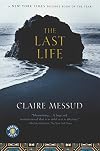
Just a terrific novel. I have no idea if "The Last Life" is in any way autobiographical, but it feels too real and is too perceptive not to be. The author gets so much exactly right here that I'm really sort of shocked that this one isn't better known. It is, in a sense, a study of various ways you can be an outsider: the book's half-American half-French main character is the granddaughter of French Algerians who fled to the south of France when everything fell apart in the sixties. She's show more got a younger brother who's severely brain-damaged and must receive constant care. After her grandfather commits a shocking criminal act, she's more on her plate than the average teenager does. I can't say I know a lot about the French experience in North Africa, but Messud carefully traces contemporary French attitudes about it while describing the way that their flight from Algiers continues to influence her characters' stifling, if materially comfortable, family life. The book prose is note-perfect and flows easily over the page, but at the same time there's something oppressive about this: the author clearly wants to demonstrate just how heavily an increasingly distant past can weigh on the present present and the ways that identities that we don't really get to choose can make us feel trapped. In other words, it's also a book about the gradations of irretrievable loss.
Of course, I admit that the book might work for me because I'm a grown-up third-culture kid with my share of warm memories for a couple of places with complicated histories that were and are beset by unjust social conditions. Like this book's protagonist, I felt I lost an irretrievable bit of myself when I left them, and like her, I know that you can't really go back. A lot of people will argue the sort of thorough examination of cultural identity that Messud performs here is really not much more than navel-gazing, and well, they might not be entirely wrong. But Sagasse's intense, complicated relationships with her parents, their disintegrating marriage, and her mother's ultimately unsuccessful bid to become fully integrated into a French family that already carries more than its share of shame and secrets are also dealt with beautifully in "The Last Life." So are the main character's first, tentative forays into sexuality and her all-too-real distress she feels about the set of increasingly difficult choices facing her. So are her description of the United States and American identity as seen from the outsides. So is the author's poignant, lovingly imagined vision of a culturally hybrid French-speaking, intercontinental Mediterranean, which, now that so much blood has been shed and so much time has past, seem unworkable, but not entirely impossible. So is everything, really. I'm a total mark for books that deal with these themes, so perhaps you should take this rave with a grain of Mediterranean sea salt. But even if I weren't, I think that there's just so much to recommend here. This one is just great. Go and get it now. show less
Of course, I admit that the book might work for me because I'm a grown-up third-culture kid with my share of warm memories for a couple of places with complicated histories that were and are beset by unjust social conditions. Like this book's protagonist, I felt I lost an irretrievable bit of myself when I left them, and like her, I know that you can't really go back. A lot of people will argue the sort of thorough examination of cultural identity that Messud performs here is really not much more than navel-gazing, and well, they might not be entirely wrong. But Sagasse's intense, complicated relationships with her parents, their disintegrating marriage, and her mother's ultimately unsuccessful bid to become fully integrated into a French family that already carries more than its share of shame and secrets are also dealt with beautifully in "The Last Life." So are the main character's first, tentative forays into sexuality and her all-too-real distress she feels about the set of increasingly difficult choices facing her. So are her description of the United States and American identity as seen from the outsides. So is the author's poignant, lovingly imagined vision of a culturally hybrid French-speaking, intercontinental Mediterranean, which, now that so much blood has been shed and so much time has past, seem unworkable, but not entirely impossible. So is everything, really. I'm a total mark for books that deal with these themes, so perhaps you should take this rave with a grain of Mediterranean sea salt. But even if I weren't, I think that there's just so much to recommend here. This one is just great. Go and get it now. show less
Lists
Awards


You May Also Like


Associated Authors
Statistics
- Works
- 16
- Also by
- 16
- Members
- 7,768
- Popularity
- #3,139
- Rating
- 3.8
- Reviews
- 312
- ISBNs
- 187
- Languages
- 14
- Favorited
- 8


