
Joanna Scott (1) (1960–)
Author of Follow Me
For other authors named Joanna Scott, see the disambiguation page.
About the Author
Joanna Scott lives in Rochester, New York.
Image credit: Joanna Scott, University of Rochester, Department of English
Works by Joanna Scott
I segreti di ieri 3 copies
Associated Works
For the Love of Books: 115 Celebrated Writers on the Books They Love Most (1999) — Contributor — 479 copies, 4 reviews
Lost Classics: Writers on Books Loved and Lost, Overlooked, Under-read, Unavailable, Stolen, Extinct, or Otherwise Out of Commission (2000) — Contributor — 319 copies, 6 reviews
A Convergence of Birds: Original Fiction and Poetry Inspired by Joseph Cornell (2001) — Contributor — 208 copies, 2 reviews
Take My Advice: Letters to the Next Generation from People Who Know a Thing or Two (2002) — Contributor — 50 copies
Black Clock 3 — Contributor — 1 copy
Tagged
Common Knowledge
- Canonical name
- Scott, Joanna
- Birthdate
- 1960
- Gender
- female
- Education
- Brown University (MA|1985)
Trinity College (BA|1983) - Occupations
- university professor
scholar of English language and literature - Organizations
- University of Rochester
- Awards and honors
- Lannan Literary Award (Fiction ∙ 1999)
MacArthur Fellowship - Relationships
- Longenbach, James (spouse)
- Nationality
- USA
- Places of residence
- Rochester, New York, USA
Darien, Connecticut, USA
Florence, Italy - Associated Place (for map)
- USA
Members
Reviews
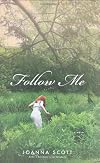
Admittedly, Follow Me is a little slow at the beginning and somewhat difficult to get into, but I implore you to keep reading because it gets better and better with each page. The style of Ms. Scott’s writing is very distinct and present from the first page. Her use of verbs creating stand-alone sentences makes it seem that it is a dream we’re reading about, an urgent dream, sometimes a nightmare, from which Sally Werner wants to run away. It’s also like Tuskee River flowing north and show more outlining Sally’s journey through life. This writing is very intriguing and it kept me wanting to read more until I became absorbed by the book and couldn’t stop even if I wanted to, which I didn’t. The story of Sally’s life, her actions driven by the need to run away from town to town, her belief that she would always be haunted by leaving her son behind, are intoxicating. Without knowing when or how, I was pulled into the whirl of that river Sally had become and even when I wasn’t reading the book, it was constantly in my thoughts. Follow Me is so many things that one could really write a whole essay on it. Not only is it a saga spanning three generations, but also a tragic love story, a depiction of how much our lives are run by chances we’re not aware of and a tribute to the finest American storytelling of which I had been so unappreciative before Scott’s book landed in my hands. I do not like the term “modern classic”, but Follow Me might very well become one. show less
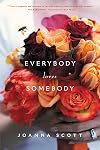
This short story collection by Joanna Scott is as gorgeous as that cover. Really, it is. I think when you can say that 8 out of the 10 stories presented here are wonderful and memorable, then that says something about the quality and originality of the writing contained within.
(As much as I love short stories (and I do), it is a very rare thing indeed when I love every story in a particular collection. This one comes really, really close to fitting that bill. I'll admit, "Yip" and "Or Else" show more didn't quite grab me, but that's OK.)
Everybody Loves Somebody is a remarkable collection of just 10 stories filled with unforgettable characters and prose rendered so beautiful that it is almost breathtaking.
Like this, from "The Queen of Sheba is Afraid of Snow," a story about an 11 year old illiterate girl living in poverty with her great-grandmother, who sells sweet potatoes and popcorn from a street cart in order to provide for the twosome. (The girl's mother is an "angel" in a religious cult.) This story is one of the very best and if I had to pick one, probably my favorite in the collection.)
"Not that the child had any sort of queenly shine to her. Her coffee skin was splotched with freckles, and her eyes usually had a startled gleam to them, as if she couldn't believe what she'd seen. Truth was, she believed too much. She believed that sinners spend eternity tied to a roasting spit over a huge bonfire; she believed her mother was a sinner, just as Granny said; she believed that when she grew up she'd have her own huckster cart and sell sweet potatoes and popcorn along Lenox Avenue; she also believed that the angels were waiting for her granny, tapping their silver slippers expectantly, though Granny never said as much and instead kept on like a mechanical soldier march, march, marching across a toy-shop floor. But the old woman had a way of moaning in her sleep that made her sound like she was saying goodbye to life. The girl didn't think far enough ahead to worry about who would take care of her when Granny died, - she wondered about that strange moment when Granny would drift from her bed up to heaven, imagined that the angels would hover outside the window blowing trumpets while the neighbors came running. The girl only hoped she'd reach the rooftop in time to see her grandmother slip through the glided door at the crest of the sky." (pg. 98)
See what I mean?
I also liked Scott's final story in this book. "The Lucite Cane," where an elderly man's cane almost becomes a character itself. How this simple cane and the presence thereof manages to ensnare so many lives is a heartbreaking tale.
As the description on the back cover says, "At a seaside wedding in 1919, a doting uncle observes the happy scene while his errant brother - the father of the bride - struggles to free himself from a locked bathroom ["Heaven and Hell"]. A young woman new to Jazz Age New York strikes up a dangerous relationship with her boss ["Stumble"]. Two old women gamble with a diplomat who counts General Franco as his friend ["Freeze-Out"]. An apartment building burns ["Across from the Shannonso"]. Children are lost ["Worry"]. Children are found. [not saying which story this is, for fear of spoilers]. A single character experiences life in multiple versions ["Or Else"]. And everybody keeps looking for someone to love."
Don't these stories sound intriguing? They are. One of the other original qualities about Everybody Loves Somebody is that the stories span an entire decade. They're not interconnected, but rather the first one starts in 1919, then the next is set in the Jazz Age, etc. One of the last few (I forget which one) ends circa 1972. I really liked that continuity throughout the book.
I think this collection would be especially good for people who claim not to like short stories for one reason or another. Yes, you might grow a little attached to some of these characters, but that only means they might stay with you longer.
Although I'd heard of Joanna Scott before picking up this collection, I only knew of her recent novel, Follow Me, which I had borrowed from the library and had to return unread before it was due. I'm glad I was introduced to her work through her short stories though. I happened to stumble on this while browsing the library's stacks. If these stories are any indication of Joanna Scott's talent, you can bet I am looking forward to reading more. show less
(As much as I love short stories (and I do), it is a very rare thing indeed when I love every story in a particular collection. This one comes really, really close to fitting that bill. I'll admit, "Yip" and "Or Else" show more didn't quite grab me, but that's OK.)
Everybody Loves Somebody is a remarkable collection of just 10 stories filled with unforgettable characters and prose rendered so beautiful that it is almost breathtaking.
Like this, from "The Queen of Sheba is Afraid of Snow," a story about an 11 year old illiterate girl living in poverty with her great-grandmother, who sells sweet potatoes and popcorn from a street cart in order to provide for the twosome. (The girl's mother is an "angel" in a religious cult.) This story is one of the very best and if I had to pick one, probably my favorite in the collection.)
"Not that the child had any sort of queenly shine to her. Her coffee skin was splotched with freckles, and her eyes usually had a startled gleam to them, as if she couldn't believe what she'd seen. Truth was, she believed too much. She believed that sinners spend eternity tied to a roasting spit over a huge bonfire; she believed her mother was a sinner, just as Granny said; she believed that when she grew up she'd have her own huckster cart and sell sweet potatoes and popcorn along Lenox Avenue; she also believed that the angels were waiting for her granny, tapping their silver slippers expectantly, though Granny never said as much and instead kept on like a mechanical soldier march, march, marching across a toy-shop floor. But the old woman had a way of moaning in her sleep that made her sound like she was saying goodbye to life. The girl didn't think far enough ahead to worry about who would take care of her when Granny died, - she wondered about that strange moment when Granny would drift from her bed up to heaven, imagined that the angels would hover outside the window blowing trumpets while the neighbors came running. The girl only hoped she'd reach the rooftop in time to see her grandmother slip through the glided door at the crest of the sky." (pg. 98)
See what I mean?
I also liked Scott's final story in this book. "The Lucite Cane," where an elderly man's cane almost becomes a character itself. How this simple cane and the presence thereof manages to ensnare so many lives is a heartbreaking tale.
As the description on the back cover says, "At a seaside wedding in 1919, a doting uncle observes the happy scene while his errant brother - the father of the bride - struggles to free himself from a locked bathroom ["Heaven and Hell"]. A young woman new to Jazz Age New York strikes up a dangerous relationship with her boss ["Stumble"]. Two old women gamble with a diplomat who counts General Franco as his friend ["Freeze-Out"]. An apartment building burns ["Across from the Shannonso"]. Children are lost ["Worry"]. Children are found. [not saying which story this is, for fear of spoilers]. A single character experiences life in multiple versions ["Or Else"]. And everybody keeps looking for someone to love."
Don't these stories sound intriguing? They are. One of the other original qualities about Everybody Loves Somebody is that the stories span an entire decade. They're not interconnected, but rather the first one starts in 1919, then the next is set in the Jazz Age, etc. One of the last few (I forget which one) ends circa 1972. I really liked that continuity throughout the book.
I think this collection would be especially good for people who claim not to like short stories for one reason or another. Yes, you might grow a little attached to some of these characters, but that only means they might stay with you longer.
Although I'd heard of Joanna Scott before picking up this collection, I only knew of her recent novel, Follow Me, which I had borrowed from the library and had to return unread before it was due. I'm glad I was introduced to her work through her short stories though. I happened to stumble on this while browsing the library's stacks. If these stories are any indication of Joanna Scott's talent, you can bet I am looking forward to reading more. show less
This story swept me away into Sally’s life and mind. The story flowed like the river that ties the characters of this saga. The writing engulfed me. This story is one that I will never forget and am deeply grateful to JoAnna Scott for writing.
Scott is the author of nine books. Of these nine books, one was a finalist for the Pulitizer Prize and two were finalists for the PEN/Faulkner Award. If these books are anything like Follow Me, I can certainly understand why. In my never-to-be-humble show more opinion, this book should be nominated, as well.
Follow Me is an epic tale of women and the hard choices that they are often faced with. This is the heartbreaking story of what happens to families when adversity infiltrates them. This is a memoir of love that was never meant to be lost, but was stolen from the lovers. This is a woman’s search for redemption for a life that she couldn’t possibly replace with other choices; the outcomes were destined and unavoidable. This is a tragic song of a man who lost what should have been his. All of this is told by a granddaughter who pieces together the remnants of fantasy with the pieces truth searching to be found.
On Sher’s “Out of Ten Scale:”
Is there any doubt, whatsover, that I am going to rate this book a 10 OUT OF 10? Of course, not! I deserves it! I only wish our bookclub read hardcovers, because this will make A GREAT BOOK CLUB discussion. show less
Scott is the author of nine books. Of these nine books, one was a finalist for the Pulitizer Prize and two were finalists for the PEN/Faulkner Award. If these books are anything like Follow Me, I can certainly understand why. In my never-to-be-humble show more opinion, this book should be nominated, as well.
Follow Me is an epic tale of women and the hard choices that they are often faced with. This is the heartbreaking story of what happens to families when adversity infiltrates them. This is a memoir of love that was never meant to be lost, but was stolen from the lovers. This is a woman’s search for redemption for a life that she couldn’t possibly replace with other choices; the outcomes were destined and unavoidable. This is a tragic song of a man who lost what should have been his. All of this is told by a granddaughter who pieces together the remnants of fantasy with the pieces truth searching to be found.
On Sher’s “Out of Ten Scale:”
Is there any doubt, whatsover, that I am going to rate this book a 10 OUT OF 10? Of course, not! I deserves it! I only wish our bookclub read hardcovers, because this will make A GREAT BOOK CLUB discussion. show less
The story of Sally Werner and her various incarnations is told by her granddaughter and namesake. Most of the story is told in Sally’s words and follows Sally from the age of 16 until her death.
One of the great pleasures of reading is discovering a new voice. Joanna Scott’s work is new to me but she’s certainly not a beginning writer. While most of Sally’s story is told in a straight forward manner, Scott is not afraid to mix things up a bit. She’ll combine narrative, internal show more thoughts, comprehension of the situation and snatches of conversation for some passages. In less skillful hands those passages could be a mess. Scott knows when to hold back.
Some books are easy reads that don’t require much attention and can be finished in an afternoon. When I read a book I often compare it to a loaf of bread or a meal trying to think of how to describe it. Follow Me is like a long lunch with many flavors incorporated into the dishes. It requires thoughtful attention and it’s so delicious you can’t help but get through it quickly. Some of Scott’s descriptions made me laugh because they are so unique. For example, “Uncle Mason’s whittling knife made a sound that reminded her of her younger brothers when they slurped soup.”
Follow Me is currently in the top 5 books I’ve read this year. It was an absolute pleasure (except for the sorrowful passages) from beginning to end. Thank you, Miriam, of the Hachette Book Group for introducing me to Joanna Scott. show less
One of the great pleasures of reading is discovering a new voice. Joanna Scott’s work is new to me but she’s certainly not a beginning writer. While most of Sally’s story is told in a straight forward manner, Scott is not afraid to mix things up a bit. She’ll combine narrative, internal show more thoughts, comprehension of the situation and snatches of conversation for some passages. In less skillful hands those passages could be a mess. Scott knows when to hold back.
Some books are easy reads that don’t require much attention and can be finished in an afternoon. When I read a book I often compare it to a loaf of bread or a meal trying to think of how to describe it. Follow Me is like a long lunch with many flavors incorporated into the dishes. It requires thoughtful attention and it’s so delicious you can’t help but get through it quickly. Some of Scott’s descriptions made me laugh because they are so unique. For example, “Uncle Mason’s whittling knife made a sound that reminded her of her younger brothers when they slurped soup.”
Follow Me is currently in the top 5 books I’ve read this year. It was an absolute pleasure (except for the sorrowful passages) from beginning to end. Thank you, Miriam, of the Hachette Book Group for introducing me to Joanna Scott. show less
Lists
Awards


You May Also Like


Associated Authors
Statistics
- Works
- 14
- Also by
- 12
- Members
- 1,005
- Popularity
- #25,666
- Rating
- 3.5
- Reviews
- 29
- ISBNs
- 89
- Languages
- 4
- Favorited
- 1