
Richard Bausch
Author of Peace
About the Author
Richard Bausch was born in Fort Benning, Georgia, in 1945. After serving in the U.S. Air Force as a survival instructor, he entered George Mason University, from which he received a B.A. in 1974. He then earned an M.F.A. degree from the University of Iowa and worked as a singer and comedian while show more writing fiction. He became a professor of English at George Mason University in 1980. His work includes the novels Real Presence, I Don't Care If I Never Get Back, The Last Good Time, Mr. Field's Daughter, and Violence. He has also published two collections of short stories, Spirits and Other Stories and The Fireman's Wife and Other Stories. He was shortlisted for the 2015 Bad S-x in Fiction Award. for his title Before, During, After. (Bowker Author Biography) show less
Image credit: ©Mathieu Bourgois
Works by Richard Bausch
What Feels Like the World 2 copies
Rare and Endangered Species 1 copy
Associated Works
The Scribner Anthology of Contemporary Short Fiction: Fifty North American American Stories Since 1970 (1999) — Contributor — 586 copies, 4 reviews
The Vintage Book of Contemporary American Short Stories (1994) — Contributor — 548 copies, 2 reviews
The Art of the Story: An International Anthology of Contemporary Short Stories (1999) — Contributor — 394 copies, 5 reviews
The Workshop: Seven Decades of the Iowa Writers Workshop - 43 Stories, Recollections, & Essays on Iowa's Place in Twentieth-Century American Literature (1999) — Contributor — 197 copies, 1 review
The Ecco Anthology of Contemporary American Short Fiction (2008) — Contributor — 140 copies, 2 reviews
The Literary Lover: Great Stories of Passion and Romance (1993) — Contributor — 55 copies, 2 reviews
The Other Side of Heaven: Post-War Fiction by Vietnamese and American Writers (1995) — Contributor — 43 copies
Tagged
Common Knowledge
- Canonical name
- Bausch, Richard
- Birthdate
- 1945-04-18
- Gender
- male
- Education
- George Mason University (BA)
University of Iowa (MFA | Creative Writing) - Occupations
- novelist
short story writer
poet - Organizations
- Fellowship of Southern Writers
University of Memphis - Awards and honors
- PEN/Malamud Award (2004)
Hillsdale Award for Fiction (1991)
American Academy of Arts and Letters Academy Award (Literature ∙ 1993)
Moss Chair of Excellence (English ∙ University of Memphis)
National Endowment for the Arts Fellowship
Guggenheim Fellowship (show all 7)
Lila Wallace-Reader’s Digest Writer’s Award - Relationships
- Bausch, Robert (brother)
- Nationality
- USA
- Birthplace
- Fort Benning, Georgia, USA
- Places of residence
- Fort Benning, Georgia, USA
Washington, D.C., USA - Associated Place (for map)
- USA
Members
Reviews
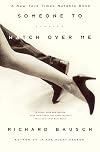
At their best, the stories of Richard Bausch capture lives in extreme situations, which doesn’t always show people at their best but often scrapes away whatever masks we wear and reveals truths, beautiful or ugly. Of course an extreme situation need not be one of violence, though it is in “Valor,” “Fatality,” and “Two Altercations.” It might be a dinner at a fine restaurant celebrating a couple’s first anniversary, as in the title story, “Someone to Watch Over Me.” The show more latter situation becomes extreme if the ancillaries are just right, and in this case they most definitely are. This story is especially fascinating because our sympathies are almost entirely with one character through much of the story but then somehow begin to shift until by the end they are almost entirely with the other character. That’s a remarkable feat. But just one of many that arise in this fine collection.
I’d like to say that every story here is exceptional, but of course even in a fine collection some will strike different readers as more exceptional than others. For me, apart from the title story, the two that stood out most were “Glass Meadow” and “Par.” The latter, in particular, has a very weak central character, deliberately so. You might suppose that might make the story collapse in upon itself. It doesn’t. Here Bausch takes his weak character through a kind of dark night of the soul (a recurring theme, perhaps). And the character emerges intact, altered surely but intact.
I might have chosen “Nobody in Hollywood”, the final story in the collection, as my favourite. But that story (exceptional though it is) is so different from those that precede it that it almost feels like it should be in a different book. Or, perhaps a better way of looking at it, it suggests that there is much more to come from this writer, all of it well worth reading. show less
I’d like to say that every story here is exceptional, but of course even in a fine collection some will strike different readers as more exceptional than others. For me, apart from the title story, the two that stood out most were “Glass Meadow” and “Par.” The latter, in particular, has a very weak central character, deliberately so. You might suppose that might make the story collapse in upon itself. It doesn’t. Here Bausch takes his weak character through a kind of dark night of the soul (a recurring theme, perhaps). And the character emerges intact, altered surely but intact.
I might have chosen “Nobody in Hollywood”, the final story in the collection, as my favourite. But that story (exceptional though it is) is so different from those that precede it that it almost feels like it should be in a different book. Or, perhaps a better way of looking at it, it suggests that there is much more to come from this writer, all of it well worth reading. show less
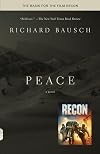
Richard Bausch's PEACE (2008) is a novel of WWII, narrowly focused on three American soldiers, recent witnesses to the cold blooded murder of a woman, perpetrated by their sergeant. The three - Corporal Robert Marson and two Privates, Joyner and Asch - are sent on a scouting mission up the icy slopes near Monte Casino, guided by an old Italian named Angelo, who, in his dark, cowled clothing, might easily be seen as the Angel of Death.
While struggling up the mountain, the three argue about show more whether to report their sergeant, an issue which becomes less important, perhaps even moot, as they encounter signs of the retreating German Army, and come under sniper fire. Bits and pieces of the men's post-war lives emerge gradually, adding depth and meaning to their dark and dangerous trek, a kind of long day's journey into night.
I was totally absorbed, caught up, in this narrative of one infinitesimal sliver of the much larger horror of the war. I was reminded of so many other novels of war - books like William Wharton's A MIDNIGHT CLEAR, or, more recently, Nick Arvin's ARTICLES OF WAR, both set during WWII; and an early novel of Vietnam, David Halberstam's ONE VERY HOT DAY.
The three main characters here argue and fight; they discuss death and faith. Asch, a Jew, says that all religions are simply -
"... trying to explain the one thing. Why we have to die ... Every single religion. I think they all exist not necessarily because there's a God, but because there's death. They're all trying to explain that away somehow."
A slight book at under 170 pages, PEACE is nevertheless a deeply important one, in its dramatic, thoughtful treatment of the important issues of faith, mortality and fundamental human decency. My highest recommendation.
- Tim Bazzett, author of the Cold War memoir, SOLDIER BOY: AT PLAY IN THE ASA show less
While struggling up the mountain, the three argue about show more whether to report their sergeant, an issue which becomes less important, perhaps even moot, as they encounter signs of the retreating German Army, and come under sniper fire. Bits and pieces of the men's post-war lives emerge gradually, adding depth and meaning to their dark and dangerous trek, a kind of long day's journey into night.
I was totally absorbed, caught up, in this narrative of one infinitesimal sliver of the much larger horror of the war. I was reminded of so many other novels of war - books like William Wharton's A MIDNIGHT CLEAR, or, more recently, Nick Arvin's ARTICLES OF WAR, both set during WWII; and an early novel of Vietnam, David Halberstam's ONE VERY HOT DAY.
The three main characters here argue and fight; they discuss death and faith. Asch, a Jew, says that all religions are simply -
"... trying to explain the one thing. Why we have to die ... Every single religion. I think they all exist not necessarily because there's a God, but because there's death. They're all trying to explain that away somehow."
A slight book at under 170 pages, PEACE is nevertheless a deeply important one, in its dramatic, thoughtful treatment of the important issues of faith, mortality and fundamental human decency. My highest recommendation.
- Tim Bazzett, author of the Cold War memoir, SOLDIER BOY: AT PLAY IN THE ASA show less
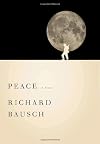
The intense existential doubt precipitated by moments of life and death struggle, catastrophic moral choice, and, yes, the peace that passeth understanding meld in this frighteningly clear and poignant tale. It is 1944, the Italian campaign, and three men are tasked, along with an elderly Italian guide, to scout up a low mountain in order to ascertain what forces of retreating Germans lie ahead. Go up a mountain and come back down. If that isn’t the basis of an archetypical narrative arc, show more I don’t know what is. Simple. But that stripped down symbolism and its corollaries reverberates throughout this haunting story.
Of course the three GIs are carrying far more than their packs. Bausch masterfully flashes back to their time before the landing, and in the case of one, Corporal Robert Marson, to his life in a suburb of Washington D.C. It is more than fear for their lives though that burdens them. An incident has occurred shortly before they are ordered out on this reconnaissance. That incident and their deliberation as to how to respond to it sets the moral choice before them. As if that weren’t enough, they find themselves encountering, from a distance, the slaughter of Jews by the retreating German forces, and on their return journey, the very real threat of death dealt by an unseen sniper.
Bausch’s writing here is so taut, so fully under control, so pitch perfect, that you will find your pace through the story to be almost breathless. This is fine writing indeed. And though it is a short novel, it feels replete. Highly recommended. show less
Of course the three GIs are carrying far more than their packs. Bausch masterfully flashes back to their time before the landing, and in the case of one, Corporal Robert Marson, to his life in a suburb of Washington D.C. It is more than fear for their lives though that burdens them. An incident has occurred shortly before they are ordered out on this reconnaissance. That incident and their deliberation as to how to respond to it sets the moral choice before them. As if that weren’t enough, they find themselves encountering, from a distance, the slaughter of Jews by the retreating German forces, and on their return journey, the very real threat of death dealt by an unseen sniper.
Bausch’s writing here is so taut, so fully under control, so pitch perfect, that you will find your pace through the story to be almost breathless. This is fine writing indeed. And though it is a short novel, it feels replete. Highly recommended. show less

Richard Bausch's REBEL POWERS is novel that builds slowly but surely with a tense family dynamic which seizes you early on and will keep you reading late into the night. Or at least that was how it affected me. The Boudreauxs are an Air Force family who fall on hard times, father Daniel, a decorated 20-year veteran who returned from an ordeal as a POW in Vietnam deeply changed. Feeling his wife's affections slipping away, he makes some bad decisions, writes some bad checks, and ends up with show more a dishonorable discharge and is sent off to hard labor in a federal prison in remote north east Wyoming. And no, these are not spoilers. You learn all this very early in the book. The story is set in the late sixties against the backdrop of war protests, riots and the RFK and MLK assassinations. Daniel's family follow him all the way across the country from Virginia to settle in a boarding house in Wilson's Creek, Wyoming, and await his release. On the train they meet the mysterious and beautiful Penny, who will figure deeply into the further dissolution this unlucky family. Seventeen year-old Thomas falls under the spell of this young woman, who is flawed both physically and psychically. The plot thickens and quickens at a pace that is nothing less than perfect. Thomas, who is the narrator of the tale, telling it decades later, is forced to grow up quickly, making for a most unique coming-of-age story.
This is a hell of a good book. It brought to mind another more recent novel about a military family in the Vietnam era, Tim Farrington's wonderful LIZZIE'S WAR. But Bausch's book is its own kind of animal. I've known of Bausch's work for many years, but this is the first of his many books I have read. I'm glad I did, and you can bet it will not be the last. This guy knows how to tell a story, and creates characters so real you'll begin to think you know them from another life. Very highly recommended. show less
This is a hell of a good book. It brought to mind another more recent novel about a military family in the Vietnam era, Tim Farrington's wonderful LIZZIE'S WAR. But Bausch's book is its own kind of animal. I've known of Bausch's work for many years, but this is the first of his many books I have read. I'm glad I did, and you can bet it will not be the last. This guy knows how to tell a story, and creates characters so real you'll begin to think you know them from another life. Very highly recommended. show less
Lists
Awards


You May Also Like


Associated Authors
Statistics
- Works
- 37
- Also by
- 25
- Members
- 1,774
- Popularity
- #14,512
- Rating
- 3.8
- Reviews
- 53
- ISBNs
- 115
- Languages
- 3
- Favorited
- 7