
Russell Banks (1940–2023)
Author of Cloudsplitter
About the Author
The oldest of four children, Russell Banks spent his childhood and adolescence in New Hampshire and Eastern Massachusetts. His blue collar, working class background is strongly reflected in his writing. The first in his family to attend college, Banks studied at Colgate University and later show more graduated Phi Beta Kappa from the University of North Carolina, at Chapel Hill. While he was establishing himself as a writer, Banks spent time as a plumber, shoe salesman, and a window dresser. Banks's titles include Searching for Survivors, Family Life, Hamilton Stark, The New World, The Book of Jamaica, Trailerpark, The Relation of My Imprisonment, Continental Drift, Success Stories, Affliction, The Sweet Hereafter and Dreaming Up America. Banks has also written numerous poems, stories, and essays. Banks is the recipient of several awards and prizes. Among his accolades are the St. Lawrence Award for Short Fiction, the John Dos Passos Award, and the Literature Award from the American Academy of Arts and Letters. In 1986, Continental Drift was a finalist for the Pulitzer Prize. (Bowker Author Biography) show less
Image credit: Russell Banks, 2012
Works by Russell Banks
Sarah Cole: A Type of Love Story (in The Best American Short Stories of the Eighties - RAVENEL) 2 copies
Russel Banks : Coffret en 3 volumes : Sous le règne de Bone ; De beaux lendemains ; American Darling (2008) 2 copies
Plains of Abraham 1 copy
On the Road [screenplay] 1 copy
Spirt of the River 1 copy
Το μαγικό βασίλειο 1 copy
Μια άλλη γλυκιά διάσταση 1 copy
Associated Works
The Story and Its Writer: An Introduction to Short Fiction (1976) — Contributor — 1,218 copies, 3 reviews
The Scribner Anthology of Contemporary Short Fiction: Fifty North American American Stories Since 1970 (1999) — Contributor — 587 copies, 4 reviews
Writers on Writing: Collected Essays from the New York Times (2001) — Contributor — 485 copies, 5 reviews
For the Love of Books: 115 Celebrated Writers on the Books They Love Most (1999) — Contributor — 479 copies, 4 reviews
You've Got to Read This: Contemporary American Writers Introduce Stories that Held Them in Awe (1994) — Introduction — 414 copies, 3 reviews
The Art of the Story: An International Anthology of Contemporary Short Stories (1999) — Contributor — 395 copies, 5 reviews
The Art of the Tale: An International Anthology of Short Stories (1986) — Contributor — 381 copies, 3 reviews
Lost Classics: Writers on Books Loved and Lost, Overlooked, Under-read, Unavailable, Stolen, Extinct, or Otherwise Out of Commission (2000) — Contributor — 319 copies, 6 reviews
The Condé Nast Traveler Book of Unforgettable Journeys: Great Writers on Great Places (2007) — Contributor — 280 copies, 5 reviews
Burn This Book: PEN Writers Speak Out on the Power of the Word (2009) — Contributor — 217 copies, 3 reviews
The Ecco Anthology of Contemporary American Short Fiction (2008) — Contributor — 141 copies, 2 reviews
Novel History: Historians and Novelists Confront America's Past and Each Other (2001) — Contributor — 139 copies, 1 review
Who's Writing This? Notations on the Authorial I, with Self-Portraits {not Antæus} (1995) — Contributor — 76 copies
The Best of the Best American Mystery Stories: The First Ten Years (2014) — Contributor — 39 copies, 1 review
High Infidelity: 24 Great Short Stories About Adultery by Some of Our Best Contemporary Authors (1997) — Contributor — 33 copies
The Hurly Burly and Other Stories (2021) — Preface, some editions; Editor, some editions — 14 copies
Antaeus No. 64/65, Spring/Autumn 1990 - Twentieth Anniversary Issue (1990) — Contributor — 14 copies
Antaeus No. 73/74, Spring 1994 - Who’s Writing This: Notations on the Authorial I {magazine} (1994) — Contributor — 6 copies
Truck 21, A 50th Birthday Celebration For Jonathan Williams — Contributor — 1 copy
Christmas 1968 : 14 poets — Contributor — 1 copy
Fire Exit 4 — Contributor — 1 copy
Tagged
Common Knowledge
- Canonical name
- Banks, Russell
- Legal name
- Banks, Russell Earl
- Birthdate
- 1940-03-28
- Date of death
- 2023-01-08
- Gender
- male
- Education
- University of North Carolina, Chapel Hill (BA|1967)
- Occupations
- fiction writer
poet
professor - Organizations
- Princeton University
International Parliament of Writers (President) - Awards and honors
- American Academy of Arts and Letters (Literature, 1998)
American Academy of Arts and Letters Academy Award (Literature, 1986)
State Author of New York/Edith Wharton Citation of Merit (2004-06)
Commonwealth Award (2011)
Thornton Wilder Prize (2008)
Anisfield-Wolf Book Award (1998) (show all 9)
John Dos Passos Prize (1985)
St Lawrence Award 91975)
Artist-in-Residence, University of Maryland - Agent
- Ellen Levine
- Relationships
- Twichell, Chase (wife)
- Cause of death
- cancer
- Nationality
- USA
- Birthplace
- Newton, Massachusetts, USA
- Places of residence
- Newton, Massachusetts, USA
New York, USA - Place of death
- Saratoga Springs, New York, USA
- Associated Place (for map)
- New York, USA
Members
Reviews
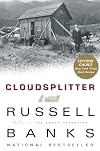
It took me a long time to get up the energy to read this 750 page historical fiction novel about the abolitionist/terrorist/martyr John Brown, but I ended up glad I did. Russell Banks is an excellent writer and had me completely immersed in this family's life and times. The focus of the book is actually Owen Brown, the third son of John Brown. When most people think of this family, they probably think of their time in Kansas and the fight between those who wanted Kansas to be a free state show more and those who wanted in to be a slave state. And then, of course, the raid on Harpers Ferry. But Banks, instead, explores the growth of the family and their time in the Northeast, meeting other abolitionists, codifying their beliefs, and just trying to make ends meet as a large, poor family.
I really liked this approach. I thought it was so interesting to imagine how John Brown and his family came to their beliefs during a time when it was not the norm to actively crusade for an end to slavery. Banks spends 600 pages on this time and a mere 150 on the final, famous events in Kansas and Harpers Ferry. It made the novel unique and presented a more nuanced view of John Brown and his family/followers.
I don't think this book will be for everyone, but if you have an interest in Civil War era, I think it is well worth your time. show less
I really liked this approach. I thought it was so interesting to imagine how John Brown and his family came to their beliefs during a time when it was not the norm to actively crusade for an end to slavery. Banks spends 600 pages on this time and a mere 150 on the final, famous events in Kansas and Harpers Ferry. It made the novel unique and presented a more nuanced view of John Brown and his family/followers.
I don't think this book will be for everyone, but if you have an interest in Civil War era, I think it is well worth your time. show less
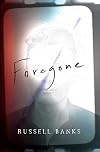
Leo Fife, a renowned documentary film maker, was dying. Malcolm MacLeod, a former student of Leo's, had assembled a film crew in Leo's Montreal living room to film the final interview. Whose idea it was is a moot point; for Leo it's an opportunity to define himself and his work for posterity; for Malcolm it's a way to seal his won reputation as the designated successor.
Malcolm was ready with twenty-five prepared questions. It soon became apparent though that Leo was having none of it. Seated show more in his wheelchair in the darkened room, Leo started talking. Forget his film exposing the secret American testing of Agent Orange in Canada. Forget his film about the bishop caught at the Ottawa airport with a computer full of child pornography*. Leo wanted to right back to his childhood in a working class commuter town near Boston.
He was adamant that his wife Emma be in the room sitting behind him throughout. What followed was Leo's life story, recounted to the camera as a confession to his wife. He would not be dissuaded.
The pain and his memories - regardless of how befuddled and distorted they have been made by the drugs that are supposed to wage war against his cancer and mask his pain - are the only evidence he has to prove that he has not yet died. His pain and his memories confirm his ongoing existence. He needs no one to witness his pain. No one can. But his memories cannot exist unless they are heard and overheard.
Is it a betrayal of their life together? Is it true? Is Leo's life built on betrayals of friends, family, and the country he and sixty thousand others left during the Vietnam war?
Banks's writing here is visual, like a film. He does a masterful job of balancing Leo's perceived memories with his present day terminal self, and the voracious demands of the film crew. At more than eighty years of age, this may well be Banks's meditation on his own mortality. This is the tenth book of his I've read; it may well be his best.
________________________
* Both these scenarios are true. The bishop's name has been changed in the novel. show less
Malcolm was ready with twenty-five prepared questions. It soon became apparent though that Leo was having none of it. Seated show more in his wheelchair in the darkened room, Leo started talking. Forget his film exposing the secret American testing of Agent Orange in Canada. Forget his film about the bishop caught at the Ottawa airport with a computer full of child pornography*. Leo wanted to right back to his childhood in a working class commuter town near Boston.
He was adamant that his wife Emma be in the room sitting behind him throughout. What followed was Leo's life story, recounted to the camera as a confession to his wife. He would not be dissuaded.
The pain and his memories - regardless of how befuddled and distorted they have been made by the drugs that are supposed to wage war against his cancer and mask his pain - are the only evidence he has to prove that he has not yet died. His pain and his memories confirm his ongoing existence. He needs no one to witness his pain. No one can. But his memories cannot exist unless they are heard and overheard.
Is it a betrayal of their life together? Is it true? Is Leo's life built on betrayals of friends, family, and the country he and sixty thousand others left during the Vietnam war?
Banks's writing here is visual, like a film. He does a masterful job of balancing Leo's perceived memories with his present day terminal self, and the voracious demands of the film crew. At more than eighty years of age, this may well be Banks's meditation on his own mortality. This is the tenth book of his I've read; it may well be his best.
________________________
* Both these scenarios are true. The bishop's name has been changed in the novel. show less
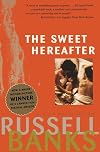
The day didn't begin with much snow, but Dolores Driscoll knew it would grow in strength as the morning wore on. She'd driven the children of Sam Dent to and from school for years, in both good and bad weather, so she understood the potential dangers of the snow. That day, something surprised her in the road, she veered off course and over a the drop into Jones Brook.
Told from the points of view of four different characters, "The Sweet Hereafter" examines a small town as it attempts to cope show more with the loss of so many lives and who to blame for such an act. Dolores Driscoll recounts the morning of the school bus accident; Billy Ansel was following the bus, watching his children as the contentedly rode to school; Mitchell Stephens, Esq., smells a lawsuit in the air and wants to be the one to gather the folks of Sam Dent into a army of victims; Nichole Burnell, a young girl now bound to a life in a wheelchair, is the one person upon whom the future of the town lies. It's remarkable storytelling, delving into the darker side of small-town life, with each of the characters surviving his or her own tragedies, separate from the accident, and yet they still find the strength to rise above something potentially even more devastating than the accident itself. A fantastic book. show less
Told from the points of view of four different characters, "The Sweet Hereafter" examines a small town as it attempts to cope show more with the loss of so many lives and who to blame for such an act. Dolores Driscoll recounts the morning of the school bus accident; Billy Ansel was following the bus, watching his children as the contentedly rode to school; Mitchell Stephens, Esq., smells a lawsuit in the air and wants to be the one to gather the folks of Sam Dent into a army of victims; Nichole Burnell, a young girl now bound to a life in a wheelchair, is the one person upon whom the future of the town lies. It's remarkable storytelling, delving into the darker side of small-town life, with each of the characters surviving his or her own tragedies, separate from the accident, and yet they still find the strength to rise above something potentially even more devastating than the accident itself. A fantastic book. show less
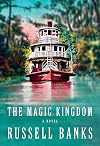
Land speculation, especially in Florida, is one of those great American obsessions. Link it to what that land was in the past, and it’s tragic.
It’s 1971, and eighty-one year old Harley Mann has started recording his life story onto reel to reel tapes. Banks sets up the conceit that he has found these tapes almost twenty years later, and got lost in the saga they have to tell, as does the actual reader of his book.
Young Harley had been brought to the Shaker colony of New Bethany in show more Florida as a young boy. It was an agrarian utopia of seven thousand acres. Here Harley learned order, the joy of work well done, agronomy, and bee keeping, along with getting a basic education.
As in all Shaker communities, men and women were segregated. That wasn’t a problem initially, but as Harley grew older, the idea of life long celibacy held no appeal whatsoever. Sent out into the wider world on supply missions, he saw a whole other side of life.
Harley fell in love, or thought he did, with a tubercular young woman who visited the colony for rest periods from time to time. He thought his mentor Elder John was also in love with her, leading to friction in what had previously been a rewarding relationship with John.
However, John also is not what he seems.
The Shaker colony eventually suffered a colony collapse. What happens to its members, and most importantly to the land itself, is Harley’s nagging obsession, as he sits on his porch all those years later.
Banks’ books always reveal the underbelly of American life in one way or another, and this is no exception. This one also reveals his regret at what was and is happening to his country. show less
It’s 1971, and eighty-one year old Harley Mann has started recording his life story onto reel to reel tapes. Banks sets up the conceit that he has found these tapes almost twenty years later, and got lost in the saga they have to tell, as does the actual reader of his book.
Young Harley had been brought to the Shaker colony of New Bethany in show more Florida as a young boy. It was an agrarian utopia of seven thousand acres. Here Harley learned order, the joy of work well done, agronomy, and bee keeping, along with getting a basic education.
As in all Shaker communities, men and women were segregated. That wasn’t a problem initially, but as Harley grew older, the idea of life long celibacy held no appeal whatsoever. Sent out into the wider world on supply missions, he saw a whole other side of life.
Harley fell in love, or thought he did, with a tubercular young woman who visited the colony for rest periods from time to time. He thought his mentor Elder John was also in love with her, leading to friction in what had previously been a rewarding relationship with John.
However, John also is not what he seems.
The Shaker colony eventually suffered a colony collapse. What happens to its members, and most importantly to the land itself, is Harley’s nagging obsession, as he sits on his porch all those years later.
Banks’ books always reveal the underbelly of American life in one way or another, and this is no exception. This one also reveals his regret at what was and is happening to his country. show less
Lists
Awards


You May Also Like


Associated Authors
Statistics
- Works
- 40
- Also by
- 46
- Members
- 11,902
- Popularity
- #1,974
- Rating
- 3.8
- Reviews
- 331
- ISBNs
- 389
- Languages
- 12
- Favorited
- 40


