
Pete Dexter
Author of Paris Trout
About the Author
Novelist, journalist, and poet Pete Dexter was born in Pontiac, Michigan, in 1943. As a student at the University of South Dakota, where he attended on and off for ten years, he wrote poetry and won a grant from the National Endowment for the Arts. After graduating in 1970, he found work as a show more newspaper reporter. While working as a columnist for the Philadelphia Daily News, Dexter was nearly beaten to death by readers who disapproved of a piece he wrote about a drug-related murder. That experience helped propel him into fiction writing, and in 1984, he published God's Pocket. Dexter won a National Book Award in 1988 for his novel Paris Trout, a book that exemplifies his characteristic blending of humor and violence. As a journalist, his work has also appeared in such periodicals as Esquire and Playboy. Paper Trails, published in 2007, is a compilation of columns he wrote for the Philadelphia Daily News and The Sacramento Bee from the 1970s to the 1990s. He also wrote the novel Spooner in 2009. (Bowker Author Biography) show less
Works by Pete Dexter
Paper Trails: True Stories of Confusion, Mindless Violence, and Forbidden Desires, a Surprising Number of Which Are Not About Marriage (2007) 127 copies, 4 reviews
Così si muore a God's Pocket 1 copy
Dexter Pete 1 copy
Associated Works
Tagged
Common Knowledge
- Canonical name
- Dexter, Pete
- Birthdate
- 1943-07-22
- Gender
- male
- Education
- University of South Dakota (BA|1970)
- Occupations
- reporter (newspaper)
columnist
novelist
professor
screenwriter - Organizations
- University of South Dakota
Sacramento Bee
Seattle Post-Intelligencer
Philadelphia Daily News
Palm Beach Post - Awards and honors
- National Book Award (1988)
- Agent
- Esther Newberg (International Creative Management)
- Nationality
- USA
- Birthplace
- Pontiac, Michigan, USA
- Places of residence
- Pontiac, Michigan, USA
Whidby Island, Washington, USA
Milledgeville, Georgia, USA
Vermillion, South Dakota, USA - Associated Place (for map)
- USA
Members
Discussions
152. Deadwood by Pete Dexter in Backlisted Book Club (March 2022)
A bed in the middle of a glass floor! Crime novel and movie. in Name that Book (May 2018)
Reviews
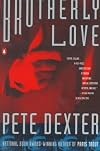
Brotherly Love has one of the most gripping, disturbing, and violent beginnings I’ve read. The violence and menace never abate throughout the story. It’s not a bang-bang mindless violence, but a grinding, wrenching threat that bursts into blackness and dissipates, until it happens again. Pete Dexter is so skillful that he keeps the tension alive the entire time.
Peter and Michael Flood are cousins in Philadelphia thrown together as children by the death of Peter’s father. In fact both show more of their fathers have been killed because of their criminal connections. They’re a union, and organized crime, family. Michael never evolves from a greedy youngster, taking what he wants. Peter is a bright spot in the story, although he’s engulfed by the ugliness that he never really tries hard enough to escape.
Nick DiMaggio, a former boxer who owns a boxing gym over an auto repair shop, is another bright spot that Peter gravitates toward. Nick has built the life that he wants and tries to steer clear of Michael and his type. “These fuckin’ guys,” “Everywhere they go, it’s like they broke in.” But he knows he can’t avoid them forever and is going to be compelled to choose sides at some point. “Maybe three times in your life something new happens and you know the right thing to do. The rest of the time…” Michael, Peter, Nick and the other characters are expertly created and believable.
Dexter’s adeptly told story of inherited violence is leavened by a subplot of redemption and glimpses of humanity. show less
Peter and Michael Flood are cousins in Philadelphia thrown together as children by the death of Peter’s father. In fact both show more of their fathers have been killed because of their criminal connections. They’re a union, and organized crime, family. Michael never evolves from a greedy youngster, taking what he wants. Peter is a bright spot in the story, although he’s engulfed by the ugliness that he never really tries hard enough to escape.
Nick DiMaggio, a former boxer who owns a boxing gym over an auto repair shop, is another bright spot that Peter gravitates toward. Nick has built the life that he wants and tries to steer clear of Michael and his type. “These fuckin’ guys,” “Everywhere they go, it’s like they broke in.” But he knows he can’t avoid them forever and is going to be compelled to choose sides at some point. “Maybe three times in your life something new happens and you know the right thing to do. The rest of the time…” Michael, Peter, Nick and the other characters are expertly created and believable.
Dexter’s adeptly told story of inherited violence is leavened by a subplot of redemption and glimpses of humanity. show less
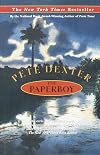
This is the third novel by Dexter I've read, and the third I loved but most likely won't read again. The prose is wonderful, dripping in humid Florida atmosphere. But it's so sad and profound that I don't know if I can stomach another go-through. Who knows.
One of the things that struck me about this book is how much is dissects the cruelness of people, even in the littlest of ways. It's especially true how men treat women in The Paperboy--even the well-meaning fellers are fairly awful.
One of the things that struck me about this book is how much is dissects the cruelness of people, even in the littlest of ways. It's especially true how men treat women in The Paperboy--even the well-meaning fellers are fairly awful.
The most satisfying book I've read in a long time.
The people that made the TV series claimed they had never heard of this book. The guy that wrote the book never had enough money to sue them. Never having seen the TV series, I have no idea how true that was to the book or if that matters, I guess it does only if you haven't seen the TV series because you can come to this book without preconceptions.
A narrative that starts and just keeps moving. It is cinematic in its execution, each frame show more clear and truthful, everything is always revealed and nothing is hidden. You may think this leaves nothing to be deduced, which is true, but what it does do is leave you to focus on the detail, for the story here is in the detail.
Unlike other stories where the main characters keep living as the incidental characters die off one by one, in this story the main characters die off as the story moves along and it is the incidental characters who reveal that they had been the main characters all along but in a way you have missed but also seen without seeing the whole time.
It put me in mind of the Homesman and The Shootist by Glendon Swarthout, another person who wrote a stories that transcended the genre.
I guess this book could also be framed as historical, but only in the way you'd frame an innocent person for a crime they never committed.
A book to be devoured and savoured at the same time, a book that sees past the morals and judgements to show people as they really are. It is the most human story I have read in a long time. show less
The people that made the TV series claimed they had never heard of this book. The guy that wrote the book never had enough money to sue them. Never having seen the TV series, I have no idea how true that was to the book or if that matters, I guess it does only if you haven't seen the TV series because you can come to this book without preconceptions.
A narrative that starts and just keeps moving. It is cinematic in its execution, each frame show more clear and truthful, everything is always revealed and nothing is hidden. You may think this leaves nothing to be deduced, which is true, but what it does do is leave you to focus on the detail, for the story here is in the detail.
Unlike other stories where the main characters keep living as the incidental characters die off one by one, in this story the main characters die off as the story moves along and it is the incidental characters who reveal that they had been the main characters all along but in a way you have missed but also seen without seeing the whole time.
It put me in mind of the Homesman and The Shootist by Glendon Swarthout, another person who wrote a stories that transcended the genre.
I guess this book could also be framed as historical, but only in the way you'd frame an innocent person for a crime they never committed.
A book to be devoured and savoured at the same time, a book that sees past the morals and judgements to show people as they really are. It is the most human story I have read in a long time. show less
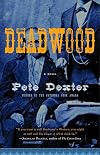
I loved this tale of Wild Bill Hickok and Colorado Charlie and Calamity Jane Cannary. I'm sure the author embroidered his story very much along with the basics of history. But that's just fine, because it makes for some very enjoyable and entertaining reading.
Colorado Charlie decided to accompany Wild Bill Hickok to Deadwood, South Dakota, just to take a road trip, more or less, in covered wagons. Charlie's brother-in-law came along, with Charlie's wife Matilda making Charlie promise to show more take care of him. They ended up staying in Deadwood, with all kinds of things going wrong, and not much going right, for any of them. Pink gin, bad local whiskey, whorehouses, gunfights, smallpox, gonorrhea, rape, wife beating, you name it, Deadwood's got it, and Dexter knows how to make you finish the book feeling sad to say goodbye to these hoary characters that he let you get close to. show less
Colorado Charlie decided to accompany Wild Bill Hickok to Deadwood, South Dakota, just to take a road trip, more or less, in covered wagons. Charlie's brother-in-law came along, with Charlie's wife Matilda making Charlie promise to show more take care of him. They ended up staying in Deadwood, with all kinds of things going wrong, and not much going right, for any of them. Pink gin, bad local whiskey, whorehouses, gunfights, smallpox, gonorrhea, rape, wife beating, you name it, Deadwood's got it, and Dexter knows how to make you finish the book feeling sad to say goodbye to these hoary characters that he let you get close to. show less
Lists
Awards


You May Also Like


Associated Authors
Statistics
- Works
- 17
- Also by
- 4
- Members
- 4,853
- Popularity
- #5,174
- Rating
- 3.8
- Reviews
- 109
- ISBNs
- 193
- Languages
- 11
- Favorited
- 18


