
E. L. Doctorow (1931–2015)
Author of Ragtime
About the Author
E. L. (Edgar Lawrence) Doctorow was born on January 6, 1931, in the Bronx, New York. He received an A.B. in philosophy in 1952 from Kenyon College and did graduate work at Columbia University. He served in the U.S. Army Signal Corps from 1953-1955. He began his career as a script reader for CBS show more Television and Columbia Pictures and as a senior editor for the New American Library. He was editor-in-chief for Dial Press from 1964 to 1969, where he also served as vice president and publisher in his last year on staff. It was at this time that he decided to write full time. He wrote novels, short stories, essays, and a play. His debut novel, Welcome to Hard Times, was published in 1960 and was adapted into a film in 1967. His other works include, Loon Lake, The Waterworks, The March, Homer and Langley, and Andrew's Brain. He won the National Book Award for Fiction in 1986 for World's Fair and the National Book Critics Circle Award for fiction in 1976 for Ragtime, which was adapted into a film in 1981 and a Broadway musical in 1998. Billy Bathgate received the PEN/Faulkner Award, the National Book Critics Circle Award, and the William Dean Howells Medal in 1990. The Book of Daniel and Billy Bathgate were also adapted into films. He received the 2013 Medal for Distinguished Contribution to American Letters for his outstanding achievement in fiction writing. He died of complications from lung cancer on July 21, 2015 at the age of 84. (Bowker Author Biography) show less
Works by E. L. Doctorow
E.L. Doctorow: Essays and Conversations (Ontario Review Press Critical Series) (1983) 16 copies, 1 review
A House on the Plains 13 copies
Jolene: A Life [short story] 2 copies
World's Fair 1 copy
Loon Lake 1 copy
Lives Of The Poets 1 copy
The Unfeeling President 1 copy
City Of God 1 copy
Homer And Langley 1 copy
Welcome To Hard Times 1 copy
Svetová výstava 1 copy
Jazero potáplic 1 copy
راكتايم 1 copy
The Book Of Daniel 1 copy
An American Tragedy 1 copy
Bad Man from Bodie 1 copy
The Hunter [short story] 1 copy
Willi [short story] 1 copy
Associated Works
A World of Ideas : Conversations With Thoughtful Men and Women About American Life Today and the Ideas Shaping Our Future (1989) — Interviewee — 603 copies, 1 review
Writers on Writing: Collected Essays from the New York Times (2001) — Contributor — 482 copies, 5 reviews
The Art of the Tale: An International Anthology of Short Stories (1986) — Contributor — 381 copies, 3 reviews
The Call of the Wild / White Fang / To Build a Fire (1998) — Introduction, some editions — 337 copies, 2 reviews
The Lincoln Anthology: Great Writers on His Life and Legacy from 1860 to Now (2008) — Contributor — 172 copies, 1 review
The Ecco Anthology of Contemporary American Short Fiction (2008) — Contributor — 140 copies, 2 reviews
Growing Up Ethnic in America: Contemporary Fiction About Learning to Be American (1999) — Contributor — 120 copies
Writing New York: A Literary Anthology (Expanded 10th-Anniversary Edition) (2008) — Contributor — 101 copies, 1 review
The Nation, 1865-1990: Selections from the Independent Magazine of Politics and Culture (1990) — Introduction — 95 copies, 1 review
Songs from Ragtime The Musical [1996 audio recording] — Foreword, some editions — 10 copies
Tagged
Common Knowledge
- Legal name
- Doctorow, Edgar Lawrence
- Birthdate
- 1931-01-06
- Date of death
- 2015-07-21
- Gender
- male
- Education
- Bronx High School of Science, New York, New York, USA
Kenyon College (AB|1952)
Columbia University - Occupations
- novelist
editor
professor - Organizations
- American Academy of Arts and Letters
New American Library
Dial Press
New York University
US Army - Awards and honors
- State Author of New York/Edith Wharton Citation of Merit (1989-91)
Kenyon Review Award for Literary Achievement (2002)
National Humanities Medal (1998)
American Academy of Arts and Letters Academy Award (1976)
F. Scott Fitzgerald Award for Outstanding Achievement in American Fiction (1999)
American Philosophical Society (2007) (show all 8)
American Academy of Arts and Letters Gold Medal for Fiction (2013)
Library of Congress Prize for American Fiction (2014) - Relationships
- Henslee, Helen (spouse)
- Cause of death
- cancer (lung)
- Nationality
- USA
- Birthplace
- The Bronx, New York, New York, USA
- Places of residence
- New York, New York, USA
New Rochelle, New York, USA
Germany - Place of death
- New York, New York, USA
- Burial location
- Woodlawn Cemetery, Bronx, New York, New York, USA
- Map Location
- USA
Members
Discussions
Group Read, November 2017: City of God in 1001 Books to read before you die (November 2017)
Reviews
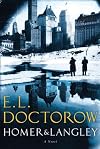
Read: Nov 2016
Rating: 5/5 stars, best of 2016
I have always been oddly fascinated by hoarding and the mindset of people who pack their homes from floor-to-ceiling with all sorts of junk so this book has been one I have meant to read for a long time. I found it incredibly moving as well as entertaining.
The story is told from the POV of Homer, who goes blind in early adulthood. He lives with his brother Langley in their childhood home; an opulent mansion in a prestigious area of New York. Homer show more chronicles his life from childhood to roughly a week before his death.
I found Doctorow's portrayel of the real life Collyer brothers to be very sympathetic and understanding. Both brothers were highly intelligent and talented. Langley had been left deeply scarred by his experiences during World War One and was devoted to his brother. It is Langley who is the compulsive hoarder as he tries to make sense of Homer's disabilites (in later life he also began to lose his hearing) and to understand the changing world.
Towards the end of the novel we really get a sense of Homer's isolation and Langley's desperate attempts to 'reach' him as he has lost his sight and hearing. Homer comments that he can no longer hear his own footsteps and feels like a ghost, that only the touch of his brother tethers him to reality.
Homer & Langley is a suberb little novel and one I know I will read again. I have also been inspired to find out more about the real brothers and while it is clear Doctorow has changed some key facts to write the book (for example in real life the brothers died in the 1940s but in the story it is implied that their deaths happen sometime in the 1970s), the book is still a wonderful portrayal of these two brilliant eccentrics. show less
Rating: 5/5 stars, best of 2016
I have always been oddly fascinated by hoarding and the mindset of people who pack their homes from floor-to-ceiling with all sorts of junk so this book has been one I have meant to read for a long time. I found it incredibly moving as well as entertaining.
The story is told from the POV of Homer, who goes blind in early adulthood. He lives with his brother Langley in their childhood home; an opulent mansion in a prestigious area of New York. Homer show more chronicles his life from childhood to roughly a week before his death.
I found Doctorow's portrayel of the real life Collyer brothers to be very sympathetic and understanding. Both brothers were highly intelligent and talented. Langley had been left deeply scarred by his experiences during World War One and was devoted to his brother. It is Langley who is the compulsive hoarder as he tries to make sense of Homer's disabilites (in later life he also began to lose his hearing) and to understand the changing world.
Towards the end of the novel we really get a sense of Homer's isolation and Langley's desperate attempts to 'reach' him as he has lost his sight and hearing. Homer comments that he can no longer hear his own footsteps and feels like a ghost, that only the touch of his brother tethers him to reality.
Homer & Langley is a suberb little novel and one I know I will read again. I have also been inspired to find out more about the real brothers and while it is clear Doctorow has changed some key facts to write the book (for example in real life the brothers died in the 1940s but in the story it is implied that their deaths happen sometime in the 1970s), the book is still a wonderful portrayal of these two brilliant eccentrics. show less
http://andalittlewine.blogspot.com/2014/01/review-andrews-brain-by-el-doctorow.h...
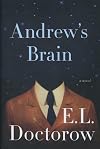
When I received an advanced copy of E.L. Doctorow's newest novel, Andrew's Brain from the fine folks at Random House, I was excited.
Although Doctorow's novels have been hit or miss for me (enjoyed Ragtime and The March, loved Book of Daniel, couldn't finished World's Fair), I am always on board with the prospect of unreliable narrators and stories about story-telling. And Andrew's Brain offers us a show more doozy.
Andrew is a cognitive scientist with a capacity of self-inflicted wounds. He describes himself as a haphazard scholar, an indifferent lover and a compulsive shoot-from-the-hip decision maker. His life work studying the chemical miracle that makes the brain into the mind has left him without the superhuman deductive abilities he thinks such a study should bestow.
One of the things I like most about Andrew's Brain, especially compared to Doctorow's previous work, is the smallness of the cast. No personified masses in this novel; Andrew tells his story to someone he calls "Doc," who might be a psychiatrist or a prison warden or both. Andrew tells us about his two wives, and his two rivals for those women- his first wife's new husband, and his second wife's ex-boyfriend. The story told through dialogue, it has all the self-deprecating humor of Portnoy's Complaint without the sexual sensationalism.
As a small jab at modern literature, my wife and I divide our two bookcases of 20th and 21st century fiction: on the left are the lonely men, on the right are the awesome women. Like Roth's canon, Doctorow's newest work is the interior space of a lonely man, the kaleidoscopic tale he tells himself within the privacy of his head to keep trudging on in the world. Without giving too much away, Andrew's wounds are real, his trauma is rooted in the modern age. Andrew's story is told haphazardly, the punchline sometimes proceeding the joke, the aftermath often shown to us before the decision. It is, I think, about the way we piece our lives together and make sense of ourselves, even when that should be impossible. show less
When I received an advanced copy of E.L. Doctorow's newest novel, Andrew's Brain from the fine folks at Random House, I was excited.
Although Doctorow's novels have been hit or miss for me (enjoyed Ragtime and The March, loved Book of Daniel, couldn't finished World's Fair), I am always on board with the prospect of unreliable narrators and stories about story-telling. And Andrew's Brain offers us a show more doozy.
Andrew is a cognitive scientist with a capacity of self-inflicted wounds. He describes himself as a haphazard scholar, an indifferent lover and a compulsive shoot-from-the-hip decision maker. His life work studying the chemical miracle that makes the brain into the mind has left him without the superhuman deductive abilities he thinks such a study should bestow.
One of the things I like most about Andrew's Brain, especially compared to Doctorow's previous work, is the smallness of the cast. No personified masses in this novel; Andrew tells his story to someone he calls "Doc," who might be a psychiatrist or a prison warden or both. Andrew tells us about his two wives, and his two rivals for those women- his first wife's new husband, and his second wife's ex-boyfriend. The story told through dialogue, it has all the self-deprecating humor of Portnoy's Complaint without the sexual sensationalism.
As a small jab at modern literature, my wife and I divide our two bookcases of 20th and 21st century fiction: on the left are the lonely men, on the right are the awesome women. Like Roth's canon, Doctorow's newest work is the interior space of a lonely man, the kaleidoscopic tale he tells himself within the privacy of his head to keep trudging on in the world. Without giving too much away, Andrew's wounds are real, his trauma is rooted in the modern age. Andrew's story is told haphazardly, the punchline sometimes proceeding the joke, the aftermath often shown to us before the decision. It is, I think, about the way we piece our lives together and make sense of ourselves, even when that should be impossible. show less
 This review was written for LibraryThing Early Reviewers.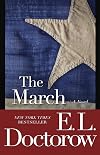
This was not war as adventure, nor war for a solemn cause, it was war at its purest, a mindless mass rage severed from any cause, ideal, or moral principle. It was as if God had decreed this characterless entanglement of brainless forces as his answer to the human presumption.
William Tecumseh Sherman’s march to the sea is, without doubt, one of the defining moments in Southern history. Doctorow picks the march up as it leaves Atlanta and cuts through Middle Georgia to Savannah, the sea, show more and then the Carolinas. The battles and the ravages of war are chronicled very realistically, and the novel has a cast of characters, both real and fictional, who cover the gamut of those affected by this bit of Civil War hell fire.
Among the most interesting are a field surgeon, a Confederate soldier masquerading as a Yankee, a freed slave girl who passes for white, a black photographer and, of course, Sherman himself. Wrede Sartorius is the field surgeon whose ice-water reactions to the war were a bit unsettling, as if he did not feel anything. His clinical interest in his patients appears to be the only interest he has, remaining as apathetic to them as individuals, as he is to others who come into his sphere. In contrast to Wrede, we have Pearl, a freed slave girl who passes for white, and shows an uncommon degree of sympathy for the distraught widow of the man who fathered her. Arly is a Confederate soldier who is awaiting execution for sleeping at his post when the Yankees come into town and cause him to be freed to fight again. His method of survival is to change uniforms and pose as a Yankee soldier, and he follows the marching troops until he meets with Calvin Harper, a free black man from Baltimore who is traveling as a photographer's assistant.
Each of these characters has a fully developed story within the story, with myriad smaller characters coming and going as the march proceeds. It was Pearl’s journey that pulled this story into a solid tale for me, as so many of the other characters came and went, serving almost as vignettes of what the war was doing to so many lives, but she remained central from the beginning to the end.
It is hard to imagine how these people survived the destruction and death around them and then managed to pick up any of the pieces and carry on with meaningful lives. Sherman was undoubtedly a brilliant general, pursuing a strategy that was designed to put an end to the war and cripple the society beyond any recovery. He did what he intended, but this novel is as much the story of the lives he touched as of his own. Interestingly, Doctorow does not paint him as hero or villain, but as a bit of both, which I suspect falls somewhere near the truth. show less
William Tecumseh Sherman’s march to the sea is, without doubt, one of the defining moments in Southern history. Doctorow picks the march up as it leaves Atlanta and cuts through Middle Georgia to Savannah, the sea, show more and then the Carolinas. The battles and the ravages of war are chronicled very realistically, and the novel has a cast of characters, both real and fictional, who cover the gamut of those affected by this bit of Civil War hell fire.
Among the most interesting are a field surgeon, a Confederate soldier masquerading as a Yankee, a freed slave girl who passes for white, a black photographer and, of course, Sherman himself. Wrede Sartorius is the field surgeon whose ice-water reactions to the war were a bit unsettling, as if he did not feel anything. His clinical interest in his patients appears to be the only interest he has, remaining as apathetic to them as individuals, as he is to others who come into his sphere. In contrast to Wrede, we have Pearl, a freed slave girl who passes for white, and shows an uncommon degree of sympathy for the distraught widow of the man who fathered her. Arly is a Confederate soldier who is awaiting execution for sleeping at his post when the Yankees come into town and cause him to be freed to fight again. His method of survival is to change uniforms and pose as a Yankee soldier, and he follows the marching troops until he meets with Calvin Harper, a free black man from Baltimore who is traveling as a photographer's assistant.
Each of these characters has a fully developed story within the story, with myriad smaller characters coming and going as the march proceeds. It was Pearl’s journey that pulled this story into a solid tale for me, as so many of the other characters came and went, serving almost as vignettes of what the war was doing to so many lives, but she remained central from the beginning to the end.
It is hard to imagine how these people survived the destruction and death around them and then managed to pick up any of the pieces and carry on with meaningful lives. Sherman was undoubtedly a brilliant general, pursuing a strategy that was designed to put an end to the war and cripple the society beyond any recovery. He did what he intended, but this novel is as much the story of the lives he touched as of his own. Interestingly, Doctorow does not paint him as hero or villain, but as a bit of both, which I suspect falls somewhere near the truth. show less
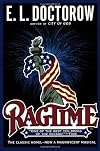
At first, I didn't know what to make of this book; for the first fifty pages or so, I felt I was being presented with a collage of history and fiction, and too many characters to make sense of the novel as a whole when it came right down to it. Without my realizing it, though, the book suddenly came together into something completely different. The collage became a tapestry, and I hated having to put the book down. In the beginning, I hadn't expected to care at any point in the novel--the show more ultra-objective style of narration had left me feeling detached; sooner than later, though, I was swept up in the way that Doctorow had woven each character's story together with the world around them.
In the end, this was an incredibly touching and humorous novel, wonderful both for its reality and an odd sort of optimism that comes out by the conclusion (at least for this reader). As a statement on history and America, as an escape, and as a piece of art, this really is a wonderful novel and a deceptively quick journey. Absolutely recommended. show less
In the end, this was an incredibly touching and humorous novel, wonderful both for its reality and an odd sort of optimism that comes out by the conclusion (at least for this reader). As a statement on history and America, as an escape, and as a piece of art, this really is a wonderful novel and a deceptively quick journey. Absolutely recommended. show less
Lists
Same Title (1)
AP Lit (1)
2022 books (1)
Unread books (1)
100 New Classics (1)
THE WAR ROOM (1)
A Novel Cure (2)
My TBR (2)
1970s (2)
1980s (2)
Fiction For Men (1)
Read (1)
Awards


You May Also Like


Associated Authors
Statistics
- Works
- 58
- Also by
- 39
- Members
- 25,172
- Popularity
- #834
- Rating
- 3.7
- Reviews
- 714
- ISBNs
- 550
- Languages
- 23
- Favorited
- 57


