
Philip Roth (1933–2018)
Author of The Plot Against America
About the Author
Philip Milton Roth was born in Newark, New Jersey on March 19, 1933. He attended Rutgers University for one year before transferring to Bucknell University where he completed a B.A. in English with highest honors in 1954. He received an M.A. from the University of Chicago in 1955. His first book, show more Goodbye, Columbus, received the National Book Award in 1960. His other books include Letting Go, When She Was Good, Portnoy's Complaint, My Life as a Man, The Ghostwriter, Zuckerman Unbound, I Married a Communist, The Plot Against America, The Facts, The Anatomy Lesson, Exit Ghost, Deception, Nemesis, Everyman, Indignation, and The Humbling. He won the National Book Critic Circle Awards in 1987 for his novel The Counterlife and in 1992 for his memoir Patrimony: A True Story. He won the PEN/Faulkner Award for Fiction in 1993 for Operation Shylock: A Confession and in 2001 for The Human Stain, the National Book Award in 1995 for Sabbath's Theater, and the Pulitzer Prize in 1998 for American Pastoral. He stopped writing in 2010. He died from congestive heart failure on May 22, 2018 at the age of 85. (Bowker Author Biography) show less
Image credit: Philip Milton Roth, on 23 mai 2007, in New York City
Series
Works by Philip Roth
Zuckerman Bound (The Ghost Writer / Zuckerman Unbound / The Anatomy Lesson / The Prague Orgy) (1985) 716 copies, 7 reviews
Philip Roth: Novels and Stories 1959-1962: Goodbye, Columbus & Five Short Stories/Letting Go (2005) 382 copies, 2 reviews
Novels 1967-1972: When She Was Good / Portnoy's Complaint / Our Gang / The Breast (2005) 367 copies, 1 review
Philip Roth: Zuckerman Bound, A Trilogy and Epilogue 1979-1985 (The Ghost Writer; Zuckerman Unbound; The Anatomy Lesson; The Prague Orgy) (2007) 279 copies
Philip Roth: Novels 1973-1977: The Great American Novel, My Life as a Man, The Professor of Desire (2006) 263 copies, 1 review
Philip Roth: Novels and Other Narratives 1986-1991 / The Counterlife / The Facts / Deception / Patrimony (2008) 153 copies, 1 review
Philip Roth: Novels 1993-1995: Operation Shylock / Sabbath's Theater (Library of America) (2010) 148 copies
Philip Roth: Novels 2001-2007: The Dying Animal / The Plot Against America / Exit Ghost (2013) 111 copies, 1 review
Bookclub-in-a-Box Discusses The Human Stain, the Novel by Philip Roth (Bookclub in a Box Discusses) (2005) 3 copies
Wie Gelegenheiten Ratgebernetzwerke strukturieren Kultursensible Untersuchung im Kontext von Innovationsprojekten in Unternehmen (2019) 3 copies
On the air : a long story 3 copies
Eli, the Fanatic [short story] 2 copies
El declive 1 copy
Il seno 1 copy
Romans, tome4 Trilogie Américaine : Pastorale Américaine - J'ai épousé un communiste - La Tâche 1 copy
Hyvästi, Columbus 1 copy
إنسان عادي 1 copy
Lidská skvrna 1 copy
Traic ʹo es 1 copy
Elév 1 copy
Sabbathovo divadlo 1 copy
Zuckerman zbavený pout 1 copy
Jako každý člověk 1 copy
Black Dogs 1 copy
The Shy Tulip Murders 1 copy
Düh 1 copy
Philip Roth 5 volume set: Portnoy's Complaint, Sabbath's Theater, Goodbye Columbus, American Pastoral, The Dying Animal (2002) 1 copy
Libby 1 copy
2004 1 copy
[Title missing] 1 copy
Rare Antique 1st Editon Our Gang Philip Roth Novel 3rd Printing Fiction [Hardcover] Philip Roth 1 copy
SOS Title Unknown 1 copy
A América de Philip Roth 2 1 copy
A América de Philip Roth 1 1 copy
Pastorale americana 1 copy
Associated Works
The Story and Its Writer: An Introduction to Short Fiction (1976) — Contributor — 1,218 copies, 3 reviews
Literature: An Introduction to Fiction, Poetry, and Drama (1995) — Contributor, some editions — 1,017 copies, 7 reviews
Perrine's Literature: Structure, Sound, and Sense (1970) — Contributor, some editions — 898 copies, 4 reviews
A Tomb for Boris Davidovich (1978) — General Editor (of series), some editions — 802 copies, 11 reviews
The World of the Short Story: A 20th Century Collection (1986) — Contributor — 514 copies, 4 reviews
Mendelssohn Is on the Roof (1960) — Afterword, some editions; Preface, some editions — 415 copies, 7 reviews
The 50 Funniest American Writers: An Anthology of Humor from Mark Twain to The Onion (2011) — Contributor — 287 copies, 3 reviews
First Fiction: An Anthology of the First Published Stories by Famous Writers (1994) — Contributor — 196 copies, 1 review
Other Men's Daughters (New York Review Books Classics) (1973) — Introduction, some editions — 165 copies, 4 reviews
An American Album: One Hundred and Fifty Years of Harper's Magazine (2000) — Contributor — 145 copies, 1 review
The Norton Anthology of American Literature, Volume 2: 1865 to Present (1979) — Contributor, some editions — 137 copies
Know the Past, Find the Future: The New York Public Library at 100 (2011) — Contributor — 133 copies, 4 reviews
The Company They Kept, Volume Two: Writers on Unforgettable Friendships (2011) — Contributor — 25 copies
Fifty Years of the American Short Story from the O. Henry Awards 1919-1970 (1970) — Contributor — 17 copies, 1 review
Fifty Years of the American Short Story from the O. Henry Awards 1919-1970, Volume 2 (1970) — Contributor — 5 copies
Meesters der vertelkunst : zevenendertig verhalen uit de moderne wereldliteratuur (1975) — Contributor — 2 copies
The Human Commitment - An Anthology of Contemporary Short Fiction — Contributor — 1 copy
32 Współczesne Opowiadania Amerykańskie - Tom II — Contributor — 1 copy
Tagged
Common Knowledge
- Canonical name
- Roth, Philip
- Legal name
- Roth, Philip Milton
- Birthdate
- 1933-03-19
- Date of death
- 2018-05-22
- Gender
- male
- Education
- Bucknell University (BA|1954)
University of Chicago (MA | English Literature | 1955) - Occupations
- novelist
- Organizations
- University of Pennsylvania
United States Army
University of Iowa
Princeton University - Awards and honors
- Emerson-Thoreau Medal (2013)
National Humanities Medal (2010)
PEN/Saul Bellow Award (2007)
Franz Kafka Prize (2001)
Pulitzer Prize (1997)
Man Book International Prize (2011) (show all 9)
Asturias Award (2012)
National Book Award (1960, 1995)
National Book Critic Circle Award (1987, 1992) - Relationships
- Bloom, Claire (domestic partner)
Bellow, Saul (teacher) - Cause of death
- heart failure
- Nationality
- USA
- Birthplace
- Newark, New Jersey, USA
- Places of residence
- Chicago, Illinois, USA
Newark, New Jersey, USA
Philadelphia, Pennsylvania, USA
Iowa City, Iowa, USA
Princeton, New Jersey, USA - Place of death
- Manhattan, New York, New York, USA
- Burial location
- Bard College Cemetery, Annandale-on-Hudson, New York, USA
- Map Location
- New Jersey, USA
Members
Discussions
Philip Roth in Legacy Libraries (January 2020)
Group Read, November 2016: Portnoy's Complaint in 1001 Books to read before you die (November 2016)
2013 Quarter 1 - Philip Roth in Monthly Author Reads (May 2013)
Romantic Novel set in New England between Librarian and Socialite girl in Name that Book (March 2013)
Reviews
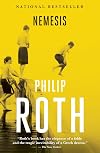
World War II is not quite over, but in the summer of 1944 there is a war of a different sort on the home front. A deadly polio epidemic is sweeping the playgrounds and streets, attacking randomly, and children, teens and adults are in iron lungs and left paralyzed or dead. No one is quite sure how polio is transmitted, and everyone is frightened:
"We were warned not to use public toilets or public drinking fountains or to swig a drink out of someone else's soda-pop bottle or to get a chill or show more to play with strangers or to borrow books from the public library or to talk on a public pay phone or to buy food from a street vendor or to eat until we had cleaned our hands thoroughly with soap and water."
Bucky Cantor, a young school teacher, is the playground director for the summer in a Jewish Newark neighborhood. After several of his playground charges get polio, Bucky wonders whether he could be doing more to protect them. He has already been feeling guilty because he was unable to enlist in the army due to his poor eyesight. Now he feels he is failing in the battle on the home front. It gets worse when his girlfriend tries to convince him to give up his job at the inner city playground and join her in the "safe" countryside as a camp counselor.
Particularly having recently experienced the covid epidemic, I found the evocation of the fear and paranoia to be very real and convincing. (I don't know when the polio vaccine became widespread, but I don't think it was available until I was a few years into elementary school. I do know there were at least two kids at my very small school in leg braces from having had polio.) It is also a very good depiction of Bucky's doubts and feelings of helplessness, and self-blame:
"He was struck by how lives diverged and by how powerless each of us is up against the force of circumstances. And where does God figure in this?"
Highly recommended
4 stars
First line: "The first case of polio came early in June, right after Memorial Day, in a poor Italian neighborhood, crosstown from where we lived." show less
"We were warned not to use public toilets or public drinking fountains or to swig a drink out of someone else's soda-pop bottle or to get a chill or show more to play with strangers or to borrow books from the public library or to talk on a public pay phone or to buy food from a street vendor or to eat until we had cleaned our hands thoroughly with soap and water."
Bucky Cantor, a young school teacher, is the playground director for the summer in a Jewish Newark neighborhood. After several of his playground charges get polio, Bucky wonders whether he could be doing more to protect them. He has already been feeling guilty because he was unable to enlist in the army due to his poor eyesight. Now he feels he is failing in the battle on the home front. It gets worse when his girlfriend tries to convince him to give up his job at the inner city playground and join her in the "safe" countryside as a camp counselor.
Particularly having recently experienced the covid epidemic, I found the evocation of the fear and paranoia to be very real and convincing. (I don't know when the polio vaccine became widespread, but I don't think it was available until I was a few years into elementary school. I do know there were at least two kids at my very small school in leg braces from having had polio.) It is also a very good depiction of Bucky's doubts and feelings of helplessness, and self-blame:
"He was struck by how lives diverged and by how powerless each of us is up against the force of circumstances. And where does God figure in this?"
Highly recommended
4 stars
First line: "The first case of polio came early in June, right after Memorial Day, in a poor Italian neighborhood, crosstown from where we lived." show less

Philip Roth is a brave author for trusting entirely to his story, relentlessly showing all of his cards at the start. There's no surprise ending here, only surprises along the way. His reveal about Coleman's past is so blunt and sudden, I thought I'd misunderstood at first. And still his story is compelling enough it doesn't matter. There is something quotable on nearly every page of this novel full of wisdom and insight about life and lives.
Since the author isn't shy with his own spoilers, show more I won't be either. Coleman clothes himself in an ulterior identity as a means of transcending societal limitations on his race. Thereafter he has a curiously adverse response to any minority group's movement to overthrow those limitations. It isn't merely disbelief in the movements' effectiveness. He finds them puerile, a childish tantrum against the laws of reality.
Coleman has progressed so far in his chosen direction that it becomes impossible for him to relate to what was, even when self-interest is at stake. Like a domesticated crow that can no longer return to the wild, his nature and identity have diverged too far to be reconciled. This theme applies as well to the other three central characters: a woman suffering from past traumas, a Vietnam veteran suffering from PTSD, and a professor caught between the country she left and one that won't accept her. All of them reject the notion of turning back, whatever their difficulties, because the identity they've embraced (or want to embrace) is more real.
I've not read Roth before, and I came to him anticipating less empathy for perspectives outside of his own background; a false impression I acquired somewhere. Only once did I wince - badly. Coleman muses about the possibility of his lover being better in bed as "a gift of the molestation" she suffered as a child. Try to read that as the character's thoughts alone. show less
Since the author isn't shy with his own spoilers, show more I won't be either. Coleman clothes himself in an ulterior identity as a means of transcending societal limitations on his race. Thereafter he has a curiously adverse response to any minority group's movement to overthrow those limitations. It isn't merely disbelief in the movements' effectiveness. He finds them puerile, a childish tantrum against the laws of reality.
Coleman has progressed so far in his chosen direction that it becomes impossible for him to relate to what was, even when self-interest is at stake. Like a domesticated crow that can no longer return to the wild, his nature and identity have diverged too far to be reconciled. This theme applies as well to the other three central characters: a woman suffering from past traumas, a Vietnam veteran suffering from PTSD, and a professor caught between the country she left and one that won't accept her. All of them reject the notion of turning back, whatever their difficulties, because the identity they've embraced (or want to embrace) is more real.
I've not read Roth before, and I came to him anticipating less empathy for perspectives outside of his own background; a false impression I acquired somewhere. Only once did I wince - badly. Coleman muses about the possibility of his lover being better in bed as "a gift of the molestation" she suffered as a child. Try to read that as the character's thoughts alone. show less
Un piccolo libro semplicemente perfetto. A mio parere uno dei Roth più riusciti in cui l'autore dipinge a colori nitidi la duplicità che alberga in ognuno di noi, la nostra insoddisfazione, la nostra tristezza, la nostra perenne ricerca di qualcos'altro.
"sono pronto a pensare che la tristezza dipenda da qualcosa dentro di me, da come non sono mai riuscito a essere quello che lr persone volevano o si aspettavano, da come non ho mai soddisfatto nessuno, neppure me stesso, da come, per quanto show more mi sia sforzato, non sono mai riuscito ad essere né una cosa né l'altra, e probabilmente non ci riuscirò mai... " show less
"sono pronto a pensare che la tristezza dipenda da qualcosa dentro di me, da come non sono mai riuscito a essere quello che lr persone volevano o si aspettavano, da come non ho mai soddisfatto nessuno, neppure me stesso, da come, per quanto show more mi sia sforzato, non sono mai riuscito ad essere né una cosa né l'altra, e probabilmente non ci riuscirò mai... " show less
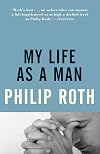
Because Peter Tarnopol (self-destructive novelist who, having won the Prix de Rome for a first novel whose high seriousness cemented him as a writer of the self-serious fifties, is desperately attempting to drag himself into the sixties with a new novel built upon the sordid details of his destructive marriage to a manipulative, soul-eating sociopath) and Nate Zuckerman, his fictional alter ego (or rather alter egos, two Zuckermans, each with a slightly different personal history, show more protagonists respectively of the two abortive short stories by Tarnopol that begin this novel)--because both of them share the same distinctive narrative voice, characterized by paragraphs of long periodic sentences (with parenthetical asides) alternating, here and there, with a blunt declarative sentence with the word "fuck" or "cunt" in it--and because this narrative voice is also the voice of every single other Roth narrator, from Portnoy to the "Philip Roth" of Operation Shylock--because, that is to say, every Roth novel is written in sentences more or less just like this one except written with more verve since I am no Philip Roth and whatever one thinks of him the guy can write--since all his narrators sound exactly alike, the metafictional conceit of My Life as a Man feels pretty much like the red herring it is.
Here Roth fictionalizes the history of his relationship with his first wife, Margaret Martinson (who married Roth in 1959, separated from him in 1963, and then, it would seem, dragged him through the purgatory of early 1960s divorce law until she died in a car crash in 1968) ostensibly to demonstrate the slipperiness and relativity of "truth," not, mind you, by narrating part of the story through the eyes of a woman whom Roth/Tarnopol/Zuckerman depicts as a demonic and possessive lunatic, but to tell the events three times, varying details of plot (his father is a Dale Carnegie-reading shoe store owner or else a bookkeeper; his brother a lapsed musician or else a human rights activist; his sister married to a couple of stock Italian stereotypes or else a Lincolnesque land developer; his "other woman" is a neurotic pill-popping heiress or else the daughter of the Zipper King) but in every case from the perspective of the wounded man, in more or less the same angry, ranting style.
Here are three versions of reality, Roth says, with a wink, and in each of them, my first wife was a monstrous, deranged succubus.
A classic case of he said, he said, he said.
The metafictional structure, then, comes off as a smokescreen, masking a sustained attempt to settle one's scores with a woman who is no longer around to defend herself. And even supposing Roth/Tarnopol/Zuckerman's crucifixion of Margaret/Maureen/Lydia is fully merited by her, the cross to which he nails her serves as a ladder to sweeping assertions about women and men in general:
How little chance that coy qualification has, not only against the sweeping and damning generalization it qualifies, but against the meaning inherent in the novel's form, which gives three versions of reality, always from the man's perspective. The phrase that comes to mind is not "unreliable narrator" but "plausible deniability."
However strangely compelling and occasionally very funny the resulting novel may be (at least I found it so, from time to time and despite myself, though some readers may well be repelled by the unremitting intensity of rage) it is also an unpleasant one. show less
Here Roth fictionalizes the history of his relationship with his first wife, Margaret Martinson (who married Roth in 1959, separated from him in 1963, and then, it would seem, dragged him through the purgatory of early 1960s divorce law until she died in a car crash in 1968) ostensibly to demonstrate the slipperiness and relativity of "truth," not, mind you, by narrating part of the story through the eyes of a woman whom Roth/Tarnopol/Zuckerman depicts as a demonic and possessive lunatic, but to tell the events three times, varying details of plot (his father is a Dale Carnegie-reading shoe store owner or else a bookkeeper; his brother a lapsed musician or else a human rights activist; his sister married to a couple of stock Italian stereotypes or else a Lincolnesque land developer; his "other woman" is a neurotic pill-popping heiress or else the daughter of the Zipper King) but in every case from the perspective of the wounded man, in more or less the same angry, ranting style.
Here are three versions of reality, Roth says, with a wink, and in each of them, my first wife was a monstrous, deranged succubus.
A classic case of he said, he said, he said.
The metafictional structure, then, comes off as a smokescreen, masking a sustained attempt to settle one's scores with a woman who is no longer around to defend herself. And even supposing Roth/Tarnopol/Zuckerman's crucifixion of Margaret/Maureen/Lydia is fully merited by her, the cross to which he nails her serves as a ladder to sweeping assertions about women and men in general:
Now I realize that it is possible to dismiss these generalizations as a manifestation of my bitterness and cynicism [this is Tarnopol, by the way, but as I have suggested above, what difference does it make?]...Well, I grant that I do not find myself feeling very 'typical' at this moment, nor am I telling this story in order to argue that my life is representative of anything; nonetheless, I am naturally interested in looking around to see how much of my experience with women has been special to me and--if you must have it that way--my pathology, and how much is symptomatic of a more extensive social malaise. And looking around, I conclude this: in Maureen and Susan I came in contact with two of the more virulent strains of a virus to which only a few women among us are immune.
Outwardly, of course, Maureen and Susan couldn't have been more dissimilar, not could either have had a stronger antipathy for the 'type' she took the other to be. However, what drew them together as women--which is to say, what drew me to them, for that is the subject here--was that in her own extreme and vivid way, each of these antipathetic originals demonstrated that sense of defenselessness and vulnerability that has come to be a mark of their sex and is often at the core of their relations with men. (172-173)
How little chance that coy qualification has, not only against the sweeping and damning generalization it qualifies, but against the meaning inherent in the novel's form, which gives three versions of reality, always from the man's perspective. The phrase that comes to mind is not "unreliable narrator" but "plausible deniability."
However strangely compelling and occasionally very funny the resulting novel may be (at least I found it so, from time to time and despite myself, though some readers may well be repelled by the unremitting intensity of rage) it is also an unpleasant one. show less
Lists
Jewish Books (12)
Fiction For Men (1)
100 New Classics (1)
2000s decade (1)
1960s (1)
1950s (1)
Movies/Shows (1)
Five star books (1)
. (1)
el (1)
Best Dystopias (1)
1970s (1)
1980s (1)
Best Satire (1)
A Novel Cure (2)
1990s (2)
Unread books (4)
Favourite Books (3)
. (2)
Deathreads (1)
BitLife (1)
. (1)
04 (1)
Erotic Fiction (1)
to get (2)
Overdue Podcast (1)
The "A" List (1)
Awards


You May Also Like


Associated Authors
Statistics
- Works
- 123
- Also by
- 80
- Members
- 74,907
- Popularity
- #169
- Rating
- 3.8
- Reviews
- 1,533
- ISBNs
- 1,739
- Languages
- 30
- Favorited
- 306


