
Written in the 1790s (though not published until some twenty years later), it's a takedown of gothic literature - or is it an evolution? In Northanger Abbey, Jane Austen pokes some fun at the unreality of gothic's clichés, as Catherine is chastised for becoming so caught up in them that she expects to find bodies and mayhem lurking behind every door instead of dull reality. But some interesting metaphorical lines can be drawn between what she's reading and what actually unfolds. Even its ending develops as a good gothic novel ought.
Catherine is the youngest of Austen's heroes, and consequently the least mature. She is practically transparent in all her feelings and hopes while she believes otherwise, which gets played for humour on a few occasions. On others she's obtuse to the undercurrents, which the narrator is kind enough to step in and highlight. It's probably the lightest of Austen's novels but it set the template for everything she would write afterwards: the well-off English middle and upper class, women in the central roles, a handsome teasing male lead. Hardly my favourite by Austen but a fun read anyway.
Catherine is the youngest of Austen's heroes, and consequently the least mature. She is practically transparent in all her feelings and hopes while she believes otherwise, which gets played for humour on a few occasions. On others she's obtuse to the undercurrents, which the narrator is kind enough to step in and highlight. It's probably the lightest of Austen's novels but it set the template for everything she would write afterwards: the well-off English middle and upper class, women in the central roles, a handsome teasing male lead. Hardly my favourite by Austen but a fun read anyway.

Rachel Cameron denies herself the ability to say no. She's at the mercy of everyone else's whim: her mother, the principle of the school where she's employed as a second grade teacher, her colleague whose frequent gifts and invitations don't actually appeal to her. Her entire life has become the property of those around her whom she doesn't want to disappoint or offend. The stress of trying to please everyone and avoid any kind of conflict, and to not be a fool, is stretching her increasingly thin until all her self-control and rationalizing can no longer contain every impulse.
It's been a long time since I read Margaret Laurence, not since I was in school. This is the first time since that I've read her as an adult, and the first time I understand her. How could any kid grasp how much growing up Rachel does in the space of one summer, making up for lost time? When the crisis arrives, it isn't a question so much of what she'll do as of who she will be. There are several wonderfully crafted callbacks in this novel: an updated sign, words spoken under anesthesia, an old photograph, a tricky heart. The one that speaks to me the most personally is that of the jester in the title. We all have a little inner jester in us, ever ready to poke some fun at our dignity, and we may as well embrace it.
In 1966 a teacher's lashing out at a student didn't have the consequences it would today. We would also be more cognizant of mental health and stress in the workplace, quicker to show more recognize the signs of tension in ourselves and others, better informed and more open to addressing them. I'm struck by the poor options women had; choices that would be challenging even today would feel practically impossible then. We also know a thing or two more about not drinking or smoking when pregnant. What never gets old is this novel's message about the need to grow up at some point, better late than never, and the mix of desperation and courage required to realize it. show less
It's been a long time since I read Margaret Laurence, not since I was in school. This is the first time since that I've read her as an adult, and the first time I understand her. How could any kid grasp how much growing up Rachel does in the space of one summer, making up for lost time? When the crisis arrives, it isn't a question so much of what she'll do as of who she will be. There are several wonderfully crafted callbacks in this novel: an updated sign, words spoken under anesthesia, an old photograph, a tricky heart. The one that speaks to me the most personally is that of the jester in the title. We all have a little inner jester in us, ever ready to poke some fun at our dignity, and we may as well embrace it.
In 1966 a teacher's lashing out at a student didn't have the consequences it would today. We would also be more cognizant of mental health and stress in the workplace, quicker to show more recognize the signs of tension in ourselves and others, better informed and more open to addressing them. I'm struck by the poor options women had; choices that would be challenging even today would feel practically impossible then. We also know a thing or two more about not drinking or smoking when pregnant. What never gets old is this novel's message about the need to grow up at some point, better late than never, and the mix of desperation and courage required to realize it. show less

These ain't your kids' fairy tale stories. Angela Carter took several well-known tales and put a modern twist on them, not always by changing their plot but by bringing the women in each of them to full life and the story closer to the present. The female leads can still be naive but they are more self-aware and not so helpless. I find it curious that rather than defy the tropes about virginity's power she seems to embrace them. Her take often defies expectations and sometimes betrays or obliterates the original's moral. She uses a strange mix of first and third person, past and present tense, to add an air of dreaminess. It helps to have some familiarity with the original versions, all easy to find on the internet or the Disney channel.
The Bloody Chamber (based on Bluebeard) - a young bride swept up by the enormous wealth of her suitor finds herself in dire straits. Through allegory it explores the notion of a groom whose true colours aren't revealed until his wedding night.
The Courtship of Mr. Lyon (based on Beauty and the Beast) - a tame story that moves the tale into the present day; no real surprises except a loose thread about the dog.
The Tiger's Bride (based on Beauty and the Beast) - another take on the same, retaining empathy for the beast with a Shrek-like twist.
Puss-in-Boots (based on Puss in Boots) - Carter is correct to highlight here, we really do not know how justified, pure or deserving the young man's admiration was.
The Erl-King (based on the folklore) show more - a woman finds herself the latest victim of a wood spirit's snare.
The Snow Child (based on The Snow-child and Snow White) - a very short allegory about a man who finds a young mistress, to his wife's displeasure.
The Lady of the House of Love (based on Sleeping Beauty) - reimagines the princess's long sleep as a vampire's extended life.
The Werewolf (based on Little Red Riding Hood) - another way in which the wolf might be conflated with her grandmother.
The Company of Wolves (based on Little Red Riding Hood) - takes the bad rap fairy tales have given wolves and dials it to 11.
Wolf-Alice (based on Little Red Riding Hood, and a bit of Alice in Wonderland?) - a feral child croses paths with a werewolf. show less
The Bloody Chamber (based on Bluebeard) - a young bride swept up by the enormous wealth of her suitor finds herself in dire straits. Through allegory it explores the notion of a groom whose true colours aren't revealed until his wedding night.
The Courtship of Mr. Lyon (based on Beauty and the Beast) - a tame story that moves the tale into the present day; no real surprises except a loose thread about the dog.
The Tiger's Bride (based on Beauty and the Beast) - another take on the same, retaining empathy for the beast with a Shrek-like twist.
Puss-in-Boots (based on Puss in Boots) - Carter is correct to highlight here, we really do not know how justified, pure or deserving the young man's admiration was.
The Erl-King (based on the folklore) show more - a woman finds herself the latest victim of a wood spirit's snare.
The Snow Child (based on The Snow-child and Snow White) - a very short allegory about a man who finds a young mistress, to his wife's displeasure.
The Lady of the House of Love (based on Sleeping Beauty) - reimagines the princess's long sleep as a vampire's extended life.
The Werewolf (based on Little Red Riding Hood) - another way in which the wolf might be conflated with her grandmother.
The Company of Wolves (based on Little Red Riding Hood) - takes the bad rap fairy tales have given wolves and dials it to 11.
Wolf-Alice (based on Little Red Riding Hood, and a bit of Alice in Wonderland?) - a feral child croses paths with a werewolf. show less

Tad Williams explores a story that takes place a thousand years before the other Osten Ard novels, when Ineluki and his brother Hakatri investigate the rumour of a dragon loose in a neighbouring mortal realm. Ineluki becomes a sort of Captain Ahab where this dragon is concerned, determined to defeat his white whale. This story has been conveyed as legend in the series already, but here we're treated to a first-hand account that shows the personalities involved and some of the undercurrents that don't make it into the legend. I thought we might get an interesting revelation or two, but there's only a teasing hint about the Tinukeday'ya's relationship to the Garden and the Dreaming Sea.
Foremost among those is Pamon Kes, who of course gets no future mention because he is Tinukeday'ya, one of the "changelings". His race is treated as inferior and largely ignored in his own time, so it's hardly surprising he does not figure in future retellings though he serves an unusually high position as Hakatri's squire. This makes him witness to events and the story is told from his perspective.
While 1,000 years is an enormous span in human terms, for the Sithi it is much more recent. It isn't all that surprising then that much was similar: Utuk'ku was already known for her silver mask, humans were already predicted to be Osten Ard's eventual inheritors, etc. More surprising is that the crossing over from the Garden was already regarded as ancient history this far back, even by this show more long-lived race. One significant difference is the many Sithi settlements where in the modern era only humans dwell. I'll be more alert in the other novels to any passing mention of their ruins.
This is written with less care than the other Osten Ard novels. There are too many plot conveniences, I found its Sithi more human-like than usual, and its first person perspective makes it the least successful at capturing the series' unique atmosphere - not a recommended starting point. It is worthwhile reading for series fans who want to know the parts that legend omits. show less
Foremost among those is Pamon Kes, who of course gets no future mention because he is Tinukeday'ya, one of the "changelings". His race is treated as inferior and largely ignored in his own time, so it's hardly surprising he does not figure in future retellings though he serves an unusually high position as Hakatri's squire. This makes him witness to events and the story is told from his perspective.
While 1,000 years is an enormous span in human terms, for the Sithi it is much more recent. It isn't all that surprising then that much was similar: Utuk'ku was already known for her silver mask, humans were already predicted to be Osten Ard's eventual inheritors, etc. More surprising is that the crossing over from the Garden was already regarded as ancient history this far back, even by this show more long-lived race. One significant difference is the many Sithi settlements where in the modern era only humans dwell. I'll be more alert in the other novels to any passing mention of their ruins.
This is written with less care than the other Osten Ard novels. There are too many plot conveniences, I found its Sithi more human-like than usual, and its first person perspective makes it the least successful at capturing the series' unique atmosphere - not a recommended starting point. It is worthwhile reading for series fans who want to know the parts that legend omits. show less

The story of an extremely competent man who was appreciated for it and rose well above his station in the 16th century court of England's Henry VIII. Thomas Cromwell is curiously lacking in faults, unless it's that people generally find him more intimidating and reserved than friendly. He is good at attracting love and admiration, but very careful about how he returns it. His empathic side, great though it can be, can be subservient to realizing his goals; just ask Lady Carey. But the loyalty he engenders among family members, servants and informers is born from admiration and respect rather than fear.
This period of English history was already well-trodden ground in fiction circles before Hilary Mantel got inside Cromwell's head. To take one example, several years ago I read The Autobiography of Henry VIII by Margaret George and retain fond memories of it. The difference in character portrayals is remarkable: there, Thomas More was a noble saint, King Henry immature and lecherous, Cromwell a somewhat sinister character lurking in the background. Mantel virtually inverts this. More becomes sadistic, and Cromwell is the do-gooder behind the scenes who navigates the dangerous waters of the Tudor court. Part of Cromwell's successful persuasion and pragmatism stems from his low beginnings and at least partly from his being irreligious. He doesn't hesitate to take steps which others of the court would have balked at or scarcely imagined.
Martel is very subtle in Cromwell's show more portrayal, allowing him to do things off stage that we only get hints of or learn after the fact. This may be to reflect the impression he made on those around him, a man who did much in secret and by secret ways, never allowing anyone to fully know him. The style choices that irritated me are purposeful. To bring more intimacy she wrote the novel in present tense and insisted upon the 'he' pronoun meaning Cromwell by default, regardless of how many other men are in the room, though there are a few slippery exceptions. To reflect how memory works there's some skipping about in time that I would have liked to see done more chronologically.
I really didn't want to revisit this period yet again, but this novel's reputation practically demanded I do so. It's a reputation that's entirely earned. show less
This period of English history was already well-trodden ground in fiction circles before Hilary Mantel got inside Cromwell's head. To take one example, several years ago I read The Autobiography of Henry VIII by Margaret George and retain fond memories of it. The difference in character portrayals is remarkable: there, Thomas More was a noble saint, King Henry immature and lecherous, Cromwell a somewhat sinister character lurking in the background. Mantel virtually inverts this. More becomes sadistic, and Cromwell is the do-gooder behind the scenes who navigates the dangerous waters of the Tudor court. Part of Cromwell's successful persuasion and pragmatism stems from his low beginnings and at least partly from his being irreligious. He doesn't hesitate to take steps which others of the court would have balked at or scarcely imagined.
Martel is very subtle in Cromwell's show more portrayal, allowing him to do things off stage that we only get hints of or learn after the fact. This may be to reflect the impression he made on those around him, a man who did much in secret and by secret ways, never allowing anyone to fully know him. The style choices that irritated me are purposeful. To bring more intimacy she wrote the novel in present tense and insisted upon the 'he' pronoun meaning Cromwell by default, regardless of how many other men are in the room, though there are a few slippery exceptions. To reflect how memory works there's some skipping about in time that I would have liked to see done more chronologically.
I really didn't want to revisit this period yet again, but this novel's reputation practically demanded I do so. It's a reputation that's entirely earned. show less

Persepolis is the story of Marjane Satrapi's childhood and coming of age, and by extension of the people she grew up among. She was age ten when the Iranian Revolution took place in 1979, old enough to appreciate the difference between her life before and after, and remained there until she was able to leave the country at age sixteen. This work draws fitting comparison to Maus by Art Spiegelman, deservedly so. Both use the graphic novel medium to literally illustrate a true story of repression and violence wielded against the innocent.
In her introduction, Satrapi describes her goal is to portray that the Iranian people is like any other - ordinary folks who just want to go about their lives in peace, spend time with friends and family, earn a living. Their dissatisfied rebellion against the Shah's government resulted as it too often does in an even worse replacement. The Ayatollah is never mentioned or depicted. Satrapi's focus is on the consequence of how the regime changed everyday people's lives, not on the regime itself. This broadens the story's underlying message which applies to any instance in which personal freedoms and civil liberties are being repressed.
There is plenty to learn here about the details of what took place in Iran, and about Iranian culture. As I learned about the burning of the Rex Cinema, about the author Ali Ashraf Darvishian, etc., a quick internet search suggested that Satrapie can be credited with shedding light on these elements for western show more audiences. In a similar way she brought a sympathetic light to bear on its people that reminds me it is not the entirety of a country that should be held responsible and maligned for its wrongdoing, only those in power who are making the decisions. show less
In her introduction, Satrapi describes her goal is to portray that the Iranian people is like any other - ordinary folks who just want to go about their lives in peace, spend time with friends and family, earn a living. Their dissatisfied rebellion against the Shah's government resulted as it too often does in an even worse replacement. The Ayatollah is never mentioned or depicted. Satrapi's focus is on the consequence of how the regime changed everyday people's lives, not on the regime itself. This broadens the story's underlying message which applies to any instance in which personal freedoms and civil liberties are being repressed.
There is plenty to learn here about the details of what took place in Iran, and about Iranian culture. As I learned about the burning of the Rex Cinema, about the author Ali Ashraf Darvishian, etc., a quick internet search suggested that Satrapie can be credited with shedding light on these elements for western show more audiences. In a similar way she brought a sympathetic light to bear on its people that reminds me it is not the entirety of a country that should be held responsible and maligned for its wrongdoing, only those in power who are making the decisions. show less

This was unexpectedly bad. How much fault lies with the author and how much with the English translation is unclear, but it's a far cry from the quality I expected of what I took to be a genre classic. Our narrator and his two companions, humans stranded on a planet of intelligent apes, make little or no effort to formulate any sort of coordinated plan nor demonstrate the least bit of having any prior training about how to explore their new environment. They haven't a care as they observe the planet's savages destroy their only means of getting back off the planet. It's bizarre this doesn't trigger our narrator's temper, which frequently gets the better of him exactly when it will do him the most harm. He makes several poor judgement calls when trying to prove his intelligence.
The second half of the novel is an improvement, once he convinces the first ape. After this the story is only marred by the occasional misstep or plot shortcut. Boulle's intent to write a "social fantasy" allegory alleviates the impossibility of finding any realism here. The premise does have a powerful attraction, the idea of a man desiring his intelligence to be respected by a world of sentient apes who to this point have only seen men as lower animals. It speaks to how haughtily we ourselves dismiss any indicators of feeling or understanding in the animal kingdom as we plunge increasingly more of it into extinction on our own planet. Or - respecting that this is also the author of "Bridge on the show more River Kwai" - how easily we can see even other races of humans as being somehow less than ourselves.
I'm astonished at how strong a movie franchise stemmed from this lowly origin. But apparently the movie rights were bought before this novel was even published, presumably sight unseen, on the strength of its premise alone. That explains a lot. show less
The second half of the novel is an improvement, once he convinces the first ape. After this the story is only marred by the occasional misstep or plot shortcut. Boulle's intent to write a "social fantasy" allegory alleviates the impossibility of finding any realism here. The premise does have a powerful attraction, the idea of a man desiring his intelligence to be respected by a world of sentient apes who to this point have only seen men as lower animals. It speaks to how haughtily we ourselves dismiss any indicators of feeling or understanding in the animal kingdom as we plunge increasingly more of it into extinction on our own planet. Or - respecting that this is also the author of "Bridge on the show more River Kwai" - how easily we can see even other races of humans as being somehow less than ourselves.
I'm astonished at how strong a movie franchise stemmed from this lowly origin. But apparently the movie rights were bought before this novel was even published, presumably sight unseen, on the strength of its premise alone. That explains a lot. show less

This was a big improvement after Snow Crash, more like what I'd expected after I first read Cryptonomicon and Anathem. Snow Crash examined the virtual world, and here Stephenson presents a world just as malleable, but this time it's reality. In the future we have mastered nanotechnology and can use it to craft virtually anything out of practically thin air - using atoms and molecules, that is, drawn from the air, the land and the sea. The result ought to be a utopian world of plenty, and to a small degree it is - anyone on the street can find food, manufacture warmth. But hierarchies continue to exist - not to mention misogyny and racism - and for the powerful to remain powerful they must assert that power.
Stephenson fills his opening pages with so much invented technobabble that his paragraphs are barely readable, but the underlying narrative is easy to follow, with two interweaving threads about Nell and the production of a device that accidentally finds its way into her hands: something that looks and acts very much like an interactive book. In the meantime we're treating to an enormous depth of world-building, which Stephenson conveys through his unique skill at info-dumping without appearing to do so. Nell pulls the heartstrings as effectively as her namesake, but the character has been reworked for a modern audience: she's resourceful and smart, a survivor in a cruel world, and she provides the beating heart of the story.
Stephenson's early work continues to show a show more strange penchant for sexualizing female minors. This downside is balanced by strong world-building and the attractive idea that reading can save the world. The ending is a hasty and mildly inconclusive mess but still satisfying. show less
Stephenson fills his opening pages with so much invented technobabble that his paragraphs are barely readable, but the underlying narrative is easy to follow, with two interweaving threads about Nell and the production of a device that accidentally finds its way into her hands: something that looks and acts very much like an interactive book. In the meantime we're treating to an enormous depth of world-building, which Stephenson conveys through his unique skill at info-dumping without appearing to do so. Nell pulls the heartstrings as effectively as her namesake, but the character has been reworked for a modern audience: she's resourceful and smart, a survivor in a cruel world, and she provides the beating heart of the story.
Stephenson's early work continues to show a show more strange penchant for sexualizing female minors. This downside is balanced by strong world-building and the attractive idea that reading can save the world. The ending is a hasty and mildly inconclusive mess but still satisfying. show less

One of several epigraphs opening this memoir by Margaret Atwood is a quote by her friend: "Don't piss her off or you'll live forever." In the introduction that follows, Atwood outlines her past refusals for composing a memoir with the reasons for doing so now. But she leaves one additional reason unspoken, the recent passing of her long-time companion Graeme Gibson. This was her opportunity to make him immortal, too. She provides his full backstory and he is a steady presence through the latter half of her own until his death in 2019.
Margaret Atwood's wisdom and dry humour shine through in this tour of her life, from her birth in 1939 to the present. There's an amazing overlap between her and my knowledge of Ontario communities that I never would have imagined. At one time as a child she lived within a few blocks of my father, and they were only six months apart in age. There's a lot to be said for the education she had going all the way back to grade school, with the careful study of poem types and structure (I didn't get any of that in the 1980s). She wasn't inspired to pursue writing as a career until high school, but once on the path it seems she didn't waver from it or ever seriously doubt herself and her ability, and pursued English into post-secondary studies.
It's always interesting to pick up hints from an author's background of what inspired certain works, and Atwood is very generous with highlighting several instances where experience provided her material. In show more the early going she's open about naming names of the deceased, then draws a veil over the names of those who may be or certainly are still living. More than once she experienced harassment, but she shares those instances with a streak of humour and identifies no one. On the other hand there's a laundry list of people she met before she was famous, though not necessarily before they were. Among the ones I recognized were Dennis Lee, Donald Sutherland, Northrup Frye, Adrienne Clarkson, Michael Ondjaatje, Margaret Laurence, Mordecai Richler, Alice Munro, Jean Rhys, together with a host of others who were or became noteworthy in poetry or publishing. I've read Salman Rushdie's biography and it was fun to see the two intersect.
Maybe what surprised me most was her credulousness about the supernatural, which crops up again and again: astrology, palm reading, ghosts, auras, psychics, fortune telling, exorcists, magic wool - all mentioned as factual things that she has either encountered, practiced or derived helpful information from. It suggests I've not read her novels as closely as I ought, so I'll watch in future for how she treats these things. I've read four or five over the years, and now I'm interested in at least that many more. show less
Margaret Atwood's wisdom and dry humour shine through in this tour of her life, from her birth in 1939 to the present. There's an amazing overlap between her and my knowledge of Ontario communities that I never would have imagined. At one time as a child she lived within a few blocks of my father, and they were only six months apart in age. There's a lot to be said for the education she had going all the way back to grade school, with the careful study of poem types and structure (I didn't get any of that in the 1980s). She wasn't inspired to pursue writing as a career until high school, but once on the path it seems she didn't waver from it or ever seriously doubt herself and her ability, and pursued English into post-secondary studies.
It's always interesting to pick up hints from an author's background of what inspired certain works, and Atwood is very generous with highlighting several instances where experience provided her material. In show more the early going she's open about naming names of the deceased, then draws a veil over the names of those who may be or certainly are still living. More than once she experienced harassment, but she shares those instances with a streak of humour and identifies no one. On the other hand there's a laundry list of people she met before she was famous, though not necessarily before they were. Among the ones I recognized were Dennis Lee, Donald Sutherland, Northrup Frye, Adrienne Clarkson, Michael Ondjaatje, Margaret Laurence, Mordecai Richler, Alice Munro, Jean Rhys, together with a host of others who were or became noteworthy in poetry or publishing. I've read Salman Rushdie's biography and it was fun to see the two intersect.
Maybe what surprised me most was her credulousness about the supernatural, which crops up again and again: astrology, palm reading, ghosts, auras, psychics, fortune telling, exorcists, magic wool - all mentioned as factual things that she has either encountered, practiced or derived helpful information from. It suggests I've not read her novels as closely as I ought, so I'll watch in future for how she treats these things. I've read four or five over the years, and now I'm interested in at least that many more. show less

A British naval officer receives his first command towards the end of the French Revolutionary Wars and takes charge of a small but worthy ship and its crew, scouring the Mediterranean for Spanish and French targets. Among his crew members is the especially valued Maturin who is more than qualified to serve as ship doctor. The novel presents an unusual mix of propelling action that kept me turning the pages along with difficult vocabulary that had me googling a definition every now and then. Books for kids ought to be written this way.
Most historical fiction uses dialogue that would not sound out of place in my living room. O'Brien fills his novel with speech that only works in the time and place he's portraying. That's really going the extra mile, and it sometimes demands a bit more while reading to grasp what's being spoken about and expressed. When this was published in 1969 that probably would have presented more of a challenge than it does now with the internet at my fingertips. Many of the definitions I looked up began with saying "An archaic term that means ..." It's nothing I'm likely to hear on the street today, but it was essential knowledge if I was a crew member in the early 1800s British navy.
O'Brian was either amazingly conversant with nautical terms and deeply knowledgeable or was very good at appearing so. I'm not inclined to fact-check every detail of his work so he might call a thing whatever he likes. This is probably the Star Trek fan in me that show more accepts any amount of technobabble so long as it sounds authentic. Some things about the British navy do stump me as they are portrayed. If I'm a captain charged with safely escorting a convoy, but a ship in that convoy is captured by pirates and all hands killed before I can recover it - I can then declare it a prize and draw income on its sale? Sounds like I'm being rewarded for failing in my duty!
I'm no sailor but the relationships among the crew, O'Brien's skill and generosity with action sequences, and the depth of setting all encourage me to read more of this series. show less
Most historical fiction uses dialogue that would not sound out of place in my living room. O'Brien fills his novel with speech that only works in the time and place he's portraying. That's really going the extra mile, and it sometimes demands a bit more while reading to grasp what's being spoken about and expressed. When this was published in 1969 that probably would have presented more of a challenge than it does now with the internet at my fingertips. Many of the definitions I looked up began with saying "An archaic term that means ..." It's nothing I'm likely to hear on the street today, but it was essential knowledge if I was a crew member in the early 1800s British navy.
O'Brian was either amazingly conversant with nautical terms and deeply knowledgeable or was very good at appearing so. I'm not inclined to fact-check every detail of his work so he might call a thing whatever he likes. This is probably the Star Trek fan in me that show more accepts any amount of technobabble so long as it sounds authentic. Some things about the British navy do stump me as they are portrayed. If I'm a captain charged with safely escorting a convoy, but a ship in that convoy is captured by pirates and all hands killed before I can recover it - I can then declare it a prize and draw income on its sale? Sounds like I'm being rewarded for failing in my duty!
I'm no sailor but the relationships among the crew, O'Brien's skill and generosity with action sequences, and the depth of setting all encourage me to read more of this series. show less
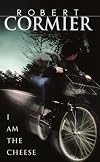
Adam is riding his bicycle through several small towns en route to visiting his father in the hospital. In between these scenes an interview is taking place where someone is being helped with delving into their memories, filling in the blanks that they are no longer able to recall. These two threads gradually sew together, and we discover that neither one is entirely what it appears to be.
I read a lot of books as a kid, but this one I found completely disorienting. I didn't know what kind of doctor only talks to you and takes notes, had never read a book that alternated between past and present, and I found the ending indecipherable. Now as an adult I can unravel it, but I'm surprised by its complexity given its target audience and not surprised at all that I couldn't grasp it then. The ending's revelations are subtly done and lingering mysteries remain.Was the family betrayed? Is his father still on the run? Where did the Hertz family go? It's a grim story with a sinister message about distrusting authority but so artful that I have to admire it, as if Thomas Pynchon were to write cogent young adult.
I read a lot of books as a kid, but this one I found completely disorienting. I didn't know what kind of doctor only talks to you and takes notes, had never read a book that alternated between past and present, and I found the ending indecipherable. Now as an adult I can unravel it, but I'm surprised by its complexity given its target audience and not surprised at all that I couldn't grasp it then. The ending's revelations are subtly done and lingering mysteries remain.

Fancy Oxford of long ago, students yelling T.S. Elliot poems out of windows and trying to out-quote one another over their wine. I found this high-class set almost impossible to relate to but fun to read about, with their bizarre quirks and idiosyncrasies.
Charles Ryder is obsessed with the Flyte family and their estate, primarily the younger son Sebastien who bears the hallmarks of having suffered some form of abuse. Sebastien has an enduring fondness for the comfort of his teddy bear Aloysius and frequently attempts to dissociate from his family, reluctant to return home for visits. He enters a downward spiral once his mother's reach extends even into his life at Oxford. The abuse in this case is overbearing parenting, the inability to escape his mother's constant analysis and judgements.
Narrator Charles is fully present in the story, generally tolerable, but he's a self-centered twit. I can respect him making a mistake in whom he marries, but not his attitude toward his children whom he coldly refers to as his wife's 'project' and expresses zero interest in. From that moment I didn't particularly care about him anymore. It crystalized the fact for me that his only empathy is for Sebastien, and his later obsession with Julia feels like a sad extension of that.
Charles Ryder is obsessed with the Flyte family and their estate, primarily the younger son Sebastien who bears the hallmarks of having suffered some form of abuse. Sebastien has an enduring fondness for the comfort of his teddy bear Aloysius and frequently attempts to dissociate from his family, reluctant to return home for visits. He enters a downward spiral once his mother's reach extends even into his life at Oxford. The abuse in this case is overbearing parenting, the inability to escape his mother's constant analysis and judgements.
Narrator Charles is fully present in the story, generally tolerable, but he's a self-centered twit. I can respect him making a mistake in whom he marries, but not his attitude toward his children whom he coldly refers to as his wife's 'project' and expresses zero interest in. From that moment I didn't particularly care about him anymore. It crystalized the fact for me that his only empathy is for Sebastien, and his later obsession with Julia feels like a sad extension of that.

I don't generally read murder mysteries, but this premise drew me in. The 'Murder Room' is an exhibit in a museum with content dedicated to murders of the past. Some creepy person gets the idea of recreating a few of the stories from its exhibits. What I didn't expect was the enormous trouble of creating well-rounded characters, making me feel this mystery was only the latest incident in their lives and that those lives will carry on after the story's end. I think I appreciated that aspect more than I did the mystery itself. In fact I was less concerned about who might have dunnit than I was fervently hoping certain characters had not.
I've been spoiled by Agatha Christie, the one mystery author I've read quite a bit of. In her stories all the pieces are there. In this novel and others like it, the detectives pull out five or ten pieces at the end which they've never shown you. It's not the same thing, and it doesn't have the same effectiveness. I would also have liked more sewing together between what goes on during the mystery - what personal revelations it might unlock for the detective as he does his work - and what conclusions he reaches about how to handle his private matters. But time and again the novel tells me that Dalgliesh keeps his work and private life strictly separate, so I guess that precludes the possibility of making these parts of the novel feel more like a whole.
I've been spoiled by Agatha Christie, the one mystery author I've read quite a bit of. In her stories all the pieces are there. In this novel and others like it, the detectives pull out five or ten pieces at the end which they've never shown you. It's not the same thing, and it doesn't have the same effectiveness. I would also have liked more sewing together between what goes on during the mystery - what personal revelations it might unlock for the detective as he does his work - and what conclusions he reaches about how to handle his private matters. But time and again the novel tells me that Dalgliesh keeps his work and private life strictly separate, so I guess that precludes the possibility of making these parts of the novel feel more like a whole.

Musashi is Japan's "Gone with the Wind" for scope, size, status and content. It is a Japanese historical fiction epic written in the 1930s, celebrating the samurai mystique without becoming overly melodramatic about it. Many of its characters, including Musashi himself, are drawn from life. Unlike the heroes of western fiction, these are refreshingly sensitive to shame and conscious of responsibility. It's lightweight fast-paced fare that relies on dialogue, action and humour. My copy is the 1980s American paperback edition, published in five parts.
In part five, Musashi thirsts for knowledge outside of swordplay, seeking a more rounded view of the world that won't be constrained by the typical role of a samurai in service to a daimyo - or even a shogun. He loses his way along this path, his confusion almost returning him back to the start of his journey in some ways. There are some surprisingly lengthy asides that dwell for pages on other characters whose journeys didn't interest me as much, and a great number of earlier characters resurface whose names I had trouble placing. But I also became more aware of what a good job this does at portraying all levels of Japanese society, from bottom to top. The climax of the story is very gripping and left me satisfied with the journey it took to get there.
In part five, Musashi thirsts for knowledge outside of swordplay, seeking a more rounded view of the world that won't be constrained by the typical role of a samurai in service to a daimyo - or even a shogun. He loses his way along this path, his confusion almost returning him back to the start of his journey in some ways. There are some surprisingly lengthy asides that dwell for pages on other characters whose journeys didn't interest me as much, and a great number of earlier characters resurface whose names I had trouble placing. But I also became more aware of what a good job this does at portraying all levels of Japanese society, from bottom to top. The climax of the story is very gripping and left me satisfied with the journey it took to get there.

Zeinab Badawi made it her mission to cover an entire continent's entire history in 450 pages. At that rate, as you can imagine, you're likely to find more detail on most of these topics by referring to Wikipedia. But how will you know what to search for, and how to piece it all together? Here is the necessary framework to see the whole picture and how it evolved. Furthermore, she writes from an internal-to-Africa perspective. What were the African goals and motivations as events unfolded, as empires rose and fell, as invaders threatened? People called 'bloodthirsty' in western-written histories become patriots and rebels fighting for their humanity. This is no bait-and-switch. This is wearing the shoes of those who were trodden upon.
The introduction clearly defines what this is not: an academic work or a polemic about contested history, though she does desire to "counterbalance negative perceptions". There is no way to avoid referencing how events have customarily been depicted, and placing that in contrast with the African viewpoint. It's a necessary exercise during this stage of writing a more balanced history. Someday this task will be behind us, and we can have popular African histories that don't require this kind of defending, that won't read like a sequence of corrections to what we'd previously understood as the sole truth.
Ancient Egypt of course takes pride of place in the early chapters, "the only part of African history that is taught widely in schools". From show more there we skip around the map of Africa, covering each area from prehistory up to Europe's age of exploration. In the last hundred pages Badawi revisits various portions in a rapid-fire account of slavery, colonization and independence movements. Along the way there are a number of highlights I looked forward to which were already familiar to me: the pyramids, the Queen of Sheba, St. Augustine, Mansa Musa's empire, Shaka Zulu, and the evil machinations of Leopold II of Belgium.
But I learned about much more that was new to me. I hadn't heard of the Beta Israel of Ethiopia, the Benin Bronzes, or the kente cloth of Ghana. I'd never looked up images of the wondrous city of Constantine in Algeria. I didn't know what the Berlin Conference was. I learned about key women figures like Queen Kahina of present-day Algeria, Yaa Asantewa of Ghana, and Njinga and Kimpa Vita of the Congo. I also was presented with key heroic figures during Africa's independence movements, including the Mahdi of Khartoum and Patrice Lumumba of the Congo. There isn't time to explore every corner: the Bantu migration is only mentioned incidentally, I saw no reference to the Kanem-Bornu empire, and Madagascar is practically ignored.
The rational for Africa's troubles with governance and economics during the last 75 years is well explained: the enormous loss of population to slavery, the devastations wrought by colonization that overshadowed any benefits, and artificial map lines that partitioned Africa into convenient European colony borders rather than accounting for local ethnicities. This legacy of imposed divisions has required a long and difficult course correction that is still not over, but there is much hope for the future. Africa is embracing the online world and environmentally friendly technologies, and it still remains a source of valuable natural resources. By harnessing the processing of those resources and securing a seat at international tables, the continent's profile steadily improves. Embracing the future includes taking pride in a clear understanding of the past. This is a promising step towards achieving that. show less
The introduction clearly defines what this is not: an academic work or a polemic about contested history, though she does desire to "counterbalance negative perceptions". There is no way to avoid referencing how events have customarily been depicted, and placing that in contrast with the African viewpoint. It's a necessary exercise during this stage of writing a more balanced history. Someday this task will be behind us, and we can have popular African histories that don't require this kind of defending, that won't read like a sequence of corrections to what we'd previously understood as the sole truth.
Ancient Egypt of course takes pride of place in the early chapters, "the only part of African history that is taught widely in schools". From show more there we skip around the map of Africa, covering each area from prehistory up to Europe's age of exploration. In the last hundred pages Badawi revisits various portions in a rapid-fire account of slavery, colonization and independence movements. Along the way there are a number of highlights I looked forward to which were already familiar to me: the pyramids, the Queen of Sheba, St. Augustine, Mansa Musa's empire, Shaka Zulu, and the evil machinations of Leopold II of Belgium.
But I learned about much more that was new to me. I hadn't heard of the Beta Israel of Ethiopia, the Benin Bronzes, or the kente cloth of Ghana. I'd never looked up images of the wondrous city of Constantine in Algeria. I didn't know what the Berlin Conference was. I learned about key women figures like Queen Kahina of present-day Algeria, Yaa Asantewa of Ghana, and Njinga and Kimpa Vita of the Congo. I also was presented with key heroic figures during Africa's independence movements, including the Mahdi of Khartoum and Patrice Lumumba of the Congo. There isn't time to explore every corner: the Bantu migration is only mentioned incidentally, I saw no reference to the Kanem-Bornu empire, and Madagascar is practically ignored.
The rational for Africa's troubles with governance and economics during the last 75 years is well explained: the enormous loss of population to slavery, the devastations wrought by colonization that overshadowed any benefits, and artificial map lines that partitioned Africa into convenient European colony borders rather than accounting for local ethnicities. This legacy of imposed divisions has required a long and difficult course correction that is still not over, but there is much hope for the future. Africa is embracing the online world and environmentally friendly technologies, and it still remains a source of valuable natural resources. By harnessing the processing of those resources and securing a seat at international tables, the continent's profile steadily improves. Embracing the future includes taking pride in a clear understanding of the past. This is a promising step towards achieving that. show less

Musashi is Japan's "Gone with the Wind" for scope, size, status and content. It is a Japanese historical fiction epic written in the 1930s, celebrating the samurai mystique without becoming overly melodramatic about it. Many of its characters, including Musashi himself, are drawn from life. Unlike the heroes of western fiction, these are refreshingly sensitive to shame and conscious of responsibility. It's lightweight fast-paced fare that relies on dialogue, action and humour. My copy is the 1980s American paperback edition, published in five parts.
In part four Musashi's wisdom grows by leaps and bounds, heralded by his realizing his past foolishness and how very far he has yet to go. Whereas the early parts had me wondering whether this reading was actually worthwhile, now I'm fully invested in the journey. Things are coming to a head between Musashi and his nemesis. The switch to the Edo setting has also added interest, expanding the number of important players in Musashi's life and providing even more insight into 17th century Japan.
In part four Musashi's wisdom grows by leaps and bounds, heralded by his realizing his past foolishness and how very far he has yet to go. Whereas the early parts had me wondering whether this reading was actually worthwhile, now I'm fully invested in the journey. Things are coming to a head between Musashi and his nemesis. The switch to the Edo setting has also added interest, expanding the number of important players in Musashi's life and providing even more insight into 17th century Japan.

What recourse for the rural, ambitious and abused son of a French sawyer who wants to rise above his station but to join the army? Except that France is embroiled in a time of peace in the 1820s, so he turns instead to the church though Napoleon is his hero. He will be a man of peace, though he doesn't believe a single word of liturgy or of the Latin Bible he's memorized word and verse. Soon after he is entering Parisian society in the company of the nobility, where his own brand of innate pride suits the company. His own pride is more genuine, being based neither on birth nor wealth. It is both a flaw in his character and a strength as well. His lack of self-doubt - or self-awareness - gives him an edge in his ambitions. In fact it is probably their entire impetus, driving everything he does. He does experience real love, but only after his pride leads him into it; never does it come first.
Stendhal's failing is his pacing, especially in the early chapters. He breezes over incidents that could have yielded an abundance of drama, and dwells for pages mining it from scenes that have little to offer. Consequently I'd find myself struggling through it one day, then more deeply absorbed the next. For a man so driven by his ambition, it's curious to observe how little of Julien's story is actually driven by himself. Nearly every step forward is achieved either through chance or by the good will of a mentor. His prodigious memory and a strong work ethic win him recognition, but show more Julian has no plan. When he does indulge a willful passion, it is only one liable to place all of his gains at risk. These insights are beyond his means to apprehend, given his lack of self-reflection. As things turn out, it's a mercy the illusion holds. show less
Stendhal's failing is his pacing, especially in the early chapters. He breezes over incidents that could have yielded an abundance of drama, and dwells for pages mining it from scenes that have little to offer. Consequently I'd find myself struggling through it one day, then more deeply absorbed the next. For a man so driven by his ambition, it's curious to observe how little of Julien's story is actually driven by himself. Nearly every step forward is achieved either through chance or by the good will of a mentor. His prodigious memory and a strong work ethic win him recognition, but show more Julian has no plan. When he does indulge a willful passion, it is only one liable to place all of his gains at risk. These insights are beyond his means to apprehend, given his lack of self-reflection. As things turn out, it's a mercy the illusion holds. show less

Musashi is Japan's "Gone with the Wind" for scope, size, status and content. It is a Japanese historical fiction epic written in the 1930s, celebrating the samurai mystique without becoming overly melodramatic about it. Many of its characters, including Musashi himself, are drawn from life. Unlike the heroes of western fiction, these are refreshingly sensitive to shame and conscious of responsibility. It's lightweight fast-paced fare that relies on dialogue, action and humour. My copy is the 1980s American paperback edition, published in five parts.
In part three, Musashi's growth is more evident as he begins to appreciate a broader range of powers besides those of the sword. It is his steady growth and how he learns that really drives the plot, since there's no way to imagine he doesn't win in the end. Consequently the Yoshioka school begins to remind me of a gambling addict that doesn't know when to walk away from the table. The well portrayed setting, random bits of humour and secondary plots provide plenty of fuel to keep things interesting.
In part three, Musashi's growth is more evident as he begins to appreciate a broader range of powers besides those of the sword. It is his steady growth and how he learns that really drives the plot, since there's no way to imagine he doesn't win in the end. Consequently the Yoshioka school begins to remind me of a gambling addict that doesn't know when to walk away from the table. The well portrayed setting, random bits of humour and secondary plots provide plenty of fuel to keep things interesting.

Musashi is Japan's "Gone with the Wind" for scope, size, status and content. It is a Japanese historical fiction epic written in the 1930s, celebrating the samurai mystique without becoming overly melodramatic about it. Many of its characters, including Musashi himself, are drawn from life. Unlike the heroes of western fiction, these are refreshingly sensitive to shame and conscious of responsibility. It's lightweight fast-paced fare that relies on dialogue, action and humour. My copy is the 1980s American paperback edition, published in five parts.
In part two, Musashi's fervent desire to prove his skills becomes obnoxious to guests who only wish him well, proving that true wisdom still lies beyond his grasp. Greater illumination is shed on the difference the Tokugawa Shogunate is making to society, as the contrast between samurai and the merchant class becomes a more level playing field. By the end of this part Musashi has at least progressed to the point where he seems satisfied to defeat his rivals without killing them.
In part two, Musashi's fervent desire to prove his skills becomes obnoxious to guests who only wish him well, proving that true wisdom still lies beyond his grasp. Greater illumination is shed on the difference the Tokugawa Shogunate is making to society, as the contrast between samurai and the merchant class becomes a more level playing field. By the end of this part Musashi has at least progressed to the point where he seems satisfied to defeat his rivals without killing them.

First, a note about the error in the prologue. "Four of us" is incorrect; there's five people in the scene, no one is missing. I mistakenly spent half the book anticipating which one wasn't going to show up.
The fictional Hampden College is like a miniature Oxford placed in a northern Vermont setting. The students in question form a sort of Loners Club, outsiders who don't fit any of the usual boxes. The narrator can relate and gets himself made a member, just in time to be involved in what unfolds: the murder of one of their own. This unusual clique of outsiders stands aloof from the party-goers, immersed in their studies, uncaring of finances or responsibilities but still personally responsible, all of them possessing interesting backgrounds and knowledge. It sounds like my idea of an ideal post-secondary educational study group, and so Robert finds it to be, until it isn't.
The origins of what goes wrong are easy to miss, barely dwelt on in the narrative, but they form the heart of the novel - the 'fatal flaw', the wish to go beyond all controls. The majority of them being spoiled rich kids who can do as they please and needn't even graduate if they so choose, control is something they all despise. But there is also some hint that the wish is tied to the nature of their studies in Greek. It may be like what Ted Chiang explored in his sci-fi story "Story of Your Life". Veering too deeply into another culture's language also brings forth its world view and its dreams. show more Henry is most deeply sunk, and the idea comes from him.
While page count is spent largely on illuminating the characters, the plot reminds me strongly of Crime and Punishment: the swiftly conducted crime that is over in a moment, dominated by the drawn out punishment that comes as much or more from within as without. We're subjected as readers to every moment of dreaded build-up and contemplation of what these students decide needs to happen, followed by every moment of waiting for the consequences to unspool. Short of skipping pages, we're no more able than they are to skim past every petty and unwanted detail and the angst each of those details creates. The story develops a tension that is lacking in most murder stories. Besides the question of whether they'll get away with it, there is also the question of whether they can survive the mental health crisis it plunges them into when they have only each other to lean on.
This could be read as a grand metaphor for how student rebellion is all for naught, whatever its form and however extreme, because reality will still impose itself after graduation: doing what you must to keep on surviving, taking whatever job presents itself, marrying whomever comes along, looking after your family obligations. What matters more to one's survival than finding means of escaping reality is learning how best to live in it. show less
The fictional Hampden College is like a miniature Oxford placed in a northern Vermont setting. The students in question form a sort of Loners Club, outsiders who don't fit any of the usual boxes. The narrator can relate and gets himself made a member, just in time to be involved in what unfolds: the murder of one of their own. This unusual clique of outsiders stands aloof from the party-goers, immersed in their studies, uncaring of finances or responsibilities but still personally responsible, all of them possessing interesting backgrounds and knowledge. It sounds like my idea of an ideal post-secondary educational study group, and so Robert finds it to be, until it isn't.
The origins of what goes wrong are easy to miss, barely dwelt on in the narrative, but they form the heart of the novel - the 'fatal flaw', the wish to go beyond all controls. The majority of them being spoiled rich kids who can do as they please and needn't even graduate if they so choose, control is something they all despise. But there is also some hint that the wish is tied to the nature of their studies in Greek. It may be like what Ted Chiang explored in his sci-fi story "Story of Your Life". Veering too deeply into another culture's language also brings forth its world view and its dreams. show more Henry is most deeply sunk, and the idea comes from him.
While page count is spent largely on illuminating the characters, the plot reminds me strongly of Crime and Punishment: the swiftly conducted crime that is over in a moment, dominated by the drawn out punishment that comes as much or more from within as without. We're subjected as readers to every moment of dreaded build-up and contemplation of what these students decide needs to happen, followed by every moment of waiting for the consequences to unspool. Short of skipping pages, we're no more able than they are to skim past every petty and unwanted detail and the angst each of those details creates. The story develops a tension that is lacking in most murder stories. Besides the question of whether they'll get away with it, there is also the question of whether they can survive the mental health crisis it plunges them into when they have only each other to lean on.
This could be read as a grand metaphor for how student rebellion is all for naught, whatever its form and however extreme, because reality will still impose itself after graduation: doing what you must to keep on surviving, taking whatever job presents itself, marrying whomever comes along, looking after your family obligations. What matters more to one's survival than finding means of escaping reality is learning how best to live in it. show less

Musashi is Japan's "Gone with the Wind" for scope, size, status and content. It is a Japanese historical fiction epic written in the 1930s, celebrating the samurai mystique without becoming overly melodramatic about it. Many of its characters, including Musashi himself, are drawn from life. Unlike the heroes of western fiction, these are refreshingly sensitive to shame and conscious of responsibility. It's lightweight fast-paced fare that relies on dialogue, action and humour. My copy is the 1980s American paperback edition, published in five parts.
In part one, Musashi is still a young ruffian. He awakes after the battle of Sekigahara in which he participated as a common foot soldier, wounded but whole. Over time he makes his way home, a fugitive on the run from the forces of the Tokugawa Shogunate. With the help of a monk he sets a new course in life to follow the way of the samurai. So far I'm feeling put out by his treatment of Otsu, but hopefully there's a happy ending in store on that front. Lots of manly suck-in-your-feelings stuff gets in the way, typical for the genre. Fun to read but glad I wasn't there.
In part one, Musashi is still a young ruffian. He awakes after the battle of Sekigahara in which he participated as a common foot soldier, wounded but whole. Over time he makes his way home, a fugitive on the run from the forces of the Tokugawa Shogunate. With the help of a monk he sets a new course in life to follow the way of the samurai. So far I'm feeling put out by his treatment of Otsu, but hopefully there's a happy ending in store on that front. Lots of manly suck-in-your-feelings stuff gets in the way, typical for the genre. Fun to read but glad I wasn't there.
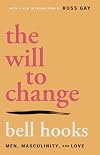
Too many men have never learned how to love. If love requires vulnerability, then love implies weakness, and most men were raised to hide weakness. Playing with our peers as children, none of us wanted to appear less tough than another. None of us wanted to be a bully's victim. Few of us had seen a grown man cry, or had only seen it done covertly. Anger was always permitted, even condoned as self-defence. What has it cost us, and our relationships, and how little has it won us? bell hooks posits males as victims of their own patriarchy. For what it offers them in terms of authority and power, it steals away in terms of self-love and being emotive. This is a feminist perspective that is inclusive of men.
I was swept by the prologue, feeling seen and welcomed. Unfortunately, in the chapters that followed she swiftly began losing me. Her definition of patriarchy is so overarching, so all-consuming, she makes it the basis for practically all of society's wrongs: violence and abuse, substance addiction, war, etc. Her simple answer - something I am always wary of - is to defeat patriarchy if we wish to end all of these things. It will be defeated by men's efforts to change, and women's unconditional love that encourages those efforts. While acknowledging that a woman should not expect to change an abusive partner, through lack of clarity she comes dangerously close to stating that as part of the formulae for success.
There is much else that is unclear, because hooks does not show more present her case methodically. She will mention a source she is citing from on occasion, but there are no footnotes, no index or bibliography. On other occasions her sources are only of the vague "studies show" variety. Many of her firmest points are made with no citations at all, and may even contradict each other. In one chapter for example, single mothers are identified as perpetuating the patriarchy. In another, they are their sons' victims. She is entirely credible when relating her own past experience, less so when she is clearly generalizing it through inductive reasoning to make statements about all men. Then she contradicts herself again in a subsequent chapter, separating men into categories. Some of her equivocations and accusations are startling: that teen boys who prefer their privacy are doing it because of our patriarchal culture, comparing it to a terrorist's regime's use of isolation to break one's spirit. That Harry Potter promotes the patriarchy, a white male who controls everyone around him. That 'masculinity' sounds like it contains the word 'mask', which means that all men are hiding something.
This book should be read as speculative philosophy, not as self-help. I deeply agree with her view that men are not hopeless, though it's not difficult to understand women who feel otherwise. Certainly we don't want our loved ones wishing us dead. I believe men can learn how to love, and learn the nuances of doing so. We must emote better, both with women and amongst ourselves, and not denigrate the effort when we see other men trying. Her contrast between dominator and partnership models of masculinity is a helpful way forward (if you read just one chapter of this book, make it Chapter 7: "Feminist Manhood"). This book offers some good pointers in positive directions, but it requires filtering. I came to it via a recommendation from the "Reads with Rachel" YouTube channel but I expect I would find some of the sources that hooks mentions more instructional, especially the work of Terrence Real. show less
I was swept by the prologue, feeling seen and welcomed. Unfortunately, in the chapters that followed she swiftly began losing me. Her definition of patriarchy is so overarching, so all-consuming, she makes it the basis for practically all of society's wrongs: violence and abuse, substance addiction, war, etc. Her simple answer - something I am always wary of - is to defeat patriarchy if we wish to end all of these things. It will be defeated by men's efforts to change, and women's unconditional love that encourages those efforts. While acknowledging that a woman should not expect to change an abusive partner, through lack of clarity she comes dangerously close to stating that as part of the formulae for success.
There is much else that is unclear, because hooks does not show more present her case methodically. She will mention a source she is citing from on occasion, but there are no footnotes, no index or bibliography. On other occasions her sources are only of the vague "studies show" variety. Many of her firmest points are made with no citations at all, and may even contradict each other. In one chapter for example, single mothers are identified as perpetuating the patriarchy. In another, they are their sons' victims. She is entirely credible when relating her own past experience, less so when she is clearly generalizing it through inductive reasoning to make statements about all men. Then she contradicts herself again in a subsequent chapter, separating men into categories. Some of her equivocations and accusations are startling: that teen boys who prefer their privacy are doing it because of our patriarchal culture, comparing it to a terrorist's regime's use of isolation to break one's spirit. That Harry Potter promotes the patriarchy, a white male who controls everyone around him. That 'masculinity' sounds like it contains the word 'mask', which means that all men are hiding something.
This book should be read as speculative philosophy, not as self-help. I deeply agree with her view that men are not hopeless, though it's not difficult to understand women who feel otherwise. Certainly we don't want our loved ones wishing us dead. I believe men can learn how to love, and learn the nuances of doing so. We must emote better, both with women and amongst ourselves, and not denigrate the effort when we see other men trying. Her contrast between dominator and partnership models of masculinity is a helpful way forward (if you read just one chapter of this book, make it Chapter 7: "Feminist Manhood"). This book offers some good pointers in positive directions, but it requires filtering. I came to it via a recommendation from the "Reads with Rachel" YouTube channel but I expect I would find some of the sources that hooks mentions more instructional, especially the work of Terrence Real. show less

Having dispensed with the introduction, now we have some wheels under the story. Every chapter is focused on stakes of one kind or another and moves it forward. Joshua's heirs have been identified, as is our inside traitor, and the progress of all bears careful watching. Nabbanai is a rat's nest of intrigue, the Sithi are more present than in the first book, the mysterious Norn machinations continue to unfold, and Simon keeps doing his level best to manage one crisis after another. The name 'Narrowdark' pops up, giving a premonition of how it might be gone into in the third book. While it sometimes feels as if bits of the original trilogy's ground are being covered again, I think that's one of this sequel series' messages: that neglected or ignored history will repeat itself when its lessons are dismissed out of hand.
Something Williams starts doing here is dividing perspectives within chapters among multiple characters. This helps condense the story and increase the pacing (certain other fantasy authors, take note!). Smart interweaving happens whereby different scenes begin to inform one another, at least for the reader. A couple of minor weaknesses occur toward the end:Hyara's stabbing felt unlikely and required Eolair to act out of character. Miri has been wonderful throughout, but when confronted by Turia she ought to have demanded Turia produce the evidence she is plotting vengeance around, then imposed her own threat about the consequences of vigilante justice in show more her kingdom.
I have deliberately tried not to think too hard about where all this is headed and how things might potentially wrap up. I'm entirely content with just enjoying the ride and letting the author take me where he will. There have been past instances where it was the second book that suffered in one of William's four-volume trilogies, but this is a stellar exception. show less
Something Williams starts doing here is dividing perspectives within chapters among multiple characters. This helps condense the story and increase the pacing (certain other fantasy authors, take note!). Smart interweaving happens whereby different scenes begin to inform one another, at least for the reader. A couple of minor weaknesses occur toward the end:
I have deliberately tried not to think too hard about where all this is headed and how things might potentially wrap up. I'm entirely content with just enjoying the ride and letting the author take me where he will. There have been past instances where it was the second book that suffered in one of William's four-volume trilogies, but this is a stellar exception. show less

Lady Audley is newlywed to a wealthy landowner, raising her from poverty. She is pleased to meet his nephew Robert, but less pleased to meet that nephew's friend who is recently returned from Australia. One of the lady's servant is behaving mysteriously, and the nephew's friend goes missing. Robert Audley engages himself in determining the fate of his lost friend, not realizing the complexity of what the clues he follows will uncover. Or perhaps he does?
This early instance of a 'sensation novel' (alongside works by Wilkie Collins) explored the dark side of what happen behind posh closed doors. It's still fun to read now, despite the devices that Braddon uses to set up her plot being transparent to a modern reader. I'll put this in a spoiler tag, but to me it was obvious from the start thatLady Audley is Helen Talboys . Braddon is not even all that subtle about it, although perhaps she was by 19th century standards. She almost cheats a couple of times, which I could see raising objections even before the later reveal. There's also little mystery about where the body surely lies .
Braddon takes a peculiar, unfamiliar-to-me approach to the unfurling of her mystery. I am used to reading about a detective who asks peculiar questions and knows more than I until the final reveal, or else a cast of characters who are more in the dark than I the reader, as I wait for their knowledge to catch up. Braddon steers an unusual middle course, presenting enough clues for us to arrive at our show more own conclusions at the same time as Robert, but never having him state his own conclusions outright though we may suspect they are the same as ours. Through at least the first half of the novel this made it impossible for me to know whether I was ahead of, behind, or not at all in agreement with him.
The defiance of Robert's opponent is impressive, and the extremities that person will resort to. It's a great battle of wills. Some curiosities have to be forgiven: characters who resolve firmly not to do things and then immediately do them; emotionally distraught individuals somehow making explicitly clear confessionals, etc. I'm most struck byRobert's foolish and repeated mistake of telling Lady Audley exactly what his next steps are, giving her the means of thwarting him . But sometimes things like this have to happen, else the story doesn't. show less
This early instance of a 'sensation novel' (alongside works by Wilkie Collins) explored the dark side of what happen behind posh closed doors. It's still fun to read now, despite the devices that Braddon uses to set up her plot being transparent to a modern reader. I'll put this in a spoiler tag, but to me it was obvious from the start that
Braddon takes a peculiar, unfamiliar-to-me approach to the unfurling of her mystery. I am used to reading about a detective who asks peculiar questions and knows more than I until the final reveal, or else a cast of characters who are more in the dark than I the reader, as I wait for their knowledge to catch up. Braddon steers an unusual middle course, presenting enough clues for us to arrive at our show more own conclusions at the same time as Robert, but never having him state his own conclusions outright though we may suspect they are the same as ours. Through at least the first half of the novel this made it impossible for me to know whether I was ahead of, behind, or not at all in agreement with him.
The defiance of Robert's opponent is impressive, and the extremities that person will resort to. It's a great battle of wills. Some curiosities have to be forgiven: characters who resolve firmly not to do things and then immediately do them; emotionally distraught individuals somehow making explicitly clear confessionals, etc. I'm most struck by

Can human thought processes be emulated artificially? This is very much a "how" question and Hofstadter explores it as such, looking for the most promising way forward. He believes it lies in the study of self-reference and tackles this from multiple angles across a variety of disciplines (music, art, mathematics, computer programming, molecular biology, etc.), on the theory that without self-reference you can't arrive at self-awareness and full consciousness or actual thinking. He makes the discussion a fascinating one in how ably he ties things together that I wouldn't have thought had much in common.
Jumping to the end, much of the concluding chapters demonstrate the extremely complicated and multi-layered processes that emerge when you break down even the most simple mental processes in humans, demonstrating how very difficult it is to emulate these processes artificially. Hofstadter seems wedded to the idea that artificial intelligence means closely emulating human thought and how it is arrived at. Getting to the same (or improved) results by any different means doesn't seem to count as true AI in his opinion. He tries to prognosticate what artificial intelligence will and will not be capable of in future and you could say that he still isn't wrong, pointing to his own definition. The AI that he envisions is not GenAI like ChatGPT but something that still lies well beyond us, a computer that really does think (and feel?) the same independent way that a person does, show more and consequently has many of our same flaws as well. Whether computer science today or in future sees any utility in trying to realize the AI of Hofstadter's vision is doubtful. To me it seems fair to weigh his 1979 vision against the direction things are actually going in 2026 and say that he has already missed the mark in several respects, all stemming from his missing the "why" that industrial science has actually been motivated by.
What we are popularly defining as AI today is function-oriented, and possibly all it will ever be. While it can be increasingly made to look and sound human, it will never "think" because that isn't its objective. This book remains brilliant for its wonderfully entertaining way of exploring the possibility of something beyond that - like Commander Data from Star Trek - which perhaps some niche areas of AI study are still pursuing, and how they might get there. show less
Jumping to the end, much of the concluding chapters demonstrate the extremely complicated and multi-layered processes that emerge when you break down even the most simple mental processes in humans, demonstrating how very difficult it is to emulate these processes artificially. Hofstadter seems wedded to the idea that artificial intelligence means closely emulating human thought and how it is arrived at. Getting to the same (or improved) results by any different means doesn't seem to count as true AI in his opinion. He tries to prognosticate what artificial intelligence will and will not be capable of in future and you could say that he still isn't wrong, pointing to his own definition. The AI that he envisions is not GenAI like ChatGPT but something that still lies well beyond us, a computer that really does think (and feel?) the same independent way that a person does, show more and consequently has many of our same flaws as well. Whether computer science today or in future sees any utility in trying to realize the AI of Hofstadter's vision is doubtful. To me it seems fair to weigh his 1979 vision against the direction things are actually going in 2026 and say that he has already missed the mark in several respects, all stemming from his missing the "why" that industrial science has actually been motivated by.
What we are popularly defining as AI today is function-oriented, and possibly all it will ever be. While it can be increasingly made to look and sound human, it will never "think" because that isn't its objective. This book remains brilliant for its wonderfully entertaining way of exploring the possibility of something beyond that - like Commander Data from Star Trek - which perhaps some niche areas of AI study are still pursuing, and how they might get there. show less

I've not read Pynchon before. There's a hint of James Joyce in how he can blow up every simple character introduction into pages of detailed backstory. At first this seems like it's going to be Zoyd's story, something about how his long history of trouble with the law is finally catching up with him but at heart he's really an okay guy. Then it seems to be centered on some mystery to do with his ex-wife Frenesi, instead. Or maybe it's about their daughter Prairie, sitting at the centre of it all? But there is never anyone who remains at the centre of it all because the centre keeps moving. The novel reinvents itself into becoming centered upon whichever character is being introduced next. It's only when the blanks have been filled in and Zoyd's story appears to be coming full circle, in tandem with Frenesi's and Prairie's, that a picture starts to form just before it dissolves.
Strange little memorable bits pop up among the many stories within the story. There is a colony of ninjas in the woods, the impress of a giant sea monster's foot on a crushed laboratory, a sneaky murderous touch that takes a full year to kill, a lot of people becoming curiously addicted to television, etc. One recurring theme is government secrecy and oppression. No one can escape the machinations of the American government and its agencies, who literally get away with murder and have plots within plots for how to control the population. Pynchon's 1990 fantasy version of this paranoia seems so show more innocent now.
I'm a little taken aback that Pynchon fans lament this novel is too coherent, but I think I need to sample more before I can arrive at any personal feeling about his work. So far I'm just bewildered and bemused. show less
Strange little memorable bits pop up among the many stories within the story. There is a colony of ninjas in the woods, the impress of a giant sea monster's foot on a crushed laboratory, a sneaky murderous touch that takes a full year to kill, a lot of people becoming curiously addicted to television, etc. One recurring theme is government secrecy and oppression. No one can escape the machinations of the American government and its agencies, who literally get away with murder and have plots within plots for how to control the population. Pynchon's 1990 fantasy version of this paranoia seems so show more innocent now.
I'm a little taken aback that Pynchon fans lament this novel is too coherent, but I think I need to sample more before I can arrive at any personal feeling about his work. So far I'm just bewildered and bemused. show less

An introverted basement hobbyist becomes responsible for his niece's inheritance. The only problem is that it's located aboard a shipwreck on the other side of the world, and he's rarely ventured more than a hundred miles from home.
Nevil Shute seems to have been well known in the UK and Australia, but I think he never got as much footing here in Canada. I only learned about him through LibraryThing. The opening chapters don't impress much with their prose, but something else begins to emerge. Shute is not content with telling you that his characters sailed a boat, flew a plane, crafted something in the workshop, etc. He's going to explain each of these things in great detail, as though he were preparing you to do each of them yourself (or allowing you to judge his characters' actions, if you already know a thing or two). On the one hand this is a huge obstacle to moving the plot forward. On the other, it's an unusual degree of realism that serves to put you in the moment, battling the elements or technological know-how to get each job done. There's a deep appreciation here for what it takes, and for proving each task possible through ingenuity and learning. If that's your element, this is the book for you.
There are frequent reminders of the novel's 1960 pedigree, especially with regards to women. Even supposing the niece gets her inheritance and graduates from Oxford, Keith's greatest ambition for her future is to become his secretary so she can cook his food and help show more with his correspondence - that says it all. Many in my father's generation will still find this to be a nice comfort read, caught up by the engineering and navigational details and the playful-if-unlikely romance. For me it's only the South Pacific setting that made it sing, along with the nobility of Keith's purpose. Might be one of the worst novel titles ever chosen, but it has a cute ending. show less
Nevil Shute seems to have been well known in the UK and Australia, but I think he never got as much footing here in Canada. I only learned about him through LibraryThing. The opening chapters don't impress much with their prose, but something else begins to emerge. Shute is not content with telling you that his characters sailed a boat, flew a plane, crafted something in the workshop, etc. He's going to explain each of these things in great detail, as though he were preparing you to do each of them yourself (or allowing you to judge his characters' actions, if you already know a thing or two). On the one hand this is a huge obstacle to moving the plot forward. On the other, it's an unusual degree of realism that serves to put you in the moment, battling the elements or technological know-how to get each job done. There's a deep appreciation here for what it takes, and for proving each task possible through ingenuity and learning. If that's your element, this is the book for you.
There are frequent reminders of the novel's 1960 pedigree, especially with regards to women. Even supposing the niece gets her inheritance and graduates from Oxford, Keith's greatest ambition for her future is to become his secretary so she can cook his food and help show more with his correspondence - that says it all. Many in my father's generation will still find this to be a nice comfort read, caught up by the engineering and navigational details and the playful-if-unlikely romance. For me it's only the South Pacific setting that made it sing, along with the nobility of Keith's purpose. Might be one of the worst novel titles ever chosen, but it has a cute ending. show less

Several great hooks occur right off the bat, setting the tone and starting the mystery. This leads up to sixteen might-be-heirs being informed of the late Sam Westing's game he left in his will that will determine who inherits his $200 million estate. They are divided into eight pairings, and each pair receives four clues. Only Sam Westing and we the readers know what all of the clues are. If I was in the target age I can well imagine trying to sort and arrange all the clues into some kind of sense before the mystery's solution is revealed. It's a good gimmick.
Among the many secrets in play there is (or is there?) also a murderer, a bomber and a thief in this mix of sixteen people, as well as someone who doesn't belong at all. The amount of diversity among them is incredible for its time - I looked in vain to see whether the text has been updated in the intervening decades but nope, this appears to be the original. There's more going on in this story that meets the eye, with several surprise revelations along the way, and the pace is rapid-fire. With sixteen suspects/detectives, all of them clever and each of them developing their own pet theory about what's going on, it's almost impossible to track and remember what everybody knows or doesn't know or thinks they know, until they do the next thing that reminds you. It's best not to try keeping it all straight but just let it wash over you. Most theories are quickly discarded in any case as contrary evidence arises.
I show more liked several of the characters. Chris is excellently depicted, and though his condition is never defined it's almost better that way. Angela and Turtle are both well drawn, sisters who care for and envy one another at the same time. Everyone in fact is well drawn, but with having so many people to shift between and all of them made sympathetic, it is nearly impossible to root for any one team. Some readers come away feeling they didn't get close to anyone in particular, because Raskin would rather have you become close with all of them at once. I suppose that's a weak point. That ending, though. That gets this book its five stars. show less
Among the many secrets in play there is (or is there?) also a murderer, a bomber and a thief in this mix of sixteen people, as well as someone who doesn't belong at all. The amount of diversity among them is incredible for its time - I looked in vain to see whether the text has been updated in the intervening decades but nope, this appears to be the original. There's more going on in this story that meets the eye, with several surprise revelations along the way, and the pace is rapid-fire. With sixteen suspects/detectives, all of them clever and each of them developing their own pet theory about what's going on, it's almost impossible to track and remember what everybody knows or doesn't know or thinks they know, until they do the next thing that reminds you. It's best not to try keeping it all straight but just let it wash over you. Most theories are quickly discarded in any case as contrary evidence arises.
I show more liked several of the characters. Chris is excellently depicted, and though his condition is never defined it's almost better that way. Angela and Turtle are both well drawn, sisters who care for and envy one another at the same time. Everyone in fact is well drawn, but with having so many people to shift between and all of them made sympathetic, it is nearly impossible to root for any one team. Some readers come away feeling they didn't get close to anyone in particular, because Raskin would rather have you become close with all of them at once. I suppose that's a weak point. That ending, though. That gets this book its five stars. show less

Better than I'd anticipated. Reading a lot of older stuff, I've learned the hard way that spoofs are generally to be leery of if you don't already know the subject matter they're poking fun at. I've not sampled the worst of the Victorian literature with rural settings that's being targeted, but here's a happy instance where enough can be inferred that Stella Gibbons still lets me in on the joke. From what I gather, they tend to be dark, dreary and weighty. What they were long in need of was a good no-nonsense city dweller to tidy up their act, and that's exactly what Gibbons provides in the character of Flora Poste, a sort of Mary Poppins for the adult set.
It's no easy task Flora is confronted with. Cold Comfort Farm is as intimidating as they come, with its elderly tiresome cranks, its dangerously lecherous younger man, its flighty child-like waif on the verge of womanhood, its hell-and-brimstone preacher, etc. Flora is equal to every challenge, even a tiresome would-be love interest who tries to throw her mission off track (but she's having none of it). It's amazing what a little common sense can do when applied to this supposedly cursed setting and its travails that appears to prefer wallowing in its misery sooner than help itself.
Gibbons' brief introduction offers a bonus stab at the genre. In a letter to her (probably fictional) friend, she writes that in this first effort at novel writing she's taken the trouble to highlight with asterisks those paragraphs where she show more tried hardest to emulate her friend's superior style. When those asterisks appear, what we get are florid descriptive passages written in an almost entirely different voice that grant some passing idea of the Victorian style she's taking down a notch. These samples are probably far more entertaining than the genuine article, but close enough to assure me the originals had this attack on their integrity coming. show less
It's no easy task Flora is confronted with. Cold Comfort Farm is as intimidating as they come, with its elderly tiresome cranks, its dangerously lecherous younger man, its flighty child-like waif on the verge of womanhood, its hell-and-brimstone preacher, etc. Flora is equal to every challenge, even a tiresome would-be love interest who tries to throw her mission off track (but she's having none of it). It's amazing what a little common sense can do when applied to this supposedly cursed setting and its travails that appears to prefer wallowing in its misery sooner than help itself.
Gibbons' brief introduction offers a bonus stab at the genre. In a letter to her (probably fictional) friend, she writes that in this first effort at novel writing she's taken the trouble to highlight with asterisks those paragraphs where she show more tried hardest to emulate her friend's superior style. When those asterisks appear, what we get are florid descriptive passages written in an almost entirely different voice that grant some passing idea of the Victorian style she's taking down a notch. These samples are probably far more entertaining than the genuine article, but close enough to assure me the originals had this attack on their integrity coming. show less
Whereas the bestselling "I Am Malala" made Malala Yousafzai a hero, this book makes her human. It is Malala's voice entirely, discarding the ghost writer from her previous book. After being shot by the Taliban, earning world-wide fame and becoming the youngest winner in history of a Nobel prize, this is Malala's actual coming-of-age story. And why shouldn't it be? So much of life's experience still lay ahead of her. Throughout this book, she both insists and demonstrates that the world's image of her doesn't fully capture her real personality. There is no need to have read her other book, or even to know her from the headlines, to appreciate what she shares here.
It is the story of an Oxford education, perhaps typical of many experiences in some ways, but with unique twists: her fame that precedes her, her ever present security, the fish-out-of-water feeling attached to her longing for home in Pakistan, and her ongoing work she continues in parallel to promote women's education. I appreciated the level of detail about a student's routine at Oxford, a far cry from my own school experience. I thought her reputation's intrusion would be a major part of the story but this happens remarkably rarely, if at all. The friends she made weren't fazed in the least, not even when her face appeared larger than life alongside world leaders in a poster for the debate club. More of a factor is her being constantly concerned about photographers catching her off guard at casual moments who show more might impact her image in Pakistan and her mission.
She is a bit more critical this time of her parents and the media, but still fair in her assessments of their help and hindrances. She can see them now through an adult's eyes, and appreciate what she could not before. Her openness about her mental health experiences and therapy hopefully adds to the positive impact she has as an influencer. Acknowledging these challenges and how to deal with them may go a long way to helping others. Asser is an extraordinary man, able to say the right things in the right circumstances, and at times I had to remember I was not reading a very good romance novel. Malala is very fortunate to have found him. She is barely more than half my age, and yet she continues to teach me things about multiple topics with a deeply affecting voice. I hope she continues to write so that I can continue to learn. show less
It is the story of an Oxford education, perhaps typical of many experiences in some ways, but with unique twists: her fame that precedes her, her ever present security, the fish-out-of-water feeling attached to her longing for home in Pakistan, and her ongoing work she continues in parallel to promote women's education. I appreciated the level of detail about a student's routine at Oxford, a far cry from my own school experience. I thought her reputation's intrusion would be a major part of the story but this happens remarkably rarely, if at all. The friends she made weren't fazed in the least, not even when her face appeared larger than life alongside world leaders in a poster for the debate club. More of a factor is her being constantly concerned about photographers catching her off guard at casual moments who show more might impact her image in Pakistan and her mission.
She is a bit more critical this time of her parents and the media, but still fair in her assessments of their help and hindrances. She can see them now through an adult's eyes, and appreciate what she could not before. Her openness about her mental health experiences and therapy hopefully adds to the positive impact she has as an influencer. Acknowledging these challenges and how to deal with them may go a long way to helping others. Asser is an extraordinary man, able to say the right things in the right circumstances, and at times I had to remember I was not reading a very good romance novel. Malala is very fortunate to have found him. She is barely more than half my age, and yet she continues to teach me things about multiple topics with a deeply affecting voice. I hope she continues to write so that I can continue to learn. show less