
Philip Roth (1933–2018)
Author of The Plot Against America
About the Author
Philip Milton Roth was born in Newark, New Jersey on March 19, 1933. He attended Rutgers University for one year before transferring to Bucknell University where he completed a B.A. in English with highest honors in 1954. He received an M.A. from the University of Chicago in 1955. His first book, show more Goodbye, Columbus, received the National Book Award in 1960. His other books include Letting Go, When She Was Good, Portnoy's Complaint, My Life as a Man, The Ghostwriter, Zuckerman Unbound, I Married a Communist, The Plot Against America, The Facts, The Anatomy Lesson, Exit Ghost, Deception, Nemesis, Everyman, Indignation, and The Humbling. He won the National Book Critic Circle Awards in 1987 for his novel The Counterlife and in 1992 for his memoir Patrimony: A True Story. He won the PEN/Faulkner Award for Fiction in 1993 for Operation Shylock: A Confession and in 2001 for The Human Stain, the National Book Award in 1995 for Sabbath's Theater, and the Pulitzer Prize in 1998 for American Pastoral. He stopped writing in 2010. He died from congestive heart failure on May 22, 2018 at the age of 85. (Bowker Author Biography) show less
Image credit: Philip Milton Roth, on 23 mai 2007, in New York City
Series
Works by Philip Roth
Zuckerman Bound (The Ghost Writer / Zuckerman Unbound / The Anatomy Lesson / The Prague Orgy) (1985) 713 copies, 7 reviews
Philip Roth: Novels and Stories 1959-1962: Goodbye, Columbus & Five Short Stories/Letting Go (2005) 379 copies, 2 reviews
Novels 1967-1972: When She Was Good / Portnoy's Complaint / Our Gang / The Breast (2005) 366 copies, 1 review
Philip Roth: Zuckerman Bound, A Trilogy and Epilogue 1979-1985 (The Ghost Writer; Zuckerman Unbound; The Anatomy Lesson; The Prague Orgy) (2007) 279 copies
Philip Roth: Novels 1973-1977: The Great American Novel, My Life as a Man, The Professor of Desire (2006) 262 copies, 1 review
Philip Roth: Novels and Other Narratives 1986-1991 / The Counterlife / The Facts / Deception / Patrimony (2008) 151 copies, 1 review
Philip Roth: Novels 1993-1995: Operation Shylock / Sabbath's Theater (Library of America) (2010) 148 copies
Philip Roth: Novels 2001-2007: The Dying Animal / The Plot Against America / Exit Ghost (2013) 111 copies, 1 review
Bookclub-in-a-Box Discusses The Human Stain, the Novel by Philip Roth (Bookclub in a Box Discusses) (2005) 3 copies
On the air : a long story 3 copies
Wie Gelegenheiten Ratgebernetzwerke strukturieren Kultursensible Untersuchung im Kontext von Innovationsprojekten in Unternehmen (2019) 3 copies
Eli, the Fanatic [short story] 2 copies
Epstein [short story] 2 copies
Düh 1 copy
El declive 1 copy
A América de Philip Roth 1 1 copy
Romans, tome4 Trilogie Américaine : Pastorale Américaine - J'ai épousé un communiste - La Tâche 1 copy
Hyvästi, Columbus 1 copy
Il seno 1 copy
A América de Philip Roth 2 1 copy
2004 1 copy
Black Dogs 1 copy
Libby 1 copy
The Shy Tulip Murders 1 copy
Philip Roth 5 volume set: Portnoy's Complaint, Sabbath's Theater, Goodbye Columbus, American Pastoral, The Dying Animal (2002) 1 copy
[Title missing] 1 copy
Rare Antique 1st Editon Our Gang Philip Roth Novel 3rd Printing Fiction [Hardcover] Philip Roth 1 copy
SOS Title Unknown 1 copy
Pastorale americana 1 copy
Associated Works
The Story and Its Writer: An Introduction to Short Fiction (1976) — Contributor — 1,216 copies, 3 reviews
Literature: An Introduction to Fiction, Poetry, and Drama (1995) — Contributor, some editions — 1,012 copies, 7 reviews
Perrine's Literature: Structure, Sound, and Sense (1970) — Contributor, some editions — 892 copies, 4 reviews
A Tomb for Boris Davidovich (1978) — General Editor (of series), some editions — 801 copies, 11 reviews
The World of the Short Story: A 20th Century Collection (1986) — Contributor — 511 copies, 4 reviews
Mendelssohn Is on the Roof (1960) — Afterword, some editions; Preface, some editions — 413 copies, 7 reviews
The 50 Funniest American Writers: An Anthology of Humor from Mark Twain to The Onion (2011) — Contributor — 284 copies, 3 reviews
First Fiction: An Anthology of the First Published Stories by Famous Writers (1994) — Contributor — 197 copies, 1 review
Other Men's Daughters (New York Review Books Classics) (1973) — Introduction, some editions — 161 copies, 4 reviews
An American Album: One Hundred and Fifty Years of Harper's Magazine (2000) — Contributor — 146 copies, 1 review
The Norton Anthology of American Literature, Volume 2: 1865 to Present (1979) — Contributor, some editions — 135 copies
Know the Past, Find the Future: The New York Public Library at 100 (2011) — Contributor — 132 copies, 4 reviews
The Company They Kept, Volume Two: Writers on Unforgettable Friendships (2011) — Contributor — 25 copies
Fifty Years of the American Short Story from the O. Henry Awards 1919-1970 (1970) — Contributor — 17 copies, 1 review
Fifty Years of the American Short Story from the O. Henry Awards 1919-1970, Volume 2 (1970) — Contributor — 5 copies
Meesters der vertelkunst : zevenendertig verhalen uit de moderne wereldliteratuur (1975) — Contributor — 2 copies
The Human Commitment - An Anthology of Contemporary Short Fiction — Contributor — 1 copy
32 Współczesne Opowiadania Amerykańskie - Tom II — Contributor — 1 copy
Tagged
Common Knowledge
- Canonical name
- Roth, Philip
- Legal name
- Roth, Philip Milton
- Birthdate
- 1933-03-19
- Date of death
- 2018-05-22
- Gender
- male
- Education
- Bucknell University (BA|1954)
University of Chicago (MA | English Literature | 1955) - Occupations
- novelist
- Organizations
- University of Pennsylvania
United States Army
University of Iowa
Princeton University - Awards and honors
- Emerson-Thoreau Medal (2013)
National Humanities Medal (2010)
PEN/Saul Bellow Award (2007)
Franz Kafka Prize (2001)
Pulitzer Prize (1997)
Man Book International Prize (2011) (show all 9)
Asturias Award (2012)
National Book Award (1960, 1995)
National Book Critic Circle Award (1987, 1992) - Relationships
- Bloom, Claire (domestic partner)
Bellow, Saul (teacher) - Cause of death
- heart failure
- Nationality
- USA
- Birthplace
- Newark, New Jersey, USA
- Places of residence
- Chicago, Illinois, USA
Newark, New Jersey, USA
Philadelphia, Pennsylvania, USA
Iowa City, Iowa, USA
Princeton, New Jersey, USA - Place of death
- Manhattan, New York, New York, USA
- Burial location
- Bard College Cemetery, Annandale-on-Hudson, New York, USA
- Map Location
- New Jersey, USA
Members
Discussions
Philip Roth in Legacy Libraries (January 2020)
Group Read, November 2016: Portnoy's Complaint in 1001 Books to read before you die (November 2016)
2013 Quarter 1 - Philip Roth in Monthly Author Reads (May 2013)
Romantic Novel set in New England between Librarian and Socialite girl in Name that Book (March 2013)
Reviews

This book was suggested to me during a discussion about an irksome segment of the 20thC literary canon: middle-aged male Americans obsessed with adultery, daddy issues or declining sexual appetite, usually relayed through obnoxiously academic or otherwise “intellectual” main characters, who think their navel-gazing is Such Serious Business. My example was John Updike; a friend suggested this novella by Philip Roth as a fun example of the subgenre.
And fun it was: The breast deals indeed show more with an aging American academic who is full of himself and who is obsessed with grandstanding through bragging about his intelligence and his sexual prowess. One day, though, he finds he has transformed into a female breast unattached to a body, an excessively grotesque development which leads to an unholy amount of introspection.
The fun part is that the novella is run through with a layer of tongue-in-cheek self-awareness: Roth walks the line between playing the subgenre straight and highlighting its pathological absurdity. Its over-the-top quality is what saves it: I don’t think it would have worked if any of it were any less outrageous. show less
And fun it was: The breast deals indeed show more with an aging American academic who is full of himself and who is obsessed with grandstanding through bragging about his intelligence and his sexual prowess. One day, though, he finds he has transformed into a female breast unattached to a body, an excessively grotesque development which leads to an unholy amount of introspection.
The fun part is that the novella is run through with a layer of tongue-in-cheek self-awareness: Roth walks the line between playing the subgenre straight and highlighting its pathological absurdity. Its over-the-top quality is what saves it: I don’t think it would have worked if any of it were any less outrageous. show less
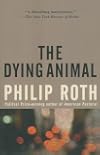
It comes as no surprise that Roth handles death, dying, sex, and the effects of all three on the human psyche with more honesty, more ease, than any writer this country has produced. The Dying Animal is a perfect book that accomplishes so much more in its allotted pages than the average novel in twice, three times as many. David Kepesh has come a long way from the lit student-turned mammary - oh, how breasts reprise their role! In Deception-like fashion, Kepesh tells the story to some other show more figure in the room about an affair unlike any other. Consuela, a twentysomething Cuban immigrant, and one of Kepesh's students, is one of the fiercest and most interesting (female) characters that Roth has invented. She's the contender in the room that has Kepesh, whose list of sexual episodes reads something like an anonymous survey of male fantasies, damn near trembling with insecurity. Roth's mastery over the series of events that has these two meet, fuck, separate, and meet again, is nothing short of brilliance. And with Dying in the title, the reader can expect this novel, in which a Casanova Jewish intellectual is caught in the middle of a war between eros and thanatos, to come with painfully beautiful Rothian meditations on the inevitable end of life. Kepesh is finished. show less

I first read this one back in high school and, in a lot of ways, it's as good as I remember it being. The book can be, by turns, funny, insightful, excruciating and observant, but what's most impressive about it is how incredibly unforced it seems: Roth's facility for rendering dialogue -- or rather, monologue -- is nothing less than amazing. Reading this one, you might as well be in the room with Alexander Portnoy, listening to him rant, remember, complain and interrogate himself. The novel show more verges on being some sort of historical document: in fifty years, you might be able to hand this to someone and say, "this is how American Jews spoke in the twentieth century." The text, which, of course, leans heavily on the passive voice, overflows with jokes, swears, regionalisms, and yiddishisms. You might also be able to say "this book perfectly expresses the condtradictions faced by the Jewish diaspora in the United States and exposes the cultural contradictions inherent in sixties-era liberalism." Any one of these would be an accomplishment, but Roth seems to pull them off all at once while barely breaking a sweat. It's half comedy routine and half exorcism, and it's a joy to read.
But there are also a few things here that keep this from being a five-star review. The first is that Alexander Portnoy seemed a whole lot less likable the second time round that he did the first, though this might have been because when a teenager myself I focused on his accounts of his teenage troubles. These sections still go down easier: Portnoy's more endearing when he plays his parents' victim than when he's acting like a fault-finding, thoughtless, chauvinist, a role that he occupies for much of the book's second half. The fact that he knows that's he's being unbearable, most of the time, doesn't make this stuff easier to read. Also, the book suffers from what might be termed the Woody Allen problem: both Roth and Portnoy love, and love describing, beautiful women, which is fine. But if Alexander's such a hopelessly neurotic cad, how come he keeps ending up with such terrific babes? At times, the book drifts towards fantasy, which might be, I suppose, also fine. "Portnoy's Complaint" isn't a documentary, it's a study of a hopelessly divided psyche in which we get to see an unstoppable id fight it out with a socially conditioned superego. Of course, I imagine some readers will only be able to take so much of this: the book, good as it is, can be an exhausting to read. Alexander's subconscious, from the book's very first sentence, is stuck on blast. Even so, whether you end up loving, hating, or identifying with Alexander Portnoy, this one should be on everyone's "must read" list. show less
But there are also a few things here that keep this from being a five-star review. The first is that Alexander Portnoy seemed a whole lot less likable the second time round that he did the first, though this might have been because when a teenager myself I focused on his accounts of his teenage troubles. These sections still go down easier: Portnoy's more endearing when he plays his parents' victim than when he's acting like a fault-finding, thoughtless, chauvinist, a role that he occupies for much of the book's second half. The fact that he knows that's he's being unbearable, most of the time, doesn't make this stuff easier to read. Also, the book suffers from what might be termed the Woody Allen problem: both Roth and Portnoy love, and love describing, beautiful women, which is fine. But if Alexander's such a hopelessly neurotic cad, how come he keeps ending up with such terrific babes? At times, the book drifts towards fantasy, which might be, I suppose, also fine. "Portnoy's Complaint" isn't a documentary, it's a study of a hopelessly divided psyche in which we get to see an unstoppable id fight it out with a socially conditioned superego. Of course, I imagine some readers will only be able to take so much of this: the book, good as it is, can be an exhausting to read. Alexander's subconscious, from the book's very first sentence, is stuck on blast. Even so, whether you end up loving, hating, or identifying with Alexander Portnoy, this one should be on everyone's "must read" list. show less

Philip Roth’s American Pastoral is filled with bile, lyrical bile. Whether in the voice of Seymour Levov, “the Swede”, or his brother Jerry, or his father Lou, or the Swede’s daughter, Merry, or almost any other character, the potential for an excoriating rant is virtually irresistible. The anger, or envy, or contempt, or, sometimes, distorting idolatry, is released shotgun fashion – its spread is wide and indiscriminate and it may not necessarily kill what it hits. Distorting show more idolatry might sound odd in that list, but love in this novel, whether of Zuckerman for the Swede, the Swede for his daughter or his wife, or various characters for “America”, is often so blurred and overridden with wish fulfilment that it begins to feel a bit more like hate for whatever the real object of that love might be.
The novel opens with a long framing device in which Roth’s writerly alter-ego, Zuckerman, introduces us to the Swede. The Swede is almost too good to be true, and not surprisingly cracks in the façade soon begin to emerge. At that point the frame of Zuckerman is dropped and the novel continues in revelatory fashion from the Swede’s perspective. That has the effect of making the frame appear to have been superfluous. No matter. By then the rants are in full flown against LBJ, the war in Vietnam, capitalism, anti-capitalism, Nixon, intellectualism, almost each character, against the narrator (the Swede) himself, and more.
We follow the Swede from his origins in Newark to the superficially idyllic and pastoral setting of Old Rimrock, with his near-Miss-America wife, Dawn, and their stuttering daughter, Merry. Merry’s impulse to rant is nearly matched by her speech impediment. It is an articulate inarticulateness, with explosive consequences, that is mirrored by other characters, and, possibly, by Roth himself. We see pyrotechnical displays of language but I fear it may be mere display. As ever there is no counter-balance, and the reader is left with the suspicion that despite piercing insight, Roth has missed something equally obvious. Or at least that is how this reader reacts. show less
The novel opens with a long framing device in which Roth’s writerly alter-ego, Zuckerman, introduces us to the Swede. The Swede is almost too good to be true, and not surprisingly cracks in the façade soon begin to emerge. At that point the frame of Zuckerman is dropped and the novel continues in revelatory fashion from the Swede’s perspective. That has the effect of making the frame appear to have been superfluous. No matter. By then the rants are in full flown against LBJ, the war in Vietnam, capitalism, anti-capitalism, Nixon, intellectualism, almost each character, against the narrator (the Swede) himself, and more.
We follow the Swede from his origins in Newark to the superficially idyllic and pastoral setting of Old Rimrock, with his near-Miss-America wife, Dawn, and their stuttering daughter, Merry. Merry’s impulse to rant is nearly matched by her speech impediment. It is an articulate inarticulateness, with explosive consequences, that is mirrored by other characters, and, possibly, by Roth himself. We see pyrotechnical displays of language but I fear it may be mere display. As ever there is no counter-balance, and the reader is left with the suspicion that despite piercing insight, Roth has missed something equally obvious. Or at least that is how this reader reacts. show less
Lists
Jewish Books (12)
Fiction For Men (1)
100 New Classics (1)
2000s decade (1)
1960s (1)
1950s (1)
Movies/Shows (1)
Five star books (1)
. (1)
el (1)
Best Dystopias (1)
1970s (1)
1980s (1)
Best Satire (1)
A Novel Cure (2)
1990s (2)
Unread books (4)
Favourite Books (3)
. (2)
Deathreads (1)
BitLife (1)
. (1)
04 (1)
Erotic Fiction (1)
to get (2)
Overdue Podcast (1)
The "A" List (1)
Awards


You May Also Like


Associated Authors
Statistics
- Works
- 114
- Also by
- 80
- Members
- 74,554
- Popularity
- #169
- Rating
- 3.8
- Reviews
- 1,524
- ISBNs
- 1,739
- Languages
- 30
- Favorited
- 306


