
Paul Auster (1947–2024)
Author of The New York Trilogy
About the Author
Paul Auster was born on February 3, 1947, in Newark, New Jersey. He received a B.A. and a M.A. in English and Comparative Literature from Columbia University. In addition to his career as a writer, Auster has been a census taker, tutor, merchant seaman, little-league baseball coach, and a telephone show more operator. He started his writing career as a translator. He soon gained popularity for the detective novels that make up his New York Trilogy. His other works include The Invention of Solitude; Leviathan; Moon Palace; Facing the Music; In the Country of Last Things; The Music of Chance; Mr. Vertigo; and The Brooklyn Follies. His latest novels are entitled, Invisible and Sunset Park. In addition to his novels, Auster has written screenplays and directed several films. He is the recipient of a fellowship from the National Endowment for the Arts and a French Prix Medicis for Foreign Literature. (Bowker Author Biography) show less
Series
Works by Paul Auster
I Thought My Father Was God: And Other True Tales from NPR's National Story Project (2001) — Editor — 1,420 copies, 28 reviews
Collected Prose: Autobiographical Writings, True Stories, Critical Essays, Prefaces, and Collaborations with Artists (2003) 282 copies, 1 review
Paul Auster's The New York Trilogy: City of Glass, Ghosts, The Locked Room -- The Graphic Adaptation (2025) — Author — 66 copies, 1 review
Talking to Strangers: Selected Essays, Prefaces, and Other Writings, 1967-2017 (2019) 45 copies, 1 review
Le diable par la queue: suivi de Laurel et Hardy vont au paradis: Black-out: & Cache-cache: Action baseball: Fausse balle (1999) 8 copies
Lektürehilfen Englisch. Moon Palace: Ausführliche Inhaltsangabe mit Interpretation. Inklusive Abitur-Fragen mit Lösungen (2001) 5 copies
[unidentified works] 3 copies
كتاب الأوهام 1 copy
مستر فيرتيجو 1 copy
موسيقى الصدفة 1 copy
تمبكتو 1 copy
Worms 1 copy
La Trilogie New-Yorkaise 1 copy
Mynd af ósýnilegum manni 1 copy
Auster en palabras de Auster 1 copy
Glerborgin 1 copy
La condición humana 1 copy
Associated Works
Burn This Book: PEN Writers Speak Out on the Power of the Word (2009) — Contributor — 217 copies, 3 reviews
Novels II of Samuel Beckett: Volume II of The Grove Centenary Editions (Works of Samuel Beckett the Grove Centenary Editions) (2006) — Editor — 177 copies
This Is My Best: Great Writers Share Their Favorite Work (2004) — Contributor — 175 copies, 3 reviews
The Dramatic Works of Samuel Beckett: Volume III of The Grove Centenary Editions (Works of Samuel Beckett the Grove Centenary Editions) (2006) — Editor — 141 copies
Adaptations: From Short Story to Big Screen: 35 Great Stories That Have Inspired Great Films (2005) — Contributor — 136 copies, 1 review
Twenty Days with Julian and Little Bunny by Papa (2003) — Introduction, some editions — 126 copies, 2 reviews
The Poems, Short Fiction, and Criticism of Samuel Beckett: Volume IV of The Grove Centenary Editions (2006) — Editor — 87 copies
Lou Reed: The Last Interview: and Other Conversations (The Last Interview Series) (2015) — Interviewer, some editions — 29 copies
L'euvre de Paul Auster: Approches et lectures plurielles : actes du Colloque Paul Auster (1995) 2 copies
MONKEY vol. 31 特集:読書 — Contributor — 1 copy
MONKEY vol.10 映画を夢みて — Contributor — 1 copy
Stooge Thirteen, Spring 1975 — Contributor — 1 copy
Tagged
Common Knowledge
- Legal name
- Auster, Paul Benjamin
- Other names
- Benjamin, Paul
- Birthdate
- 1947-02-03
- Date of death
- 2024-04-30
- Gender
- male
- Education
- Columbia University (BA|1969|MA|1970)
- Occupations
- novelist
poet
scriptwriter
translator - Organizations
- PEN American Center (Vice-President)
- Awards and honors
- Morton Dauwen Zabel Award (1990)
Premio Príncipe de Asturias (Letters ∙ 2006)
American Academy of Arts and Letters (Literature, 2006)
John William Corrington Award for Literary Excellence (1996)
Commandeur des Arts et des Lettres (2007)
Honorary Doctorate (University of Leige ∙ 2007) - Relationships
- Hustvedt, Siri (wife)
Davis, Lydia (wife|divorced)
Mandelbaum, Allen (uncle) - Short biography
- Paul Auster was the husband of author Siri Hustvedt.
- Cause of death
- lung cancer
- Nationality
- USA
- Birthplace
- Newark, New Jersey, USA
- Places of residence
- Newark, New Jersey, USA
Paris, France
Brooklyn, New York, USA - Place of death
- Brooklyn, New York, USA
- Map Location
- USA
Members
Discussions
Author Paul Austor in Book talk (June 2024)
OT - Paul Auster in Folio Society Devotees (May 2024)
Found: main character henry in Name that Book (April 2024)
Found: YA? Dystopian Fantasy, Running forever until they died? in Name that Book (January 2024)
June 2013: Paul Auster in Monthly Author Reads (July 2019)
Group Read, September 2016: The Music of Chance in 1001 Books to read before you die (September 2016)
Reviews

"It was the summer that men first walked on the moon. I was very young back then, but I did not believe there would ever be a future. I wanted to live dangerously, to push myself as far as I could go, and then see what happened to me when I got there. As it turned out, I nearly did not make it. "
The overriding theme of this novel is redemption. Can someone who has sunk so low as that they have eat other peoples' discarded food ever make a life for themselves.
Marco Stanley Fogg is a child of show more the sixties, and has had a tough start in life, no known father and a mother who was killed by a bus when he was a young boy, brought up by an uncle who lived a hand to mouth existence as a musician. This novel covers the early years in Fogg's life, a life steeped in tragedy and loss. Beginning during 'the summer that men first walked on the moon', and moving backward and forward in time to span three generations propelled by coincidence and memory.
In fact Auster rather than trying to shy away from coincidences makes a feature of them, deliberately stretching the reader's credulity to the limit. The book centres around three characters, who through accidents of birth are blood relatives and yet no one knows about it until its far too late.
Fogg is a dreamer drifting through life, directionless with no ambitions and unable to properly manage his money. I really liked how Fogg uses his uncles boxes of books as furniture when he first moves to Manhattan and as he reads the books so his furniture slowly disappears, " each time I opened another box, I simultaneously destroyed another piece of furniture. My bed was dismantled, my chairs shrank and disappeared, my desk atrophied into empty space. My life had become a gathering zero, and it was a thing I could actually see: a palpable, burgeoning emptiness. Each time I ventured into my uncle’s past, it produced a physical result, an effect in the real world. The consequences were therefore always before my eyes, and there was no way to escape them.”
Moon Palace is such a great mix of sadness and humour. There were a lot of witty and sardonic sections, everything about this book is such a mix of contradictions and my mood swung along with it. Overall I found it a witty novel, filled with many unexpected coincidences that is also remarkably easy to read. show less
The overriding theme of this novel is redemption. Can someone who has sunk so low as that they have eat other peoples' discarded food ever make a life for themselves.
Marco Stanley Fogg is a child of show more the sixties, and has had a tough start in life, no known father and a mother who was killed by a bus when he was a young boy, brought up by an uncle who lived a hand to mouth existence as a musician. This novel covers the early years in Fogg's life, a life steeped in tragedy and loss. Beginning during 'the summer that men first walked on the moon', and moving backward and forward in time to span three generations propelled by coincidence and memory.
In fact Auster rather than trying to shy away from coincidences makes a feature of them, deliberately stretching the reader's credulity to the limit. The book centres around three characters, who through accidents of birth are blood relatives and yet no one knows about it until its far too late.
Fogg is a dreamer drifting through life, directionless with no ambitions and unable to properly manage his money. I really liked how Fogg uses his uncles boxes of books as furniture when he first moves to Manhattan and as he reads the books so his furniture slowly disappears, " each time I opened another box, I simultaneously destroyed another piece of furniture. My bed was dismantled, my chairs shrank and disappeared, my desk atrophied into empty space. My life had become a gathering zero, and it was a thing I could actually see: a palpable, burgeoning emptiness. Each time I ventured into my uncle’s past, it produced a physical result, an effect in the real world. The consequences were therefore always before my eyes, and there was no way to escape them.”
Moon Palace is such a great mix of sadness and humour. There were a lot of witty and sardonic sections, everything about this book is such a mix of contradictions and my mood swung along with it. Overall I found it a witty novel, filled with many unexpected coincidences that is also remarkably easy to read. show less
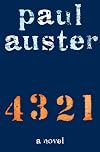
"One swing of a man's bat, and another man's life was in ruins."
"Such an interesting thought, Ferguson said to himself: to imagine how things could be different for him even though he was the same. The same boy in a different house with a different tree. The same boy with different parents. The same boy with the same parents who didn't do the same things they did now."
This is the story of the life (or lives) of Archie Ferguson, from his birth in 1947 until he "comes of age" in his early show more 20's. After a prologue which relates the story of Archie's parents Rose and Stanley and their families, the novel is divided into 7 chapters, and each chapter has 4 parts. Each part tells one version of Archie's life. So for example the story of Archie as a young child in Chapter 1, Part 1 carries forward chronologically to the story of that same Archie in Chapter 2 Part 1; the story of a second Archie begins in Chapter 1 Part 2, and continues in Chapter 2 Part 2, and so forth. As I got into the book, I began to regret that I hadn't been keeping notes on what happened to each version of Archie, so that I was finding it hard to keep what happened to which of the various versions of Archie straight.
For in each of the 4 Archies there are varying events, large and small, resulting in divergencies in the stories of his life. Do Rose and Stanley stay married or do they divorce? Does one or the other of them die? Does the survivor remarry? Does Archie have siblings, or step-siblings or half-siblings? Is Archie's family rich or poor? Does Archie play sports? Is he good at sports? What sport?Is he a good student or poor student? What are Archie's early sexual experiences? Is he heterosexual or homosexual or bi? Does Archie go to college? Where? What jobs does Archie have? Does Archie sustain any injuries or major illnesses? Or even something as basic as does Archie survive to adulthood? And so on and so on.
What makes the book especially interesting is that although Auster is presenting this as Archie's story and its variations, it all plays out against the backdrop of unchanging historical events of the second half of the 20th century. One Archie as a small child is traumatized by hearing of the execution of the Rosenbergs. One Archie loses an uncle in the Korean War. And of course by the time the Archies are teenagers, the Vietnam War and the draft looms over their lives. The Civil Rights Movement plays an important role, and one Archie has first hand experiences in the 1967 Newark riots. Some of the Archies play a role in the student takeover of Columbia University and/or the student SDS movement.
I've read that there are a lot of autobiographical elements from Auster's life in the stories of the Archies, and one of the Archies in his early 20's contemplates or plans to write a book similar to this one. 4321 was published late in Auster's life, but I can't help but wonder if parts of it were written when he was a young man.
Another thing I liked about the book is that it contains many discussions and descriptions of the creative processes involved in writing.As various of the Archies contemplate becoming a writer, we are treated to samples of or descriptions of their early writing efforts. So for example, as a child one Archie wrote a short story called "Sole Mates" in which 2 shoes, Hank and Frank, brown brogans, first meet when they are placed side by side in a dark shoe box. When they are finally bought they become best friends for life. The story was very clever, and for me was illustrative of Auster's brilliant imagination, along with other examples of writings by the fictional Archies. There are also exhaustive lists and descriptions of books the Archies read which influenced them, of movies they saw, of art work. You could develop a whole curriculum from these lists. (Maybe someone should go through the book and pull out the literary references to put on the Just Lists Thread).
There were a couple of things that bothered me about the book. I think it went on a wee bit too long (but who am I to tell Paul Auster how long to make his books?). I did find that some of the descriptions of the various sports played by Archie were a bit repetitious for me. I also felt that some of the descriptions of the awkward teenage makeout sessions with various girls were repetitious. Because of this there were occasionally times when I wasn't overly eager to pick the book up. Nevertheless, overall, the book is so brilliant and wonderfully written, that I highly recommend it.
4 stars show less
"Such an interesting thought, Ferguson said to himself: to imagine how things could be different for him even though he was the same. The same boy in a different house with a different tree. The same boy with different parents. The same boy with the same parents who didn't do the same things they did now."
This is the story of the life (or lives) of Archie Ferguson, from his birth in 1947 until he "comes of age" in his early show more 20's. After a prologue which relates the story of Archie's parents Rose and Stanley and their families, the novel is divided into 7 chapters, and each chapter has 4 parts. Each part tells one version of Archie's life. So for example the story of Archie as a young child in Chapter 1, Part 1 carries forward chronologically to the story of that same Archie in Chapter 2 Part 1; the story of a second Archie begins in Chapter 1 Part 2, and continues in Chapter 2 Part 2, and so forth. As I got into the book, I began to regret that I hadn't been keeping notes on what happened to each version of Archie, so that I was finding it hard to keep what happened to which of the various versions of Archie straight.
For in each of the 4 Archies there are varying events, large and small, resulting in divergencies in the stories of his life. Do Rose and Stanley stay married or do they divorce? Does one or the other of them die? Does the survivor remarry? Does Archie have siblings, or step-siblings or half-siblings? Is Archie's family rich or poor? Does Archie play sports? Is he good at sports? What sport?Is he a good student or poor student? What are Archie's early sexual experiences? Is he heterosexual or homosexual or bi? Does Archie go to college? Where? What jobs does Archie have? Does Archie sustain any injuries or major illnesses? Or even something as basic as does Archie survive to adulthood? And so on and so on.
What makes the book especially interesting is that although Auster is presenting this as Archie's story and its variations, it all plays out against the backdrop of unchanging historical events of the second half of the 20th century. One Archie as a small child is traumatized by hearing of the execution of the Rosenbergs. One Archie loses an uncle in the Korean War. And of course by the time the Archies are teenagers, the Vietnam War and the draft looms over their lives. The Civil Rights Movement plays an important role, and one Archie has first hand experiences in the 1967 Newark riots. Some of the Archies play a role in the student takeover of Columbia University and/or the student SDS movement.
I've read that there are a lot of autobiographical elements from Auster's life in the stories of the Archies, and one of the Archies in his early 20's contemplates or plans to write a book similar to this one. 4321 was published late in Auster's life, but I can't help but wonder if parts of it were written when he was a young man.
Another thing I liked about the book is that it contains many discussions and descriptions of the creative processes involved in writing.As various of the Archies contemplate becoming a writer, we are treated to samples of or descriptions of their early writing efforts. So for example, as a child one Archie wrote a short story called "Sole Mates" in which 2 shoes, Hank and Frank, brown brogans, first meet when they are placed side by side in a dark shoe box. When they are finally bought they become best friends for life. The story was very clever, and for me was illustrative of Auster's brilliant imagination, along with other examples of writings by the fictional Archies. There are also exhaustive lists and descriptions of books the Archies read which influenced them, of movies they saw, of art work. You could develop a whole curriculum from these lists. (Maybe someone should go through the book and pull out the literary references to put on the Just Lists Thread).
There were a couple of things that bothered me about the book. I think it went on a wee bit too long (but who am I to tell Paul Auster how long to make his books?). I did find that some of the descriptions of the various sports played by Archie were a bit repetitious for me. I also felt that some of the descriptions of the awkward teenage makeout sessions with various girls were repetitious. Because of this there were occasionally times when I wasn't overly eager to pick the book up. Nevertheless, overall, the book is so brilliant and wonderfully written, that I highly recommend it.
4 stars show less
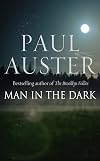
I bought "Man In The Dark" because I was transferring between flights in an airport in some non-English speaking country and I'd run out of things to read. I had no idea that Paul Auster is seen in America as a contemporary god of literature, who's writing, to quote Wikipedia, "blends absurdism, existentialism, crime fiction, and the search for identity and personal meaning."
So I came to "Man In The Dark" with no preconceptions, just a willingness to engage with the text.
I was impressed by show more the concept: an insomniac old man, in pain from a leg shattered in a recent car accident, is trying to get through the night in his daughter's house. His hours of unwelcome wakefulness are stained by grief for his dead wife and worry about his lonely, divorced daughter. He seeks refuge from his cares by talking to his granddaughter and sleep-dreaming a Kafkaesque novel about a dystopian alternative-future US, locked in a civil war.
This was all very promising. The old man, a prize winning journalist was beautifully realized and his conversations with his granddaughter have some wonderful observations about films and the role of objects in film narrative. I felt this was a man I'd like to spend time with.
Unfortunately the book then started to get clever and to play with metaphysical twists and turns that seemed forced and reminded me of just how strongly I associate boredom with Samuel Becket, who made me wait for Godot for an unbearable eternity (yes, I know that that's what he mean to do. What I don't know is why I should thank him for that.).
The book within a book, about a man who wakes in a hole and finds himself drawn into fighting in a war where he has no allegiance to any side was never very compelling. It degenerated into a Kafka-wannabe college-student effort and finally disappeared up its own metaphysical orifice when it turns out that the hero in the story can only win through if he assassinates the old man who invented him.
The structure is clever but in a way that suggests all of the meanings of "conceit".
I read the book to the end. I was able to acknowledge the skill of the author and the sincerity of the moral struggle but it seemed to me that this book failed both as a novel and as a vehicle for original metaphysical thought.
This being said, I'm sure it will appear on High School reading lists for a generation as an example of "real" literature - you know, the kind people read to show how clever they are rather than so they can have a good time. show less
So I came to "Man In The Dark" with no preconceptions, just a willingness to engage with the text.
I was impressed by show more the concept: an insomniac old man, in pain from a leg shattered in a recent car accident, is trying to get through the night in his daughter's house. His hours of unwelcome wakefulness are stained by grief for his dead wife and worry about his lonely, divorced daughter. He seeks refuge from his cares by talking to his granddaughter and sleep-dreaming a Kafkaesque novel about a dystopian alternative-future US, locked in a civil war.
This was all very promising. The old man, a prize winning journalist was beautifully realized and his conversations with his granddaughter have some wonderful observations about films and the role of objects in film narrative. I felt this was a man I'd like to spend time with.
Unfortunately the book then started to get clever and to play with metaphysical twists and turns that seemed forced and reminded me of just how strongly I associate boredom with Samuel Becket, who made me wait for Godot for an unbearable eternity (yes, I know that that's what he mean to do. What I don't know is why I should thank him for that.).
The book within a book, about a man who wakes in a hole and finds himself drawn into fighting in a war where he has no allegiance to any side was never very compelling. It degenerated into a Kafka-wannabe college-student effort and finally disappeared up its own metaphysical orifice when it turns out that the hero in the story can only win through if he assassinates the old man who invented him.
The structure is clever but in a way that suggests all of the meanings of "conceit".
I read the book to the end. I was able to acknowledge the skill of the author and the sincerity of the moral struggle but it seemed to me that this book failed both as a novel and as a vehicle for original metaphysical thought.
This being said, I'm sure it will appear on High School reading lists for a generation as an example of "real" literature - you know, the kind people read to show how clever they are rather than so they can have a good time. show less
Free Will and Blind Luck
I find it very difficult to review a book I am so emotionally attached to. Even after a third read, I still feel so strongly that rational words struggle to reach the surface. I confessed this to GR friend, Violeta the other day. She is an Auster fan and wanted to read my thoughts on this one. Perhaps, a few personal touches and anecdotes will help get me from point A to B in this review.
Then I read an essay that explains how no scholar believes in free will anymore. show more Free Will is an illusion. Basically, our choices are predetermined by so many factors, neurology, the laws of physics, genes etc. Of course this upsets our sense of ourselves as agents of our destiny, perhaps we are more likely pushed into the choices we seem to think belong to us alone.
I pause while writing this to make my son dinner after he came home from coaching 12 year olds on our coldest wettest day so far. I am predetermined to do this even though I know he is 20 years old and capable of doing it himself. He of course is doing what I was doing for him 8 years ago, that is coaching a 12-year-old soccer team (his as it happens) and so it goes on.
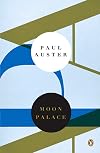
This lead me to Moon Palace and the problem of chance. Chance events are the building blocks of the novel. Chance determines everything, but in a fatalistic way, except that fate isn't predestiny but a story written by an author at his typewriter following the permutations and combinations of the character's possibilities. Fogg, the narrator came from a family of immigrants whose name was changed on arrival at Ellis island from Fogelman. Fogg’s mother dies in an accident when he is nine. His uncle Victor adores him as the only family he has left. When he departs this world, he wills nephew Fogg with 1492 books, which he starts reading in a completely random way, box by box to honour his last family member, and stick to a predetermined path. This fatalism overwhelms Fogg and almost kills him since he gives himself over completely to chance and nearly starves to death. These elements would be spoilers if only the book was poorly written. But it is so beautifully done, you don’t care about the number of books corresponding to the year of Columbus’ discovery or any one of the many details that Fogg is clueless about his past. You stop caring about chance, time and destiny when you are in self-destructive mode. The past Fogg is about to encounter contains the big sprawling story of America – as big as the wild west and manifest destiny or the rise and fall of corporate empires. Chance encounters, experiences, events, signs and symbols act as the narrative glue in this story. How Auster pulls off the plausibility of the events is the spectacle. Fogg just happens to be in the middle of it all trying to see it all.
Personal anecdote spoiler: Books were randomly assigned to me as a child, since my parents could not read English. Even to poorly educated people like my parents, books still contained mystery and wonder. How did I come by books? My father worked in various jobs at a hospital. Books were left about in either the emergency department or outpatient appointment waiting room. Everyone knows to bring a book, or perhaps the nuns who originally ran this hospital believed it right to put books out for people to read, perhaps as a distraction from the anxiety of waiting for bad news. My father, perhaps realising his limitations as a reader and provider of educational support brought some of them home with him once in a while. So books randomly appeared at our home some mornings after one of my father’s night shifts. I got Gogol’s Dead Souls, David Copperfield, Vol 2, Anna Karenina Vol 1, War and Peace among many others like these as a twelve-year-old. Luck, chance, fathers. That’s what Moon Palace is all about. Lost fathers in novels are like lost fathers on night shifts.
Chance in an Auster novel is like a secret language of the universe. Without it, there is no meaning to the random elements of the lives of its characters. A bit like a novel, eh! I only read this book by chance too. I hung around in my 20s with a bunch of people who we’d now call geeks. These friends all loved Auster’s New York Trilogy. I didn’t. Perhaps it was the way they dissected it like a sci-fi movie hunt for George Lucas’ cultish hidden fanboy tributes that bothered me. Anyway, one day at a friend’s place I was bored and found Moon Palace on the shelf and started reading it. The friend said he didn’t like it and gave it to me. I lend it out often and it never seems to come back, requiring me to find a replacement copy every so often.
I like Auster’s take on America’s foundational myths, too. It’s full of stories of people setting off to find their destiny, down on luck, seeking truth, the Pacific Ocean, dramatic western vistas, enduring, surviving, left for dead, defying the odds. Only this time, the story involves one of the recent generation from a boatload of immigrants telling the story rather than some robber baron, plantation owning, corporate magnate with a string of newspapers.
Character isn’t Auster’s strong point. No one is deeply drawn. The old man Effing, who Fogg goes to work for is easily recognisable as any old rich easterner, cantankerous, moody, self-important mostly an a***hole. At times he seems to hold the destiny of young Fogg in his hands. Effing believes he is an agent of his own destiny, defying chance after a freak fall as he journeys across the continent seeking the aesthetic of the old west as a painter. Chance drives Effing’s own story, but he chooses to tell Fogg he has the mythical power of telekinesis. Old men of wealth will believe in their own power over life. This can only be a counterpoint to the element of chance, an irony of the passing of the old. Voice is a character in American fiction. I am convinced of it. So much so, that an American voiced character can only behave like an American. And Auster does something very interesting here, he reminds that this fast talking self-determining being is none other than a victim of chance, too. But you want to hear his story first. After all, even Odysseus was an a***hole at times.
By the end of it, each character in this book loses everyone they are close to. More like a melodrama than an earnest piece of literature. Fogg’s mother and uncle, eventually his father and even the grandfather he didn’t know about. He loses his lover Kitty Wu (three reads and I still will them to continue) and Zimmerman his old college buddy who saved his life when he went homeless. Loss is inevitable, like chance. The only point of loss is that it is a point along the way in a story that leads to another. Like a refutation of free will, there are elements at work leading from one point to the next that we cannot fully know until they are revealed. show less
I find it very difficult to review a book I am so emotionally attached to. Even after a third read, I still feel so strongly that rational words struggle to reach the surface. I confessed this to GR friend, Violeta the other day. She is an Auster fan and wanted to read my thoughts on this one. Perhaps, a few personal touches and anecdotes will help get me from point A to B in this review.
Then I read an essay that explains how no scholar believes in free will anymore. show more Free Will is an illusion. Basically, our choices are predetermined by so many factors, neurology, the laws of physics, genes etc. Of course this upsets our sense of ourselves as agents of our destiny, perhaps we are more likely pushed into the choices we seem to think belong to us alone.
I pause while writing this to make my son dinner after he came home from coaching 12 year olds on our coldest wettest day so far. I am predetermined to do this even though I know he is 20 years old and capable of doing it himself. He of course is doing what I was doing for him 8 years ago, that is coaching a 12-year-old soccer team (his as it happens) and so it goes on.
This lead me to Moon Palace and the problem of chance. Chance events are the building blocks of the novel. Chance determines everything, but in a fatalistic way, except that fate isn't predestiny but a story written by an author at his typewriter following the permutations and combinations of the character's possibilities. Fogg, the narrator came from a family of immigrants whose name was changed on arrival at Ellis island from Fogelman. Fogg’s mother dies in an accident when he is nine. His uncle Victor adores him as the only family he has left. When he departs this world, he wills nephew Fogg with 1492 books, which he starts reading in a completely random way, box by box to honour his last family member, and stick to a predetermined path. This fatalism overwhelms Fogg and almost kills him since he gives himself over completely to chance and nearly starves to death. These elements would be spoilers if only the book was poorly written. But it is so beautifully done, you don’t care about the number of books corresponding to the year of Columbus’ discovery or any one of the many details that Fogg is clueless about his past. You stop caring about chance, time and destiny when you are in self-destructive mode. The past Fogg is about to encounter contains the big sprawling story of America – as big as the wild west and manifest destiny or the rise and fall of corporate empires. Chance encounters, experiences, events, signs and symbols act as the narrative glue in this story. How Auster pulls off the plausibility of the events is the spectacle. Fogg just happens to be in the middle of it all trying to see it all.
Personal anecdote spoiler: Books were randomly assigned to me as a child, since my parents could not read English. Even to poorly educated people like my parents, books still contained mystery and wonder. How did I come by books? My father worked in various jobs at a hospital. Books were left about in either the emergency department or outpatient appointment waiting room. Everyone knows to bring a book, or perhaps the nuns who originally ran this hospital believed it right to put books out for people to read, perhaps as a distraction from the anxiety of waiting for bad news. My father, perhaps realising his limitations as a reader and provider of educational support brought some of them home with him once in a while. So books randomly appeared at our home some mornings after one of my father’s night shifts. I got Gogol’s Dead Souls, David Copperfield, Vol 2, Anna Karenina Vol 1, War and Peace among many others like these as a twelve-year-old. Luck, chance, fathers. That’s what Moon Palace is all about. Lost fathers in novels are like lost fathers on night shifts.
Chance in an Auster novel is like a secret language of the universe. Without it, there is no meaning to the random elements of the lives of its characters. A bit like a novel, eh! I only read this book by chance too. I hung around in my 20s with a bunch of people who we’d now call geeks. These friends all loved Auster’s New York Trilogy. I didn’t. Perhaps it was the way they dissected it like a sci-fi movie hunt for George Lucas’ cultish hidden fanboy tributes that bothered me. Anyway, one day at a friend’s place I was bored and found Moon Palace on the shelf and started reading it. The friend said he didn’t like it and gave it to me. I lend it out often and it never seems to come back, requiring me to find a replacement copy every so often.
I like Auster’s take on America’s foundational myths, too. It’s full of stories of people setting off to find their destiny, down on luck, seeking truth, the Pacific Ocean, dramatic western vistas, enduring, surviving, left for dead, defying the odds. Only this time, the story involves one of the recent generation from a boatload of immigrants telling the story rather than some robber baron, plantation owning, corporate magnate with a string of newspapers.
Character isn’t Auster’s strong point. No one is deeply drawn. The old man Effing, who Fogg goes to work for is easily recognisable as any old rich easterner, cantankerous, moody, self-important mostly an a***hole. At times he seems to hold the destiny of young Fogg in his hands. Effing believes he is an agent of his own destiny, defying chance after a freak fall as he journeys across the continent seeking the aesthetic of the old west as a painter. Chance drives Effing’s own story, but he chooses to tell Fogg he has the mythical power of telekinesis. Old men of wealth will believe in their own power over life. This can only be a counterpoint to the element of chance, an irony of the passing of the old. Voice is a character in American fiction. I am convinced of it. So much so, that an American voiced character can only behave like an American. And Auster does something very interesting here, he reminds that this fast talking self-determining being is none other than a victim of chance, too. But you want to hear his story first. After all, even Odysseus was an a***hole at times.
By the end of it, each character in this book loses everyone they are close to. More like a melodrama than an earnest piece of literature. Fogg’s mother and uncle, eventually his father and even the grandfather he didn’t know about. He loses his lover Kitty Wu (three reads and I still will them to continue) and Zimmerman his old college buddy who saved his life when he went homeless. Loss is inevitable, like chance. The only point of loss is that it is a point along the way in a story that leads to another. Like a refutation of free will, there are elements at work leading from one point to the next that we cannot fully know until they are revealed. show less
Lists
Folio Society (1)
Unread books (1)
True Crime (1)
Best First Lines (1)
First Novels (1)
04 (1)
Science: Social (1)
Judaism & Israel (1)
Elegant Prose (1)
1980s (2)
Five star books (3)
Metafiction (4)
My TBR (5)
To Read (1)
Sleeplessness (1)
Urban Fiction (1)
Booker Prize (1)
Christmas Books (1)
A Dog's Eye View (1)
Magic Realism (1)
Awards


You May Also Like


Associated Authors
Statistics
- Works
- 106
- Also by
- 48
- Members
- 64,982
- Popularity
- #216
- Rating
- 3.8
- Reviews
- 1,510
- ISBNs
- 1,889
- Languages
- 40
- Favorited
- 393


