
Ian McEwan
Author of Atonement
About the Author
Ian McEwan was born in Aldershot, England on June 21, 1948. He received a B.A. in English Literature from the University of Sussex and an M.A. in English Literature from the University of East Anglia. He writes novels, plays, and collections of short stories including In Between the Sheets, The show more Cement Garden, The Comfort of Strangers, The Innocent, Black Dogs, The Daydreamer, Enduring Love, Sweet Tooth, The Children Act and Nutshell. He has won numerous awards including the 1976 Somerset Maugham Award for First Love, Last Rites; the 1987 Whitbread Novel Award and the 1993 Prix Fémina Etranger for The Child in Time; the 1998 Booker Prize for Fiction for Amserdam; the 2002 W. H. Smith Literary Award, the 2003 National Book Critics' Circle Fiction Award, the 2003 Los Angeles Times Prize for Fiction, and the 2004 Santiago Prize for the European Novel for Atonement; and the 2006 James Tait Black Memorial Prize for Saturday. (Bowker Author Biography) show less
Works by Ian McEwan
Stories: First Love, Last Rites; Between the Sheets (Einaudi Pocket Writers Vol. 399) (1996) 51 copies
Ian McEwan Bestsellers: The Child in Time / The Cement Garden / The Comfort of Strangers (2020) 8 copies
Other Minds 4 copies
Disguises 4 copies
Hand on the Shoulder 3 copies
The Diagnosis 2 copies
Homemade {story} 2 copies
Solid Geometry [short story] 2 copies
2019 1 copy
W pościeli 1 copy
Primo Amore ultimi riti 1 copy
Στην ακτή: Μυθιστόρημα 1 copy
Butterflies [short story] 1 copy
Düssel... 1 copy
Amsterdam Condensed 1 copy
2004 1 copy
גן הבטון 1 copy
Associated Works
What We Believe but Cannot Prove: Today's Leading Thinkers on Science in the Age of Certainty (2006) — Introduction, some editions — 851 copies, 14 reviews
The Art of the Story: An International Anthology of Contemporary Short Stories (1999) — Contributor — 394 copies, 5 reviews
The Art of the Tale: An International Anthology of Short Stories (1986) — Contributor — 381 copies, 3 reviews
The Graphic Canon, Vol. 3: From Heart of Darkness to Hemingway to Infinite Jest (2013) — Contributor — 162 copies, 1 review
New Beginnings: New Writing from Bestselling Authors Sold in Aid of the Indian Ocean Tsunami Earthquake Charities (2005) — Contributor — 46 copies
William Golding: The Man and His Books - A Tribute on His 75th Birthday (1986) — Contributor — 18 copies
The Ploughman's Lunch — Screenwriter — 1 copy
Tagged
Common Knowledge
- Legal name
- McEwan, Ian Russell
- Birthdate
- 1948-06-21
- Gender
- male
- Education
- Woolverstone Hall School
Eton College
University of Sussex (BA|1970)
University of East Anglia (M.Litt.|1971|Creative Writing) - Occupations
- short story writer
screenwriter
novelist - Organizations
- British Humanist Association (distinguished supporter)
American Academy of Arts and Letters (Foreign Honorary, Literature, 2006) - Awards and honors
- Kenyon Review Award for Literary Achievement (2006)
Royal Society of Literature (Fellow, 1983)
Royal Society of Arts (Fellow)
Shakespeare Prize (1999)
Order of the British Empire (2000)
Granta's Best of Young British Novelists (1983) (show all 10)
British Book Award (2008)
Jerusalem Prize (2011)
Helmerich Award (2010)
Goethe Medal (2020) - Agent
- Deborah Rogers (Rogers, Coleridge & White)
- Relationships
- Bradbury, Malcolm (teacher)
McAfee, Annalena (wife) - Short biography
- In 2002, Ian McEwan discovered he had a brother six years his senior who had been given up for adoption by his mother during World War II.
- Nationality
- UK
- Birthplace
- Aldershot, Hampshire, England, UK
- Places of residence
- East Asia
Germany
North Africa
Oxford, Oxfordshire, England, UK
London, England, UK - Map Location
- England, UK
Members
Discussions
Ian McEwan in Literary Snobs (February 2023)
BRITISH AUTHOR CHALLENGE - AUGUST 2016 - WYNNE JONES & McEWAN in 75 Books Challenge for 2016 (September 2016)
Ian McEwan in Someone explain it to me... (July 2014)
Saturday by Ian McEwan in 1001 Books to read before you die (April 2008)
Reviews
Solar by Ian McEwan
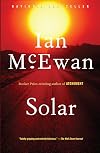
Michael Beard, Nobel Prize winner, womanizer, occasional buffoon, has-been opportunist, is far from a likeable character. As a matter-of-fact, one wonders how he can have so much success with women since he's not much to look at either. But this is the genius of McEwan: I couldn't help but wonder what would happen to him, how the sordid mess that he created for himself would finish. In some ways, Beard is very relatable: he does the stupid things that we all occasionally do, makes cowardly show more decisions, has flashes of brilliance and undeniable qualities. He is very human, and where he is probably much more callous than most of us, we can probably all see aspects of ourselves, good and bad.
The narrative is also very cleverly constructed where a few incidents, a couple critical decisions, all come to roost in the most unlikely of places, a small town in New Mexico. There is definitely poetry in those last desert scenes where the oppressive heat becomes unbearable.
Overall, although it's a dense book, I really enjoyed this read with passages that had me laughing out loud and others shaking my head. The denouement is perfect as both a logical ending and a ruthless judgment of Beard who may be foolish but not a fool. show less
The narrative is also very cleverly constructed where a few incidents, a couple critical decisions, all come to roost in the most unlikely of places, a small town in New Mexico. There is definitely poetry in those last desert scenes where the oppressive heat becomes unbearable.
Overall, although it's a dense book, I really enjoyed this read with passages that had me laughing out loud and others shaking my head. The denouement is perfect as both a logical ending and a ruthless judgment of Beard who may be foolish but not a fool. show less
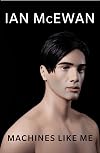
This took me a while to start reading, because I made the mistake of looking up all the negative reviews first. And yes, this is a bad sci-fi novel, and a jumbled work of fiction in general, but honestly, the worst part for me was the narrator, Charlie Friend (or Humbert Humbert, as I started calling him, creepy old nonce that he is). The story is fairly easy to get through.
Set, randomly, in an alternate version of the 1980s, presumably so that the author can safely rant about politics while show more also dropping in cliched technological advances like artificial intelligence, a nonentity called Charlie, living in a flat in London beneath a younger nonentity called Miranda on whom he has a crush, buys a 'synthetic human' called Adam. And - that's the story, really. Adam is the best character in the book. Charlie is the type of bland middle-aged man - although he's only 32 - who thinks that drinking wine makes him sophisticated and calls shagging the girl in the flat upstairs 'making love', because 'getting his end away' would make him sound shallow. Miranda, the emotionally stunted student who is ten years Charlie's junior yet somehow - author insert alert! - falls in love with him anyway, is supposed to be some sort of sympathetic womanly enigma - she has a secret! - but the only depth of character she gains is a nasty streak of vindictiveness. I wasn't convinced that Charlie and Miranda were in love, or that their needs mattered more than Adam's. And the ridiculous subplots of Miranda's secret and the little boy that she wants to adopt just made me like the 'humans' even less. Perhaps that's the point - I hope so, Mr McEwan!
Anyway, Adam. One of a batch of twenty five androids named Adam and Eve - that's the level of originality we're dealing with - created by an Alan Turing who doesn't kill himself but lives into old age, this Adam has the misfortune to be purchased by Charlie and programmed by both Charlie and Miranda, yet he's still awesome. Intelligent, perceptive, poetic (gotta love those haikus), and not about to take any shit from his 'owner' - when Charlie makes a habit of switching Adam off, Adam breaks Charlie's wrist and threatens him: 'I mean it when I say how sorry I am I broke a bit of you last night. I promise it will never happen again. But the next time you reach for my kill switch, I'm more than happy to remove your arm entirely, at the ball and socket joint'. I laughed, I have to admit. Charlie and Miranda's lives are so small and pathetic, and Adam is so brilliant, that I kind of wanted him to follow through on his threat and worse. But when Adam's implacable logic serves Miranda the justice she's so fond of meting out to others, the two bottom feeders go after Adam again!
The plot is rambling and cliched, padded with political rants and what McEwan must have thought was his clever reinvention of the 80s - the Falklands War and a lot of lives are lost, the prime minister is killed at Brighton, etc - and the narrator is so boring that Miranda's father thinks he's the machine (another laugh), but I enjoyed reading about Adam and how his 'brothers and sisters' are so depressed by humanity that they are systematically killing themselves. I couldn't have cared less about Miranda, and didn't believe for a second that a 23 year old student would want to adopt a random child, even less that her application would be seriously considered. I think the author is of the view that all women make natural mothers, and some latent maternal instinct will kick in when faced with a grubby toddler who has the unfortunate name of Mark. But then, he also seems to think that Charlie Friend would attract said 23 year old just because they live in the same building, whereas she would be more likely to laugh in his face and then move out. Although their rationale that 'the end justifies the means' is bitter evidence that they deserve each other.
Intriguing and infuriating - could have been far better, if told from Adam's perspective! show less
Set, randomly, in an alternate version of the 1980s, presumably so that the author can safely rant about politics while show more also dropping in cliched technological advances like artificial intelligence, a nonentity called Charlie, living in a flat in London beneath a younger nonentity called Miranda on whom he has a crush, buys a 'synthetic human' called Adam. And - that's the story, really. Adam is the best character in the book. Charlie is the type of bland middle-aged man - although he's only 32 - who thinks that drinking wine makes him sophisticated and calls shagging the girl in the flat upstairs 'making love', because 'getting his end away' would make him sound shallow. Miranda, the emotionally stunted student who is ten years Charlie's junior yet somehow - author insert alert! - falls in love with him anyway, is supposed to be some sort of sympathetic womanly enigma - she has a secret! - but the only depth of character she gains is a nasty streak of vindictiveness. I wasn't convinced that Charlie and Miranda were in love, or that their needs mattered more than Adam's. And the ridiculous subplots of Miranda's secret and the little boy that she wants to adopt just made me like the 'humans' even less. Perhaps that's the point - I hope so, Mr McEwan!
Anyway, Adam. One of a batch of twenty five androids named Adam and Eve - that's the level of originality we're dealing with - created by an Alan Turing who doesn't kill himself but lives into old age, this Adam has the misfortune to be purchased by Charlie and programmed by both Charlie and Miranda, yet he's still awesome. Intelligent, perceptive, poetic (gotta love those haikus), and not about to take any shit from his 'owner' - when Charlie makes a habit of switching Adam off, Adam breaks Charlie's wrist and threatens him: 'I mean it when I say how sorry I am I broke a bit of you last night. I promise it will never happen again. But the next time you reach for my kill switch, I'm more than happy to remove your arm entirely, at the ball and socket joint'. I laughed, I have to admit. Charlie and Miranda's lives are so small and pathetic, and Adam is so brilliant, that I kind of wanted him to follow through on his threat and worse. But when Adam's implacable logic serves Miranda the justice she's so fond of meting out to others, the two bottom feeders go after Adam again!
The plot is rambling and cliched, padded with political rants and what McEwan must have thought was his clever reinvention of the 80s - the Falklands War and a lot of lives are lost, the prime minister is killed at Brighton, etc - and the narrator is so boring that Miranda's father thinks he's the machine (another laugh), but I enjoyed reading about Adam and how his 'brothers and sisters' are so depressed by humanity that they are systematically killing themselves. I couldn't have cared less about Miranda, and didn't believe for a second that a 23 year old student would want to adopt a random child, even less that her application would be seriously considered. I think the author is of the view that all women make natural mothers, and some latent maternal instinct will kick in when faced with a grubby toddler who has the unfortunate name of Mark. But then, he also seems to think that Charlie Friend would attract said 23 year old just because they live in the same building, whereas she would be more likely to laugh in his face and then move out. Although their rationale that 'the end justifies the means' is bitter evidence that they deserve each other.
Intriguing and infuriating - could have been far better, if told from Adam's perspective! show less
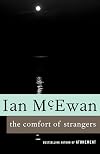
Reason read: botm Dec 2024. What a horrid book. This reminded me of Crash and Crash May actually have more literary value. The story of a couple (not married) on vacation in Venice. Their relationship is meh, the setting is a set up for mysterious and unsettling themes of danger. So despite it being a location that should have been charming it is, instead, one of unsettling dangers. The title alludes to their meeting up with a man, Robert and his wife Caroline. This couple are simply awful show more and why anyone would even want a second run in with them is totally beyond comprehension. The themes of this book being the dark side of sexuality, seductive stranger danger, false intimacy through manipulation and dominance, and anxieties and repressed desires. There is nothing in this book that is comforting at all. I am going to rate it one star. It is my least favorite book by Ian McEwan. It was short listeed for the Booker and I am glad the judges did not think this one was a winner. show less
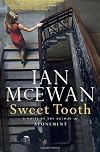
On one view, duplicity is the novelist’s stock-in-trade. As such, all novelists are spies, of a sort, and all novels spy novels. Or perhaps the doubleness of fiction makes all novels metafictional, and all novelists purveyors of metafictional theory. Or perhaps the hot pursuit of plot, that narrative drive, is equally meaningful whether one is chasing a real fox or a faux-fox. One or all these views might be held by Ian McEwan and in Sweet Tooth he puts them all into play.
Serena Frome, a show more beautiful young Cambridge graduate, is groomed by a Cambridge don to enter the British internal security service, MI5. It is 1972, a transitional year for the world economy as the OPEC embargo begins to bite, the coal miners’ union flexes its muscle, the Troubles in Northern Ireland are about to overwhelm the British mainland, a snap election leads to a change in government, and Serena Frome, against all good advice, falls in love. Unfortunately her love interest is also her work target, the writer T.H. Haley, and everything from that point forward (or possibly earlier) is not entirely as it seems.
This is rich ground for McEwan as he explores conflicting interests (taste?) in fiction. As Serena undergoes her own form of sentimental education, the reader glimpses snippets from T.H. Haley’s short stories and first novella that are eerily similar to McEwan’s own early work. These are just tasters, however, as McEwan slips from one style to another and back again; it’s a master class by a master craftsman, each sentence deliciously precise. It hardly matters that Serena’s inner conflict is less than fully believable, or that her external conflicts border on the preposterous. (Well, it might matter, but go with it and wait for the twist in the tail/tale at the end.)
For my own part, I do not believe that fiction is by nature duplicitous. I think that misunderstands the relationship between truth and fiction. That makes me less than sympathetic to McEwan’s metafictional theses. But such disagreement is no bar to recommending this finely constructed novel and whatever sweet truth it cares to impart. show less
Serena Frome, a show more beautiful young Cambridge graduate, is groomed by a Cambridge don to enter the British internal security service, MI5. It is 1972, a transitional year for the world economy as the OPEC embargo begins to bite, the coal miners’ union flexes its muscle, the Troubles in Northern Ireland are about to overwhelm the British mainland, a snap election leads to a change in government, and Serena Frome, against all good advice, falls in love. Unfortunately her love interest is also her work target, the writer T.H. Haley, and everything from that point forward (or possibly earlier) is not entirely as it seems.
This is rich ground for McEwan as he explores conflicting interests (taste?) in fiction. As Serena undergoes her own form of sentimental education, the reader glimpses snippets from T.H. Haley’s short stories and first novella that are eerily similar to McEwan’s own early work. These are just tasters, however, as McEwan slips from one style to another and back again; it’s a master class by a master craftsman, each sentence deliciously precise. It hardly matters that Serena’s inner conflict is less than fully believable, or that her external conflicts border on the preposterous. (Well, it might matter, but go with it and wait for the twist in the tail/tale at the end.)
For my own part, I do not believe that fiction is by nature duplicitous. I think that misunderstands the relationship between truth and fiction. That makes me less than sympathetic to McEwan’s metafictional theses. But such disagreement is no bar to recommending this finely constructed novel and whatever sweet truth it cares to impart. show less
Lists
Read This Next (1)
Metamorphoses (1)
1970s (1)
Didactic Fiction (1)
Same Title (1)
. (1)
Finished in 2025 (1)
A Novel Cure (1)
French Books (1)
Best Spy Fiction (1)
Summer Books (1)
. (1)
1980s (1)
Favourite Books (1)
2000s decade (1)
Best War Stories (1)
Elegant Prose (1)
United Kingdom (1)
First Novels (1)
Finished in 2024 (1)
Venice (1)
Arctic novels (1)
Booker Prize (6)
AP Lit (2)
One Day (1)
Take Four Books (1)
Unread books (5)
Five star books (3)
Short and Sweet (1)
1990s (1)
BBC Big Read (1)
. (1)
BBC Big Read (1)
100 New Classics (1)
Enfants sans (1)
To Read (1)
Awards


You May Also Like


Associated Authors
Statistics
- Works
- 77
- Also by
- 31
- Members
- 100,209
- Popularity
- #90
- Rating
- 3.7
- Reviews
- 2,888
- ISBNs
- 1,510
- Languages
- 35
- Favorited
- 487


