
Pat Barker (1) (1943–)
Author of Regeneration
For other authors named Pat Barker, see the disambiguation page.
About the Author
Pat Barker's most recent novel is Another World (FSG, 1999). She is also the author of the highly acclaimed Regeneration trilogy: Regeneration; The Eye in the Door, winner of the 1993 Guardian Fiction Prize; and The Ghost Road, winner of the 1996 Booker Prize. She lives in England. (Bowker Author show more Biography) show less
Series
Works by Pat Barker
Associated Works
Tagged
Common Knowledge
- Canonical name
- Barker, Pat
- Legal name
- Barker, Patricia Mary W.
- Other names
- Drake, Patricia Mary W. (birth)
- Birthdate
- 1943-05-08
- Gender
- female
- Education
- London School of Economics (BA|1965)
Durham University - Occupations
- novelist
- Awards and honors
- Order of the British Empire (Commander, 2000)
Royal Society of Literature (Fellow, 1995) - Relationships
- Ralph, Anna (daughter)
- Nationality
- UK
- Birthplace
- Thornaby-on-Tees, Yorkshire, England, UK
- Places of residence
- Thornaby-on-Tees, Yorkshire, England, UK
- Map Location
- England, UK
Members
Discussions
Le Salon reads the Iliad in Le Salon Littéraire du Peuple pour le Peuple (April 2020)
What are you reading the week of September 20, 2019? in What Are You Reading Now? (September 2019)
***Group Read: Regerneration in 1001 Books to read before you die (November 2010)
Reviews

I'm a sucker for retelling a story from a different persepective. Done well it can bring something new to the original story, and open your eyes to a new view. And this is done well, in fact it is almost done very well, but a few jarring notes crept in.
This is the siege of Troy as told from the perspective of Bresis, who is queen of Lyrnessus, and is awarded to Achilles as a slave for him to do with what he will. And she ends up being his bed girl. She is then taken by Agamemnon to replace show more his favourite slave, who is sent back to her father and causes the falling out between Achilles & Agamemnon. Only it's not actually about Bresis at all, it's about male power and posturing and they both back themselves into a corner they can't get out of without loosing face.
Telling the story from Bresis' view gives the narrative a whole different spin. through he you hear from the women in the camps, those taken as slaves, the pretty and the not so pretty and how they fare with their captors. It can be pretty blunt at times about the fact that she is having sex (let's be honest - and the book is very honest in this regard - being raped) by the man who killed her husband and brothers. And yet she can see the human side of him, at times in a way that few others can. For the most part, the story is told by Bresis herself, in the first person. And that worked really well, it made it very immediate and took you into her world. You could see the story you knew, but it was as if in a distorted mirror, and that just made it more interesting, the distortion of a close first person narrator telling what is important to them not what was important to the original story. The bits that I felt were jarring were the chapters that were not told in the first person, they were in the 3rd person and told Achilles story, which you needed to understand what Bresis was seeing and experiencing, but it felt like a return to the traditional, male orriented, story, rather than seeing the world solely through the eyes of the one person. I felt that these were at odds with the remainder of the story. And for that reason this doesn't get the 5 stars that it almost deserves. It is a very good read, it is a really good effort to do something different, but I feel that the execution lets it down just on that one point. show less
This is the siege of Troy as told from the perspective of Bresis, who is queen of Lyrnessus, and is awarded to Achilles as a slave for him to do with what he will. And she ends up being his bed girl. She is then taken by Agamemnon to replace show more his favourite slave, who is sent back to her father and causes the falling out between Achilles & Agamemnon. Only it's not actually about Bresis at all, it's about male power and posturing and they both back themselves into a corner they can't get out of without loosing face.
Telling the story from Bresis' view gives the narrative a whole different spin. through he you hear from the women in the camps, those taken as slaves, the pretty and the not so pretty and how they fare with their captors. It can be pretty blunt at times about the fact that she is having sex (let's be honest - and the book is very honest in this regard - being raped) by the man who killed her husband and brothers. And yet she can see the human side of him, at times in a way that few others can. For the most part, the story is told by Bresis herself, in the first person. And that worked really well, it made it very immediate and took you into her world. You could see the story you knew, but it was as if in a distorted mirror, and that just made it more interesting, the distortion of a close first person narrator telling what is important to them not what was important to the original story. The bits that I felt were jarring were the chapters that were not told in the first person, they were in the 3rd person and told Achilles story, which you needed to understand what Bresis was seeing and experiencing, but it felt like a return to the traditional, male orriented, story, rather than seeing the world solely through the eyes of the one person. I felt that these were at odds with the remainder of the story. And for that reason this doesn't get the 5 stars that it almost deserves. It is a very good read, it is a really good effort to do something different, but I feel that the execution lets it down just on that one point. show less

Novelist Barker takes on a retelling of The Iliad from a woman’s point of view. Briseis was a queen when her city fell to the Greeks. She was awarded to Achilles as his war prize, becoming his concubine. From her position as a slave, Briseis describes life within the Greek war camp and the conversations she overhears as she serves at Achilles’ table and later listens to his conversations with Patroclus. While the men in both camps are focused on winning the war, Briseis wants to recover show more her identity as a person that was taken from her when she became a slave. The outcome of the war is never in doubt since Barker is faithful to the legend of the fall of Troy. Briseis finally realizes that she and the other Trojan women have not been silenced forever when she overhears a Trojan woman singing to her son by her Greek captor. “We’re going to survive—our songs, our stories. They’ll never be able to forget us. Decades after the last man who fought at Troy is dead, their sons will remember the songs their Trojan mothers sang to them. We’ll be in their dreams—and in their worst nightmares, too." show less
I once got into a heated discussion with science-fiction writer Steven Barnes about whether or not it was appropriate to have women in the armed forces assume combat duties (which was beginning to happen at that time). The topic rated its own panel discussion at the convention, and it all started when Barnes declared that “any civilization that puts its baby-makers on the front lines is not going to survive.” I then pointed out that “baby-makers” have been on the front lines of show more virtually every conflict throughout history – they just weren’t allowed to carry weapons.
I do hope Mr. Barnes has read (or will read) Pat Barker’s [The Silence of the Girls], which centers around the ending days of the Trojan War but is told mostly from the viewpoint of a Trojan woman, captured when her city fell and awarded as a prize of war to Achilles.
Briseis was the daughter of one king and the wife of another, both orphaned and widowed when her city fell to the Greeks. Her rank, youth, and (according to legend) beauty made her a worthy trophy for the vain and high-tempered Achilles. Equally desirable was Chriseis, the young girl who was studying as an Apollonian priestess under the ministrations of her father, a priest, and who was awarded to Agamemnon. (Sorry about the Briseis/Chriseis name similarity. Blame it on Homer.) Chriseis’ father, having survived his city’s fall, comes to ransom back his daughter, and when the offer is refused a horrible plague strikes the camp. Agamemnon finally agrees to give the girl back, and sure enough the plague ceases. Only now he has no bed-warmer, and decides he is entitled by his kingly rank to take Briseis from Achilles. Remember back up there where we said “vain and high-tempered”? He does not take this insult well, and there is a falling-out that nearly changes the course of the war.
Readers familiar with the tale know where this is all going. Readers who have never been exposed to the world’s first grand soap opera don’t really need all the gory details to become intrigued by this character-driven novel.
Briseis deals with her captivity and sexual subjugation with a calm, remote manner. As distasteful as the whole thing is, it’s what happened to the women of vanquished Trojans and she doesn’t see much point in fussing about it. She also realizes that being the chattel of a powerful man is preferable to being an enslaved woman with no specific owner, and she does nothing to upset that particular apple cart. What she chafes under is simply the fact of slavery.
For a novel with the reality of rape at its core, [The Silence of the Girls] is remarkably tame. There are no detailed descriptions of any specific sex act, and Achilles’ relationship with Patroclus (long presumed to be his lover as well as his friend) is acknowledged in passing. Among the captive women there is a practical, matter-of-fact attitude and even an occasional joke about how to best accommodate the preferences of their owners and how to use their sexuality to better their social standing among the captive population. When it comes to the dialogue among warriors and the drinking songs of the troops, the language get considerably rougher. Who knew bronze-age Greeks had such an affinity for the F-bomb?
Which brings up one of the few quibbles the reader might have with the book. The dialogue is sometimes jarringly contemporary. Lines like “are you all right, mate?” and “you couldn’t bloody well wait for it” seem incongruous coming from a 1250 B.C. mouth. Yet what is an author to do? Too many times, when writing about this saga, authors have used mock-Shakespearean language or stilted, contraction-less patois that strips all personality, all reality, from the characters. In the end, one must simply acknowledge that Barker is a 21st-Century British author who has chosen to write the dialogue in 21st-Century British vernacular.
For this reader, that was overbalanced by the ways in which Barker has approached the brawling, petulant, meddling gods of the era.
While Briseis remains skeptical of the gods’ powers, she nonetheless doesn’t challenge them directly. When plague strikes the camp, she has long observed the increase in the rat population that preceded it. When Achilles’ mother, Thetis, is referred to as a sea goddess, she withholds judgement. But when the viewpoint shifts to Achilles, his belief in the gods’ powers is undeniable. The narration presents supernatural visitations from Thetis as perfectly normal occurrences, and the magical armor she brings him for the final battle of the war is as real to Achilles as the weapons from which it protects him.
Overall, this is a thought-provoking work that takes on the horrors of war as it impacts victor and vanquished, warrior and bystander alike. show less
I do hope Mr. Barnes has read (or will read) Pat Barker’s [The Silence of the Girls], which centers around the ending days of the Trojan War but is told mostly from the viewpoint of a Trojan woman, captured when her city fell and awarded as a prize of war to Achilles.
Briseis was the daughter of one king and the wife of another, both orphaned and widowed when her city fell to the Greeks. Her rank, youth, and (according to legend) beauty made her a worthy trophy for the vain and high-tempered Achilles. Equally desirable was Chriseis, the young girl who was studying as an Apollonian priestess under the ministrations of her father, a priest, and who was awarded to Agamemnon. (Sorry about the Briseis/Chriseis name similarity. Blame it on Homer.) Chriseis’ father, having survived his city’s fall, comes to ransom back his daughter, and when the offer is refused a horrible plague strikes the camp. Agamemnon finally agrees to give the girl back, and sure enough the plague ceases. Only now he has no bed-warmer, and decides he is entitled by his kingly rank to take Briseis from Achilles. Remember back up there where we said “vain and high-tempered”? He does not take this insult well, and there is a falling-out that nearly changes the course of the war.
Readers familiar with the tale know where this is all going. Readers who have never been exposed to the world’s first grand soap opera don’t really need all the gory details to become intrigued by this character-driven novel.
Briseis deals with her captivity and sexual subjugation with a calm, remote manner. As distasteful as the whole thing is, it’s what happened to the women of vanquished Trojans and she doesn’t see much point in fussing about it. She also realizes that being the chattel of a powerful man is preferable to being an enslaved woman with no specific owner, and she does nothing to upset that particular apple cart. What she chafes under is simply the fact of slavery.
For a novel with the reality of rape at its core, [The Silence of the Girls] is remarkably tame. There are no detailed descriptions of any specific sex act, and Achilles’ relationship with Patroclus (long presumed to be his lover as well as his friend) is acknowledged in passing. Among the captive women there is a practical, matter-of-fact attitude and even an occasional joke about how to best accommodate the preferences of their owners and how to use their sexuality to better their social standing among the captive population. When it comes to the dialogue among warriors and the drinking songs of the troops, the language get considerably rougher. Who knew bronze-age Greeks had such an affinity for the F-bomb?
Which brings up one of the few quibbles the reader might have with the book. The dialogue is sometimes jarringly contemporary. Lines like “are you all right, mate?” and “you couldn’t bloody well wait for it” seem incongruous coming from a 1250 B.C. mouth. Yet what is an author to do? Too many times, when writing about this saga, authors have used mock-Shakespearean language or stilted, contraction-less patois that strips all personality, all reality, from the characters. In the end, one must simply acknowledge that Barker is a 21st-Century British author who has chosen to write the dialogue in 21st-Century British vernacular.
For this reader, that was overbalanced by the ways in which Barker has approached the brawling, petulant, meddling gods of the era.
While Briseis remains skeptical of the gods’ powers, she nonetheless doesn’t challenge them directly. When plague strikes the camp, she has long observed the increase in the rat population that preceded it. When Achilles’ mother, Thetis, is referred to as a sea goddess, she withholds judgement. But when the viewpoint shifts to Achilles, his belief in the gods’ powers is undeniable. The narration presents supernatural visitations from Thetis as perfectly normal occurrences, and the magical armor she brings him for the final battle of the war is as real to Achilles as the weapons from which it protects him.
Overall, this is a thought-provoking work that takes on the horrors of war as it impacts victor and vanquished, warrior and bystander alike. show less
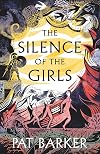
Pat Barker has done a retelling of Achilles' story, this time from the point of view of Briseis, the captured and enslaved princess of a city in Troy. Briseis is given to Achilles as part of his spoils of war. When Agamemnon and Achilles have a falling out, Briseis is in the middle, taken from Achilles by Agamemnon as a show of power.
Briseis's complicated feelings towards her captors, even those who are relatively nice to her are explored throughout the book. This is especially true of her show more feelings towards Patroclus, Achilles's best friend, but also in the end true for her feelings towards Achilles. Also, as the title suggests, the way that women are silenced in the story is explored.
Overall, I loved this book. However, I kept thinking the reason I loved it is because the story itself is still so good, even after 1000s of years. The complicated Achilles with his love of Patroclus, his hero status, but his petulant behavior just can't be beat. And his story does overshadow Briseis, even while the book is meant to be about her story. So this is compulsively readable and a great story, but I'm not positive Barker achieved what she set out to. show less
Briseis's complicated feelings towards her captors, even those who are relatively nice to her are explored throughout the book. This is especially true of her show more feelings towards Patroclus, Achilles's best friend, but also in the end true for her feelings towards Achilles. Also, as the title suggests, the way that women are silenced in the story is explored.
Overall, I loved this book. However, I kept thinking the reason I loved it is because the story itself is still so good, even after 1000s of years. The complicated Achilles with his love of Patroclus, his hero status, but his petulant behavior just can't be beat. And his story does overshadow Briseis, even while the book is meant to be about her story. So this is compulsively readable and a great story, but I'm not positive Barker achieved what she set out to. show less
Lists
THE WAR ROOM (7)
2023 Challenge (1)
The Trojan War (1)
Unread books (1)
Netgalley Reads (1)
Favourite Books (1)
Women in War (3)
My TBR (2)
Five star books (2)
Booker Prize (1)
Page Turners (1)
100 New Classics (1)
Female Author (2)
War Literature (1)
Awards


You May Also Like


Associated Authors
Statistics
- Works
- 21
- Also by
- 3
- Members
- 21,585
- Popularity
- #997
- Rating
- 3.9
- Reviews
- 591
- ISBNs
- 472
- Languages
- 15
- Favorited
- 64
