

Beryl Bainbridge (1932–2010)
Author of Master Georgie
About the Author
Beryl Bainbridge was born on November 21, 1934, in Liverpool, England. She became an actress at a young age and worked in English repertory theatres and on the radio. Her work contains dark, somber subject matter, deftly mixed with humor. Her writing acts as an outlet for her childhood show more frustrations, and frequently deals with family relations. In her novels, she recalls memories of disappointment and of a bad-tempered, brooding father. During her lifetime, she wrote 18 novels including A Weekend with Claude, Another Part of the Wood, The Bottle Factory Outing, The Birthday Boys, According to Queeney, and Young Adolf. She adapted many of her novels, such as An Awfully Big Adventure, Sweet William, and The Dressmaker, for film. She has received numerous awards and honors including the Whitbread Award in 1977 for Injury Time and in 1996 for Every Man for Himself; the James Tait Black Memorial Prize for fiction in 1998 for Master Georgie; a Guardian Fiction Award, and the David Cohen Prize for Literature in 2003. She was made a dame by Queen Elizabeth II in 2000. She died from cancer on July 2, 2010 at the age of 77. (Bowker Author Biography) show less
Works by Beryl Bainbridge
The Novels of Beryl Bainbridge Volume One: An Awfully Big Adventure, The Birthday Boys, and Master Georgie (2018) 8 copies
The Novels of Beryl Bainbridge Volume Two: The Dressmaker, The Bottle Factory Outing, and Injury Time (2018) 2 copies
À conquista do Polo Sul 2 copies
Any 1 copy
The Bottle Factory Outing (BBC Radio 4 drama) — Author — 1 copy
Associated Works
Deep Blue: Stories of Shipwreck, Sunken Treasure, and Survival (Adrenaline) (2001) — Contributor — 32 copies
Sylvia Plath's Tomato Soup Cake: A Compendium of Classic Authors' Favourite Recipes (2024) — Contributor — 6 copies
Tagged
Common Knowledge
- Canonical name
- Bainbridge, Beryl
- Legal name
- Bainbridge, Beryl Margaret
- Birthdate
- 1932-11-21
- Date of death
- 2010-07-02
- Gender
- female
- Education
- Merchant Taylors' Girls School
- Occupations
- novelist
theatre critic
actor
novelist - Awards and honors
- David Cohen British Literature Prize (2003)
British Book Award (Author of the Year ∙ 1999)
The Heywood Hill Literary Prize (2004)
Royal Society of Literature (Fellow)
Order of the British Empire (Dame Commander, 2000) - Agent
- John Johnson Ltd
- Short biography
- After the publication of her breakthrough novel Harriet Said in 1972, Beryl Bainbridge became one of the grandes dames of British contemporary literature because of her prolific and successful works, original voice, and darkly funny outlook. Her biography, Beryl Bainbridge: Love By All Sorts of Means by Brendan King, was published in 2016.
- Cause of death
- cancer
- Nationality
- UK
- Birthplace
- Liverpool, Merseyside, England, UK
- Places of residence
- Liverpool, Merseyside, England, UK
- Place of death
- London, Middlesex, England, UK
- Map Location
- England, UK
Members
Discussions
BRITISH AUTHOR CHALLENGE JUNE 2015 - BAINBRIDGE & BURGESS in 75 Books Challenge for 2015 (July 2015)
2012, Quarter 2: Beryl Bainbridge in Monthly Author Reads (May 2012)
Reviews

Having read Beryl Bainbridge's "The Bottle Factory Outing," which had a dry ironic tone but was otherwise a fairly straightforward and exceedingly British narrative, I figured I knew that "Harriet Said" would be a pretty straightforward take on the Parker-Hulme murder case. What I got was something much stranger: a sensitive portrait of a girl on the tender, awkward cusp of womanhood, a portrait of severe, sadistic psychological attachment, and a perverse view of English family life in which show more the adults seem more helplessly childlike than their children and innocence either a memory or a joke. By turns erotic, shockingly cruel, and curiously dreamlike, "Harriet Said" does a wonderful job of mapping out both the psychological terrain and the physical environs of its main character, a girl under the spell of Harriet, the electrifyingly malicious and thoroughly manipulative title character. We see them wander the back roads of a quiet, beautiful seaside village, befriending its outcasts and dreaming of better things, self-consciously tracking their progress to adulthood. They store up experiences and opinions, one of them falls for the Tsar, a dreamy, unhappy man in middle age who wanders the dunes alongside them, and things end badly.
What's really remarkable about this book, though, is how perfectly Bainbridge seems to have captured that period in adolescence where even the smallest events or excursions seem breathtakingly important and even the most minor of interactions seem freighted with the potential for sex or danger. The book has few characters and takes place almost entirely within the narrow confines of an economically depressed rural backwater, but what happens its two main characters is made to seem so meaningful that it often feels absolutely enormous. I suppose we've already got "Heavenly Creatures," but considering how thoroughly soaked this novel is in sensuality and malice, the complexity of the author's portraits of her young characters, and how completely the volatile, diabolical Harriet looms over everything in it, I'm rather surprised that noone's yet thought to make a film version of it yet. In fact, I'm surprised that less than two-hundred users seem to have it in their libraries. This one is hardly light reading, but might rank as some sort of near-forgotten classic, a startlingly precise portrait of precocious evil. Highly recommended. show less
What's really remarkable about this book, though, is how perfectly Bainbridge seems to have captured that period in adolescence where even the smallest events or excursions seem breathtakingly important and even the most minor of interactions seem freighted with the potential for sex or danger. The book has few characters and takes place almost entirely within the narrow confines of an economically depressed rural backwater, but what happens its two main characters is made to seem so meaningful that it often feels absolutely enormous. I suppose we've already got "Heavenly Creatures," but considering how thoroughly soaked this novel is in sensuality and malice, the complexity of the author's portraits of her young characters, and how completely the volatile, diabolical Harriet looms over everything in it, I'm rather surprised that noone's yet thought to make a film version of it yet. In fact, I'm surprised that less than two-hundred users seem to have it in their libraries. This one is hardly light reading, but might rank as some sort of near-forgotten classic, a startlingly precise portrait of precocious evil. Highly recommended. show less
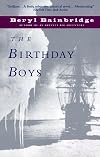
An imaginative, brilliantly realized evocation of the thoughts and voices of Captain Scott and the four men with him, who suffered extraordinary hardships before finally dying during their 1912 attempt to be the first to reach the South Pole.
This was a fictional account of the Antarctic expedition that actually occurred 1910-1913, led by Captain Scott in a race to be the first to the South Pole. Scott and four companions made it to the South Pole, only to realize they were not the first; show more they were one day short of that fame. Tragically, they all died on their return journey.
Each chapter is written from the point of view of the men who died on that last push to the South Pole. While these men come from varied stations in life, their underlying themes are very similar. Taff Evans, Dr. Wilson, Captain Scott, Lt. Bowers and Captain Oates each describe a different stage in the journey as part of the Terra Nova expedition in 1910-1913 and the often, horrific conditions that the entire team endured. The men come across as optimistic, confident, and courageous, and finally to the point of, misguided.
They were amateurs playing a dangerous game of life and death, where missteps could lead to life changing, and tragic consequences.... which it did.
This was an arrogant expedition composed of men, who despite their professional expertise, they believed in the romantic notion that heroes are those who overcome anything through sheer force of will. Throughout their story lies a tale of a man who for years was seen as a "tragic hero". Here he was portrayed more as a reckless adventurer in pursuit of the glory no matter what the costs.
When disasters continued to occur one after another, rather than turn around and try to return later, he shifted the blame onto the others and continued in his dangerously rash pursuit of his goal. He didn't think, and brushed off the dangers he knew could occur, knowing these men who were accustomed to following the given command, would follow him to their deaths, and they everyone, did. This wasn't his first expedition in these dangerous deadly conditions. The author of this book is fairly scathing in his view of Scott, even if you have hold on to the view of Scott as a tragic hero who died in a moment of self-sacrifice you have to realize that it wasn't just his sacrifice...it was the sacrifice of the men that he led to their deaths with very little thought given to the act.
By the end of this well researched and thought-out book, previous beliefs, as well as history, may be reweighted, rethought and reassigned and rewritten. The final chapter in Captain Oates’s words was by far the most poignant and so well worth a read.
Again, a warning: This book will appeal to readers who enjoy history as well as historical fiction, and novels with extremely dark subject matter. Keep in mind that there is NOT in any way, a happy ending and the struggles of all who were involved is not for the faint of heart. show less
This was a fictional account of the Antarctic expedition that actually occurred 1910-1913, led by Captain Scott in a race to be the first to the South Pole. Scott and four companions made it to the South Pole, only to realize they were not the first; show more they were one day short of that fame. Tragically, they all died on their return journey.
Each chapter is written from the point of view of the men who died on that last push to the South Pole. While these men come from varied stations in life, their underlying themes are very similar. Taff Evans, Dr. Wilson, Captain Scott, Lt. Bowers and Captain Oates each describe a different stage in the journey as part of the Terra Nova expedition in 1910-1913 and the often, horrific conditions that the entire team endured. The men come across as optimistic, confident, and courageous, and finally to the point of, misguided.
They were amateurs playing a dangerous game of life and death, where missteps could lead to life changing, and tragic consequences.... which it did.
This was an arrogant expedition composed of men, who despite their professional expertise, they believed in the romantic notion that heroes are those who overcome anything through sheer force of will. Throughout their story lies a tale of a man who for years was seen as a "tragic hero". Here he was portrayed more as a reckless adventurer in pursuit of the glory no matter what the costs.
When disasters continued to occur one after another, rather than turn around and try to return later, he shifted the blame onto the others and continued in his dangerously rash pursuit of his goal. He didn't think, and brushed off the dangers he knew could occur, knowing these men who were accustomed to following the given command, would follow him to their deaths, and they everyone, did. This wasn't his first expedition in these dangerous deadly conditions. The author of this book is fairly scathing in his view of Scott, even if you have hold on to the view of Scott as a tragic hero who died in a moment of self-sacrifice you have to realize that it wasn't just his sacrifice...it was the sacrifice of the men that he led to their deaths with very little thought given to the act.
By the end of this well researched and thought-out book, previous beliefs, as well as history, may be reweighted, rethought and reassigned and rewritten. The final chapter in Captain Oates’s words was by far the most poignant and so well worth a read.
Again, a warning: This book will appeal to readers who enjoy history as well as historical fiction, and novels with extremely dark subject matter. Keep in mind that there is NOT in any way, a happy ending and the struggles of all who were involved is not for the faint of heart. show less

Typical of Bainsbridge she leaves out much of the background detail in her novels, but the beauty of her writing is that she brings it out as the story progresses as if the reader is living it as they read. Her oblique but spare style and dark humour is memorable. Set in 1968, this is about Rose, a teenager searching for Dr Wheeler, a man who helped her in a troubled time and who is part of Robert Kennedy's entourage. She is aided by Washington Harold, also seeking Wheeler but for a very show more different reason. He has offered to transport her across America in his camper. Their link is unlikely as they have little in common apart from a common goal. The book ends almost abruptly when they reach Los Angeles during a tragic moment in American history. Bainsbridge, who died in 2010, wrote the final pages of the almost-finished book during her last days in hospital. Her editor chose to publish it much as Bainsbridge left it. show less
If you are new to the story of Robert Falcon Scott, and his four companions, who were beaten to the South Pole by the Norwegian explorer Roald Amundsen, and died in their attempt to get back to home base, then this novel isn't the place to start. (One place to start: "The Worst Journey in the World," by Apsley Cherry-Garrard, a member of Scott's final expedition.) This novel consists of five first person stream of consciousness "reflections," which depend on some knowledge of the legend of show more the tragedy, and its key characters: the "noble" leader Scott; scientist Wilson; plucky, gung-ho team player "Birdie" Bowers; taciturn, self-sacrificing Oates; and the "gentle giant" (and only representative of the non-officer class) Petty Officer Evans.[return][return]Without knowing the cliches that these five men were turned into, in the "Boy's Own" fairytale that their disastrous mission became in the 100 years since their death, I don't think it would be obvious just how cleverly Bainbridge puts flesh on bones that hero-worship had stripped of most of their humanity. While revisionist histories put the blame squarely on Scott, as a poor leader who made very bad choices, Bainbridge does a remarkable job of channeling the voices of the five, demonstrating how the weaknesses of each one (and even their strengths) contributed to the tragedy. And at the same time, she gives credit to the power of the legend, leaving the reader with a sense of profound sadness that such good intentions and --yes, let's be old fashioned for a moment -- nobility should have ended so badly. I'm greatly looking forward to Bainbridge's take on the Titanic ("Every Man for Himself") -- another tragedy that might have ended very differently if only one person in a position of authority had thought for a moment and said, "Hey, wait ...."[return][return]So if you're familiar with the story of Robert Falcon Scott, I highly recommend this novel for its canny insights into the characters involved, and how an expedition that was supposed to demonstrate an Empire's strength of technology and character went so badly wrong. And if you are new to the story of Robert Falcon Scott ... it's a great story. And this wonderful novel will be waiting for you. show less
Lists
Booker Prize (6)
Awards


You May Also Like


Associated Authors
Statistics
- Works
- 41
- Also by
- 13
- Members
- 6,758
- Popularity
- #3,622
- Rating
- 3.5
- Reviews
- 179
- ISBNs
- 336
- Languages
- 14
- Favorited
- 21