
Peter Ackroyd (1) (1949–)
Author of London: The Biography
For other authors named Peter Ackroyd, see the disambiguation page.
About the Author
Peter Ackroyd was born in London in 1949. He graduated from Cambridge University and was a Fellow at Yale (1971-1973). A critically acclaimed and versatile writer, Ackroyd began his career while at Yale, publishing two volumes of poetry. He continued writing poetry until he began delving into show more historical fiction with The Great Fire of London (1982). A constant theme in Ackroyd's work is the blending of past, present, and future, often paralleling the two in his biographies and novels. Much of Ackroyd's work explores the lives of celebrated authors such as Dickens, Milton, Eliot, Blake, and More. Ackroyd's approach is unusual, injecting imagined material into traditional biographies. In The Last Testament of Oscar Wilde (1983), his work takes on an autobiographical form in his account of Wilde's final years. He was widely praised for his believable imitation of Wilde's style. He was awarded the British Whitbread Award for biography in 1984 of T.S. Eliot, and the Whitbread Award for fiction in 1985 for his novel Hawksmoor. Ackroyd currently lives in London and publishes one or two books a year. He still considers poetry to be his first love, seeing his novels as an extension of earlier poetic work. (Bowker Author Biography) Peter Ackroyd is the award-winning author of four biographies, most recently the national bestseller "The Life of Thomas More", as well as ten novels, including "Chatterton" & "Hawksmoor". He lives in London, where he is at work on his next book, "London: The Biography. (Publisher Provided) Peter Ackroyd is a bestselling writer of both fiction and nonfiction. He lives in London. (Publisher Provided) show less
Series
Works by Peter Ackroyd
Foundation: The History of England from Its Earliest Beginnings to the Tudors (2011) 1,486 copies, 30 reviews
Rebellion: The History of England from James I to the Glorious Revolution (2014) 847 copies, 16 reviews
Revolution: The History of England from the Battle of the Boyne to the Battle of Waterloo (2016) 435 copies, 7 reviews
Dominion: The History of England from the Battle of Waterloo to Victoria's Diamond Jubilee (2018) 331 copies, 2 reviews
History of England Volumes 1-6 Books Collection Set By Peter Ackroyd (Foundation, Tudors, Civil War, Revolution, Dominion, Innovation) (2023) 2 copies
Brief Lives: Newton 1 copy
Doktor Dee'nin Evi 1 copy
Shakespeare 1 copy
Peter Ackroyd 5 Books Collection Set History of England Series Vol 1-5 (Foundation, Tudors, Civil War, Revolution, Dominion) (2020) 1 copy
Peter Ackroyd's Thames [DVD] 1 copy
The Canterbury Tales 1 copy
Dickens (dvd) 1 copy
Associated Works
William Shakespeare: The Complete Works (1623) — Introduction, some editions — 35,707 copies, 177 reviews
Memoirs of the Extraordinary Life, Works, and Discoveries of Martinus Scriblerus (1741) — Foreword, some editions — 202 copies, 6 reviews
The East End: Four Centuries of London Life (1989) — Introduction, some editions — 47 copies, 1 review
Method and Theory: Proceedings of the London 1985 Achaemeniel History Workshop (Achaemenid History Workshop Series, Vol 3) (1988) — Contributor — 3 copies
Tagged
Common Knowledge
- Canonical name
- Ackroyd, Peter
- Legal name
- Ackroyd, Peter Warwick
- Birthdate
- 1949-10-05
- Gender
- male
- Education
- Clare College, University of Cambridge (MA|1971)
Yale University (Mellon Fellow 1972-1973)
St. Benedict's School, Ealing - Occupations
- novelist
biographer
tv writer/presenter
poet
historian
critic - Organizations
- The Spectator
The Times - Awards and honors
- Order of the British Empire (Commander, 2003)
Royal Society of Literature (Fellow, 1984)
American Academy of Arts and Sciences (Foreign Honorary Member, 2006)
Mellon Fellow - Agent
- Sheil Land Associates Ltd
- Relationships
- Kuhn, Brian (partner)
- Short biography
- Peter Ackroyd is an award-winning novelist, broadcaster, biographer, poet and historian. He is the author of London Under and the bestselling London: The Biography and Thames: Sacred River. He has won a number of accolades including the Whitbread Biography Award, the Royal Society of Literature’s William Heinemann Award, the James Tait Black Memorial Prize, the Guardian Fiction Prize and the Somerset Maugham Award. He holds a CBE for services to literature (The Browser).
- Nationality
- UK
- Birthplace
- East Acton, Middlesex, England, UK
- Places of residence
- London, England, UK
- Map Location
- England, UK
Members
Discussions
Group Read: Peter Ackroyd - History of England series in 2015 Category Challenge (March 6)
1001 Group Read - January, 2013: Hawksmoor in 1001 Books to read before you die (August 2013)
Reviews
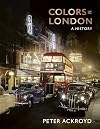
I don't think there'll ever be a coffee-table book on London I don't like. :D It's really true--I love just about all the ones I've read to date, and this is no exception!
It brilliantly combines all my favorite things into one resource, including art, history, paraphernalia (Antique postcards! Historic Olympics posters/ads!), literature, and more. This is exactly why I loved my European Studies degree program in college--it didn't lean too heavily on any one thing, instead dabbling just show more enough across a variety of topics to hold my interest.
And coming at the topic from the examination of color--genius. I'm reminded of a favorite quote from a favorite movie, _The Lake House_: "...the light in Barcelona is quite different from the light in Tokyo. And, the light in Tokyo is different from that in Prague. A truly great structure, one that is meant to stand the tests of time never disregards its environment. A serious architect takes that into account. He knows that if he wants presence, he must consult with nature. He must be captivated by the light. Always the light. Always." Ackroyd does a brilliant job at this himself in _Colors of London: A History_. It makes my heart happy (and also makes me want to buy a plane ticket).
Of course, not everything about London is sunshine and daises, fun and games. We do see the challenges and hardships represented here, just as much as the city's glories--as we should. (And oh, reading about Queen Elizabeth's coronation just weeks after her passing... #feels) Even the weather comes up; inevitable, just like one cannot talk about the Pacific Northwest without talking about rain--or mist (ask me how I know :D). And yet, I felt at home in that section--not just because it was covered under my favorite color, blue, but because the PNW and England share many a common weather; the two are not so different there.
Thoughtful, engaging, informative, well-organized and -presented--this read would be at home on any traveler (armchair or in-person), photographer, or historian's bookcase.
I received an eARC of the book from the publisher via NetGalley. All opinions are my own. show less
It brilliantly combines all my favorite things into one resource, including art, history, paraphernalia (Antique postcards! Historic Olympics posters/ads!), literature, and more. This is exactly why I loved my European Studies degree program in college--it didn't lean too heavily on any one thing, instead dabbling just show more enough across a variety of topics to hold my interest.
And coming at the topic from the examination of color--genius. I'm reminded of a favorite quote from a favorite movie, _The Lake House_: "...the light in Barcelona is quite different from the light in Tokyo. And, the light in Tokyo is different from that in Prague. A truly great structure, one that is meant to stand the tests of time never disregards its environment. A serious architect takes that into account. He knows that if he wants presence, he must consult with nature. He must be captivated by the light. Always the light. Always." Ackroyd does a brilliant job at this himself in _Colors of London: A History_. It makes my heart happy (and also makes me want to buy a plane ticket).
Of course, not everything about London is sunshine and daises, fun and games. We do see the challenges and hardships represented here, just as much as the city's glories--as we should. (And oh, reading about Queen Elizabeth's coronation just weeks after her passing... #feels) Even the weather comes up; inevitable, just like one cannot talk about the Pacific Northwest without talking about rain--or mist (ask me how I know :D). And yet, I felt at home in that section--not just because it was covered under my favorite color, blue, but because the PNW and England share many a common weather; the two are not so different there.
Thoughtful, engaging, informative, well-organized and -presented--this read would be at home on any traveler (armchair or in-person), photographer, or historian's bookcase.
I received an eARC of the book from the publisher via NetGalley. All opinions are my own. show less
Firstly, yes, I'm going to cover the weird last chapter at the end. That wasn't enough to stop me from giving this book five stars.
Secondly, I really enjoyed this exploration of how gloriously queer London's history has been. While the book called itself a celebration of what it is to be queer, I'm not sure how much of a celebration it felt like on my end, reading about people just trying to experience same sex love (or sex) being pilloried and dying in tortuous ways. This book is not for show more the faint of heart, though it's not sensationalist or exploitative so much as honest and provocative. The facts are delivered as they are, take them or leave them, despite attempts to shut down queer culture in the 18th and 19th century in particular, it persisted.
Perhaps most fascinating for me was learning just how queer the 15th, 16th and 17th centuries were. I'd previously had no idea (despite reading about these areas), and this book highlighted to me just how much of queer culture (that is to say - almost all of it) is omitted from standard history texts, or history texts that don't specifically deal with this subject. And this was probably the most joyous part of the book for me, as a queer person, just getting to learn how deliciously queer everything was. The perseverence of queerness, its tenacious holding on and sometimes raw proliferation - that, yes, should be celebrated.
Now, to the last chapter. It feels the most anomalous, and I was warned that its tone was different to previous chapters, and it really was. Honestly, I think the HIV crisis was depicted well, but I feel that the 60s were poorly referenced, and his addressing contemporary culture was frankly weird and the last two pages read like a very bizarre Twitter thread about how uncomfortable and unnecessary the phrase 'check your privilege!' is (which is obviously something that many queer youth disagree with). I feel like here, Ackroyd shows that he is an older white male historian, and not someone necessarily rolling with contemporary times - perhaps this era will need to be documented by an historian not more interested in documenting the 15th and 16th century, and I respect that. I wouldn't have minded much, but for the fact that that the last few pages felt like they were clumsily tacked on, and I feel like you can almost hear Ackroyd being like 'ughhhh I don't want to write about THIS part of history, I don't even UNDERSTAND it.'
But one chapter of only a handful of pages wasn't enough to ruin the rest for me, I'll just skip it in future. And I would caution folks not to throw the baby out with the bathwater here. This is a rich tapestry of knowledge, a deep dive of research, and a relatively impartial - and even austere - statement of the blend of facts before us. He's doing the work not many people bother to do, and he's exemplary at it. I especially liked how much attention he devoted to queer women, and his cognisance of the fact that while gay men became more 'out of the closet' earlier, women stayed into the closet for varying reasons (not least because of misogyny).
Anyway! tl;dr - Good book, will happily keep on my bookshelf, and am determined to look for more queer history now. show less
Secondly, I really enjoyed this exploration of how gloriously queer London's history has been. While the book called itself a celebration of what it is to be queer, I'm not sure how much of a celebration it felt like on my end, reading about people just trying to experience same sex love (or sex) being pilloried and dying in tortuous ways. This book is not for show more the faint of heart, though it's not sensationalist or exploitative so much as honest and provocative. The facts are delivered as they are, take them or leave them, despite attempts to shut down queer culture in the 18th and 19th century in particular, it persisted.
Perhaps most fascinating for me was learning just how queer the 15th, 16th and 17th centuries were. I'd previously had no idea (despite reading about these areas), and this book highlighted to me just how much of queer culture (that is to say - almost all of it) is omitted from standard history texts, or history texts that don't specifically deal with this subject. And this was probably the most joyous part of the book for me, as a queer person, just getting to learn how deliciously queer everything was. The perseverence of queerness, its tenacious holding on and sometimes raw proliferation - that, yes, should be celebrated.
Now, to the last chapter. It feels the most anomalous, and I was warned that its tone was different to previous chapters, and it really was. Honestly, I think the HIV crisis was depicted well, but I feel that the 60s were poorly referenced, and his addressing contemporary culture was frankly weird and the last two pages read like a very bizarre Twitter thread about how uncomfortable and unnecessary the phrase 'check your privilege!' is (which is obviously something that many queer youth disagree with). I feel like here, Ackroyd shows that he is an older white male historian, and not someone necessarily rolling with contemporary times - perhaps this era will need to be documented by an historian not more interested in documenting the 15th and 16th century, and I respect that. I wouldn't have minded much, but for the fact that that the last few pages felt like they were clumsily tacked on, and I feel like you can almost hear Ackroyd being like 'ughhhh I don't want to write about THIS part of history, I don't even UNDERSTAND it.'
But one chapter of only a handful of pages wasn't enough to ruin the rest for me, I'll just skip it in future. And I would caution folks not to throw the baby out with the bathwater here. This is a rich tapestry of knowledge, a deep dive of research, and a relatively impartial - and even austere - statement of the blend of facts before us. He's doing the work not many people bother to do, and he's exemplary at it. I especially liked how much attention he devoted to queer women, and his cognisance of the fact that while gay men became more 'out of the closet' earlier, women stayed into the closet for varying reasons (not least because of misogyny).
Anyway! tl;dr - Good book, will happily keep on my bookshelf, and am determined to look for more queer history now. show less
The Publisher Says: Celebrated novelist, biographer, and critic Peter Ackroyd paints a vivid picture of one of the world's greatest cities in this brilliant and original work, exploring how the city's many hues have come to shape its history and identity.
Think of the colors of London and what do you imagine? The reds of open-top buses and terracotta bricks? The grey smog of Victorian industry, Portland stone, and pigeons in Trafalgar square? Or the gradations of yellows, violets, and blues show more that shimmer on the Thames at sunset—reflecting the incandescent light of a city that never truly goes dark. We associate green with royal parks and the District Line; gold with royal carriages, the Golden Lane Estate, and the tops of monuments and cathedrals.
Colors of London shows us that color is everywhere in the city, and each one holds myriad links to its past. The colors of London have inspired artists (Whistler, Van Gogh, Turner, Monet), designers (Harry Beck) and social reformers (Charles Booth). And from the city’s first origins, Ackroyd shows how color is always to be found at the heart of London’s history, from the blazing reds of the Great Fire of London to the blackouts of the Blitz to the bold colors of royal celebrations and vibrant street life.
This beautifully written book examines the city's fascinating relationship with color, alongside specially commissioned colorized photographs from Dynamichrome, which bring a lost London back to life.
London has been the main character in Ackroyd's work ever since his first novel, and he has won countless prizes in both fiction and non-fiction for his truly remarkable body of work. Here, he channels a lifetime of knowledge of the great city, writing with clarity and passion about the hues and shades which have shaped London's journey through history into the present day.
A truly invaluable book for lovers of art, history, photography, or urban geography, this beautifully illustrated title tells a rich and fascinating story of the history of this great and ever-changing city.
I RECEIVED A DRC FROM THE PUBLISHER VIA EDELWEISS+. THANK YOU.
My Review: Gifting the Anglophile on your list is always a doddle, right? "Something about England!" the generous, but innocent, gifter thinks. "This will be a snap!"
*cue hollow laughter at callow ignorance*
What part of England...north, south, west, Kent? What time in English history...Thatcher's 1980s, Victoria's imperial experiment, William the Bastard's conquering hordes of French-speaking Vikings? England England or Britain...Britain as a whole, the constituent parts?
I know it's not going to soothe your frazzled last nerve enough to make the idea of a cocktail unnecessary...but there aren't a lot of people who read seriously who haven't heard of, and probably read something by, Peter Ackroyd. He's a cultural monadnock. While one might not adore his prose, or even want to read about his relentlessly centered-on-London stories, it's a whole different kettle of fresh-from-the-Thames eels to think of reading his spear-sharp and sword-long prose about London...accompanied by these startlingly colorized vintage photos of London's past. The firm Dynamichrome makes this its business, and let me tell you that they are clearly destined to be leaders in a revolution for instead of the hitherto prevalent against the colorizing trend. These are images of London from all periods in its history. They're as beautiful as photos of London get. They're also enhanced by the careful and painstaking additions of colors commensurate with the time in history as well as the time of day that they reveal.
The book's organizing principle is seen in the Table of Contents on the recto above presented. Ackroyd's essays, which I suggest is the best way to present and think of these nominal chapters, riff on the colors, the affects, the gestalt of the visual impact of London. The publishers then chose vintage images and Dynamichrome brought their intense, archivally trained eyes to bear on enlivening them with colors appropriate to and emblematic of the times.
Bloody gorgeous, mate.
London's suitability for gifting your Anglophile without getting the weak smile and the slide from a slack, uninterested hand that we all dread is nonpareil. It's been the focus of immense amounts of attention in the moments of history as well as scholarship about that history, so it is readily scannable. It is a major player in the world's economic life, and its social norms have both set and influenced the social norms of many, many countries with past and present ties to it. London isn't England (me, I prefer York, or Chester) but it is called "the Capital" for a reason. It is the head of the government, the home of the economy's engine-controlling bodies, the monarchy's most famous symbols reside there...London is part of the mental furniture of the world's mind.
It's a simple task to find illustrations for a book about London, and an even easier one to gloss over the role of color in Humankind's experience of its world. We are fortunate to have photographic evidence of the reality of London's nineteenth-century past on forward. Beginning just slightly earlier, we have color illustrations of life in London from the eighteenth century. Printing technology has improved and improved in the centuries since Gutenberg married woodblock image-making to moveable type in 1454. That's been a key development in history's accelerating climb into prosperity from subsistence levels to reliable surpluses to wretched excess. Knowledge and ideas are easily transmissible when they're on paper.
They're also ephemeral, and subject to manipulation; they're also incomplete and misleading. But they're less likely to vanish without a trace as, for example, the cure for scurvy did in the sixteenth century when French captain Jacques Cartier heard from Native Americans that his men's scurvy would vanish if he made them drink spruce-needle tisane. It did...but he didn't do much to make it known, and it got lost in archives. Much as that has impacted our view of scurvy's history, the lack of color in vintage photos has made our vision of the past flat and one-dimensional.
We've always lived in a world of color. Nature's colors, but also mankind's. Rescue your Anglophile's imagination from the curse of flat black-and-white thinking with this book. It's vivid, and in its vividness lies its power to inform and to build on our knowledge of one of the world's most important cities: It was always modern, it was always intense, it was always brightly and intensely modern. Celebrate that this Yule gifting season. show less
Think of the colors of London and what do you imagine? The reds of open-top buses and terracotta bricks? The grey smog of Victorian industry, Portland stone, and pigeons in Trafalgar square? Or the gradations of yellows, violets, and blues show more that shimmer on the Thames at sunset—reflecting the incandescent light of a city that never truly goes dark. We associate green with royal parks and the District Line; gold with royal carriages, the Golden Lane Estate, and the tops of monuments and cathedrals.
Colors of London shows us that color is everywhere in the city, and each one holds myriad links to its past. The colors of London have inspired artists (Whistler, Van Gogh, Turner, Monet), designers (Harry Beck) and social reformers (Charles Booth). And from the city’s first origins, Ackroyd shows how color is always to be found at the heart of London’s history, from the blazing reds of the Great Fire of London to the blackouts of the Blitz to the bold colors of royal celebrations and vibrant street life.
This beautifully written book examines the city's fascinating relationship with color, alongside specially commissioned colorized photographs from Dynamichrome, which bring a lost London back to life.
London has been the main character in Ackroyd's work ever since his first novel, and he has won countless prizes in both fiction and non-fiction for his truly remarkable body of work. Here, he channels a lifetime of knowledge of the great city, writing with clarity and passion about the hues and shades which have shaped London's journey through history into the present day.
A truly invaluable book for lovers of art, history, photography, or urban geography, this beautifully illustrated title tells a rich and fascinating story of the history of this great and ever-changing city.
I RECEIVED A DRC FROM THE PUBLISHER VIA EDELWEISS+. THANK YOU.
My Review: Gifting the Anglophile on your list is always a doddle, right? "Something about England!" the generous, but innocent, gifter thinks. "This will be a snap!"
*cue hollow laughter at callow ignorance*
What part of England...north, south, west, Kent? What time in English history...Thatcher's 1980s, Victoria's imperial experiment, William the Bastard's conquering hordes of French-speaking Vikings? England England or Britain...Britain as a whole, the constituent parts?
I know it's not going to soothe your frazzled last nerve enough to make the idea of a cocktail unnecessary...but there aren't a lot of people who read seriously who haven't heard of, and probably read something by, Peter Ackroyd. He's a cultural monadnock. While one might not adore his prose, or even want to read about his relentlessly centered-on-London stories, it's a whole different kettle of fresh-from-the-Thames eels to think of reading his spear-sharp and sword-long prose about London...accompanied by these startlingly colorized vintage photos of London's past. The firm Dynamichrome makes this its business, and let me tell you that they are clearly destined to be leaders in a revolution for instead of the hitherto prevalent against the colorizing trend. These are images of London from all periods in its history. They're as beautiful as photos of London get. They're also enhanced by the careful and painstaking additions of colors commensurate with the time in history as well as the time of day that they reveal.
The book's organizing principle is seen in the Table of Contents on the recto above presented. Ackroyd's essays, which I suggest is the best way to present and think of these nominal chapters, riff on the colors, the affects, the gestalt of the visual impact of London. The publishers then chose vintage images and Dynamichrome brought their intense, archivally trained eyes to bear on enlivening them with colors appropriate to and emblematic of the times.
Bloody gorgeous, mate.
London's suitability for gifting your Anglophile without getting the weak smile and the slide from a slack, uninterested hand that we all dread is nonpareil. It's been the focus of immense amounts of attention in the moments of history as well as scholarship about that history, so it is readily scannable. It is a major player in the world's economic life, and its social norms have both set and influenced the social norms of many, many countries with past and present ties to it. London isn't England (me, I prefer York, or Chester) but it is called "the Capital" for a reason. It is the head of the government, the home of the economy's engine-controlling bodies, the monarchy's most famous symbols reside there...London is part of the mental furniture of the world's mind.
It's a simple task to find illustrations for a book about London, and an even easier one to gloss over the role of color in Humankind's experience of its world. We are fortunate to have photographic evidence of the reality of London's nineteenth-century past on forward. Beginning just slightly earlier, we have color illustrations of life in London from the eighteenth century. Printing technology has improved and improved in the centuries since Gutenberg married woodblock image-making to moveable type in 1454. That's been a key development in history's accelerating climb into prosperity from subsistence levels to reliable surpluses to wretched excess. Knowledge and ideas are easily transmissible when they're on paper.
They're also ephemeral, and subject to manipulation; they're also incomplete and misleading. But they're less likely to vanish without a trace as, for example, the cure for scurvy did in the sixteenth century when French captain Jacques Cartier heard from Native Americans that his men's scurvy would vanish if he made them drink spruce-needle tisane. It did...but he didn't do much to make it known, and it got lost in archives. Much as that has impacted our view of scurvy's history, the lack of color in vintage photos has made our vision of the past flat and one-dimensional.
We've always lived in a world of color. Nature's colors, but also mankind's. Rescue your Anglophile's imagination from the curse of flat black-and-white thinking with this book. It's vivid, and in its vividness lies its power to inform and to build on our knowledge of one of the world's most important cities: It was always modern, it was always intense, it was always brightly and intensely modern. Celebrate that this Yule gifting season. show less
'Albion' is a tricky text. It purports to be an account of something called the 'English imagination' (mostly literary but also nodding to the artistic, theatrical and musical) but it is equally a partial mythologisation of its subject matter. Is this really what it is (or was) to be English?
It is certainly plausible but plausibility is not something to be confused with the truth. The book, however, still represents a truth of the matter if not necessarily being the full truth of the matter. show more Once this accepted, then the book can be enjoyed as highly intelligent, suggestive and indeed creative.
What is striking is that this English imagination is positioned well within an Anglo-Saxon origin story and a Catholic medieval past which are seen as providing very strong continuities, at least compared to literary histories that have privileged the half a millennium from Shakespeare onwards.
The book devotes nearly half its length to the world before Shakespeare and then peters out somewhere around the mid-Victorian era. This is the Matter of Literary England presented in a new way as something that it is not hard to see as having been lost even by 2002 (date of publication).
Not that Ackroyd says any such thing. He not making any judgements here that are 'contemporary' or polemical. He just embeds himself in the mythos and gives us well over 50 finely tuned essays on different facets of the English imagination that he weaves around a framework of shared ideas.
Summarising that framework here would be pedestrian and not very helpful. The journey through the book has to be made in good faith by the reader. The investigation of Ackroyd's judgements has to be an impressionistic one where, by the end, you feel that you think you understand.
Still, the individual essay-chapters can be fascinating in themselves. The anger of the classic female novelists, the continuity of gardening in English culture, forgery as at the base of English romanticism, English literature as a literature of appropriation and borrowing from outside ...
Each chapter represents an interpretative truth of the matter but is one persuaded by the whole? Less so perhaps. The late chapter in praise of the fraudulent Macpherson (not English at all) and Chatterton gives us a clue. This is a book of fact where facts build up to a useful and noble fiction.
With that caution, the book remains a strong recommendation precisely because the specific interpretations constantly open the mind to new possibilities and angles about a distinctive tradition, exposing a past far deeper than the usual Chaucer, Milton, Shakespeare origin story.
There is no chapter that is not useful, educational and/or thought-provoking. The thought is left that, twenty years later, this mythos is already looking as if it is entirely located in the past and no longer represents the present, that this book is (without that being the intention) a cultural swan song.
This review is written after a week in which an African-origin leader of the 'conservative' party announced 'reforms' that her party briefings (though not her directly) suggested would end support for degrees in certain subjects with the performing arts and English high on the list.
Not that English studies in the age of intersectional and anti-colonial studies has had very much to do with the approach to the English imagination evidenced in this book. She may be right. Maybe the pass on cultural Englishness was sold a long time ago in a 'trahison des clercs'. So be it!
Perhaps the English imagination always was a bit of a forgery as Celtic and all other nationalisms are ultimately forgeries. Perhaps it always was the imagination of cosmopolitan appropriative elites trickling down the products of their leisure time to the great unwashed for a livelihood.
Perhaps this educated Englishness - a shared literary culture - only exists now in past texts and that this particular text is merely preservative of what it once was to be English and educated. Perhaps a future civilisation will study English as the English once studied the Classics - as the honoured dead. show less
It is certainly plausible but plausibility is not something to be confused with the truth. The book, however, still represents a truth of the matter if not necessarily being the full truth of the matter. show more Once this accepted, then the book can be enjoyed as highly intelligent, suggestive and indeed creative.
What is striking is that this English imagination is positioned well within an Anglo-Saxon origin story and a Catholic medieval past which are seen as providing very strong continuities, at least compared to literary histories that have privileged the half a millennium from Shakespeare onwards.
The book devotes nearly half its length to the world before Shakespeare and then peters out somewhere around the mid-Victorian era. This is the Matter of Literary England presented in a new way as something that it is not hard to see as having been lost even by 2002 (date of publication).
Not that Ackroyd says any such thing. He not making any judgements here that are 'contemporary' or polemical. He just embeds himself in the mythos and gives us well over 50 finely tuned essays on different facets of the English imagination that he weaves around a framework of shared ideas.
Summarising that framework here would be pedestrian and not very helpful. The journey through the book has to be made in good faith by the reader. The investigation of Ackroyd's judgements has to be an impressionistic one where, by the end, you feel that you think you understand.
Still, the individual essay-chapters can be fascinating in themselves. The anger of the classic female novelists, the continuity of gardening in English culture, forgery as at the base of English romanticism, English literature as a literature of appropriation and borrowing from outside ...
Each chapter represents an interpretative truth of the matter but is one persuaded by the whole? Less so perhaps. The late chapter in praise of the fraudulent Macpherson (not English at all) and Chatterton gives us a clue. This is a book of fact where facts build up to a useful and noble fiction.
With that caution, the book remains a strong recommendation precisely because the specific interpretations constantly open the mind to new possibilities and angles about a distinctive tradition, exposing a past far deeper than the usual Chaucer, Milton, Shakespeare origin story.
There is no chapter that is not useful, educational and/or thought-provoking. The thought is left that, twenty years later, this mythos is already looking as if it is entirely located in the past and no longer represents the present, that this book is (without that being the intention) a cultural swan song.
This review is written after a week in which an African-origin leader of the 'conservative' party announced 'reforms' that her party briefings (though not her directly) suggested would end support for degrees in certain subjects with the performing arts and English high on the list.
Not that English studies in the age of intersectional and anti-colonial studies has had very much to do with the approach to the English imagination evidenced in this book. She may be right. Maybe the pass on cultural Englishness was sold a long time ago in a 'trahison des clercs'. So be it!
Perhaps the English imagination always was a bit of a forgery as Celtic and all other nationalisms are ultimately forgeries. Perhaps it always was the imagination of cosmopolitan appropriative elites trickling down the products of their leisure time to the great unwashed for a livelihood.
Perhaps this educated Englishness - a shared literary culture - only exists now in past texts and that this particular text is merely preservative of what it once was to be English and educated. Perhaps a future civilisation will study English as the English once studied the Classics - as the honoured dead. show less
Lists
My TBR (1)
99 (1)
mystery (1)
Best Biographies (1)
Unread books (2)
history (1)
Wyrd as Folk (1)
Entertainment (1)
Booker Prize (1)
Awards


You May Also Like


Associated Authors
Statistics
- Works
- 90
- Also by
- 19
- Members
- 32,119
- Popularity
- #608
- Rating
- 4.0
- Reviews
- 676
- ISBNs
- 752
- Languages
- 26
- Favorited
- 83


