
Alison Weir (1) (1951–)
Author of The Six Wives of Henry VIII
For other authors named Alison Weir, see the disambiguation page.
About the Author
Alison Weir was born in London, England on July 8, 1951. She received training to be a teacher with a concentration in history from the North Western Polytechnic. Before becoming a full-time writer, she worked as a civil servant and ran her own school for children with learning difficulties from show more 1991 to 1997. Her first book, Britain's Royal Families, was published in 1989. Her other books include The Six Wives of Henry VIII; Children of England; Eleanor of Aquitaine; Henry VIII: King and Court; Mary, Queen of Scots; and Isabella. Her first novel, Innocent Traitor, was published in 2006. Her other novels include The Lady Elizabeth, The Lady in the Tower: The Fall of Anne Boleyn, The Captive Queen, A Dangerous Inheritance, and Katherine of Aragon, the True Queen. (Bowker Author Biography) show less
Series
Works by Alison Weir
Mistress of the Monarchy: The Life of Katherine Swynford, Duchess of Lancaster (2008) 1,150 copies, 36 reviews
A Dangerous Inheritance: A Novel of Tudor Rivals and the Secret of the Tower (2012) 632 copies, 45 reviews
A Man of God 1 copy
Associated Works
Tagged
Common Knowledge
- Canonical name
- Weir, Alison
- Other names
- Matthews, Alison (birth)
- Birthdate
- 1951-07-08
- Gender
- female
- Education
- City of London School for Girls
North Western Polytechnic - Occupations
- historian
civil servant
teacher
novelist - Awards and honors
- Royal Society of Arts (Fellow, 2003)
- Relationships
- Weir, Rankin (spouse)
- Nationality
- UK
- Birthplace
- Westminster, London, England, UK
- Places of residence
- Scotland, UK
London, England, UK
Surrey, England, UK - Map Location
- England, UK
Members
Discussions
Alison Weir in Folio Society Devotees (April 2022)
Mary Boleyn: The Mistress of Kings by Alison Weir (August 2011 batch) in Reviews of Early Reviewers Books (January 2012)
Reviews
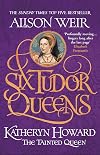
This is the fifth in the author's six novel series tracing the lives of Henry VIII's six wives. Historically, there tend to have been two views of Katheryn Howard, partly driven by the uncertainty over her year of birth and hence her age at the time of her marriage to the King in 1540 and her execution in early 1542. Traditionally many have viewed her as a teenage temptress, or a young woman of easy virtue, contrasting her undoubtedly real adultery with the false allegations of adultery made show more against her predecessor but two, Anne Boleyn. Others have viewed her as an innocent tool of powerful (mostly) men such as her uncle and her lovers, and of some women such as her step-grandmother the Dowager Duchess of Norfolk and possibly of her companion Jane Rochford, and even as a victim of child abuse inflicted by her lovers, including the King.
Having read this as usual wonderfully written and absorbing novel, I think neither of these descriptions really fit her case. Of course, her fall and death were tragic and horrible, yet she was willing to become the political pawn of her uncle and step grandmother in their bid to oust the reformers, as she really wanted to be queen. She was naive and reckless about her relationships particularly with the slippery Francis Dereham before her marriage to the King, though, of course, she was very young, and doubtless her growing up was affected by the early death of her beloved mother (in the very first few pages of the novel) and the spendthrift nature of her affectionate but hapless father. She was even more reckless in carrying on an affair with Thomas Culpeper after her marriage to the King, which grew in intensity particularly after she was becoming increasingly anxious at her failure to give the King the second son he craved. The novel conveys well the breathless tension of Katheryn's dodging around meeting Culpeper, and her increasing fear and terror after her sudden arrest, initially just for the premarital relations with Dereham but then later for the adultery with Culpeper (though she tried to argue it was not really adultery as they did not have full penetrative sex). Ultimately I think it has to be said she was largely the author of her own demise, while also obviously being manipulated by others. I think if just the Dereham stuff had come out and the Culpeper affair had either not happened at all or not been revealed, she would have saved her life at least, though she would probably have been divorced and disgraced given the King's (itself rather naive) belief in Katheryn's purity and innocence. In many ways Katheryn's is a really tragic story that contains a wide range of timeless human emotions about sexual love, jealousy and power. show less
Having read this as usual wonderfully written and absorbing novel, I think neither of these descriptions really fit her case. Of course, her fall and death were tragic and horrible, yet she was willing to become the political pawn of her uncle and step grandmother in their bid to oust the reformers, as she really wanted to be queen. She was naive and reckless about her relationships particularly with the slippery Francis Dereham before her marriage to the King, though, of course, she was very young, and doubtless her growing up was affected by the early death of her beloved mother (in the very first few pages of the novel) and the spendthrift nature of her affectionate but hapless father. She was even more reckless in carrying on an affair with Thomas Culpeper after her marriage to the King, which grew in intensity particularly after she was becoming increasingly anxious at her failure to give the King the second son he craved. The novel conveys well the breathless tension of Katheryn's dodging around meeting Culpeper, and her increasing fear and terror after her sudden arrest, initially just for the premarital relations with Dereham but then later for the adultery with Culpeper (though she tried to argue it was not really adultery as they did not have full penetrative sex). Ultimately I think it has to be said she was largely the author of her own demise, while also obviously being manipulated by others. I think if just the Dereham stuff had come out and the Culpeper affair had either not happened at all or not been revealed, she would have saved her life at least, though she would probably have been divorced and disgraced given the King's (itself rather naive) belief in Katheryn's purity and innocence. In many ways Katheryn's is a really tragic story that contains a wide range of timeless human emotions about sexual love, jealousy and power. show less
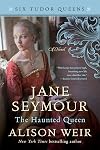
This is novel #3 in Historian Alison Weir’s planned series about the six wives of England’s King Henry VIII (THE TUDOR QUEENS). And like the previous two I’ve read, this one’s great strength AND weakness is Weir’s background as an historian. Because her inclusion of so much historically accurate detail is, at times, welcome, and at other times, dull.
There is not much primary historical material about Jane Seymour. And so, Weir has taken some liberties in telling this story. (These show more she explains in the very helpful Author’s Note.) For example, she imagines Jane’s childhood and an early desire to become a nun. She imagines Jane’s devotion to Queen Katherine of Aragon as lady-in-waiting. And she imagines an active role for Jane in the downfall of Queen Anne Boleyn.
Weir also uses what is TRULY known about the real Jane. Like her faithfulness to the Catholic religion and dutiful obedience to her husband. She is, after all, the wife Henry chose to be buried with — even though he still has three more to go after Jane’s death. But that could also be because Jane succeeded in providing Henry’s much longed for male heir.
Often, with historical novels, authors too often fall into the trap of writing as though the characters know the ultimate outcome of events, in the way that readers do. Weir is good at keeping the story real. Instead she writes with the emotions and fears that contemporary characters, who don’t know what will happen, might truly have be thinking. For example, assuming Henry’s marriage to Anne Boleyn would be annulled and being surprised when she was arrested instead. Or Jane worrying that she might either lose her child or have a girl. This is one of Weir’s strengths and helps make reading this novel more of a discovery, rather than a recitation of the facts that many of us already know.
What was most interesting to me was the work Weir did around explaining Jane’s death — 12 days after her son’s birth. Weir reviewed the primary source material and then showed it to a number of contemporary medical experts. Based on their input, Weir debunks the more common theories that Jane died of either puerperal fever or a rudimentary caesarean delivery. Instead, Weir proposes that Jane suffered two distinct illnesses — first food poisoning (which left her severely dehydrated), followed by an embolism. Seemed convincing to me.
So, for all you Tudor fans, here’s another one to add to your list. And I will soon pick up Weir’s newly published novel #4 about Anne of Cleves. show less
There is not much primary historical material about Jane Seymour. And so, Weir has taken some liberties in telling this story. (These show more she explains in the very helpful Author’s Note.) For example, she imagines Jane’s childhood and an early desire to become a nun. She imagines Jane’s devotion to Queen Katherine of Aragon as lady-in-waiting. And she imagines an active role for Jane in the downfall of Queen Anne Boleyn.
Weir also uses what is TRULY known about the real Jane. Like her faithfulness to the Catholic religion and dutiful obedience to her husband. She is, after all, the wife Henry chose to be buried with — even though he still has three more to go after Jane’s death. But that could also be because Jane succeeded in providing Henry’s much longed for male heir.
Often, with historical novels, authors too often fall into the trap of writing as though the characters know the ultimate outcome of events, in the way that readers do. Weir is good at keeping the story real. Instead she writes with the emotions and fears that contemporary characters, who don’t know what will happen, might truly have be thinking. For example, assuming Henry’s marriage to Anne Boleyn would be annulled and being surprised when she was arrested instead. Or Jane worrying that she might either lose her child or have a girl. This is one of Weir’s strengths and helps make reading this novel more of a discovery, rather than a recitation of the facts that many of us already know.
What was most interesting to me was the work Weir did around explaining Jane’s death — 12 days after her son’s birth. Weir reviewed the primary source material and then showed it to a number of contemporary medical experts. Based on their input, Weir debunks the more common theories that Jane died of either puerperal fever or a rudimentary caesarean delivery. Instead, Weir proposes that Jane suffered two distinct illnesses — first food poisoning (which left her severely dehydrated), followed by an embolism. Seemed convincing to me.
So, for all you Tudor fans, here’s another one to add to your list. And I will soon pick up Weir’s newly published novel #4 about Anne of Cleves. show less
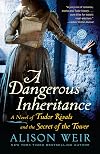
I thought I had lost interest in yet more historical fiction related to the Plantagenets and Tudors. But there I was checking out A Dangerous Inheritance at the library after book group a couple weeks ago. I had to renew it but once I started reading, I really couldn't stop. Part of it was the format: short vignettes that moved between the two main characters, Richard III's illegitimate daughter Katherine, and Lady Katherine Grey, the sister of Lady Jane Grey. Alison Weir masterfully weaves show more together the stories of these two women, connecting them through the always intriguing story of the princes in the tower.
While much is known about Grey, Weir was able to be a bit freer with Katherine Plantagenet, since less is known about her life. (She doesn't even has a Wikipedia page: here is the best source.) Weir imagines what it must have been like to have been the daughter, baseborn or not, of Richard III, hated in his lifetime and ever after as the man who killed his nephews. Weir shows the very dangerous paths navigated by England's ruling classes as they try to survive the shift in leadership and religious imperatives. show less
While much is known about Grey, Weir was able to be a bit freer with Katherine Plantagenet, since less is known about her life. (She doesn't even has a Wikipedia page: here is the best source.) Weir imagines what it must have been like to have been the daughter, baseborn or not, of Richard III, hated in his lifetime and ever after as the man who killed his nephews. Weir shows the very dangerous paths navigated by England's ruling classes as they try to survive the shift in leadership and religious imperatives. show less

Innocent Traitor by Alison Weir is the engrossing story of Lady Jane Grey. She was the daughter of scheming, ambitious parents who are at first disappointed that their first child was a female, but all too soon are plotting a dangerous future for her. Through her mother, Jane is a Tudor, niece to Henry VIII. Being that close to royalty brought great privileges but in the 15th century it was never safe to have even the slightest claim to the throne.
Jane is raised as a pawn, first with an eye show more to marrying her to Henry VIII’s son, Edward but when Edward is dying, the protestant powers behind him scheme to have him declare Jane as his heir, in order to prevent his sister, Mary, a staunch Catholic, from taking the throne. Jane, herself, had no ambitions in this direction, would rather have been left alone with her books and meditations, but at age fourteen, she is forced to first marry into a powerful family and then to accept the throne. Meanwhile Princess Mary having learned of Edward’s death, proclaimed herself Queen. In only a few short days, the people and the nobles have declared for Mary, sealing Jane’s fate.
This is a well written, stirring account of this young woman’s life. Weir skilfully weaves British history into an enthralling story and gives life to these historic figures. With it’s riveting plot and rich descriptions, this book would interest anyone interested in English history. show less
Jane is raised as a pawn, first with an eye show more to marrying her to Henry VIII’s son, Edward but when Edward is dying, the protestant powers behind him scheme to have him declare Jane as his heir, in order to prevent his sister, Mary, a staunch Catholic, from taking the throne. Jane, herself, had no ambitions in this direction, would rather have been left alone with her books and meditations, but at age fourteen, she is forced to first marry into a powerful family and then to accept the throne. Meanwhile Princess Mary having learned of Edward’s death, proclaimed herself Queen. In only a few short days, the people and the nobles have declared for Mary, sealing Jane’s fate.
This is a well written, stirring account of this young woman’s life. Weir skilfully weaves British history into an enthralling story and gives life to these historic figures. With it’s riveting plot and rich descriptions, this book would interest anyone interested in English history. show less
Lists
Female Author (6)
Europe (1)
THE WAR ROOM (1)
Awards


You May Also Like


Associated Authors
Statistics
- Works
- 66
- Also by
- 2
- Members
- 37,963
- Popularity
- #475
- Rating
- 3.9
- Reviews
- 1,093
- ISBNs
- 619
- Languages
- 12
- Favorited
- 47


