
Carolly Erickson
Author of The Hidden Diary of Marie Antoinette
About the Author
Carolly Erickson (born 1943) is an author of historical fiction and non-fiction. She lives in Hawaii. She is a historian and the author of The Hidden Diary of Marie Antoinette, The First Elizabeth, Great Catherine, Alexandra and many other prize-winning works of fiction and nonfiction. She earned show more her doctorate in history from Columbia University. (Bowker Author Biography) show less
Works by Carolly Erickson
Anne Boleyn Hc 4 copies
THE FIRST ELIZABETH Easton Press 2 copies
Mary Queen of Scots 2 copies
Catalina la Grande 1 copy
La grande Caterina 1 copy
Alexander 1 copy
La figlia della Zarina 1 copy
Associated Works
The Frontier in American development; essays in honor of Paul Wallace Gates (1969) — Contributor — 5 copies
Tagged
Common Knowledge
- Canonical name
- Erickson, Carolly
- Birthdate
- 1943-04-12
- Gender
- female
- Education
- University of Washington (B.A., 1963)
Columbia University (Ph.D, History, 1969) - Occupations
- historian
novelist
professor (history) - Organizations
- University of California Santa Barbara
Mediaeval Academy of America
American Historical Association
Medieval Association of the Pacific
West Coast Association of Women Historians
Phi Beta Kappa - Short biography
- Carolly Erickson is a distinguished biographer and historian as well as an historical novelist. She writes primarily about famous women in European history. "I have found the past compelling since the age of fourteen or so," she once remarked. Even before she began her undergraduate work in history at the University of Washington, she had "a feeling I might some day write history for the general reader." To support herself, she has played the piano in cocktail lounges in New York City. She currently spends part of her year in Hawaii and part in the Lake Chelan Valley in Washington State.
- Nationality
- USA
- Birthplace
- Los Angeles, California, USA
- Places of residence
- Hawaii, USA
- Associated Place (for map)
- USA
Members
Reviews

Wow. That sums up my reaction to the person Catherine was. Knowing she eventually became Empress and ruled for decades, all through the story of her horrible childhood and worse situation as Peter III’s wife, I longed for her to take revenge. Of course being the judicious, self-possessed and level-headed person she was, she did no such thing. Not directly anyway. Her wit, success and lasting legacy are revenge enough. Just where are her haughty great-aunt-in-law or vicious husband now in show more the collective consciousness? Nowhere and nobodies. Catherine was Great and she is remembered.
Not perfect though, and I think Erickson did her best to reveal Catherine’s flaws as well as her strengths, though I think the overall goal was to show a woman who succeeded against a state and a system designed to keep her down and relegate her to failure. show less
Not perfect though, and I think Erickson did her best to reveal Catherine’s flaws as well as her strengths, though I think the overall goal was to show a woman who succeeded against a state and a system designed to keep her down and relegate her to failure. show less

57. Bonnie Prince Charlie (Audio) by Carolly Erickson, read by Steven Crossley (1989, 11 hrs 12 mins, ~300 pages in Paperback, Listened September 23 to October 6)
To some extent my choosing this book just shows that I'm open to about any book on history in audio. But, also I was curious about Bonnie Prince Charlie. His a name has come up here and there, never with any memorable contextual explanation. So, this was a chance to learn where he fit in English history.
It's hard to think any nice show more thoughts about him after reading over the years and years of his useless later life where we was drunkard who beat his mistresses and wife and who never came to terms with his lot in life and really had no redeeming features. But actually the younger Charles is fascinating. Grandson of the deposed Catholic James II of England, he was raised to see himself as the rightful heir of the English and Scottish crowns. He believed this completely, and believed with full conviction that he would take the crown from the current rulers of England, the Hanovers (Kings George I, II & III during Charles's lifetime).
In 1745 Charles landed in Scotland practically by himself, without adequate supplies, most of which were lost in route. And he raised a Scottish highlander volunteer army, convincing his followers merely by force of character. Charles was bold, full of confidence, eager, athletic - he was almost suicidally fearless. He led an uprising that took Edinburgh, won a huge and unlikely victory over an English army, and then invaded England en route to London. He marched past Manchester, as far Darby. A planned French invasion would join him. This was during the war of Austrian Succession, and the Hanover army was largely on the continent, pursuing Hanover interests. England was exposed. But, despite momentum, Charles's generals forced Charles to call a retreat instead of engage in a battle against a larger army. The momentum was lost, the French invasion plans nullified, and the remnants of his army were eventually thoroughly crushed in the Battle of Culloden. Charles escaped and slowly found his way out of Scotland and to France (while England burned the rebellious Scottish highlands to the ground).
Charles Stuart was successful momentarily through fearless foolishness and became a popular heroic and tragic figure throughout Europe. But he couldn't give in to reality, and his life and person became pretty dreadful.
Obscure stuff, but interesting nonetheless. Carolly Erickson, who later wrote several novels, wrote an entertaining and well-written history, bringing in a sense of the atmospheres of mid-18th century Rome, Paris, London and, of course, of Charles's highlander army.
2014
https://www.librarything.com/topic/179643#4878421 show less
To some extent my choosing this book just shows that I'm open to about any book on history in audio. But, also I was curious about Bonnie Prince Charlie. His a name has come up here and there, never with any memorable contextual explanation. So, this was a chance to learn where he fit in English history.
It's hard to think any nice show more thoughts about him after reading over the years and years of his useless later life where we was drunkard who beat his mistresses and wife and who never came to terms with his lot in life and really had no redeeming features. But actually the younger Charles is fascinating. Grandson of the deposed Catholic James II of England, he was raised to see himself as the rightful heir of the English and Scottish crowns. He believed this completely, and believed with full conviction that he would take the crown from the current rulers of England, the Hanovers (Kings George I, II & III during Charles's lifetime).
In 1745 Charles landed in Scotland practically by himself, without adequate supplies, most of which were lost in route. And he raised a Scottish highlander volunteer army, convincing his followers merely by force of character. Charles was bold, full of confidence, eager, athletic - he was almost suicidally fearless. He led an uprising that took Edinburgh, won a huge and unlikely victory over an English army, and then invaded England en route to London. He marched past Manchester, as far Darby. A planned French invasion would join him. This was during the war of Austrian Succession, and the Hanover army was largely on the continent, pursuing Hanover interests. England was exposed. But, despite momentum, Charles's generals forced Charles to call a retreat instead of engage in a battle against a larger army. The momentum was lost, the French invasion plans nullified, and the remnants of his army were eventually thoroughly crushed in the Battle of Culloden. Charles escaped and slowly found his way out of Scotland and to France (while England burned the rebellious Scottish highlands to the ground).
Charles Stuart was successful momentarily through fearless foolishness and became a popular heroic and tragic figure throughout Europe. But he couldn't give in to reality, and his life and person became pretty dreadful.
Obscure stuff, but interesting nonetheless. Carolly Erickson, who later wrote several novels, wrote an entertaining and well-written history, bringing in a sense of the atmospheres of mid-18th century Rome, Paris, London and, of course, of Charles's highlander army.
2014
https://www.librarything.com/topic/179643#4878421 show less
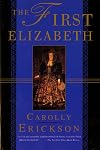
I read this back when I was in school along with a couple of this author's other works. I enjoyed this book nearly as much as I enjoyed her bio on Marie Antoinette. But that doesn't mean that this book is at all a bad read. While Ms. Erickson does speculate quite a bit, much like she did for her book about Anne Boleyn, the way she speculated helped to make this book a more real read, rather than just a dry book of various sources and excerpts and the like, but these looking for a more dry, show more factual read are advised to look elsewhere, this is more suited to people who like biographies with a more personal taste. show less
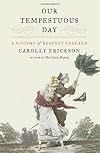
This book serves as a readable and interesting history of Regency England. Erickson explores a range of topics from the political and military to Luddite risings and social happenings. I learned new things about the period and was fascinated by the presentation of a much darker era than what is often reflected in popular fiction.
Lists
Awards


You May Also Like


Associated Authors
Statistics
- Works
- 49
- Also by
- 1
- Members
- 8,803
- Popularity
- #2,718
- Rating
- 3.5
- Reviews
- 204
- ISBNs
- 291
- Languages
- 12
- Favorited
- 12
