
Sarah Gristwood
Author of Arbella: England's Lost Queen
About the Author
Biographer and journalist Sarah Gristwood attended Oxford University and is the author of seven books, including the best-selling Arbella and Elizabeth and Leicester. She lives in London and Kent.
Works by Sarah Gristwood
The Tudors in Love: Passion and Politics in the Age of England's Most Famous Dynasty (2022) 82 copies, 1 review
God's Jury 1 copy
Tagged
Common Knowledge
- Canonical name
- Gristwood, Sarah
- Birthdate
- 1960
- Gender
- female
- Education
- University of Oxford (St. Anne's College)
- Occupations
- journalist
biographer
historian - Awards and honors
- Royal Historical Society (Fellow)
Royal Society of Arts (Fellow) - Agent
- Araminta Whitley (Lucas Alexander Whitley)
- Relationships
- Malcolm, Derek (husband|1994|his death|2023)
- Short biography
- After leaving Oxford, Sarah Gristwood began work as a journalist, writing at first about the theatre as well as general features on everything from gun control to Giorgio Armani. But increasingly she found herself specializing in film interviews. Her work has appeared in most of the UK's leading newspapers and magazines.
Turning to history, she wrote two bestselling Tudor biographies, Arbella: England’s Lost Queen and Elizabeth and Leicester; and the 18th-century story Perdita: Royal Mistress, Writer, Romantic, which was selected as Radio 4 Book of the Week. Presenting and contributing to several radio and tv documentaries, she also published a book on iconic dresses, Fabulous Frocks (with Jane Eastoe); and a 50th anniversary companion to the film Breakfast at Tiffany’s, as well as collaborating with Tracy Borman, Alison Weir and Kate Williams on The Ring and the Crown, a book on the history of royal weddings. 2011 also saw the publication of her first historical novel, The Girl in the Mirror. In September 2012 she brought out a new nonfiction book -- Blood Sisters: The Women behind the Wars of the Roses.
She and her husband, film critic Derek Malcolm, live in London and Kent. - Nationality
- UK
- Birthplace
- Kent, England, UK
- Places of residence
- London, England, UK
Kent, England, UK - Map Location
- England, UK
Members
Reviews
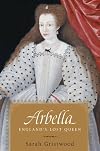
A Christmas gift from the “Interesting Women” wishlist. Arbella Stuart (her name is often latinized to Arabella, but her contemporaries knew her as “Arbella” or “Arbel”) was Henry VIII’s great-grand niece, and in the confusing Tudor and Stuart lines of succession coupled with the early deaths of her father and mother, ended up second in line to the throne of England (after James VI of Scotland, who eventually did inherit as James I). You might think it’s romance novel fodder show more to be an heir to the throne, but the reality is more tragic than romantic; Arbella spent almost her entire life under house arrest or in the Tower, eventually dying there of self-starvation after an ill-advised marriage and an even more ill-advised escape attempt.
Unlike many of her contemporaries, Arbella left a considerable corpus of writing behind, probably because there wasn’t much else she could do for most of her life except write or embroider. Unfortunately, her letters are often disjointed or incoherent, leading author Sarah Gristwood to suggest she may have been mentally ill. Her existing portraits show her as attractive if a little dazed-looking, probably to be expected under the circumstances. Gristwood has a nicely readable style, and provides some interesting diversions on various topics, including the difficulty of writing history in an era where Robert Cecil, Sir Robert Cecil, Baron Cecil, Viscount Cranborne, and the Earl of Salisbury were all the same person; 16th century medicine (after you bled somebody, you forced several dried peas into the wound, then covered it with earthworm paste); and what was involved in dressing an Elizabethan lady for court.
In addition to the speculation that Arbella had mental problems, Gristwood offers a couple more interesting suggestions: that Arbella’s tutor “Morley”, who also acted as a spy to ensure that she wasn’t turning Catholic, was actually Christopher Marlowe; and that John Webster’s play The Duchess of Malfi is a disguised biography of Arbella. The jacket biography describes Sarah Gristwood as a journalist and broadcaster; I wonder how many Americans in those professions could turn out a book like this. Excellent index, excellent bibliography, good endnotes; could use a map or two, especially of London and south England (there’s contemporary illustrations of London and the Tower in the text and plates, but although interesting they don’t really serve to show who’s doing what where). show less
Unlike many of her contemporaries, Arbella left a considerable corpus of writing behind, probably because there wasn’t much else she could do for most of her life except write or embroider. Unfortunately, her letters are often disjointed or incoherent, leading author Sarah Gristwood to suggest she may have been mentally ill. Her existing portraits show her as attractive if a little dazed-looking, probably to be expected under the circumstances. Gristwood has a nicely readable style, and provides some interesting diversions on various topics, including the difficulty of writing history in an era where Robert Cecil, Sir Robert Cecil, Baron Cecil, Viscount Cranborne, and the Earl of Salisbury were all the same person; 16th century medicine (after you bled somebody, you forced several dried peas into the wound, then covered it with earthworm paste); and what was involved in dressing an Elizabethan lady for court.
In addition to the speculation that Arbella had mental problems, Gristwood offers a couple more interesting suggestions: that Arbella’s tutor “Morley”, who also acted as a spy to ensure that she wasn’t turning Catholic, was actually Christopher Marlowe; and that John Webster’s play The Duchess of Malfi is a disguised biography of Arbella. The jacket biography describes Sarah Gristwood as a journalist and broadcaster; I wonder how many Americans in those professions could turn out a book like this. Excellent index, excellent bibliography, good endnotes; could use a map or two, especially of London and south England (there’s contemporary illustrations of London and the Tower in the text and plates, but although interesting they don’t really serve to show who’s doing what where). show less
[This is a review I wrote in 2012]
**A Shakespearean-style deception**
I'm in two minds about 'The Girl in the Mirror' - a conundrum as I'm usually pretty quick to make up my mind about a book.
The premise is good and the beginning promises a tale of a life lived out in late sixteenth-century Europe, with the inherent risks, drama and religious uncertainty of the period all playing a part.
The first half of the book had me riveted. Jeanne's tale was interesting and well-written; although critics show more have brought up the implausibility of Jeanne's story, it is fiction after all and I was enjoying Jeanne's deception.
My interest started to wane about half way through as Jeanne's involvement with the Earl of Essex, and his reciprocal interest in her, became increasingly ludicrous. Around the same time, the backdrop of horticulture disappeared almost entirely from the novel, which was a disappointment; added to which I was beginning to feel that the story of Jeanne's deception and the theme of Martin and the players (actors) as spies, two interesting threads, weren't being developed to their full potential and the political detail was becoming a bit repetitive.
The to-ing and fro-ing between Queen Elizabeth I and Essex, and between Essex and Cecil became a little confused, even though I have a reasonable understanding of Tudor history. Perhaps a reader deeply entrenched in sixteenth century history would have read this more easily, but personally I would have got on with it better if it had been written more concisely.
That said, I enjoyed the read overall and found the ending made up for some of the waywardness in the latter half of the novel. I'd be interested to read more historical fiction from Sarah Gristwood as her sense of the period is clearly extremely good, and I hope this is the first of many historical novels to come. show less
**A Shakespearean-style deception**
I'm in two minds about 'The Girl in the Mirror' - a conundrum as I'm usually pretty quick to make up my mind about a book.
The premise is good and the beginning promises a tale of a life lived out in late sixteenth-century Europe, with the inherent risks, drama and religious uncertainty of the period all playing a part.
The first half of the book had me riveted. Jeanne's tale was interesting and well-written; although critics show more have brought up the implausibility of Jeanne's story, it is fiction after all and I was enjoying Jeanne's deception.
My interest started to wane about half way through as Jeanne's involvement with the Earl of Essex, and his reciprocal interest in her, became increasingly ludicrous. Around the same time, the backdrop of horticulture disappeared almost entirely from the novel, which was a disappointment; added to which I was beginning to feel that the story of Jeanne's deception and the theme of Martin and the players (actors) as spies, two interesting threads, weren't being developed to their full potential and the political detail was becoming a bit repetitive.
The to-ing and fro-ing between Queen Elizabeth I and Essex, and between Essex and Cecil became a little confused, even though I have a reasonable understanding of Tudor history. Perhaps a reader deeply entrenched in sixteenth century history would have read this more easily, but personally I would have got on with it better if it had been written more concisely.
That said, I enjoyed the read overall and found the ending made up for some of the waywardness in the latter half of the novel. I'd be interested to read more historical fiction from Sarah Gristwood as her sense of the period is clearly extremely good, and I hope this is the first of many historical novels to come. show less
I'm fascinated by Elizabeth's relationship with Robert Dudley and this is the best book I have found that talks about it. Solid scholarship and using a knowledge of the human condition to inform her suppositions, this is the book to read if the relationship fascinates you as well.
3.5 stars
This review was first published at the Just A Reader book review blog.
Arbella: England's Lost Queen by Sarah Gristwood is a biography of a less popularly known figure in the Elizabethan era. Arbella Stuart was third cousin (I think that's correct) to Elizabeth I and first cousin to James I. She was, at one time, a serious consideration as heir to Elizabeth's throne. For anyone interested in that era of British history, this biography is a good addition to the field and gives a great show more deal of detail on a person who hasn't been written about in as much detail as the more well known figures such as Elizabeth, James, Robert Dudley, and others whose names are recognizable to popular audiences even today.
Gristwood writes with an amazing amount of detail and uses a prodigious amount of source quotes. Arbella seems to have left a large number of letters from which to pull information and, as a possible contender to the throne, her name and events in her life were topics of gossip and letters by a variety of officials of the era - from Cecil to James to foreign ambassadors. Like most documentation from that time period, there are gaps in what has survived and conflicting information slanted by whoever wrote it for their own political purposes.
Arbella's life is a rollercoaster with seemingly more downs than ups. Her fate rests entirely in the hands of others and yet she attempts to take control of her own destiny several times. Her royal blood makes her both incredibly valuable and equally dangerous, cutting her off from both of the avenues for which she was raised - ruling and marriage. Her attempts to get won or the other are met with hostility by both Elizabeth and James. Arbella seems at all times to keep one eye on her political ambitions which can never help her marital cause. Her family member's ambition is an equal part of the problem as, much like Jane Grey, Arbella is blamed for the plots of others - though neither woman is without ambition.
Arbella: Englad's Lost Queen seems to be the first biography by Gristwood and she does a fair job of it - it's a well-written and engaging read but Alison Weir's works of the same time period remain my favorites to this point. It may simply be that Gristwood has not found her stride yet and I'm certainly going to read more of her work. show less
This review was first published at the Just A Reader book review blog.
Arbella: England's Lost Queen by Sarah Gristwood is a biography of a less popularly known figure in the Elizabethan era. Arbella Stuart was third cousin (I think that's correct) to Elizabeth I and first cousin to James I. She was, at one time, a serious consideration as heir to Elizabeth's throne. For anyone interested in that era of British history, this biography is a good addition to the field and gives a great show more deal of detail on a person who hasn't been written about in as much detail as the more well known figures such as Elizabeth, James, Robert Dudley, and others whose names are recognizable to popular audiences even today.
Gristwood writes with an amazing amount of detail and uses a prodigious amount of source quotes. Arbella seems to have left a large number of letters from which to pull information and, as a possible contender to the throne, her name and events in her life were topics of gossip and letters by a variety of officials of the era - from Cecil to James to foreign ambassadors. Like most documentation from that time period, there are gaps in what has survived and conflicting information slanted by whoever wrote it for their own political purposes.
Arbella's life is a rollercoaster with seemingly more downs than ups. Her fate rests entirely in the hands of others and yet she attempts to take control of her own destiny several times. Her royal blood makes her both incredibly valuable and equally dangerous, cutting her off from both of the avenues for which she was raised - ruling and marriage. Her attempts to get won or the other are met with hostility by both Elizabeth and James. Arbella seems at all times to keep one eye on her political ambitions which can never help her marital cause. Her family member's ambition is an equal part of the problem as, much like Jane Grey, Arbella is blamed for the plots of others - though neither woman is without ambition.
Arbella: Englad's Lost Queen seems to be the first biography by Gristwood and she does a fair job of it - it's a well-written and engaging read but Alison Weir's works of the same time period remain my favorites to this point. It may simply be that Gristwood has not found her stride yet and I'm certainly going to read more of her work. show less
Lists
Awards

You May Also Like


Associated Authors
Statistics
- Works
- 18
- Members
- 1,911
- Popularity
- #13,465
- Rating
- 3.7
- Reviews
- 43
- ISBNs
- 74
- Languages
- 4
- Favorited
- 1