
Sharon Kay Penman (1945–2021)
Author of Here Be Dragons
About the Author
Sharon Kay Penman was born in New York City on August 13, 1945. She received a bachelor's degree in history from the University of Texas at Austin and a Juris Doctor degree from Rutgers University School of Law. She worked as a tax lawyer before becoming a full-time writer. She wrote The Sunne in show more Splendour, which chronicled the life of Richard III, while she was a student and a tax lawyer. After finishing the manuscript, her only copy was stolen from her car. She eventually rewrote the book and it was published in 1982. Her other works include Here Be Dragons, The Reckoning, When Christ and His Saints Slept, The Queen's Man, Cruel as the Grave, Dragon's Lair, Prince of Darkness, Lionheart and A King's Ransom. She won the 2001 Career Achievement Award for Historical Mysteries from Romantic Times. (Bowker Author Biography) show less
Image credit: © William Penman, Jr.
Series
Works by Sharon Kay Penman
Associated Works
Tagged
Common Knowledge
- Canonical name
- Penman, Sharon Kay
- Birthdate
- 1945-08-13
- Date of death
- 2021-01-22
- Gender
- female
- Education
- University of Texas, Austin (BA ∙ History)
Rutgers University (JD) - Occupations
- lawyer
historical novelist - Agent
- Molly Friedrich (Aaron M. Priest Literary Agency)
Mic Cheetham (Anthony Sheil Associates, Ltd.) - Short biography
- Sharon Kay Penman was born in New York City and grew up in New Jersey. She majored in history at the University of Texas at Austin, and received a law degree from Rutgers University School of Law. She worked as a tax lawyer before becoming a writer. While still a student, she started to research and write her first novel, The Sunne in Splendour (1982), a fictional account of the life of Richard Plantagenet, Duke of Gloucester, later King Richard III of England. However, after the only copy of her manuscript was stolen from her car, she was devastated and gave up writing for several years. Eventually she was inspired to begin again, and 12 years later, while practicing law at the same time, had produced the 936-page novel. In the early 1980s, she began publishing the "Welsh Trilogy" of historical novels set in medieval Wales. It was followed by the "Plantagenet series," novels about the life of King Henry II and Queen Eleanor of Aquitaine. In 1996, she published the first in a series of medieval mystery novels, The Queen's Man. It was named a finalist for an Edgar Award for Best First Mystery from the Mystery Writers of America.
- Cause of death
- pneumonia
- Nationality
- USA
- Birthplace
- New York, New York, USA
- Places of residence
- New York, New York, USA
New Jersey, USA - Place of death
- Atlantic City, New Jersey, USA
- Associated Place (for map)
- New Jersey, USA
Members
Discussions
Rest in Peace Sharon Kay Penman in Historical Fiction (September 2021)
Chronological Sharon Kay Penman Books Challenge in Historical Fiction (August 2021)
Sharon Kay Penman in Historical Fiction (February 2017)
GROUP READ: Devil's Brood by Sharon Kay Penman in 2013 Category Challenge (November 2013)
GROUP READ: Time and Chance by Sharon Kay Penman in 2013 Category Challenge (September 2013)
2013 GROUP READ Dicussion - When Christ and His Saints Slept in 2013 Category Challenge (February 2013)
Reviews
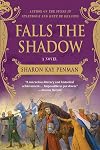
Falls the Shadow picks up where Here Be Dragons left off, with English and Welsh relations at a stalemate, at least until Welsh prince Llewellyn dies and Henry III's sister marries Simon de Montfort, a French nobleman whose star is on the rise. Simon's emerging influence among the peasantry, as well as an increasing number of nobility, proves to be an unexpectedly dangerous rival to the wimpy English king.
Whoa. This was a crazy interesting time period. The frequently changing allegiances are show more dizzying, and Simon de Montfort seems like such an implausibly larger-than-life character that it's surprising his name and legacy aren't better known into the present. About halfway through the book it occurred to me that there had been minimal focus on the Welsh perspective and the Welsh princes themselves, despite the title of the series. Penman does a fair job in the Author's Note justifying her choice to focus on English goings-on and what amounts to "filler," but I nevertheless feel that a thorough understanding of Davydd or Llewellyn and their personalities, motivations, exploits and foibles, was noticeably lacking. Looking forward to the third and final installment, with hopes that the focus returns to Wales. show less
Whoa. This was a crazy interesting time period. The frequently changing allegiances are show more dizzying, and Simon de Montfort seems like such an implausibly larger-than-life character that it's surprising his name and legacy aren't better known into the present. About halfway through the book it occurred to me that there had been minimal focus on the Welsh perspective and the Welsh princes themselves, despite the title of the series. Penman does a fair job in the Author's Note justifying her choice to focus on English goings-on and what amounts to "filler," but I nevertheless feel that a thorough understanding of Davydd or Llewellyn and their personalities, motivations, exploits and foibles, was noticeably lacking. Looking forward to the third and final installment, with hopes that the focus returns to Wales. show less
In her author’s note to this book, Sharon Kay Penman explains that her plan to follow up Here Be Dragons was to cover the lives of both Simon de Montfort and Llywelyn the Last. But Simon’s story proved to be much larger than half a book would allow, so Penman wisely ceded the stage to him for this second book.
Simon, born in France, married to the English king’s sister, proves to be the staunchest believer in an English king’s obligations to his people. Unfortunately, Henry III was show more the sort of person who really shouldn’t have been king: petulant, easily led by whichever follower he spoke to last, and definitely not a battlefield champion. Simon seems to fit the mould of kingship more, with his charisma, decisive battle tactics, and concern for the welfare of more citizens than earlier kings had considered. But his promotion of the Oxford Provisions smacks of treason to Henry…
I liked this even more than Here Be Dragons, probably because there weren’t any awkward sex scenes between people with large age differences (like Llywelyn Fawr and Joanna in the first book). I enjoyed reading about the dynamics of the de Montfort family and their various exploits, as well as the struggles Simon faced in attempting to get people on board with the Oxford Provisions.
In my head I was comparing this with Edith Pargeter’s Brothers of Gwynedd quartet—those books don’t go into quite as much detail but move a bit more quickly, from what I recall. They would complement each other nicely.
Side note: I was reading this when the news broke that Sharon Kay Penman had died, and the title seemed fitting. A shadow had fallen over the world of historical fiction with her passing. But what a rich legacy she has left. show less
Simon, born in France, married to the English king’s sister, proves to be the staunchest believer in an English king’s obligations to his people. Unfortunately, Henry III was show more the sort of person who really shouldn’t have been king: petulant, easily led by whichever follower he spoke to last, and definitely not a battlefield champion. Simon seems to fit the mould of kingship more, with his charisma, decisive battle tactics, and concern for the welfare of more citizens than earlier kings had considered. But his promotion of the Oxford Provisions smacks of treason to Henry…
I liked this even more than Here Be Dragons, probably because there weren’t any awkward sex scenes between people with large age differences (like Llywelyn Fawr and Joanna in the first book). I enjoyed reading about the dynamics of the de Montfort family and their various exploits, as well as the struggles Simon faced in attempting to get people on board with the Oxford Provisions.
In my head I was comparing this with Edith Pargeter’s Brothers of Gwynedd quartet—those books don’t go into quite as much detail but move a bit more quickly, from what I recall. They would complement each other nicely.
Side note: I was reading this when the news broke that Sharon Kay Penman had died, and the title seemed fitting. A shadow had fallen over the world of historical fiction with her passing. But what a rich legacy she has left. show less

A re-read, first read this as a teenager. In fact, I suspect Mum thinks she owns the copy I have. Kind of the middle of a trilogy, but they stand alone pretty well. Follows the life & times of 2 amazing men, Simon de Montfort & Llewelyn ap Gruffyd, grandson of Llewelyn the great. The characters are all clearly defined and brought to dazzling life, their strengths and weaknesses laid bare. The conflict between Simon and the King over his leadership (or lack of it). It is so clearly depicted show more that you find yourself backing Simon to the hilt. But you know, ahead of time, that it ends badly, and so it does. Last few chapters are a trial to read and (yet again) reduced me to a quivery mass of tears. It's a rivetting read, rolling along through france, England & Wales, through small country interludes and great state occasions with pace and the pages whizz by beneath your eyes. The Welsh chapters are equally eventful, but in a different way, they don;t have the glamour of the de montforts, but they have a charm of their own. The stories merge and mingle throughout, with Simon's wife, Nell, being the half sister of Llewelyn the Great, where we start the story. By the end, Llewelyn and Simon's daughter have been betrothed, but this has bene broken off after the battle and fall from grace. Some lovely vignettes that don't necessarily advance the story, but go a long way to flesh out the main protagonists. it's a story of dreams - a fair society and a united Wales. Neither come to pass in this book, but you can't help feeling that both dreams were dazzling enough to take the breath away, certainly worth fighting for - but to fight and fail? how terrible can a dream become. show less
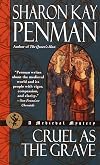
Good historical fiction is sublime, but bad historical ... This one is bad.
Here's the formula for lazy historical fiction:
1. Talk about food. Parade it into the foreground at every opportunity. It's a substitute for realism, and an out-of-nowhere mention of something weird like "lamprey pie" will disguise the overall shallowness of your research. Don't talk about how scarce it was, because that's a downer.
2. Make your dialogue imitate Tolkien, and your readers will accept it as Middle show more English. It's a bit like Romans having British accents.
3. It has to be a murder mystery. Don't question it. It just does.
This book opened with promise: an intriguing description of a power struggle between Eleanor of Aquitaine and Prince John. The hero, Justin de Quincy, learns that John has arranged a French invasion fleet. This may have a major impact on him, even as far as who in his family lives and dies. So what does he do? He immediately forgets all about it and launches an investigation into the murder of a peasant girl he's never heard of. Because POINT 3, dammit — the formula must be followed!
A final point. It's extraneous, but I can't resist making it, because I got so damn tired of characters saying things "with a grin." It's the Diet Coke of emoting, found everywhere, always leaving a nasty aftertaste. It can mean almost anything, so it conveys almost nothing, which means you have to specify what kind of grin. But most people don't, especially not Penman. Please, everyone, stop it with the grins. Thank you. show less
Here's the formula for lazy historical fiction:
1. Talk about food. Parade it into the foreground at every opportunity. It's a substitute for realism, and an out-of-nowhere mention of something weird like "lamprey pie" will disguise the overall shallowness of your research. Don't talk about how scarce it was, because that's a downer.
2. Make your dialogue imitate Tolkien, and your readers will accept it as Middle show more English. It's a bit like Romans having British accents.
3. It has to be a murder mystery. Don't question it. It just does.
This book opened with promise: an intriguing description of a power struggle between Eleanor of Aquitaine and Prince John. The hero, Justin de Quincy, learns that John has arranged a French invasion fleet. This may have a major impact on him, even as far as who in his family lives and dies. So what does he do? He immediately forgets all about it and launches an investigation into the murder of a peasant girl he's never heard of. Because POINT 3, dammit — the formula must be followed!
A final point. It's extraneous, but I can't resist making it, because I got so damn tired of characters saying things "with a grin." It's the Diet Coke of emoting, found everywhere, always leaving a nasty aftertaste. It can mean almost anything, so it conveys almost nothing, which means you have to specify what kind of grin. But most people don't, especially not Penman. Please, everyone, stop it with the grins. Thank you. show less
Lists
Historical Fiction (10)
Five star books (1)
Awards


You May Also Like


Associated Authors
Statistics
- Works
- 21
- Also by
- 2
- Members
- 19,007
- Popularity
- #1,150
- Rating
- 4.2
- Reviews
- 508
- ISBNs
- 181
- Languages
- 4
- Favorited
- 190

