
Anya Seton (1904–1990)
Author of Katherine
About the Author
Works by Anya Seton
Associated Works
Reader's Digest Condensed Books 1973 v02: A Palm for Mrs Pollifax / The Camerons / The Japanese / Green Darkness (1973) — Author — 27 copies
Reader's Digest Best Sellers 1962: Devil Water | Dearly Beloved | Ring of Bright Water | The Devil's Advocate (1962) — Author — 22 copies
Reader's Digest Condensed Books.: I Start Counting? • Three in Hand • Winston Churchill • My Boy John That Went to Sea • Avalon (1929) 3 copies
Reader's Digest A Treasury of Great Historical Novels Vol 1: Katherine / The Massacre at Fall Creek / Captain from Castile (1983) 3 copies
Reader's Digest Condensed Books: Microbe Hunters • Devil Water • To Sir, With Love • The Golden Rendezvous (1963) 3 copies
Tagged
Common Knowledge
- Legal name
- Seton, Ann
- Other names
- Chase, Ann Seton
Cottier, Ann Seton - Birthdate
- 1904-01-23
- Date of death
- 1990-11-08
- Gender
- female
- Education
- Spence School, New York City, New York, USA
- Occupations
- historical novelist
nurse - Organizations
- PEN
Authors League of America
Pen and Brush Club
National League of American Pen Women - Awards and honors
- Award of Distinction from the National League of American Pen Women (1957)
Citation of Honor from The Society of Colonial Wars (1957-1958) - Relationships
- Seton-Thompson, Grace Gallatin (mother)
Seton, Ernest Thompson (father) - Cause of death
- heart failure
- Nationality
- USA
- Birthplace
- New York, New York, USA
- Places of residence
- Cos Cob, Connecticut, USA
Old Greenwich, Connecticut, USA - Place of death
- Old Greenwich, Connecticut, USA
- Burial location
- Putnam Cemetery, Greenwich, Connecticut, USA
- Associated Place (for map)
- Connecticut, USA
Members
Discussions
Subjugate the British in Good Show Sir! — bad science fiction and fantasy covers (January 2025)
Reviews

Rating: 3 stars out of five, but only because I still love the memory
The Book Report: The book description says:
This unforgettable story of undying love combines mysticism, suspense, mystery, and romance into a web of good and evil that stretches from 16th-century England to the present day. Richard Marsdon marries a young American woman named Celia, brings her to live at his English estate, and all seems to be going well. But now Richard has become withdrawn, and Celia is constantly haunted show more by a vague dread. When she suffers a breakdown and wavers between life and death, a wise doctor realizes that only by forcing Celia to relive her past can he enable her to escape her illness. Celia travels back 400 years in time to her past life as a beautiful but doomed servant. Through her eyes, we see the England of the Tudors, torn by religious strife, and experience all the pageantry, lustiness, and cruelty of the age. As in other historical romance titles by this author, the past comes alive in this flamboyant classic novel.
My Review: My sister used to have a book store. She, our mother, and I all spent the summer of 1973, damn near 40 years ago now, reading this book. We'd been stealing it back and forth from each other until finally she gave Mama and me our own copies so she could read it in peace. We did a sort of group read on the book, and oh my heck how we liked it!
I was a teenager then. I wasn't an inexperienced reader, but I was completely suckered in by anything to do with reincarnation. Mama was just getting the Jeebus infection that ate her sense of humor, compassion, and decency...all oddly enough while sexually abusing her teenaged son, funny how often religion masks corruption...and my sister was in one of the periodic hellish patches that have punctuated her road through life.
We all resonated with the travails of the characters, trying to work out their manifold interconnections and karmic debts. The book's very Gothicness was deeply appealing to each of us for our own reasons, and gave us hours and hours of fun things to talk about. For that, a whole star in grateful memory.
Rereading this at fifty-two was probably a mistake. The writing is very much what one would expect of an historical novelist whose career began in the 1940s. She was renowned in the day for her meticulous research, and yet says in her Preface (p. vi of the 1973 Houghton Mifflin hardcover I got from the liberry), “Source books make for tedious listing, but for the Tudor period {of Green Darkness} I have tried to consult all the pertinent ones.” Imagine someone, even a novelist, trying to get away with that now! There would be calumnious mutterings and sulphrous aspersions cast on the character and the ability of such an author. As if it matters in a work of fiction.
The humid Gothic atmosphere of lust and love denied, the surrendered to, then disastrously brought to a close, was a little hard on my older self. I like romantic stories just fine, but the moralizing you can keep. And there is a deal of moralizing! Whee dawggie! The gay characters are ugly...as within, so without, and Seton clearly has the attitude of her day towards gay men...the lusty lower-class wenches get their bastards and get turned out, the Catholic Church and its hypocrisy suffer agonies at the hands of the vile Protestant politicians...Seton was raised a Theosophist...good people turn hard and cold when given property to protect...the Exotic Hindu Doctor who understands Modern Medicine but Knows How to Be In Touch With the Spirits, oof!...oh, the lot!
So not so much on the attitude. I get it, and in those days I absorbed it because it was the way my family thought, but how I wish I could go back to 1973 and smack this book out of my young hands! Along with Stranger in a Strange Land, its misogyny and homophobia leached right into my brain and lodged there. Never made me one whit less gay, just made me feel terrible about it, like the culture's messages continue to do to young and impressionable kids to this day.
But the fact that the lady wrote this, her next-to-last book, when she was nearing seventy and had only just been divorced from her husband of nigh on forty years, and was beginning her long decline into ill health, makes Green Darkness a poignant re-read for me. Her life was unraveling, and mine was too (what little there was of it at that point); I think both my mother and my sister felt the same way. I suspect some resonance of that bound all of us to this book and spoke to each of us about its unhappy people in unhappy lives. There is, in the best romantic tradition, a happy ending. But I for one have never believed it. show less
The Book Report: The book description says:
This unforgettable story of undying love combines mysticism, suspense, mystery, and romance into a web of good and evil that stretches from 16th-century England to the present day. Richard Marsdon marries a young American woman named Celia, brings her to live at his English estate, and all seems to be going well. But now Richard has become withdrawn, and Celia is constantly haunted show more by a vague dread. When she suffers a breakdown and wavers between life and death, a wise doctor realizes that only by forcing Celia to relive her past can he enable her to escape her illness. Celia travels back 400 years in time to her past life as a beautiful but doomed servant. Through her eyes, we see the England of the Tudors, torn by religious strife, and experience all the pageantry, lustiness, and cruelty of the age. As in other historical romance titles by this author, the past comes alive in this flamboyant classic novel.
My Review: My sister used to have a book store. She, our mother, and I all spent the summer of 1973, damn near 40 years ago now, reading this book. We'd been stealing it back and forth from each other until finally she gave Mama and me our own copies so she could read it in peace. We did a sort of group read on the book, and oh my heck how we liked it!
I was a teenager then. I wasn't an inexperienced reader, but I was completely suckered in by anything to do with reincarnation. Mama was just getting the Jeebus infection that ate her sense of humor, compassion, and decency...all oddly enough while sexually abusing her teenaged son, funny how often religion masks corruption...and my sister was in one of the periodic hellish patches that have punctuated her road through life.
We all resonated with the travails of the characters, trying to work out their manifold interconnections and karmic debts. The book's very Gothicness was deeply appealing to each of us for our own reasons, and gave us hours and hours of fun things to talk about. For that, a whole star in grateful memory.
Rereading this at fifty-two was probably a mistake. The writing is very much what one would expect of an historical novelist whose career began in the 1940s. She was renowned in the day for her meticulous research, and yet says in her Preface (p. vi of the 1973 Houghton Mifflin hardcover I got from the liberry), “Source books make for tedious listing, but for the Tudor period {of Green Darkness} I have tried to consult all the pertinent ones.” Imagine someone, even a novelist, trying to get away with that now! There would be calumnious mutterings and sulphrous aspersions cast on the character and the ability of such an author. As if it matters in a work of fiction.
The humid Gothic atmosphere of lust and love denied, the surrendered to, then disastrously brought to a close, was a little hard on my older self. I like romantic stories just fine, but the moralizing you can keep. And there is a deal of moralizing! Whee dawggie! The gay characters are ugly...as within, so without, and Seton clearly has the attitude of her day towards gay men...the lusty lower-class wenches get their bastards and get turned out, the Catholic Church and its hypocrisy suffer agonies at the hands of the vile Protestant politicians...Seton was raised a Theosophist...good people turn hard and cold when given property to protect...the Exotic Hindu Doctor who understands Modern Medicine but Knows How to Be In Touch With the Spirits, oof!...oh, the lot!
So not so much on the attitude. I get it, and in those days I absorbed it because it was the way my family thought, but how I wish I could go back to 1973 and smack this book out of my young hands! Along with Stranger in a Strange Land, its misogyny and homophobia leached right into my brain and lodged there. Never made me one whit less gay, just made me feel terrible about it, like the culture's messages continue to do to young and impressionable kids to this day.
But the fact that the lady wrote this, her next-to-last book, when she was nearing seventy and had only just been divorced from her husband of nigh on forty years, and was beginning her long decline into ill health, makes Green Darkness a poignant re-read for me. Her life was unraveling, and mine was too (what little there was of it at that point); I think both my mother and my sister felt the same way. I suspect some resonance of that bound all of us to this book and spoke to each of us about its unhappy people in unhappy lives. There is, in the best romantic tradition, a happy ending. But I for one have never believed it. show less
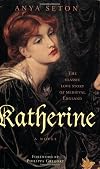
An exceptional classic of historical fiction!
First published in 1954, the KATHERINE of the title is Katherine de Roet Swynford (1349-1403), one-time household governess, then mistress, and later third wife of John of Gaunt (1340-1399), 1st Duke of Lancaster. And a fascinating woman in her own right. Her chief claim to fame is that their descendants founded the ever-popular House of Tudor. She's also happens to be the sister-in-law of Geoffrey Chaucer (1340-1400), author of THE CANTERBURY show more TALES.
When I first read this book many years ago, I knew little of English history during this time period. But I found the story and especially the character of Katherine so compelling that it launched an entirely new fascination. So much so that I've now read dozens of books about assorted members of the House of Plantagenet, and its offshoots, the York and Lancaster rivals.
In a quirky piece of historical irony, John of Gaunt's son and heir by his first wife, Henry Bolingbroke, later King Henry IV (1367-1413) was instrumental in starting the Wars of the Roses (1455-87), whereas his great, great grandson, Henry Tudor (1457-1509 - aka King Henry VII) is credited with ending those wars.
The book is considered a well-researched historical romance for its time period (when far fewer resources were readily available) and is just one of the dozen well-received novels American author Anya Seton (1904-1990) wrote. Several of which were made into movies. For me, this was a true page-turner.
It's a shame Seton is not more widely known today because for me, she is one of the best historical novelists I've come across. She made Katherine, John of Gaunt, their romance, AND complex histories -- all come alive. I actually became extremely invested in whether their Beaufort descendants should be considered legitimate. (Read the book to find out more!) Clearly this is one of those works of historical fiction that has stayed with me over decades. show less
First published in 1954, the KATHERINE of the title is Katherine de Roet Swynford (1349-1403), one-time household governess, then mistress, and later third wife of John of Gaunt (1340-1399), 1st Duke of Lancaster. And a fascinating woman in her own right. Her chief claim to fame is that their descendants founded the ever-popular House of Tudor. She's also happens to be the sister-in-law of Geoffrey Chaucer (1340-1400), author of THE CANTERBURY show more TALES.
When I first read this book many years ago, I knew little of English history during this time period. But I found the story and especially the character of Katherine so compelling that it launched an entirely new fascination. So much so that I've now read dozens of books about assorted members of the House of Plantagenet, and its offshoots, the York and Lancaster rivals.
In a quirky piece of historical irony, John of Gaunt's son and heir by his first wife, Henry Bolingbroke, later King Henry IV (1367-1413) was instrumental in starting the Wars of the Roses (1455-87), whereas his great, great grandson, Henry Tudor (1457-1509 - aka King Henry VII) is credited with ending those wars.
The book is considered a well-researched historical romance for its time period (when far fewer resources were readily available) and is just one of the dozen well-received novels American author Anya Seton (1904-1990) wrote. Several of which were made into movies. For me, this was a true page-turner.
It's a shame Seton is not more widely known today because for me, she is one of the best historical novelists I've come across. She made Katherine, John of Gaunt, their romance, AND complex histories -- all come alive. I actually became extremely invested in whether their Beaufort descendants should be considered legitimate. (Read the book to find out more!) Clearly this is one of those works of historical fiction that has stayed with me over decades. show less
“I only know that from wherever it is that we're going there can be no turning back.”
It is absolutely astounding to me that this hasn’t been made into a mini-series yet. It’s a fact that because of Katherine and her illegitimate children, the House of York (and Henry VII) and the Tudors and the Stuarts are not only all Plantagenets but Lancasters as well. So much for the fall of the house of Lancaster!
But for those of you who haven’t come for a summary of Who Dated Who: 1366, show more you’ll be pleased to hear that this novel is the most romantic biographical story I’ve ever read. It goes beyond the Bildungsroman, carrying us into Katherine’s late life, her time apart from her love and briefly touches on everyone she knew and encountered. If you’re a fan of historical fiction (romantic or otherwise) this is such a great book to read.
It’s only show of being dated is the (wonderfully) chaste descriptions of Katherine’s young passion and consequently of her (what else can you call it?) rape. The other is the dancing around of Richard II’s rumored homosexuality. All other rumors are given life, and considering how close she came to this infamous king... but it’s not important enough to the story in the end.
A little tedious was when the Young Katherine is looked upon with desire by every man she comes across, they all lust for her, in a mild way, and see the purity and innocence in her appearance. It is finally trumped when she meets a man, one whom many would scorn and shun for his appearance, that she knows what it is to be looked at with love by a man who does not desire her. In this same segment, where we meet Lady Julian, a woman who, like St. Hildegard von Bingen was, has not been officially canonized, but is still venerated as a saint. The religious aspects of this novel are well placed and wrought with care for the rest of the novel. As important as religion was then, and how pervasive it was, it cannot be for nought that Katherine’s growth happens with the aid of priests and monks, saints and nuns. Equally so for the revolts of the Lollards and the heretics; the demands of an unruly bourgeois who despise the wanton greed of the bishops and cardinals; this was also the time of the schism of the church, where there were two popes in the world.
Phillipa Gregory (famously the author of several novels about the medieval british royals) gives this book a very pointed introduction on the differences of romance fiction and historical fiction. While this book bears a resemblance to the stories of Tristan and Iseult, Arthur and Guinevere, her point is valid, Katherine’s life, while not shaping landscapes directly, mostly of childrearing and observation, did have a marked impact on British history. She’s often strongly admonished in the classic history texts, her role as paramour and later the First Lady of England, has her brandished as an interloper as notorious as Alice Perrers.
These contrasts of intent, greed versus love, and marriage versus love, are common to historical as well as medieval contemporary stories that explore a world obsessed with true love and empires built by men. The violence that intersperses the sanity and the abandon that pierces through the pious times without plague frame the troubles of Katherine’s life, even this fictionalized account of it. She lives long and sees much, and enjoys the width and breadth of what her world had to offer, even as unhappy as some of it was. I know that much of Katherine’s life is unknown, but there is something very noble about this woman nonetheless, her life is important, even if we don’t know the half of it.
Kudos to Geoffrey Chaucer, by the way, for writing absolutely nothing about his sister-in-law.
I can't believe I haven't said anything about the fantastic narration! Looking over lines of passages from the book, it sounds so much more classical and stodgy than it did when read by the lovely and talented Wanda McCaddon. She's apparently narrated a couple other classics, historicals and romances: I'm on it!
500pp. Fawcett Crest Books. 1954.
23:43. Tantor Media. 25 Mar. 2011. show less
It is absolutely astounding to me that this hasn’t been made into a mini-series yet. It’s a fact that because of Katherine and her illegitimate children, the House of York (and Henry VII) and the Tudors and the Stuarts are not only all Plantagenets but Lancasters as well. So much for the fall of the house of Lancaster!
But for those of you who haven’t come for a summary of Who Dated Who: 1366, show more you’ll be pleased to hear that this novel is the most romantic biographical story I’ve ever read. It goes beyond the Bildungsroman, carrying us into Katherine’s late life, her time apart from her love and briefly touches on everyone she knew and encountered. If you’re a fan of historical fiction (romantic or otherwise) this is such a great book to read.
It’s only show of being dated is the (wonderfully) chaste descriptions of Katherine’s young passion and consequently of her (what else can you call it?) rape. The other is the dancing around of Richard II’s rumored homosexuality. All other rumors are given life, and considering how close she came to this infamous king... but it’s not important enough to the story in the end.
A little tedious was when the Young Katherine is looked upon with desire by every man she comes across, they all lust for her, in a mild way, and see the purity and innocence in her appearance. It is finally trumped when she meets a man, one whom many would scorn and shun for his appearance, that she knows what it is to be looked at with love by a man who does not desire her. In this same segment, where we meet Lady Julian, a woman who, like St. Hildegard von Bingen was, has not been officially canonized, but is still venerated as a saint. The religious aspects of this novel are well placed and wrought with care for the rest of the novel. As important as religion was then, and how pervasive it was, it cannot be for nought that Katherine’s growth happens with the aid of priests and monks, saints and nuns. Equally so for the revolts of the Lollards and the heretics; the demands of an unruly bourgeois who despise the wanton greed of the bishops and cardinals; this was also the time of the schism of the church, where there were two popes in the world.
Phillipa Gregory (famously the author of several novels about the medieval british royals) gives this book a very pointed introduction on the differences of romance fiction and historical fiction. While this book bears a resemblance to the stories of Tristan and Iseult, Arthur and Guinevere, her point is valid, Katherine’s life, while not shaping landscapes directly, mostly of childrearing and observation, did have a marked impact on British history. She’s often strongly admonished in the classic history texts, her role as paramour and later the First Lady of England, has her brandished as an interloper as notorious as Alice Perrers.
These contrasts of intent, greed versus love, and marriage versus love, are common to historical as well as medieval contemporary stories that explore a world obsessed with true love and empires built by men. The violence that intersperses the sanity and the abandon that pierces through the pious times without plague frame the troubles of Katherine’s life, even this fictionalized account of it. She lives long and sees much, and enjoys the width and breadth of what her world had to offer, even as unhappy as some of it was. I know that much of Katherine’s life is unknown, but there is something very noble about this woman nonetheless, her life is important, even if we don’t know the half of it.
Kudos to Geoffrey Chaucer, by the way, for writing absolutely nothing about his sister-in-law.
I can't believe I haven't said anything about the fantastic narration! Looking over lines of passages from the book, it sounds so much more classical and stodgy than it did when read by the lovely and talented Wanda McCaddon. She's apparently narrated a couple other classics, historicals and romances: I'm on it!
500pp. Fawcett Crest Books. 1954.
23:43. Tantor Media. 25 Mar. 2011. show less
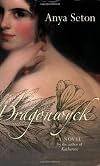
Miranda Wells is too dainty and flighty to fit in with her hard working, puritanical farming family. When a distant cousin invites her to act as companion to his young daughter, she leaps at the chance and soon arrives at the beautiful gothic mansion of Dragonwyck. It is ruled by the autocratic Nicholas Van Ryn, who is so handsome, powerful, cultured that Miranda falls for him immediately. Nicholas is haunted by his first wife, who cannot give him the son he craves, and by Miranda's beauty. show more After Johanna dies, he immediately proposes to Miranda. And it is here that the story takes a turn, because far from a meeting of minds or a storybook ending, Miranda's triumphant wedding rapidly becomes a nightmare.
This is like a wonderfully dark and twisted version of Jane Eyre or Rebecca, in which the remote older gentleman the heroine falls in love with is actually a terrifying villain. And yet, he is still as powerful and handsome as ever, and he's still quite attractive to the heroine, which makes the story all the more horrifying. Miranda is no Jane Eyre--she is silly, selfish, and bends to Nicholas's every whim. But she is an engrossing main character, perhaps in part because she is so unlike the smarter, wiser, less shallow heroines of better novels. I was rooting for her to get what she wanted from the very first. Miranda has to change in order to find happiness with the true hero of the book (the selfless Dr. Jeff Turner), but I never felt like this was a morality tale*.
*Actually, there is one very annoying bit: after her husband brutalizes her body and spirit for years, Miranda finally breaks free of him but nearly dies in the effort. She recovers, but her shining golden hair is shaven off during her fever, and she has unobtrusive brown hair ever after. I've seen this trope before, and it's bullshit every time. show less
This is like a wonderfully dark and twisted version of Jane Eyre or Rebecca, in which the remote older gentleman the heroine falls in love with is actually a terrifying villain. And yet, he is still as powerful and handsome as ever, and he's still quite attractive to the heroine, which makes the story all the more horrifying. Miranda is no Jane Eyre--she is silly, selfish, and bends to Nicholas's every whim. But she is an engrossing main character, perhaps in part because she is so unlike the smarter, wiser, less shallow heroines of better novels. I was rooting for her to get what she wanted from the very first. Miranda has to change in order to find happiness with the true hero of the book (the selfless Dr. Jeff Turner), but I never felt like this was a morality tale*.
*Actually, there is one very annoying bit: after her husband brutalizes her body and spirit for years, Miranda finally breaks free of him but nearly dies in the effort. She recovers, but her shining golden hair is shaven off during her fever, and she has unobtrusive brown hair ever after. I've seen this trope before, and it's bullshit every time.
Lists
Guilty Pleasures (1)
New York (1)
1940s (1)
Roman Britain (1)
Favourite Books (1)
Awards


You May Also Like


Associated Authors
Statistics
- Works
- 25
- Also by
- 13
- Members
- 8,982
- Popularity
- #2,675
- Rating
- 3.9
- Reviews
- 246
- ISBNs
- 227
- Languages
- 11
- Favorited
- 48