
Norah Lofts (1904–1983)
Author of The Concubine
About the Author
Celebrated novelist Norah Lofts perfected the art of bringing the past alive in her works of historical fiction. She remains one of England's most distinguished and best loved women of letters, selling more than a million books and captivating generations of readers. Lofts' first novel, "I Met a show more Gypsy", won the American Booksellers' Award for 1935. In her long and prolific career, she wrote more than 60 books of nonfiction, biography and historical fiction, animating history and yet preserving historical accuracy. In works such as "Scent of Cloves" (1940), "Bless This House" (1954), and "Crown of Aloes" (1979), period detail and language are blended with a masterful storytelling technique. Lofts is also well known for biographical novels about great and fascinating women of history such as Anne Boleyn and Catherine of Aragon. In addition, Lofts has written thrillers under the pseudonym Peter Curtis and novels as Juliet Astley. Norah (Robinson) Lofts was born in Norfolk, England on August 27, 1904. She credited her history-teaching years, 1925 to 1936, for developing a sense of history which became the foundation for her writings. Married and the mother of two sons, she lived in an ancient English city, among medieval ruins, in a 250-year-old house. She died there on September 10, 1983. (Bowker Author Biography) show less
Disambiguation Notice:
"Juliet Astley" and "Peter Curtis" are noms de plume of Norah Lofts.
Image credit: Courtesy of the NYPL Digital Gallery (image use requires permission from the New York Public Library)
Series
Works by Norah Lofts
Great Historical Romances: The Talisman Ring + The Gambling Man + The King's Pleasure (1978) 19 copies
The Best of Norah Lofts. Jassy. Bless This House. Scent of Cloves. How Far to Bethlehem (1984) 4 copies
Bless the House 1 copy
O vôo da Borboleta 1 copy
Knight's Acre 1 copy
Una casetta in campagna 1 copy
Calf for Venus 1 copy
Norah Lofts, Suffolk House Trilogy Collection: Town House, the House at Old Vine & the House at Sunset (2011) 1 copy
Il bel cavaliere 1 copy
Nessuno per lei 1 copy
Mr. Edward 1 copy
Associated Works
Ghostly Gentlewomen: Two Centuries of Spectral Stories by the Gentle Sex (1977) — Contributor — 26 copies
Our Man in Havana, And a Right Good Crew (Nelson Doubleday Best in Books, Volume 33) (1959) 3 copies
Reader's Digest Condensed Books: Fiona • Papillon • Miss One Thousand Spring Blossoms • The King's Pleasure (1970) 2 copies
Nine Coaches Waiting / No Question of Murder / The Nan Patterson Case / Journey to Christmas / Now or Never / You’re Out of Your Mind Charlie Brown (1959) — Contributor — 2 copies
Hoe ver nog naar Bethlehem; Dokters onder kruisverhoor; Ada Harris gaat naar New York; Avontuur in Karinthië 1 copy, 1 review
The Uncertain Element: An Anthology of Fantastic Conceptions — Contributor — 1 copy
Tagged
Common Knowledge
- Other names
- Robinson, Norah(birth)
Astley, Juliet (pseudonym)
Curtis, Peter (pseudonym) - Birthdate
- 1904-08-27
- Date of death
- 1983-09-10
- Gender
- female
- Education
- Norwich Teaching College
- Occupations
- teacher
short story writer
historical novelist
mystery writer
biographer - Short biography
- Norah Lofts, née Robinson, trained as a teacher, became a prolific best-selling author both in the UK and USA. She wrote over 50 books and specialized in historical fiction, although she also wrote nonfiction and short stories. Her books are compelling reading and provide a wealth of historically accurate period detail. Several of her novels were turned into films. Norah Lofts chose to issue her mystery novels under the pen name Peter Curtis because she didn't want the many readers of her popular historical fiction to expect classic Norah Lofts-style writing in them.
- Nationality
- UK
- Birthplace
- Shipdham, Norfolk, England, UK
- Places of residence
- Norfolk, England, UK
- Place of death
- Bury St Edmunds, Suffolk, England, UK
- Burial location
- cremated
- Map Location
- England, UK
- Disambiguation notice
- "Juliet Astley" and "Peter Curtis" are noms de plume of Norah Lofts.
Members
Discussions
British Author Challenge March 2025: Norah Lofts & Gerald Durrell in 75 Books Challenge for 2025 (August 2025)
Reviews
Jassy by Norah Lofts

“Jassy” is an addictive story and one of the best books I’ve ever read. The way the author has constructed the plot and developed the characters is borderline genius.
Four different narrators tell the tale, none of whom are Jassy. This leaves her with a kind of aura, and it works. Some characters like her, some don’t, while others fit somewhere in between.
I like her a lot, right from her first scene, which is described by Narrator One, namely Barney. Jassy and her parents move in next show more door to him. He’s nearing his fourteenth birthday at the time. Jassy, as we later learn, is eleven, but Barney thinks she’s about six because of her smallness.
It’s a simple scene but incredibly vivid. They’re carrying their furniture across the lawn to the house. Except for the mother, that is. She doesn’t help at all. She’s some sort of gypsy, which is the only excuse given for her standing by idle while her husband and daughter do all the carrying.
The father, as we later learn, is completely opposite to the mother. He’s an activist, ready to stand for a good cause and help those in need, plus he’s religious.
Going back to the aforementioned scene, we have little Jassy doing most of the work without complaint. Although Barney describes her as ugly, owing to a bulging forehead and oversized mouth, she nevertheless comes across as endearing.
The main reason I’m giving this simple scene so much attention is because it’s stayed with me like a memory. It’s as though I’ve seen it myself, not second-hand. Several other scenes have done likewise.
Moving on, we learn Barney’s greatest ambition is to one day reclaim a house called Mortiboys, which was in his family for many generations, only for his father to lose it at cards. They were forced to move into a farm, from which Barney can see Mortiboys and often stares at it, dreaming it’ll one day be his.
At times, Barney comes across as selfish, but more than once he proves himself to have a good heart. He also sounds like a typical teenager. He hates his father for losing Mortiboys but he loves his mother.
His father, incidentally, is an amusing character. He never speaks clearly, so his dialogue features a mix of coherent language and the repeated word “mumble”. You get the gist of what he’s saying, but it’s a lovely comic touch every time certain words are replaced with “mumble, mumble”.
One of my favourite scenes is when Barney first meets Jassy. I won’t go into detail, but he helps her out of a scrape, winning her devotion. She hasn’t made any friends because the village children know her mother is a gypsy, which makes them suspicious of Jassy. From a writing standpoint, this is a clever way of making the reader sympathise with the title character.
A few more quality scenes with Barney and Jassy come later. In these, we see how Barney is outwardly impatient but inwardly caring.
Most of the time, Jassy is neat in appearance and well-conducted in her manner; however, every so often she loses her temper, and she becomes violent. This is usually after someone uses violence on her, but she’s standing up for herself and is remorseful soon after, even when her actions are (arguably) justified.
I found Barney’s narrative absorbing, and like his section best of the four narrators. I can only fault it on one point: it includes a spoiler. Without going into detail, Barney mentions one of the characters would be dead by a specific time, so when that time nears, and people are worried, we know it’s going to happen. If we didn’t know, we’d be in suspense. So, this is one of two needless spoilers that I wish the author hadn’t included.
The second narrator is a female schoolteacher approaching fifty. She’s an interesting character who takes the narrative in a whole new direction. While Barney’s section covers about one year, this part covers five, so Jassy is sixteen by the end of it.
We don’t see Jassy as much in this second part, but she influences almost everything that happens to the narrator.
The third narrator, Dylis, is a girl of Jassy’s age and, as her narration progresses, she becomes harder to sympathise with. This is because of her self-centred nature, which the author superbly portrays.
We get to see Barney again, but of course this time from without, not within. Dylis and Jassy visit him, this being the first time Jassy has seen him in five years. I love how the author has crafted this reunion. It’s suspenseful and, although Dylis is narrating, you feel Jassy’s nervous excitement. She on the most part acts as though seeing Barney is not a big thing for her, yet a couple of Dylis’s observations of Jassy’s body language reveal the truth. I won’t be specific here, but it’s a wonderful example of “showing”, not “telling”. Aspiring authors could learn much from this scene (and many others).
Dylis is the daughter of the man who beat Barney’s father at cards and won Mortiboys. Barney, who’s now a tall and handsome eighteen-year-old, has met the beautiful Dylis before when she showed him around Mortiboys. She’s as pleased as Jassy to see Barney again.
A lot of the action transpires at Mortiboys, which needs many repairs, only Dylis’s father won’t pay to have them fixed.
Without revealing anything important, I'm disappointed to state that during Dylis's narration the author includes the second of this book's two spoilers. It's something Dylis mentions when she states she's now an old woman. What she says she's done in her life robs a huge element of suspense from the story. I can't elaborate further without giving it away, but anyone who's read "Jassy" will understand, and will surely be as annoyed as me about it. It serves no purpose for Dylis to give up this info. I don't understand why an author of such great talent would drop this spoiler and the earlier one in Barney's narration.
This third section covers about a year before the story changes narrator for the fourth and final time. If ever there was an unreliable narrator, this girl Lindy is it. That’s not to say she’s lying. Far from it. Problem is, she has mental issues, and is referred to as a “looney” by the rest of the villagers – except for Jassy, who’s kind to her and persuades Dylis’s father to give her a job at Mortiboys.
This fourth narrative is shorter than the previous three. It’s the hardest to read because of the strange language and Lindy’s hallucinations (she sees an angel every so often). From a writing perspective, though, the author does an excellent job with delving into Lindy’s disturbed mind and portraying her perspective of life.
Lindy always refers to Jassy as “She” in the same way as Christians refer to God as “He”. Lindy’s devoted to her because Jassy is kind, where others aren’t, and she arranged a job for her, while others wouldn’t employ her.
I can’t relate too much more about this final section without spoiling surprises, but I’ll touch on the ending. Again, I won’t give anything away, but the following three paragraphs might be too vague for anyone who hasn’t read the book, so it might better to read it afterwards (if I haven’t bored you off already by going on for so long).
When I got to the last sentence, I reacted with something like, “What! Is that it?” Not because it’s badly done, but because it’s abrupt and not how I imagined it would end. Also, I was reading this for free on Open Library, and thought I’d another ten or more pages to go. While I expected some back matter, I didn’t expect so many adverts for other books, so I thought there’d be at least another eight pages before reaching the end.
Once I got over the above surprise, I initially felt disappointed. Not because of how it was written, or that it made no sense, or anything like that, but because it’s not what I hoped for. I mentioned above that it’s an abrupt ending, which it is, and on first impressions is a definitive ending.
Reflecting on it, though, it’s really an open ending. In other words, it could’ve carried on with a different outcome to what’s implied. First, Lindy is an unreliable narrator. Second, who is she relating all this to? The reader, obviously, but considering how it ends, and how it’s put together, it suggests (to me at least) that she’s relayed all this to someone somehow. If so, it would change Jassy’s path. Third, Lindy relates in detail how a reputable character listens to Jassy’s story (I can’t be more specific without giving it away, but anyone who’s read the book will understand), so he could then tell certain important characters (important in their positions in society and important in Jassy's personal life), which would surely alter matters for Jassy, perhaps leading to the ending I was hoping for. Fourth, I could be wrong on all accounts and the ending is as definitive as it initially implies.
Ultimately, is down to the reader’s imagination. Open endings can be annoying, but if you’re not happy with it, you can interpret what happens next in a way that suits you.
I’ve thought a lot about this because “Jassy” is one of few novels to make a lasting impression on me. It kept popping into my head regularly for three or four days after reading it. And it’s the scenes featuring Jassy that are most vivid. We never get into her mind, yet my sympathies were utmost with her during all four narratives. At first, I thought it was a shame Jassy didn’t narrate a section, but now I think if she did it would’ve taken something away from this engrossing story.
This is my second Norah Lofts’s novel, so wasn’t sure what to expect, it being a while since the first one. Much as “A Rose for Virtue” made me want to read more works by this author, it didn’t make me yearn to do so in any hurry. The gap between “Jassy” and whichever title I choose next will not be as long. Whether it’ll be nearly as good, I don’t know, but I’ll always be grateful to the late Norah Lofts for crafting such a thought-provoking novel and for creating such a charming character as Jassy.
***
Added three months after the above text:
I've since read Norah Lofts's 'Nethergate', which features several characters from 'Jassy', and is mostly set in the same area. Jassy is referred to several times, though she doesn't appear in any scenes, and it makes clear what happened to her. 'Nethergate' isn't a sequel, but arguably it could be. show less
Four different narrators tell the tale, none of whom are Jassy. This leaves her with a kind of aura, and it works. Some characters like her, some don’t, while others fit somewhere in between.
I like her a lot, right from her first scene, which is described by Narrator One, namely Barney. Jassy and her parents move in next show more door to him. He’s nearing his fourteenth birthday at the time. Jassy, as we later learn, is eleven, but Barney thinks she’s about six because of her smallness.
It’s a simple scene but incredibly vivid. They’re carrying their furniture across the lawn to the house. Except for the mother, that is. She doesn’t help at all. She’s some sort of gypsy, which is the only excuse given for her standing by idle while her husband and daughter do all the carrying.
The father, as we later learn, is completely opposite to the mother. He’s an activist, ready to stand for a good cause and help those in need, plus he’s religious.
Going back to the aforementioned scene, we have little Jassy doing most of the work without complaint. Although Barney describes her as ugly, owing to a bulging forehead and oversized mouth, she nevertheless comes across as endearing.
The main reason I’m giving this simple scene so much attention is because it’s stayed with me like a memory. It’s as though I’ve seen it myself, not second-hand. Several other scenes have done likewise.
Moving on, we learn Barney’s greatest ambition is to one day reclaim a house called Mortiboys, which was in his family for many generations, only for his father to lose it at cards. They were forced to move into a farm, from which Barney can see Mortiboys and often stares at it, dreaming it’ll one day be his.
At times, Barney comes across as selfish, but more than once he proves himself to have a good heart. He also sounds like a typical teenager. He hates his father for losing Mortiboys but he loves his mother.
His father, incidentally, is an amusing character. He never speaks clearly, so his dialogue features a mix of coherent language and the repeated word “mumble”. You get the gist of what he’s saying, but it’s a lovely comic touch every time certain words are replaced with “mumble, mumble”.
One of my favourite scenes is when Barney first meets Jassy. I won’t go into detail, but he helps her out of a scrape, winning her devotion. She hasn’t made any friends because the village children know her mother is a gypsy, which makes them suspicious of Jassy. From a writing standpoint, this is a clever way of making the reader sympathise with the title character.
A few more quality scenes with Barney and Jassy come later. In these, we see how Barney is outwardly impatient but inwardly caring.
Most of the time, Jassy is neat in appearance and well-conducted in her manner; however, every so often she loses her temper, and she becomes violent. This is usually after someone uses violence on her, but she’s standing up for herself and is remorseful soon after, even when her actions are (arguably) justified.
I found Barney’s narrative absorbing, and like his section best of the four narrators. I can only fault it on one point: it includes a spoiler. Without going into detail, Barney mentions one of the characters would be dead by a specific time, so when that time nears, and people are worried, we know it’s going to happen. If we didn’t know, we’d be in suspense. So, this is one of two needless spoilers that I wish the author hadn’t included.
The second narrator is a female schoolteacher approaching fifty. She’s an interesting character who takes the narrative in a whole new direction. While Barney’s section covers about one year, this part covers five, so Jassy is sixteen by the end of it.
We don’t see Jassy as much in this second part, but she influences almost everything that happens to the narrator.
The third narrator, Dylis, is a girl of Jassy’s age and, as her narration progresses, she becomes harder to sympathise with. This is because of her self-centred nature, which the author superbly portrays.
We get to see Barney again, but of course this time from without, not within. Dylis and Jassy visit him, this being the first time Jassy has seen him in five years. I love how the author has crafted this reunion. It’s suspenseful and, although Dylis is narrating, you feel Jassy’s nervous excitement. She on the most part acts as though seeing Barney is not a big thing for her, yet a couple of Dylis’s observations of Jassy’s body language reveal the truth. I won’t be specific here, but it’s a wonderful example of “showing”, not “telling”. Aspiring authors could learn much from this scene (and many others).
Dylis is the daughter of the man who beat Barney’s father at cards and won Mortiboys. Barney, who’s now a tall and handsome eighteen-year-old, has met the beautiful Dylis before when she showed him around Mortiboys. She’s as pleased as Jassy to see Barney again.
A lot of the action transpires at Mortiboys, which needs many repairs, only Dylis’s father won’t pay to have them fixed.
Without revealing anything important, I'm disappointed to state that during Dylis's narration the author includes the second of this book's two spoilers. It's something Dylis mentions when she states she's now an old woman. What she says she's done in her life robs a huge element of suspense from the story. I can't elaborate further without giving it away, but anyone who's read "Jassy" will understand, and will surely be as annoyed as me about it. It serves no purpose for Dylis to give up this info. I don't understand why an author of such great talent would drop this spoiler and the earlier one in Barney's narration.
This third section covers about a year before the story changes narrator for the fourth and final time. If ever there was an unreliable narrator, this girl Lindy is it. That’s not to say she’s lying. Far from it. Problem is, she has mental issues, and is referred to as a “looney” by the rest of the villagers – except for Jassy, who’s kind to her and persuades Dylis’s father to give her a job at Mortiboys.
This fourth narrative is shorter than the previous three. It’s the hardest to read because of the strange language and Lindy’s hallucinations (she sees an angel every so often). From a writing perspective, though, the author does an excellent job with delving into Lindy’s disturbed mind and portraying her perspective of life.
Lindy always refers to Jassy as “She” in the same way as Christians refer to God as “He”. Lindy’s devoted to her because Jassy is kind, where others aren’t, and she arranged a job for her, while others wouldn’t employ her.
I can’t relate too much more about this final section without spoiling surprises, but I’ll touch on the ending. Again, I won’t give anything away, but the following three paragraphs might be too vague for anyone who hasn’t read the book, so it might better to read it afterwards (if I haven’t bored you off already by going on for so long).
When I got to the last sentence, I reacted with something like, “What! Is that it?” Not because it’s badly done, but because it’s abrupt and not how I imagined it would end. Also, I was reading this for free on Open Library, and thought I’d another ten or more pages to go. While I expected some back matter, I didn’t expect so many adverts for other books, so I thought there’d be at least another eight pages before reaching the end.
Once I got over the above surprise, I initially felt disappointed. Not because of how it was written, or that it made no sense, or anything like that, but because it’s not what I hoped for. I mentioned above that it’s an abrupt ending, which it is, and on first impressions is a definitive ending.
Reflecting on it, though, it’s really an open ending. In other words, it could’ve carried on with a different outcome to what’s implied. First, Lindy is an unreliable narrator. Second, who is she relating all this to? The reader, obviously, but considering how it ends, and how it’s put together, it suggests (to me at least) that she’s relayed all this to someone somehow. If so, it would change Jassy’s path. Third, Lindy relates in detail how a reputable character listens to Jassy’s story (I can’t be more specific without giving it away, but anyone who’s read the book will understand), so he could then tell certain important characters (important in their positions in society and important in Jassy's personal life), which would surely alter matters for Jassy, perhaps leading to the ending I was hoping for. Fourth, I could be wrong on all accounts and the ending is as definitive as it initially implies.
Ultimately, is down to the reader’s imagination. Open endings can be annoying, but if you’re not happy with it, you can interpret what happens next in a way that suits you.
I’ve thought a lot about this because “Jassy” is one of few novels to make a lasting impression on me. It kept popping into my head regularly for three or four days after reading it. And it’s the scenes featuring Jassy that are most vivid. We never get into her mind, yet my sympathies were utmost with her during all four narratives. At first, I thought it was a shame Jassy didn’t narrate a section, but now I think if she did it would’ve taken something away from this engrossing story.
This is my second Norah Lofts’s novel, so wasn’t sure what to expect, it being a while since the first one. Much as “A Rose for Virtue” made me want to read more works by this author, it didn’t make me yearn to do so in any hurry. The gap between “Jassy” and whichever title I choose next will not be as long. Whether it’ll be nearly as good, I don’t know, but I’ll always be grateful to the late Norah Lofts for crafting such a thought-provoking novel and for creating such a charming character as Jassy.
***
Added three months after the above text:
I've since read Norah Lofts's 'Nethergate', which features several characters from 'Jassy', and is mostly set in the same area. Jassy is referred to several times, though she doesn't appear in any scenes, and it makes clear what happened to her. 'Nethergate' isn't a sequel, but arguably it could be. show less
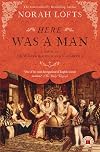
‘Here was a Man’ is the first book I’ve read featuring Walter Raleigh as the main character. Not knowing much about him, particularly his years during James I’s reign, I was interested in reading a dramatised account of his life.
The narrative is episodic, skipping over years where nothing of great importance occurs. His wife and his queen are the two main women in his life. I liked the wooing scenes when he falls in love with his wife-to-be. The scenes with Elizabeth are often show more intense. The author does a good job in developing all her characters, especially these three.
I liked the story well enough, though didn’t find it to be as exciting as the synopsis implied. It’s occasionally spoiled by writing with hindsight:
‘Her own red-gold hair had recently given place to a wig, the first of a collection that was to number six hundred at her death.’
Other scenes are so dry and devoid of drama that they read like a textbook:
‘Essex’s anger had been a sight to see, too, when he had arrived too late and had threatened court martial and had been defied.’
A few revisions of the manuscript could easily have dramatised the above quote.
Overall, this is a decent first novel by my favourite author, but not in the same league as many of her later titles. show less
The narrative is episodic, skipping over years where nothing of great importance occurs. His wife and his queen are the two main women in his life. I liked the wooing scenes when he falls in love with his wife-to-be. The scenes with Elizabeth are often show more intense. The author does a good job in developing all her characters, especially these three.
I liked the story well enough, though didn’t find it to be as exciting as the synopsis implied. It’s occasionally spoiled by writing with hindsight:
‘Her own red-gold hair had recently given place to a wig, the first of a collection that was to number six hundred at her death.’
Other scenes are so dry and devoid of drama that they read like a textbook:
‘Essex’s anger had been a sight to see, too, when he had arrived too late and had threatened court martial and had been defied.’
A few revisions of the manuscript could easily have dramatised the above quote.
Overall, this is a decent first novel by my favourite author, but not in the same league as many of her later titles. show less

I try to read this book every Christmas. I love the interweaving of Bible stories and parables. I love the human side of Biblical characters that isn't always evident in Sunday School. I love, for example, that the innkeeper of Bethlehem was formerly a traveler who was set on by bandits, and left at the inn years before Jesus' birth. A masterful retelling of a beloved story.

Lovers All Untrue is a sordid tale of the appalling control men held over women in Victorian England. Mr. Draper, a prosperous merchant, is a horrid, despicable man who selfishly intends to keep both his daughters at home forever to serve his needs in his old age, but he wasn't prepared for his eldest daughter's strong will. While his wife and younger daughter, Ellen, both bow to his will, Marion—who realizes early on she cannot live under her father's oppressive rule—is equally show more determined to outsmart her father but is soon caught up in a web of tangled lies that turns deadly. I found the story slow at first, but halfway through, I couldn't wait to find out how their fates unfolded, only to be disappointed by an abrupt and disturbing end. show less
Lists
Awards


You May Also Like


Associated Authors
Statistics
- Works
- 85
- Also by
- 17
- Members
- 6,098
- Popularity
- #4,038
- Rating
- 3.7
- Reviews
- 120
- ISBNs
- 624
- Languages
- 10
- Favorited
- 22
