
Dorothy Eden (1912–1982)
Author of An Afternoon Walk
About the Author
Dorothy Eden was born in Canterbury Plains, New Zealand on April 3, 1912. She worked as a legal secretary before moving to London, England in 1954 to become a full-time writer. She is best known for her writings in the historical, suspense, and Gothic genres. Her first novel, The Singing Shadows, show more was published in 1940. During her lifetime, she wrote more than 40 novels including Let Us Prey, The Vines of Yarrabee, Melbury Square, The Shadow Wife, An Afternoon Walk, The Salamanca Drum, and An Important Family. She also contributed to several magazines including Redbook and Good Housekeeping. She died of cancer on March 4, 1982 at the age of 69. (Bowker Author Biography) show less
Image credit: The Herald & Weekly Times Limited
Works by Dorothy Eden
Eerie Nights in London: Death Is a Red Rose, Listen to Danger, and Night of the Letter (2013) 13 copies
Det bästas bokval: Mannen från Tarsus / Flykten mot norr / Mysteriet Willa / Det svarta skeppet 2 copies
Il frutto dello scandalo 1 copy
Žrtveno jagnje 1 copy
Zamenjana nevesta 1 copy
Revanche de l'amour 1 copy
Kvinnorna på Greenhill 1 copy
Den gyllene timmen 1 copy
Dorothy Eden 4 Books / Waiting for Willa, the Voice of Dolls, the Time of the Dragon, Melbury Square (1972) 1 copy
Walk into My Parlour 1 copy
Tout commencera demain 1 copy
Listen to danger 1 copy
Associated Works
A Gothic Treasure Trove: Moonraker's Bride / The Golden Unicorn / Kirkland Revels / Wings of the Falcon / Lady of Mallow / River Rising (1987) — Contributor — 110 copies
Reader's Digest Condensed Books: Storm Island • Does She Know She's There? • The Storrington Papers • Flight to Landfall (1979) — Contributor — 5 copies
Reader's Digest Condensed Books V. 65: The Wine and the Music / Waiting for Willa / Incredible Island / Duel in the Snow (1970) — Author — 3 copies
Reader's Digest Auswahlbücher 98 - Wintersturm. Allawa. Alexander Dolguns Schicksal. Yarrabee 2 copies
Det Bästas Bokval (1971) vol 64: Mannen från Tarsus / Flykten mot norr / Mysteriet Willa / Det svarta skeppet (1971) — Author — 2 copies
Nancy, waar zijn je kinderen; De wijngaarden van Yarrabee; De man met de baskenmuts; Bichu de jaguar — Contributor — 1 copy, 1 review
Tagged
Common Knowledge
- Canonical name
- Eden, Dorothy
- Legal name
- Eden, Dorothy Enid
- Other names
- Paradise, Mary
- Birthdate
- 1912-04-03
- Date of death
- 1982-03-04
- Gender
- female
- Occupations
- novelist
short story writer
legal secretary - Agent
- Dorothy Olding
- Short biography
- Dorothy Eden was born in a farming community near Christchurch, New Zealand, where she attended school. She worked as a legal secretary and published her first novel, The Singing Shadows, in 1940. She took a trip around the world before moving to England in 1954 to further her writing career. She was best known for her many historical, suspense, and Gothic novels. She also contributed short stories to magazines, including Redbook and Good Housekeeping. An Important Family (1982), her 43rd book, was published in the year of her death.
- Cause of death
- cancer
- Nationality
- New Zealand
UK - Birthplace
- Canterbury Plains, New Zealand
- Places of residence
- Canterbury Plains, New Zealand
London, England, UK - Place of death
- London, England, UK
- Associated Place (for map)
- London, England, UK
Members
Reviews

This hilariously bad book gets two stars only because I was too curious about the ending to DNF it. Written in 1967, it is terribly dated in its gender roles and sexual attitudes. It takes the form of a woman’s recollection of terrible events that befell her a few years earlier when she met a rich, handsome, romantic stranger and was so desperate to avoid being a pathetic old maid at the age of 26 that she demanded he marry her rather than just engaging in a love affair. After all, she was show more already damaged goods from an earlier love affair where (gasp) her lover had refused to marry her after stringing her along. From all her dark hints, I expected that she’d been imprisoned and tortured in the dungeons. It turned out, however, that he’d pretended to marry her in a sham wedding, then acted like she had hallucinated it all when she miscarried in an accident. Then, to make sure you understand what a villain he really is, it turns out that he was a Nazi collaborator during the war, which really has nothing whatever to do with the plot. But not to worry, she finds hope of happiness in the end, when Otto commits suicide, but she realizes that she really has the hots for his brother, who is actually the marrying sort.
This book serves as a good moral lesson on the dangers of impulsive commitments, not because of the heroine’s sufferings, but because I picked it up on impulse from my library’s donation gimmie shelves. And oh boy, did I pay for it.
I read this book for Task the Second: The Silent Nights (Read a book set in one of the Nordic countries, where winter nights are long!) in the Twelve Tasks of the Festive Season challenge. Although it takes place across several countries, the bulk of the action is in Denmark, and in Otto’s home manor house castle on the island of Samsø, and is in the spring, where apparently, the days are very long instead of the long winter nights. show less
This book serves as a good moral lesson on the dangers of impulsive commitments, not because of the heroine’s sufferings, but because I picked it up on impulse from my library’s donation gimmie shelves. And oh boy, did I pay for it.
I read this book for Task the Second: The Silent Nights (Read a book set in one of the Nordic countries, where winter nights are long!) in the Twelve Tasks of the Festive Season challenge. Although it takes place across several countries, the bulk of the action is in Denmark, and in Otto’s home manor house castle on the island of Samsø, and is in the spring, where apparently, the days are very long instead of the long winter nights. show less

This was a wild read! Newly married Lois has to navigate three eccentric aunts, one oddly unsettling servant girl, and one of the worst husbands ever in this 1950 gothic romance novel.
Although, taking Rodney the terrible husband into account, it’s really more of a mystery with gothic undertones - romance is nowhere to be found for the modern reader. It boggles the mind just how many times Rodney doesn’t take his wife’s perfectly legitimate concerns seriously. Everyone else is show more constantly dismissing her, too. Get ready for the most gaslighting you’ve ever seen in a book if you take the plunge and read this! While the gaslighting was incredibly aggravating, I have to admit that it did add to the peril of the book, and kept my eyes glued to the page to find out what awful thing would happen next.
The three aunts as well as Willow, the servant girl, are undoubtedly the best part of the book. These characters in particular feel a little like something out of Shirley Jackson’s We Have Always Lived in the Castle, or The Sundial. But because Crow Hollow was published in 1950, it actually predates those Jackson books. The characters aren’t as fully developed as something Jackson would come up with, but still, I think fans of hers looking for a fun, non-serious read might enjoy this book.
Dorothy Eden is definitely the best gothic romance author I’ve found when it comes to pure entertainment factor. I’ve yet to be disappointed by her! show less
Although, taking Rodney the terrible husband into account, it’s really more of a mystery with gothic undertones - romance is nowhere to be found for the modern reader. It boggles the mind just how many times Rodney doesn’t take his wife’s perfectly legitimate concerns seriously. Everyone else is show more constantly dismissing her, too. Get ready for the most gaslighting you’ve ever seen in a book if you take the plunge and read this! While the gaslighting was incredibly aggravating, I have to admit that it did add to the peril of the book, and kept my eyes glued to the page to find out what awful thing would happen next.
The three aunts as well as Willow, the servant girl, are undoubtedly the best part of the book. These characters in particular feel a little like something out of Shirley Jackson’s We Have Always Lived in the Castle, or The Sundial. But because Crow Hollow was published in 1950, it actually predates those Jackson books. The characters aren’t as fully developed as something Jackson would come up with, but still, I think fans of hers looking for a fun, non-serious read might enjoy this book.
Dorothy Eden is definitely the best gothic romance author I’ve found when it comes to pure entertainment factor. I’ve yet to be disappointed by her! show less
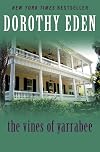
The Vines of Yarrabee by Dorothy Eden is a 2013 Open Road Media publication. (Originally published in 1968)
Well, that was depressing.
Eugenia leaves her home in England, traveling to the wilderness of Australia to marry Gilbert, the owner of a vineyard plantation. It becomes immediately clear that Eugenia is second fiddle to her husband’s vineyard. Matters only get worse, when Gilbert brings in a widowed and pregnant convict to be a maid at their newly built home, appropriately named show more Yarrabee.
Eugenia struggles to find her role in the home, and in her marriage. Gilbert treats her like an ornament, a refined, delicate creature, smothering her nearly to death. Meanwhile, the maid secures a permanent role in the household, rolling up her sleeves and becoming more help to Gilbert than he would ever allow Eugenia to be.
As the years pass, children are born, the vines prosper and struggle, there are passions and heartbreaks and tragedies, while each person is trapped in a defined role, they are helpless to break free from, without ever truly knowing or understanding the people they are the most familiar with.
Those familiar with Dorothy Eden may associate her with the Gothic style romantic suspense genre that was so popular in the sixties and seventies.
This book doesn’t not fall into that category, but is, instead, a family saga, and pure historical fiction. There is no mystery, or supernatural element, and while Yarabee is a large house, it’s newly built, is not haunted, or crumbling, or set on the cliffs of Cornwall.
The story gets off to a slow start, but eventually, I found myself absorbed in Eugenia’s sad battle with homesickness, and the tragic way her life unfolds. While Gilbert’s dominance and his obsession with his vines makes it hard to like him, Eugenia could also try one’s patience. Of the two, though, I did sympathize with Eugenia, who was trapped in the proverbial ivory tower, but longed for more out her marriage and her life.
As I continued to read, I was buoyed by a few possibilities, but was disappointed over and over again, by the way the things turned out.
I could see a type of personal triumph, I suppose, with the way things turned out in the end. Unfortunately, it was not the way I would have liked the book to end. These events should have transpired much earlier in the book. As such, the conclusion left me feeling dispirited and unsatisfied, with some question as to how things might have proceeded from there for our Eugenia.
While I have read several of Eden’s novels over the years, there are still many I have yet to read, but to date, this one is my least favorite.
2.5 stars show less
Well, that was depressing.
Eugenia leaves her home in England, traveling to the wilderness of Australia to marry Gilbert, the owner of a vineyard plantation. It becomes immediately clear that Eugenia is second fiddle to her husband’s vineyard. Matters only get worse, when Gilbert brings in a widowed and pregnant convict to be a maid at their newly built home, appropriately named show more Yarrabee.
Eugenia struggles to find her role in the home, and in her marriage. Gilbert treats her like an ornament, a refined, delicate creature, smothering her nearly to death. Meanwhile, the maid secures a permanent role in the household, rolling up her sleeves and becoming more help to Gilbert than he would ever allow Eugenia to be.
As the years pass, children are born, the vines prosper and struggle, there are passions and heartbreaks and tragedies, while each person is trapped in a defined role, they are helpless to break free from, without ever truly knowing or understanding the people they are the most familiar with.
Those familiar with Dorothy Eden may associate her with the Gothic style romantic suspense genre that was so popular in the sixties and seventies.
This book doesn’t not fall into that category, but is, instead, a family saga, and pure historical fiction. There is no mystery, or supernatural element, and while Yarabee is a large house, it’s newly built, is not haunted, or crumbling, or set on the cliffs of Cornwall.
The story gets off to a slow start, but eventually, I found myself absorbed in Eugenia’s sad battle with homesickness, and the tragic way her life unfolds. While Gilbert’s dominance and his obsession with his vines makes it hard to like him, Eugenia could also try one’s patience. Of the two, though, I did sympathize with Eugenia, who was trapped in the proverbial ivory tower, but longed for more out her marriage and her life.
As I continued to read, I was buoyed by a few possibilities, but was disappointed over and over again, by the way the things turned out.
I could see a type of personal triumph, I suppose, with the way things turned out in the end. Unfortunately, it was not the way I would have liked the book to end. These events should have transpired much earlier in the book. As such, the conclusion left me feeling dispirited and unsatisfied, with some question as to how things might have proceeded from there for our Eugenia.
While I have read several of Eden’s novels over the years, there are still many I have yet to read, but to date, this one is my least favorite.
2.5 stars show less

4.5 stars! Are you the kind of reader who is interested in toxic sibling relationships, and in particular, families where a parent clearly loves one sibling more than the other? And are you also longing for a dramatic, character driven gothic novel with an unhinged twist towards the end? The Daughters of Ardmore Hall is the book for you!
Originally published in 1946, this story follows main character Truda. Truda is the “good” sister. She’s kind and unselfish, always putting others show more before herself, especially when it comes to her sister Charlotte. Charlotte is the absolute worst. She is the sister who gets everything she wants, and if Truda has something she wants, Charlotte figures out how to take it from her. She’s one of the most hateable characters I’ve ever come across in a book. If you read this book, you, too, will be seething with rage on Truda’s behalf as Charlotte schemes her way through the plot.
As far as flaws are concerned, The Daughters of Ardmore Hall drags a little bit towards the end. I had already guessed what had happened long before the characters pieced it together, so it felt like I was waiting for them to catch up to me. But while I was able to guess what had happened in general, I still didn’t know the details! And I was desperate to find out, so that made it a worthwhile, riveting read for me. show less
Originally published in 1946, this story follows main character Truda. Truda is the “good” sister. She’s kind and unselfish, always putting others show more before herself, especially when it comes to her sister Charlotte. Charlotte is the absolute worst. She is the sister who gets everything she wants, and if Truda has something she wants, Charlotte figures out how to take it from her. She’s one of the most hateable characters I’ve ever come across in a book. If you read this book, you, too, will be seething with rage on Truda’s behalf as Charlotte schemes her way through the plot.
As far as flaws are concerned, The Daughters of Ardmore Hall drags a little bit towards the end. I had already guessed what had happened long before the characters pieced it together, so it felt like I was waiting for them to catch up to me. But while I was able to guess what had happened in general, I still didn’t know the details! And I was desperate to find out, so that made it a worthwhile, riveting read for me. show less
Awards

You May Also Like


Associated Authors
Statistics
- Works
- 70
- Also by
- 7
- Members
- 2,515
- Popularity
- #10,203
- Rating
- 3.3
- Reviews
- 31
- ISBNs
- 396
- Languages
- 9
- Favorited
- 2