
Barbara Michaels (1927–2013)
Author of Crocodile on the Sandbank
About the Author
Barbara Mertz was born on September 29, 1927 in Astoria, Illinois. She received a bachelor's degree in 1947, a master's degree in 1950 and doctorate in Egyptology in 1952 from the University of Chicago. She wrote a few books using her real name including Temples, Tombs and Hieroglyphs (1964), Red show more Land, Black Land (1966), and Two Thousand Years in Rome (1968). She also wrote under the pen names Barbara Michaels and Elizabeth Peters. She made her fiction debut, The Master of Blacktower, under the name Barbara Michaels in 1966. She wrote over two dozen novels using this pen name including Sons of the Wolf, Someone in the House, Vanish with the Rose, Dancing Floor, and Other Worlds. Her debut novel under the pen name Elizabeth Peters was The Jackal's Head in 1968. She also wrote the Amelia Peabody series and Vicky Bliss Mystery series using this name. She died on August 8, 2013 at the age of 85. (Bowker Author Biography) show less
Series
Works by Barbara Michaels
Temples, Tombs, and Hieroglyphs: A Popular History of Ancient Egypt (1964) — Author — 839 copies, 15 reviews
Amelia Peabody's Egypt: A Compendium (2003) — Contributor; Editor; Foreword — 593 copies, 11 reviews
Malice Domestic 01: An Anthology of Original Traditional Mystery Stories (1992) — Editor; Introduction — 191 copies
Liz Peters, PI [short story] 2 copies
Crocodile on the Sandbank | The Curse of the Pharaohs | The Last Camel Died at Noon | The Snake, the Crocodile, and the Dog (1996) 1 copy
Amelia Peabody Series 1-5 1 copy
Associated Works
A Gothic Treasure Trove: Moonraker's Bride / The Golden Unicorn / Kirkland Revels / Wings of the Falcon / Lady of Mallow / River Rising (1987) — Contributor — 113 copies
The Curse of the Pharoahs | Spend Game | Murder on Martha's Vineyard (1981) — Contributor — 5 copies
Deadly Trap | Wait for What Will Come | The Last Sherlock Holmes Story (1978) — Contributor — 2 copies
La Balsa; Vlucht naar de heuvels; Captain te koop; Ammie, kom naar huis — Contributor — 1 copy, 1 review
Ammie, vuelve a casa ; Sin novedad en el frente ; Mil flores en primavera ; Kamante y Lulu — Contributor — 1 copy
Free Fall in Crimson | Curse of the Pharaohs | Murder on Martha's Vineyard (1981) — Contributor — 1 copy
Tagged
Common Knowledge
- Legal name
- Mertz, Barbara Louise
- Other names
- Michaels, Barbara
Peters, Elizabeth
Gross, Barbara Louise
Mertz, Barbara Louise Gross
Mertz, Barbara Gross - Birthdate
- 1927-09-29
- Date of death
- 2013-08-08
- Gender
- female
- Education
- University of Chicago (PhD|Egyptology) ∙ 1952)
- Occupations
- writer
archaeologist
Egyptologist - Organizations
- Egypt Exploration Society
- Awards and honors
- MWA Grand Master (1998)
Romance Writers of America (Lifetime Achievement Award ∙ 1991)
Malice Domestic Award for Lifetime Achievement (2003) - Agent
- Dominick Abel Literary
- Relationships
- Mertz, Richard (former spouse)
Mertz, Elizabeth (offspring)
Mertz, Peter (offspring) - Cause of death
- pulmonary embolism
- Nationality
- USA
- Birthplace
- Canton, Illinois, USA
- Places of residence
- Canton, Illinois, USA
Frederick, Maryland, USA - Place of death
- Frederick, Maryland, USA
- Associated Place (for map)
- Maryland, USA
Members
Reviews
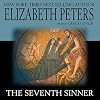
When I previewed this novel on a #FridayReads post, someone said that the cover reminded them of the Nancy Drew novels and someone else replied that they'd read the book and it felt like 'Nancy Drew for grown ups'. I think that that's an excellent description.
'The Seventh Sinner' was a light, fast read, set in an exotic location, populated with vibrant and sometimes slightly strange people tangled up in a mystery that's shot through with references to the history of ancient Rome and the show more early Christian Church. The mystery is fairly clever and kept me guessing throughout but what made the book for me was the spiky pragmatism of Jaqueline Kirby, an American librarian who strikes up an acquaintance with a group of young, post-doctoral historians, a generation younger than her and mostly American, who are doing research at the institute in Rome that Jacqueline is working at for the summer.
Although this is the first book in a four-book series featuring Jacqueline Kirby, the story is not told from her point of view. This storytelling style reminded me of the first Miss Marple book 'The Murder At The Vicarage' where we learnt about Miss Marple through the eyes of others without ever getting in her head. The impact of this in 'The Seventh Sinner' is that Jacqueline Kirby retains a mystique that makes her interesting and unpredictable. Having the story told by someone who is sometimes a little slow to understand what's happening around her but who is close enough to witness Jacqueline's calmness in the face of danger and her habit of changing how she presents herself to the world e.g. from demure, hair-in-a-bun glove-wearing proper Librarian to charismatic, flaming-haired, dress-split-to-long-legged-thigh party goer.
Jacqueline is observant, often blunt, always independent, sometimes deceitful and always unflappable. She's hard to like, impossible to ignore and difficult to predict. She also has a very wide range of knowledge of history, art and people that she uses to track down the person behind the killings.
I thought that the feeling of being in a privileged English-speaking enclave in a foreign city where you are neither tourist nor resident was captured well.
The plot is cunning, erudite and almost plausible. There's a large cast of characters, relatively little violence and a lot of conversation about history, archaeology and hagiography.
When the big reveal came, it was fun and caught me by surprise but didn't feel like cheating. I felt the final chapters after we knew who killed whom and why, showed a need to tidy up every detail that felt quite old-fashioned, even for the 1970s. I'm fairly sure that those pages wouldn't make it into a movie version.
I was a teenager when 'The Seventh Sinner' was published in 1972 and reading it now feels like time travel but to a time that seems stranger than I had remembered. It wasn't just the floral flamboyance of the men's clothes or the now-so-dated hairstyles. The social mores and attitudes towards gender and age are more different than I had remembered. This book made me aware of just how long it's been since I was a teenager.
The audiobook version of 'The Seventh Sinner' wasn't what I had expected either. Audible (who offer the book for free to members) show the release date as 2018 but Blackstone recorded it in 1997 and it's showing its age. Grace Conlin does an OK job as a narrator but it's not up to today's standards where I'm used to narrators providing their characters with distinct, instantly recognisable voices.
I had fun with the book. It kept me entertained on a long car ride and left me keen to finish it off when we got home. I'll be reading more in this series but next time I won't be using the audiobook version. show less
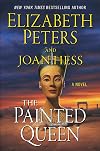
The final Amelia Peabody story (completed by Joan Hess after Elizabeth Peters passed away) is set in 1912. Amelia and Emerson are preparing for another season of excavating in Egypt. However, they aren't in Egypt two hours when the first assassin breaks into Amelia's bathing chamber and dies from a knife in the back. Amelia, being Amelia and not unfamiliar with being the target of assassins, takes this in stride.
Amelia and Emerson soon learn that she and Ramses are being targeted by the show more five remaining Godwin brothers who want revenge for the death of Nefret's villainous husband Geoffrey Godwin. The only distinguishing feature to identify the assassins is that they were monocles.
But assassins aside, Emerson and Amelia are directed to Amarna to check on excavations by Herr Morgenstern who has been behaving erratically. Apparently he has absconded to Cairo with a bust of Nefertiti that he found in his excavations. This sets Ramses and David on a quest to find the bust. Which they do, but not before uncovering a number of forgeries and villains who want the bust also.
Meanwhile, Morgenstern wanders in and out of danger apparently having some sort of mental episodes that leave him paranoid and confused. Amelia dashes into danger to save him a few times despite the threat of assassins.
I love this series and this final volume had all the things I love. The relationship between Amelia and Emerson is a a match of equals. Amelia is profoundly herself - entitled, decisive, and determined. She has a reckless disregard for her her own safety probably fostered by her belief that she is invincible.
The mystery with the many busts of Nefertiti and the actions of the hirsute missionary added interest. The inept assassins added both danger and humor.
Someday, I want to read this whole series again in internal chronological order to see how everyone changed and grew. show less
Amelia and Emerson soon learn that she and Ramses are being targeted by the show more five remaining Godwin brothers who want revenge for the death of Nefret's villainous husband Geoffrey Godwin. The only distinguishing feature to identify the assassins is that they were monocles.
But assassins aside, Emerson and Amelia are directed to Amarna to check on excavations by Herr Morgenstern who has been behaving erratically. Apparently he has absconded to Cairo with a bust of Nefertiti that he found in his excavations. This sets Ramses and David on a quest to find the bust. Which they do, but not before uncovering a number of forgeries and villains who want the bust also.
Meanwhile, Morgenstern wanders in and out of danger apparently having some sort of mental episodes that leave him paranoid and confused. Amelia dashes into danger to save him a few times despite the threat of assassins.
I love this series and this final volume had all the things I love. The relationship between Amelia and Emerson is a a match of equals. Amelia is profoundly herself - entitled, decisive, and determined. She has a reckless disregard for her her own safety probably fostered by her belief that she is invincible.
The mystery with the many busts of Nefertiti and the actions of the hirsute missionary added interest. The inept assassins added both danger and humor.
Someday, I want to read this whole series again in internal chronological order to see how everyone changed and grew. show less

In the first book of this series, Amelia Peabody was an amusingly practical and unemotional woman, far ahead of her times (the late 1800s). She had a sort of Tracy-and-Hepburn back and forth bantering relationship with a male Egyptologist, and you just knew they were going to fall in love. They did, and got married. This book picks up a bit later, when Amelia and Emerson have a small child and are living in England, waiting until said small child is old enough to take with them on show more excavations in Egypt.
The child is obnoxious, and precocious, of course. His nickname is "Ramses," which is supposed to suggest his charming stubbornness. A few pages of Ramses was enough to hope that he and his speech impediment would fall down a very deep well. So in a way, it's lucky that the reader isn't subjected to much of young Ramses. Why not? Well, in short order there's a mystery in Egypt that simply must be solved, and since Ramses is too young to accompany them, Amelia and Emerson leave the toddler at home with his aunt and uncle and venture off without him for months. Now, I don't blame them, kind of, because like I said, the kid is annoying. But I'm a reader and they are his parents and in theory, they should maybe be more attached to him than this? Also, they chuckle about how he bullies his cousins and they're all terrified of him and boy is everyone going to have lots of "fun" with Ramses while we're gone, hahaha. On the other hand, Amelia's parenting of the child is like Ayn Rand raising a baby in a Skinner box. The less influence she has in his life, the better he will probably do.
The rest of the book, in Egypt, is tolerably interesting. The mystery is fine, all accidents and deaths that the natives think are related to a curse on the tomb Amelia and Emerson are excavating. Amelia and Emerson are less enjoyable sniping at each other now, and I don't really think it's Emerson's fault. I think the fault is partially that Amelia is telling the story and she thinks she is oh-so-clever and oh-so-charming, of course, and partially that the "hate meet" is charming for a courtship, but should probably have the edge taken off for a marriage. It's not cute little jabs - it seems like Amelia doesn't like or think much of Emerson, really. I suspect that this is why Peters adds in frequent references to all the sex that Amelia and Emerson are having - they can't keep their hands off each other, so obviously 1. they actually do like each other and 2. Emerson forgives Amelia for her constant malicious remarks. But I don't buy it.
If the child were the only problem, I could maybe see going forward with this series. In fact, I'd been looking forward to doing so because it's nice to have something light and entertaining to read interspersed with heavier books. But I find that I just can't stand Amelia. She's turned from a spirited, sarcastic woman into a harpy.
Recommended for: the virulently childfree (after the first 30 pages or so), women who mistake being a harridan for being strong.
Quote: "Only one ripple mars the smooth surface of my content. Is it concern for my little son, so far from his mother's tender care? No, dear reader, it is not. The thought that several thousands of miles separate me from Ramses inspires a sense of profound peace such as I have not known for years." show less
The child is obnoxious, and precocious, of course. His nickname is "Ramses," which is supposed to suggest his charming stubbornness. A few pages of Ramses was enough to hope that he and his speech impediment would fall down a very deep well. So in a way, it's lucky that the reader isn't subjected to much of young Ramses. Why not? Well, in short order there's a mystery in Egypt that simply must be solved, and since Ramses is too young to accompany them, Amelia and Emerson leave the toddler at home with his aunt and uncle and venture off without him for months. Now, I don't blame them, kind of, because like I said, the kid is annoying. But I'm a reader and they are his parents and in theory, they should maybe be more attached to him than this? Also, they chuckle about how he bullies his cousins and they're all terrified of him and boy is everyone going to have lots of "fun" with Ramses while we're gone, hahaha. On the other hand, Amelia's parenting of the child is like Ayn Rand raising a baby in a Skinner box. The less influence she has in his life, the better he will probably do.
The rest of the book, in Egypt, is tolerably interesting. The mystery is fine, all accidents and deaths that the natives think are related to a curse on the tomb Amelia and Emerson are excavating. Amelia and Emerson are less enjoyable sniping at each other now, and I don't really think it's Emerson's fault. I think the fault is partially that Amelia is telling the story and she thinks she is oh-so-clever and oh-so-charming, of course, and partially that the "hate meet" is charming for a courtship, but should probably have the edge taken off for a marriage. It's not cute little jabs - it seems like Amelia doesn't like or think much of Emerson, really. I suspect that this is why Peters adds in frequent references to all the sex that Amelia and Emerson are having - they can't keep their hands off each other, so obviously 1. they actually do like each other and 2. Emerson forgives Amelia for her constant malicious remarks. But I don't buy it.
If the child were the only problem, I could maybe see going forward with this series. In fact, I'd been looking forward to doing so because it's nice to have something light and entertaining to read interspersed with heavier books. But I find that I just can't stand Amelia. She's turned from a spirited, sarcastic woman into a harpy.
Recommended for: the virulently childfree (after the first 30 pages or so), women who mistake being a harridan for being strong.
Quote: "Only one ripple mars the smooth surface of my content. Is it concern for my little son, so far from his mother's tender care? No, dear reader, it is not. The thought that several thousands of miles separate me from Ramses inspires a sense of profound peace such as I have not known for years." show less
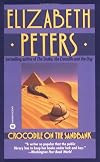
This book is a bit of an older vintage, since it has been written in 1975, but it still reads extremely fresh – or rather, it would, if this was not the kind of book you’re unlikely to find in publisher catalogs today. It’s a slow-burning, slowly building mystery that reads like a mix of a gothic story, an Agatha Christie novel and an Indiana Jones novelization, with a middle-aged, self-reliant heroine who has both the makings of an excellent governess and of an even more excellent show more army surgeon, who orders men around and is obeyed even when those men think she is being a meddling, ignorant woman, because not doing what Amelia Peabody wants is never a good idea. Nowadays, you might say she wasn’t a likable character, but good lord does Amelia Peabody not care whether anybody likes her or not. It’s not her job to be liked. In fact, as an independent heiress of her father’s if not fortune, then still rather considerable wealth, nothing is her job if she doesn’t want it to be. The job she wants is that of an archeologist, and when the opportunity arises, she grabs it by the throat and doesn’t let it go till it surrenders and gives her whatever she wants. Amelia Peabody is the kind of person I want to be, even though I might not personally fancy crouching in the sand and being burned to a crisp day in and day out. (Other than, say, Ella, who would love to become a archeologist-flavored crisp.)
FEMALE FRIENDSHIP MAKES EVERYTHING AWESOME
“Crocodile on the Sandbank” is the first book in a series 19 historical mysteries by Egyptologist Barbara Mertz aka Elizabeth Peters, and as such it sets the scene for the whole premise of ‘Amelia Peabody, archeologist adventurer’.
We first meet Amelia shortly after the death of her father, and we learn her reasons for not marrying (namely, that she’s no interested in any of her suitors and feels that most of them are out for her fortune anyway, since she’s not exactly of marrying age anymore). Instead of finding a husband and giving up all that nice money, she decides that, after years of being her father’s helpmate and then nurse, it’s time for her to indulge a little, so she decides to spend the winter sailing up the Nile, like many English people did in the 1880s. But when she comes to Rome, from where she’s supposed to sail to Alexandria, her travel companion becomes sick – and without a travel companion, there is no way even a woman in her 30s could go to Egypt (and even today that’d be kind of a bummer, wouldn’t it? Who wants to spend the whole winter all alone?). But lo and behold, on a walk through Rome she stumbles over Evelyn Barton-Forbes, an English girl sick and down on her luck after she eloped with her Italian tutor and then was left by said Italian tutor, in a city where she doesn’t know anybody, and with no way back, since her grandfather disinherited her. And so, Amelia found herself a travel companion after all, and off they go to Egypt.
I don’t usually put plot descriptions into my reviews, but I love the set-up of “Crocodile on the Sandbank” a lot, even though the beginning is a little slow, especially because the whole book is narrated by Amelia herself and her often slightly meandering style takes a little getting used to. Once you do get used to the style of the book, though, it just feels so authentic that I actually found myself thinking that the book might have been written a lot earlier than 1975 (this is again a case of a friend recommending me a book and me reading it without even looking up when it was written). At no point does the description of Amelia’s surroundings sound anything but absolutely natural, if kind of sober, except when Amelia starts waxing poetic about archeology and archeological findings. There is also a lot of jargon and a lot of the kind of professional gossip that just makes you feel like you’re there yourself, in 1880s Egypt, hearing about all those new developments and controversies in the world of archeology.
I guess ‘new developments in archeology’ should be a great segue to Emerson, but to be honest, I don’t like Emerson, so let me talk about Evelyn first, because Evelyn I do like, very much so. If anybody had tried to create a character just for me to enjoy, then I’m pretty sure that character would be very close to Evelyn. She is kind, shy, and, let’s face it, kind of fatalistic, and she faints about 8 times in the novel (seriously, so much fainting), which makes her a very stark contrast to no-nonsense, cast-iron parasol wielding Amelia, whose only reason to faint would be if she worked under the brooding Egyptian sun for 12 hours without drinking a sip of water, which is a very likely thing for her to do.
But still, Evelyn might not be physically strong, but when the going gets rough, she is very much able to hold her own and to postpone the fainting on later, when it’s save to do so. She is also amazingly loyal to Amelia – and she is also the most likely person to make sure that Amelia does not spend 12 hours under the brooding Egyptian sun without drinking some water. Evelyn doesn’t only pay back her salvation by Amelia by being her constant companion and helpmate, even in very difficult situations (did I mention that Amelia fancies herself an amateur nurse?), but by opening up to her, showing Amelia her most secret wounds, she also gets Amelia to open up herself. Theirs is one of the most beautiful female friendships I’ve read in a long while, and, let’s face it, there aren’t that many of those in fiction in general.
A DESERT FULL OF DUDES
Okay, now let’s actually talk about Emerson. God, I hate that guy. I guess he redeems himself later, and I guess his assholery plays into the whole broody-hero-trope, but just… What. An. Asshole. He basically introduces himself to Amelia by yelling at her for gently removing some dust from an extremely neglected exhibition piece in an extremely neglected museum, implying that she is a stupid woman and that she is a ‘rampageous British female at her clumsiest and most arrogant’. And then he just keeps on insulting her. I hate this guy. He might be a visionary archeologist and Egyptologist, and he does get a little less obnoxious later on – a little – and the fact that his brother Walter is a huge sweetheart makes reading about him a little more bearable – again, a little – but still, I did not grow to like him. What an ass.
It might be thanks to the rather matter-of-fact writing style of the book that I still enjoyed it so much, even with Emerson being his asshole-y self. The book never actually claims that Emerson is not an asshole, just that he and Amelia have the kinds of personalities that sometimes work well together. I didn’t need to like him to understand why Amelia eventually takes a liking to him. And to be honest, that is quite an achievement.
One thing I did like was the portrayal of Egyptian natives in the book. There was definitely a certain distance between the native Egyptian characters of the book and the English characters, but in a book set in 1880s Egypt, that is pretty much a given. However, Amelia shows great respect both for her translator Michael and for the crew of the pleasure ship she chartered, under Captain Hassan. As I already said, Amelia fancies herself an amateur nurse, and she earns quite a bit of respect among the men on her ship by stitching them up whenever there is any kind of injury. This mutual respect creates a certain loyalty between both the crew and Amelia, which later turns out to be of vital importance for the plot. And while there are several descriptions of misogynistic behavior among the Egyptian natives in this book, the fact that Radcliff ‘Let’s Yell at Strangers’ Emerson is also in this book at least makes it clear that misogynistic thoughts, actions and words aren’t a monopoly of Muslim men.
The plot of “Crocodile on the Sandbank” is a mix of travel novel and mystery, though less of the whodunit kind and more of the gothic-inspired ‘we need to figure out what is behind these strange goings on’. There is a mummy, and there is an action-packed finale involving so many characters that at some point you’re like ‘Wait, who’s where now?’, but the whole thing is a lot of fun, even though the mystery plot really only kicks in properly at the 50% mark of the book. Still, the thing that I enjoyed most wasn’t necessarily the plot, but the characters, the descriptions of 1880s Egypt (which were surprisingly less racist than I’d have imagined), and Amelia’s very palpable love of archeology. The book might be over 40 years old by now, but it honestly is a perfect example of how the distance between an author and a historical novel, especially if an author is an expert on the subject field she writes in, can transcend time differences between an author and a reader, so that it just feels so fresh and current that I’m pretty sure it’s still going to be a great read in another 40 years.
Want to read more of my reviews? Visit me on The Bookabelles Blog or follow me here on Goodreads :) show less
FEMALE FRIENDSHIP MAKES EVERYTHING AWESOME
“Crocodile on the Sandbank” is the first book in a series 19 historical mysteries by Egyptologist Barbara Mertz aka Elizabeth Peters, and as such it sets the scene for the whole premise of ‘Amelia Peabody, archeologist adventurer’.
We first meet Amelia shortly after the death of her father, and we learn her reasons for not marrying (namely, that she’s no interested in any of her suitors and feels that most of them are out for her fortune anyway, since she’s not exactly of marrying age anymore). Instead of finding a husband and giving up all that nice money, she decides that, after years of being her father’s helpmate and then nurse, it’s time for her to indulge a little, so she decides to spend the winter sailing up the Nile, like many English people did in the 1880s. But when she comes to Rome, from where she’s supposed to sail to Alexandria, her travel companion becomes sick – and without a travel companion, there is no way even a woman in her 30s could go to Egypt (and even today that’d be kind of a bummer, wouldn’t it? Who wants to spend the whole winter all alone?). But lo and behold, on a walk through Rome she stumbles over Evelyn Barton-Forbes, an English girl sick and down on her luck after she eloped with her Italian tutor and then was left by said Italian tutor, in a city where she doesn’t know anybody, and with no way back, since her grandfather disinherited her. And so, Amelia found herself a travel companion after all, and off they go to Egypt.
I don’t usually put plot descriptions into my reviews, but I love the set-up of “Crocodile on the Sandbank” a lot, even though the beginning is a little slow, especially because the whole book is narrated by Amelia herself and her often slightly meandering style takes a little getting used to. Once you do get used to the style of the book, though, it just feels so authentic that I actually found myself thinking that the book might have been written a lot earlier than 1975 (this is again a case of a friend recommending me a book and me reading it without even looking up when it was written). At no point does the description of Amelia’s surroundings sound anything but absolutely natural, if kind of sober, except when Amelia starts waxing poetic about archeology and archeological findings. There is also a lot of jargon and a lot of the kind of professional gossip that just makes you feel like you’re there yourself, in 1880s Egypt, hearing about all those new developments and controversies in the world of archeology.
I guess ‘new developments in archeology’ should be a great segue to Emerson, but to be honest, I don’t like Emerson, so let me talk about Evelyn first, because Evelyn I do like, very much so. If anybody had tried to create a character just for me to enjoy, then I’m pretty sure that character would be very close to Evelyn. She is kind, shy, and, let’s face it, kind of fatalistic, and she faints about 8 times in the novel (seriously, so much fainting), which makes her a very stark contrast to no-nonsense, cast-iron parasol wielding Amelia, whose only reason to faint would be if she worked under the brooding Egyptian sun for 12 hours without drinking a sip of water, which is a very likely thing for her to do.
But still, Evelyn might not be physically strong, but when the going gets rough, she is very much able to hold her own and to postpone the fainting on later, when it’s save to do so. She is also amazingly loyal to Amelia – and she is also the most likely person to make sure that Amelia does not spend 12 hours under the brooding Egyptian sun without drinking some water. Evelyn doesn’t only pay back her salvation by Amelia by being her constant companion and helpmate, even in very difficult situations (did I mention that Amelia fancies herself an amateur nurse?), but by opening up to her, showing Amelia her most secret wounds, she also gets Amelia to open up herself. Theirs is one of the most beautiful female friendships I’ve read in a long while, and, let’s face it, there aren’t that many of those in fiction in general.
A DESERT FULL OF DUDES
Okay, now let’s actually talk about Emerson. God, I hate that guy. I guess he redeems himself later, and I guess his assholery plays into the whole broody-hero-trope, but just… What. An. Asshole. He basically introduces himself to Amelia by yelling at her for gently removing some dust from an extremely neglected exhibition piece in an extremely neglected museum, implying that she is a stupid woman and that she is a ‘rampageous British female at her clumsiest and most arrogant’. And then he just keeps on insulting her. I hate this guy. He might be a visionary archeologist and Egyptologist, and he does get a little less obnoxious later on – a little – and the fact that his brother Walter is a huge sweetheart makes reading about him a little more bearable – again, a little – but still, I did not grow to like him. What an ass.
It might be thanks to the rather matter-of-fact writing style of the book that I still enjoyed it so much, even with Emerson being his asshole-y self. The book never actually claims that Emerson is not an asshole, just that he and Amelia have the kinds of personalities that sometimes work well together. I didn’t need to like him to understand why Amelia eventually takes a liking to him. And to be honest, that is quite an achievement.
One thing I did like was the portrayal of Egyptian natives in the book. There was definitely a certain distance between the native Egyptian characters of the book and the English characters, but in a book set in 1880s Egypt, that is pretty much a given. However, Amelia shows great respect both for her translator Michael and for the crew of the pleasure ship she chartered, under Captain Hassan. As I already said, Amelia fancies herself an amateur nurse, and she earns quite a bit of respect among the men on her ship by stitching them up whenever there is any kind of injury. This mutual respect creates a certain loyalty between both the crew and Amelia, which later turns out to be of vital importance for the plot. And while there are several descriptions of misogynistic behavior among the Egyptian natives in this book, the fact that Radcliff ‘Let’s Yell at Strangers’ Emerson is also in this book at least makes it clear that misogynistic thoughts, actions and words aren’t a monopoly of Muslim men.
The plot of “Crocodile on the Sandbank” is a mix of travel novel and mystery, though less of the whodunit kind and more of the gothic-inspired ‘we need to figure out what is behind these strange goings on’. There is a mummy, and there is an action-packed finale involving so many characters that at some point you’re like ‘Wait, who’s where now?’, but the whole thing is a lot of fun, even though the mystery plot really only kicks in properly at the 50% mark of the book. Still, the thing that I enjoyed most wasn’t necessarily the plot, but the characters, the descriptions of 1880s Egypt (which were surprisingly less racist than I’d have imagined), and Amelia’s very palpable love of archeology. The book might be over 40 years old by now, but it honestly is a perfect example of how the distance between an author and a historical novel, especially if an author is an expert on the subject field she writes in, can transcend time differences between an author and a reader, so that it just feels so fresh and current that I’m pretty sure it’s still going to be a great read in another 40 years.
Want to read more of my reviews? Visit me on The Bookabelles Blog or follow me here on Goodreads :) show less
Lists
Scholar Novels (19)
Best Audiobooks (1)
Awards


You May Also Like


Associated Authors
Statistics
- Works
- 99
- Also by
- 37
- Members
- 72,987
- Popularity
- #173
- Rating
- 3.8
- Reviews
- 1,600
- ISBNs
- 1,830
- Languages
- 12
- Favorited
- 56

