
Ellis Peters (1913–1995)
Author of A Morbid Taste for Bones
About the Author
Ellis Peters is the pseudonym for Edith Pargeter, who was born in Horsehay, Shropshire. She was a chemist's assistant from 1933 to 1940 and participated during World War II in the Women's Royal Navy Service. The name "Ellis Peters" was adopted by Edith Pargeter to clearly mark a division between show more her mystery stories and her other work. Her brother was Ellis and Petra was a friend from Czechoslovakia, thus the name. She came to writing mysteries, she says, "after half a lifetime of novel-writing." Her detective fiction features well-rounded, knowledgeable characters with whom the reader can empathize. Her most famous literary creation is the medieval monk Brother Cadfael. The blend of history and the formula of the detective story gives Peters's works their popular appeal. As detective hero, Brother Cadfael remains faithful to the requirements of the formula, yet the historical milieu in which he operates is both fully realized and well textured. Peters received the Mystery Writers of America's Edgar Award in 1963 and the Crime Writers Association's Silver Dagger Award in 1981. (Bowker Author Biography) show less
Image credit: Edith Mary Pargeter ('Ellis Peters'), 1989
Series
Works by Ellis Peters
The Heaven Tree Trilogy: The Heaven Tree, The Green Branch, The Scarlet Seed (1993) 514 copies, 6 reviews
The Brother Cadfael Mysteries: Monk's Hood / The Leper of St. Giles / The Sanctuary Sparrow / One Corpse Too Many (1995) 166 copies, 3 reviews
The Dominic Felse Omnibus (The Piper on The Mountain, Mourning Raga, Death to the Landlords) (1991) 54 copies
Brother Cadfael Omnibus: Dead Man's Ransom | The Pilgrim of Hate | An Excellent Mystery (1999) 34 copies
The Detective Omnibus (City of Gold and Shadows / Flight of a Witch / Funeral of Figaro) (1992) 31 copies, 1 review
The George Felse Omnibus: Fallen Into the Pit; Death and the Joyful Woman; A Nice Derangement of Epitaphs (1994) 30 copies
The Brother Cadfael Mysteries: A Morbid Taste for Bones / The Raven in the Foregate / The Rose Rent (1999) 28 copies
Brother Cadfael Omnibus: The Rose Rent | The Hermit of Eyton Forest | The Raven in the Foregate (2001) 25 copies
The Devil's Novice / The Disappearance of the Saturnalia Silver / Blind Justice / He Came with the Rain (2000) 6 copies
By This Strange Fire 4 copies
Brother Cadfael: Monk's Hood, The Leper of St. Giles, The Sanctuary Sparrow, One Corpse Too Many [enhanced audiotrack] (1999) 4 copies
Let Nothing You Dismay! 2 copies
The Duchess and the Doll 1 copy
Cadfael: Series 3 (The Rose Rent | St. Peter's Fair | Raven in the Foregate) [1997 TV episodes] 1 copy
Historical Whodunnits 1 copy
Monk's Hood [abridged] 1 copy
Associated Works
The Mammoth Book of Historical Whodunits (1993) — Preface; Foreword & Contributor — 617 copies, 4 reviews
Cadfael Country: Shropshire and the Welsh Borders (1990) — Introduction, some editions — 82 copies, 1 review
Who Killed Father Christmas? and Other Seasonal Mysteries (2023) — Contributor — 76 copies, 2 reviews
Bodies from the Library 5: Forgotten Stories of Mystery and Suspense from the Golden Age of Detection (2022) — Contributor — 47 copies, 1 review
Once Upon a Crime: Historical Mysteries From Ellery Queen's Mystery Magazine (1994) — Contributor — 29 copies
Puzzles of the Parish: Short Tales of Ministers, Murder and Mystery 151 (British Library Crime Classics) (2026) — Contributor — 15 copies, 1 review
The Confession of Brother Haluin | Murder on Tour: A Rock'n'Roll Mystery | A Wicked Slice (1989) — Contributor — 2 copies
Cadfael: Series 3-4 — Original books — 2 copies
Cadfael: Series 1-2 — Original books — 1 copy
Tagged
Common Knowledge
- Legal name
- Pargeter, Edith Mary
- Other names
- Redfern, John
Carr, Jolyon
Benedict, Peter
Peters, Ellis
Pargeter, Edith - Birthdate
- 1913-09-28
- Date of death
- 1995-10-14
- Gender
- female
- Education
- Dawley Church of England School
Coalbrookdale High School for Girls - Occupations
- author
chemist's assistant
historical novelist
translator - Organizations
- Women's Royal Naval Service (WWII)
- Awards and honors
- Order of the British Empire (Officer ∙ 1994)
British Empire Medal (1944)
Cartier Diamond Dagger (1993)
Silver Dagger Award (1980)
Czechoslovak Society for International Relations, Gold Medal and ribbon (1968)
Edgar Award (1963) - Short biography
- Edith Mary Pargeter, BEM (September 28, 1913 in Horsehay, Shropshire, England –October 14, 1995) was a prolific author of works in many categories, especially history and historical fiction, and was also honoured for her translations of Czech classics; she is probably best known for her murder mysteries, both historical and modern. Born in the village of Horsehay (Shropshire, England), she had Welsh ancestry, and many of her short stories and books (both fictional and non-fictional) were set in Wales and its borderlands, and/or have Welsh protagonists.
During World War II, she worked in an administrative role in the Women's Royal Naval Service, and received the British Empire Medal - BEM.
Pargeter wrote under a number of pseudonyms; it was under the name Ellis Peters that she wrote the highly popular series of Brother Cadfael medieval mysteries, many of which were made into films for television. - Nationality
- UK
- Birthplace
- Horsehay, Shropshire, England, UK
- Places of residence
- Horsehay, Shropshire, England, UK
Shrewsbury, Shropshire, England, UK
Madeley, Shropshire, England, UK - Place of death
- Shrewsbury, Shropshire, England, UK
- Burial location
- cremated, ashes scattered
- Map Location
- England, UK
Members
Reviews
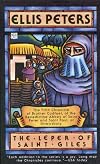
Eh. This one did not work for me at all. I was bugged throughout by the vast number of unsympathetic characters and wildly uneven pacing. EP is usually far better at pacing! Even worse: while I spotted the murderer right off (he was the only character with opportunity -- not a red herring in sight!), there was *nothing* in the text to provide him a motive until the (eyerolling) reveal. I hate reveals where the detective springs new information on the audience, as if the writer couldn't be show more bothered to set things up properly within the story. It's lazy writing, grrr.
(Actually, what it seems like is EP wasn't sure what book she was writing. The various plot threads feel borrowed from totally different stories and clodged together by force.)
Disability tag for leprosy. Disability FAIL because of the ending, as if it's better to be dead than disfigured. It's especially noxious in a post-war/veteran context, as it implies that veterans who come home from war with disfiguring injuries or infections have no right to family, love, or happiness and should retire from society, abandon their loved ones and property, and live out their lives as beggars. That is not noble sacrifice. That is fucking AWFUL.
Granted, YES, I KNOW, the history of leprosy and treatment of its patients is fucking awful, but this was published in 1981, not 1881. Grandpa should get to come home. show less
(Actually, what it seems like is EP wasn't sure what book she was writing. The various plot threads feel borrowed from totally different stories and clodged together by force.)
Disability tag for leprosy. Disability FAIL because of the ending, as if it's better to be dead than disfigured. It's especially noxious in a post-war/veteran context, as it implies that veterans who come home from war with disfiguring injuries or infections have no right to family, love, or happiness and should retire from society, abandon their loved ones and property, and live out their lives as beggars. That is not noble sacrifice. That is fucking AWFUL.
Granted, YES, I KNOW, the history of leprosy and treatment of its patients is fucking awful, but this was published in 1981, not 1881. Grandpa should get to come home. show less
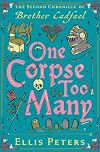
Summary: Burying 94 defenders of Shrewsbury loyal to Empress Maud, executed by King Stephen, Cadfael finds 95 bodies, one of which had been murdered. Could the killer be the young man seeking a daughter of a supporter of Empress Maud, hiding in the abbey under Cadfael’s protection?
The abbey at Shrewsbury is caught amid a civil war between those defending the town of Shrewsbury, loyal to Empress Maud who is in France, and the present, dominating forces under King Stephen. When the town show more falls, ninety-four of the defenders, loyal to Maud are executed by hanging, cut down and left in a heap outside the town. Cadfael is delegated to lead the group to provide them a decent burial or be claimed by their families. The grim task becomes grimmer when Cadfael counts, no doubt to make sure they have retrieved all, only to find that there are ninety-five. One of the corpses had been murdered, garrotted from behind and hidden among the others.
He secures King Stephen’s permission to investigate the murder. It is only one of the burdens he bears as he copes with the effects of war. A young boy has been assigned to him, provided for by a year’s gift to the abbey. Godric works hard and listens well–and refuses to strip down on a hot day–and Cadfael realizes this is no boy. He learns that she is Godith Adeney, daughter of one of Maud’s patrons, who had escaped the city. He arranges for her to stay with him rather than the other boys, and tries to protect her secret until he can arrange to get her to safety in neighboring Wales. She also identifies the murdered man–one of her father’s young servants, smuggling family wealth out of the city to aid Maud’s cause
The task is complicated by Hugh Beringar. Years ago he was betrothed to Godith. Now he has sided, or tried to, with King Stephen. He’s a skilled horseman and swordsman, but the proof of loyalty remains. Finding Godith and turning her over to the King as hostage and bait to bring her father out of hiding will confirm Beringar’s loyalties. He stays at the Abbey and attaches himself to Cadfael. Does he know, or suspect? The only thing that distracts is the recently bereaved Aline siward who lost her brother among the ninety-four. His rival for her affections is Adam Courcelle, a young soldier of the king, who apologizes that he could not save her brother.
Godith discovers a wounded young man in bushes outside the abbey, a companion assisting the man who was murdered, who had fought with his assailant in a barn. Cadfael attends to the young man, Tobold, who quickly develops a bond with Godith, and investigates the scene, finding a broken flower from the hilt of a knife–a key to finding the murderer. There is also the family treasure, which Tobold has hidden.
Peters does an effective job building the tension as it is evident that Beringer both enlists Cadfael’s help in secreting away some horses and provides bait for Cadfael to use with the two he is hiding who need to get to Wales, along with the treasure, which Cadfael suspects Beringar is also seeking. Beringar is both stealthy and clever. How much does he know? Can the former soldier and herbalist Cadfael outfox him? More than that, if the treasure is Beringar’s object, is he the murderer? For all that, a kind of admiration has arisen within Cadfael for this young man.
Peters has some surprises yet in store that both further the tension in the plot, and heighten the satisfaction with its outcome…but I will say no more! It’s masterful!
In back of all this, Peters captures the knife-edge abbeys lived on amid such civil distress. They do not take sides but provide stores and horses for the king–and refuge for those associated with his rival. All the while, they pursue a higher call, to care for souls, to heal bodies when they can and bury them with dignity when that fails. In Cadfael, the former soldier we read the tension of understanding the way of the warrior and the pursuit of his spiritual calling. He exemplifies one who lives “as wisely as a serpent and as innocently as a dove.” show less
The abbey at Shrewsbury is caught amid a civil war between those defending the town of Shrewsbury, loyal to Empress Maud who is in France, and the present, dominating forces under King Stephen. When the town show more falls, ninety-four of the defenders, loyal to Maud are executed by hanging, cut down and left in a heap outside the town. Cadfael is delegated to lead the group to provide them a decent burial or be claimed by their families. The grim task becomes grimmer when Cadfael counts, no doubt to make sure they have retrieved all, only to find that there are ninety-five. One of the corpses had been murdered, garrotted from behind and hidden among the others.
He secures King Stephen’s permission to investigate the murder. It is only one of the burdens he bears as he copes with the effects of war. A young boy has been assigned to him, provided for by a year’s gift to the abbey. Godric works hard and listens well–and refuses to strip down on a hot day–and Cadfael realizes this is no boy. He learns that she is Godith Adeney, daughter of one of Maud’s patrons, who had escaped the city. He arranges for her to stay with him rather than the other boys, and tries to protect her secret until he can arrange to get her to safety in neighboring Wales. She also identifies the murdered man–one of her father’s young servants, smuggling family wealth out of the city to aid Maud’s cause
The task is complicated by Hugh Beringar. Years ago he was betrothed to Godith. Now he has sided, or tried to, with King Stephen. He’s a skilled horseman and swordsman, but the proof of loyalty remains. Finding Godith and turning her over to the King as hostage and bait to bring her father out of hiding will confirm Beringar’s loyalties. He stays at the Abbey and attaches himself to Cadfael. Does he know, or suspect? The only thing that distracts is the recently bereaved Aline siward who lost her brother among the ninety-four. His rival for her affections is Adam Courcelle, a young soldier of the king, who apologizes that he could not save her brother.
Godith discovers a wounded young man in bushes outside the abbey, a companion assisting the man who was murdered, who had fought with his assailant in a barn. Cadfael attends to the young man, Tobold, who quickly develops a bond with Godith, and investigates the scene, finding a broken flower from the hilt of a knife–a key to finding the murderer. There is also the family treasure, which Tobold has hidden.
Peters does an effective job building the tension as it is evident that Beringer both enlists Cadfael’s help in secreting away some horses and provides bait for Cadfael to use with the two he is hiding who need to get to Wales, along with the treasure, which Cadfael suspects Beringar is also seeking. Beringar is both stealthy and clever. How much does he know? Can the former soldier and herbalist Cadfael outfox him? More than that, if the treasure is Beringar’s object, is he the murderer? For all that, a kind of admiration has arisen within Cadfael for this young man.
Peters has some surprises yet in store that both further the tension in the plot, and heighten the satisfaction with its outcome…but I will say no more! It’s masterful!
In back of all this, Peters captures the knife-edge abbeys lived on amid such civil distress. They do not take sides but provide stores and horses for the king–and refuge for those associated with his rival. All the while, they pursue a higher call, to care for souls, to heal bodies when they can and bury them with dignity when that fails. In Cadfael, the former soldier we read the tension of understanding the way of the warrior and the pursuit of his spiritual calling. He exemplifies one who lives “as wisely as a serpent and as innocently as a dove.” show less
Warning: this review contains spoilers (albeit for events that are part of the historical record).
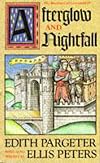
This book broke my heart. Edward I should have been ashamed of himself for his appalling treatment of the Welsh. His weaselling with words and dicking around with delay tactics were irritating; his callous breaking up of the princes and princesses of Wales and his grossly disproportionate death sentence for David left me fuming.
Edith Pargeter writes very well to fill matters of historical show more record with suspense and tension, and to bring the personalities to life as characters with whom readers can identify. I especially liked Eleanor and Elizabeth -- Elizabeth's defiant retort to Edward of "YOU were the one who told me to marry David and love and obey him, so anything I do on that score is YOUR fault" was breathtakingly awesome. In your face, Longshanks!
The quartet as a whole is recommended. It's even better to read if you know the area of Gwynedd or can look up pictures as you read. Seeing the landscape will bring home just how much Llywelyn valued the defence of his homeland. show less
This book broke my heart. Edward I should have been ashamed of himself for his appalling treatment of the Welsh. His weaselling with words and dicking around with delay tactics were irritating; his callous breaking up of the princes and princesses of Wales and his grossly disproportionate death sentence for David left me fuming.
Edith Pargeter writes very well to fill matters of historical show more record with suspense and tension, and to bring the personalities to life as characters with whom readers can identify. I especially liked Eleanor and Elizabeth -- Elizabeth's defiant retort to Edward of "YOU were the one who told me to marry David and love and obey him, so anything I do on that score is YOUR fault" was breathtakingly awesome. In your face, Longshanks!
The quartet as a whole is recommended. It's even better to read if you know the area of Gwynedd or can look up pictures as you read. Seeing the landscape will bring home just how much Llywelyn valued the defence of his homeland. show less

A re-read. I first came across the series as a teenager,when mum would buy them as they came out. Brother Cadfael is a Welshman who has been a sailor, crusader and certainly lived a life before finding a home as a monk in the Abbey at Shrewsbury. He is a herbalist, and has more independence than most monks get allowed as a result. In this edition, an oil used to ease muscle pains is used to kill a somewhat unpleasant baron. This baron is in the midst of handing over his lands to the abbey in show more exchange for free living. Only he is cut down before the deed can be sealed, so it is not valid. In which case who is heir to the property and how is the prime suspect? That would be his stepson, his wife's child by her first husband. only she turns out to be a woman Cadfael had an understanding with before he went to the Holy land and sort of forgot to come back. That being a typical level of coincidence in these.
But it's not any less enjoyable because of that. There are some pantomime villains, but they are few & far between. In few people is there pure evil, they are all human and fallible and, by that, all the more appealing. A nice easy read. show less
But it's not any less enjoyable because of that. There are some pantomime villains, but they are few & far between. In few people is there pure evil, they are all human and fallible and, by that, all the more appealing. A nice easy read. show less
Lists
Women in War (1)
THE WAR ROOM (1)
Favorite Series (1)
Edad Media (1)
Garden-fiction (1)
Monastic life (1)
Which house? (1)
Edgar Award (1)
Next in Series (1)
Historical Fiction (21)
Detective Stories (12)
British Mystery (14)
1970s (1)
Female Author (1)
Read in 2006 (3)
al.vick-series (2)
Awards


You May Also Like


Associated Authors
Statistics
- Works
- 154
- Also by
- 66
- Members
- 58,493
- Popularity
- #247
- Rating
- 3.9
- Reviews
- 1,066
- ISBNs
- 1,757
- Languages
- 25
- Favorited
- 171
