
Lindsey Davis
Author of The Silver Pigs
About the Author
Lindsey Davis lives in London, England. (Publisher Provided) Lindsey Davis was born in Birmingham, England in 1949. She earned her English degree at Oxford. Her published works include The Course of Honour and The Silver Pigs, the first in the Falco series which won the Authors' Club Best First show more Novel award in 1989. In 1999 she received the Sherlock Award for Best Comic Detective for her creation, Marcus Didius Falco. (Publisher Provided) show less
Series
Works by Lindsey Davis
Something Spooky on Geophys 2 copies
Associated Works
The Life and Opinions of Tristram Shandy, Gentleman (-0001) — Foreword, some editions — 8,554 copies, 125 reviews
Malice Domestic 06: An Anthology of Original Mystery Stories (1997) — Contributor — 99 copies, 3 reviews
Mothers, Murderers and Mistresses: Empresses of Ancient Rome [2013 TV Series] (2013) — Self — 4 copies
Poseidon's Gold | Less Than Meets the Eye | The Mamur Zapt and the Girl in the Nile — Contributor — 1 copy
Tagged
Common Knowledge
- Other names
- Davis, Lindsey
- Birthdate
- 1949
- Gender
- female
- Education
- Lady Margaret Hall, Oxford
- Occupations
- civil servant
writer - Organizations
- Crime Writers' Association (CWA)
Classical Association - Awards and honors
- Sherlock Award for Best Comic Detective (2000)
Crimewriters' Association Dagger in the Library (1995)
Herodotus Lifetime Achievement Award for Excellence in Historical Mysteries (2000)
Cartier Diamond Dagger (2011) - Agent
- Heather Jeeves (Heather Jeeves Literary Agency)
- Nationality
- UK
- Birthplace
- Birmingham, Warwickshire, England, UK
- Places of residence
- Greenwich, London, Middlesex, England, UK
- Associated Place (for map)
- England, UK
Members
Discussions
Lindsay Davis in Historical Mysteries (December 2015)
Reviews
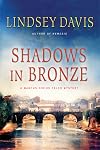
This is the second of a historical fiction detective series, which is as stereotypically a “hard boiled” crime fiction book as you can get with a setting in Ancient Rome… which makes it very amusing on a meta level, as well as in fact, since the author adds a great deal of humor to the story.
Set in Rome, late spring, AD 71, this installment is narrated by 30-year-old Marcus Didius Falco, a free citizen of Rome, and a private informer (i.e., private investigator), occasionally employed show more by Roman Emperor Vespasian. While Falco was politically a republican rather than a believer in emperors, Vespasian suggested he might raise Falco’s social rank if he worked as an imperial agent. The appeal of this was that Falco might then be able to marry (or even date!) the love of his life, Helena Justina, who was a Roman senator’s daughter. Falco figured he needed at least four hundred thousand sesterces to be able to approach Helena. [Today it is believed that the sesterces has a modern equivalence ranging from $.50 to $1.50. Thus Falco would need at least something like $200,000 to be considered respectable enough to see a senator’s daughter.]
Falco is very much involved with his large family, since his father is dead and he is now the titular head of the family. His mother was happy with Falco’s new job working for the Palace, having convinced herself it involved good money and simple work. Falco mused: “I was reluctant to let her discover so soon that it was the same old round of trudging after villains who chose to slouch through the streets when I wanted my lunch.”
In fact, Falco found the job depressing:
“Informing is a drab business. The pay’s filthy, the work’s worse, and if you ever find a woman who is worth any trouble you don’t have the money and you don’t have the time; if you do, the chances are you simply don’t have the energy.”
Falco occasionally checks in with Vespasian, with whom he improbably gets along:
“In some ways we two were ill-assorted. Vespasian Caesar was an upcountry senator from a down-market family, but a traditional aristocrat. I was an outspoken, introverted rough-neck with an Aventine accent and no sense of respect. The fact we could work together successfully was a typical Roman paradox.”
In this book, Vespasian sends Falco off to the Campania region in southern Italy, home to Pompeii, Herculaneum, Oplontis, Capri, and Paestum, where Falco spends time looking for bad actors, either to threaten them on Vespasian’s behalf, or do away with them. [Mount Vesuvius did not erupt until eight years later, in 79 AD.] Much to Falco’s delight, Helena Justina is also visiting in the region. Falco just has to avoid getting killed….
Evaluation: The author seems to be channeling Raymond Chandler and his fictional character Philip Marlowe, who is a wisecracking, hard-drinking private eye with a philosophical bent and a penchant for poetry. With Davis’s addition of endearing characters and the educational setting in Ancient Rome, she has created a winning combination. I enjoy Falco’s self-deprecating humor. For example, in the course of going about his business, Falco rescued a sacrificial goat from the Temple of Hera. One of the temple acolytes said to him: “Didius Falco, people are getting bad ideas about you and your goat!”
“‘Nonsense,’” Falco responded. “This goat is respectable!” show less
Set in Rome, late spring, AD 71, this installment is narrated by 30-year-old Marcus Didius Falco, a free citizen of Rome, and a private informer (i.e., private investigator), occasionally employed show more by Roman Emperor Vespasian. While Falco was politically a republican rather than a believer in emperors, Vespasian suggested he might raise Falco’s social rank if he worked as an imperial agent. The appeal of this was that Falco might then be able to marry (or even date!) the love of his life, Helena Justina, who was a Roman senator’s daughter. Falco figured he needed at least four hundred thousand sesterces to be able to approach Helena. [Today it is believed that the sesterces has a modern equivalence ranging from $.50 to $1.50. Thus Falco would need at least something like $200,000 to be considered respectable enough to see a senator’s daughter.]
Falco is very much involved with his large family, since his father is dead and he is now the titular head of the family. His mother was happy with Falco’s new job working for the Palace, having convinced herself it involved good money and simple work. Falco mused: “I was reluctant to let her discover so soon that it was the same old round of trudging after villains who chose to slouch through the streets when I wanted my lunch.”
In fact, Falco found the job depressing:
“Informing is a drab business. The pay’s filthy, the work’s worse, and if you ever find a woman who is worth any trouble you don’t have the money and you don’t have the time; if you do, the chances are you simply don’t have the energy.”
Falco occasionally checks in with Vespasian, with whom he improbably gets along:
“In some ways we two were ill-assorted. Vespasian Caesar was an upcountry senator from a down-market family, but a traditional aristocrat. I was an outspoken, introverted rough-neck with an Aventine accent and no sense of respect. The fact we could work together successfully was a typical Roman paradox.”
In this book, Vespasian sends Falco off to the Campania region in southern Italy, home to Pompeii, Herculaneum, Oplontis, Capri, and Paestum, where Falco spends time looking for bad actors, either to threaten them on Vespasian’s behalf, or do away with them. [Mount Vesuvius did not erupt until eight years later, in 79 AD.] Much to Falco’s delight, Helena Justina is also visiting in the region. Falco just has to avoid getting killed….
Evaluation: The author seems to be channeling Raymond Chandler and his fictional character Philip Marlowe, who is a wisecracking, hard-drinking private eye with a philosophical bent and a penchant for poetry. With Davis’s addition of endearing characters and the educational setting in Ancient Rome, she has created a winning combination. I enjoy Falco’s self-deprecating humor. For example, in the course of going about his business, Falco rescued a sacrificial goat from the Temple of Hera. One of the temple acolytes said to him: “Didius Falco, people are getting bad ideas about you and your goat!”
“‘Nonsense,’” Falco responded. “This goat is respectable!” show less

Once more we delve into the murkier side of 1st-century Rome with Marcus Didius Falco. The joy of reading Lindsey Davis's historical whodunnits is that she uses her extensive and deep research into the world of Vespasian's Rome – the period we know most about everyday Roman life because it's the decade before Vesuvius left a valuable snapshot – to bring the Roman Empire and its traditions alive. In a way that leaves a lesser role for the actual crime and its investigation, but that show more shouldn't be taken to mean this isn't a real nail-biter to the very end.
Falco and his immediate family Helena Justina, baby Julia Junilla and disreputable dog Nux are back in Rome, summoned by Vespasian to receive imperial thanks for his work on the Census (tax enforcement in other words). Falco is raised by a grateful Empire to the Equestrian rank he has long sought, though the fiscally-prudent emperor has declined to furnish the entry fee, simply awarding him a priestly sinecure as Procurator of the Sacred Geese and Sacrificial Chickens. It sounds like a good joke but Vespasian is no fool, and it leads Falco into the world of religious cults: the Vestal Virgins, the Arval Brotherhood and a strangely dysfunctional and secretive priestly family, in search of a missing six-year-old and the deranged killer of an Arval Brother. Naturally, everything is intertwined. But once the killer has been identified, will the little girl be found safely?
One of the very best of the series so far. show less
Falco and his immediate family Helena Justina, baby Julia Junilla and disreputable dog Nux are back in Rome, summoned by Vespasian to receive imperial thanks for his work on the Census (tax enforcement in other words). Falco is raised by a grateful Empire to the Equestrian rank he has long sought, though the fiscally-prudent emperor has declined to furnish the entry fee, simply awarding him a priestly sinecure as Procurator of the Sacred Geese and Sacrificial Chickens. It sounds like a good joke but Vespasian is no fool, and it leads Falco into the world of religious cults: the Vestal Virgins, the Arval Brotherhood and a strangely dysfunctional and secretive priestly family, in search of a missing six-year-old and the deranged killer of an Arval Brother. Naturally, everything is intertwined. But once the killer has been identified, will the little girl be found safely?
One of the very best of the series so far. show less
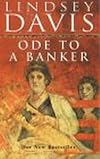
Murder in the Slush Pile
This episode in the Roman crime saga takes us back to base in Rome for a romp in the worlds of classical publishing and banking, and of patronage. Those worlds have many similarities with their counterparts in our own time and no doubt draw on the author's own experiences at a time in her writing career when her writing has become successful enough to be financially self-sustaining.
Our hero Marcus Didius is headhunted by a wealthy publisher, but turns the proposed show more deal down as too exploitative. Shortly afterwards Chrysippus the publisher is found brutally murdered in his library - literally a body in the library, signalling that this is going to be in part a clever Agatha Christie spoof with Falco becoming more Poirot than Marlowe. Chrysippus is a Greek banker as well as a patron of the arts, but who wants him dead? A disgruntled author or a hard-up bank client? Or someone entirely different with a grievance? The Falcon family saga moves on, with cameos from Ma, Pa and bossy sister Junia as well as Maia the Nice One. Anacrites is scheming and romance comes for Petri. There's a nice swipe at writers groups, and a neat joke that you'll miss if you haven't studied Latin concerning the fate of a manuscript submitted by one Martialis.
If you wanted to meet Marcus Didius Falcon for the first time I'd suggest you didn't start here because in so many ways it's not typical. Best to begin at the beginning anyway. show less
This episode in the Roman crime saga takes us back to base in Rome for a romp in the worlds of classical publishing and banking, and of patronage. Those worlds have many similarities with their counterparts in our own time and no doubt draw on the author's own experiences at a time in her writing career when her writing has become successful enough to be financially self-sustaining.
Our hero Marcus Didius is headhunted by a wealthy publisher, but turns the proposed show more deal down as too exploitative. Shortly afterwards Chrysippus the publisher is found brutally murdered in his library - literally a body in the library, signalling that this is going to be in part a clever Agatha Christie spoof with Falco becoming more Poirot than Marlowe. Chrysippus is a Greek banker as well as a patron of the arts, but who wants him dead? A disgruntled author or a hard-up bank client? Or someone entirely different with a grievance? The Falcon family saga moves on, with cameos from Ma, Pa and bossy sister Junia as well as Maia the Nice One. Anacrites is scheming and romance comes for Petri. There's a nice swipe at writers groups, and a neat joke that you'll miss if you haven't studied Latin concerning the fate of a manuscript submitted by one Martialis.
If you wanted to meet Marcus Didius Falcon for the first time I'd suggest you didn't start here because in so many ways it's not typical. Best to begin at the beginning anyway. show less

This series leaves me with mixed feelings every time. In theory I should like it, it's set in an interesting period, it has an engaging narrator from the wrong side of the tracks and with republican ideals. I'm not a huge fan of the first person, although I accept that it makes it rather immediate. Unfortunately, I sometimes feel he is selectively dense. Often about women and most usually about his girlfriend, Helena, the senator's daughter. In this one he is engaged by a found family of show more freed persons to find out about the woman their leader has got engaged to. They;re not keen, she seems to be on the lookout for husband number 4 with the previous 3 having passed in dubious circumstances. The resolution takes some time to come out and is all wrapped up very neatly. I felt there were a few gaps that maybe weren't explained. show less
Lists
Awards


You May Also Like


Associated Authors
Statistics
- Works
- 57
- Also by
- 16
- Members
- 26,526
- Popularity
- #788
- Rating
- 3.8
- Reviews
- 732
- ISBNs
- 978
- Languages
- 12
- Favorited
- 102

