
David Wishart (1) (1952–)
Author of Ovid
For other authors named David Wishart, see the disambiguation page.
Series
Works by David Wishart
Associated Works
Tagged
Common Knowledge
- Birthdate
- 1952
- Gender
- male
- Education
- University of Edinburgh
- Occupations
- English Teacher
- Agent
- Darley Anderson (Darley Anderson Literary ∙ TV ∙ and Film Agency)
- Short biography
- David Wishart is a Classics scholar and after working abroad in Kuwait, Greece and Saudi Arabia as a freelance teacher of English, he now lives with his wife and family in Scotland. [from I, Virgil (1995)]
- Nationality
- UK
- Birthplace
- Arbroath, Scotland, UK
- Places of residence
- Greece
Saudi Arabia
Carnoustie, Angus, Scotland, UK - Associated Place (for map)
- Scotland, UK
Members
Reviews

On the whole, I liked this novel, one of the Marcus Corvinus series of ancient Roman mysteries. I didn't think it was as good as the other two in the series I've read--#1 and #10. By this time I'm used to Wishart's unconventional Rome, so that was no stumbling block. This particular mystery was just too confusing. One of the villains was not brought in until the book was nearly finished, which to my understanding, is sloppy mystery writing. I'd give the story 3.5 stars if possible.
The show more Empress Livia summons Marcus Corvinus and asks him to investigate the death of her son [and Tiberius's adopted son], Germanicus, the hero and general. Ostensibly, he had died of an illness, but even Tacitus has admitted the details of Germanicus's death were cloudy.
In Rome, Marcus does find evidence of a conspiracy having to do with the death, but he has raised as many questions as he has answered. The plot was confusing to me, or else I'm obtuse. After Marcus had an "Aha!" moment, I'm glad he and his wife, Perilla would discuss what he had discovered; then through their questions and answers I would "get" it.
The charismatic Germanicus had been sent away from the western part of the empire to Asia to dilute his influence. Marus and Perilla travel to Antioch, where Germanicus had died, to try to fit more pieces of the puzzle together. As the couple is getting too close to the truth for someone's comfort, they are "asked" to leave and to return to Rome. The conclusion was ingenious speculation, but plausible. I think the author took an interesting premise and made the plot a bit more complicated than it should have been.
Marcus's new stepfather, Priscus, was emphasized and was a comic figure. There were some humorous comments in this novel: e.g., concerning the innkeeper of the Two Cedars Inn in Antioch and his extended family. The sightseeing tour in Antioch, the guide, and Marcus's interior thoughts were also funny--I took this as a satire on sightseeing tours in general, with the delighted wife and the all-suffering husband.
I enjoyed this light mystery, however I felt it was too elaborate for its own good. I do recommend it, however. show less
The show more Empress Livia summons Marcus Corvinus and asks him to investigate the death of her son [and Tiberius's adopted son], Germanicus, the hero and general. Ostensibly, he had died of an illness, but even Tacitus has admitted the details of Germanicus's death were cloudy.
In Rome, Marcus does find evidence of a conspiracy having to do with the death, but he has raised as many questions as he has answered. The plot was confusing to me, or else I'm obtuse. After Marcus had an "Aha!" moment, I'm glad he and his wife, Perilla would discuss what he had discovered; then through their questions and answers I would "get" it.
The charismatic Germanicus had been sent away from the western part of the empire to Asia to dilute his influence. Marus and Perilla travel to Antioch, where Germanicus had died, to try to fit more pieces of the puzzle together. As the couple is getting too close to the truth for someone's comfort, they are "asked" to leave and to return to Rome. The conclusion was ingenious speculation, but plausible. I think the author took an interesting premise and made the plot a bit more complicated than it should have been.
Marcus's new stepfather, Priscus, was emphasized and was a comic figure. There were some humorous comments in this novel: e.g., concerning the innkeeper of the Two Cedars Inn in Antioch and his extended family. The sightseeing tour in Antioch, the guide, and Marcus's interior thoughts were also funny--I took this as a satire on sightseeing tours in general, with the delighted wife and the all-suffering husband.
I enjoyed this light mystery, however I felt it was too elaborate for its own good. I do recommend it, however. show less
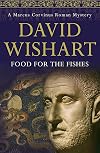
David Wishart produces great Roman mysteries from a part of Europe Rome never reached – just north of Hadrian’s Wall. Food for the Fishes is one of the most enjoyable of Wishart’s series about Marcus Corvinus, a young patrician, set during the reign of Tiberius.
The interplay among Corvinus and the recurring supporting cast is one of the strengths of Wishart’s series. Perilla (his wife), Vispania (his mother) and Priscus (his step-father) are all well developed characters and each show more contributes to this book, which is set in Vispania’s seaside villa in Baiae, a favorite Roman resort for the wealthy.
The mystery itself is delightfully plotted and the book is well written. I look forward to each installment in the series, as I do to those of Steven Saylor, Lindsey Davis and Rosemary Rowe. show less
The interplay among Corvinus and the recurring supporting cast is one of the strengths of Wishart’s series. Perilla (his wife), Vispania (his mother) and Priscus (his step-father) are all well developed characters and each show more contributes to this book, which is set in Vispania’s seaside villa in Baiae, a favorite Roman resort for the wealthy.
The mystery itself is delightfully plotted and the book is well written. I look forward to each installment in the series, as I do to those of Steven Saylor, Lindsey Davis and Rosemary Rowe. show less

In the next Marcus Corvinus adventure, Foreign Bodies, the new emperor Claudius requests some help looking into the death of a family friend. The unfortunate victim was living in Lugdunum, in the wilds of Gaul, and Marcus and Perilla set off traveling on Claudius’ expense account.
Obviously we all love Clau-Clau-Claudius from Robert Graves I,Claudius (Well, not all of us, not my husband, an uncultured lout who wandered away during “don’t touch the figs”), and Wishart’s emperor show more Claudius is cut from the same autocratic and mildly absent-minded cloth. Or wait, is Claudius just pretending to be fuzzy-headed while actually playing his own clever game? With Claudius, you never know.
Almost immediately, Marcus and Perilla encounter a handsome and egocentric Greek doctor, Domitius Crinas, also heading to the distant provinces on Claudius’ command. Crinas immediately suggests Marcus improve his health by cutting back on the wine, and almost as quickly volunteers to take Perilla sight-seeing. Poor Marcus, down to a strict limit of 4 cups of wine a day, finds himself third-wheeling on Perilla and Crinas’ cultural adventures.
After reading so many Marcus Corvinus adventures, I worried that these would start to be a bit formulaic. I’d be happy to read a dozen tales of Marcus Corvinus stumbles on a corpse, Perilla suggests dropping the case just this once, Marcus goes to investigate a very important lead in a wine-shop, Bathylus and/or Meton scolds him for coming back late, Perilla looks up from her scroll long enough to point Marcus towards the solution, etc., etc., but I was even more excited as this story veered further away.
As usual, Wishart leads readers to a surprising and satisfying conclusion. After the big reveal, it’s easy to see the hints and clues along the way, but I was pretty surprised by the (uh, how to say this in a spoiler-free way?) secret identity.
Foreign Bodies by David Wishart will be released on September 1, 2016 show less
Obviously we all love Clau-Clau-Claudius from Robert Graves I,Claudius (Well, not all of us, not my husband, an uncultured lout who wandered away during “don’t touch the figs”), and Wishart’s emperor show more Claudius is cut from the same autocratic and mildly absent-minded cloth. Or wait, is Claudius just pretending to be fuzzy-headed while actually playing his own clever game? With Claudius, you never know.
Almost immediately, Marcus and Perilla encounter a handsome and egocentric Greek doctor, Domitius Crinas, also heading to the distant provinces on Claudius’ command. Crinas immediately suggests Marcus improve his health by cutting back on the wine, and almost as quickly volunteers to take Perilla sight-seeing. Poor Marcus, down to a strict limit of 4 cups of wine a day, finds himself third-wheeling on Perilla and Crinas’ cultural adventures.
After reading so many Marcus Corvinus adventures, I worried that these would start to be a bit formulaic. I’d be happy to read a dozen tales of Marcus Corvinus stumbles on a corpse, Perilla suggests dropping the case just this once, Marcus goes to investigate a very important lead in a wine-shop, Bathylus and/or Meton scolds him for coming back late, Perilla looks up from her scroll long enough to point Marcus towards the solution, etc., etc., but I was even more excited as this story veered further away.
As usual, Wishart leads readers to a surprising and satisfying conclusion. After the big reveal, it’s easy to see the hints and clues along the way, but I was pretty surprised by the (uh, how to say this in a spoiler-free way?) secret identity.
Foreign Bodies by David Wishart will be released on September 1, 2016 show less

Fairly fresh from the enjoyable Food for the Fishes, a later Marcus Corvinus mystery, I was curious about how this series began. Whoever reads any novels in this series has to accept Wishart's Roman world as is, also his deliberately anachronistic dialogue, narration, and inner monologues of Marcus, the Senatorial protagonist and narrator--a "broad-striper". Marcus is a party animal. He is not interested in pursuing the politics and promotions of the 'cursus honorem'. I liked Marcus, a show more wine-quaffing Mickey Spillane or Sam Spade in the Rome of Tiberius. The emperor is irreverently nicknamed "The Wart" by Marcus.
The poet Ovid's stepdaughter, the Lady Perilla, asks Marcus to help bring the deceased Ovid's ashes back to Rome from Tomi on the Black Sea, the place of the poet's exile. She wants to give them a proper internment on Roman soil. From that simple request, the plot becomes more and more convoluted. Marcus agrees to help, is stonewalled by bureaucracy, and uncovers a plot involving the imperial family. Marcus escapes death several times as the mystery deepens. Marcus also finds links connecting the intrigue, the Teutoberg Forest Massacre, and the Roman commander of the three legions in Germany, Quinctilius Varus. There are the usual clues, red herrings, and dead bodies. With so many disparate plot strands, I wondered how the author would pull everything together to make sense. He created a logical plot from the few simple facts that are known historically, filling in gaps fictionally.
I liked Marcus's thinking things out and trying to put two and two together. He wasn't afraid to express any uncertainties. The Lady Perilla was no slouch, either. I got a good picture of the Roman patron-client relationship.
I highly recommend this to those wanting to read good escapist historical mystery fiction. show less
The poet Ovid's stepdaughter, the Lady Perilla, asks Marcus to help bring the deceased Ovid's ashes back to Rome from Tomi on the Black Sea, the place of the poet's exile. She wants to give them a proper internment on Roman soil. From that simple request, the plot becomes more and more convoluted. Marcus agrees to help, is stonewalled by bureaucracy, and uncovers a plot involving the imperial family. Marcus escapes death several times as the mystery deepens. Marcus also finds links connecting the intrigue, the Teutoberg Forest Massacre, and the Roman commander of the three legions in Germany, Quinctilius Varus. There are the usual clues, red herrings, and dead bodies. With so many disparate plot strands, I wondered how the author would pull everything together to make sense. He created a logical plot from the few simple facts that are known historically, filling in gaps fictionally.
I liked Marcus's thinking things out and trying to put two and two together. He wasn't afraid to express any uncertainties. The Lady Perilla was no slouch, either. I got a good picture of the Roman patron-client relationship.
I highly recommend this to those wanting to read good escapist historical mystery fiction. show less
Lists
You May Also Like


Associated Authors
Statistics
- Works
- 27
- Also by
- 1
- Members
- 1,696
- Popularity
- #15,137
- Rating
- 3.7
- Reviews
- 92
- ISBNs
- 118
- Languages
- 10
- Favorited
- 1