
Ngaio Marsh (1895–1982)
Author of A Man Lay Dead
About the Author
Ngaio Marsh was born on April 23, 1895 in Christchurch, New Zealand. She attended St. Mary's College and Canterbury University. She worked in the theater acting, producing, and even painting scenery. She was a partner in an interior decorating business in England from 1928 to 1932. She later show more returned to New Zealand and produced plays for a Shakespearean repertory company. She also worked with the Drama Department of Canterbury University. During World War II, she served in the New Zealand Red Cross Transport Unit. She traveled to England frequently and founded the British Commonwealth Theatre Company in 1949. Her first novel, A Man Lay Dead, was published in 1934. She wrote more than 40 books including the Roderick Alleyn Mysteries series and Black Beech and Honeydew. She also wrote theatrical and television plays. She was named to the Order of the British Empire in 1949 and was made Dame Commander of the Order of the British Empire in 1966. The Mystery Writers of America named her a Grand Master in 1977. She died on February 18, 1982 at the age of 82. (Bowker Author Biography) show less
Series
Works by Ngaio Marsh
The Ngaio Marsh Collection 01: A Man Lay Dead / Enter a Murderer / The Nursing Home Murder (2009) 166 copies, 6 reviews
Scales of Justice / Death of a Fool / Tied Up in Tinsel / Grave Mistake / Photo Finish (1983) 84 copies, 4 reviews
The Ngaio Marsh Collection 03: Death in a White Tie / Overture to Death / Death at the Bar (2009) 80 copies, 2 reviews
The Ngaio Marsh Collection 04: A Surfeit of Lampreys / Death and the Dancing Footman / Colour Scheme (2009) 64 copies, 1 review
The Ngaio Marsh Collection 05: Died in the Wool / Final Curtain / Swing, Brother, Swing (1998) 60 copies
Curtain Calls: Three Great Mysteries Enter A Murderer, Night at the Vulcan, Killer Dolphin (1966) 57 copies, 1 review
The Ngaio Marsh Collection 09: Clutch of Constables / When in Rome / Tied Up in Tinsel (2010) 54 copies
The Ngaio Marsh Collection 07: Off With His Head / Singing in the Shrouds / False Scent (2009) 51 copies
The Ngaio Marsh Collection 11: Photo-Finish / Light Thickens / Black Beech and Honeydew (2010) 43 copies, 1 review
The Ngaio Marsh Collection 06: Opening Night / Spinsters in Jeopardy / Scales of Justice (2009) 42 copies
The Roderick Alleyn Mysteries: The Nursing Home Murder; Death in a White Tie; Final Curtain (1993) 26 copies, 1 review
Three-act special; 3 complete mystery novels: A wreath for Rivera. Spinsters in jeopardy. Night at the Vulcan (1960) 25 copies, 1 review
Enter A Murderer; A Man Lay Dead; Death At The Bar; Death And The Dancing Footman; Overture To Death, [in 5 volumes] (1941) 2 copies
Ngaio Marsh 2 copies
Singing in the Shrouds {abridged} 2 copies
Opening Night | When in Rome 1 copy
Ouverture per un delitto 1 copy
Chapter and Verse 1 copy
Death in the garden 1 copy
Enter a Murderer 1 copy
False Scent 1 copy
Hand in Glove 1 copy
Scales of Justice 1 copy
Final Curtain 1 copy
Vintage murder 1 copy
Opening Night 1 copy
Spinsters in Jeopardy 1 copy
The Christmas tree 1 copy
Death In a White Tie, Death Of A Peer, Hand in Glove, Death And The Dancing Footwoman, Death At The Bar (1982) 1 copy
Clutch of Constables / Vintage Murders / Tied Up in Tinsel / Night at the Vulcan / Photo Finish / Enter a Murder (1994) 1 copy
Overture to Death 1 copy
Associated Works
A Moment on the Edge : 100 Years of Crime Stories by Women (2002) — Contributor — 295 copies, 6 reviews
Chapter and Hearse: Suspense Stories about the World of Books (1985) — Contributor — 49 copies, 1 review
Grande Dames of Detection: Two Centuries of Sleuthing Stories by the Gentle Sex (1973) — Contributor — 35 copies
Ellery Queen's murdercade: 23 stories from Ellery Queen's mystery magazine (Mystery annual ; 29) (1975) — Contributor — 25 copies
The Case of the Golddigger's Purse | Died in the Wool | Pearls Before Swine (1945) 10 copies, 1 review
In Deadly Earnest: A Collection of Fiction by New Zealand Women 1870s–1980s (1989) — Contributor — 7 copies
Sylvia Plath's Tomato Soup Cake: A Compendium of Classic Authors' Favourite Recipes (2024) — Contributor — 6 copies
The Inspector Alleyn Mysteries: Death in a White Tie [1990 TV Series, Series 1, Episode 5] (1993) 3 copies
Hånden i sandet og andre virkelige kriminalsager skildret af berømte kriminalforfattere (1974) 1 copy, 1 review
Tagged
Common Knowledge
- Legal name
- Marsh, Edith Ngaio
- Birthdate
- 1895-04-23
- Date of death
- 1982-02-18
- Gender
- female
- Education
- St. Margaret's College (Christchurch, New Zealand)
Canterbury College (School of Art) - Occupations
- theatrical producer
interior decorator
novelist
actor
painter
detective novelist - Organizations
- Detection Club
- Awards and honors
- Order of the British Empire (Dame Commander, 1966)
MWA Grand Master (1978) - Short biography
- Ngaio Marsh was the pen name of Edith Ngaio Marsh, born in Christchurch, New Zealand to English immigrants. Her name, pronounced "ny-o," was a Maori word meaning "reflections on the water." She attended the private St. Margaret’s College, where she showed an aptitude for acting and writing, producing poetry, prose and plays.
In 1913 she entered Canterbury College School of Art and left in 1919 in order to become a professional painter. The opportunity to tour with the Allan Wilkie Shakespeare Company delayed her plans until later in the 1920s. In 1928, Marsh made her first visit to England, where she worked in the theatre, interior design, and travel writing. She began writing novels and soon embarked on a prolific crime-writing career. In 1934, she published A Man Lay Dead, featuring the very English Chief Detective Inspector Roderick Alleyn. During World War II, she served in a New Zealand Red Cross Transport Unit, driving repatriated soldiers in a hospital bus. By the 1950s, Marsh was considered a “Queen of Crime” along with Agatha Christie, Margery Allingham, and Dorothy L. Sayers.
Marsh was passionately attached to her native country and returned to live in New Zealand but made frequent trips to England and other countries. She became a leader of the New Zealand theatre, mounting numerous Shakespeare plays. In her career, Ngaio Marsh wrote 32 novels and an autobiography, Black Beech and Honeydew (1965). She never married. Margaret Lewis wrote an authorized biography, Ngaio Marsh, A Life in 1991. New Zealand art historian Joanne Drayton's biography, Ngaio Marsh: Her Life in Crime, was published in 2008. - Nationality
- New Zealand
- Birthplace
- Christchurch, Canterbury, New Zealand
- Places of residence
- England, UK
Christchurch, Canterbury, New Zealand - Place of death
- Christchurch, Canterbury, New Zealand
- Burial location
- Church of the Holy Innocents Churchyard Peel Forest, Timaru District, Canterbury, New Zealand
- Associated Place (for map)
- Christchurch, Canterbury, New Zealand
Members
Reviews
Distracted and Ruined
Review of the Felony & Mayhem Press Kindle eBook edition (2013) of the Geoffrey Bles hardcover original (1936)
I found myself completely distracted by the homophobic asides in this now dated 1936 mystery. The number of putdowns was so over the top that I started marking them in my Kindle notes. A sampling here:
This was accompanied by adjectives and verbs of descriptions and actions which again portrayed the same characters as willowy… glided… fluted… begged… bleated… flounced… etc. as further putdowns. This was by both the investigators and the other suspects.
There were also insults of other nationalities (the French in this case) and one of the classic racist asides observing another character who refrained from saying something because they were “too white to say so.”
It all made the actual mystery seem like an afterthought, perhaps it was misdirection so that you aren’t paying attention to the actual murderer? Otherwise this could have been an interesting investigation, based as it apparently was on an actual cult temple from the 1890s in New Zealand which was led by an American conman. The action takes place in London, England though, as do most of the Roderick Alleyn mysteries. Ngaio Marsh found ways to bring him to her home ground of New Zealand occasionally as well.
See photograph at https://teara.govt.nz/files/28397-atl_1.jpg
Photograph of the 'Temple of Truth' in Christchurch, New Zealand, the rumoured inspiration for the ‘House of the Sacred Flame‘ in ‘Death in Ecstasy’. Image sourced from The Encyclopaedia of New Zealand.
I read several of Ngaio Marsh's Roderick Alleyns during the lockdowns of 2020 and 2021 as I was regularly digging through my old mystery paperbacks for re-read possibilities. I don’t remember any of those having this sort of bigotry.
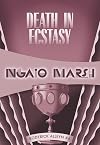
See book cover at https://upload.wikimedia.org/wikipedia/en/2/28/DeathInEcstacy.jpg
Cover of the original hardcover edition of ‘Death in Ecstasy’ (1936) as published by Geoffrey Bles. Image sourced from Wikipedia.
I read Death in Ecstasy through a $1.99 Kindle Deal of the Day in 2023 from Amazon thinking that it would be reliable Golden Age Mystery. It seemed instead that the 1930s was a golden age of homophobia and racism.
Trivia and Links
Death in Ecstasy was adapted for television in 1964 as Season 1 Episode 11 of the Detective (1964-1969) series which based its scripts on dozens of crime novels by different authors. I could not find a posting of it on the internet. Although there was a later Alleyn Mysteries TV series (1990-1994), Death in Ecstasy was not included in those adaptations.
Death in Ecstasy was adapted as a BBC radioplay in 1969 and you can hear that audio recording on YouTube here. NOTE: I have not listened to this, but I can’t imagine they would have retained the homophobic and racist elements. show less
Review of the Felony & Mayhem Press Kindle eBook edition (2013) of the Geoffrey Bles hardcover original (1936)
I found myself completely distracted by the homophobic asides in this now dated 1936 mystery. The number of putdowns was so over the top that I started marking them in my Kindle notes. A sampling here:
"What a loathly, what a nauseating, what an unspeakable little dollop." "that little beast", “Fauntleroy take little Eric", "Gemini, possibly heavenly", "a littleshow more
pig", "that little animal", "horrible youth", "unattractive", "two hothouse flowers", "perhaps the Greeks had a word for him", "those two queens", "little drip", "a monster'', "that sissy", "the unspeakable", "you two bloody little pansies."
This was accompanied by adjectives and verbs of descriptions and actions which again portrayed the same characters as willowy… glided… fluted… begged… bleated… flounced… etc. as further putdowns. This was by both the investigators and the other suspects.
There were also insults of other nationalities (the French in this case) and one of the classic racist asides observing another character who refrained from saying something because they were “too white to say so.”
It all made the actual mystery seem like an afterthought, perhaps it was misdirection so that you aren’t paying attention to the actual murderer? Otherwise this could have been an interesting investigation, based as it apparently was on an actual cult temple from the 1890s in New Zealand which was led by an American conman. The action takes place in London, England though, as do most of the Roderick Alleyn mysteries. Ngaio Marsh found ways to bring him to her home ground of New Zealand occasionally as well.
See photograph at https://teara.govt.nz/files/28397-atl_1.jpg
Photograph of the 'Temple of Truth' in Christchurch, New Zealand, the rumoured inspiration for the ‘House of the Sacred Flame‘ in ‘Death in Ecstasy’. Image sourced from The Encyclopaedia of New Zealand.
I read several of Ngaio Marsh's Roderick Alleyns during the lockdowns of 2020 and 2021 as I was regularly digging through my old mystery paperbacks for re-read possibilities. I don’t remember any of those having this sort of bigotry.
See book cover at https://upload.wikimedia.org/wikipedia/en/2/28/DeathInEcstacy.jpg
Cover of the original hardcover edition of ‘Death in Ecstasy’ (1936) as published by Geoffrey Bles. Image sourced from Wikipedia.
I read Death in Ecstasy through a $1.99 Kindle Deal of the Day in 2023 from Amazon thinking that it would be reliable Golden Age Mystery. It seemed instead that the 1930s was a golden age of homophobia and racism.
Trivia and Links
Death in Ecstasy was adapted for television in 1964 as Season 1 Episode 11 of the Detective (1964-1969) series which based its scripts on dozens of crime novels by different authors. I could not find a posting of it on the internet. Although there was a later Alleyn Mysteries TV series (1990-1994), Death in Ecstasy was not included in those adaptations.
Death in Ecstasy was adapted as a BBC radioplay in 1969 and you can hear that audio recording on YouTube here. NOTE: I have not listened to this, but I can’t imagine they would have retained the homophobic and racist elements. show less
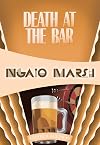
Summary: A holiday at a secluded seaside inn, and a challenge at darts ends up in murder from prussic acid (cyanide).
Three friends return to the remote seaside village of Ottercombe for a holiday. Luke Watchman is a renowned barrister, his cousin Sebastian Parish, a well-known actor, and Norman Cubitt, an accomplished artist who is doing Sebastian’s portrait. They stay at The Feathers, an inn with a pub operated by Abel Pomeroy and his son Will, who is active in a local communist cell with show more Decima Moore, a stunning local farmer’s daughter returned from Oxford who Will hopes to marry, and Bob Legge, an older gentleman with a mysterious background who already is secretary and treasurer for the group. Legge lives at The Feathers. Also staying at the Feathers is the Hon. Violet Darragh, who hangs about doing amateurish water color sketches while paying particular attention to Legge.
Things start off badly between Watchman and Legge. They have a fender-bender resulting from Legge charging into a blind intersection. The gentlemen extricate their cars, which were not damaged, only to discover on arrival that they are both staying at Feathers. It’s clear from an encounter the first night that they don’t like each other, and Watchman expects he’s seen him before. Legge has a stellar hand at darts, defeating Watchman, and challenging him to a trick where Legge will outline a hand on the dartboard with darts. Watchman declines.
The next day starts benignly enough with Cubitt off painting Sebastian’s portrait. Violet paints nearby. Over a rise Watchman encounters Decima Moore and we learn they’d had a fling on a previous visit by Watchman. Now she wants nothing more to do with him and he forces himself on her only to be repulsed as the painter come over the rise. The weather turns ill that night and Legge can’t make an appointment in nearby Illington because the tunnel into Ottercombe, its only access is impassable. So they are all in the bar. Pomeroy opens a special brandy for the guests, who have already drunk freely. Legge resumes his dart challenge, Watchman takes it up. Abel breaks out a new set of darts to which Legge approves.
The fourth dart pierces one of Watchman’s fingers. He turns pale, sits down. He is averse to blood and his friends chalk it up to that. Abel dresses the wound with iodine, but Watchman worsens. Someone suggests brandy, which Decima pours into Watchman’s empty glass. He barely takes any, saying “poison” through clenched teeth, knocking the glass away in a spasm-like motion. Just then the lights went out amid the storm, things are hectic with broken glass everywhere. When the lights come back on, Watchman is dead.
The local police do a credible investigation of the scene. The dart is found to have traces of prussic acid (cyanide) on the tip. Abel Pomeroy, who had bought prussic acid to kill rats is muttered against by the locals for not securing it. He goes to Scotland Yard to clear his reputation, sees Alleyn, who consults with the locals and is asked in, along with his fellow investigator, Fox. Attention is focused on Legge, but it becomes clear that he could not have put cyanide on the darts before throwing them. Nor was the brandy nor the glass tainted. But lethal levels of cyanide were found in Watchman’s blood. How was he poisoned? And who did it? Both Parrish, who is in financial straits and Cubitt stood to inherit from Watchman. It is clear Decima disliked him. Will was aware of the affair from the previous year. And Legge turns out to have been part of a case prosecuted by Watchman under the name Montague Thringle, taking the fall for a partner, perhaps unjustly.
Alleyn’s challenge is to sort all this out when virtually no one wants to cooperate. Legge is pathologically afraid of the police. And then an attempt is made to poison him and Fox, with Fox getting very ill.
I really enjoyed this story for the delightful cast of characters (Violet Darragh turns out to be quite interesting!), the rustic inn, and the unique seaside setting with its difficult to navigate tunnel that foreshadowed the twisty plot of this story. I found myself surprised at the end by who the murderer was–I had been thinking “anyone but this person.” A very satisfying read! show less
Three friends return to the remote seaside village of Ottercombe for a holiday. Luke Watchman is a renowned barrister, his cousin Sebastian Parish, a well-known actor, and Norman Cubitt, an accomplished artist who is doing Sebastian’s portrait. They stay at The Feathers, an inn with a pub operated by Abel Pomeroy and his son Will, who is active in a local communist cell with show more Decima Moore, a stunning local farmer’s daughter returned from Oxford who Will hopes to marry, and Bob Legge, an older gentleman with a mysterious background who already is secretary and treasurer for the group. Legge lives at The Feathers. Also staying at the Feathers is the Hon. Violet Darragh, who hangs about doing amateurish water color sketches while paying particular attention to Legge.
Things start off badly between Watchman and Legge. They have a fender-bender resulting from Legge charging into a blind intersection. The gentlemen extricate their cars, which were not damaged, only to discover on arrival that they are both staying at Feathers. It’s clear from an encounter the first night that they don’t like each other, and Watchman expects he’s seen him before. Legge has a stellar hand at darts, defeating Watchman, and challenging him to a trick where Legge will outline a hand on the dartboard with darts. Watchman declines.
The next day starts benignly enough with Cubitt off painting Sebastian’s portrait. Violet paints nearby. Over a rise Watchman encounters Decima Moore and we learn they’d had a fling on a previous visit by Watchman. Now she wants nothing more to do with him and he forces himself on her only to be repulsed as the painter come over the rise. The weather turns ill that night and Legge can’t make an appointment in nearby Illington because the tunnel into Ottercombe, its only access is impassable. So they are all in the bar. Pomeroy opens a special brandy for the guests, who have already drunk freely. Legge resumes his dart challenge, Watchman takes it up. Abel breaks out a new set of darts to which Legge approves.
The fourth dart pierces one of Watchman’s fingers. He turns pale, sits down. He is averse to blood and his friends chalk it up to that. Abel dresses the wound with iodine, but Watchman worsens. Someone suggests brandy, which Decima pours into Watchman’s empty glass. He barely takes any, saying “poison” through clenched teeth, knocking the glass away in a spasm-like motion. Just then the lights went out amid the storm, things are hectic with broken glass everywhere. When the lights come back on, Watchman is dead.
The local police do a credible investigation of the scene. The dart is found to have traces of prussic acid (cyanide) on the tip. Abel Pomeroy, who had bought prussic acid to kill rats is muttered against by the locals for not securing it. He goes to Scotland Yard to clear his reputation, sees Alleyn, who consults with the locals and is asked in, along with his fellow investigator, Fox. Attention is focused on Legge, but it becomes clear that he could not have put cyanide on the darts before throwing them. Nor was the brandy nor the glass tainted. But lethal levels of cyanide were found in Watchman’s blood. How was he poisoned? And who did it? Both Parrish, who is in financial straits and Cubitt stood to inherit from Watchman. It is clear Decima disliked him. Will was aware of the affair from the previous year. And Legge turns out to have been part of a case prosecuted by Watchman under the name Montague Thringle, taking the fall for a partner, perhaps unjustly.
Alleyn’s challenge is to sort all this out when virtually no one wants to cooperate. Legge is pathologically afraid of the police. And then an attempt is made to poison him and Fox, with Fox getting very ill.
I really enjoyed this story for the delightful cast of characters (Violet Darragh turns out to be quite interesting!), the rustic inn, and the unique seaside setting with its difficult to navigate tunnel that foreshadowed the twisty plot of this story. I found myself surprised at the end by who the murderer was–I had been thinking “anyone but this person.” A very satisfying read! show less

In Dorothy Sayer's "Gaudy Night" Harriet Vane, a detective novelist, is struggling with the plot of her latest book "Death twixt wind and water". She discusses it with Peter Wimsey who suggests she leaves off writing a purely puzzle book and gives her characters real human emotions and motivations. I suspect that "Artists in Crime" may be Ngaio Marsh's equivalent. Although the murder itself is bizarre, in allowing Alleyn to fall properly in love she finally shows him as a fully rounded human show more being with real emotions behind the facetious facade and the book is all the better for it. I also love the introduction of Troy, and Marsh's real feel for the art milieu in which the book is set. Beautiful descriptions too. Her first fully realised book. show less

Having recently read biographies of Debra and Diana Mitford and being sick with sinusitis I decided to take the plunge into a fictional version of London Season between the wars and reread "Death in a White Tie". It's fascinating to see how well the outsider Marsh (she was a New Zealander) has captured the feel of the era of debutantes balls, chaperones, debs delights and it's underbelly of adultery, divorce, illegitimacy and remarriage. Things I thought far-fetched when I first read this show more story are rooted in reality! It's also a good murder-mystery with Roderick Alleyn seeking the help of Lord Robert "Bunchy" Gospell in identifying a society blackmailer - a request that led to murder. There's also a little romance with Alleyn wooing, and finally winning, painter Agatha Troy (who he met in "Artists in Crime"). Marsh creates some delightful cameo parts too particularly Alleyn's mother (making her first appearance in the series) and the truculent paying Jewish debutante Rose Birnbaum (who's hard-as-nails chaperone tells her "there was a good deal to be said for the German point of view"). Yes, there's a lot of class attitudes that perturb modern sensibilities but this book also paints us vivid picture of a time and place. show less
Lists
British Mystery (20)
Next in Series (1)
Read in 2006 (1)
Christmas Books (1)
Best Audiobooks (1)
Favorite Series (1)
Ambleside Books (1)
Female Author (1)
1960s (2)
Women in War (1)
Art and Artists (1)
Read in 2010 (1)
Global Mysteries (1)
Awards


You May Also Like


Associated Authors
Statistics
- Works
- 127
- Also by
- 51
- Members
- 31,501
- Popularity
- #626
- Rating
- 3.7
- Reviews
- 656
- ISBNs
- 1,285
- Languages
- 13
- Favorited
- 72
