
Josephine Tey (1896–1952)
Author of The Daughter of Time
About the Author
Josephine Tey is a pseudonym used by Elizabeth Mackintosh. She was born in 1896 in Inverness and died in 1952. She is a Scottish author best known for her mystery novels. She attended Inverness Royal Academy and then Anstey Physical Training College in Erdington, a suburb of Birmingham. She taught show more physical training at various schools in England and Scotland, but in 1926 she had to return to Inverness to care for her invalid father. There she began her career as a writer. In five of the mystery novels, the hero is Scotland Yard Inspector Alan Grant. The most famous of these is The Daughter of Time, in which Grant, laid up in hospital, has friends research reference books and contemporary documents so that he can puzzle out the mystery of whether King Richard III of England murdered his nephews, the Princes in the Tower. Grant comes to the firm conclusion that King Richard was totally innocent of the death of the Princes. In 1990, The Daughter of Time was selected by the British Crime Writers' Association as the greatest mystery novel of all time; The Franchise Affair was 11th on the same list of 100 books. (Bowker Author Biography) show less
Series
Works by Josephine Tey
Four, Five & Six by Tey: The Daughter of Time, The Singing Sands, A Shilling for Candles (1958) 155 copies, 2 reviews
Remember Caesar 3 copies
Rahab 2 copies
Plays 2 2 copies
Reckoning 2 copies
Sara 2 copies
Barnharrow 2 copies
Mrs Fry Has a Visitor 2 copies
The Staff-Room 2 copies
Sweet Coz 2 copies
The Mother of Masé 2 copies
Three Mrs. Madderleys 2 copies
Clarion Call 2 copies
Lady Charing Is Cross 2 copies
Leith Sands 2 copies
Deborah 1 copy
Madame Ville d'Aubier 1 copy
時間的女兒 1 copy
[Title missing] 1 copy
The Pen of My Aunt 1 copy
Associated Works
The Edinburgh Mystery: And Other Tales of Scottish Crime (2022) — Contributor — 127 copies, 7 reviews
Ghosts from the Library: Lost Tales of Terror and the Supernatural (2023) — Contributor — 75 copies, 1 review
Reader's Digest Great Stories of Mystery and Suspense, 1974, Volume 2 (1974) — Contributor — 10 copies
Great Mystery Books, 10 Volumes (Journey into Fear, The 39 Steps, And Then There Were None, Maltese Falcon, The Nine Tailors, The Doorbell Rang, The Confidential Agent, The Big… (1967) — Contributor — 6 copies
Brat Farrar | The Brading Collection | The Bride Regrets | Make Haste to Live (1950) — Contributor — 1 copy
Tagged
Common Knowledge
- Legal name
- Mackintosh, Elizabeth
- Other names
- Daviot, Gordon
Tey, Josephine - Birthdate
- 1896-07-25
- Date of death
- 1952-02-13
- Gender
- female
- Education
- Royal Academy
Anstey Physical Training College (1915-1918) - Occupations
- teacher
crime writer
novelist
playwright
author - Organizations
- Voluntary Aid Detachment
- Agent
- Georgia Glover (David Higham Associates) - estate
- Short biography
- Josephine Tey, birth name Elizabeth Mackintosh, was a Scottish-born novelist and playwright. She wrote some of the most acclaimed mysteries in the English language and her books, including the Alan Grant series, are still popular today. She attended the Anstey Physical Training College in Birmingham, England and became a physical education instructor before publishing her first short fiction in periodicals such as the English Review. Her first novel appeared under the pseudonym Gordon Daviot in 1929. Her best known work, The Daughter of Time (1951), is still widely admired not just as a defense of Richard III of England but also as a study of the nature and practice of history writing itself.
- Cause of death
- liver cancer
- Nationality
- UK
- Birthplace
- Inverness, Inverness-shire, Scotland, UK
- Places of residence
- Birmingham, Warwickshire, England, UK
- Place of death
- London, Middlesex, England, UK
- Burial location
- cremated, ashes scattered
- Map Location
- Scotland, UK
Members
Discussions
NOVEMBER Read - SPOILERS THREAD - Daughter of Time in The Green Dragon (July 2023)
NOVEMBER READ - NO SPOILERS - Daughter of Time in The Green Dragon (November 2014)
Josephine Tey in British & Irish Crime Fiction (April 2014)
***Group Read: Brat Farrar (Spoilers) in 75 Books Challenge for 2010 (April 2010)
***Group Read: Brat Farrar (Spoiler-free) in 75 Books Challenge for 2010 (March 2010)
Reviews
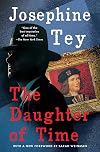
Inspector Alan Grant is bedridden in a London hospital, but his brain is all there, and he's going mad with boredom. To occupy his brain (it's pre-TV after all), he decides to look into the mysterious deaths of the two young princes in the Tower a few centuries back--were they murdered, as history seems to claim, by their uncle King Richard III to secure his kingship? Or were other forces at play?
The book takes a very positive view of Richard III, which was not the prevailing bias at the show more time it was written. The only other thing I've read on the subject is The Sunne in Splendour, which also absolves Richard of the crime. In the present book, Inspector Grant opines that the negative view history had taken of Richard was partially the result of the position of his successors, the Tudors. The negative bias of the Tudors would also have influenced the negative portrayal of Richard in Shakespeare's plays. Unlike a conventional murder mystery, Grant has to go back to contemporaneous historical sources hundreds of years old to come to a conclusion, and we follow right along with him on this journey as he puzzles out what might have really happened. The NY Times has called this one of the best mysteries of all time, although I have to point out that it is quite different than most murder mysteries being published today. show less
The book takes a very positive view of Richard III, which was not the prevailing bias at the show more time it was written. The only other thing I've read on the subject is The Sunne in Splendour, which also absolves Richard of the crime. In the present book, Inspector Grant opines that the negative view history had taken of Richard was partially the result of the position of his successors, the Tudors. The negative bias of the Tudors would also have influenced the negative portrayal of Richard in Shakespeare's plays. Unlike a conventional murder mystery, Grant has to go back to contemporaneous historical sources hundreds of years old to come to a conclusion, and we follow right along with him on this journey as he puzzles out what might have really happened. The NY Times has called this one of the best mysteries of all time, although I have to point out that it is quite different than most murder mysteries being published today. show less

Former teacher, now celebrated author of a popular book on psychology, Lucy Pym accepts an invitation to lecture at a young women's physical training college run by an old friend she hasn't seen in decades. What was intended to be an overnight visit extends to cover the doings of finals week and the run-up to the year-end demonstration of skills the students have been preparing for all term. As a guest of the college, Miss Pym observes all this with rapidly diminishing objectivity, and finds show more herself on the horns of one moral dilemma after another. How she rationalizes her own responses to these situations comprises much of the narrative. The reader cannot avoid taking a stand, but will you agree with Miss Pym? I enjoyed this one immensely. I did have one quibble with the plot, as I do not believe a school of this sort would allow one of its students to work out alone in the gymnasium, and if they had not, a critical element of the story could not have happened as it did . Nonetheless, a treat, and I recommend it if this is the kind of thing you like. show less
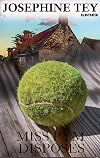
Plotting in the Gymnasium
A review of the Ponomarenko eBook (October 11, 2024) of the Peter Davies hardcover original (1946).
It is 5 stars for the original, but beware of this eBook edition show more which contains completely inappropriate girlie pulp magazine covers as its so-called "illustrations."
I read all of Josephine Tey's mystery novels featuring Inspector Alan Grant in my pre-GR / pre-review days but had overlooked the non-Grant novel Miss Pym Disposes which is somewhat of a roman à clef recalling Tey's own early upbringing in a girl's physical education college.
See cover at https://m.media-amazon.com/images/S/compressed.photo.goodreads.com/books/1628704...
A reprint edition of the 1946 Peter Davies original hardcover edition, adding a cover blurb referencing the later book "The Daughter of Time" (1951). Image sourced from Goodreads.
The Lucy Pym of the title is a former French language teacher who has had a hit with a popular psychology book whereby she is now independently wealthy and tours the lecture circuit. She is asked by her college friend Henrietta Hodge to lecture at Leys College, a physical training academy for girls, where Hodge is the Headmistress.
Lucy interacts with the teaching staff and the senior students who are in preparation for final exams, a public performance for family and their graduations and placements at various teaching institutions, clinics or hospitals. She is induced to stay over until the end of the school term. Lucy gradually becomes aware of the different cliques and rivalries among the girls and eventually a shocking "accident" occurs, about which Lucy holds key information, brings about a moral quandary.
This is a slow burn of a novel where the key event doesn't occur until the 75% point of the book. The suspense builds gradually as you wonder who the victim and perpetrator will be. Along the way Tey delights with her character portrayals ranging from the Four Disciples (a clique of 4 girls with names evoking the 4 Gospel writers), the Nut Tart (the nickname for a Brazilian student of dance), the outsider Barbara Rouse and the elite pair of friends Pamela (Beau) Nash and Mary Innes.
Too much more would be a spoiler, but in the end Miss Pym disposes her decision and certain events take their course, but there is a final twist reveal which causes you to reassess everything that you had previously read and understood. I found this to be a totally captivating read, even though it is quite unlike most novels in the mystery genre. I think you could say it is a precursor for the so-called "psychological suspense" sub-genre of novels.
Trivia and Links
Josephine Tey was one of the pseudonyms of Elizabeth Mackintosh (1896-1952) who also wrote under the penname of Gordon Daviot. Her most popular novel (per GR ratings and reviews) is [book:The Daughter of Time|77661] (Alan Grant #5 - 1951) where the detective is recuperating in hospital and uses the downtime to investigate the case of Richard III and the murder of the Princes in the Tower. In 1990, it was voted Number One in the 100 Greatest Crime Novels of All Time by the British Crime Writers Association. See reference at Wikipedia. show less
A review of the Ponomarenko eBook (October 11, 2024) of the Peter Davies hardcover original (1946).
"Do the obvious right thing, and let God dispose," Rick had said. And it had seemed a sensible ruling. But that was when it had been a hypothetical affair of "causing grievous bodily harm" (that was the phrase, wasn't it?) and now it had ceased to be hypothesis and it wasn't any longer mere bodily harm.
It is 5 stars for the original, but beware of this eBook edition show more which contains completely inappropriate girlie pulp magazine covers as its so-called "illustrations."
I read all of Josephine Tey's mystery novels featuring Inspector Alan Grant in my pre-GR / pre-review days but had overlooked the non-Grant novel Miss Pym Disposes which is somewhat of a roman à clef recalling Tey's own early upbringing in a girl's physical education college.
See cover at https://m.media-amazon.com/images/S/compressed.photo.goodreads.com/books/1628704...
A reprint edition of the 1946 Peter Davies original hardcover edition, adding a cover blurb referencing the later book "The Daughter of Time" (1951). Image sourced from Goodreads.
The Lucy Pym of the title is a former French language teacher who has had a hit with a popular psychology book whereby she is now independently wealthy and tours the lecture circuit. She is asked by her college friend Henrietta Hodge to lecture at Leys College, a physical training academy for girls, where Hodge is the Headmistress.
Lucy interacts with the teaching staff and the senior students who are in preparation for final exams, a public performance for family and their graduations and placements at various teaching institutions, clinics or hospitals. She is induced to stay over until the end of the school term. Lucy gradually becomes aware of the different cliques and rivalries among the girls and eventually a shocking "accident" occurs, about which Lucy holds key information, brings about a moral quandary.
This is a slow burn of a novel where the key event doesn't occur until the 75% point of the book. The suspense builds gradually as you wonder who the victim and perpetrator will be. Along the way Tey delights with her character portrayals ranging from the Four Disciples (a clique of 4 girls with names evoking the 4 Gospel writers), the Nut Tart (the nickname for a Brazilian student of dance), the outsider Barbara Rouse and the elite pair of friends Pamela (Beau) Nash and Mary Innes.
Too much more would be a spoiler, but in the end Miss Pym disposes her decision and certain events take their course, but there is a final twist reveal which causes you to reassess everything that you had previously read and understood. I found this to be a totally captivating read, even though it is quite unlike most novels in the mystery genre. I think you could say it is a precursor for the so-called "psychological suspense" sub-genre of novels.
Trivia and Links
Josephine Tey was one of the pseudonyms of Elizabeth Mackintosh (1896-1952) who also wrote under the penname of Gordon Daviot. Her most popular novel (per GR ratings and reviews) is [book:The Daughter of Time|77661] (Alan Grant #5 - 1951) where the detective is recuperating in hospital and uses the downtime to investigate the case of Richard III and the murder of the Princes in the Tower. In 1990, it was voted Number One in the 100 Greatest Crime Novels of All Time by the British Crime Writers Association. See reference at Wikipedia. show less

By this point in my reread of Josephine Tey it's more than clear that she did not write ordinary books. The cover blurb clearly gives out that Disposes is a murder mystery, but the story is in no rush to do anyone in. And that is brilliant, and cruel. We are introduced to Miss Pym, and become friends. It didn't take long at all to come to care about her – still surprised and honestly delighted at her completely unanticipated fame and relative fortune, at her still-new ability to go show more wherever and do whatever she pleased. There are times and circumstances in which it is almost as nice (almost) to see good things happen to good people as to have them to oneself; it's lovely to watch Miss Pym as written by Josephine Tey exploring the sort of freedom I'd wish for my own life – and which, come to think of it, may have been a glimpse into Miss Tey's own feelings; there is, apparently, much of Josephine Tey (pseudonym of Elizabeth Mackintosh) in Miss Pym and the girls and ladies of the school: Elizabeth Mackintosh was, according to the Times obituary (via http://www.r3.org/fiction/mysteries/tey_butler.html) "born and brought up at Inverness and was trained as a physical training instructress at the Anstey Physical Training College, Birmingham".
Along with Miss Pym we meet the inmates of the Leys school for young women, and seeing through her eyes there are perhaps two students who are less than lovely, and one instructor; everyone else is charming, and indispensable. Which is when the memory that this is a murder mystery begins to niggle … Which of these will be the victim? Worse – which will be the killer? For once there is no hint in the blurb (at least in my edition); the hideous cover of my copy makes it look like a student, but covers are notoriously unreliable. It's a different sort of suspense than is often found in the genre – rather than being kept waiting to find out whodunnit or whether this one will escape the murderer or that one escape the law, here it is a wait to see which of these people I've quickly come to like will a) die and b) be responsible. Neither is a more appealing prospect than the other; it didn't take long before I really didn't want any of them dead, nor did I want any of them to be capable of killing anyone. It is sadly rare to read a book in which the characters are so well-made that their plotline becomes genuinely distressing.
Not a negligible accomplishment for less than a hundred pages. Tey rules. show less
Along with Miss Pym we meet the inmates of the Leys school for young women, and seeing through her eyes there are perhaps two students who are less than lovely, and one instructor; everyone else is charming, and indispensable. Which is when the memory that this is a murder mystery begins to niggle … Which of these will be the victim? Worse – which will be the killer? For once there is no hint in the blurb (at least in my edition); the hideous cover of my copy makes it look like a student, but covers are notoriously unreliable. It's a different sort of suspense than is often found in the genre – rather than being kept waiting to find out whodunnit or whether this one will escape the murderer or that one escape the law, here it is a wait to see which of these people I've quickly come to like will a) die and b) be responsible. Neither is a more appealing prospect than the other; it didn't take long before I really didn't want any of them dead, nor did I want any of them to be capable of killing anyone. It is sadly rare to read a book in which the characters are so well-made that their plotline becomes genuinely distressing.
Not a negligible accomplishment for less than a hundred pages. Tey rules. show less
Lists
Comfort Reads (1)
Read These Too (1)
Ambleside Year 7 (1)
1950s (1)
Books with Twins (1)
Elevenses (1)
Favourite Books (1)
Ambleside Books (1)
Overdue Podcast (1)
METAfiction (1)
British Mystery (7)
Five star books (2)
Reading LIst (2)
Female Author (3)
Folio Society (4)
Murder Mysteries (1)
Next in Series (1)
United Kingdom (1)
Allie's Wishlist (1)
Awards


You May Also Like


Associated Authors
Statistics
- Works
- 51
- Also by
- 11
- Members
- 20,099
- Popularity
- #1,079
- Rating
- 3.9
- Reviews
- 741
- ISBNs
- 501
- Languages
- 16
- Favorited
- 91
