
Georgette Heyer (1902–1974)
Author of The Grand Sophy
About the Author
Georgette Heyer was born on August 16, 1902 at Wimbledon, London. She wrote The Black Moth as a story for her brother Boris. Her father, impressed with his daughter's imagination, suggested that she prepare it to be published, which it was by Constable in 1921. Having scored an instant success with show more The Black Moth at the age of nineteen under her own name, Georgette Heyer, she experimented with a pseudonym, Stella Martin, for her third book, published by Mills & Boon. She continued writing and in 1925 she married Ronald Rougier, a mining engineer. After reasonable but not spectacular sales from her first few books the instant success of These Old Shades in 1926 brought her a solid source of income which was very necessary at the time since the family relied to a large extent on the income from Georgette Heyer's writing. She wrote over fifty books during her lifetime and created the Regency England genre of romance novels. She died on July 4, 1974 at the age of 71. (Bowker Author Biography) show less
Image credit: Georgette Heyer, 1939
Series
Works by Georgette Heyer
The Georgette Heyer Omnibus: Faro's Daughter, The Corinthian, and the Nonesuch (1973) 64 copies, 1 review
These Old Shades + Sprig Muslin + Sylvester + The Corinthian + The Convenient Marriage (1977) 38 copies, 1 review
Great Historical Romances: The Talisman Ring + The Gambling Man + The King's Pleasure (1978) 19 copies
The Early Georgette Heyer Collection: The Transformation of Philip Jettan; The Black Moth; The Great Roxhythe; Instead of the Thorn; A Proposal To Cicely (2020) 11 copies
Georgette Heyer 3 copies
Vojvodova pomsta 1 copy
Diabolský únos 1 copy
Farlig gift 1 copy
Royal Escape / Black Sheep / A Blunt Instrument / Regency Buck / Envious Casca / The Corinthian (1980) 1 copy
Pistols for Two + Hazard 1 copy
Aşka Bir Şans Daha 1 copy
Associated Works
Tagged
Common Knowledge
- Legal name
- Rougier, Georgette Heyer
- Other names
- Martin, Stella
- Birthdate
- 1902-08-16
- Date of death
- 1974-07-04
- Gender
- female
- Education
- Royal College of Music
- Occupations
- novelist
historical novelist
crime novelist - Awards and honors
- Blue Plaque
- Relationships
- Oman, Carola (friend)
Rougier, George Ronald (husband)
Heyer, George (father) - Short biography
- Georgette Heyer wrote meticulously researched historical-romance novels, specializing in the late eighteenth/early nineteenth-century, and was most famous for her Regency novels. She lived a sheltered childhood and at age 17, created a serial story to amuse her brother Boris, who was ill; their father asked her to prepare it for publication and his agent found a publisher for it -- this became The Black Moth (1921), about a disgraced young aristocrat who becomes a highwayman. According to Georgette Heyer's biographer Jane Aiken Hodge, that first novel contained many of the elements that would become standard for Heyer's works, the "saturnine male lead, the marriage in danger, the extravagant wife, and the group of idle, entertaining young men." Beginning in 1932, Heyer released one romance novel and one detective thriller each year. Her books were highly popular both in the UK and the USA and she remains an enduring international bestseller, read and loved by four generations of readers.
- Cause of death
- lung cancer
- Nationality
- UK
- Birthplace
- Wimbledon, London, England, UK
- Places of residence
- England, UK
Wimbledon, England, UK
Paris, France
Tanganyika
Macedonia - Place of death
- London, England, UK
- Burial location
- Cremated
- Map Location
- England, UK
Members
Discussions
OT: Heyer censored in Folio Society Devotees (May 2025)
Georgette Heyer - Frederica in Folio Society Devotees (September 2023)
Found: Victorian era woman comes into her own in Name that Book (August 2021)
BRITISH AUTHOR CHALLENGE - JUNE 2017 - HEYER & SCHAMA in 75 Books Challenge for 2017 (October 2017)
Read GEORGETTE HEYER in June in 2014 Category Challenge (July 2014)
FREDERICA - Group Read - SPOILERS POSSIBLE in 75 Books Challenge for 2014 (March 2014)
Can't remember the names of these books in Name that Book (August 2013)
Bujold fan looking for a Georgette Heyer introduction in Almack's (July 2013)
Georgette Heyer in Cozy Mysteries (December 2012)
January 2012: Georgette Heyer in Monthly Author Reads (March 2012)
Fantasy casting: Frederica in Almack's (May 2010)
Heyer Discussion: [Friday's Child] in 75 Books Challenge for 2009 (February 2010)
Historicals in Almack's (January 2010)
Adaptations? in Almack's (December 2009)
Reluctant Widow film adaptation in Almack's (December 2009)
Music in Heyer in Almack's (November 2009)
Heyer, No Wind of Blame, rev. jimroberts in Reviews reviewed (September 2009)
Reviews
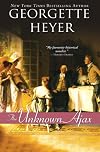
Real Rating: 4.5* of five
The Publisher Says: A past dispute...
When the irascible Lord Darracott's eldest son dies unexpectedly, the noble family must accept their estranged Yorkshire cousin as heir apparent. They are convinced he will prove to be a sadly vulgar person, but nothing could have prepared the beleaguered family for the arrival of Major Hugo Darracott.
A present deception...
His clever and beautiful cousin Anthea is sure there's more to the gentle giant than Hugo's innocent blue show more eyes and broad Yorkshire brogue would lead one to believe. But even she doesn't guess what he's capable of, until a family crisis arises and only Hugo can preserve the family's honor, leading everybody on a merry chase in the process.
My Review: Here is a charming late (1959) work by Regency writer Miss Georgette Heyer (1902-1974), whom I shall not dismiss by calling her a "romance writer." There is very little of romance literature in this work; it is, rather, an historical novel with two characters whose marital future is in no real doubt from the get-go.
Spirited, determined Miss Anthea Darracott is to marry her newly introduced cousin Hugh Darracott, called Hugo. His, well, nigh-on-as-nasty-as-bastardy common birth to a Yorkshire mill lass appalls and disgusts their mutual grandfather. Sadly, Hugo's stint on the Peninsula in the Napoleonic Wars did not result in his convenient death. As he is alive and has sold out his commission, Lord Darracott must needs attend at last to the distasteful yet needful task of acknowledging the man as his heir. The law says Hugo's the heir by virtue of being born to a son, long dead, whose birth preceded the living son Matthew's birth. Not one soul among the Darracotts is happy about this, least of all Hugo.
Until he meets Anthea.
A spoiled Corinthian, a gaumless follower of the Beau, a stripling with dreams dashed and hopes thwarted; an Earl's daughter, a ninnyhammer, and a faded gentlewoman; a damned nasty old baron, a staff of hicks, and a starchy Calvinistic revenuer round out the dramatis personae. Miss Heyer's reliable clockwork plot moves the pieces into proper alignment for our surprisingly dark doings to eventuate as inevitably as sunrise and sunset, given the people she's placed in our path. In the end, all is sorted, and there is no one more pleased than a reader whose purpose in taking this trip was to restfully go down a well-loved and intimately known river of lovely words:
A quick resort to From Old Books will acquaint you with these and many more delicious underknown and woefully unused English-language words. Except "sackless hodgobbin," which appears here for the only time I can find in the entire online world. An academic published a paper on Heyer's impeccable research in Schwa, a linguistics journal, beginning on page 57. She confesses herself overmatched by this beautifully obvious, dolefully obscure phrase. Now, you whopstraws, go forth and discover the original citation for it!
Heyer presents us with a few beautiful drawing-room farces among her scenes, but possibly the funniest moments (to my mind) were between Vincent the Corinthian and Claud the gaumless's respective valets. Crimpleshaw and Polyphant (respectively) are engaged in a vicious, take-no-prisoners battle for dominance in the servants' hall. Hugo's arrival, valetless, ignites a major set-to in their long-running war. Crimpleshaw wins the first skirmish by using his secret formula for blacking to give Hugo's (excellent quality) boots a whole new level of gloss. Polyphant's riposte, an attempt to provide perfect neck-cloth tying, is rebuffed by Hugo; then, horror of horrors, the first true test of the line, provision of a valet to Hugo, goes to Crimpleshaw by dint of having a nephew in need of a position!
Intolerable. The insult must be answered!
And so it goes, a side-show that was beautifully woven in to the main narrative of Lord Darracott's humbling at the hands of his maligned, unloved, and insulted grandson Hugo, yet in a way that provokes no smallest scintilla of opprobrium in the sensitive reader's breast. It is a come-uppance and a liberation; it is not, for all that, a set-down or slight. It is the ideal ending to the story Miss Heyer chose to adorn her plot with.
Make no mistake: It is the same plot. The dresses are different and the hero is called something new, but it's a Heyer Regency. Read it or don't; those of us susceptible to her gorgeously bedizened orreries aren't going to be affected. Read it, say I, for the simple and genuine pleasure of following a master craftsperson as she sets the pieces of her construction before you prior to throwing a cloth over them and voilà off with the cloth to reveal a perfect Georgian manor house.
Come in, you great whopstraws, the door's letting in the cold of reality! Stop awhile by the fire. It will warm you in places you'd forgot were cold. show less
The Publisher Says: A past dispute...
When the irascible Lord Darracott's eldest son dies unexpectedly, the noble family must accept their estranged Yorkshire cousin as heir apparent. They are convinced he will prove to be a sadly vulgar person, but nothing could have prepared the beleaguered family for the arrival of Major Hugo Darracott.
A present deception...
His clever and beautiful cousin Anthea is sure there's more to the gentle giant than Hugo's innocent blue show more eyes and broad Yorkshire brogue would lead one to believe. But even she doesn't guess what he's capable of, until a family crisis arises and only Hugo can preserve the family's honor, leading everybody on a merry chase in the process.
My Review: Here is a charming late (1959) work by Regency writer Miss Georgette Heyer (1902-1974), whom I shall not dismiss by calling her a "romance writer." There is very little of romance literature in this work; it is, rather, an historical novel with two characters whose marital future is in no real doubt from the get-go.
Spirited, determined Miss Anthea Darracott is to marry her newly introduced cousin Hugh Darracott, called Hugo. His, well, nigh-on-as-nasty-as-bastardy common birth to a Yorkshire mill lass appalls and disgusts their mutual grandfather. Sadly, Hugo's stint on the Peninsula in the Napoleonic Wars did not result in his convenient death. As he is alive and has sold out his commission, Lord Darracott must needs attend at last to the distasteful yet needful task of acknowledging the man as his heir. The law says Hugo's the heir by virtue of being born to a son, long dead, whose birth preceded the living son Matthew's birth. Not one soul among the Darracotts is happy about this, least of all Hugo.
Until he meets Anthea.
A spoiled Corinthian, a gaumless follower of the Beau, a stripling with dreams dashed and hopes thwarted; an Earl's daughter, a ninnyhammer, and a faded gentlewoman; a damned nasty old baron, a staff of hicks, and a starchy Calvinistic revenuer round out the dramatis personae. Miss Heyer's reliable clockwork plot moves the pieces into proper alignment for our surprisingly dark doings to eventuate as inevitably as sunrise and sunset, given the people she's placed in our path. In the end, all is sorted, and there is no one more pleased than a reader whose purpose in taking this trip was to restfully go down a well-loved and intimately known river of lovely words:
- thatchgallows
- sackless hodgobbin
- whopstraw
- knaggy
- stiff-rumped
A quick resort to From Old Books will acquaint you with these and many more delicious underknown and woefully unused English-language words. Except "sackless hodgobbin," which appears here for the only time I can find in the entire online world. An academic published a paper on Heyer's impeccable research in Schwa, a linguistics journal, beginning on page 57. She confesses herself overmatched by this beautifully obvious, dolefully obscure phrase. Now, you whopstraws, go forth and discover the original citation for it!
Heyer presents us with a few beautiful drawing-room farces among her scenes, but possibly the funniest moments (to my mind) were between Vincent the Corinthian and Claud the gaumless's respective valets. Crimpleshaw and Polyphant (respectively) are engaged in a vicious, take-no-prisoners battle for dominance in the servants' hall. Hugo's arrival, valetless, ignites a major set-to in their long-running war. Crimpleshaw wins the first skirmish by using his secret formula for blacking to give Hugo's (excellent quality) boots a whole new level of gloss. Polyphant's riposte, an attempt to provide perfect neck-cloth tying, is rebuffed by Hugo; then, horror of horrors, the first true test of the line, provision of a valet to Hugo, goes to Crimpleshaw by dint of having a nephew in need of a position!
Intolerable. The insult must be answered!
And so it goes, a side-show that was beautifully woven in to the main narrative of Lord Darracott's humbling at the hands of his maligned, unloved, and insulted grandson Hugo, yet in a way that provokes no smallest scintilla of opprobrium in the sensitive reader's breast. It is a come-uppance and a liberation; it is not, for all that, a set-down or slight. It is the ideal ending to the story Miss Heyer chose to adorn her plot with.
Make no mistake: It is the same plot. The dresses are different and the hero is called something new, but it's a Heyer Regency. Read it or don't; those of us susceptible to her gorgeously bedizened orreries aren't going to be affected. Read it, say I, for the simple and genuine pleasure of following a master craftsperson as she sets the pieces of her construction before you prior to throwing a cloth over them and voilà off with the cloth to reveal a perfect Georgian manor house.
Come in, you great whopstraws, the door's letting in the cold of reality! Stop awhile by the fire. It will warm you in places you'd forgot were cold. show less

Heyer is an author I enjoy even more when read aloud. This was delightfully entertaining. The Marquis of Alverstoke has no trouble refusing appeals from his widowed relatives to do things like host balls for their daughters. But when he is approached by Miss Frederica Merriville, whose late father was some sort of distant cousin-by-marriage, and asked if he could sponsor her beautiful younger sister into society, he gives quite a different answer.
Frederica does not intend to ask for more show more from Alverstoke than a simple introduction, but when she, her younger siblings and their dog get into various scrapes, they keep turning to Alverstoke for help.
Heyer does a good job of establishing that Alverstoke’s behaviour towards the Merrivilles seems out of character to those who know him but isn’t unbelievably so. Because the Merrivilles are not boring! I particularly enjoyed the way Frederica, with her composure and practical common-sense, keeps saying and doing things which surprise him, and the way he makes her laugh. The Merriville sibling dynamics are also very lively and believable.
Frederica does not intend to ask for more show more from Alverstoke than a simple introduction, but when she, her younger siblings and their dog get into various scrapes, they keep turning to Alverstoke for help.
Heyer does a good job of establishing that Alverstoke’s behaviour towards the Merrivilles seems out of character to those who know him but isn’t unbelievably so. Because the Merrivilles are not boring! I particularly enjoyed the way Frederica, with her composure and practical common-sense, keeps saying and doing things which surprise him, and the way he makes her laugh. The Merriville sibling dynamics are also very lively and believable.
“[...] I daresay you are old enough to be of use.”show less
“I am seven-and-thirty,” said Alverstoke, somewhat acidly, “and I should perhaps inform you that I am never of use to anyone!”
She gazed at him in astonishment. “Never? But why not?”
He shrugged. “Pure selfishness, ma’am, coupled with a dislike of being bored.”
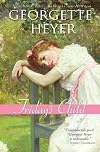
Exactly what it says on the tin: Anthony, Lord Sheringham (nicknamed Sherry), aged 23, is desperate to get his hands on his inheritance. His father left it in trust until he reached age 25 or until he married, whichever comes first. After finding his suit rejected by Isabella, the Season's Incomparable, Sherry vows to marry the first female he sees!
What luck it happens to be Hero Wantage, a girl six years his junior, who hails him as he rushes back to town. Hero is a very sweet girl, show more orphaned as a child, who has been living with her odious Cousin Jane. Jane is ready to wash her hands of Hero and has told her that she's to become a governess at a seminary in Bath. Hero hates the idea, but feels she has no other choice. Sherry has known both Isabella and Hero since they were all kids, and he feels a brotherly sort of pity when he hears her sad story. Then it occurs to him that marriage would solve both of their problems: it would rescue Hero from this abominable fate, and it would release his funds directly into his hands.
Sherry proposes to Hero, who promptly accepts (she's been in love with him for about as long as she's known him), and they dash off to London, procure a special license, and set about setting up a household together. Hero has absolutely no notion of Society (and Sherry's mother, the now-dowager Lady Sheringham, hates her guts) so it falls to Sherry to guide her through the thorns of the ton - until misunderstandings mount to the nth degree, causing Hero to run away because she fears she has made Sherry interminably angry with her foibles and scrapes. (He did tell her he was sending her to his mother, whom he has no idea hates his wife, so its understandable that Hero would be so upset.) Suddenly Sherry realizes what he's lost and he vows to win her back, with comedic results.
This story is absolutely adorable ♥ Sherry and Hero are both young and stupid, but they are well-meaning and good-natured. They both mature over the course of the story, and realize what it means to be married, even in name only. They are surrounded by a hilarious cast of secondary characters: Isabella, the Incomparable, has wonderful shades of grey; Sherry's BFFs Gil, George, and Ferdy, who adore Hero (whom they nicnkame Kitten) almost as much as Sherry himself does; the odious Cousin Jane and her plain-faced daughters; and the wretched villain Sir Montagu, who has it out for everybody in this entire circle, because he is the one callous asshole in the entire story.
This book appealed to me more than I anticipated; it has that sweet sense of puppy love that I personally adore; it is a gentle narrative, and wonderful bit of escapism. I love the little details, too, like how everyone calls Hero "Lady Sherry," immediately adopting Sheringham's nickname for her. Ferdy is absolutely hilarious with his obliviousness; George and Isabella are in love with each other but refuse to admit it, causing their own scrapes; and damn if Gil doesn't deserve to be the hero of his own novel! He was truly the most mature and thoughtful of the lot.
The ending is a bit much, but otherwise this was the perfect, sweet, innocent little Romance. It's replaced The Corinthian at the top of my favorite Heyers list (so far). show less
What luck it happens to be Hero Wantage, a girl six years his junior, who hails him as he rushes back to town. Hero is a very sweet girl, show more orphaned as a child, who has been living with her odious Cousin Jane. Jane is ready to wash her hands of Hero and has told her that she's to become a governess at a seminary in Bath. Hero hates the idea, but feels she has no other choice. Sherry has known both Isabella and Hero since they were all kids, and he feels a brotherly sort of pity when he hears her sad story. Then it occurs to him that marriage would solve both of their problems: it would rescue Hero from this abominable fate, and it would release his funds directly into his hands.
Sherry proposes to Hero, who promptly accepts (she's been in love with him for about as long as she's known him), and they dash off to London, procure a special license, and set about setting up a household together. Hero has absolutely no notion of Society (and Sherry's mother, the now-dowager Lady Sheringham, hates her guts) so it falls to Sherry to guide her through the thorns of the ton - until misunderstandings mount to the nth degree, causing Hero to run away because she fears she has made Sherry interminably angry with her foibles and scrapes. (He did tell her he was sending her to his mother, whom he has no idea hates his wife, so its understandable that Hero would be so upset.) Suddenly Sherry realizes what he's lost and he vows to win her back, with comedic results.
This story is absolutely adorable ♥ Sherry and Hero are both young and stupid, but they are well-meaning and good-natured. They both mature over the course of the story, and realize what it means to be married, even in name only. They are surrounded by a hilarious cast of secondary characters: Isabella, the Incomparable, has wonderful shades of grey; Sherry's BFFs Gil, George, and Ferdy, who adore Hero (whom they nicnkame Kitten) almost as much as Sherry himself does; the odious Cousin Jane and her plain-faced daughters; and the wretched villain Sir Montagu, who has it out for everybody in this entire circle, because he is the one callous asshole in the entire story.
This book appealed to me more than I anticipated; it has that sweet sense of puppy love that I personally adore; it is a gentle narrative, and wonderful bit of escapism. I love the little details, too, like how everyone calls Hero "Lady Sherry," immediately adopting Sheringham's nickname for her. Ferdy is absolutely hilarious with his obliviousness; George and Isabella are in love with each other but refuse to admit it, causing their own scrapes; and damn if Gil doesn't deserve to be the hero of his own novel! He was truly the most mature and thoughtful of the lot.
The ending is a bit much, but otherwise this was the perfect, sweet, innocent little Romance. It's replaced The Corinthian at the top of my favorite Heyers list (so far). show less
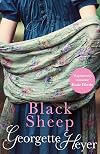
There are some problematic moments here concerning women's agency and desires, and the ending is so absurdly and apparently purposelessly abrupt that I literally examined my library copy for any signs that the last page had been ripped out. When 'what the hell?' is my parting thought, it's hard to admit that I really, really liked the novel.
But I did! It's super-fun. The romantic leads actually like each other, laugh at each other's jokes, get each other, and seem well-suited (amazing, show more huh?). Miles is hilarious in his utter unconcern for the conventions of a society into and out of which he drifts as it suits him. I completely dig his lack of family feeling, perhaps because I share his bafflement (but WHY should I care about so-and-so just because we happen to be related?). It's well-written and funny. And I rather like it that the two couples who seem 'meant to be' are quite clear nearly from the beginning. Especially with the central pair, it's really about 'how will they end up together' rather than 'will they end up together?' or 'who will end up together?'
I just wish Oliver didn't think about Fanny in such a creepy you're-so-young-and-naive-I-want-to-stick-my-tongue-down-your-throat way, and that the novel didn't regard abduction (as long as you figure the woman really wants it) as a darned romantic notion. show less
But I did! It's super-fun. The romantic leads actually like each other, laugh at each other's jokes, get each other, and seem well-suited (amazing, show more huh?). Miles is hilarious in his utter unconcern for the conventions of a society into and out of which he drifts as it suits him. I completely dig his lack of family feeling, perhaps because I share his bafflement (but WHY should I care about so-and-so just because we happen to be related?). It's well-written and funny. And I rather like it that the two couples who seem 'meant to be' are quite clear nearly from the beginning. Especially with the central pair, it's really about 'how will they end up together' rather than 'will they end up together?' or 'who will end up together?'
I just wish Oliver didn't think about Fanny in such a creepy you're-so-young-and-naive-I-want-to-stick-my-tongue-down-your-throat way, and that the novel didn't regard abduction (as long as you figure the woman really wants it) as a darned romantic notion. show less
Lists
Ghosts (1)
Shelf 101 (1)
Women in War (1)
To Be Read (1)
Best Beach Reads (1)
A Novel Cure (1)
French Books (1)
1940s (1)
Backlisted (1)
1930s (1)
Christmas Books (1)
Set in the 1600s (1)
Books Read in 2023 (18)
Favourite Books (4)
1950s (4)
Female Author (4)
Comfort Reads (7)
Books Read in 2016 (10)
Comedy of Manners (11)
Books Read in 2025 (11)
Books Read in 2019 (11)
British Mystery (12)
Books Read in 2021 (15)
Five star books (2)
Murder Mysteries (3)
THE WAR ROOM (1)
Awards


You May Also Like


Associated Authors
Statistics
- Works
- 125
- Also by
- 6
- Members
- 78,082
- Popularity
- #159
- Rating
- 3.9
- Reviews
- 2,648
- ISBNs
- 2,117
- Languages
- 18
- Favorited
- 357
