
Mary Balogh
Author of Slightly Dangerous
About the Author
Mary Balogh was born in Swansea, Wales on March 24, 1944. She received a B.A. with honors from the University of Wales in 1965. From 1967 to 1988, she taught high school English in Saskatchewan, Canada, becoming principal of the school in 1982. Her first novel, A Masked Deception, was published in show more 1985 and she won the Romantic Times Award for best new Regency writer. Since then, she has written more than 60 novels and has received a lifetime achievement award for her work in the genre of historical romance. Her works include The Wood Nymph, Christmas Promise, The Plumed Bonnet, Famous Heroine, A Matter of Class, No Man's Mistress, More than a Mistress, One Night for Love, and Only a Kiss. Her title's Someone to Hold and Someone to Care made The New York Times Bestseller List. (Bowker Author Biography) Mary Balogh grew up in Wales. She later came to Canada to teach & there she began a second career as an author. (Publisher Provided) show less
Series
Works by Mary Balogh
Christmas Keepsakes: A Handful of Gold / The Three Gifts / The Season for Suitors (1998) — Contributor — 122 copies
A Regency Christmas Feast [1996: Wassail Bowl/ Sophie's Syllabub/ Gingerbread Man/ Proof Is in the Pudding/ Christmas Goose] (1996) — Contributor — 117 copies, 3 reviews
A Regency Christmas II [1990: Playing House/ Three Kings/ Sunshine for Christmas/ Last Wish/ Christmas Star] (1990) — Contributor — 113 copies
A Regency Christmas III [1991: Mistletoe and Folly/ Christmas Cuckoo/ Best Christmas Ever/ Home for Christmas/ Dark Man] (1991) — Contributor — 105 copies, 1 review
A Regency Christmas VII [1995: Surprise Party/ Mummers' Play/ Christmas Ghost/ Rake's Christmas/ Lady Bountiful] (1995) 104 copies, 2 reviews
A Regency Christmas I [1989: Star of Bethlehem/ Gift of Fortune/ Old Acquaintances/ Duke's Progress/ Kissing Bough] (1989) — Contributor — 104 copies
The Gifts of Christmas (A Handful of Gold / A Drop of Frankincense / A Touch of Myrrh) (1998) — Contributor — 101 copies, 2 reviews
A Regency Christmas IV [1992: Porcelain Madonna/ Christmas Rose/ Seasonal Stratagem/ Best Gift of All/ Christmas Tart] (1992) — Contributor — 98 copies, 2 reviews
A Regency Christmas V: [1993: Under the Kissing Bough; Season of Joy; The Viscount and the Hoyden; The Christmas Mouse; No Room at the Inn] (1993) — Contributor — 91 copies, 2 reviews
A Regency Christmas VI [1994: Best Gift/ Dinner at Grillion's/ Christmas Knight/ Christmas Magic/ It Came Upon a Midnight Clear] (1994) — Contributor — 75 copies, 2 reviews
Timeswept Brides (The Heirloom / Man of Her Dreams / Bride's Joy / A Dream Across Time) (1996) — Contributor — 71 copies
The Forbidden Daffodils 5 copies
Playing House 4 copies
The Porcelain Madonna 3 copies
A Waltz Among the Stars 3 copies
Mary Balogh - 7 Titles 3 copies
Precious Rogue [and] The Treasure Hunt [and] The Substitute Guest [and] The Wrong Door [and] Golden Rose (2003) — Author — 3 copies
The North Tower 2 copies
Mary Balogh - 4 Titles (First Comes Marriage / Then Comes Seduction / At Last Comes Love / Seducing An Angel) (2009) 1 copy
A Letter to the Reader 1 copy
Guarded by Angels 1 copy
Mary Balogh - 6 Titles 1 copy
Mary Balogh Collection 1 copy
Associated Works
A Regency Christmas Carol [1997: Bond Street Carolers/ Melody/ Mistletoe Kiss/ Make a Joyful Noise/ Earl's Nightingale] (1997) — Contributor — 128 copies, 2 reviews
Tagged
Common Knowledge
- Other names
- Jenkins, Mary (birth name)
- Birthdate
- 1944-03-24
- Gender
- female
- Occupations
- teacher
writer - Nationality
- Canada
UK (birth) - Birthplace
- Swansea, Wales, UK
- Places of residence
- Kipling, Saskatchewan, Canada
Regina, Saskatchewan, Canada - Associated Place (for map)
- Saskatchewan, Canada
Members
Discussions
regency romance about forced engagement in Name that Book (February 2016)
Romance Novel Help in Name that Book (June 2013)
Reviews

I kind of adore this family and series. Mary Balogh does a gorgeous job with her characters and all their quirks and goodness. This book especially showed how much this family loves each other, and it was wonderful to see. Also amazing that Viola gets an HEA at 42 after having a crap husband who at least gave her three great kids. And Marcel went through a lot to get to his HEA at the end too, which was rather heartbreaking but lovely to read.
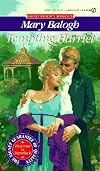
Mary Balogh has never met a duke that doesn't love a quizzing glass!
Notes for myself: Mistress Project #3! A project where I read historical romances with mistresses.
I realized I haven’t defined what a mistress is; in my research for titles I came across a Dear Author post that had some really fascinating comments. Some folks brought up what their idea of a mistress is.
my working definitions of mistress in romance:
1. Mistresses that are sex workers: someone in a contracted relationship show more (either for a specific period of time or until either party wishes to end the contract.) One MC is usually “put up” in a house and given an allowance for decorating the house and for clothing. Some mistresses in this kind of relationship are contracted for sex and or companionship (such as attending public functions like the theater, etc.)
Romance has a pretty contentious relationship with sex work and sex workers - I find this interesting (and disappointing, though not at all surprising!) a genre that is happy to proclaim it is feminist or progressive actually has a lot of whorephoboia baked right in. I can't think of anything more regressive or conservative than upholding stigmatization.
2. An agreement between MCs where sex and or companionship is the basis for the relationship. No contract or living arrangements are drawn up or provided. Sometimes referred to as “lovers.”
infidelity dependent upon reader definition of what is or is not cheating. For instance, characters in a loveless marriage and or who have made arrangements with their spouses to live separately is not cheating TO ME an ADULT grown up who recognizes nuance.
Harriet is a 28 year-old widow and former lady’s companion to Clara from the previous book, Dancing with Clara. In that book, Harriet was propositioned by Lord Tenby (35ish?) for “carte blanche” (to become his mistress.) It’s been six years since this proposition (actually there were 2), Harriet has married, had a daughter, and became a widow; Lord Tenby (aka Archibald/Archie) has remained unmarried, but now has come into a Dukedom. His grandma refuses to die until he is married na has a child (specifically a son, of course!) Archie would have offered marriage to Harried all those years ago, because he believed he was in love with her - but his grandfather died and he now had to take on the duties of the Duke. Harriet and Archie are reacquainted at a ball and all the feelings come back to Archie - and Harriet who actually did care for Archie but was afraid of losing her reputation to become his mistress.
Archie wants to ask for Harriet to marry him, since meeting again, he realized that he did love her and loves her still. However, when he means to propose, Harriet misunderstands what he intends to ask her and agrees to be his mistress. Hurt but wanting anything he can get from Harriet, Archie accepts this is they decide to tryst in the house he keeps for his previous mistresses.
Classic Balogh make me wanna pull my hair out complicated hero: Archie’s madonna/whore complex over Harriet was so frustrating and yet! He cries because he not able to tell Harriet I LOVE YOU I WANT YOU I AM SORRY! For me, this was high stakes! He is a Duke she was low born, he can’t use say he’s gonna marry her. His entire family is very clear on what station is acceptable for marriage. Like truly! His grandmother mentions bloodlines owed to heirs and is very concerned with not tainting the aristocratic blood. This was so fucked up to read mostly because Balogh doesn’t have anyone correct grandma - readers have to sit with the reality of the institution of the aristocracy! Which is racist and white supremacist! When he finally gets the courage to tell his family to piss off and propose to Harriet, she misinterprets what a mess!
Also classic Balogh - writing consistent characters! Harriet is a parson’s daughter and does uphold a lot of the ideals inline with her upbringing - for instance, she does feel guilt and shame for sleeping with Archie because it is done so without feelings (or so it appears.) Something that was interesting here is that Archie doesn’t learn about Harriet’s daughter until about 75%. Harriet’s decision to wait to introduce Susan, her daughter, to Archie was smart. Oftentimes, children will get introduced to love interests REALLY early and I’m not sure that’s wise?
So it’s a complicated 4 stars! Mary Balogh knows how to push my buttons! Characters were consistent and her Signet Regency releases remain some of my favorite historical romances. There is a lot of uncomfortable “pure blood” shit here but I don’t believe it is wrong to accurately portray aristos as obsessed with bloodlines and purity because HELLO MCFLY! They still are! Recall Meghan Markle! YMMV on texts depicting this.
Mistress notes:
* Harriet agrees to be his mistress - there is no paid arrangement or contract, the plan is to meet up and have sex a few times a week.
* At one point, Archie corrects Harriet that she is his lover, not his mistress but after this, they both refer to her as mistress again.
Balogh has written several romance novels featuring mistresses - both contracted or a lover. One that comes to mind, but is actually side characters, not the MCs is Longing! Sian’s, the FMC, mother was a mistress. Sian’s dad loved her mother but was unable to make her his wife so she was his mistress. When her mom died, Sian’s father finically provided for her. I wish Balogh had an entire book about the relationship between Sian’s parents because, to me, that is capital R ROMANCE. show less
Notes for myself: Mistress Project #3! A project where I read historical romances with mistresses.
my working definitions of mistress in romance:
1. Mistresses that are sex workers: someone in a contracted relationship
Romance has a pretty contentious relationship with sex work and sex workers - I find this interesting (and disappointing, though not at all surprising!) a genre that is happy to proclaim it is feminist or progressive actually has a lot of whorephoboia baked right in. I can't think of anything more regressive or conservative than upholding stigmatization.
2. An agreement between MCs where sex and or companionship is the basis for the relationship. No contract or living arrangements are drawn up or provided. Sometimes referred to as “lovers.”
infidelity dependent upon reader definition of what is or is not cheating. For instance, characters in a loveless marriage and or who have made arrangements with their spouses to live separately is not cheating TO ME an ADULT grown up who recognizes nuance.
Harriet is a 28 year-old widow and former lady’s companion to Clara from the previous book, Dancing with Clara. In that book, Harriet was propositioned by Lord Tenby (35ish?) for “carte blanche” (to become his mistress.) It’s been six years since this proposition (actually there were 2), Harriet has married, had a daughter, and became a widow; Lord Tenby (aka Archibald/Archie) has remained unmarried, but now has come into a Dukedom. His grandma refuses to die until he is married na has a child (specifically a son, of course!) Archie would have offered marriage to Harried all those years ago, because he believed he was in love with her - but his grandfather died and he now had to take on the duties of the Duke. Harriet and Archie are reacquainted at a ball and all the feelings come back to Archie - and Harriet who actually did care for Archie but was afraid of losing her reputation to become his mistress.
Archie wants to ask for Harriet to marry him, since meeting again, he realized that he did love her and loves her still. However, when he means to propose, Harriet misunderstands what he intends to ask her and agrees to be his mistress. Hurt but wanting anything he can get from Harriet, Archie accepts this is they decide to tryst in the house he keeps for his previous mistresses.
Classic Balogh make me wanna pull my hair out complicated hero: Archie’s madonna/whore complex over Harriet was so frustrating and yet! He cries because he not able to tell Harriet I LOVE YOU I WANT YOU I AM SORRY! For me, this was high stakes! He is a Duke she was low born, he can’t use say he’s gonna marry her. His entire family is very clear on what station is acceptable for marriage. Like truly! His grandmother mentions bloodlines owed to heirs and is very concerned with not tainting the aristocratic blood. This was so fucked up to read mostly because Balogh doesn’t have anyone correct grandma - readers have to sit with the reality of the institution of the aristocracy! Which is racist and white supremacist! When he finally gets the courage to tell his family to piss off and propose to Harriet, she misinterprets what a mess!
Also classic Balogh - writing consistent characters! Harriet is a parson’s daughter and does uphold a lot of the ideals inline with her upbringing - for instance, she does feel guilt and shame for sleeping with Archie because it is done so without feelings (or so it appears.) Something that was interesting here is that Archie doesn’t learn about Harriet’s daughter until about 75%. Harriet’s decision to wait to introduce Susan, her daughter, to Archie was smart. Oftentimes, children will get introduced to love interests REALLY early and I’m not sure that’s wise?
So it’s a complicated 4 stars! Mary Balogh knows how to push my buttons! Characters were consistent and her Signet Regency releases remain some of my favorite historical romances. There is a lot of uncomfortable “pure blood” shit here but I don’t believe it is wrong to accurately portray aristos as obsessed with bloodlines and purity because HELLO MCFLY! They still are! Recall Meghan Markle! YMMV on texts depicting this.
Mistress notes:
* Harriet agrees to be his mistress - there is no paid arrangement or contract, the plan is to meet up and have sex a few times a week.
* At one point, Archie corrects Harriet that she is his lover, not his mistress but after this, they both refer to her as mistress again.
Balogh has written several romance novels featuring mistresses - both contracted or a lover. One that comes to mind, but is actually side characters, not the MCs is Longing! Sian’s, the FMC, mother was a mistress. Sian’s dad loved her mother but was unable to make her his wife so she was his mistress. When her mom died, Sian’s father finically provided for her. I wish Balogh had an entire book about the relationship between Sian’s parents because, to me, that is capital R ROMANCE.
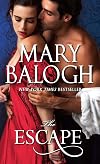
I should begin by confessing a bias: I think that Mary Balogh’s The Survivor Series, focused on a group of friends who are dealing with the painful consequences of the Napoleonic wars, is one of the best Regency romance series that has been written in the past few years. The Escape is another wonderful character-driven novel: Benedict Harper has lost nearly all use of his legs and has difficulty in imagining how to build a life after the war. Samantha McKay, after years of nursing her show more invalided soldier husband, is recently widowed and has difficulty in remembering what it feels like to live.
What makes this novel special is the way in which it delves into the very real conflicts and complications that result when Ben and Sam realize how much they enjoy one another’s company. There are no shortcuts to happiness here: how can Samantha join herself to another invalid, when what she craves is freedom and laughter? And how can Ben contemplate any intimacy, when he craves independence, not a loving nursemaid?
The novel’s pace is measured, but that suits the time that realistically is needed for these characters to find themselves before they can find love. There’s a sweetness and poignancy to the story, and it’s a lovely, emotionally satisfying novel, perfect for curling up with on a lazy afternoon. show less
What makes this novel special is the way in which it delves into the very real conflicts and complications that result when Ben and Sam realize how much they enjoy one another’s company. There are no shortcuts to happiness here: how can Samantha join herself to another invalid, when what she craves is freedom and laughter? And how can Ben contemplate any intimacy, when he craves independence, not a loving nursemaid?
The novel’s pace is measured, but that suits the time that realistically is needed for these characters to find themselves before they can find love. There’s a sweetness and poignancy to the story, and it’s a lovely, emotionally satisfying novel, perfect for curling up with on a lazy afternoon. show less
 This review was written for LibraryThing Early Reviewers.
The only characters exhibiting any sense in this whole book were Estelle, Bertrand, and Abigail. Not coincidentally, they were also the only characters attempting to understand the hero and heroine. Not even the hero or heroine made much of an effort to understand each other.
Did they have occasionally insightful and meaningful conversations? Yes. (Not that we got to see a lot of them. But we were told they happened, so I suppose they did.) But any time they skirted close to true empathy and show more understanding, to being vulnerable, the conversation was diverted or ended. Which certainly explains why they spent fully half the book convinced that the other person didn't love them.
I get it. Almost all conflict in romance novels is contrived, but there's an upward limit of my tolerance for people behaving foolishly for the sake of the plot. And it didn't help that almost every single other person in the book also seemed determined to behave foolishly for the sake of the plot.
The rigid policing of Viola's virtue by her family—forcing her into an unwanted engagement—is bad enough. She's a middle-aged woman who's lived in a bigamous marriage for over 20 years: the time to protect her reputation and virtue is long past. And if they were really concerned about Viola's being taken advantage of, why didn't they ask her if she was happy or safe when they stumbled upon her little love nest?
But asking Viola how she feels or what she needs is beyond the capabilities of her family, clearly. Over and over again, they express concern amongst themselves that Viola may not want this engagement, but not one of them asks her. Not. One. Instead they flock to Marcel to make sure he really loves her.
It's almost a relief that Marcel's family is so self-obsessed that they couldn't care less about his sudden engagement. Except for Estelle and Bertrand, anyway, but if it weren't for Estelle and Bertrand, Marcel wouldn't have cancelled the engagement or eventually declared his love—at plot-convenient moments, of course.
In fact, Marcel and Viola are so accustomed to running away from their problems—he into pleasure and distraction, she into the depths of her self (and self-pity)—that I don't really believe they have the tools to handle any difficulties they may encounter in the rest of their lives together. Maybe if Estelle or Bertrand or Abigail are on hand to force them to confront their fear with constructive action, they'll be all right, but I personally hope Estelle, Bertrand, and Abigail get to live their own lives, instead.
What an off-putting and enraging mess of a book. Characterization all over the place—did Viola end up figuring out who she is, as she was so determined to do at the beginning of the book? I don't think so. A love story that hasn't earned its happy ending—where would the hero and heroine be without their pushy children? And pages upon pages of a family who become less and less appealing with every book I read in this series—Viola was right: they smother everyone in love without ever attempting to understand them. I hope that the next book is better...but I'm not holding my breath. show less
Did they have occasionally insightful and meaningful conversations? Yes. (Not that we got to see a lot of them. But we were told they happened, so I suppose they did.) But any time they skirted close to true empathy and show more understanding, to being vulnerable, the conversation was diverted or ended. Which certainly explains why they spent fully half the book convinced that the other person didn't love them.
I get it. Almost all conflict in romance novels is contrived, but there's an upward limit of my tolerance for people behaving foolishly for the sake of the plot. And it didn't help that almost every single other person in the book also seemed determined to behave foolishly for the sake of the plot.
The rigid policing of Viola's virtue by her family—forcing her into an unwanted engagement—is bad enough. She's a middle-aged woman who's lived in a bigamous marriage for over 20 years: the time to protect her reputation and virtue is long past. And if they were really concerned about Viola's being taken advantage of, why didn't they ask her if she was happy or safe when they stumbled upon her little love nest?
But asking Viola how she feels or what she needs is beyond the capabilities of her family, clearly. Over and over again, they express concern amongst themselves that Viola may not want this engagement, but not one of them asks her. Not. One. Instead they flock to Marcel to make sure he really loves her.
It's almost a relief that Marcel's family is so self-obsessed that they couldn't care less about his sudden engagement. Except for Estelle and Bertrand, anyway, but if it weren't for Estelle and Bertrand, Marcel wouldn't have cancelled the engagement or eventually declared his love—at plot-convenient moments, of course.
In fact, Marcel and Viola are so accustomed to running away from their problems—he into pleasure and distraction, she into the depths of her self (and self-pity)—that I don't really believe they have the tools to handle any difficulties they may encounter in the rest of their lives together. Maybe if Estelle or Bertrand or Abigail are on hand to force them to confront their fear with constructive action, they'll be all right, but I personally hope Estelle, Bertrand, and Abigail get to live their own lives, instead.
What an off-putting and enraging mess of a book. Characterization all over the place—did Viola end up figuring out who she is, as she was so determined to do at the beginning of the book? I don't think so. A love story that hasn't earned its happy ending—where would the hero and heroine be without their pushy children? And pages upon pages of a family who become less and less appealing with every book I read in this series—Viola was right: they smother everyone in love without ever attempting to understand them. I hope that the next book is better...but I'm not holding my breath. show less
Lists
Awards


A Summer to Remember ([HM] Best Romance for 2002 [Awarded 2003], Author Most Glommed, [HM] Best European Historical [Tie], 2003)
Slightly Dangerous (Best European Historical, Best Hero, [HM] Author Most Glommed, [HM] Best Couple – 2005)


You May Also Like


Associated Authors
Statistics
- Works
- 173
- Also by
- 9
- Members
- 44,943
- Popularity
- #364
- Rating
- 3.9
- Reviews
- 1,534
- ISBNs
- 1,028
- Languages
- 16
- Favorited
- 108


