
Carla Kelly (1) (1947–)
Author of Marrying The Captain (Harlequin Historical Series)
For other authors named Carla Kelly, see the disambiguation page.
Series
Works by Carla Kelly
A Regency Christmas II [1990: Playing House/ Three Kings/ Sunshine for Christmas/ Last Wish/ Christmas Star] (1990) — Contributor — 115 copies
A Regency Christmas [2002: Solid Silver Chess Set/ No Room at the Inn/ Amiable Miser/ Partridge in a Pear Tree/ Home for Hannah] (2002) — Contributor — 97 copies, 2 reviews
A Regency Christmas Present (1999: Christmas Canvas/ Object of Charity/ Heart's Desire/ Last Gift/ Christmas Wish List) (1999) — Contributor — 95 copies, 1 review
A Regency Christmas (1998: Three Good Deeds/ Christmas Ornament/ Felicity's Forfeit/ Second Chance/ Hounds of Heaven) (1998) — Contributor — 85 copies, 1 review
Carla Kelly's Christmas Collection: The Christmas Ornament / Make a Joyful Noise / An Object of Charity / The Three Kings (2011) 59 copies, 7 reviews
Coming Home for Christmas (A Christmas in Paradise / O Christmas Tree / No Crib for a Bed) (2011) 55 copies, 1 review
A Hopeful Christmas: A Regency Romance Collection (4-in-1) (2020) — Contributor — 32 copies, 2 reviews
Wie vom Himmel gessandt 2 copies
und sie folgten dem Stern 1 copy
The Background Man 1 copy
A Pregnant Courtesan for the Rake / Regency Christmas Wishes / Her Christmas Knight (2017) — Author — 1 copy
The Christmas Ornament 1 copy
Harlequin Historical December 2025 - Box Set 1 of 2 — Author — 1 copy
The Christmas Angle 1 copy
Associated Works
A Regency Christmas Carol [1997: Bond Street Carolers/ Melody/ Mistletoe Kiss/ Make a Joyful Noise/ Earl's Nightingale] (1997) — Contributor — 128 copies, 2 reviews
The Golden Spurs: The Best of Western Short Fiction (Western Writers of America ) (1991) — Contributor — 12 copies
Tagged
Common Knowledge
- Birthdate
- 1947
- Gender
- female
- Education
- Brigham Young University
- Occupations
- ranger
historian
newspaper staff writer
author - Organizations
- The Church of Jesus Christ of Latter-day Saints
- Awards and honors
- Romantic Times Lifetime Achievement Award
- Agent
- Ruth Cohen
- Short biography
- I'm a long-time, award-winning novelist, perhaps best known for my Regency Romances, two of which have earned Rita Awards from Romance Writers of America. I've also been writing Mormon-themed novels, as well as historical fiction for Harlequin and CamelPress in Seattle. I have three Whitney Awards from LDStorymakers, and two Spur Awards from Western Writers of America, plus a Lifetime Achievement Award from Romantic Times (which makes me feel like I have one foot in the grave).
I love to write. The whole process still fascinates me, even after many novels and short stories, and some non-fiction work. I'm still learning with every book. [adapted from Amazon.com Author Page, retrieved 11/10/2016] - Nationality
- USA
- Places of residence
- North Dakota, USA
- Associated Place (for map)
- North Dakota, USA
Members
Reviews

I don't think I've ever rated a Carla Kelly romance so low, but this read like a book that ought to have been twice as long and had important bits snipped out to fit the necessary word length. The result is that instead of feeling the hero and heroine are lucky to have found one another and are setting out for a great new life in America, I'm tsking, "Giiiiirl, don't leave your support system, no matter how paltry, for a new country where you'll be dependent on a man who's already shown a show more predilection for shouting and physical abuse." ...Not a convincing love story, even if the hero's son is adorable and deserves the heroine as his stepmum. show less
Good story that involves a journey, both physical and emotional for the hero and heroine. Mary was taken in by relatives when she was young and has a good, if dull, life with them. When her spoiled cousin throws her fiance's ring into a fruitcake batter and ends up in one of the cakes sent out as gifts, Mary is the one sent to find it. She looks on the trip as the only sort of adventure she'll ever have.
Ross is home on leave and taking the opportunity to reconnect with his ten year old son. show more With Napoleon on Elba, it's thought that the war is over, but Ross is not so trusting. After so many years at sea and at war, he finds himself tired of the fight, but uncomfortable on land. When he and Nathan meet Mary at an inn, he is intrigued by her and her quest. Discovering that they are related, however distantly, gives him the excuse to offer his assistance.
I liked both Mary and Ross, though he certainly gave me moments of frustration throughout the book. Mary learned quite a lot about herself over the course of her search. By the time she had met up with Ross, she had realized that her life in Edinburgh was merely existence and she wanted more. She just wasn't sure how to go about it. I liked the way that she was pretty unflappable. The innkeeper's mistake that introduced her to Ross and Nathan didn't faze her, and her invitation to join her showed remarkable poise. Though initially reluctant to accept his involvement in her search, she soon agreed. I really liked how easily she was able to talk to Ross and the bond she formed with Nathan. She also understood him when his memories would send him into a funk and was able to bring him out of them. I also liked that she accepts his peg leg as part of who he is. As they make their way through the search, Mary tries to fight the feelings she's beginning to have for him. She knows that she's not what he wants, and that he isn't ready anyway.
Ross was a very complex character. He is pretty much married to the navy, having spent twenty-four years at sea so far. He's had few shore leaves, and uses them to spend time with his son. They have an excellent relationship in spite of his absences. He has seen a lot of death and destruction over the years, including the loss of his leg. It has left him rather cynical, and he is certain that the war with Napoleon is not over. He has a rather unique perspective on the effects of the war, and frequently refers to Napoleon as his "employer", something that gets him into trouble at one point in the book. He is drawn to Mary from the very beginning, but doesn't quite understand why, as she is nothing like the women who usually interest him. He even has a list of what he will eventually look for, once war is done and he starts looking for a wife. As the three of them travel together, we get a better look at Ross and see a man with a sense of humor and great capacity for love, but is also haunted by fears and insecurities.
Their journey together brings changes to them both. They combine Mary's search for the ring with an amusing yet moving tribute to some of Ross's shipmates involving inns and favorite foods. One of those stops has Mary encouraging Ross to visit the parents of one of his lost crew members. This is a very emotional section, and Mary's support is vital to Ross's ability to get through it. Ross starts to see Mary more as a woman and having qualities he should add to his "list". Mary's feelings have grown stronger for Ross, though she knows he doesn't feel the same way. Those feelings make her realize she can't go back to her old way of life and gets her thinking about what to do with her future without him in it.
When they come to the end of their journey and the retrieval of the final fruitcake, something happens that sets off an unreasonable anger in Ross. He says some terrible things to Mary, which sends her brokenhearted back to Edinburgh, and damages his relationship with his son. It takes days for him to realize what he has done, and his self examination has him contemplating his own worth. Meanwhile, Mary has had an epiphany of her own and has started making plans for her future. It takes a determined ten year old boy to make them see that their futures belong together. I enjoyed seeing how it was managed, though I wouldn't have minded a little more grovelling on Ross's part. I liked their plans for a new life, and would have enjoyed an epilogue to see how it goes.
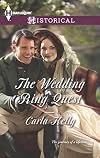
My only gripe with the book as nothing to do with the story, but with the cover. It is entirely wrong for the book. The hero is described as a mature naval officer with a wooden leg. He is always in uniform. The majority of the book takes place during the winter, frequently in the snow. By necessity, they travel in a closed carriage. So why does the cover show a summer scene, in an open carriage, with a youngish looking man in civilian clothing, who obviously has two good legs? Did Harlequin's art department even bother to check the details of the story? show less
Ross is home on leave and taking the opportunity to reconnect with his ten year old son. show more With Napoleon on Elba, it's thought that the war is over, but Ross is not so trusting. After so many years at sea and at war, he finds himself tired of the fight, but uncomfortable on land. When he and Nathan meet Mary at an inn, he is intrigued by her and her quest. Discovering that they are related, however distantly, gives him the excuse to offer his assistance.
I liked both Mary and Ross, though he certainly gave me moments of frustration throughout the book. Mary learned quite a lot about herself over the course of her search. By the time she had met up with Ross, she had realized that her life in Edinburgh was merely existence and she wanted more. She just wasn't sure how to go about it. I liked the way that she was pretty unflappable. The innkeeper's mistake that introduced her to Ross and Nathan didn't faze her, and her invitation to join her showed remarkable poise. Though initially reluctant to accept his involvement in her search, she soon agreed. I really liked how easily she was able to talk to Ross and the bond she formed with Nathan. She also understood him when his memories would send him into a funk and was able to bring him out of them. I also liked that she accepts his peg leg as part of who he is. As they make their way through the search, Mary tries to fight the feelings she's beginning to have for him. She knows that she's not what he wants, and that he isn't ready anyway.
Ross was a very complex character. He is pretty much married to the navy, having spent twenty-four years at sea so far. He's had few shore leaves, and uses them to spend time with his son. They have an excellent relationship in spite of his absences. He has seen a lot of death and destruction over the years, including the loss of his leg. It has left him rather cynical, and he is certain that the war with Napoleon is not over. He has a rather unique perspective on the effects of the war, and frequently refers to Napoleon as his "employer", something that gets him into trouble at one point in the book. He is drawn to Mary from the very beginning, but doesn't quite understand why, as she is nothing like the women who usually interest him. He even has a list of what he will eventually look for, once war is done and he starts looking for a wife. As the three of them travel together, we get a better look at Ross and see a man with a sense of humor and great capacity for love, but is also haunted by fears and insecurities.
Their journey together brings changes to them both. They combine Mary's search for the ring with an amusing yet moving tribute to some of Ross's shipmates involving inns and favorite foods. One of those stops has Mary encouraging Ross to visit the parents of one of his lost crew members. This is a very emotional section, and Mary's support is vital to Ross's ability to get through it. Ross starts to see Mary more as a woman and having qualities he should add to his "list". Mary's feelings have grown stronger for Ross, though she knows he doesn't feel the same way. Those feelings make her realize she can't go back to her old way of life and gets her thinking about what to do with her future without him in it.
When they come to the end of their journey and the retrieval of the final fruitcake, something happens that sets off an unreasonable anger in Ross. He says some terrible things to Mary, which sends her brokenhearted back to Edinburgh, and damages his relationship with his son. It takes days for him to realize what he has done, and his self examination has him contemplating his own worth. Meanwhile, Mary has had an epiphany of her own and has started making plans for her future. It takes a determined ten year old boy to make them see that their futures belong together. I enjoyed seeing how it was managed, though I wouldn't have minded a little more grovelling on Ross's part. I liked their plans for a new life, and would have enjoyed an epilogue to see how it goes.
My only gripe with the book as nothing to do with the story, but with the cover. It is entirely wrong for the book. The hero is described as a mature naval officer with a wooden leg. He is always in uniform. The majority of the book takes place during the winter, frequently in the snow. By necessity, they travel in a closed carriage. So why does the cover show a summer scene, in an open carriage, with a youngish looking man in civilian clothing, who obviously has two good legs? Did Harlequin's art department even bother to check the details of the story? show less
Ms. Kelly is a superlative writer of historical fiction that is both romantic, heartfelt and historically accurate. Her specialties were the Napoleonic Wars and the American West, with mostly military backgrounds. However, Ms. Kelly is part of the LDS church and wrote five novels specially for that market, with LDS pioneer history as the background. Even though I am not LDS, I have read and loved them all, and learned a great deal about a history that people outside that church are litle show more aware of. This book is the last of the five. It is an excellent story, but probably the least accessible to non-LDS of the bunch.
The story focuses on a couple, Ammon and Addie, who were young marrieds in an LDS colony in Mexico early in the 20th century. They have been estranged for two years following the miscarriage of their first child, and a subsequent blow-up based on misinformation, harsh words, pride and a meddling father-in-law. They have been living apart in nearby towns, but then the Mexican revolution began. As the war progressed, the Mormons (who were viewed as Americans by the Mexicans, even those like Ammon who was born in Mexico and were relatively integrated with the local culture despite the church inclination to stay separate) were expelled from Mexico by revolutionary General Salazar. In New Mexico, Ammon learns from his father-in-law that his wife stayed behind to tend her ailing grandmother and never got out. He is commissioned to go back into Mexico and rescue her.
So we have a quest story, as they make their way through dangerous territory amidst warring factions, and also try to make peace with each other and their past. It's gripping, and the journey through a war-torn country is fierce and compelling. The love story and maturing of the main characters is heart felt. The reason it is not totally accessible to the general market is that more than its predecessors, it presumes a knowledge of the contents of the Book of Mormon, of which I am completely unfamiliar. Ammon often finds parallels between his situation and that of his namesake from that text. I could and did follow along with what was going on, and still loved the story, but it would likely be more meaningful to someone who is intimate with that text.
I still loved the book, and would recommend it, but if you aren't LDS, I'd recommend starting with her earlier LDS books, the duo "Borrowed Light" and "Enduring Light", or the duo "My Loving Vigil Keeping" and "One Step Enough", to see if they are your cup of tea. show less
The story focuses on a couple, Ammon and Addie, who were young marrieds in an LDS colony in Mexico early in the 20th century. They have been estranged for two years following the miscarriage of their first child, and a subsequent blow-up based on misinformation, harsh words, pride and a meddling father-in-law. They have been living apart in nearby towns, but then the Mexican revolution began. As the war progressed, the Mormons (who were viewed as Americans by the Mexicans, even those like Ammon who was born in Mexico and were relatively integrated with the local culture despite the church inclination to stay separate) were expelled from Mexico by revolutionary General Salazar. In New Mexico, Ammon learns from his father-in-law that his wife stayed behind to tend her ailing grandmother and never got out. He is commissioned to go back into Mexico and rescue her.
So we have a quest story, as they make their way through dangerous territory amidst warring factions, and also try to make peace with each other and their past. It's gripping, and the journey through a war-torn country is fierce and compelling. The love story and maturing of the main characters is heart felt. The reason it is not totally accessible to the general market is that more than its predecessors, it presumes a knowledge of the contents of the Book of Mormon, of which I am completely unfamiliar. Ammon often finds parallels between his situation and that of his namesake from that text. I could and did follow along with what was going on, and still loved the story, but it would likely be more meaningful to someone who is intimate with that text.
I still loved the book, and would recommend it, but if you aren't LDS, I'd recommend starting with her earlier LDS books, the duo "Borrowed Light" and "Enduring Light", or the duo "My Loving Vigil Keeping" and "One Step Enough", to see if they are your cup of tea. show less

Terrific book. One of the things I like most about this author is her use of ordinary people instead of members of the nobility. It makes a refreshing change of pace. In this book, we have Jerusha, the penniless daughter of a vicar, and Jamie, a surgeon with the Royal Navy.
Jerusha's prospects are slim in her small hometown. Her mother sends her to Plymouth to be a companion to her aunt, where she looks at a dismal future catering to grouchy old women. Her aunt is selfish, snobbish, and show more mean-spirited. Things begin to change when chance takes her to a naval hospital nearby. She encounters Jamie, a navy surgeon she knew as a child, and discovers a calling to help the injured.
Jamie joined the Royal Navy as a surgeon's mate when he was thirteen. He eventually studied and passed the exams to become a surgeon. He spends most of his time either at the hospital in Devonport or onboard various ships. Because of the war with Napoleon, he is very busy. The last person he expects to see is the little girl from fifteen years earlier.
Jerusha quickly becomes involved with Jamie's work at the hospital. Her aunt would disapprove, so she sneaks out. Experience tells the reader that this will eventually cause a problem. I loved Jerusha's interactions with the patients she helped. Their stories are frequently heartbreaking, but some are filled with hope. I liked seeing how her confidence grew as she took on more responsibility.
I loved seeing the relationship between Jamie and Jerusha develop. It started in a fun manner, as Jamie referred to the day they met. There is a sweet part that refers back to that day, and Jamie won my heart right away with how he comforts her. I liked seeing them together. Their interactions are real and relatable, from the discussions of their work to the lighter moments of teasing. It is an unusual relationship in that they spend more time apart than together because of Jamie's long periods spent at sea. However, the often difficult and extreme circumstances of their time together bring them closer than a more traditional relationship is likely to do. The scene where Jerusha joined Jamie on the ship was especially intense. The ending was great, with a twist that would affect their future.
One of the many things I loved about this book was the detailed descriptions of the hospital and its patients. They weren't just nameless props for the story but portrayed as real human beings. Their lives and personalities were realistic, and their injuries and actions were believable. This book gave me a different perspective on the Napoleonic War's naval blockade, the effects on people, and the Battle of Trafalgar.
As a side note: The name Jerusha is unusual and memorable, and it took me a while to remember where I had heard it before. I finally recalled that Jerusha was the preacher's wife's name in James Michener's book Hawaii. show less
Jerusha's prospects are slim in her small hometown. Her mother sends her to Plymouth to be a companion to her aunt, where she looks at a dismal future catering to grouchy old women. Her aunt is selfish, snobbish, and show more mean-spirited. Things begin to change when chance takes her to a naval hospital nearby. She encounters Jamie, a navy surgeon she knew as a child, and discovers a calling to help the injured.
Jamie joined the Royal Navy as a surgeon's mate when he was thirteen. He eventually studied and passed the exams to become a surgeon. He spends most of his time either at the hospital in Devonport or onboard various ships. Because of the war with Napoleon, he is very busy. The last person he expects to see is the little girl from fifteen years earlier.
Jerusha quickly becomes involved with Jamie's work at the hospital. Her aunt would disapprove, so she sneaks out. Experience tells the reader that this will eventually cause a problem. I loved Jerusha's interactions with the patients she helped. Their stories are frequently heartbreaking, but some are filled with hope. I liked seeing how her confidence grew as she took on more responsibility.
I loved seeing the relationship between Jamie and Jerusha develop. It started in a fun manner, as Jamie referred to the day they met. There is a sweet part that refers back to that day, and Jamie won my heart right away with how he comforts her. I liked seeing them together. Their interactions are real and relatable, from the discussions of their work to the lighter moments of teasing. It is an unusual relationship in that they spend more time apart than together because of Jamie's long periods spent at sea. However, the often difficult and extreme circumstances of their time together bring them closer than a more traditional relationship is likely to do. The scene where Jerusha joined Jamie on the ship was especially intense. The ending was great, with a twist that would affect their future.
One of the many things I loved about this book was the detailed descriptions of the hospital and its patients. They weren't just nameless props for the story but portrayed as real human beings. Their lives and personalities were realistic, and their injuries and actions were believable. This book gave me a different perspective on the Napoleonic War's naval blockade, the effects on people, and the Battle of Trafalgar.
As a side note: The name Jerusha is unusual and memorable, and it took me a while to remember where I had heard it before. I finally recalled that Jerusha was the preacher's wife's name in James Michener's book Hawaii. show less
Lists
Awards


You May Also Like


Associated Authors
Statistics
- Works
- 106
- Also by
- 6
- Members
- 5,412
- Popularity
- #4,606
- Rating
- 3.9
- Reviews
- 218
- ISBNs
- 251
- Languages
- 2
- Favorited
- 7