
Sandra Heath
Author of Regency Christmas Wishes [2003]
About the Author
Romance novelist Sandra Heath spent her childhood traveling around Europe because her father was an officer in the British Royal Air Force. She won the Romantic Times Reviewers' Choice Awards for Best Regency Author and for Best Regency Romance. She currently lives in Gloucester, England with her show more husband. (Bowker Author Biography) show less
Series
Works by Sandra Heath
A Regency Christmas Feast [1996: Wassail Bowl/ Sophie's Syllabub/ Gingerbread Man/ Proof Is in the Pudding/ Christmas Goose] (1996) — Contributor — 117 copies, 3 reviews
A Regency Christmas III [1991: Mistletoe and Folly/ Christmas Cuckoo/ Best Christmas Ever/ Home for Christmas/ Dark Man] (1991) — Contributor — 105 copies, 1 review
A Regency Christmas VII [1995: Surprise Party/ Mummers' Play/ Christmas Ghost/ Rake's Christmas/ Lady Bountiful] (1995) 104 copies, 2 reviews
A Regency Christmas [2002: Solid Silver Chess Set/ No Room at the Inn/ Amiable Miser/ Partridge in a Pear Tree/ Home for Hannah] (2002) — Contributor — 98 copies, 2 reviews
A Regency Christmas IV [1992: Porcelain Madonna/ Christmas Rose/ Seasonal Stratagem/ Best Gift of All/ Christmas Tart] (1992) — Contributor — 98 copies, 2 reviews
A Regency Christmas V: [1993: Under the Kissing Bough; Season of Joy; The Viscount and the Hoyden; The Christmas Mouse; No Room at the Inn] (1993) — Contributor — 91 copies, 2 reviews
A Regency Christmas VI [1994: Best Gift/ Dinner at Grillion's/ Christmas Knight/ Christmas Magic/ It Came Upon a Midnight Clear] (1994) — Contributor — 75 copies, 2 reviews
Associated Works
Tagged
Common Knowledge
- Other names
- Wilson, Sandra
Stanley, Sarah
Machin, Jeannie
Wilson, Sandra Heath
Heath, Sandra - Birthdate
- 1941
- Gender
- female
- Nationality
- UK
- Places of residence
- England
Members
Reviews

The only previous experience I've had with this author is that she is not afraid to stir in some crazysauce, so I was a bit wary as I cracked this novel. But, there are no wacky hijinks or forced comedic interludes here: this is straight-up trad Regency drama, which is exactly what I was looking for.
Susannah Garland is, quite literally, a poor relation. Her mother, a member of the aristocratic Devereux family, eloped with a mere schoolmaster and was basically banished from her family after show more that. Both of Susannah's parents died, and against her own better judgment even at 15, she accedes to her mother's wish that she return to the family fold, now headed by her mother's brother, Lord Devereux. She is not welcomed to Sanderby, the family house; everyone treats her like a stain to be covered and forgotten, except for her cousin Miles. Susannah is so overwhelmed with relief at finding a kind soul that she fancies herself in love with him, and he returns her feelings very fervently. However, Lord Devereux is a harsh taskmaster, even to his own flesh and blood. He demands that Miles make a politically advantageous match with the daughter of the family next door, or else face being thrown into debtor's prison due to his outrageous gambling losses.
Neither Miles nor Agnes, his prospective bride, want the match, but Lord Devereux is determined to have the Winston family money to refill the coffers. Miles is quite spineless and cowardly, even from the very start of the book. He pleads with Susannah to basically stay with him as his mistress after the marriage, which he will go through with because he doesn't want to go to prison. Susannah refuses, multiple times, and ultimately comes to fear for her life when she overhears a very harsh conversation between father and son. Lord Devereux threatens to banish Susannah to his Irish estates in order to keep her away from Miles; Susannah sees the writing on the wall, knowing her uncle would just as likely have her killed as anything else. She decides to run away that very night, taking her precious few possessions with her.
Luckily for her, Sir Jeffrey Stratton happens along to Sanderby at that moment, an accident befalling his vehicle. Stratton is a mortal enemy of the Devereux family, both politically and personally, but Devereux is forced to oblige Stratton a conveyance. Stratton sends his own carriage back to London (a mere 5 miles away) and Susannah slips inside it as its leaving the grounds.
She rides into London, intent on finding her father's sister in Covent Garden. She has no idea of Covent Garden's reputation, and finds herself well and truly stuck when she learns that her aunt died two years previously. Her uncle is already on the warpath, trying to find her, so she ducks into a nearby boarding house and considers her options. Miles is obviously too cowardly to defy his father, and thus won't rescue her; she has no other living family; her uncle is out for her blood. What choice does she have to to try to find respectable work?
Susannah's mother was an extremely talented seamstress, and she taught Susannah to be equally good with the needle. She's already made a few dresses for herself, and in fact uses one of these to finagle an interview at the most exclusive dressmaker's in Town, Madame Hilary. Madame acknowledges her talent, but cannot forgive her for the audacity of arriving via the front door (instead of the side). She rather reluctantly hires Susannah on for her workroom, but offers no support when her forewoman and her footman bully her relentlessly.
Susannah is quite strong, and withstands the constant torment. The other girls in the workroom are just as miserable, but nobody wants to rock the boat. Susannah is paired with another girl, Annie Jones, on her first day, and the two quickly become friends. Susannah is quite disappointed by Madame Hilary's outmoded fashions, and knows that she could do better. Annie challenges her to sketch some designs, which soon consumes all of Susannah's free time. Meanwhile, Madame picks her to run errands around Town for the shop, thanks to her refined accent and manners. Susannah knows that she is merely being used, but she doesn't care: she's starting to nurture a dream of opening her own fashion house, one to rival even Madame Hilary's. She knows exactly which clients she'd lure away, too: the ones Madame feels are beneath her notice, and for whom she gives ugly, unflattering clothes. Madame is too busy sucking up to the elites of the ton, and the royal family, to care about those considered "lesser than."
A chance encounter with Princess Amelia exposes Susannah's flair for design, and when Madame Hilary learns of Susannah's background, she blackmails her into handing over her design sketches, which of course Madame Hilary steals credit for. Suddenly she's producing new, exciting fashions and attracting even more attention than ever before. Agnes Winston even decides to have her wedding gown made by Madame's establishment, and Madame is gleeful, forcing Susannah to design the dress because she believes it will hurt her to have to stitch the very gown for the woman "stealing" Miles away from her.
Miles has discovered Susannah's whereabouts, and persuades her to meet him secretly at night. His constant whining about his untenable position, coupled with her months of working in the real world, open Susannah's eyes and makes her realize that her childish infatuation is just that. She doesn't love Miles anymore, at least not romantically, but she does pity him and his situation. She refuses (again) to be his mistress, but Miles is unrepentant. He proclaims his love for her over and over again but does exactly nothing to change his situation. He is a spineless creep and we're barely a third of the way into the book.
Susannah and the other seamstresses are given the chance to go to the church and see their work for the wedding party; against her better judgment (for she has now met Agnes and knows what a bitch she is), she decides to attend, and joins the crowd gathered outside the church to watch the wedding party arrive. She's so intent on looking at the gowns she helped make that she doesn't realize when Miles spots her in the crowd until his uncle suddenly arrives at her side and grabs her arm, threatening her to hell and back because he believes she's there to cause a scene.
She's rescued by Sir Jeffrey, who is also amongst the crowd and is curious as to why Lord Devereux is so furious with a very pretty girl. Jeffrey extracts her from the situation and they leave as the wedding party goes into the church. Susannah confesses who she is and why her uncle hates her so much, and Jeffrey is intrigued. He hates Lord Devereux and Miles just as much, and sees an opportunity to use Susannah to advance his own, quiet revenge on them. It seems Devereux's father cheated Sir Jeffrey's father out of a large amount of money, hence his grudge against them. He tells Susannah all of this, so when he offers to finance her dream of opening her own establishment, she walks into the partnership quite knowingly. Jeffrey also warns her that people will believe that she is his mistress, but being so close to her ultimate dream makes it worth the risk. Susannah agrees, and sets out to find a suitable property to open her shop.
Miles arrives not long into this process, telling Susannah that his father has died and he's now Lord Devereux. He means to set aside his marriage to the harridan Agnes and take Susannah in her stead, but Susannah refuses. She doesn't love him anymore, and besides, she's thisclose to her dream. Miles is quite ugly to her, implying that he believes she is Jeffrey's mistress, and warns her that he'll be back.
Susannah opens her shop, even when the grand showroom is destroyed on the eve of the grand opening, and suppliers around Town refuse to do business with her under threat of losing Madame Hilary's trade. Her first client is Jeffrey's (ex-) Mistress, Lady Cowper, who is sufficiently impressed with Susannah's determination in the face of disaster that she orders a gown from her and spreads the word of her shop, just as Susannah had hoped. She'd made a supreme personal sacrifice to her own pride in asking Jeffrey to ask his mistress to help; this is when she learns that they are no longer together, and though Jeffrey is invested in the financial success of Susannah's shop, he's not quite so personally invested in bringing her clients.
Susannah's shop flourishes; she hires her friend, Annie Jones, as her forewoman, and puts together a warm and inviting workroom. She attracts those who were not treated well by Madame Hilary, and soon it becomes obvious who the true designer was from the previous season. Susannah's start is on the rise, but her personal life is in shambles. She learns that Jeffrey has won the deed to Sanderby from Miles in a card game, and that Miles has deteriorated even more into his vices. Jeffrey is planning to close up Sanderby instead of letting Miles and Agnes live there. Miles continues to come round to Susannah, pleading for her to love him even though he is married and expecting a child. Susannah has fallen in love with Jeffrey, who holds her at arm's length and seems to still be in mourning for his late wife.
The years roll on; as Susannah's shop becomes the most exclusive ladies dressmaker in Town, more people are gunning for her. Miles manages to force her into a compromising situation, which leads Jeffrey to believe she's taken Miles as a covert lover; he's even more icy and cool than ever, and says some pretty awful things to her. Still, he doesn't abandon her, especially as Miles becomes more and more obsessed with her. Agnes has left him and openly taken up with a lover, so he feels entitled to do the same. Susannah still cares for Miles, but realizes the danger she's in with him. A chance for the royal warrant comes her way, and she only has to keep her reputation intact and it's hers; that's when Miles makes his final move: he demands Susannah marry him, or he will destroy her reputation as a dressmaker, leaving her with as much as she had at the beginning of the book: nothing.
The final chapter is a breathtaking climax of a scene, where everything finally comes out into the open, and Susannah is forced to make her choice. Jeffrey holds the key, in Sanderby, but no one is sure that Miles will accept anything less than the woman he's become so obsessed with.
I really enjoyed this book. I loved Susannah: she is a strong, determined, clear-minded character who knows how to get what she wants without straying into absurdity. She is quite brave in the face of a lot of nastiness and just keeps going for her goal, though what she wants more than anything is for Jeffrey to love her. Jeffrey is a suitable, if obstinate hero; Miles is a suitably disgusting jerk and it was really nice that Susannah discovers this fairly early in the book. She can't quite bring herself to hate him, not even in the end when he's threatening her livelihood and her happiness, which is more than I can say for myself, LOL.
Real historical figures are scattered throughout, and the fierce political backdrop of the early wars with Napoleon figure into the story, though not enough to distract from the romance. William Pitt, Lady Jersey, Emily Cowper, and the Prince Regent are a few figures to make cameo appearances (I thought it interesting that Ms Heath makes her hero one of the Lady Cowper's many lovers, that was pretty bold!).
I really loved this, and it makes me wish all the more that my vintage romances were readily available, as I have several of this author's backlist. Definitely recommend! show less
Susannah Garland is, quite literally, a poor relation. Her mother, a member of the aristocratic Devereux family, eloped with a mere schoolmaster and was basically banished from her family after show more that. Both of Susannah's parents died, and against her own better judgment even at 15, she accedes to her mother's wish that she return to the family fold, now headed by her mother's brother, Lord Devereux. She is not welcomed to Sanderby, the family house; everyone treats her like a stain to be covered and forgotten, except for her cousin Miles. Susannah is so overwhelmed with relief at finding a kind soul that she fancies herself in love with him, and he returns her feelings very fervently. However, Lord Devereux is a harsh taskmaster, even to his own flesh and blood. He demands that Miles make a politically advantageous match with the daughter of the family next door, or else face being thrown into debtor's prison due to his outrageous gambling losses.
Neither Miles nor Agnes, his prospective bride, want the match, but Lord Devereux is determined to have the Winston family money to refill the coffers. Miles is quite spineless and cowardly, even from the very start of the book. He pleads with Susannah to basically stay with him as his mistress after the marriage, which he will go through with because he doesn't want to go to prison. Susannah refuses, multiple times, and ultimately comes to fear for her life when she overhears a very harsh conversation between father and son. Lord Devereux threatens to banish Susannah to his Irish estates in order to keep her away from Miles; Susannah sees the writing on the wall, knowing her uncle would just as likely have her killed as anything else. She decides to run away that very night, taking her precious few possessions with her.
Luckily for her, Sir Jeffrey Stratton happens along to Sanderby at that moment, an accident befalling his vehicle. Stratton is a mortal enemy of the Devereux family, both politically and personally, but Devereux is forced to oblige Stratton a conveyance. Stratton sends his own carriage back to London (a mere 5 miles away) and Susannah slips inside it as its leaving the grounds.
She rides into London, intent on finding her father's sister in Covent Garden. She has no idea of Covent Garden's reputation, and finds herself well and truly stuck when she learns that her aunt died two years previously. Her uncle is already on the warpath, trying to find her, so she ducks into a nearby boarding house and considers her options. Miles is obviously too cowardly to defy his father, and thus won't rescue her; she has no other living family; her uncle is out for her blood. What choice does she have to to try to find respectable work?
Susannah's mother was an extremely talented seamstress, and she taught Susannah to be equally good with the needle. She's already made a few dresses for herself, and in fact uses one of these to finagle an interview at the most exclusive dressmaker's in Town, Madame Hilary. Madame acknowledges her talent, but cannot forgive her for the audacity of arriving via the front door (instead of the side). She rather reluctantly hires Susannah on for her workroom, but offers no support when her forewoman and her footman bully her relentlessly.
Susannah is quite strong, and withstands the constant torment. The other girls in the workroom are just as miserable, but nobody wants to rock the boat. Susannah is paired with another girl, Annie Jones, on her first day, and the two quickly become friends. Susannah is quite disappointed by Madame Hilary's outmoded fashions, and knows that she could do better. Annie challenges her to sketch some designs, which soon consumes all of Susannah's free time. Meanwhile, Madame picks her to run errands around Town for the shop, thanks to her refined accent and manners. Susannah knows that she is merely being used, but she doesn't care: she's starting to nurture a dream of opening her own fashion house, one to rival even Madame Hilary's. She knows exactly which clients she'd lure away, too: the ones Madame feels are beneath her notice, and for whom she gives ugly, unflattering clothes. Madame is too busy sucking up to the elites of the ton, and the royal family, to care about those considered "lesser than."
A chance encounter with Princess Amelia exposes Susannah's flair for design, and when Madame Hilary learns of Susannah's background, she blackmails her into handing over her design sketches, which of course Madame Hilary steals credit for. Suddenly she's producing new, exciting fashions and attracting even more attention than ever before. Agnes Winston even decides to have her wedding gown made by Madame's establishment, and Madame is gleeful, forcing Susannah to design the dress because she believes it will hurt her to have to stitch the very gown for the woman "stealing" Miles away from her.
Miles has discovered Susannah's whereabouts, and persuades her to meet him secretly at night. His constant whining about his untenable position, coupled with her months of working in the real world, open Susannah's eyes and makes her realize that her childish infatuation is just that. She doesn't love Miles anymore, at least not romantically, but she does pity him and his situation. She refuses (again) to be his mistress, but Miles is unrepentant. He proclaims his love for her over and over again but does exactly nothing to change his situation. He is a spineless creep and we're barely a third of the way into the book.
Susannah and the other seamstresses are given the chance to go to the church and see their work for the wedding party; against her better judgment (for she has now met Agnes and knows what a bitch she is), she decides to attend, and joins the crowd gathered outside the church to watch the wedding party arrive. She's so intent on looking at the gowns she helped make that she doesn't realize when Miles spots her in the crowd until his uncle suddenly arrives at her side and grabs her arm, threatening her to hell and back because he believes she's there to cause a scene.
She's rescued by Sir Jeffrey, who is also amongst the crowd and is curious as to why Lord Devereux is so furious with a very pretty girl. Jeffrey extracts her from the situation and they leave as the wedding party goes into the church. Susannah confesses who she is and why her uncle hates her so much, and Jeffrey is intrigued. He hates Lord Devereux and Miles just as much, and sees an opportunity to use Susannah to advance his own, quiet revenge on them. It seems Devereux's father cheated Sir Jeffrey's father out of a large amount of money, hence his grudge against them. He tells Susannah all of this, so when he offers to finance her dream of opening her own establishment, she walks into the partnership quite knowingly. Jeffrey also warns her that people will believe that she is his mistress, but being so close to her ultimate dream makes it worth the risk. Susannah agrees, and sets out to find a suitable property to open her shop.
Miles arrives not long into this process, telling Susannah that his father has died and he's now Lord Devereux. He means to set aside his marriage to the harridan Agnes and take Susannah in her stead, but Susannah refuses. She doesn't love him anymore, and besides, she's thisclose to her dream. Miles is quite ugly to her, implying that he believes she is Jeffrey's mistress, and warns her that he'll be back.
Susannah opens her shop, even when the grand showroom is destroyed on the eve of the grand opening, and suppliers around Town refuse to do business with her under threat of losing Madame Hilary's trade. Her first client is Jeffrey's (ex-) Mistress, Lady Cowper, who is sufficiently impressed with Susannah's determination in the face of disaster that she orders a gown from her and spreads the word of her shop, just as Susannah had hoped. She'd made a supreme personal sacrifice to her own pride in asking Jeffrey to ask his mistress to help; this is when she learns that they are no longer together, and though Jeffrey is invested in the financial success of Susannah's shop, he's not quite so personally invested in bringing her clients.
Susannah's shop flourishes; she hires her friend, Annie Jones, as her forewoman, and puts together a warm and inviting workroom. She attracts those who were not treated well by Madame Hilary, and soon it becomes obvious who the true designer was from the previous season. Susannah's start is on the rise, but her personal life is in shambles. She learns that Jeffrey has won the deed to Sanderby from Miles in a card game, and that Miles has deteriorated even more into his vices. Jeffrey is planning to close up Sanderby instead of letting Miles and Agnes live there. Miles continues to come round to Susannah, pleading for her to love him even though he is married and expecting a child. Susannah has fallen in love with Jeffrey, who holds her at arm's length and seems to still be in mourning for his late wife.
The years roll on; as Susannah's shop becomes the most exclusive ladies dressmaker in Town, more people are gunning for her. Miles manages to force her into a compromising situation, which leads Jeffrey to believe she's taken Miles as a covert lover; he's even more icy and cool than ever, and says some pretty awful things to her. Still, he doesn't abandon her, especially as Miles becomes more and more obsessed with her. Agnes has left him and openly taken up with a lover, so he feels entitled to do the same. Susannah still cares for Miles, but realizes the danger she's in with him. A chance for the royal warrant comes her way, and she only has to keep her reputation intact and it's hers; that's when Miles makes his final move: he demands Susannah marry him, or he will destroy her reputation as a dressmaker, leaving her with as much as she had at the beginning of the book: nothing.
The final chapter is a breathtaking climax of a scene, where everything finally comes out into the open, and Susannah is forced to make her choice. Jeffrey holds the key, in Sanderby, but no one is sure that Miles will accept anything less than the woman he's become so obsessed with.
I really enjoyed this book. I loved Susannah: she is a strong, determined, clear-minded character who knows how to get what she wants without straying into absurdity. She is quite brave in the face of a lot of nastiness and just keeps going for her goal, though what she wants more than anything is for Jeffrey to love her. Jeffrey is a suitable, if obstinate hero; Miles is a suitably disgusting jerk and it was really nice that Susannah discovers this fairly early in the book. She can't quite bring herself to hate him, not even in the end when he's threatening her livelihood and her happiness, which is more than I can say for myself, LOL.
Real historical figures are scattered throughout, and the fierce political backdrop of the early wars with Napoleon figure into the story, though not enough to distract from the romance. William Pitt, Lady Jersey, Emily Cowper, and the Prince Regent are a few figures to make cameo appearances (I thought it interesting that Ms Heath makes her hero one of the Lady Cowper's many lovers, that was pretty bold!).
I really loved this, and it makes me wish all the more that my vintage romances were readily available, as I have several of this author's backlist. Definitely recommend! show less

This book is absolutely bonkers, and I mean that in the best possible way. Don't let that "Signet Regency Romance" banner fool you - this isn't your grandmother's trad Regency by a loooooong chalk. Not only are there multiple explicit sex scenes, but its chock full of witchcraft, paranormal, supernatural, and superstitious elements, too.
The basic premise is this: Sorceress Meg Ashton, handmaiden to Hecate, is burned at the stake for witchcraft on Halloween night in 1618. As she dies, she show more spouts a promise to avenge her death on the descendants of everyone involved in her execution. A stone effigy and twelve-stone circle dedicated to Hecate was also ruined - the stones scattered, at least, though the stone of the Lady itself could not be moved. From the moment she dies, the superstitious villagers believe that Hecate trapped Meg's soul in the stone to assist in her vengeance.
Halloween night 1818, Meg is reincarnated as a beautiful young woman who suddenly shows up in the village during a thunderstorm. She is taken in by the elderly Admiral Villiers, who names her Judith after his mother. Meg - now Judith - executes the first part of her plan by marrying and then killing the Admiral, whose ancestor was judge at her trial. She then sets her sights on Nicholas, the ninth Lord Montacute, descendant of the third Lord, who had her executed in the first place.
The author spares us no detail. Judith is a flame-haired voluptuous woman who casts her spells while dancing naked around the Lady, basically going into fits of orgasmic ecstasy as her spells come to fruition. She's stolen the desk seal from the current Lord and thinks she is using it to cast her spell on him - but alas, she actually dropped it in the village green, and the minute she says the magic words, Miss Verity Windsor unwittingly picks it up. The spell has worked, drawing the current Lord back to his country seat in the backwaters of Shropshire, but instead of becoming entranced with Judith, he's drawn to Verity.
Verity is, of course, Judith's total opposite: a blond-haired, lilac(!)-eyed innocent miss, niece of the local magistrate Joshua, who of course hates Nicholas with every fiber of his being. She's had a crush on Nicholas for most of her life, so she can hardly believe it when he basically jumps her bones the second he arrives in in Shropshire. Joshua, desperate to get Verity out of the way, sends her to London, where he's long planned to give her a Season to find a suitable husband. Nicholas follows her, of course, hellbent on wooing Verity into his bed as fast as humanly possible.
Verity's nurse Martha is a wisewoman, and has long suspected the mysterious Judith Villiers is some kind of witch. She gives Verity a pendant of sandstone to protect her, but nothing can protect Verity's vulnerable heart when Nicholas declares that he loves her and wants to marry her posthaste.
Meanwhile, Judith is very upset at her misdirected spell and is doing everything she can to set it to rights again, including threatening the life of Martha's great-nephew in exchange for Nicholas's seal. She plots and plans and continues to be a wanton slut, much to the disgust of everyone in the village.
She manages to get the seal and brings Nicholas back to the village, leaving Verity in London with a broken heart because he's suddenly shunned her and wants a divorce. Verity and Nicholas's friends are at loose ends, not understanding what's going on, while Nicholas marches towards his own death. Things culminate on Halloween night 1819, as Judith attempts to carry out her nefarious plan: having Nicholas kill his own wife right before her very eyes!
I don't think it's possible to read this at any other time of year except the Halloween season and truly appreciate all of the absolute crazysauce on offer. Ms. Heath writes a very tight, fast-paced plot from an omniscient POV, so we watch all of the players moving about in real time. Judith is completely OTT; Nicholas is just clueless; Martha (and her sister Sadie) is completely badass. Verity doesn't have much of a personality, and there's not a lot done to convince this reader that Nicholas really loves her (for real!) in the end. But getting to that conclusion is a lot of fun.
Even though this wasn't what I was expecting, I enjoyed the crazy immensely. It's a fun Halloween read. I'll definitely be on the lookout for this author's other work. show less
The basic premise is this: Sorceress Meg Ashton, handmaiden to Hecate, is burned at the stake for witchcraft on Halloween night in 1618. As she dies, she show more spouts a promise to avenge her death on the descendants of everyone involved in her execution. A stone effigy and twelve-stone circle dedicated to Hecate was also ruined - the stones scattered, at least, though the stone of the Lady itself could not be moved. From the moment she dies, the superstitious villagers believe that Hecate trapped Meg's soul in the stone to assist in her vengeance.
Halloween night 1818, Meg is reincarnated as a beautiful young woman who suddenly shows up in the village during a thunderstorm. She is taken in by the elderly Admiral Villiers, who names her Judith after his mother. Meg - now Judith - executes the first part of her plan by marrying and then killing the Admiral, whose ancestor was judge at her trial. She then sets her sights on Nicholas, the ninth Lord Montacute, descendant of the third Lord, who had her executed in the first place.
The author spares us no detail. Judith is a flame-haired voluptuous woman who casts her spells while dancing naked around the Lady, basically going into fits of orgasmic ecstasy as her spells come to fruition. She's stolen the desk seal from the current Lord and thinks she is using it to cast her spell on him - but alas, she actually dropped it in the village green, and the minute she says the magic words, Miss Verity Windsor unwittingly picks it up. The spell has worked, drawing the current Lord back to his country seat in the backwaters of Shropshire, but instead of becoming entranced with Judith, he's drawn to Verity.
Verity is, of course, Judith's total opposite: a blond-haired, lilac(!)-eyed innocent miss, niece of the local magistrate Joshua, who of course hates Nicholas with every fiber of his being. She's had a crush on Nicholas for most of her life, so she can hardly believe it when he basically jumps her bones the second he arrives in in Shropshire. Joshua, desperate to get Verity out of the way, sends her to London, where he's long planned to give her a Season to find a suitable husband. Nicholas follows her, of course, hellbent on wooing Verity into his bed as fast as humanly possible.
Verity's nurse Martha is a wisewoman, and has long suspected the mysterious Judith Villiers is some kind of witch. She gives Verity a pendant of sandstone to protect her, but nothing can protect Verity's vulnerable heart when Nicholas declares that he loves her and wants to marry her posthaste.
Meanwhile, Judith is very upset at her misdirected spell and is doing everything she can to set it to rights again, including threatening the life of Martha's great-nephew in exchange for Nicholas's seal. She plots and plans and continues to be a wanton slut, much to the disgust of everyone in the village.
She manages to get the seal and brings Nicholas back to the village, leaving Verity in London with a broken heart because he's suddenly shunned her and wants a divorce. Verity and Nicholas's friends are at loose ends, not understanding what's going on, while Nicholas marches towards his own death. Things culminate on Halloween night 1819, as Judith attempts to carry out her nefarious plan: having Nicholas kill his own wife right before her very eyes!
I don't think it's possible to read this at any other time of year except the Halloween season and truly appreciate all of the absolute crazysauce on offer. Ms. Heath writes a very tight, fast-paced plot from an omniscient POV, so we watch all of the players moving about in real time. Judith is completely OTT; Nicholas is just clueless; Martha (and her sister Sadie) is completely badass. Verity doesn't have much of a personality, and there's not a lot done to convince this reader that Nicholas really loves her (for real!) in the end. But getting to that conclusion is a lot of fun.
Even though this wasn't what I was expecting, I enjoyed the crazy immensely. It's a fun Halloween read. I'll definitely be on the lookout for this author's other work. show less

I've been on a bit of a Regency kick recently, so when I stumbled across this anthology of Christmas-themed Regency short stories a few weeks ago, I thought it might be a fun holiday read. It didn't hurt that the cover was fairly attractive (what can I say? quite a few of the romances I've been reading recently have covers that are a little too aggressively pastel... this, even with the Thomas Kinkade echoes, is High Art by comparison), and that the five contributors were all previously show more unknown to me, providing an opportunity to try new authors in the genre.
Unfortunately, I found Regency Christmas Wishes a thoroughly unsatisfactory reading experience, and wouldn't recommend a single one of the stories it contains. None of the characters felt fully realized to me, which I might have laid at the door of the short-story form itself, with its necessary brevity, had I not already read and enjoyed Georgette Heyer's brilliant romantic shorts, in her Pistols for Two and Other Stories. I also thought many of the narrative developments were rather unbelievable, and while I realize that romance is not always the most realistic of genres, I should at least be able to suspend my disbelief, while reading.
The collection leads off with Barbara Metzger's The Lucky Coin, in which impoverished baronet Sir Adam Standish, in London to plead for more time to repay the mortgage taken out on his lands by his dissolute father, falls instantly in love with the beautiful Miss Jenna Relaford, when he sees her in a curiosity shop. Unfortunately, Miss Relaford is the niece of Sir Adam's banker, who has no very good opinion of down-on-their-luck aristocrats trying to recoup their losses by marrying heiresses from the mercantile class. Leaving aside the idea of the magical wishing coin, which I found inane, as well as the love-at-first-sight motif (never a favorite), I thought Metzger completely ignored the very real class issues here, and resolved everything a little too neatly. Individual rating: 2 stars.
Next up is Following Yonder Star, by Emma Jensen, in which Miss Alice Ashe - a spinster in her late twenties - confronts the man who broke her heart, by leaving their small Irish town years before, and never returning. Here you have some rather contrived conflicts - Gareth Blackwell fervently hopes his brother's widow will bear a son, so he will not have to be the next Earl of Kilcullen, while the widowed countess herself desires a daughter, in order not to be tied to the estate. I appreciated that Jensen had to make her hero appealing, and that painting him as a grasping tyrant would hardly have fit the bill, but I also found her idealized portrait of Gareth - getting along so well with his tenant farmers, determined to better their lot - rather difficult to take, given what I know of the behavior of the Irish aristocracy just a few decades later, during the Great Famine. Still, as a story this was probably the most enjoyable of the lot. Individual rating: 2.5 stars.
The third selection was Sandra Heath's The Merry Magpie, in which Sir Charles Neville, returning to England after an absence of six years, seeks out his estranged wife at Christmas, determined to make amends for the philandering that led to their separation. Of all the stories in Regency Christmas Wishes, I think I found this the least convincing. Given how common it was for aristocratic men of this period to keep mistresses - many other Regency novels comment on this - I found it difficult to believe that Sir Charles would have been vilified in quite the way that Heath depicts. Yes, his wife Juliet would have been terribly hurt, and it's possible there would have been a separation, but I doubt that society would have countenanced her tossing him out, regardless of his behavior. This story also had some unfortunately anachronistic language - Lady Marchwell actually says to Sir Charles, at one point: "Oh, poor you!" - and an unlikely sexual encounter in a rowboat (on a river). Individual rating: .5 stars.
Best Wishes, by Edith Layton, is the fourth selection, and follows the story of the newly wed Viscount and Viscountess of Rexford, who have their first real argument about where to spend the holidays: with his pre-marriage set (including a former lover), or with her extended family. Oh lord! This one has a bed-hopping house party! I was rolling my eyes... Individual rating: 2 stars.
The fifth and final story was Carla Kelly's Let Nothing You Dismay, in which Lord Trevor Chase - an outcast from society, because of his work as a barrister, representing children in the criminal courts - and Miss Cecilia Ambrose, a half-English half-Egyptian school-teacher, who accompanies Lord Trevor's niece home from school for the holidays. This was an interesting story, in that it made reference to much darker realities than I have usually seen in Regency fiction. I had difficulty believing, however, that even a reform-minded radical would have discussed "buggery," or being suspected as a "sodomite," with a respectable woman. I also wasn't thrilled with the idea, implied in the resolution of the story, that love can save an addict, or any other kind of psychologically wounded individual from themselves. Individual rating: 1 star.
Overall, not a very impressive group of tales. Averaging out the stars, you get 1.6 stars, but hey! It's the holidays, so I rounded up. show less
Unfortunately, I found Regency Christmas Wishes a thoroughly unsatisfactory reading experience, and wouldn't recommend a single one of the stories it contains. None of the characters felt fully realized to me, which I might have laid at the door of the short-story form itself, with its necessary brevity, had I not already read and enjoyed Georgette Heyer's brilliant romantic shorts, in her Pistols for Two and Other Stories. I also thought many of the narrative developments were rather unbelievable, and while I realize that romance is not always the most realistic of genres, I should at least be able to suspend my disbelief, while reading.
The collection leads off with Barbara Metzger's The Lucky Coin, in which impoverished baronet Sir Adam Standish, in London to plead for more time to repay the mortgage taken out on his lands by his dissolute father, falls instantly in love with the beautiful Miss Jenna Relaford, when he sees her in a curiosity shop. Unfortunately, Miss Relaford is the niece of Sir Adam's banker, who has no very good opinion of down-on-their-luck aristocrats trying to recoup their losses by marrying heiresses from the mercantile class. Leaving aside the idea of the magical wishing coin, which I found inane, as well as the love-at-first-sight motif (never a favorite), I thought Metzger completely ignored the very real class issues here, and resolved everything a little too neatly. Individual rating: 2 stars.
Next up is Following Yonder Star, by Emma Jensen, in which Miss Alice Ashe - a spinster in her late twenties - confronts the man who broke her heart, by leaving their small Irish town years before, and never returning. Here you have some rather contrived conflicts - Gareth Blackwell fervently hopes his brother's widow will bear a son, so he will not have to be the next Earl of Kilcullen, while the widowed countess herself desires a daughter, in order not to be tied to the estate. I appreciated that Jensen had to make her hero appealing, and that painting him as a grasping tyrant would hardly have fit the bill, but I also found her idealized portrait of Gareth - getting along so well with his tenant farmers, determined to better their lot - rather difficult to take, given what I know of the behavior of the Irish aristocracy just a few decades later, during the Great Famine. Still, as a story this was probably the most enjoyable of the lot. Individual rating: 2.5 stars.
The third selection was Sandra Heath's The Merry Magpie, in which Sir Charles Neville, returning to England after an absence of six years, seeks out his estranged wife at Christmas, determined to make amends for the philandering that led to their separation. Of all the stories in Regency Christmas Wishes, I think I found this the least convincing. Given how common it was for aristocratic men of this period to keep mistresses - many other Regency novels comment on this - I found it difficult to believe that Sir Charles would have been vilified in quite the way that Heath depicts. Yes, his wife Juliet would have been terribly hurt, and it's possible there would have been a separation, but I doubt that society would have countenanced her tossing him out, regardless of his behavior. This story also had some unfortunately anachronistic language - Lady Marchwell actually says to Sir Charles, at one point: "Oh, poor you!" - and an unlikely sexual encounter in a rowboat (on a river). Individual rating: .5 stars.
Best Wishes, by Edith Layton, is the fourth selection, and follows the story of the newly wed Viscount and Viscountess of Rexford, who have their first real argument about where to spend the holidays: with his pre-marriage set (including a former lover), or with her extended family. Oh lord! This one has a bed-hopping house party! I was rolling my eyes... Individual rating: 2 stars.
The fifth and final story was Carla Kelly's Let Nothing You Dismay, in which Lord Trevor Chase - an outcast from society, because of his work as a barrister, representing children in the criminal courts - and Miss Cecilia Ambrose, a half-English half-Egyptian school-teacher, who accompanies Lord Trevor's niece home from school for the holidays. This was an interesting story, in that it made reference to much darker realities than I have usually seen in Regency fiction. I had difficulty believing, however, that even a reform-minded radical would have discussed "buggery," or being suspected as a "sodomite," with a respectable woman. I also wasn't thrilled with the idea, implied in the resolution of the story, that love can save an addict, or any other kind of psychologically wounded individual from themselves. Individual rating: 1 star.
Overall, not a very impressive group of tales. Averaging out the stars, you get 1.6 stars, but hey! It's the holidays, so I rounded up. show less
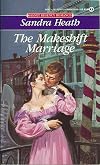
The July 2025 #TBRChallenge is “Back in My Day...” and I decided to have a bit of fun with this prompt. Curious as to how many vintage romance novels I own that fall into my birth year, I ran a search on LibraryThing (seriously, LT is an amazing catalog, OMG) and came up with 4 possibilities. This book sounded the most promising, so here it is. This is what was being published the same year I came into existence!
As the book opens, we find Miss Laura Milbanke in the principal bedchamber show more of the luxurious Hotel Cantorini on the Grand Canal in Venice. Laura awakens in this most extravagant and exclusive suite and we learn her backstory: orphaned as a child, she was sent to live with an aunt who treated her like an unwanted poor relation. She was treated as being somewhere between the gently bred family of her aunt and the servants belowstairs. She was given an education, and basically lived in her uncle's library, but when her aunt died, her cousins turned her out of the house with only the small inheritance she had been bequeathed in her relative's will. She will have to take a job in service, likely as a companion to an odious old spinster, but decides that before she heads for a life of drudgery, she will indulge in a burning dream: to visit this grand hotel in this grand city. She basically blows her money on a month-long stay, living a life amongst the Quality and doing her best to dodge the Austrian army officers who have taken up residence.
She is so immersed in her delight that she steps out onto her balcony in her nightgown to watch the sun rise. She's brought back to herself when she spots a lone gondola in the Canal, with an impossibly handsome passenger. She ducks back into her suite and figures she'll never run into him because she's taking a self-guided tour of the city and it does not involve impossibly handsome men.
This man is Sir Nicholas Grenville, the only other English person staying at her hotel, so she is seated with him for meals. He is less than welcoming, buried in his ledgers, and it basically makes for awkward company. Then an oily creep named Baron Frederick von Marienfeld takes an interest in her and she basically sticks close to Sir Nicholas because even his unpleasant company is better than the Baron's. Nicholas warns Laura against the Baron (as if she needed to be warned) and says that he is the finest duelist on the Continent, having successfully dispatched 11 previous rivals.
The Baron manages to corner Laura one day into a compromising position, and Sir Nicholas sweeps to her rescue, accepting the Baron's hastily offered duel for her honor. Laura is horrified; the man barely knows her and has made it more than clear that he can't stand her, so why in the world would he fight a duel because of her??
Nicholas finally relents, apologies for his atrocious behavior, and tells Laura his own backstory. He has just inherited King's Cliff Manor in Somerset, and the vast property is beyond broke. His father spent far more than the incomed earned off the property, and threw lavish events, including a huge annual hunt that bankrupted the place. He died and left Nicholas to face the music, and Nicholas knows that the only way to save the property is to tighten the belt of the finances, including doing major things like disbanding the hunt, selling extra properly, and draining the marshland. He knows that the estate will be in an uproar about all of the changes, including his father's former ward, the beautiful Augustine Townsend. Nicholas fancies himself in love with Augustine, but openly wonders - basically believes - that she cares more about the house than him, as it was not that long ago that the Grenvilles bought the estate from the Townsends. Augustine and her mother have lived at King's Cliff their entire lives, and it was always assumed Augustine would marry the heir to the estate, thus bringing it back to her family.
Nicholas escaped from England for much the same reason that Laura did: to get away from the drudgery of his life and indulge himself one last time. As they find they have more in common than previously believed, they decide to spend the day before the duel together, exploring the beautiful city.
The duel comes and goes. Nicholas was gravely wounded, but not killed, and the Baron was chased out of the country due to his actions (shooting an unarmed man). Nicholas is brought back to the hotel, and Laura is shocked to learn that he has asked that she basically be his patient advocate with the local doctor. The doctor wants to amputate his arm; Nicholas adamantly refuses to have such a thing done, and it's up to Laura to abide by his wishes. She does so, and the doctor basically tells her that she's signed his death warrant.
But Nicholas lives through the night, and continues to hang on with the bullet still lodged in his arm. After a couple of days, he requests that Laura accept his hand in marriage, thus freeing her from having to take up paying work, even if he dies. They are married in his sick room, and soon make the voyage home, to King's Cliff, taking the sea route instead of overland due to his wound.
The sea journey is horrible and prolonged; by the time they make it to England, Nicholas is sick with ague. He insists on going home and calling in his personal physician; the group is surprised when they are stopped at the gate of King's Cliff because the guard can't believe he's still alive. Apparently word had been sent that he had died in Venice, and the house is appropriately dressed in deepest mourning. The servants are astounded that he has returned, albeit barely alive, and tell Laura they are glad she is there because none of them wanted to serve Augustine as Lady Grenville.
As it turns out, Augustine and her mother are away, having gone off to Grenville cousin the Earl of Langford to attend a big party. An odd thing to do when they are supposed to be in mourning, and indeed, when Laura sees them later as they return to the house, they appear to be drunk in celebration. The news that Nicholas lives is an ugly surprise, indeed!
If, at this point, you have surmised (as I did) that the Earl plotted to have Nicholas killed by the baron in Venice so that he might usurp King's Cliff *and* Augustine, congratulations, you have discovered the big denouement of the third act.
Daniel Tregarron, Nicholas's personal physician and best friend, meets Laura as she arrives with her gravely ill husband. He immediately tends to him, wanting to bring down the fever. He tells Laura that he is aware of a new type of surgery that can be done to remove the bullet from the body without amputation; it is done with sweet vitriol, aka ether as an anesthetic. Daniel tells Laura that it is safe because he has experimented with the sweet vitriol himself, and felt no pain. He wants permission to do the surgery, which Laura as Nicholas's wife can give. She thinks it over very carefully, and assents. They will have to wait until he has recovered from the infection (believed to be malaria) and can be weaned from the laudanum, which is contraindicated to the anesthetic.
Meanwhile, Augustine makes her presence well known. She immediately throws herself by Nicholas's sickbed, weeping with supposed joy at his return and anxiety that he will not live. She pushes Laura completely out, and when not in Nicholas's bedroom, she is a cruel bitch to her. Augustine lords it over Laura that Nicholas intended to marry her upon his return from Venice, and surely when he recovers his senses he will annul his unconsummated marriage, set Laura aside, and marry her. Augustine is proud, vain, and conceited, and she does her best to run roughshod over Laura. She is sure that nothing will change; Nicholas will relent and let her have her way, including her continued lavish lifestyle.
Laura assumes that Augustine is right; after all, Nicholas told her as much in Venice, but she's not going to be set aside quite as easily as that. Daniel Tregarron and the estate agent, Charles Dodswell, want to honor Nicholas's plans for saving the estate, and that will only happen if Nicholas gives Laura power of attorney to act in his stead while he is still ill. There is an urgency to this, because a notorious London loanshark is calling in a debt that cannot otherwise be paid. Nicholas is well enough after being weaned from the laudanum to understand and agree with their plan, so he signs over POA the night before the planned surgery.
This, of course, outrages the Earl of Langford and the Townsends; legally, Laura is the head of the family and they can't cross her, no matter how much they want to. Temporarily thwarted, Augustine decides to put her acid tongue to good use, and starts spreading rumors that Laura is having a passionate affair with Daniel. The two spend a lot of time together, because Daniel is the only person in the house who is civil to her, but once tongues start wagging, things take a turn for the worse.
Daniel successfully operates and removes the bullet from Nicholas's arm. He leaves the house soon after, leaving Laura at the mercy of the nasty Townsend women. Rumors are running wild, and some of the servants have turned against Laura for her perceived betrayal of their master. No one dares tell her what's being said, not even her maid, so she's left to wonder why she's suddenly getting the cold shoulder.
Someone does eventually tell Daniel, and he decides that it's to his advantage to let the rumors swirl. He's fallen in love with Laura and would do anything to break up her marriage to his best friend, up to and including lying about their relationship to said friend. Nicholas inevitably hears the rumors and is deeply hurt, once again turning cold and dour towards Laura.
The misunderstanding is woven fairly deftly into the story, but it goes on way longer than it should have. Laura doesn't know that she's been linked to the doctor, so of course she seeks out his company as a friend; Daniel soon turns on her and tells her that he will pursue her because he can give her the love and affection Nicholas obviously won't; Nicholas forbids her from seeing him because he's angry and jealous, but refuses to tell Laura why. More than once I just wanted to shake him (and her!) and tell them to use their words already! The two are painfully in love, but both believe the other wants out in order to marry someone else.
Things get really ugly at the end, as Nicholas discovers the plot against him, and Augustine continues to spread lies about Laura even on her way out the door. The big conversation that straightens out everyone's feelings literally happens on the next-to-last page. It is a good one, very emotional and tugging at the heartstrings, but MAN does it happen too late to really matter.
I liked Nicholas until he decided to be a Proud Man instead of an understanding one; Daniel's turn to the dark side was unexpected, and mostly done quite nicely until he forgot how to accept "no" as a complete answer. Laura was a bit wishy-washy, but I found it to be mostly understandable; she loves her husband and doesn't want to leave, but doesn't want to commit herself to a life of 1000% misery, either. The villains are appropriately villainous and get their appropriate comeuppance, but I would've liked to enjoyed wallowing in it for a bit longer. They are all so cruel to Laura, right up until the end. She needed more time to feel triumphant, IMO.
All in all, not the best I've read by this author, unfortunately, but it is a strong plot with interesting characters, so worth a read if you are a trad Regency purist. show less
As the book opens, we find Miss Laura Milbanke in the principal bedchamber show more of the luxurious Hotel Cantorini on the Grand Canal in Venice. Laura awakens in this most extravagant and exclusive suite and we learn her backstory: orphaned as a child, she was sent to live with an aunt who treated her like an unwanted poor relation. She was treated as being somewhere between the gently bred family of her aunt and the servants belowstairs. She was given an education, and basically lived in her uncle's library, but when her aunt died, her cousins turned her out of the house with only the small inheritance she had been bequeathed in her relative's will. She will have to take a job in service, likely as a companion to an odious old spinster, but decides that before she heads for a life of drudgery, she will indulge in a burning dream: to visit this grand hotel in this grand city. She basically blows her money on a month-long stay, living a life amongst the Quality and doing her best to dodge the Austrian army officers who have taken up residence.
She is so immersed in her delight that she steps out onto her balcony in her nightgown to watch the sun rise. She's brought back to herself when she spots a lone gondola in the Canal, with an impossibly handsome passenger. She ducks back into her suite and figures she'll never run into him because she's taking a self-guided tour of the city and it does not involve impossibly handsome men.
This man is Sir Nicholas Grenville, the only other English person staying at her hotel, so she is seated with him for meals. He is less than welcoming, buried in his ledgers, and it basically makes for awkward company. Then an oily creep named Baron Frederick von Marienfeld takes an interest in her and she basically sticks close to Sir Nicholas because even his unpleasant company is better than the Baron's. Nicholas warns Laura against the Baron (as if she needed to be warned) and says that he is the finest duelist on the Continent, having successfully dispatched 11 previous rivals.
The Baron manages to corner Laura one day into a compromising position, and Sir Nicholas sweeps to her rescue, accepting the Baron's hastily offered duel for her honor. Laura is horrified; the man barely knows her and has made it more than clear that he can't stand her, so why in the world would he fight a duel because of her??
Nicholas finally relents, apologies for his atrocious behavior, and tells Laura his own backstory. He has just inherited King's Cliff Manor in Somerset, and the vast property is beyond broke. His father spent far more than the incomed earned off the property, and threw lavish events, including a huge annual hunt that bankrupted the place. He died and left Nicholas to face the music, and Nicholas knows that the only way to save the property is to tighten the belt of the finances, including doing major things like disbanding the hunt, selling extra properly, and draining the marshland. He knows that the estate will be in an uproar about all of the changes, including his father's former ward, the beautiful Augustine Townsend. Nicholas fancies himself in love with Augustine, but openly wonders - basically believes - that she cares more about the house than him, as it was not that long ago that the Grenvilles bought the estate from the Townsends. Augustine and her mother have lived at King's Cliff their entire lives, and it was always assumed Augustine would marry the heir to the estate, thus bringing it back to her family.
Nicholas escaped from England for much the same reason that Laura did: to get away from the drudgery of his life and indulge himself one last time. As they find they have more in common than previously believed, they decide to spend the day before the duel together, exploring the beautiful city.
The duel comes and goes. Nicholas was gravely wounded, but not killed, and the Baron was chased out of the country due to his actions (shooting an unarmed man). Nicholas is brought back to the hotel, and Laura is shocked to learn that he has asked that she basically be his patient advocate with the local doctor. The doctor wants to amputate his arm; Nicholas adamantly refuses to have such a thing done, and it's up to Laura to abide by his wishes. She does so, and the doctor basically tells her that she's signed his death warrant.
But Nicholas lives through the night, and continues to hang on with the bullet still lodged in his arm. After a couple of days, he requests that Laura accept his hand in marriage, thus freeing her from having to take up paying work, even if he dies. They are married in his sick room, and soon make the voyage home, to King's Cliff, taking the sea route instead of overland due to his wound.
The sea journey is horrible and prolonged; by the time they make it to England, Nicholas is sick with ague. He insists on going home and calling in his personal physician; the group is surprised when they are stopped at the gate of King's Cliff because the guard can't believe he's still alive. Apparently word had been sent that he had died in Venice, and the house is appropriately dressed in deepest mourning. The servants are astounded that he has returned, albeit barely alive, and tell Laura they are glad she is there because none of them wanted to serve Augustine as Lady Grenville.
As it turns out, Augustine and her mother are away, having gone off to Grenville cousin the Earl of Langford to attend a big party. An odd thing to do when they are supposed to be in mourning, and indeed, when Laura sees them later as they return to the house, they appear to be drunk in celebration. The news that Nicholas lives is an ugly surprise, indeed!
If, at this point, you have surmised (as I did) that the Earl plotted to have Nicholas killed by the baron in Venice so that he might usurp King's Cliff *and* Augustine, congratulations, you have discovered the big denouement of the third act.
Daniel Tregarron, Nicholas's personal physician and best friend, meets Laura as she arrives with her gravely ill husband. He immediately tends to him, wanting to bring down the fever. He tells Laura that he is aware of a new type of surgery that can be done to remove the bullet from the body without amputation; it is done with sweet vitriol, aka ether as an anesthetic. Daniel tells Laura that it is safe because he has experimented with the sweet vitriol himself, and felt no pain. He wants permission to do the surgery, which Laura as Nicholas's wife can give. She thinks it over very carefully, and assents. They will have to wait until he has recovered from the infection (believed to be malaria) and can be weaned from the laudanum, which is contraindicated to the anesthetic.
Meanwhile, Augustine makes her presence well known. She immediately throws herself by Nicholas's sickbed, weeping with supposed joy at his return and anxiety that he will not live. She pushes Laura completely out, and when not in Nicholas's bedroom, she is a cruel bitch to her. Augustine lords it over Laura that Nicholas intended to marry her upon his return from Venice, and surely when he recovers his senses he will annul his unconsummated marriage, set Laura aside, and marry her. Augustine is proud, vain, and conceited, and she does her best to run roughshod over Laura. She is sure that nothing will change; Nicholas will relent and let her have her way, including her continued lavish lifestyle.
Laura assumes that Augustine is right; after all, Nicholas told her as much in Venice, but she's not going to be set aside quite as easily as that. Daniel Tregarron and the estate agent, Charles Dodswell, want to honor Nicholas's plans for saving the estate, and that will only happen if Nicholas gives Laura power of attorney to act in his stead while he is still ill. There is an urgency to this, because a notorious London loanshark is calling in a debt that cannot otherwise be paid. Nicholas is well enough after being weaned from the laudanum to understand and agree with their plan, so he signs over POA the night before the planned surgery.
This, of course, outrages the Earl of Langford and the Townsends; legally, Laura is the head of the family and they can't cross her, no matter how much they want to. Temporarily thwarted, Augustine decides to put her acid tongue to good use, and starts spreading rumors that Laura is having a passionate affair with Daniel. The two spend a lot of time together, because Daniel is the only person in the house who is civil to her, but once tongues start wagging, things take a turn for the worse.
Daniel successfully operates and removes the bullet from Nicholas's arm. He leaves the house soon after, leaving Laura at the mercy of the nasty Townsend women. Rumors are running wild, and some of the servants have turned against Laura for her perceived betrayal of their master. No one dares tell her what's being said, not even her maid, so she's left to wonder why she's suddenly getting the cold shoulder.
Someone does eventually tell Daniel, and he decides that it's to his advantage to let the rumors swirl. He's fallen in love with Laura and would do anything to break up her marriage to his best friend, up to and including lying about their relationship to said friend. Nicholas inevitably hears the rumors and is deeply hurt, once again turning cold and dour towards Laura.
The misunderstanding is woven fairly deftly into the story, but it goes on way longer than it should have. Laura doesn't know that she's been linked to the doctor, so of course she seeks out his company as a friend; Daniel soon turns on her and tells her that he will pursue her because he can give her the love and affection Nicholas obviously won't; Nicholas forbids her from seeing him because he's angry and jealous, but refuses to tell Laura why. More than once I just wanted to shake him (and her!) and tell them to use their words already! The two are painfully in love, but both believe the other wants out in order to marry someone else.
Things get really ugly at the end, as Nicholas discovers the plot against him, and Augustine continues to spread lies about Laura even on her way out the door. The big conversation that straightens out everyone's feelings literally happens on the next-to-last page. It is a good one, very emotional and tugging at the heartstrings, but MAN does it happen too late to really matter.
I liked Nicholas until he decided to be a Proud Man instead of an understanding one; Daniel's turn to the dark side was unexpected, and mostly done quite nicely until he forgot how to accept "no" as a complete answer. Laura was a bit wishy-washy, but I found it to be mostly understandable; she loves her husband and doesn't want to leave, but doesn't want to commit herself to a life of 1000% misery, either. The villains are appropriately villainous and get their appropriate comeuppance, but I would've liked to enjoyed wallowing in it for a bit longer. They are all so cruel to Laura, right up until the end. She needed more time to feel triumphant, IMO.
All in all, not the best I've read by this author, unfortunately, but it is a strong plot with interesting characters, so worth a read if you are a trad Regency purist. show less
Awards

You May Also Like


Associated Authors
Statistics
- Works
- 96
- Also by
- 1
- Members
- 2,324
- Popularity
- #11,042
- Rating
- 3.4
- Reviews
- 49
- ISBNs
- 218
- Languages
- 1
- Favorited
- 2