
Edmund Crispin (1921–1978)
Author of The Moving Toyshop
About the Author
Disambiguation Notice:
(ger) Edmund Crispin war das Pseudonym von Robert Bruce Montgomery, 1921—1978, einem englischen Krimiautor, Science-fiction-Herausgeber und Komponisten. Unter dem Namen Edmund Crispin ist er bekannt für seine Detektivromane und -erzählungen um den Oxford-Professor Gervase Fen. Writing as Bruce Montgomery, he was a prolific composer of vocal and film music.
Robert Bruce Montgomery wrote crime stories and edited anthologies using the pen name Edmund Crispin. He composed music using the name Bruce Montgomery.
Series
Works by Edmund Crispin
We Know You're Busy Writing, but We Thought You Wouldn't Mind If We Just… [short story] (2022) 4 copies
The Amorous Flea: A Musical Comedy Based on Molière's School for Wives — Composer — 3 copies
Intrigue in the Palace 2 copies
Outwards from Earth 2 copies
My Joy, My Life, My Crown! 1 copy
Best Detective Stories 2 1 copy
La morte nel villaggio 1 copy
The Year and the Day 1 copy
The Hours of Darkness 1 copy
Science Fiction Stories 1 copy
Ritornello di Morte 1 copy
Best Tales of Horror 1 copy
Associated Works
Great Detectives: A Century of the Best Mysteries from England and America (1984) — Contributor — 406 copies, 4 reviews
Miraculous Mysteries: Locked Room Mysteries and Impossible Crimes (2017) — Contributor — 163 copies, 11 reviews
Bodies from the Library 2: Forgotten Stories of Mystery and Suspense by the Queens of Crime and other Masters of Golden Age Detection (2019) — Contributor — 96 copies, 3 reviews
Ghosts from the Library: Lost Tales of Terror and the Supernatural (2023) — Contributor — 75 copies, 1 review
Bodies from the Library 5: Forgotten Stories of Mystery and Suspense from the Golden Age of Detection (2022) — Contributor — 47 copies, 1 review
Puzzles of the Parish: Short Tales of Ministers, Murder and Mystery 151 (British Library Crime Classics) (2026) — Contributor — 15 copies, 1 review
The Gollancz Detective Omnibus: The Moving Toyshop, Appleby's End, Unnatural Death (1951) — Contributor — 7 copies
The Best Science Fiction Stories of C. M. Kornbluth — Introduction, some editions — 5 copies
Black Opal | I Found Him Dead | Dead and Dumb — Contributor — 2 copies
Appendici in giallo 1 — Contributor — 1 copy
Classic Crime Gift Set--Police At the Funeral, the Moving Toyshop, Death At the President's Lodging (1988) — Contributor — 1 copy
Tagged
Common Knowledge
- Legal name
- Robert Bruce Montgomery
- Other names
- Edmund Crispin
Bruce Montgomery - Birthdate
- 1921-10-02
- Date of death
- 1978-09-15
- Gender
- male
- Occupations
- crime writer
composer - Disambiguation notice
- Robert Bruce Montgomery wrote crime stories and edited anthologies using the pen name Edmund Crispin. He composed music using the name Bruce Montgomery.
Members
Reviews

The Moving Toyshop has garnered much praise from those who ought to know about classic whodunits but it is still disconcerting for the newcomer to find characters imagining titles for the book they're in and referring to the book's author. Bearing in mind the title (taken from Pope's parody The Rape of the Lock) we have always to be aware that the author is trifling with us.
Humour suffuses this mystery: from two of the protagonists playing literary games ("Unreadable Books" or "Detestable show more Characters in Fiction") to clues taken from Edward Lear's limericks; and from the prickly professor with his hair "sticking up like porcupine quills" to altos in a choir rehearsing Brahms' Song of Destiny "hooting morosely like ships in a Channel fog -- which is the way of altos the world over". Even the chapter titles ("episodes" is how they're presented) are maliciously witty in introducing us to the dramatis personae: Prowling Poet, Dubious Don, Candid Solicitor, Indignant Janeite, Nice Young Lady, Malevolent Medium, Neurotic Physician and so on.
Despite an unhelpful 'simplified' sketch map (in which sites are not identified, perhaps deliberately) it's possible to get a good sense of a relatively traffic-free pre-war Oxford populated by representatives of town and gown; in a way, the city of dreaming spires (nightmarish, more like) is yet another actor in the farce. Impecunious poet Richard Cadogan travels to Oxford to get some excitement into his life, only to get more of this than he bargained for when he stumbles upon a dead body above a toyshop. Unfortunately for him, when he returns with the police to the crime scene both body and shop are no longer there, having morphed overnight into an ordinary grocery. He confides in his eccentric friend Professor Gervase Fen and, like a latter-day Watson and Holmes partnership, they set out to solve to mystery. As they investigate they risk both life and reason -- and the more we are willing to suspend disbelief the more Crispin attempts to rip away that fourth wall.
A word about the author. Bruce Montgomery hid behind his Shakespeare-inspired pen name for a number of Gervase Fen novels, of which I've only read the first, The Case of the Gilded Fly (1944). He was also a composer of choral and orchestral music as well as of film scores, notably for the ribald Carry On series, hence the introduction of the Brahms rehearsal into the plot. In this particular instalment he's clearly enjoying himself playing with convoluted plotlines, tricky characters, moments of high farce and, particularly, literary allusions:
"Golly," said Sally when he had finished; and added a little shyly: "You do believe what I told you, don't you? I know it sounds fantastic, but---"
"My dear Sally, this is such a wild business I'd believe you if you said you were the Lady of Shalott."
"You do talk funnily, don't you?"
The Moving Toyshop is as much a humour-dunit as a whodunit -- because of all the diversions we almost don't care who committed the crime in the first place -- and as such is as amusing a read as you might hope for. As an envoi let me quote you his amuse-gueule advice to the reader on the reverse of the title page:
None but the most blindly credulous will imagine the characters and events in this story to be anything but fictitious. It is true that the ancient and noble city of Oxford is, of all the towns of England, the likeliest progenitor of unlikely events and persons. But there are limits.
https://wp.me/p2oNj1-2Jm show less
Humour suffuses this mystery: from two of the protagonists playing literary games ("Unreadable Books" or "Detestable show more Characters in Fiction") to clues taken from Edward Lear's limericks; and from the prickly professor with his hair "sticking up like porcupine quills" to altos in a choir rehearsing Brahms' Song of Destiny "hooting morosely like ships in a Channel fog -- which is the way of altos the world over". Even the chapter titles ("episodes" is how they're presented) are maliciously witty in introducing us to the dramatis personae: Prowling Poet, Dubious Don, Candid Solicitor, Indignant Janeite, Nice Young Lady, Malevolent Medium, Neurotic Physician and so on.
Despite an unhelpful 'simplified' sketch map (in which sites are not identified, perhaps deliberately) it's possible to get a good sense of a relatively traffic-free pre-war Oxford populated by representatives of town and gown; in a way, the city of dreaming spires (nightmarish, more like) is yet another actor in the farce. Impecunious poet Richard Cadogan travels to Oxford to get some excitement into his life, only to get more of this than he bargained for when he stumbles upon a dead body above a toyshop. Unfortunately for him, when he returns with the police to the crime scene both body and shop are no longer there, having morphed overnight into an ordinary grocery. He confides in his eccentric friend Professor Gervase Fen and, like a latter-day Watson and Holmes partnership, they set out to solve to mystery. As they investigate they risk both life and reason -- and the more we are willing to suspend disbelief the more Crispin attempts to rip away that fourth wall.
A word about the author. Bruce Montgomery hid behind his Shakespeare-inspired pen name for a number of Gervase Fen novels, of which I've only read the first, The Case of the Gilded Fly (1944). He was also a composer of choral and orchestral music as well as of film scores, notably for the ribald Carry On series, hence the introduction of the Brahms rehearsal into the plot. In this particular instalment he's clearly enjoying himself playing with convoluted plotlines, tricky characters, moments of high farce and, particularly, literary allusions:
"Golly," said Sally when he had finished; and added a little shyly: "You do believe what I told you, don't you? I know it sounds fantastic, but---"
"My dear Sally, this is such a wild business I'd believe you if you said you were the Lady of Shalott."
"You do talk funnily, don't you?"
The Moving Toyshop is as much a humour-dunit as a whodunit -- because of all the diversions we almost don't care who committed the crime in the first place -- and as such is as amusing a read as you might hope for. As an envoi let me quote you his amuse-gueule advice to the reader on the reverse of the title page:
None but the most blindly credulous will imagine the characters and events in this story to be anything but fictitious. It is true that the ancient and noble city of Oxford is, of all the towns of England, the likeliest progenitor of unlikely events and persons. But there are limits.
https://wp.me/p2oNj1-2Jm show less
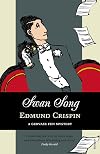
Plenty of the cast and hangers-on of the first post-war production of Wagner's Die Meistersinger had good motives for murdering the lead bass-baritone - and his brother wasn't too fond of him either. But how could any of them possibly have managed to kill him in own dressing room? Gervase Fen investigates.
An excellent locked-room mystery with strong characters, a robust plot and a very ingenious solution. The immediate post-war context is obvious, and the German and Jewish characters add to show more the story, although the latter is occasionally a bit of an unfortunate caricature. There's a very entertaining scene with some Young Intellectuals discussing Wagner's influence on Hitler, and it gets quite serious on a couple of occasions.
One of the things I like about the Gervase Fen books is that, while they are exceedingly frivolous, they don't trivialise the crimes that take place within them. Crispin goes from silliness to gravity in the blink of an eye and to great effect
There are a lot of literary references - and not only to serious literature: I laughed out loud when the crime writer asking Fen for an interview about his amateur sleuthing comments that she also proposes to interview Mrs Bradley and Albert Campion. show less
An excellent locked-room mystery with strong characters, a robust plot and a very ingenious solution. The immediate post-war context is obvious, and the German and Jewish characters add to show more the story, although the latter is occasionally a bit of an unfortunate caricature. There's a very entertaining scene with some Young Intellectuals discussing Wagner's influence on Hitler, and it gets quite serious on a couple of occasions.
One of the things I like about the Gervase Fen books is that, while they are exceedingly frivolous, they don't trivialise the crimes that take place within them. Crispin goes from silliness to gravity in the blink of an eye and to great effect
There are a lot of literary references - and not only to serious literature: I laughed out loud when the crime writer asking Fen for an interview about his amateur sleuthing comments that she also proposes to interview Mrs Bradley and Albert Campion. show less
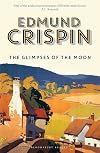
Gervase Fen is not particularly interested in a local murder until another decapitated body is found at the village fête.
Some of the humour has not worn well but other parts still had me laughing till it hurt. The mystery was good fun but it was the surrounding repartee and chaos that really made it worth reading.
Some of the humour has not worn well but other parts still had me laughing till it hurt. The mystery was good fun but it was the surrounding repartee and chaos that really made it worth reading.

Crispin has written an enjoyably camp mystery, featuring a don-turned-detective and an poet getting a bit more action in Oxford than he was expecting. The Moving Toyshop has an almost Wodehousian bent; the protagonists careen from one development to another with hardly pause for breath. Indeed, the mystery - though I suppose logical enough in its own way - felt for me more like a Macguffin used to propel the characters forward than a source of narrative tension in its own right.
Cadogan show more stumbles across a corpse in a deserted toyshop one Oxford night, before being brained himself, and waking up in a completely different location. Will his old chum Professor Fen be able to nut this one out?
I confess, it's pretty fun in the finding out. Despite being written in the sixties, The Moving Toyshop harks back to a much earlier era of novels. An era where girls where "gels", and people drank alcohol the way we drink tea now, i.e. before, after and during virtually every meal of the day, and in-between for pick ups as required.
There's a stagey, conspiratorial air to the novel; Crispin is inviting us to giggle along with him, pick out the literary allusions and the inherent silliness of a cloistered neckbeard solving crimes with such brio and panache. It makes the book absolutely wafer-thin in terms of drive or significance - but its meagre two hundred page length and genuinely quality prose more than compensates.
It's odd to see so much rich vocabulary in such a souffle of a novel, but to be honest, it made this diversion all the more pleasant. A fun few hours to be had here. show less
Cadogan show more stumbles across a corpse in a deserted toyshop one Oxford night, before being brained himself, and waking up in a completely different location. Will his old chum Professor Fen be able to nut this one out?
I confess, it's pretty fun in the finding out. Despite being written in the sixties, The Moving Toyshop harks back to a much earlier era of novels. An era where girls where "gels", and people drank alcohol the way we drink tea now, i.e. before, after and during virtually every meal of the day, and in-between for pick ups as required.
There's a stagey, conspiratorial air to the novel; Crispin is inviting us to giggle along with him, pick out the literary allusions and the inherent silliness of a cloistered neckbeard solving crimes with such brio and panache. It makes the book absolutely wafer-thin in terms of drive or significance - but its meagre two hundred page length and genuinely quality prose more than compensates.
It's odd to see so much rich vocabulary in such a souffle of a novel, but to be honest, it made this diversion all the more pleasant. A fun few hours to be had here. show less
Lists
British Mystery (2)
Awards


You May Also Like


Associated Authors
Statistics
- Works
- 54
- Also by
- 53
- Members
- 7,576
- Popularity
- #3,222
- Rating
- 3.7
- Reviews
- 242
- ISBNs
- 263
- Languages
- 11
- Favorited
- 38

