The Drowning City is a promising debut that overcomes its few hiccups by the conclusion of the book. Downum is definitely one to watch.
Isyllt is a necromancer spy, sent to the steamy south to sow trouble in a rival empire. But on arrival, she realises she's stepped into a colonised city on the precipice. Can she push it over the edge without taking herself with it?
I struggled a little with the start of this book - I am not alone, judging from some reviews. Downum pops you straight into her city, and she fills her story with new terms, names, cultures. The political situation is not complex (an empire, their colonised kingdom, another rival kingdom/empire far to the north) but when it's served up all at once, the info dump was a little intense, especially coupled with constant allusions to what's happening offscreen and multiple protagonists.
This is compounded by Downum's rather heady prose. I don't know if I got used to it, or if she scaled it back a little bit as the book progressed, but either way I was fine with it by the end.
The setting is a kind of pan-Asian setting. It works very well in some places, and not so well in others, as Downum is happy to mix up syntax and cultural norms from very different Asian countries (eg Indonesia, Thailand, Vietnam/Laos, India etc) to make her setting, and for me it was both a bit confusing, and also skirted the line of orientalism for me. I know her fantasy country is not meant to be analogous to one particular Asian country, show more but this kind of blending felt a bit haphazard - I felt she just wanted it to feel exotic and "Asian".
However, these weaknesses were far outweighed by the novel's strengths, first of which was its mature and engrossing plot. I love tales of intrigue, and Downum has a good one here - and one that escalates steadily, avoiding a tit-for-tat feel that Game of Thrones imitators can have. There is a sense of things being at stake in The Drowning City, and also progression.
Whilst the multiple protagonists were confusing at first, as their stories matured and developed I really started to appreciate them. Characters I had written off as one dimensional and shallow came to life, with more complexity than I had given them credit for.
This goes for our main protagonist, Isyllt, as well. Downum stuffs her with backstory and it really does add a lot of depth.
The climax, when it comes, is a superb collation of these separate threads. None of it felt forced or rushed to me, and I finished the book with a feeling of great satisfaction. A promising debut; I bought the sequel immediately. show less
Isyllt is a necromancer spy, sent to the steamy south to sow trouble in a rival empire. But on arrival, she realises she's stepped into a colonised city on the precipice. Can she push it over the edge without taking herself with it?
I struggled a little with the start of this book - I am not alone, judging from some reviews. Downum pops you straight into her city, and she fills her story with new terms, names, cultures. The political situation is not complex (an empire, their colonised kingdom, another rival kingdom/empire far to the north) but when it's served up all at once, the info dump was a little intense, especially coupled with constant allusions to what's happening offscreen and multiple protagonists.
This is compounded by Downum's rather heady prose. I don't know if I got used to it, or if she scaled it back a little bit as the book progressed, but either way I was fine with it by the end.
The setting is a kind of pan-Asian setting. It works very well in some places, and not so well in others, as Downum is happy to mix up syntax and cultural norms from very different Asian countries (eg Indonesia, Thailand, Vietnam/Laos, India etc) to make her setting, and for me it was both a bit confusing, and also skirted the line of orientalism for me. I know her fantasy country is not meant to be analogous to one particular Asian country, show more but this kind of blending felt a bit haphazard - I felt she just wanted it to feel exotic and "Asian".
However, these weaknesses were far outweighed by the novel's strengths, first of which was its mature and engrossing plot. I love tales of intrigue, and Downum has a good one here - and one that escalates steadily, avoiding a tit-for-tat feel that Game of Thrones imitators can have. There is a sense of things being at stake in The Drowning City, and also progression.
Whilst the multiple protagonists were confusing at first, as their stories matured and developed I really started to appreciate them. Characters I had written off as one dimensional and shallow came to life, with more complexity than I had given them credit for.
This goes for our main protagonist, Isyllt, as well. Downum stuffs her with backstory and it really does add a lot of depth.
The climax, when it comes, is a superb collation of these separate threads. None of it felt forced or rushed to me, and I finished the book with a feeling of great satisfaction. A promising debut; I bought the sequel immediately. show less
Pratt's first novel in the Pathfinder series was one of my favourites, so I was looking forward to catching up with beleaguered alchemist Alaeron once more. I was not disappointed. Pratt has written another fun diversion that I happily ate up over a long weekend.
Alaeron has come back to the hated Technic League for one last job, in a bid to stop the flow of assassins since he defected, and staunch his never-ending curiosity. With street rat Skiver by his side, will he be able to make it out of the leagues clutches with mind and body intact?
There's nothing especially outstanding about Reign of Stars, but it all just *works*. Pratt's strength is probably his pacing. I never got a sense I was reading a campaign, and the narrative was engaging and moved at a clip.
Alaeron remains smart when it comes to gadgets and dumb when it comes to humans; it would be easy to overplay this trait and lean on it to heavily. Pratt flirts with that but always backs off, leaving Alaeron a more interesting and three dimensional figure. He also manages to squeeze a bit of character development in there, too.
With a nicely written climax that references and builds on what came before, Paizo has once again put out a very enjoyable stand-alone sword and sorcery novel.
Alaeron has come back to the hated Technic League for one last job, in a bid to stop the flow of assassins since he defected, and staunch his never-ending curiosity. With street rat Skiver by his side, will he be able to make it out of the leagues clutches with mind and body intact?
There's nothing especially outstanding about Reign of Stars, but it all just *works*. Pratt's strength is probably his pacing. I never got a sense I was reading a campaign, and the narrative was engaging and moved at a clip.
Alaeron remains smart when it comes to gadgets and dumb when it comes to humans; it would be easy to overplay this trait and lean on it to heavily. Pratt flirts with that but always backs off, leaving Alaeron a more interesting and three dimensional figure. He also manages to squeeze a bit of character development in there, too.
With a nicely written climax that references and builds on what came before, Paizo has once again put out a very enjoyable stand-alone sword and sorcery novel.
When it comes to Rakish Elizabethan heroes, traipsing around the Scot/English border my bar has been set stratospherically high by Dorothy Dunnett's Lymond. Whilst Sir Robert Carey doesn't quite get there, Chisholm has written a very fun and engaging historical/mystery novel.
Robert Carey - gilded popinjay of the Elizabethan court - is taking up a new post as Warden up at the border. But there's more to his beruffed dandy than meets the eye; dealing with dynastic feuds, old flames, and a dastardly heist will put Carey's mettle to the test. Not to mention the resentful lord whose job he just took...
Chisholm has done her research: The only anachronisms in A Famine of Horses are the kind designed to assist readers without breaking the spell. There are no out-of-place idioms here, but nor does she dive head-first into the accents and sytnax of the time. The result is easy-to-read but flavorsome dialogue that is a pleasure to consume.
Carey himself is devilishly beguiling, and Chisholm's light touch injects plenty of humour into the rollicking yarn.
Indeed, there are jokes, romance, danger and a splash of derring-do - none of it pitched to insult the reader or add a tick to some genre checklist. I felt the story grew organically, propelled by a coterie of engaging and three dimensional characters I look forward to meeting in future novels.
Recommended.
Robert Carey - gilded popinjay of the Elizabethan court - is taking up a new post as Warden up at the border. But there's more to his beruffed dandy than meets the eye; dealing with dynastic feuds, old flames, and a dastardly heist will put Carey's mettle to the test. Not to mention the resentful lord whose job he just took...
Chisholm has done her research: The only anachronisms in A Famine of Horses are the kind designed to assist readers without breaking the spell. There are no out-of-place idioms here, but nor does she dive head-first into the accents and sytnax of the time. The result is easy-to-read but flavorsome dialogue that is a pleasure to consume.
Carey himself is devilishly beguiling, and Chisholm's light touch injects plenty of humour into the rollicking yarn.
Indeed, there are jokes, romance, danger and a splash of derring-do - none of it pitched to insult the reader or add a tick to some genre checklist. I felt the story grew organically, propelled by a coterie of engaging and three dimensional characters I look forward to meeting in future novels.
Recommended.
Daughter of the Sword is a very competent urban fantasy novel. Bein's knowledge of Japan shines through, and the samurai-era chapters are just terrific. I enjoyed this book and will happily read the sequel.
Mariko Oshiro is the only female detective working in Tokyo. When she starts investigating a series of sword murders, her pragmatic worldview is going to by challenged by mystic tales of cursed swords with eerie powers.
Bein largely breaks the book up into contemporary sequences interleavened by historical pieces detailing the history of the swords that form the backbone of the plot. I *loved* the historical sections. Indeed, I would love to read a book containing nothing but samurai stories from Bein.
This is not to say the urban part is poor, I just felt like Bein had more going on in those passages, and they lacked the frankly cool samurai atmosphere.
As a character, Mariko is not especially nuanced, but I felt like Bein did enough to keep her engaging and believable. His strength is probably the plotting, which moved at a consistent and fast pace, and finished with a satisfying bang.
As a debut novel, Daughter of the Sword avoids a lot of rookie mistakes. I look forward to seeing more as Bein's writing matures.
Mariko Oshiro is the only female detective working in Tokyo. When she starts investigating a series of sword murders, her pragmatic worldview is going to by challenged by mystic tales of cursed swords with eerie powers.
Bein largely breaks the book up into contemporary sequences interleavened by historical pieces detailing the history of the swords that form the backbone of the plot. I *loved* the historical sections. Indeed, I would love to read a book containing nothing but samurai stories from Bein.
This is not to say the urban part is poor, I just felt like Bein had more going on in those passages, and they lacked the frankly cool samurai atmosphere.
As a character, Mariko is not especially nuanced, but I felt like Bein did enough to keep her engaging and believable. His strength is probably the plotting, which moved at a consistent and fast pace, and finished with a satisfying bang.
As a debut novel, Daughter of the Sword avoids a lot of rookie mistakes. I look forward to seeing more as Bein's writing matures.
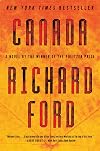
I am a big Ford fan, but bucking the critical consensus, I wouldn't put Canada up there with his very best. It's unequivocally a book of two halves, and for me, the first half was a much stronger book than the second. It left me with a feeling of slight flabbiness, and that Ford had a destination in mind, determined to get there at the expense of better construction.
Del Parson is the narrator of the novel, an older man now stepping us through the most tumultuous period of his life, when his parents resolved to commit a bank robbery. That decision will shatter Del's young life and change him, and his family, inalterably.
The first thing to talk about, when you're talking about Ford's books, is the prose. As always, it is achingly good. His ability to capture the thoughts of a fifteen year old boy, when written from the vantage point of a man in his sixties (both Ford, and the adult Del, looking back), is remarkable. What's even more remarkable is its readability. Ford has never been one for literary pyrotechnics, but the profundity and beauty of his words is easy glide over and miss because it's just so darned easy to digest. The simplicity belies the care and weight Ford invests in his sentences. The way he closes his chapters is just beauitful poetry.
There's an equal facility (mostly; we'll get to that), with his characters. Ford isn't interested in cutting anyone's heads open, and laying their thoughts out for the reader to pick through like beachcombers. Instead we show more get actions, sometimes cryptic; words, often contradictory; and Del's own insightful, but limited observations. It works, very well. Del's portrait of his brittle, strained family and prickly twin sister are so real and undeniably human, I found myself helplessly loving them just as Del does.
Ford struggles more in the second half of the book, where Del interacts with a far more eccentric (and I felt less real) cast of characters. Whilst Ford refuses to overwrite, in dealing with characters that are more extreme, it's easier to slip towards cliche or cypher - which disappointed me. I also felt the rushed timeline lent an unreal air to this part of the story. The tension he had built so masterfully in the first half was strangely absent, and the denouement was simply far too speedy.
For all that, it is not a bad book; simply a less strong one from Ford. Well worth reading from one of the masters of American literature. show less
Del Parson is the narrator of the novel, an older man now stepping us through the most tumultuous period of his life, when his parents resolved to commit a bank robbery. That decision will shatter Del's young life and change him, and his family, inalterably.
The first thing to talk about, when you're talking about Ford's books, is the prose. As always, it is achingly good. His ability to capture the thoughts of a fifteen year old boy, when written from the vantage point of a man in his sixties (both Ford, and the adult Del, looking back), is remarkable. What's even more remarkable is its readability. Ford has never been one for literary pyrotechnics, but the profundity and beauty of his words is easy glide over and miss because it's just so darned easy to digest. The simplicity belies the care and weight Ford invests in his sentences. The way he closes his chapters is just beauitful poetry.
There's an equal facility (mostly; we'll get to that), with his characters. Ford isn't interested in cutting anyone's heads open, and laying their thoughts out for the reader to pick through like beachcombers. Instead we show more get actions, sometimes cryptic; words, often contradictory; and Del's own insightful, but limited observations. It works, very well. Del's portrait of his brittle, strained family and prickly twin sister are so real and undeniably human, I found myself helplessly loving them just as Del does.
Ford struggles more in the second half of the book, where Del interacts with a far more eccentric (and I felt less real) cast of characters. Whilst Ford refuses to overwrite, in dealing with characters that are more extreme, it's easier to slip towards cliche or cypher - which disappointed me. I also felt the rushed timeline lent an unreal air to this part of the story. The tension he had built so masterfully in the first half was strangely absent, and the denouement was simply far too speedy.
For all that, it is not a bad book; simply a less strong one from Ford. Well worth reading from one of the masters of American literature. show less
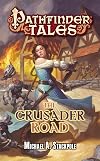
Stackpole, a veteran of the fantasy franchise world, has written an engaging, though not amazing, entry into the pathfinder franchise. The Crusader Road picks up some bonus points for its protagonists and familial focus - which is a welcome change to your average fantasy novel.
Lady Tyressa Vishov has banished to Echo Woods, faced with the dim prospect of building a new township. Along with her introverted son and pining teenaged daughter, she must win over the locals, and avoid the many threats of the Wood.
I enjoyed this book, as I expected I would. Stackpole knows the fundamentals of novel writing, and the setting - whilst not the most febrile in the Pathfinder universe - is still enjoyable.
What really struck me though was how unusual it is to have a fantasy novel where a mother is one of the main characters, and family considerations are a prime motivator throughout the book. In sword and sorcery novels in particular, we're used to lone heroes striding through a hostile world, encumbered only by loot and regrets.
The change worked for me, and I love the idea of having adventures with your family, not in spite of them.
Lady Tyressa Vishov has banished to Echo Woods, faced with the dim prospect of building a new township. Along with her introverted son and pining teenaged daughter, she must win over the locals, and avoid the many threats of the Wood.
I enjoyed this book, as I expected I would. Stackpole knows the fundamentals of novel writing, and the setting - whilst not the most febrile in the Pathfinder universe - is still enjoyable.
What really struck me though was how unusual it is to have a fantasy novel where a mother is one of the main characters, and family considerations are a prime motivator throughout the book. In sword and sorcery novels in particular, we're used to lone heroes striding through a hostile world, encumbered only by loot and regrets.
The change worked for me, and I love the idea of having adventures with your family, not in spite of them.
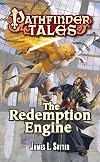
As overall editor, Sutter is arguably the star of the Pathfinder Tales novels, and his debut was terrific. I'm pleased to report I enjoyed its sequel just as much, though I do look forward some for developed in the future.
Salim is sent to that hive of scum and villainy, Kaer Marga, tasked with tracking down a disparity in the accounting of souls. His adventure will take him all through the city, and below it - and through the domains of heaven and hell as well.
Sutter seems to reserve the most creative and fabulous settings of the Pathfinder universe for his own books, and The Redemption Engine is no exception.
Every location is stuffed full of interesting people, cultures, and scenery. Salim's whirlwind tour through half a dozen locales that could easily serve up a stand alone novel on themselves was delightful to me. I never knew what Sutter was going to through up next.
This sense of surprise persisted with the narrative. It would be a stretch to call The Redemption Engine a mystery, but there is a procedural element to it. Salim gathers clues, and pieces them together before a spectacular conclusion. I was never bored, even when the mystery was was clear to me because Sutter is always invested in his characters first and foremost. Even minor players get a back story and a sense of something bigger in their lives and the greater world. I enjoy it very much, particular Salim's sidekicks in this outing. Pathfinder again demonstrates its willingness to go beyond the show more familiar trope - I really applaud its comfort in depicting characters with alternative sexualities and cultures, and taking it seriously.
Which bring me to the, not flaw exactly, but weakness of the book. Salim has been a lone wolf for so long, and it does lend a more episodic sense to the book than warranted. Sutter works hard to give us a sense of how Salim is developing and changing, but I would love to see some regulars in the books, in the same way that Dave Gross has expanded the cast to great effect in his books in this universe. Still, this is a quible, The Redemption Engine is a great read, and Sutter sets the standard again. show less
Salim is sent to that hive of scum and villainy, Kaer Marga, tasked with tracking down a disparity in the accounting of souls. His adventure will take him all through the city, and below it - and through the domains of heaven and hell as well.
Sutter seems to reserve the most creative and fabulous settings of the Pathfinder universe for his own books, and The Redemption Engine is no exception.
Every location is stuffed full of interesting people, cultures, and scenery. Salim's whirlwind tour through half a dozen locales that could easily serve up a stand alone novel on themselves was delightful to me. I never knew what Sutter was going to through up next.
This sense of surprise persisted with the narrative. It would be a stretch to call The Redemption Engine a mystery, but there is a procedural element to it. Salim gathers clues, and pieces them together before a spectacular conclusion. I was never bored, even when the mystery was was clear to me because Sutter is always invested in his characters first and foremost. Even minor players get a back story and a sense of something bigger in their lives and the greater world. I enjoy it very much, particular Salim's sidekicks in this outing. Pathfinder again demonstrates its willingness to go beyond the show more familiar trope - I really applaud its comfort in depicting characters with alternative sexualities and cultures, and taking it seriously.
Which bring me to the, not flaw exactly, but weakness of the book. Salim has been a lone wolf for so long, and it does lend a more episodic sense to the book than warranted. Sutter works hard to give us a sense of how Salim is developing and changing, but I would love to see some regulars in the books, in the same way that Dave Gross has expanded the cast to great effect in his books in this universe. Still, this is a quible, The Redemption Engine is a great read, and Sutter sets the standard again. show less
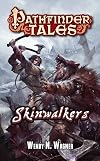
Skinwalkers is not the strongest entry in the typically reliable Pathfinder Tales series. A mediocre narrative marries to a heretofore unseen level of violence to produce a brutal, but somewhat flat novel.
Jendara is thrown back into her tumultuous past when a group of strange raiders attack her home and people. Can she solve the mystery behind these attacks and confront her own unhappy past?
This wasn't a bad book, but it was decidedly average. I felt like Wagner was always writing to a plan - but not in a good way - rather, chapters, incidences and twists all felt pre-decided, and that it was simply a matter of getting the characters in position for things to happen. It all felt a little rote to me.
This isn't helped by a dearth of characterisation. Jendara is fleshed out, but virtually no one else gets any flavour; they felt largely interchangeable to me. It doesn't help that, as a character, Jendara is pretty simple. Coupled with the simplistic narrative, I was left with what would have made a fine short story but really groaned under the weight of being a novel.
In addition the setting felt so homogenous - dare I say monotonous. The archipelago itself was boring to me, and unchanging, and the character's never got out of it except for a completely unnecessary diversion to an incongruous pathfinder library that seemed to exist only to pad the length.
Coupled with the grisly violence, which was gratuitous and failed to add anything, I didn't love this book.
If you are show more after a freezing setting in the pathfinder world, Elaine Cunningham's Winter Witch is a stronger book on all counts. show less
Jendara is thrown back into her tumultuous past when a group of strange raiders attack her home and people. Can she solve the mystery behind these attacks and confront her own unhappy past?
This wasn't a bad book, but it was decidedly average. I felt like Wagner was always writing to a plan - but not in a good way - rather, chapters, incidences and twists all felt pre-decided, and that it was simply a matter of getting the characters in position for things to happen. It all felt a little rote to me.
This isn't helped by a dearth of characterisation. Jendara is fleshed out, but virtually no one else gets any flavour; they felt largely interchangeable to me. It doesn't help that, as a character, Jendara is pretty simple. Coupled with the simplistic narrative, I was left with what would have made a fine short story but really groaned under the weight of being a novel.
In addition the setting felt so homogenous - dare I say monotonous. The archipelago itself was boring to me, and unchanging, and the character's never got out of it except for a completely unnecessary diversion to an incongruous pathfinder library that seemed to exist only to pad the length.
Coupled with the grisly violence, which was gratuitous and failed to add anything, I didn't love this book.
If you are show more after a freezing setting in the pathfinder world, Elaine Cunningham's Winter Witch is a stronger book on all counts. show less
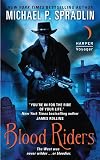
Blood Riders is a satisfying western/horror that gets the job done with a competence I appreciated. It's not going to set anyone's world on fire, but in a genre riddled with crap, it's definitely one of the better ones.
Captain Hollister is disgraced after his wild stories of being attacked by superhumans are discounted. But something weird is happening in the west, and he's being pressed back into service by none other than Allan Pinkerton himself. Will Hollister be able to prevent a terrible evil from spreading?
The answer, may not exactly surprise you, but it's a fun journey getting there. Spradlin has worked as a writer for quite some time in various areas, and his experience shows. The prose is clean and unobtrusive, the pacing excellent - probably the best strength of the novel - and the ideas creative without being silly.
The novel itself is built around several set pieces, and he has a real gift for this mini "episodes" as it were. Deserted towns overrun by vampires, with ticking deadlines and civilians in danger, it sounds a little hackneyed but he puts them together really well.
The conclusion was satisfying, setting up for an obvious sequel that never seemed to arrive, which is disappointing, as I would read it.
Captain Hollister is disgraced after his wild stories of being attacked by superhumans are discounted. But something weird is happening in the west, and he's being pressed back into service by none other than Allan Pinkerton himself. Will Hollister be able to prevent a terrible evil from spreading?
The answer, may not exactly surprise you, but it's a fun journey getting there. Spradlin has worked as a writer for quite some time in various areas, and his experience shows. The prose is clean and unobtrusive, the pacing excellent - probably the best strength of the novel - and the ideas creative without being silly.
The novel itself is built around several set pieces, and he has a real gift for this mini "episodes" as it were. Deserted towns overrun by vampires, with ticking deadlines and civilians in danger, it sounds a little hackneyed but he puts them together really well.
The conclusion was satisfying, setting up for an obvious sequel that never seemed to arrive, which is disappointing, as I would read it.
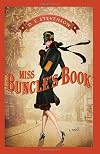
This is most definitely not a book for everyone, but if you like affectionate takes on English eccentrics, it's hard to get better.
Miss Buncle, confronted with dwindling dividends, resolves that writing a book is the best way of shoring up her finances. Wholly without imagination, however, she resorts to thinly disguised portraits of her own village. Thus does the sleepy Silverstream become "Copperfield", and when its denizens find out, chaos breaks loose.
I really, really enjoyed this book. It's light as a souffle, but Stevenson's frothy prose up to the task. English farce is a kind of subgenre, one I'm quite partial too, but it can be tricky to pull off. If you make the book too lightweight, there's no momentum to keep a reader going. But if you weigh it down with serious characterisation or narrative, the inherent absurdity becomes too much.
Stevenson navigates the territory most ably. The book has a fairly cracking pace, and the wide cast provides a welcome contrast, ranging from unpleasant and silly to sensible and nice - and every permutation in between.
Whilst gently mocking, the book's tone never slips into bitterness, and nor does Stevenson deprive the reader of the ending we want. The dialogue is light and very play-like, and the prose itself - amused, slightly removed, flowery in just the right places - is a vital contributor to the book's humour.
But there's an extra treat to Mrs Buncle's book: in a postmodern twist very progressive for 1934, the show more book-within-a-book structure becomes its own delightful puzzle box.
The parallels (and differences) - between the characters of Silverstream and Copperfield, and their fates, lends a very pleasing, mischievous complexity to an otherwise straight forward novel. In addition there's a lovely recursive element, where a disruptive element in the book-within is mirrored by the production of the book itself in the actual novel. I probably haven't explained that very well. Suffice to say it's well done, Stevenson doesn't harp on it, and it's quite clever.
I can't really picture a way this book could have accomplished what it wanted to any better - hence a well-deserved 5 stars. I wouldn't recommend it to everyone, but it's about as good as it gets within the genre. show less
Miss Buncle, confronted with dwindling dividends, resolves that writing a book is the best way of shoring up her finances. Wholly without imagination, however, she resorts to thinly disguised portraits of her own village. Thus does the sleepy Silverstream become "Copperfield", and when its denizens find out, chaos breaks loose.
I really, really enjoyed this book. It's light as a souffle, but Stevenson's frothy prose up to the task. English farce is a kind of subgenre, one I'm quite partial too, but it can be tricky to pull off. If you make the book too lightweight, there's no momentum to keep a reader going. But if you weigh it down with serious characterisation or narrative, the inherent absurdity becomes too much.
Stevenson navigates the territory most ably. The book has a fairly cracking pace, and the wide cast provides a welcome contrast, ranging from unpleasant and silly to sensible and nice - and every permutation in between.
Whilst gently mocking, the book's tone never slips into bitterness, and nor does Stevenson deprive the reader of the ending we want. The dialogue is light and very play-like, and the prose itself - amused, slightly removed, flowery in just the right places - is a vital contributor to the book's humour.
But there's an extra treat to Mrs Buncle's book: in a postmodern twist very progressive for 1934, the show more book-within-a-book structure becomes its own delightful puzzle box.
The parallels (and differences) - between the characters of Silverstream and Copperfield, and their fates, lends a very pleasing, mischievous complexity to an otherwise straight forward novel. In addition there's a lovely recursive element, where a disruptive element in the book-within is mirrored by the production of the book itself in the actual novel. I probably haven't explained that very well. Suffice to say it's well done, Stevenson doesn't harp on it, and it's quite clever.
I can't really picture a way this book could have accomplished what it wanted to any better - hence a well-deserved 5 stars. I wouldn't recommend it to everyone, but it's about as good as it gets within the genre. show less

The panegyrics splattered across the front and back of The Information Officer mean it has some high expectations to meet, and Mills _mostly_ meets them, though I must say I was looking for a little more.
The island of Malta is being bombed into dust by Italian and German bombers, but there's something darker on the island itself, as well. When the eponymous Officer, Max, is confronted by the bodies of several Maltese women, he is set on a path to unearth a British killer on the island, before the situation on the ground explodes both literally and figuratively.
This book had some strong points, and some weaker ones. Mills' prose is quite accomplished. Evocative without being needlessly flashy, it's the perfect vehicle for his clearly in-depth research. He is able to conjure up the atmosphere of the Island's virtual siege convincingly.
Max himself - along with the other characters - is interesting, albeit a little bit colourless. It's always a challenge in novels that rely heavily on action in the narrative; your protagonist is constantly having to act, but not necessarily in ways that would set them apart from anyone else.
The supporting cast fares better in this respect; the breathing room allows more flavour to emerge, and I found myself wishing I could see more of them. Many of Max's adventures take place alone.
The plot is arguably the weakest part of the novel. It's not weak, per se, but it is a bit silly in more than one place. Its lack of realism is jarring in a show more novel where everything else feels quite real. This is typified by the ending, which devolves into a very silly, movie-like climax coupled with some redundant - and even more silly - bookends.
I am also prejudiced against psychos in crime/mystery novels. They feel so hackneyed and boring and lazy to me, and it becomes clear early on that we are dealing with a psycho (another silly part: interludes written from the psycho's perspective), and thus the need for credible, interesting motivation and characterisation is thrown out the window. They are an easy out for a writer, and should be avoided, I feel.
So in the end, The Information Officer really was a mix of good and bad parts to me, but Mills definitely has potential if he can get his Airport Thriller inclinations under control. show less
The island of Malta is being bombed into dust by Italian and German bombers, but there's something darker on the island itself, as well. When the eponymous Officer, Max, is confronted by the bodies of several Maltese women, he is set on a path to unearth a British killer on the island, before the situation on the ground explodes both literally and figuratively.
This book had some strong points, and some weaker ones. Mills' prose is quite accomplished. Evocative without being needlessly flashy, it's the perfect vehicle for his clearly in-depth research. He is able to conjure up the atmosphere of the Island's virtual siege convincingly.
Max himself - along with the other characters - is interesting, albeit a little bit colourless. It's always a challenge in novels that rely heavily on action in the narrative; your protagonist is constantly having to act, but not necessarily in ways that would set them apart from anyone else.
The supporting cast fares better in this respect; the breathing room allows more flavour to emerge, and I found myself wishing I could see more of them. Many of Max's adventures take place alone.
The plot is arguably the weakest part of the novel. It's not weak, per se, but it is a bit silly in more than one place. Its lack of realism is jarring in a show more novel where everything else feels quite real. This is typified by the ending, which devolves into a very silly, movie-like climax coupled with some redundant - and even more silly - bookends.
I am also prejudiced against psychos in crime/mystery novels. They feel so hackneyed and boring and lazy to me, and it becomes clear early on that we are dealing with a psycho (another silly part: interludes written from the psycho's perspective), and thus the need for credible, interesting motivation and characterisation is thrown out the window. They are an easy out for a writer, and should be avoided, I feel.
So in the end, The Information Officer really was a mix of good and bad parts to me, but Mills definitely has potential if he can get his Airport Thriller inclinations under control. show less
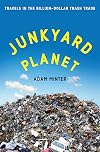
Minter, son of a scrap-man, and one of the few journalists working exclusively on recycling issues, has written a fascinating, inspiring, disturbing, and at times almost magical exploration of the world of recycling.
It's a complex story, and it pulls in stories about globalisation, technology, economics and commodity markets, manufacturing, and culture. I have worked in the sector and know it reasonably well, but was still surprised and amazed in virtually every chapter.
Minter, though clearly an expert, never forgets his casual reader, and consistently positions his story and facts around what an average person would make of them. Explanations are succinct and lucid; priorities are not arranged commercially. His enthusiasm around the sheer act of scrapping itself does set him apart, undeniably, but his excitement is infectious, and I found myself sharing it more often than not.
It's not a long book, but neither is it too short. Minter has delivered something thorough that includes a good deal of interesting history, demonstrating how the very complex market of today came to be.
My only wish is that he had spent a little more time - or whole chpaters, even - on the waste disposal industry, as opposed to just the recycling industry. It is equally fascinating and complex. To be fair, however, that is not is expertise, and is probably more than enough for another book.
Here in the West, we tend to forget about our trash once it goes in the bin - this book is an show more invigorating, intriguing antidote to that. Recommended. show less
It's a complex story, and it pulls in stories about globalisation, technology, economics and commodity markets, manufacturing, and culture. I have worked in the sector and know it reasonably well, but was still surprised and amazed in virtually every chapter.
Minter, though clearly an expert, never forgets his casual reader, and consistently positions his story and facts around what an average person would make of them. Explanations are succinct and lucid; priorities are not arranged commercially. His enthusiasm around the sheer act of scrapping itself does set him apart, undeniably, but his excitement is infectious, and I found myself sharing it more often than not.
It's not a long book, but neither is it too short. Minter has delivered something thorough that includes a good deal of interesting history, demonstrating how the very complex market of today came to be.
My only wish is that he had spent a little more time - or whole chpaters, even - on the waste disposal industry, as opposed to just the recycling industry. It is equally fascinating and complex. To be fair, however, that is not is expertise, and is probably more than enough for another book.
Here in the West, we tend to forget about our trash once it goes in the bin - this book is an show more invigorating, intriguing antidote to that. Recommended. show less
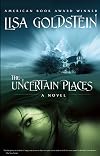
I wanted to like this book more than I did. Unfortunately a marked similarity to John Cowley's Little, Big - a far superior novel on every count - made it hard to overlook the weaknesses.
Will Taylor becomes involved with the charmed Feierabend family in the early seventies. But there's more to the family than meets the eye, and he's going to find himself swept up in the world of the fairies.
In fairness, The Uncertain Places is not a bad book, it's just very middling, and the plot is super, super similar to John Cowley's book Little, Big - also concerning the multi-decadal involvement of one family with fairies. Whilst Cowley's novel may have had a somewhat meandering narrative, it is indisputably a work of literature (arguably a major one), and it threw the flaws of this book into sharp relief.
The problem starts with the characterisation, which is not very strong. Will's voice (the book is written in first person) is mostly believable and interesting, but all the other characters seemed shallow to me. It doesn't help that the narrative is one where Things Happen to people, rather than people driving the story. This makes for very reactive characters, always responding in understandable-but-predictable ways to things. It also crowds out a lot of charactersation because the characters never really get to respond to each other, they are always responding to Things, even with each other, and I never got to see sides of these people that would exist away from the main show more narrative.
The prose itself is utilitarian. I know I'm harping on, but one of the great strengths of Little, Big was its dream-like, heady prose - perfectly suited to a tale of the fey. The Uncertain Places had prose better suited to a much more pedestrian topic, and I couldn't help feeling it rendered the fantastic into the suburban at times.
The predictable shape of the narrative didn't help matters. This is a very narrative driven book, but I felt it lacked a lot of complexity, in favour of an episodic, and-then-and-then-and-then approach. The callbacks weren't subtle or interesting enough, the interface with fairy tales was often clunky or obvious - and I say this as someone who *loves* fairy tales, and has a very deep knowledge of them.
I mean, the book is innocent enough in itself, but I was left wanting more on every count except for length - the opposite to how it should be, really. show less
Will Taylor becomes involved with the charmed Feierabend family in the early seventies. But there's more to the family than meets the eye, and he's going to find himself swept up in the world of the fairies.
In fairness, The Uncertain Places is not a bad book, it's just very middling, and the plot is super, super similar to John Cowley's book Little, Big - also concerning the multi-decadal involvement of one family with fairies. Whilst Cowley's novel may have had a somewhat meandering narrative, it is indisputably a work of literature (arguably a major one), and it threw the flaws of this book into sharp relief.
The problem starts with the characterisation, which is not very strong. Will's voice (the book is written in first person) is mostly believable and interesting, but all the other characters seemed shallow to me. It doesn't help that the narrative is one where Things Happen to people, rather than people driving the story. This makes for very reactive characters, always responding in understandable-but-predictable ways to things. It also crowds out a lot of charactersation because the characters never really get to respond to each other, they are always responding to Things, even with each other, and I never got to see sides of these people that would exist away from the main show more narrative.
The prose itself is utilitarian. I know I'm harping on, but one of the great strengths of Little, Big was its dream-like, heady prose - perfectly suited to a tale of the fey. The Uncertain Places had prose better suited to a much more pedestrian topic, and I couldn't help feeling it rendered the fantastic into the suburban at times.
The predictable shape of the narrative didn't help matters. This is a very narrative driven book, but I felt it lacked a lot of complexity, in favour of an episodic, and-then-and-then-and-then approach. The callbacks weren't subtle or interesting enough, the interface with fairy tales was often clunky or obvious - and I say this as someone who *loves* fairy tales, and has a very deep knowledge of them.
I mean, the book is innocent enough in itself, but I was left wanting more on every count except for length - the opposite to how it should be, really. show less
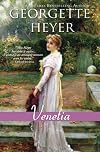
Another Heyer, another enjoyable romp of a standard that romps rarely aspire to, let alone realise. I only wish I could find other romance writers with literally half the wit and talent.
Venetia's sheltered life receives an unexpected guest in the presence of confirmed rake Lord Damerel. But whilst Venetia may be sheltered, she's hardly a wallflower. Can this feisty lass win over the country's most scandalous reprobate (I think we all know the answer to this one).
There's not much point assessing a Heyer novel by the standard of the romance genre. It's like assessing Buckingham Palace by the standard of your average sand castle. Suffice to say, if you've never read Heyer, you're in for a treat. More interesting is where Venetia slots into her existing oeuvre, and my answer to that is in the higher tiers.
The book lacks the almost farcical situation comedy that drives my favourite Heyers, like Cotillon, or The Grand Sophy (it is also, if I'm not mistaken somewhat longer than those two novels). However, it makes up for it with some of her best characterisation in the forms of Venetia, her brother Aubrey, and Damerel.
There can be a somewhat "stagy" quality to Heyer's books, exacerbated by her gravitation towards stock characters at almost pantomime levels. This book, however, features more nuance on this count than some of her others. It was one of her later novels, and I think it's reflected in a maturity and complexity to the central relationships that compensates for the show more length and rather less helter-skelter plot than is typical.
This is not to imply the book lacks events. On the contrary, the pacing is steady and there's several changes of locale in addition. I guess there's a stronger human element propelling events in this book.
The best part is, as ever, the dialogue. Line-for-line, I strongly believe that Heyer is one of the best dialogue writers of all time - in any genre. Again, this book doesn't necessarily vibrate with the zingers of some of her others, but there's a wonderful, almost musical, quality to the conversation. It flows smoothly; every character has a distinct voice; and it shows a deftness and craft that is just a treat for anyone who enjoys reading or fine prose. The colloquial is delivered without sinking into artifice or incomprehension and it cannot be easy.
As a reader, there is a particular sensation that I relish from books like this: The feeling of being in safe hands. It's like sinking into bed at a five star hotel; everything is taken care of; someone is doing all the thinking for you and will ensure you enjoy yourself; somebody here really knows what they're doing.
I don't get it often, and most usually from writers with a long, successful history in genre like this. But it delights me, every time. If you haven't had that feeling for a while, give Heyer a whirl. show less
Venetia's sheltered life receives an unexpected guest in the presence of confirmed rake Lord Damerel. But whilst Venetia may be sheltered, she's hardly a wallflower. Can this feisty lass win over the country's most scandalous reprobate (I think we all know the answer to this one).
There's not much point assessing a Heyer novel by the standard of the romance genre. It's like assessing Buckingham Palace by the standard of your average sand castle. Suffice to say, if you've never read Heyer, you're in for a treat. More interesting is where Venetia slots into her existing oeuvre, and my answer to that is in the higher tiers.
The book lacks the almost farcical situation comedy that drives my favourite Heyers, like Cotillon, or The Grand Sophy (it is also, if I'm not mistaken somewhat longer than those two novels). However, it makes up for it with some of her best characterisation in the forms of Venetia, her brother Aubrey, and Damerel.
There can be a somewhat "stagy" quality to Heyer's books, exacerbated by her gravitation towards stock characters at almost pantomime levels. This book, however, features more nuance on this count than some of her others. It was one of her later novels, and I think it's reflected in a maturity and complexity to the central relationships that compensates for the show more length and rather less helter-skelter plot than is typical.
This is not to imply the book lacks events. On the contrary, the pacing is steady and there's several changes of locale in addition. I guess there's a stronger human element propelling events in this book.
The best part is, as ever, the dialogue. Line-for-line, I strongly believe that Heyer is one of the best dialogue writers of all time - in any genre. Again, this book doesn't necessarily vibrate with the zingers of some of her others, but there's a wonderful, almost musical, quality to the conversation. It flows smoothly; every character has a distinct voice; and it shows a deftness and craft that is just a treat for anyone who enjoys reading or fine prose. The colloquial is delivered without sinking into artifice or incomprehension and it cannot be easy.
As a reader, there is a particular sensation that I relish from books like this: The feeling of being in safe hands. It's like sinking into bed at a five star hotel; everything is taken care of; someone is doing all the thinking for you and will ensure you enjoy yourself; somebody here really knows what they're doing.
I don't get it often, and most usually from writers with a long, successful history in genre like this. But it delights me, every time. If you haven't had that feeling for a while, give Heyer a whirl. show less
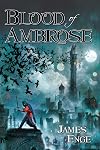
Blood of Ambrose is an enjoyable different sword-and-sorcery novel - a bit of a throwback in many ways. Enge has created an interesting cast of characters and a narrative with a nice pace to it.I'm looking forward to further entries in the series.
The King of Ambrose has always relied on help from the semi-mortal Ambrosius siblings - powerful wizards with a swarm of legends trailing them. Just as well, as the young King as been usurped, and he will need every ounce of creativity his "uncle" and "aunty" can bring to regain, and retain, his throne.
I enjoyed this novel. Enge is one of a growing number of fantasy writers writers, not outside genre per se, but certainly distinct from the prevailing trends. The antecedents of Blood of Ambrose are earlier fantasy novels. There's a kind of humour and Vance-ian touch to proceedings, and also a clear debt to Fritz Leiber.
As it happens, I love those older authors and their style of fantasy, so I felt right at home with Blood of Ambrose. This was Enge's first novel, and there are a few rough corners (the prose gets a little unfinished at times), but there's a solid base underneath it all.
That base is the characterisation. The Ambrose siblings, Morlock and Ambrosia, are well-drawn, interesting, and call back to a very rich history during the course of this book. Enge is happy to keep some cards off the table, and it makes for a complexity and ambiguity that really bodes well for the future books in the series.
Morlock in show more particular, is a tortured, and flawed figure who is always compelling. Enge resist silly hyperbole when it comes to these flaws - something a lot of fantasy writers succumb to, and it keeps the character fresh and his responses unpredictable.
A great start for a debut novel and first in a series. I'll definitely read more. show less
The King of Ambrose has always relied on help from the semi-mortal Ambrosius siblings - powerful wizards with a swarm of legends trailing them. Just as well, as the young King as been usurped, and he will need every ounce of creativity his "uncle" and "aunty" can bring to regain, and retain, his throne.
I enjoyed this novel. Enge is one of a growing number of fantasy writers writers, not outside genre per se, but certainly distinct from the prevailing trends. The antecedents of Blood of Ambrose are earlier fantasy novels. There's a kind of humour and Vance-ian touch to proceedings, and also a clear debt to Fritz Leiber.
As it happens, I love those older authors and their style of fantasy, so I felt right at home with Blood of Ambrose. This was Enge's first novel, and there are a few rough corners (the prose gets a little unfinished at times), but there's a solid base underneath it all.
That base is the characterisation. The Ambrose siblings, Morlock and Ambrosia, are well-drawn, interesting, and call back to a very rich history during the course of this book. Enge is happy to keep some cards off the table, and it makes for a complexity and ambiguity that really bodes well for the future books in the series.
Morlock in show more particular, is a tortured, and flawed figure who is always compelling. Enge resist silly hyperbole when it comes to these flaws - something a lot of fantasy writers succumb to, and it keeps the character fresh and his responses unpredictable.
A great start for a debut novel and first in a series. I'll definitely read more. show less
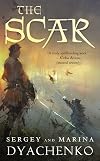
This book came out of nowhere and really wowed. It's considerably better - and considerably more different - than the predictable grimdark, thousand-cast sagas publishers seem to be sticking with.
Egert Soll is an arrogant young soldier, toast of the town and pinnacle of his circle. But a terrible event (avoid reading blurbs as they cover a third of this book, much to my anger), changes his life completely, and he will need all his courage to overcome new, inimical foes.
That plot summary is hopelessly vague and cliched - but I really enjoyed the way this book unfolded its quite touching an humane story, and I don't want to spoil it for anyone else.
The Scar reminded me very much of a fairy tale in terms of its narrative building blocks. Magic curses, old wizards, and, yes, love, all make an appearance. But the way Dyanchenko deals with them - with seriousness, emotion and compassion - made the book really sing.
The characterisation is superb. Egert, and every other character, is believable, interesting and complex. Characters in fantasy novels are often very reactive (things happen to the,) or one dimensional (he's the angry one! She's driven by revenge! Oh, she's the funny one!). The Scar avoid this, given even small characters an internal contrast, and with that comes an almost exciting ambiguity; they react like real people, and their emotions frequently make the decisions for them. The characters (of which there are not many) form the heart of The Scar, and they are show more a great success.
They are also employed to drive a well structured narrative that provides excellent climax and resolution. I am unsure if this is the case in the novel's original Russian publication, but the book is effectively a stand-alone novel in English, and I was well satisfied with its resolution and overall narrative. Dyachenko has a nice sense of pace that serves up plenty of interest and even excitement without feeling monotone or exhausting.
The fact I genuinely cared about the characters made small, emotional struggles exciting - something far to few fantasy authors understand. Internal conflicts if done well can produce just as much tension it, and there's no need to serve up bombastic violence to get it.
The translation is also good. The prose is softly lyrical without being flowery or affected. It's different enough to be interesting, but not indulgent or strange for the sake of strangeness. It has a clean quality I really appreciate and it was obvious to me this is not Dyachenko's first book.
All in all, The Scar was such a refreshing read from a genre that gets very modish and stale at times. I'm disappointed - but not wholly surprised - it hasn't made more of a splash. show less
Egert Soll is an arrogant young soldier, toast of the town and pinnacle of his circle. But a terrible event (avoid reading blurbs as they cover a third of this book, much to my anger), changes his life completely, and he will need all his courage to overcome new, inimical foes.
That plot summary is hopelessly vague and cliched - but I really enjoyed the way this book unfolded its quite touching an humane story, and I don't want to spoil it for anyone else.
The Scar reminded me very much of a fairy tale in terms of its narrative building blocks. Magic curses, old wizards, and, yes, love, all make an appearance. But the way Dyanchenko deals with them - with seriousness, emotion and compassion - made the book really sing.
The characterisation is superb. Egert, and every other character, is believable, interesting and complex. Characters in fantasy novels are often very reactive (things happen to the,) or one dimensional (he's the angry one! She's driven by revenge! Oh, she's the funny one!). The Scar avoid this, given even small characters an internal contrast, and with that comes an almost exciting ambiguity; they react like real people, and their emotions frequently make the decisions for them. The characters (of which there are not many) form the heart of The Scar, and they are show more a great success.
They are also employed to drive a well structured narrative that provides excellent climax and resolution. I am unsure if this is the case in the novel's original Russian publication, but the book is effectively a stand-alone novel in English, and I was well satisfied with its resolution and overall narrative. Dyachenko has a nice sense of pace that serves up plenty of interest and even excitement without feeling monotone or exhausting.
The fact I genuinely cared about the characters made small, emotional struggles exciting - something far to few fantasy authors understand. Internal conflicts if done well can produce just as much tension it, and there's no need to serve up bombastic violence to get it.
The translation is also good. The prose is softly lyrical without being flowery or affected. It's different enough to be interesting, but not indulgent or strange for the sake of strangeness. It has a clean quality I really appreciate and it was obvious to me this is not Dyachenko's first book.
All in all, The Scar was such a refreshing read from a genre that gets very modish and stale at times. I'm disappointed - but not wholly surprised - it hasn't made more of a splash. show less

I picked up Spitfire very cheaply for my kindle,, and I must say that the price is right. Despite flashes of cleverness and a catchy opening, Sandoval falls back on some very silly yet predictable plotting, and the book loses its initial zing.
Receptionist Tomi is dealing with an unpleasant job, when her ex is found dead in his refrigerator. Can she unravel the mystery whilst juggling a demanding boss and a new love interest?
The summary highlights one of Spitfire's problems - it wants to be romance, comedy, crime novel, thriller, all wrapped up in one. But such a tonal diversity would be a challenge for any writer, and Sandoval is noticeably better at some of the genres than others.
Spitfire starts out funny and quirky. This was the strongest part of the book. Tomi is not an especially in-depth character but her wisecracks were amusing enough. Likewise the romance, whilst utterly predictable, is handled in a kind of bubbly, fun way.
But the book really falls down on the crime/thriller stuff, and this comes to dominate the latter half of the book. As a crime novel, the clues are arbitrary, often nonsensical and poorly structured. As a thriller, you're never in any doubt that Tomi will pull through, and Sandoval's narrator and the flagrant implausibility of the characters, plot and dialogue involved with the crime sequence pushes away tension like a skilled masseuse.
It's much better, for everyone, when books finish stronger than they began. Unfortunately the opposite was show more the case with this one. show less
Receptionist Tomi is dealing with an unpleasant job, when her ex is found dead in his refrigerator. Can she unravel the mystery whilst juggling a demanding boss and a new love interest?
The summary highlights one of Spitfire's problems - it wants to be romance, comedy, crime novel, thriller, all wrapped up in one. But such a tonal diversity would be a challenge for any writer, and Sandoval is noticeably better at some of the genres than others.
Spitfire starts out funny and quirky. This was the strongest part of the book. Tomi is not an especially in-depth character but her wisecracks were amusing enough. Likewise the romance, whilst utterly predictable, is handled in a kind of bubbly, fun way.
But the book really falls down on the crime/thriller stuff, and this comes to dominate the latter half of the book. As a crime novel, the clues are arbitrary, often nonsensical and poorly structured. As a thriller, you're never in any doubt that Tomi will pull through, and Sandoval's narrator and the flagrant implausibility of the characters, plot and dialogue involved with the crime sequence pushes away tension like a skilled masseuse.
It's much better, for everyone, when books finish stronger than they began. Unfortunately the opposite was show more the case with this one. show less

Three Parts Dead received rave reviews on release. It is indeed a very promising debut novel, but I couldn't help feeling it had a little more promise than it actually delivered; Gladstone still has some structural and narrative issues to work through, I think.
Tara is a kind of magic contract lawyer, for lack of a better description, and her first case on the job is a doozy. A god has died, and she needs to find out the whys and hows, before she follows suit.
I immediately liked this book for its abundance of strong - and interesting - female characters. It's depressingly unusual in fantasy novels and Gladstone doesn't make a big song and dance about it.
The prose was reasonable, a little bit on the heavy-handed side but nothing too terrible, and the world-building is wildly imaginative - really very creative and unique without (mostly) feeling gimmicky.
My problem was the way the world-building intersected with the narrative. The book suffers from a bit of China-Mieville syndrome - incredibly fecund and creative setting; strip away the dressing and the narrative is pretty standard.
Gladstone is clearly a rigorous planner, and there was a sense of 'hitting the marks' that I felt all through the book. Major plot points which should have been surprising were instead somewhat predictable and I found myself waiting for them. This is also meant that the MacGuffins (of which there are more than a few) felt very obvious to me.
Outside of Tara and her boss/mentor, other characters show more were both familiar, and thin. The travails of an addict meant to inspire sympathy felt very ho-hum and predictable, whereas a vampire who barely featured was far more interesting.
I felt that Gladstone was prepared to sacrifice a lot of the creativity and ambiguity in the book to a narrative he was determined to adhere to, and wasn't *especially* complex or original. This was compounded by the florid world-building; there were several points where I felt Gladstone could have backed off the pace a bit and given me time to luxuriate in his locale, but was instead reduced to ramming flavour down my throat in order to keep the action going and move on to the next thing.
I suppose I'm really saying I felt the book wanted to concentrate on what I thought was its weakest aspects - characterisation, especially motivation and action-y narrative - instead of its best parts (terrific world-building, two strong leads with interesting histories).
This is not to say that Three Parts Dead was bad - it's a fine enough book and I will likely read his next one - just that the rhapsody it received was not entirely justified. show less
Tara is a kind of magic contract lawyer, for lack of a better description, and her first case on the job is a doozy. A god has died, and she needs to find out the whys and hows, before she follows suit.
I immediately liked this book for its abundance of strong - and interesting - female characters. It's depressingly unusual in fantasy novels and Gladstone doesn't make a big song and dance about it.
The prose was reasonable, a little bit on the heavy-handed side but nothing too terrible, and the world-building is wildly imaginative - really very creative and unique without (mostly) feeling gimmicky.
My problem was the way the world-building intersected with the narrative. The book suffers from a bit of China-Mieville syndrome - incredibly fecund and creative setting; strip away the dressing and the narrative is pretty standard.
Gladstone is clearly a rigorous planner, and there was a sense of 'hitting the marks' that I felt all through the book. Major plot points which should have been surprising were instead somewhat predictable and I found myself waiting for them. This is also meant that the MacGuffins (of which there are more than a few) felt very obvious to me.
Outside of Tara and her boss/mentor, other characters show more were both familiar, and thin. The travails of an addict meant to inspire sympathy felt very ho-hum and predictable, whereas a vampire who barely featured was far more interesting.
I felt that Gladstone was prepared to sacrifice a lot of the creativity and ambiguity in the book to a narrative he was determined to adhere to, and wasn't *especially* complex or original. This was compounded by the florid world-building; there were several points where I felt Gladstone could have backed off the pace a bit and given me time to luxuriate in his locale, but was instead reduced to ramming flavour down my throat in order to keep the action going and move on to the next thing.
I suppose I'm really saying I felt the book wanted to concentrate on what I thought was its weakest aspects - characterisation, especially motivation and action-y narrative - instead of its best parts (terrific world-building, two strong leads with interesting histories).
This is not to say that Three Parts Dead was bad - it's a fine enough book and I will likely read his next one - just that the rhapsody it received was not entirely justified. show less
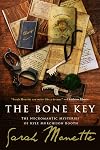
At its best, The Bone Key is a really great Victorian ghost story pastiche. But like many anthologies, it has trouble sustaining the level through its many stories. Nonetheless, it was short and always enjoyable.
Kyle Murchison Booth is a querulous museum worker with a cursed history and an affinity for the otherworldly. His (mis)adventures see him brushing up against everything from lovecraftian terrors to the more pedestrian spirits that haunt our world. Monette is mostly riffing on Hodgson's Carnacki the Ghost Finder and M.R James, with a more American bent and a few other nods here and there.
The excellent foreword to the collection outlines what she perceived as some of the shortcomings of the Victorian ghost story - with which she is clearly and thoroughly acquainted. Namely, an unwillingness to confront the often sexual subtexts running through the work, and the shades of racism and various other isms underpinning the genre. Booth's stories were her attempt at both homage and corrective - and in my opinion they largely work on both scores.
The best stories combine a sense of subtlety (so pronounced in Victorian ghost stories, and lacking from much contemporary horror) with a richer palette of terror and the otherworldly. There's nothing scary here, per se, but there is a nice sense of both spookiness, and kookiness - Monette is well aware of the more silly facets of the genre, and regards them with affection.
All of this, including the weaker stories, is held show more together by the character of Booth himself. Delightfully awkward and prissy, despairing yet also canny and courageous when he needs to be, he is a wonderful construction that really has depth and attraction for a reader - superior, almost an exaggeration of every bland protagonist the genre is built upon.
I enjoyed this anthology, it's slight but very fun. However, I am steeped in Victorian ghost stories like a shipwreck in the briny deep, so I'm completely unable to say whether someone without that background would enjoy it at as much. show less
Kyle Murchison Booth is a querulous museum worker with a cursed history and an affinity for the otherworldly. His (mis)adventures see him brushing up against everything from lovecraftian terrors to the more pedestrian spirits that haunt our world. Monette is mostly riffing on Hodgson's Carnacki the Ghost Finder and M.R James, with a more American bent and a few other nods here and there.
The excellent foreword to the collection outlines what she perceived as some of the shortcomings of the Victorian ghost story - with which she is clearly and thoroughly acquainted. Namely, an unwillingness to confront the often sexual subtexts running through the work, and the shades of racism and various other isms underpinning the genre. Booth's stories were her attempt at both homage and corrective - and in my opinion they largely work on both scores.
The best stories combine a sense of subtlety (so pronounced in Victorian ghost stories, and lacking from much contemporary horror) with a richer palette of terror and the otherworldly. There's nothing scary here, per se, but there is a nice sense of both spookiness, and kookiness - Monette is well aware of the more silly facets of the genre, and regards them with affection.
All of this, including the weaker stories, is held show more together by the character of Booth himself. Delightfully awkward and prissy, despairing yet also canny and courageous when he needs to be, he is a wonderful construction that really has depth and attraction for a reader - superior, almost an exaggeration of every bland protagonist the genre is built upon.
I enjoyed this anthology, it's slight but very fun. However, I am steeped in Victorian ghost stories like a shipwreck in the briny deep, so I'm completely unable to say whether someone without that background would enjoy it at as much. show less
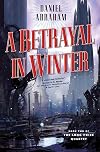
I did not feel this entry was a strong as the first in the quartet. Abraham shows some limits to his range - either deliberately or accidentally - in writing another novel with a love triangle at its center, and a limited cast of characters. I enjoyed it, but couldn't help feel it was really set up for the next book.
Otah has disappeared into his identity as Itani for fifteen years after the events that destroyed Sarakeyht's cotton processing monopoly. But when his brother - Prince of a mountain kingdom - is assassinated, he must return to face his heritage, and the suspicions that he has come back to usurp the throne.
If you liked the first book in the series, I think you will enjoy this one too - though I felt it's somewhat lesser on almost every score.
Abraham's investment in character is carried perhaps a little too far here, with Otah and Maati's tortured consciences taking up too many pages with too little change. The addition of another love triangle, just like the first book, made this one feel a little smaller to me. I felt that Abraham was working from a more limited palette, and couldn't help chafing at the restraints over the lengthy of this fairly long story.
In some respects, the narrative is more brisk. More certainly happens, and yet by the end of the novel it was clear much of it was incidental to the plot, and I couldn't help feeling it was all a set-up for the inevitable conclusion, with some filler thrown in.
This sounds like a litany of complaints, show more and I don't intend it to be. The strengths of Abraham's work remains - clean, crisp prose; solid characterisation; well-drawn female characters; a commitment to world-building remarkable in its consistency - but I got all that in the first book without any negatives..
It doesn't help the the andat in this novel, Stone-Made-Soft, lacks the internal conflict and magnetism of Seedless, from the first novel.
That all said, I eagerly look forward to the third book, as I couldn't help feeling this novel was mostly a prologue for it. show less
Otah has disappeared into his identity as Itani for fifteen years after the events that destroyed Sarakeyht's cotton processing monopoly. But when his brother - Prince of a mountain kingdom - is assassinated, he must return to face his heritage, and the suspicions that he has come back to usurp the throne.
If you liked the first book in the series, I think you will enjoy this one too - though I felt it's somewhat lesser on almost every score.
Abraham's investment in character is carried perhaps a little too far here, with Otah and Maati's tortured consciences taking up too many pages with too little change. The addition of another love triangle, just like the first book, made this one feel a little smaller to me. I felt that Abraham was working from a more limited palette, and couldn't help chafing at the restraints over the lengthy of this fairly long story.
In some respects, the narrative is more brisk. More certainly happens, and yet by the end of the novel it was clear much of it was incidental to the plot, and I couldn't help feeling it was all a set-up for the inevitable conclusion, with some filler thrown in.
This sounds like a litany of complaints, show more and I don't intend it to be. The strengths of Abraham's work remains - clean, crisp prose; solid characterisation; well-drawn female characters; a commitment to world-building remarkable in its consistency - but I got all that in the first book without any negatives..
It doesn't help the the andat in this novel, Stone-Made-Soft, lacks the internal conflict and magnetism of Seedless, from the first novel.
That all said, I eagerly look forward to the third book, as I couldn't help feeling this novel was mostly a prologue for it. show less
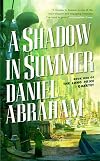
On publishing, Daniel Abraham's debut novel was - and remains - a stark contrast to most mainstream fantasy. Leisurely, character-driven, little violence and plenty of strong female characters. This may not be for everyone, but it was a breath of fresh air for me.
The cities of the Khaiem retain trade control through the use of andats - spirits made flesh - that no one else can master. But the andats themselves chafe under Khaiem domination, as do neighboring countries. A conspiracy to destroy an andat's master - a "poet" - has far reaching consequences in the port city of Saraykeht.
A Shadow in Summer reminded me very much of Guy Gavriel Kay's work. Limpid, measured prose is married to a barely-magical setting, and I really enjoyed it. There's a sense of care and investment in this book that is rare in contemporary fantasy.
The characters are diverse, interesting, and it is their personal emotions and conflicts that propel the story, as much as the conspiracy itself. Abraham doesn't shy away from writing female characters, and it's a nice change.
Most intriguing of all is the andat, Seedless. Its bitter, sardonic, tortured voice is a great premise and character to hang the narrative from, and every scene featuring it is undeniably magnetic.
Despite that, this is not a book for those who like a quick moving plot. There's a sense of... fate or predestination in A Shadow in Summer (also like Kay) that gives the book a melancholy tone, and an undeniably reserved pace.
I show more enjoyed the characters and found spending time with them no onerous, but not everyone will feel that way. Nonetheless a refreshing read and interesting entry to contemporary fantasy. show less
The cities of the Khaiem retain trade control through the use of andats - spirits made flesh - that no one else can master. But the andats themselves chafe under Khaiem domination, as do neighboring countries. A conspiracy to destroy an andat's master - a "poet" - has far reaching consequences in the port city of Saraykeht.
A Shadow in Summer reminded me very much of Guy Gavriel Kay's work. Limpid, measured prose is married to a barely-magical setting, and I really enjoyed it. There's a sense of care and investment in this book that is rare in contemporary fantasy.
The characters are diverse, interesting, and it is their personal emotions and conflicts that propel the story, as much as the conspiracy itself. Abraham doesn't shy away from writing female characters, and it's a nice change.
Most intriguing of all is the andat, Seedless. Its bitter, sardonic, tortured voice is a great premise and character to hang the narrative from, and every scene featuring it is undeniably magnetic.
Despite that, this is not a book for those who like a quick moving plot. There's a sense of... fate or predestination in A Shadow in Summer (also like Kay) that gives the book a melancholy tone, and an undeniably reserved pace.
I show more enjoyed the characters and found spending time with them no onerous, but not everyone will feel that way. Nonetheless a refreshing read and interesting entry to contemporary fantasy. show less
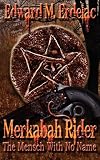
The Merkabah Rider - Jewish cowboy/exorcist/mystic - continues his adventures in this second installment. The plot continues its move towards Lovecraftian horror, and though I enjoyed the book, I find this aspect less entertaining than the cabbalistic ephemera that preceded it.
Rider is being worn down by Lilith's minions, at the same time as he's forced to confront more terrifying abominations before. His nemesis is hot on his trail too, and Rider is now at breaking point, will he make it through?
Again, I was entertained by The Mensch with no name, as I was with its predecessor. I am a bit of a sucker for weird west settings, and Erdelac's flirtatiously fruity prose also makes a nice contrast from the workmanlike-at-best writing that tends to dominate the niche-fantasy ebook world.
The formatting of the book, at least on my kindle, sadly conforms to the lacklustre median. Chapter breaks are practically non-existent, and so are page breaks. Though the book was cheap, it's not hard to get the formatting right. It gives the whole novel a slapdash feel.
Whilst the progression to Lovecraftian horrors continues in this installment - something that doesn't really resonate with me (I feel it's a bit modish, and less original) - Erdelac makes a good effort at giving a sense of progression throughout the short stories. A sense of impending climax is inescapable.
The Mensch With No Name wasn't as good as the previous entry in the series, but I still enjoyed it a lot, and something show more so original is worth being generous with. show less
Rider is being worn down by Lilith's minions, at the same time as he's forced to confront more terrifying abominations before. His nemesis is hot on his trail too, and Rider is now at breaking point, will he make it through?
Again, I was entertained by The Mensch with no name, as I was with its predecessor. I am a bit of a sucker for weird west settings, and Erdelac's flirtatiously fruity prose also makes a nice contrast from the workmanlike-at-best writing that tends to dominate the niche-fantasy ebook world.
The formatting of the book, at least on my kindle, sadly conforms to the lacklustre median. Chapter breaks are practically non-existent, and so are page breaks. Though the book was cheap, it's not hard to get the formatting right. It gives the whole novel a slapdash feel.
Whilst the progression to Lovecraftian horrors continues in this installment - something that doesn't really resonate with me (I feel it's a bit modish, and less original) - Erdelac makes a good effort at giving a sense of progression throughout the short stories. A sense of impending climax is inescapable.
The Mensch With No Name wasn't as good as the previous entry in the series, but I still enjoyed it a lot, and something show more so original is worth being generous with. show less
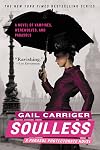
I don't think of myself as overly fussy when reading genre, but I thought this books was terrible and I couldn't hope to finish it. Sloppy right, stock characters, hackneyed plot and glaring anachronisms really put me off.
Alexia is a "soulless" someone without a soul, who nullifies the supernatural powers of Victorian England's werewolves, vampires etc. After accidentally killing a vampire, Alexia is plunged into a dangerous mystery alongside the hunky werewolf Lord Maccon.
Paranormal fanatasy is, I grant, typically a hotbed (heh) of mediocrity and shabby writing, but hordes of glowing reviews (including a starred one from the usually-reliable Publishers Weekly) inspired me to give Soulless a shot. I was disappointed to find a book awash in the typical issues of the genre.
The first, and biggest, issue is the writing. Carriger is a clumsy writer. She mercilessly abuses the third person omniscient perspective, head-hopping from character to character in the course of a few paragraphs. This is interspersed with many an awkward info-dump, filling in facts about the world that seem conjured as needed and seemingly without reason or consistency.
Compounding this is the terrible cod-regency tone. I'm not a stickler who will complain about use of the wrong width of thread or something, but when a character - in *Victorian England* - is using the word "Gee" as an exclamation, I throw up my hands. That's just pure laziness, and an attentive author (or an editor doing their job) show more should have caught it immediately. I didn't finish the book, but what I did read is peppered with glaring anachronisms like this in in dialogue, in social mores etc. It's terrible, theme-park writing.
The characterisation is little better. Alexia is, naturally, super-special whilst not being special at all, no one is able to appreciate her specialness except her love interest and all the actual characters that matter. She is considered homely, except is actually kinda totally beautiful and immediately captures the attention of hunky man she's attracted to. And so on. The characters aren't even cut-outs - no one bothered to cut them out, including a homophobic portrayal of a gay person straight out of a Carry On movie.
The plot - what I read of it - was episodic, A leads to B, leads to C etc that is quite common to a lot of books. It was at this point that I stopped reading.
If you haven't guessed, I though this was a terrible book, I wouldn't recommend it to anyone. show less
Alexia is a "soulless" someone without a soul, who nullifies the supernatural powers of Victorian England's werewolves, vampires etc. After accidentally killing a vampire, Alexia is plunged into a dangerous mystery alongside the hunky werewolf Lord Maccon.
Paranormal fanatasy is, I grant, typically a hotbed (heh) of mediocrity and shabby writing, but hordes of glowing reviews (including a starred one from the usually-reliable Publishers Weekly) inspired me to give Soulless a shot. I was disappointed to find a book awash in the typical issues of the genre.
The first, and biggest, issue is the writing. Carriger is a clumsy writer. She mercilessly abuses the third person omniscient perspective, head-hopping from character to character in the course of a few paragraphs. This is interspersed with many an awkward info-dump, filling in facts about the world that seem conjured as needed and seemingly without reason or consistency.
Compounding this is the terrible cod-regency tone. I'm not a stickler who will complain about use of the wrong width of thread or something, but when a character - in *Victorian England* - is using the word "Gee" as an exclamation, I throw up my hands. That's just pure laziness, and an attentive author (or an editor doing their job) show more should have caught it immediately. I didn't finish the book, but what I did read is peppered with glaring anachronisms like this in in dialogue, in social mores etc. It's terrible, theme-park writing.
The characterisation is little better. Alexia is, naturally, super-special whilst not being special at all, no one is able to appreciate her specialness except her love interest and all the actual characters that matter. She is considered homely, except is actually kinda totally beautiful and immediately captures the attention of hunky man she's attracted to. And so on. The characters aren't even cut-outs - no one bothered to cut them out, including a homophobic portrayal of a gay person straight out of a Carry On movie.
The plot - what I read of it - was episodic, A leads to B, leads to C etc that is quite common to a lot of books. It was at this point that I stopped reading.
If you haven't guessed, I though this was a terrible book, I wouldn't recommend it to anyone. show less
Seed by Rob Ziegler
I wanted to like Seed more than I did, ultimately. There's nothing wrong with the book per se, but it felt very familiar and its hefty length wore me down.
It's a post-apocalyptic world, with a scattered population dependent on the enigmatic Satori Corporation for seed - the only seed that can survive the harsh climate the world now faces. A living enclave, Satori also produces genetically enhanced ubermenschen for this brave new world. But a questioning genetic builder, a hardened soldier, and a cynical climate refugee will come together in a way that will change everything.
Ziegler juggles his multiple protagonists well, though only one is truly sympathetic, and none evince a tonne of depth. I suppose my main challenge with the book was that its plot moves fairly slowly, and towards a conflagration that's predictable, even if its outcome isn't.
The world-building is a little patchy. Rich and interesting in parts, skeletal in others. The rest of the world seemingly doesn't exist, there's little sense of society in this fractured milieu, and the technology is stereotypically post-apocalyptic - light years ahead in some areas, but oddly stone age in others.
For all its flashes of originality, there's an awful lot of stereotypical post-apocalypse stuff in Seed, and I personally find the trope a bit played out; this kind of book has been written for many decades now.
Lacking characters I could really care about and a setting that felt really familiar, I struggled to connect show more with Seed, though I think Ziegler is worth keeping an eye on as writer; there's potential here. show less
It's a post-apocalyptic world, with a scattered population dependent on the enigmatic Satori Corporation for seed - the only seed that can survive the harsh climate the world now faces. A living enclave, Satori also produces genetically enhanced ubermenschen for this brave new world. But a questioning genetic builder, a hardened soldier, and a cynical climate refugee will come together in a way that will change everything.
Ziegler juggles his multiple protagonists well, though only one is truly sympathetic, and none evince a tonne of depth. I suppose my main challenge with the book was that its plot moves fairly slowly, and towards a conflagration that's predictable, even if its outcome isn't.
The world-building is a little patchy. Rich and interesting in parts, skeletal in others. The rest of the world seemingly doesn't exist, there's little sense of society in this fractured milieu, and the technology is stereotypically post-apocalyptic - light years ahead in some areas, but oddly stone age in others.
For all its flashes of originality, there's an awful lot of stereotypical post-apocalypse stuff in Seed, and I personally find the trope a bit played out; this kind of book has been written for many decades now.
Lacking characters I could really care about and a setting that felt really familiar, I struggled to connect show more with Seed, though I think Ziegler is worth keeping an eye on as writer; there's potential here. show less
Weatherford has written a scintillating history, here. The book blew away my preconceptions of the Mongol Empire and replaced them with a much more nuanced understanding of how these people warred and ruled Fascinating, well-researched, and with a passion for the topic that shines through, this is one of the best popular histories that I've read.
Genghis Khan and the Golden Horde have a popular series of associations: mericiless barbarians, sweeping down from the steppe and leaving ruin and desolation in their wake. The reality, though, was quite quite different, and Weatherford does a stirling job of bringing it to light.
Starting with the genesis of the Mongols most famous ruler, Temujin - the Great Khan himself - Weatherford traces his development giving a background to both the man, and the cultures that propelled the Mongols halfway round the world.
This structure - interspersing the personal, political histories with the broader military and cultural development - is maintained throughout the entire book, and it really worked for me.
Weatherford brings a surprisingly deft narrative hand to his story, and it's difficult not to root for the various Mongols. But he doesn't shy away from scholarship, either, and more in-depth explanations of how war was waged, life was lived, and death was dealt.
The result is that both aspects of the book are equally engaging, and I never tired of either. The use of primary or secondary sources (where they are available) also helped show more lend a voice to both the Mongols and their opponents and vassals. Weatherford really is a good writer, and the audiobook version is narrated extremely well.
I learnt a lot from this book, and much of it was surprising and fascinating. Weatherford's passion is obvious and enthralling. A great read. show less
Genghis Khan and the Golden Horde have a popular series of associations: mericiless barbarians, sweeping down from the steppe and leaving ruin and desolation in their wake. The reality, though, was quite quite different, and Weatherford does a stirling job of bringing it to light.
Starting with the genesis of the Mongols most famous ruler, Temujin - the Great Khan himself - Weatherford traces his development giving a background to both the man, and the cultures that propelled the Mongols halfway round the world.
This structure - interspersing the personal, political histories with the broader military and cultural development - is maintained throughout the entire book, and it really worked for me.
Weatherford brings a surprisingly deft narrative hand to his story, and it's difficult not to root for the various Mongols. But he doesn't shy away from scholarship, either, and more in-depth explanations of how war was waged, life was lived, and death was dealt.
The result is that both aspects of the book are equally engaging, and I never tired of either. The use of primary or secondary sources (where they are available) also helped show more lend a voice to both the Mongols and their opponents and vassals. Weatherford really is a good writer, and the audiobook version is narrated extremely well.
I learnt a lot from this book, and much of it was surprising and fascinating. Weatherford's passion is obvious and enthralling. A great read. show less
I enjoyed this book a lot for several different reasons: quality prose; excellent characterisation; a subtext; and an ending that was just about perfect, neither too much nor too little. Schuyler is definitely an author to watch.
Hanne, a translator, has just finished work on the book that should cement her career, but accidents and authors intervene. Now she must take a voyage of discovery, internally, and externally.
My very vague plot summary is an effort not to give away too much. There are no great twists to this book, but every event is quite integral, and I found the blurb was one of the variety which actually summarises half the novel - and there's just no need for it.
Schulyer gives us a protagonist we rarely see in fiction - a woman in her fifties. Moreover, a woman in her fifties that is not primarily a mother or a wife, is still a sexual being, and invested in her career. It's remarkable (and sad) how unusual this, and it instantly made me interested. Hanne defies archetypes - her prickly, somewhat awkward presence is believable, not always likeable, but always interesting and sympathetic.
The novel really hinges on her characterisation - it is a book about her - and it's a testament that Schulyer can takes inside someone's head so thoroughly.
Of course, this isn't just a character study. Underneath it all are deep, very crucial questions to the novel and the act of reading, about meaning; about the ways we construct and deconstruct it. And it's (mostly) show more rendered with light touch; through the characters and their environment rather than superimposed above them, or breaking down the walls to expand on a thesis.
It was, in my opinion, quite gracefully done. This grace extends to Schulyer's clean prose and her structure. Though the plot is not the raison d'etre of this novel, I genuinely had no idea how it would end and where it would go. I was surprised, pleasantly, especially by the ending - which I found very satisfying without that neatness that cloys sometimes. The idea of the story ending, but these lives and people going on. An excellent novel. show less
Hanne, a translator, has just finished work on the book that should cement her career, but accidents and authors intervene. Now she must take a voyage of discovery, internally, and externally.
My very vague plot summary is an effort not to give away too much. There are no great twists to this book, but every event is quite integral, and I found the blurb was one of the variety which actually summarises half the novel - and there's just no need for it.
Schulyer gives us a protagonist we rarely see in fiction - a woman in her fifties. Moreover, a woman in her fifties that is not primarily a mother or a wife, is still a sexual being, and invested in her career. It's remarkable (and sad) how unusual this, and it instantly made me interested. Hanne defies archetypes - her prickly, somewhat awkward presence is believable, not always likeable, but always interesting and sympathetic.
The novel really hinges on her characterisation - it is a book about her - and it's a testament that Schulyer can takes inside someone's head so thoroughly.
Of course, this isn't just a character study. Underneath it all are deep, very crucial questions to the novel and the act of reading, about meaning; about the ways we construct and deconstruct it. And it's (mostly) show more rendered with light touch; through the characters and their environment rather than superimposed above them, or breaking down the walls to expand on a thesis.
It was, in my opinion, quite gracefully done. This grace extends to Schulyer's clean prose and her structure. Though the plot is not the raison d'etre of this novel, I genuinely had no idea how it would end and where it would go. I was surprised, pleasantly, especially by the ending - which I found very satisfying without that neatness that cloys sometimes. The idea of the story ending, but these lives and people going on. An excellent novel. show less
When it comes to Regency Romance, Georgette Heyer is my benchmark - a dauntingly high bar to clear. Lord Sidley's Last Season does not, alas, scale those giddy heights, but it's the closest I've got in quite some time and definitely "Good enough".
Marian Ware is in town for the season before heading back to the countryside for her romance-less wedding. Lord Sidley is enjoying what everyone assumes will be his last time in London - though not for the right reasons. Can these two opposite types... well you know the drill.
Ferguson is a decent writer - always a bonus when taking a chance on a new romance author - in just about every respect. The book is not exactly bursting with surprises, but then we don't really read them for the surprise do we?
The novel is free of glaring anachronism, though it does lack somewhat of the verite you might see in a Heyer - more "regency" than regency. But if you accept the setting as a set of sorts, it's far better than most.
This is especially apparent in the dialogue. Again, the spiky bon mots and understated mockery of a Heyer is not in evidence, but the conversation flows nicely, and the rhythms of the speech didn't jar me from the narrative.
As characters go, Sidley is the main attraction. Marian lacks the craftiness I tend to appreciate in these regency romances, though she is perfectly adequate.
All in all, a fine book. It's no Heyer, but what is?
Marian Ware is in town for the season before heading back to the countryside for her romance-less wedding. Lord Sidley is enjoying what everyone assumes will be his last time in London - though not for the right reasons. Can these two opposite types... well you know the drill.
Ferguson is a decent writer - always a bonus when taking a chance on a new romance author - in just about every respect. The book is not exactly bursting with surprises, but then we don't really read them for the surprise do we?
The novel is free of glaring anachronism, though it does lack somewhat of the verite you might see in a Heyer - more "regency" than regency. But if you accept the setting as a set of sorts, it's far better than most.
This is especially apparent in the dialogue. Again, the spiky bon mots and understated mockery of a Heyer is not in evidence, but the conversation flows nicely, and the rhythms of the speech didn't jar me from the narrative.
As characters go, Sidley is the main attraction. Marian lacks the craftiness I tend to appreciate in these regency romances, though she is perfectly adequate.
All in all, a fine book. It's no Heyer, but what is?
The Big Thirst is a mostly-fascinating outline of the way water is taken for granted in the west, and how that lackadaisical attitude - and the readily available fresh water it's premised on - cannot last. It does get a little repetitive and bogged down in places, but regularly picks back up with interesting tidbits and case studies.
My favourite part of the book was unfortunately the shortest - the beginning, where Fishman details just what water _is_ exactly, where it comes from, and why it's here on Earth. I felt like every paragraph sparked a new revelation - water is amazing! - and I could have read a whole book like that.
However, it's just a framing device; the bulk of the novel is built around case studies of urban water use and misuse ranging from Pennsylvania to rural India. Three main areas make up the case studies: Australia, arid Las Vegas, and the large cities of India. All of whom grapple with different, in some cases very interesting, challenges with water.
This section was mostly hit but there were some misses - and an unmistakeable sense of padding. Fishman has a tendency to repeat himself a little with the case studies, and his attempts at "I am there" journalism (not a favourite of mine) favour atmospherics over facts. This was especially apparent in the pages devoted to framing Toowoomba's water debate; a very slight and boring recap of Galveston's hurricane challenges; and summarising the previous career of Las Vegas Water's head honcho.
But don't show more let these sections put you off - for every weak case study, there's several fascinating ones. Especially interesting to me was the section on India. I knew nothing about municipal water arrangements in India, and the challenges - and solutions - were really engaging. It helps that there was not much padding in it as well.
Indeed, for a large book, I was left feeling... thirsty for more information about water and the myriad ways we treat it. Fishman's journey elides Africa and Europe entirely, where I'm sure there would be equally intriguing stories. You could read that as a criticism, but really it's a compliment - Fishman succeeded in making me invested in the topic. show less
My favourite part of the book was unfortunately the shortest - the beginning, where Fishman details just what water _is_ exactly, where it comes from, and why it's here on Earth. I felt like every paragraph sparked a new revelation - water is amazing! - and I could have read a whole book like that.
However, it's just a framing device; the bulk of the novel is built around case studies of urban water use and misuse ranging from Pennsylvania to rural India. Three main areas make up the case studies: Australia, arid Las Vegas, and the large cities of India. All of whom grapple with different, in some cases very interesting, challenges with water.
This section was mostly hit but there were some misses - and an unmistakeable sense of padding. Fishman has a tendency to repeat himself a little with the case studies, and his attempts at "I am there" journalism (not a favourite of mine) favour atmospherics over facts. This was especially apparent in the pages devoted to framing Toowoomba's water debate; a very slight and boring recap of Galveston's hurricane challenges; and summarising the previous career of Las Vegas Water's head honcho.
But don't show more let these sections put you off - for every weak case study, there's several fascinating ones. Especially interesting to me was the section on India. I knew nothing about municipal water arrangements in India, and the challenges - and solutions - were really engaging. It helps that there was not much padding in it as well.
Indeed, for a large book, I was left feeling... thirsty for more information about water and the myriad ways we treat it. Fishman's journey elides Africa and Europe entirely, where I'm sure there would be equally intriguing stories. You could read that as a criticism, but really it's a compliment - Fishman succeeded in making me invested in the topic. show less
The Little Death is an enjoyable, short mystery. It's not dripping with unpredictablity, but the author's background as a lawyer lends the book a nice verite, and it doesn't outstay its welcome.
Henry Rios is a burnt out public defender. When his addict lover dies, no one is suspicious but him. However, Henry's one time paramour comes from one of the most prestigious families in America, and getting to the bottom of his death will ruffle some very powerful feathers.
The Little Death was published more than two decades ago, and its age shows, in that this is a simple mystery with a basic structure you don't see so much now. Henry's homosexuality is a strong part of the story, and the reactions of other characters to it show how far we've come along - or not, in some cases. This also gives the novel a somewhat dated feel.
Though the killer was ultimately quite predictable to me, the central mystery hinges on some points of law, and it was refreshing to see the law in a mystery - it so rarely makes a convincing appearance.
Overall this was a slight book, but its price was also slight, as was its length, so I was satisfied.
Henry Rios is a burnt out public defender. When his addict lover dies, no one is suspicious but him. However, Henry's one time paramour comes from one of the most prestigious families in America, and getting to the bottom of his death will ruffle some very powerful feathers.
The Little Death was published more than two decades ago, and its age shows, in that this is a simple mystery with a basic structure you don't see so much now. Henry's homosexuality is a strong part of the story, and the reactions of other characters to it show how far we've come along - or not, in some cases. This also gives the novel a somewhat dated feel.
Though the killer was ultimately quite predictable to me, the central mystery hinges on some points of law, and it was refreshing to see the law in a mystery - it so rarely makes a convincing appearance.
Overall this was a slight book, but its price was also slight, as was its length, so I was satisfied.
A flawed book, and a weaker entry in the Pathfinder Tales series. Willrich's writing has its strengths, but they are often stymied by weak prose, a predictable narrative and the slightly silly milieu.
Gideon Gull is attending bard school, but it's also secretly a spy school, training up bards for intelligence work. When a magical fog starts driving peopl crazy, Gull reunites with his old flame and some fellow bards to solve the mystery.
The first thing that leapt out at me with this book was the prose, but unfortunately not in a positive way. In an effort to lend the book a suitably bardic tone, Willrich writes with a flowery overstated style, heavy on metaphors that break the flow and possess questionable efficacy. He also seems to struggle incorporating dialogue with action; the book veers wildly between the two at times, and the dialogue was quite... odd in parts. At points, it flows very naturally, but at others it seemed stilted and forced. It felt almost performative - what someone *thinks* they would say, rather than what they would actually say.
It doesn't help that the book has somewhat of a stop-start plot, very episodic and also quite predictable. The druid sections work best but are featured only a little. The villain is immediately guessable and the conclusion foregone.
It's a shame as there are parts of the book that work, but they are sporadic and it's just too inconsistent. I don't know how much of this is down to the setting (the Harry Potter like show more bard/spy school really is a bit much, as is the vast and powerful array of spells that *students* have), but Willrich seems like a writer who needs to write a few more books to get up to scratch. show less
Gideon Gull is attending bard school, but it's also secretly a spy school, training up bards for intelligence work. When a magical fog starts driving peopl crazy, Gull reunites with his old flame and some fellow bards to solve the mystery.
The first thing that leapt out at me with this book was the prose, but unfortunately not in a positive way. In an effort to lend the book a suitably bardic tone, Willrich writes with a flowery overstated style, heavy on metaphors that break the flow and possess questionable efficacy. He also seems to struggle incorporating dialogue with action; the book veers wildly between the two at times, and the dialogue was quite... odd in parts. At points, it flows very naturally, but at others it seemed stilted and forced. It felt almost performative - what someone *thinks* they would say, rather than what they would actually say.
It doesn't help that the book has somewhat of a stop-start plot, very episodic and also quite predictable. The druid sections work best but are featured only a little. The villain is immediately guessable and the conclusion foregone.
It's a shame as there are parts of the book that work, but they are sporadic and it's just too inconsistent. I don't know how much of this is down to the setting (the Harry Potter like show more bard/spy school really is a bit much, as is the vast and powerful array of spells that *students* have), but Willrich seems like a writer who needs to write a few more books to get up to scratch. show less