

Anne Perry (1938–2023)
Author of The Cater Street Hangman
About the Author
Anne Perry was born Juliet Hume on October 28, 1938 in Blackheath, London. Sent to Christchurch, New Zealand to recover from a childhood case of severe pneumonia, she became very close friends with another girl, Pauline Parker. When Perry's family abandoned her, she had only Parker to turn to, and show more when the Parkers planned to move from New Zealand, Parker asked that Perry be allowed to join them. When Parker's mother disagreed, Perry and Parker bludgeoned her to death. Perry eventually served five and a half years in an adult prison for the crime. Once she was freed, she changed her name and moved to America, where she eventually became a writer. Her first Victorian novel, The Cater Street Hangman, was published in 1979. Although the truth of her past came out when the case of Mrs. Parker's murder was made into a movie (Heavenly Creatures), Perry is still a popular author and continues to write. She has written over 50 books and short story collections including the Thomas Pitt series, the William Monk series, and the Daniel Pitt series. Her story, Heroes, won the 2001 Edgar Award for Best Short Story. Her title's Blind Justice and The Angel Court Affair made The New York Times Best Seller List. (Bowker Author Biography) show less
Series
Works by Anne Perry
An Anne Perry Christmas: Two Holiday Novels [A Christmas Journey / A Christmas Visitor] (2006) 70 copies, 1 review
Anne Perry's Christmas Crimes: Two Victorian Holiday Mysteries: A Christmas Homecoming and A Christmas Garland (2014) 36 copies
Death in the Devil's Acre | Cardington Crescent | Silence in Hanover Close | Bethlehem Road (2018) 9 copies
A Tale of One City 3 copies
Sneaker Wave 2 copies
No Graves As Yet | Shoulder the Sky | Angels in the Gloom | At Some Disputed Barricade | We Shall Not Sleep (2014) 2 copies
HIl Ibattesimo 2 copies
Morte a doppio taglio 1 copy
Inspector Monk 1-20 1 copy
The Blue Scorpion 1 copy
Un mare senza sole 1 copy
℗Il ℗maniero: Bedford Square 1 copy
Fashionable Funeral 1 copy
Ventuno giorni 1 copy
Shutter Speed 1 copy
A Christmas Story 1 copy
The Judgement 1 copy
Hostages {story} 1 copy
The Pace of a Stranger 1 copy
My Object All Sublime 1 copy
The Christmas Gift 1 copy
The Sisters of Henry VIII 1 copy
Lost Causes 1 copy
Cold Fire 1 copy
Associated Works
The Sherlock Holmes Mysteries: New Expanded Edition (Signet Classics | 22 stories) (1984) — Introduction, some editions — 432 copies, 2 reviews
The Book That Changed My Life: 71 Remarkable Writers Celebrate the Books That Matter Most to Them (2006) — Contributor — 411 copies, 18 reviews
The New Adventures of Sherlock Holmes: Original Stories by Eminent Mystery Writers (1976) — Contributor — 391 copies, 4 reviews
Bibliomysteries: Crime in the World of Books and Bookstores, Volume One (2013) — Contributor — 241 copies, 14 reviews
The Lineup: The World's Greatest Crime Writers Tell the Inside Story of Their Greatest Detectives (2009) — Contributor — 239 copies, 5 reviews
Crime Through Time: Original Tales of Historical Mystery (1997) — Contributor — 137 copies, 2 reviews
The World's Finest Mystery and Crime Stories: First Annual Collection (2000) — Contributor — 67 copies, 1 review
The Best Paranormal Crime Stories Ever Told (2010) — Contributor, some editions — 62 copies, 1 review
A Taste of Murder: Diabolically Delicious Recipes from Contemporary Mystery Writers (1999) — Contributor — 48 copies, 1 review
The World's Finest Mystery and Crime Stories: Third Annual Collection (2002) — Contributor — 46 copies
Malice Domestic 10: : An Anthology of Original Traditional Mystery Stories (2001) — Contributor — 34 copies, 1 review
Totally Charmed: Demons, Whitelighters and the Power of Three (2005) — Contributor — 33 copies, 1 review
Reader's Digest Select Editions 2006 v06 #288: Married to a Stranger / A Christmas Guest / Sailing to Capri / The Conjurer's Bird (2006) — Author — 29 copies
Private Investigations: Mystery Writers on the Secrets, Riddles, and Wonders in Their Lives (2020) — Contributor — 29 copies, 4 reviews
The Deadly Bride and 21 of the Year's Finest Crime and Mystery Stories: Volume II (2006) — Contributor — 29 copies
Canine Crimes: Fifteen Thrilling Original Tales Starring German Shepherds, Irish Setters, Mastifs, Mutts, and Other Daring Dogs (1998) — Contributor — 19 copies
The Year's 25 Finest Crime and Mystery Stories: Fifth Annual Edition (1996) — Contributor — 7 copies
The Year's 25 Finest Crime and Mystery Stories: Sixth Annual Edition (1997) — Contributor — 5 copies, 1 review
Tagged
Common Knowledge
- Legal name
- Perry, Anne
- Other names
- Hulme, Juliet Marion (birth name)
- Birthdate
- 1938-10-28
- Date of death
- 2023-04-10
- Gender
- female
- Occupations
- author
- Organizations
- Church of Jesus Christ of Latter-day Saints
- Agent
- Donald Maass
- Relationships
- Hulme, Jonathan (sibling)
- Nationality
- UK
- Birthplace
- Blackheath, London, Middlesex, England, UK
- Places of residence
- Portmahomack, Ross and Cromarty, Scotland, UK
Christchurch, New Zealand
Los Angeles, California, USA - Place of death
- Los Angeles, California, USA (in hospital)
- Map Location
- England, UK
Members
Discussions
Anne Perry Group Read--Part 1 in 2013 Category Challenge (December 2013)
Detective Novel -- Period Setting, Murdered was a Pedophile in Name that Book (December 2009)
Reviews
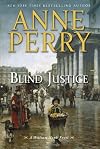
In this latest novel by Anne Perry, when Hester Monk hears about a church which is pushing its parishioners to donate more than they can afford, indeed, so much that it has financially ruined some, she decides she must investigate. What she learns makes her suspect that the preacher, Adam Taft, is bilking his mostly poor parishioners out of their money, not for other poorer folk as they are being told but so that he and his family can live a lavish lifestyle. When a bookkeeper confirms her show more suspicions, she reports it to the law.
The Monks' friend Sir Oliver Rathbone, is selected to reside over the trial as judge. As the trial moves forward, it becomes clear that the defence is winning, thanks mainly to the testimony of one witness. Rathbone believes that Taft is guilty but there is nothing he, as judge, can do until he realizes he may hold damning evidence against the witness. His interference in the trial has consequences more dire than he had considered not only to the witness but to Taft and Rathbone himself. Soon, he is the one on trial and it is up to the Monks to discover evidence which can save him.
Most of the story revolves around the trials, first of Tate and then Rathbone's. We get very little of Hester's investigation of the church except the outcome. Monk's investigation of the aftermath of Rathbone's revelation is more detailed. There are several references to a past story and reading it may have helped with some of the background but it wasn't necessary to follow this one. Perry did a very good job of weaving this into the narrative without making the mistake of lesser authors of telling it through the conversation of characters who shouldn't need the recap.
However, like in most of Perry's novels, the main character is really Victorian England itself, always lovingly betrayed in all its fog enshrouded glory from the abject poverty surrounding the docks to the palatial estates of the wealthy in Knightsbridge. Whether it's an accurate portrait is less important than that Perry makes it a seductive one.
Despite being set in the sprawl of mid-19th c. London, Blind Justice has the feel of a cosy mystery in the tradition of Agatha Christie. There is little violence and what there is tends to be in the background; bodies are found, never killed in plain view of the reader; the investigators are mostly nice amateurs, in this case, Hester, with a rare understanding of human nature; good almost always triumphs over evil and bad people almost always get their comeuppance. I added the almosts because, unlike the usual cosy, Perry also recognizes that the power to judge can easily become the power to corrupt and that, as the old cliche warns, two wrongs don't make a right. Sometimes, it is important to step away from the abyss even if it allows bad people to get away if we are to remain human. It is this rare ability to add nuances in a genre filled with stories of a manichean simplicity which sets Anne Perry apart and makes her novels so compelling. show less
The Monks' friend Sir Oliver Rathbone, is selected to reside over the trial as judge. As the trial moves forward, it becomes clear that the defence is winning, thanks mainly to the testimony of one witness. Rathbone believes that Taft is guilty but there is nothing he, as judge, can do until he realizes he may hold damning evidence against the witness. His interference in the trial has consequences more dire than he had considered not only to the witness but to Taft and Rathbone himself. Soon, he is the one on trial and it is up to the Monks to discover evidence which can save him.
Most of the story revolves around the trials, first of Tate and then Rathbone's. We get very little of Hester's investigation of the church except the outcome. Monk's investigation of the aftermath of Rathbone's revelation is more detailed. There are several references to a past story and reading it may have helped with some of the background but it wasn't necessary to follow this one. Perry did a very good job of weaving this into the narrative without making the mistake of lesser authors of telling it through the conversation of characters who shouldn't need the recap.
However, like in most of Perry's novels, the main character is really Victorian England itself, always lovingly betrayed in all its fog enshrouded glory from the abject poverty surrounding the docks to the palatial estates of the wealthy in Knightsbridge. Whether it's an accurate portrait is less important than that Perry makes it a seductive one.
Despite being set in the sprawl of mid-19th c. London, Blind Justice has the feel of a cosy mystery in the tradition of Agatha Christie. There is little violence and what there is tends to be in the background; bodies are found, never killed in plain view of the reader; the investigators are mostly nice amateurs, in this case, Hester, with a rare understanding of human nature; good almost always triumphs over evil and bad people almost always get their comeuppance. I added the almosts because, unlike the usual cosy, Perry also recognizes that the power to judge can easily become the power to corrupt and that, as the old cliche warns, two wrongs don't make a right. Sometimes, it is important to step away from the abyss even if it allows bad people to get away if we are to remain human. It is this rare ability to add nuances in a genre filled with stories of a manichean simplicity which sets Anne Perry apart and makes her novels so compelling. show less
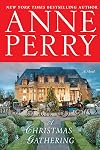
Victor and Vespasia. Always a pleasure!
I love these two, Victor Narraway and Lady Vespasia. True love in their mature years. As Vespasia muses, "So late in life, she had found the man she truly loved with all the passion, intelligence, and trust in her nature." What a special couple!
Victor has retired as head of the London Special Branch, but unbeknownst to Vespasia he's acting as a contact for a young woman, Iris Watson-Watt, involved in a sting to unmask a traitor. So they are spending show more Christmas at Cavendish Hall the country house of Max and Lady Amelia Cavendish. Not really where they both wanted to be. For Victor this case is personal. It takes him back to a similar occassion in France which did not end well. And like that time twenty years ago, the young woman Iris is attacked. Recovery is uncertain. Will history repeat itself?
Vespasia of course knows most of the people at the house party, not that she'd had much to do with them for some time.
The guests seem an uneasy lot and when the claws come out, I applauded the way Vespasia held her own against cutting remarks made by the hostess. Such panache and style!
A taut mystery novella that showcases the strengths and misgivings of these two wonderful Perry personalities that I've always adored. Another Anne Perry Christmas treat!
A Random House ARC via NetGalley show less
I love these two, Victor Narraway and Lady Vespasia. True love in their mature years. As Vespasia muses, "So late in life, she had found the man she truly loved with all the passion, intelligence, and trust in her nature." What a special couple!
Victor has retired as head of the London Special Branch, but unbeknownst to Vespasia he's acting as a contact for a young woman, Iris Watson-Watt, involved in a sting to unmask a traitor. So they are spending show more Christmas at Cavendish Hall the country house of Max and Lady Amelia Cavendish. Not really where they both wanted to be. For Victor this case is personal. It takes him back to a similar occassion in France which did not end well. And like that time twenty years ago, the young woman Iris is attacked. Recovery is uncertain. Will history repeat itself?
Vespasia of course knows most of the people at the house party, not that she'd had much to do with them for some time.
The guests seem an uneasy lot and when the claws come out, I applauded the way Vespasia held her own against cutting remarks made by the hostess. Such panache and style!
A taut mystery novella that showcases the strengths and misgivings of these two wonderful Perry personalities that I've always adored. Another Anne Perry Christmas treat!
A Random House ARC via NetGalley show less
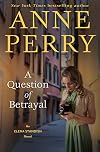
Author Anne Perry's Elena Standish mystery series is her newest and is a spectacular addition to her collective works. This second book in series is exciting, clever, very well written and it deftly weaves three story lines which converge on a thrilling climax. Her scene descriptions are painterly and provide equally a glimpse into the subtle nuances of human interaction through the personalities of her well-conceived characters. Perry is truly masterful.
After her harrowing experiences in show more "Death in Focus" (the first book in series), our protagonist, Elena Standish, receives her first MI6 assignment. Going into enemy territory, making contact and safely extracting a deeply embedded agent is a tall order for anyone, let alone a freshman agent. However, as Elena was once the love interest of said agent, she is the best MI6 has at locating and identifying the agent by subtle mannerisms, even though six years have passed since they were last together. She convinces herself that she can keep this totally professional, make the contact, and get the guy out of Trieste, Italy. show less
After her harrowing experiences in show more "Death in Focus" (the first book in series), our protagonist, Elena Standish, receives her first MI6 assignment. Going into enemy territory, making contact and safely extracting a deeply embedded agent is a tall order for anyone, let alone a freshman agent. However, as Elena was once the love interest of said agent, she is the best MI6 has at locating and identifying the agent by subtle mannerisms, even though six years have passed since they were last together. She convinces herself that she can keep this totally professional, make the contact, and get the guy out of Trieste, Italy. show less
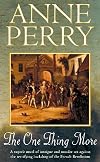
This gripping novel is a murder mystery set during the French Revolution, in the run up to the execution of the former King Louis XVI in January 1793. In the desperate economic situation of the time, the inhabitants of Citizen Bernave's house, including his extended family, servants, and others, are shocked one night when a band of desperate citizens invade the house, wrongly believing they are hoarding food. Bernave confronts them, but when the confusion is over, he lies dead, stabbed in show more the back (i.e. by one of his household, not by the intruders). Needless to say, there is a complex set of motives, arising both from the turbulent politics of the time, with double dealing between the rival political factions, and from the past personal actions of the characters. This story has the reader guessing as to the exact motives of Bernave and several of the others right up until a dramatic set of revelations in the final chapter.
The central political thread running throughout the novel centres around moderate revolutionaries who think that the execution of the king, whatever his personal faults and the undoubted evils and injustices of the Ancien Régime, is an act of barbarism which will bring all the surrounding countries invading and tearing France apart, as was indeed the case. The novel has interesting and thoughtful things to say about how revolutions in seeking to destroy all that went before them, the evil and the good, so often end up not replacing them with values and institutions that are better than their abolished predecessors. As one of the non-political characters says, "All I want is safe streets and food in the shops...... I don’t care whether it’s the King, or Marat or the Commune, or who it is. And I think most of the women in France feel the same. What’s a revolution for if we’re all still cold and hungry, and scared stiff of our neighbours in case they take a dislike to us and make a false report to some Section Leader, and the next thing you know, we’re charged with something?". The fanaticism of the Jacobins is well illustrated by an oration by the cold Louis Saint Just: "The vessel of the revolution can arrive in port only on a sea reddened with torrents of blood! .....We must not only punish traitors, but all people who are not enthusiastic. There are only two kinds of citizen, the good and the bad. The republic owes the good its protections. To the bad it owes only death!". As Célie Laurent observes of the humourlessness of the radicals, "Was it really necessary to be humourless in order to be good? Could one not possibly bring about social change for the better, and still keep the ability to see the absurd, and to laugh at it?". A really gripping novel, though I am puzzled by its banal and seemingly meaningless title, what is that all about?. show less
The central political thread running throughout the novel centres around moderate revolutionaries who think that the execution of the king, whatever his personal faults and the undoubted evils and injustices of the Ancien Régime, is an act of barbarism which will bring all the surrounding countries invading and tearing France apart, as was indeed the case. The novel has interesting and thoughtful things to say about how revolutions in seeking to destroy all that went before them, the evil and the good, so often end up not replacing them with values and institutions that are better than their abolished predecessors. As one of the non-political characters says, "All I want is safe streets and food in the shops...... I don’t care whether it’s the King, or Marat or the Commune, or who it is. And I think most of the women in France feel the same. What’s a revolution for if we’re all still cold and hungry, and scared stiff of our neighbours in case they take a dislike to us and make a false report to some Section Leader, and the next thing you know, we’re charged with something?". The fanaticism of the Jacobins is well illustrated by an oration by the cold Louis Saint Just: "The vessel of the revolution can arrive in port only on a sea reddened with torrents of blood! .....We must not only punish traitors, but all people who are not enthusiastic. There are only two kinds of citizen, the good and the bad. The republic owes the good its protections. To the bad it owes only death!". As Célie Laurent observes of the humourlessness of the radicals, "Was it really necessary to be humourless in order to be good? Could one not possibly bring about social change for the better, and still keep the ability to see the absurd, and to laugh at it?". A really gripping novel, though I am puzzled by its banal and seemingly meaningless title, what is that all about?. show less
Lists
Awards


You May Also Like


Associated Authors
Statistics
- Works
- 198
- Also by
- 69
- Members
- 55,037
- Popularity
- #271
- Rating
- 3.8
- Reviews
- 1,795
- ISBNs
- 2,658
- Languages
- 12
- Favorited
- 86


