
Laurie R. King
Author of The Beekeeper's Apprentice
About the Author
Laurie R. King is the bestselling author of "A Darker Place," four contemporary novels featuring Kate Martinelli, and five acclaimed Mary Russell mysteries. She lives in northern California. Her newest book is the ninth one in the Mary Russell mystery series, The Language of Bees. (Publisher show more Provided) Laurie R. King is a mystery writer, who holds a bachelor's degree and a master's degree in theology. Her first novel, Grave Talent, was published in 1993 and won the Edgar Award for Best First Novel. Since then, she has written over twenty books including the Mary Russell Mysteries series, the Stuyvesant and Grey series, the Kate Martinelli Mystery series, A Darker Place, Folly, and Keeping Watch. She has also co-authored a number of nonfiction works and anthologies including Crime Writing, The Grand Game, and Studies in Sherlock. Laurie's title, Dreaming Spies, is a 2015 New York Times Bestseller. (Bowker Author Biography) show less
Series
Works by Laurie R. King
How to Write a Mystery: A Handbook from Mystery Writers of America (2021) — Editor — 196 copies, 9 reviews
The Grand Game: A Celebration of Sherlockian Scholarship, Volume One (1902-1959) (2011) — Editor — 7 copies
The Grand Game: A Celebration of Sherlockian Scholarship, Volume Two (1960-2010) (2012) — Editor — 7 copies
No title 3 copies
Weaving the Dark [short story] 3 copies
The Grand Game, Vol. One and Two and Bonus Material — Editor — 2 copies
Mary Russell 1-12 1 copy
The House [short story] 1 copy
Associated Works
My Bookstore: Writers Celebrate Their Favorite Places to Browse, Read, and Shop (2012) — Contributor — 622 copies, 16 reviews
In the Shadow of the Master: Classic Tales by Edgar Allan Poe (2009) — Contributor — 206 copies, 3 reviews
The Blue Religion: New Stories about Cops, Criminals, and the Chase (2008) — Contributor — 173 copies, 7 reviews
Crime Through Time: Original Tales of Historical Mystery (1997) — Contributor — 137 copies, 2 reviews
The World's Finest Mystery and Crime Stories: First Annual Collection (2000) — Contributor — 68 copies, 1 review
Criminal Kabbalah: An Intriguing Anthology of Jewish Mystery and Detective Fiction (2002) — Foreword, some editions — 65 copies
Anatomy of Innocence: Testimonies of the Wrongfully Convicted (2017) — Contributor — 59 copies, 1 review
The One Fixed Point in a Changing Age: A New Generation on Sherlock Holmes (1900) — Introduction — 4 copies
Tagged
Common Knowledge
- Other names
- Richards, Leigh
- Birthdate
- 1952-09-19
- Gender
- female
- Education
- University of California, Santa Cruz
Graduate Theological Union - Occupations
- fiction writer
- Awards and honors
- Romantic Times Career Achievement Award (Historical Mystery, 2005)
- Agent
- Alec Shane
- Relationships
- King, Noel Quinton (husband)
- Nationality
- USA
- Birthplace
- Oakland, California, USA
- Places of residence
- Watsonville, California, USA
- Associated Place (for map)
- California, USA
Members
Discussions
A Study in Sherlock - New Pastiche Collection in Baker Street and Beyond (November 2013)
New Holmes/Russell Book Coming! in Baker Street and Beyond (November 2012)
Reviews
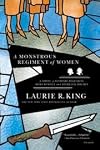
The betrayal I felt at the end of this book regarding this romance angle was IMMENSE. The first book was a good time, well written and with a really refreshing view of Holmes from the perspective of a teen growing into a newly modern woman. Went into this book expecting a fun 1920s mystery romp with a dash of Sherlock thrown in, great, good fun, love it. This book is still well written, researched, and had a supernatural angle which though is a bit hard for Sherlock fans, is tied in kind of show more as the book references Doyle's occult phase. Then a bit of romance rears its head as the protagonist nurses a crush for her mentor/father figure. For Mary to have a crush on Sherlock, who is about 40 years her elder, fine. We've all had a crush on Sherlock at some point, it's very college-age-person-crushing-on-professor vibes. But to take a character as iconic as Sherlock and marry him off with a child who just turned 21 and who he essentially helped raise since she was in her mid-teens....YUCK GROSS WHYYYYYY. It caught me off guard, as in my mind I had firmly crossed off that possibility. The strength of the book imo was in the building of a family by 2 lonely people with similar traits and interests who are frequently misunderstood, plus adventures. So stupid to throw that away on a kiss that I think most people would find disgusting, and which really undermines the entire relationship. To add to the grossness, he says he's wanted to kiss her since he first saw her, to which she saucily replies, you mean when I was dressed like a boy (winky face) instead of what we were all screaming in our heads, which was, YOU MEAN WHEN SHE WAS 15 YOU PERVERT?!?! (angry face). It ruined the book for me, and brought me here with my rant. show less
The Game: A novel of suspense featuring Mary Russell and Sherlock Holmes (A Mary Russell & Sherlock Holmes Mystery Book 7) by Laurie R. King

A birthday dinner with Mycroft on Mary's twenty-fourth birthday in January, 1924, sends Holmes and Russell to India to search for Kimball O'Hara who hasn't been seen for three years. Tensions are rising in India. The nationalist uprising under Ghandi is gaining momentum and the rivalry between Russia and the British is also fierce. The change from a Tsar to the Bolsheviks didn't really change the desire to gain control of India. Neither did the newly elected Socialist Party change show more Britain's.
The story begins with the ocean voyage to India where Mary undergoes a crash course in Hindustani and immersion in the Mahabharata to gain an understanding of the culture. She also meets Sunny Goodheart, her mother who is inspired by an Indian Teacher, and her brother who is a budding Communist. Repeated run-ins with the Goodhearts raise suspicions in both Mary and Sherlock. The suspicions reach their peak when the Goodhearts are found to be visitors to the Maharajah of Khanpur. The Maharajah is supposed to be a staunch ally of Britain but there are some questions since his country is near where O'Hara was last seen.
Holmes and Russell begin their investigation by taking on the personas of traveling magicians. They gather a young donkey boy named Bindra along with his donkey and cart and begin to make their way across India. I loved the descriptions of the land and people as seen through Mary's eyes.
Mary becomes herself again when she meets the Goodhearts and has a chance to enter Khanpur as their guest. However, Holmes and Bindra are keeping their personas and will meet her later in Khanpur. Mary gets a chance to get to know the Maharajah and finds him to be a volatile personality with a secret political agenda. He seems fascinated by Mary especially after she joined him on a hunt for feral hogs and did well. When she wants to leave, he tries to keep her there. Fortunately, she managed to resume her identity as a traveling magician and slip away from him for a while leaving him in a rage.
She and Sherlock are traveling to get out of Khanpur when the Maharajah catches up to them. He captures Sherlock but Mary is able to make her escape out of Khanpur and to a trusted British agent. Then the two of them need to find a way back in to confirm suspicions about the Maharajah's goals and, more importantly to Mary, to rescue Holmes.
This story was filled with adventure and danger and political intrigue. I loved the mystery and Mary's world. I enjoyed the ties to Rudyard Kipling's KIM and the look at India through Mary's eyes. show less
The story begins with the ocean voyage to India where Mary undergoes a crash course in Hindustani and immersion in the Mahabharata to gain an understanding of the culture. She also meets Sunny Goodheart, her mother who is inspired by an Indian Teacher, and her brother who is a budding Communist. Repeated run-ins with the Goodhearts raise suspicions in both Mary and Sherlock. The suspicions reach their peak when the Goodhearts are found to be visitors to the Maharajah of Khanpur. The Maharajah is supposed to be a staunch ally of Britain but there are some questions since his country is near where O'Hara was last seen.
Holmes and Russell begin their investigation by taking on the personas of traveling magicians. They gather a young donkey boy named Bindra along with his donkey and cart and begin to make their way across India. I loved the descriptions of the land and people as seen through Mary's eyes.
Mary becomes herself again when she meets the Goodhearts and has a chance to enter Khanpur as their guest. However, Holmes and Bindra are keeping their personas and will meet her later in Khanpur. Mary gets a chance to get to know the Maharajah and finds him to be a volatile personality with a secret political agenda. He seems fascinated by Mary especially after she joined him on a hunt for feral hogs and did well. When she wants to leave, he tries to keep her there. Fortunately, she managed to resume her identity as a traveling magician and slip away from him for a while leaving him in a rage.
She and Sherlock are traveling to get out of Khanpur when the Maharajah catches up to them. He captures Sherlock but Mary is able to make her escape out of Khanpur and to a trusted British agent. Then the two of them need to find a way back in to confirm suspicions about the Maharajah's goals and, more importantly to Mary, to rescue Holmes.
This story was filled with adventure and danger and political intrigue. I loved the mystery and Mary's world. I enjoyed the ties to Rudyard Kipling's KIM and the look at India through Mary's eyes. show less
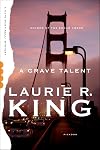
I like King's sentence-to-sentence writing style a lot, and there was a lot of this book that I thought was strong. It also kept me interested the whole way through, even though we pretty much have the mystery wrapped up by the two-thirds mark.
That said: my first gripe is that Hawkin is a terrible partner, and Kate shouldn't have had to shelter Vaun at her house. He was wrong and she was right. He investigated her private life and threatened to out her at work and held his authority over her show more to get her to do something unprofessional, and we're supposed to forgive him at the end and look forward to their next investigation together? I don't think so.
Also Bruckner's psychological "methods" would have felt more at home in one of Laurie King's Mary Russell books in the Victorian era than it did here in the nineties, as did some of the veneration of St. Vaun. They both felt a bit heightened and unrealistic, which didn't match the world King seemed to be aiming for. Also, please tell me-- were we supposed to find Bruckner creepy? I definitely did.
There were a few pacing issues as well-- the various focuses of the book (the community on Tyler's Road, the character analyses of Vaun and of Andy, the meat-and-potatoes investigating, and Kate's home life) were all basically interesting but did not seem correctly mixed and arranged in the book, so that the cumulative effect was of disjointedness. For example, I wish the people on the Road and their relationships, which were weighted very heavily in the early part of the book, had remained more of a throughline. Once the bridge broke and Kate had stranded herself alone on the hill with everyone, I really thought the rest of the story would focus on the community, and finding out out that it wasn't as idyllic as it seemed-- but then Kate and Hawkin helicopter out of there and it's pretty much left behind completely. So I suppose it turns out the only thing wrong with it was that one person who turned out to be a murderer lived there, not that the whole thing was founded based on a feudalistic concept and their landlord had an unprecedented amount of control over their lives and their access to the world? Tyler is basically a cult leader, but don't worry, he let some of them have telephones in the epilogue or whatever, so good for him I guess.
I'm also not sure King does justice to Kate as a lesbian character. I'm sure the lesbian "twist" read better in the nineties, and I'm happy that King decided to go for it, but reading it now, it felt unnecessarily coy the way it danced around the issue. The book didn't really address either Lee's insensitivity to Kate's fears of coming out, or the way Kate's wish to stay in the closet and to publically keep her distance from the "leather and chain" gay San Fran community and Lee's AIDS-stricken patients may have come from a place of internalized homophobia. Instead, the book struck a strange middle ground of trying to make Kate's lesbianism emphasized and central to the story while also not fully exploring it. I'll admit I was also worried to see how King would write lesbian characters after I read A Monstrous Regiment of Women lol. show less
That said: my first gripe is that Hawkin is a terrible partner, and Kate shouldn't have had to shelter Vaun at her house. He was wrong and she was right. He investigated her private life and threatened to out her at work and held his authority over her show more to get her to do something unprofessional, and we're supposed to forgive him at the end and look forward to their next investigation together? I don't think so.
Also Bruckner's psychological "methods" would have felt more at home in one of Laurie King's Mary Russell books in the Victorian era than it did here in the nineties, as did some of the veneration of St. Vaun. They both felt a bit heightened and unrealistic, which didn't match the world King seemed to be aiming for. Also, please tell me-- were we supposed to find Bruckner creepy? I definitely did.
There were a few pacing issues as well-- the various focuses of the book (the community on Tyler's Road, the character analyses of Vaun and of Andy, the meat-and-potatoes investigating, and Kate's home life) were all basically interesting but did not seem correctly mixed and arranged in the book, so that the cumulative effect was of disjointedness. For example, I wish the people on the Road and their relationships, which were weighted very heavily in the early part of the book, had remained more of a throughline. Once the bridge broke and Kate had stranded herself alone on the hill with everyone, I really thought the rest of the story would focus on the community, and finding out out that it wasn't as idyllic as it seemed-- but then Kate and Hawkin helicopter out of there and it's pretty much left behind completely. So I suppose it turns out the only thing wrong with it was that one person who turned out to be a murderer lived there, not that the whole thing was founded based on a feudalistic concept and their landlord had an unprecedented amount of control over their lives and their access to the world? Tyler is basically a cult leader, but don't worry, he let some of them have telephones in the epilogue or whatever, so good for him I guess.
I'm also not sure King does justice to Kate as a lesbian character. I'm sure the lesbian "twist" read better in the nineties, and I'm happy that King decided to go for it, but reading it now, it felt unnecessarily coy the way it danced around the issue. The book didn't really address either Lee's insensitivity to Kate's fears of coming out, or the way Kate's wish to stay in the closet and to publically keep her distance from the "leather and chain" gay San Fran community and Lee's AIDS-stricken patients may have come from a place of internalized homophobia. Instead, the book struck a strange middle ground of trying to make Kate's lesbianism emphasized and central to the story while also not fully exploring it. I'll admit I was also worried to see how King would write lesbian characters after I read A Monstrous Regiment of Women lol. show less
A Monstrous Regiment of Women: A Novel of Suspense Featuring Mary Russell and Sherlock Holmes by Laurie R. King
I think we misremember Sherlock Holmes stories...we think the mysteries will be the point. They are not, mostly--Sherlock Holmes stories are adventures. This is an adventure from the POV of Holmes’s protege, an independent, perhaps gender-queer, brilliant young woman. I think the book is trying to be a feminist treatise...introducing each chapter with a misogynist quote, showing the POV character’s capability and intelligence in a man’s world, and telling the story of a revolutionary. show more It sort of works. Unfortunately, the punchlines in the climactic moments are that Holmes has to rescue her, Holmes has to knock her unconscious to do something valiant that he decides she can’t handle, etc. The woman who is running an organization for women’s rights and protection turns out to be in the hypnotic thrall of an abuser, and when she discovers he’s also a murderer, she gives up her goals and throws her life away. And in the end? The relationship plot ends horribly. The author lays the groundwork for a unique and strong ending to that issue—but nope. So, a conflicted book. I liked the world, the prose, the pace, most of what the main character undertakes...lots of good stuff here. I wish the author portrayed women as not always needing to be rescued. show less
Lists
Books Read in 2013 (12)
Best Audiobooks (1)
Carole's List (1)
Edgar Award (1)
Favorite Series (1)
Victorian Period (1)
Books Read in 2016 (10)
Female Author (7)
British Mystery (4)
To Read (1)
Awards


You May Also Like


Associated Authors
Statistics
- Works
- 80
- Also by
- 21
- Members
- 46,843
- Popularity
- #338
- Rating
- 3.9
- Reviews
- 2,116
- ISBNs
- 841
- Languages
- 18
- Favorited
- 241


