

Carole Nelson Douglas (1944–2021)
Author of Good Night, Mr. Holmes
About the Author
Bestselling author Carole Nelson Douglas was born on November 5, 1944. She majored in theater and English literature in college and was an award-winning journalist for the St. Paul Pioneer Press until she moved to Texas in 1984, where she began writing fiction full time. She is the author of over show more fifty novels in genres including mystery, fantasy, science fiction, and romance fiction. Douglas seeks to create strong female protagonists in her works and is best known for two popular series, the Irene Adler mysteries and the Midnight Louie mystery series. (Bowker Author Biography) show less
Series
Works by Carole Nelson Douglas
White House Pet Detectives: Tales of Crime and Mystery at the White House from a Pet's-Eye View (2002) — Editor; Contributor — 17 copies
Cat in an Alphabet Soup 1 copy
Dobranoc, panie Holmes 1 copy
Butterfly Kiss 1 copy
Coyote Peyote {short story} 1 copy
Cat in an Aqua Storm 1 copy
Associated Works
Murder by Magic: Twenty Tales of Crime and the Supernatural (2004) — Contributor — 267 copies, 4 reviews
Twilight Zone: 19 Original Stories on the 50th Anniversary (2009) — Contributor — 144 copies, 3 reviews
Malice Domestic 02: An Anthology of Original Traditional Mystery Stories (1993) — Contributor — 111 copies, 1 review
The World's Finest Mystery and Crime Stories: First Annual Collection (2000) — Contributor — 68 copies, 1 review
Perfectly Plum: An Unauthorized Celebration of the Life, Loves and Other Disasters of Stephanie Plum, Trenton Bounty Hun (2007) — Contributor — 58 copies
Malice Domestic 04: An Anthology of Original Traditional Mystery Stories (1995) — Contributor — 58 copies
The World's Finest Mystery and Crime Stories: Fourth Annual Collection (2003) — Contributor — 36 copies
Private Investigations: Mystery Writers on the Secrets, Riddles, and Wonders in Their Lives (2020) — Contributor — 29 copies, 4 reviews
The Year's 25 Finest Crime and Mystery Stories: Fourth Annual Edition (1995) — Contributor — 14 copies, 1 review
The Year's 25 Finest Crime and Mystery Stories: Second Annual Edition (1993) — Contributor — 12 copies
The Year's 25 Finest Crime and Mystery Stories: Third Annual Edition (1994) — Contributor — 10 copies
The Year's 25 Finest Crime and Mystery Stories: Seventh Annual Edition (1998) — Contributor — 9 copies
The Year's 25 Finest Crime and Mystery Stories: Fifth Annual Edition (1996) — Contributor — 7 copies
The Widow of Slane: Six More of the Best Crime and Mystery Novellas of the Year! (2006) — Director — 7 copies
Wolf Woman Bay and 9 More of the Finest Crime and Mystery Novellas of the Year! (2007) — Contributor — 6 copies
The Sound and the Furry: Stories to Benefit the International Fund for Animal Welfare — Contributor — 1 copy
Tagged
Common Knowledge
- Birthdate
- 1944-05-11
- Date of death
- 2021-10-20
- Gender
- female
- Education
- College of St. Catherine (BA)
- Occupations
- reporter (newspaper)
editor
journalist - Organizations
- Science Fiction and Fantasy Writers of America
St. Paul Pioneer Press-Dispatch
Newspaper Guild
Novelists, Inc.
International Thriller Writers
Cat Writers' Association (show all 8)
Romance Writers of America
Sisters in Crime - Nationality
- USA
- Birthplace
- Everett, Washington, USA
- Places of residence
- St. Paul, Minnesota, USA
Fort Worth, Texas, USA - Associated Place (for map)
- USA
Members
Reviews

Irissa, last of the Torloc sorceresses, had been betrayed by the rainbow gate that was supposed to lead her to the haven world of her vanished people. The hand of Kendric, companion and Swordsman of Rule, had been torn from her grasp. Then the gate had rejected her into this strange world where a cold moon hung forever unmoving in the sky.
Now she was a prisoner of the Stonekeeper Sofistron. Around her encircled the pale walls of her cell, filled with half-seen reflections of herself. She was show more helpless, all her power drained into those other-self images. And this time, there was no Kendric to save her. He was a swordless exile in the Rynth, stranded among the Unkept women and the rim-runner outlaws from the magic Stonekeeps.
Somewhere, she knew, there had to be another gate, a way out from this hostile world. show less
Now she was a prisoner of the Stonekeeper Sofistron. Around her encircled the pale walls of her cell, filled with half-seen reflections of herself. She was show more helpless, all her power drained into those other-self images. And this time, there was no Kendric to save her. He was a swordless exile in the Rynth, stranded among the Unkept women and the rim-runner outlaws from the magic Stonekeeps.
Somewhere, she knew, there had to be another gate, a way out from this hostile world. show less
Another Scandal in Bohemia: A Novel of Suspense Featuring Sherlock Holmes and Irene Adler by Carole Nelson Douglas
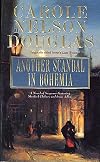
Carole Nelson Douglas writes a series of books with Irene Adler as the main character. Irene, you will remember, was the woman who bested Holmes in "A Scandal in Bohemia". Afterwards, Holmes always refers to her as "the woman". In Douglas's fourth Irene Adler book, "Another Scandal in Bohemia", Irene and her trusty sidekick Nell are going back to Bohemia, to Prague, to help the King's new wife Clotilde, with a rather personal problem, as well as seeing if they can shed some light on the show more Golem that has been terrorizing the city. I love Nell, she is full of completely deadpan, dry humor that had me laughing out loud. Irene is charming, Douglas does an excellent job portraying these characters. The plot was a bit thick for me, but I did enjoy it, especially when Sherlock himself made a guest appearance. show less

I have no idea why the title was changed in the most recent editions: Good Morning, Irene is far better (though I like the newer cover more.) I started with the second book in this series because it was the one my local library had. I suspect this is actually a series where not reading the first book really does interfere with your enjoyment. At the start of the second one, Irene Adler, her husband Godfrey, and Nell, the last member of the household, a young London typist who has been show more adopted by Irene and fills the chronicler role, are living in Paris, and they have come into a great deal of wealth, and Irene is allowing herself to be presumed dead for some reason, but does not seem particularly invested in keeping a low profile. I thought that would be all I needed to know, but the further I got in the book, the more it became clear that there were complications carrying over from the first book which it would have helped me to know about, but which I never quite got the picture of.
That aside, though, the book was fun. Irene is delicious, Irene's friends are delicious, Godfrey is wonderful; it took me awhile to warm to Nell, but I eventually did. The absolute best thing about this book (and, I hope, the whole series), is that it reverses the gender roles of the story, and does so deliberately. Not reversing gender roles in the world itself - it's still late Victorian Europe, and the women living in it are women who belong in that time - but reversing gender roles in the *story*, just by choosing to make it a story that's about women, and told through a lens in which women are the important people. Women are important, women's views are important, women's work and women's concerns and women's spaces are the important ones; women are powerful, and not just because the women Douglas chooses to write about are powerful women (though some of them are), but because she tells the story from a viewpoint where the power that women have is the important power: partly through Irene, who is determined that a woman can have any power a man does, but wield it better; partly through respectable Nell, who is determined that the power her society assigns to women is all the power anybody needs. Oh, there are male characters, but the important thing about the male characters is their relationships with the women - there's nothing inherently important about them as people.
And yet she does this, and does it intentionally, in a believable Victorian London without changing anything except the POV, with characters (male and female) who are entirely believable and likeable; and it's not a "woman's story" - it's not about romance, family, and household; it's a rollicking murder mystery and treasure hunt set among dangerous and far-flung lands.
Now on to the things I didn't like: the mystery itself never really grabbed my attention; it was certainly quite as baroque as any of Holmes' cases, but I think it's easier to sustain that level of ~mysterious happenings~ when you only have to do it for the length of a short story or novella; in a modern-length novel it gets to be a bit much. And so many of the important characters and events were introduced very late in the novel, so you have to sit through a long build-up and then everything happening at once. Once it did start happening, I was hooked, and everything came together neatly in the solution of the mystery, though the actual solution was one of those classic "let's get all the suspects in a room and explain the deductions" arrangements which just seemed deeply out of place in the story as it was - they can work when you're trying to bluff a confession, but in this one it wasn't all that necessary. Also, the portions that suddenly switch to Holmes POV, while it's nice to have the connection back to Holmes, are really jarringly abrupt, and I think on a re-read I would just skip them with very little loss to the story. (Plus: not enough Watson!) Also, while story manages (by dint of being set mostly in Monaco) to carry over Doyle's love of ~exotic foreign lands~ without ever having to directly address the imperialism of the period; but there is a minor character, a lascar, who manages to really not move very far past what Doyle was doing in his portrayal of "exotic" people from colonized nations. So, I mean, it's not openly horridly offensive, but it was a bit of a disappointment that she didn't do *better*.
Also, Irene's relationship with Nell is really - uncomfortable. That may be intentional, placing them in a rocky period in their friendship that gets explained and involved elsewhere in the series, but in this book as itself, Nell appears to be tagging along after Irene mostly out of a sense of obligation, and Irene appears to be treating her as a useful accessory without actually listening to her as a person. It's not badly done, and I do suspect it's getting set up to be resolved later in the series, but with Nell & Irene as the relationship that ought to be the backbone of the book, it suffuses everything with a not-fun kind of tension.
I did like the postscripts at the end, though, which made the ties with Holmes canon explicit while accounting for the ways in which Holmes canon was contradicted. (Including the continual barbs directed at Sherlock, who isn't nearly as smart as he thinks he is; poor dear, he can't help it, he's only a man.)
Verdict: Will not be reading out of order, but will be keeping my eye out for the first book in the series. show less
That aside, though, the book was fun. Irene is delicious, Irene's friends are delicious, Godfrey is wonderful; it took me awhile to warm to Nell, but I eventually did. The absolute best thing about this book (and, I hope, the whole series), is that it reverses the gender roles of the story, and does so deliberately. Not reversing gender roles in the world itself - it's still late Victorian Europe, and the women living in it are women who belong in that time - but reversing gender roles in the *story*, just by choosing to make it a story that's about women, and told through a lens in which women are the important people. Women are important, women's views are important, women's work and women's concerns and women's spaces are the important ones; women are powerful, and not just because the women Douglas chooses to write about are powerful women (though some of them are), but because she tells the story from a viewpoint where the power that women have is the important power: partly through Irene, who is determined that a woman can have any power a man does, but wield it better; partly through respectable Nell, who is determined that the power her society assigns to women is all the power anybody needs. Oh, there are male characters, but the important thing about the male characters is their relationships with the women - there's nothing inherently important about them as people.
And yet she does this, and does it intentionally, in a believable Victorian London without changing anything except the POV, with characters (male and female) who are entirely believable and likeable; and it's not a "woman's story" - it's not about romance, family, and household; it's a rollicking murder mystery and treasure hunt set among dangerous and far-flung lands.
Now on to the things I didn't like: the mystery itself never really grabbed my attention; it was certainly quite as baroque as any of Holmes' cases, but I think it's easier to sustain that level of ~mysterious happenings~ when you only have to do it for the length of a short story or novella; in a modern-length novel it gets to be a bit much. And so many of the important characters and events were introduced very late in the novel, so you have to sit through a long build-up and then everything happening at once. Once it did start happening, I was hooked, and everything came together neatly in the solution of the mystery, though the actual solution was one of those classic "let's get all the suspects in a room and explain the deductions" arrangements which just seemed deeply out of place in the story as it was - they can work when you're trying to bluff a confession, but in this one it wasn't all that necessary. Also, the portions that suddenly switch to Holmes POV, while it's nice to have the connection back to Holmes, are really jarringly abrupt, and I think on a re-read I would just skip them with very little loss to the story. (Plus: not enough Watson!) Also, while story manages (by dint of being set mostly in Monaco) to carry over Doyle's love of ~exotic foreign lands~ without ever having to directly address the imperialism of the period; but there is a minor character, a lascar, who manages to really not move very far past what Doyle was doing in his portrayal of "exotic" people from colonized nations. So, I mean, it's not openly horridly offensive, but it was a bit of a disappointment that she didn't do *better*.
Also, Irene's relationship with Nell is really - uncomfortable. That may be intentional, placing them in a rocky period in their friendship that gets explained and involved elsewhere in the series, but in this book as itself, Nell appears to be tagging along after Irene mostly out of a sense of obligation, and Irene appears to be treating her as a useful accessory without actually listening to her as a person. It's not badly done, and I do suspect it's getting set up to be resolved later in the series, but with Nell & Irene as the relationship that ought to be the backbone of the book, it suffuses everything with a not-fun kind of tension.
I did like the postscripts at the end, though, which made the ties with Holmes canon explicit while accounting for the ways in which Holmes canon was contradicted. (Including the continual barbs directed at Sherlock, who isn't nearly as smart as he thinks he is; poor dear, he can't help it, he's only a man.)
Verdict: Will not be reading out of order, but will be keeping my eye out for the first book in the series. show less

I liked it enough that I will try the next in the series, but I didn't love it.
From the blurb, you know that this is a retelling of "A Scandal in Bohemia" from the perspective of Irene Adler. It fleshes out a lot of the backstory, both of Irene and her relationship with the king, and of the Mr. Godfrey Norton who is merely a name in the Doyle work. It also introduces Nell Huxleigh, who is Watson to Irene's Holmes. Like that original duo, Nell is both able assistant and a foil for Irene's show more peculiar character. I thought all of that was done well. The story has a bit of Graustarkian drama that blends perfectly with the original tale. The newcomers to the cast are enjoyable, and the glimpses of other prominent figures of that time and place lend color to the scenery.
I didn't love the book for two reasons: one character, one plot. The character reason is that I didn't particularly warm to Irene Adler. Of course, one doesn't "warm" to an aloof character like Sherlock Holmes, either. But in Irene's case, it was more that she came across as selfish rather than intellectual. I admit that there's no reason to expect that Irene would be a female counterpart of Holmes—an opera singer is not a consulting detective—and Doyle didn't suggest that was the case. Nonetheless, I wanted to like the two major characters, and I really only felt that way about Nell.
As for the plot, the story set itself up to have one clue leading to another via chains of deduction, but then failed to deliver. Only the final clue was of any value. The chest with the lead ingots, etc. were all useless and largely forgotten in the later plot.
Still, I'm intrigued enough by this addition to the Holmes universe, and Nell Huxleigh is enjoyable enough that I'll try the next in the series. show less
From the blurb, you know that this is a retelling of "A Scandal in Bohemia" from the perspective of Irene Adler. It fleshes out a lot of the backstory, both of Irene and her relationship with the king, and of the Mr. Godfrey Norton who is merely a name in the Doyle work. It also introduces Nell Huxleigh, who is Watson to Irene's Holmes. Like that original duo, Nell is both able assistant and a foil for Irene's show more peculiar character. I thought all of that was done well. The story has a bit of Graustarkian drama that blends perfectly with the original tale. The newcomers to the cast are enjoyable, and the glimpses of other prominent figures of that time and place lend color to the scenery.
I didn't love the book for two reasons: one character, one plot. The character reason is that I didn't particularly warm to Irene Adler. Of course, one doesn't "warm" to an aloof character like Sherlock Holmes, either. But in Irene's case, it was more that she came across as selfish rather than intellectual. I admit that there's no reason to expect that Irene would be a female counterpart of Holmes—an opera singer is not a consulting detective—and Doyle didn't suggest that was the case. Nonetheless, I wanted to like the two major characters, and I really only felt that way about Nell.
As for the plot, the story set itself up to have one clue leading to another via chains of deduction, but then failed to deliver. Only the final clue was of any value. The chest with the lead ingots, etc. were all useless and largely forgotten in the later plot.
Still, I'm intrigued enough by this addition to the Holmes universe, and Nell Huxleigh is enjoyable enough that I'll try the next in the series. show less
Lists
You May Also Like


Associated Authors
Statistics
- Works
- 88
- Also by
- 60
- Members
- 10,258
- Popularity
- #2,313
- Rating
- 3.6
- Reviews
- 139
- ISBNs
- 270
- Languages
- 3
- Favorited
- 20

