
Carrie Vaughn
Author of Kitty and the Midnight Hour
About the Author
Image credit: by Timony Siobhan.
Series
Works by Carrie Vaughn
Bannerless [short story] 8 copies
[Title missing] 7 copies
Ghost Girl Takes Manhattan 7 copies
Asimov's Science Fiction: Vol. 49, No. 5 & 6 [May/June 2025] — Contributor — 5 copies
Astrophilia 5 copies
The Nymph's Child [short fiction] 3 copies
Don Quixote 3 copies
Rooftops 3 copies
Blade Through the Heart 3 copies
Gremlin 2 copies
The Art of Homecoming 2 copies
The Girls from Avenger 2 copies
Woolly — Author — 2 copies
Swing Time 2 copies
Dead Poets {short story} 1 copy
Just Cause 4 1 copy
Just Cause 1 1 copy
Chosen Ones 1 1 copy
Chosen Ones 2 1 copy
Peace in Our Time 1 copy
Just Cause 2 1 copy
Watching 1 copy
The Girl Who Loved Shonen Knife [short story] — Author — 1 copy
The Huntsman and The Beast 1 copy
Marrying In 1 copy
Just Cause 3 1 copy
Free Space 1 copy
Salvage 1 copy
Associated Works
Songs of Love and Death: All Original Tales of Star Crossed Love (2010) — Contributor — 811 copies, 37 reviews
The Thackery T. Lambshead Cabinet of Curiosities: Exhibits, Oddities, Images, and Stories from Top Authors and Artists (2011) — Contributor — 491 copies, 17 reviews
The Mad Scientist's Guide to World Domination: Original Short Fiction for the Modern Evil Genius (2013) — Contributor — 433 copies, 22 reviews
The Year's Best Science Fiction: Twenty-Eighth Annual Collection (2011) — Contributor — 328 copies, 3 reviews
The Year's Best Science Fiction: Thirtieth Annual Collection (2013) — Contributor — 254 copies, 3 reviews
The Year's Best Science Fiction: Thirty-First Annual Collection (2014) — Contributor — 203 copies, 3 reviews
The Year's Best Science Fiction: Thirty-Third Annual Collection (2016) — Contributor — 190 copies, 2 reviews
The Very Best of the Best: 35 Years of The Year's Best Science Fiction (2019) — Contributor — 182 copies, 1 review
Lightspeed Magazine, Issue 49 • June 2014 (Women Destroy Science Fiction! special issue) (2014) — Contributor — 174 copies, 11 reviews
Worlds Seen in Passing: Ten Years of Tor.com Short Fiction (2018) — Contributor — 161 copies, 1 review
The Year's Best Science Fiction: Thirty-Fourth Annual Collection (2017) — Contributor — 147 copies, 4 reviews
Some of the Best from Tor.com: 2020 Edition: A Tor.com Original (2021) — Contributor — 102 copies, 3 reviews
The Final Frontier: Stories of Exploring Space, Colonizing the Universe, and First Contact (2018) — Contributor — 72 copies, 4 reviews
Hanzai Japan: Fantastical, Futuristic Stories of Crime From and About Japan (2015) — Contributor — 44 copies
The Long List Anthology Volume 7: More Stories from the Hugo Award Nomination List (2022) — Contributor — 38 copies, 2 reviews
Heiresses of Russ 2013: The Year's Best Lesbian Speculative Fiction (2013) — Contributor — 32 copies
Asimov's Science Fiction: Vol. 41, No. 9 & 10 [September/October 2017] (2017) — Contributor — 17 copies, 2 reviews
The Magazine of Fantasy and Science Fiction January/February 2019, Vol. 136, Nos. 1 & 2 (1978) — Contributor — 11 copies, 1 review
Brave New Worlds {Second Edition ebook} — Contributor, some editions — 11 copies
Shapers of Worlds Volume II: Science fiction and fantasy by authors featured on The Worldshapers podcast (2021) — Contributor — 9 copies
Subterranean Magazine Spring 2009 — Contributor — 7 copies
Asimov's Science Fiction: Vol. 42, No. 9 & 10 [September/October 2018] (2018) — Contributor — 7 copies
Beneath Ceaseless Skies Issue #392 — Contributor — 5 copies
FenCon XI: The University of FenCon — Contributor — 1 copy
The Year’s Top Ten Tales of Science Fiction 6 — Contributor — 1 copy
Clarkesworld: Issue 191 (August 2022) — Author — 1 copy
Tagged
Common Knowledge
- Birthdate
- 1973-01-28
- Gender
- female
- Education
- Occidental College (BA)
University of Colorado at Boulder (MA|English Literature)
University of York - Occupations
- writer
novelist - Awards and honors
- Jack Williamson Lectureship (2012)
- Agent
- Seth Fishman (Gernert Co.)
- Nationality
- USA
- Birthplace
- Mather Air Force Base, Sacramento, California, USA
- Places of residence
- Denver, Colorado, USA
Boulder Colorado, USA - Associated Place (for map)
- USA
Members
Discussions
Ratings added on Nov. 26th still not showing in rating summary or rating calculation as of November 29 in Bug Collectors (December 2023)
Contemporary fantasy with a female fencer who is drawn into an alternate world in Name that Book (August 2010)
Reviews

While this instalment of the Kitty Norville series didn't really rock my house, it was an entertaining read.
I think that part of the problem is that Kitty as a character and as a person, works best on personal, small scale things. She's only the save the world type if the world can be saved by her being brave enough to do the right thing about the problem in front of her with the help of people that she trusts to stand with her. This is actually what I like about Kitty but it makes it show more difficult to maintain momentum when the series story arc is being propelled by "The Long Game" which will result in a war with a megalomanic group of vampires. I just can't see Kitty as the leader of the opposing army. Then again, neither can Kitty, which is part of why I continue to enjoy these books.
The things I liked most in "Kitty Rocks The House" were that her talk show featured strongly and she finally paid attention to leading her pack.
I love the way Carrie Vaughn writes and Marguerite Gavin narrates, Kitty's "The Midnight Hour" talk show. It's a splendid mix of humour, compassion, and snark, tackling themes from the truly scary to the mindbogglingly stupid. If I could get "The Midnight Hour" on my radio, I'd listen every week.
Kitty became the alpha of her pack in the fourth book of the series, "Kitty And The Silver Bullet". In the six books in between, it seems to me that Kitty's paid very little attention to her pack and has seldom seemed comfortable in her role as alpha. Even if she did achieve her position by challenging and killing the previous alpha pair, Kitty is a talker, not a fighter and she has struggled to reconcile this with a role that is typically achieved and maintained through physical dominance.
In "Kitty Rocks The House" Kitty is made to confront her leadership responsibilities and decide on the kind of alpha she wants to be. I enjoyed that the problem is first highlighted when one of Kitty's pack calls in anonymously to "The Midnight Hour" because its the only way that he can get her attention. Kitty is hoisted with her own petard when she describes the caller's benignly indifferent alphas as "...the kind of parents who buy the beer for their children's parties - cool but not responsible..." and only then realises who she is talking to. Later in the book, Kitty's leadership is challenged by a werewolf pair that are stronger than Kitty and her mate and Kitty has to decide how to respond: run? fight? talk?
I really enjoy watching Kitty work her way through these problems; trying to do better and trying to keep the emphasis on Were rather Wolf. Kitty may stumble from time to time but that just shows her to be human and gives value to her successes.
I was much less engaged in the next segment of "The Long Game" plot, even though it included a vampire priest working for the Vatican and the emergence of a new kind of enemy. The ideas are good but they are not at the heart of the books or, perhaps, not at the heart of what I enjoy about the books. show less
I think that part of the problem is that Kitty as a character and as a person, works best on personal, small scale things. She's only the save the world type if the world can be saved by her being brave enough to do the right thing about the problem in front of her with the help of people that she trusts to stand with her. This is actually what I like about Kitty but it makes it show more difficult to maintain momentum when the series story arc is being propelled by "The Long Game" which will result in a war with a megalomanic group of vampires. I just can't see Kitty as the leader of the opposing army. Then again, neither can Kitty, which is part of why I continue to enjoy these books.
The things I liked most in "Kitty Rocks The House" were that her talk show featured strongly and she finally paid attention to leading her pack.
I love the way Carrie Vaughn writes and Marguerite Gavin narrates, Kitty's "The Midnight Hour" talk show. It's a splendid mix of humour, compassion, and snark, tackling themes from the truly scary to the mindbogglingly stupid. If I could get "The Midnight Hour" on my radio, I'd listen every week.
Kitty became the alpha of her pack in the fourth book of the series, "Kitty And The Silver Bullet". In the six books in between, it seems to me that Kitty's paid very little attention to her pack and has seldom seemed comfortable in her role as alpha. Even if she did achieve her position by challenging and killing the previous alpha pair, Kitty is a talker, not a fighter and she has struggled to reconcile this with a role that is typically achieved and maintained through physical dominance.
In "Kitty Rocks The House" Kitty is made to confront her leadership responsibilities and decide on the kind of alpha she wants to be. I enjoyed that the problem is first highlighted when one of Kitty's pack calls in anonymously to "The Midnight Hour" because its the only way that he can get her attention. Kitty is hoisted with her own petard when she describes the caller's benignly indifferent alphas as "...the kind of parents who buy the beer for their children's parties - cool but not responsible..." and only then realises who she is talking to. Later in the book, Kitty's leadership is challenged by a werewolf pair that are stronger than Kitty and her mate and Kitty has to decide how to respond: run? fight? talk?
I really enjoy watching Kitty work her way through these problems; trying to do better and trying to keep the emphasis on Were rather Wolf. Kitty may stumble from time to time but that just shows her to be human and gives value to her successes.
I was much less engaged in the next segment of "The Long Game" plot, even though it included a vampire priest working for the Vatican and the emergence of a new kind of enemy. The ideas are good but they are not at the heart of the books or, perhaps, not at the heart of what I enjoy about the books. show less
Dear Ms. Vaughn,
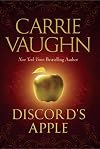
Please respectfully accept this as my humble request that you write a sequel, companion book, follow-up, something to Discord's Apple, which is as kick-ass and original story as I have ever found. I loved that you merged Greek mythology, folktales and fairytales, King Arthur, global political struggle, and the most awesome little storeroom in the world into one intricate story. I am willing to take anything you may be willing to offer in this new world you have crafted, be it show more a short story, another book, a graphic novel, or hell, even just a throwaway comment on the web somewhere. Because THIS BOOK WAS JUST THAT AWESOME. I didn't expect it to be this good, it started off kind of ho hum, another interesting urban fantasy, but then you pulled out the immortal Greek warrior, and things started looking up but wasn't quite into the "amazing category" but then you threw in Merlin, King Arthur, Hera, and Robin Goodfellow. Okay, that was better. But then holy cow that ending! show less
Please respectfully accept this as my humble request that you write a sequel, companion book, follow-up, something to Discord's Apple, which is as kick-ass and original story as I have ever found. I loved that you merged Greek mythology, folktales and fairytales, King Arthur, global political struggle, and the most awesome little storeroom in the world into one intricate story. I am willing to take anything you may be willing to offer in this new world you have crafted, be it show more a short story, another book, a graphic novel, or hell, even just a throwaway comment on the web somewhere. Because THIS BOOK WAS JUST THAT AWESOME. I didn't expect it to be this good, it started off kind of ho hum, another interesting urban fantasy, but then you pulled out the immortal Greek warrior, and things started looking up but wasn't quite into the "amazing category" but then you threw in Merlin, King Arthur, Hera, and Robin Goodfellow. Okay, that was better. But then holy cow that ending! show less
I received an advance copy of this book via NetGalley.
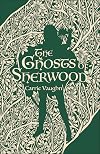
The Ghosts of Sherwood is a fast, thoroughly enjoyable read that picks up on the adventures of an older Robin and Marian and their three children. I expected it to be novel-length and was surprised (but not unpleasantly so) to find it was a novella. This is only fantasy in that it re-imagines their lives. It's not a deep, heavily-researched historical fiction piece, either, but one very accessible to anyone familiar with the Robin Hood show more Legend.
For me, the stars of the story were the children. The eldest, Mary, is a smart teenage girl. When she and her siblings are captured by enemies of her father, they must use their wits to stay alive and well as their parents come to the rescue. The youngest child, Eleanor, is depicted as autistic. As the parent of an autistic child, I loved seeing a realistic portrayal, especially within a loving, supportive family.
I'm glad this is listed on book sites as Robin Hood Stories #1, because I would love to read more of Vaughn's take on the famous family. show less
The Ghosts of Sherwood is a fast, thoroughly enjoyable read that picks up on the adventures of an older Robin and Marian and their three children. I expected it to be novel-length and was surprised (but not unpleasantly so) to find it was a novella. This is only fantasy in that it re-imagines their lives. It's not a deep, heavily-researched historical fiction piece, either, but one very accessible to anyone familiar with the Robin Hood show more Legend.
For me, the stars of the story were the children. The eldest, Mary, is a smart teenage girl. When she and her siblings are captured by enemies of her father, they must use their wits to stay alive and well as their parents come to the rescue. The youngest child, Eleanor, is depicted as autistic. As the parent of an autistic child, I loved seeing a realistic portrayal, especially within a loving, supportive family.
I'm glad this is listed on book sites as Robin Hood Stories #1, because I would love to read more of Vaughn's take on the famous family. show less
What this is:
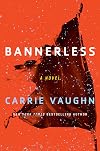
A post-apocalyptic pastoral with mystery elements, with murder, light social corruption, with traces of old tech in a much-reduced future where simple ways are regulated with tight social pressures. Banners are referring to the right to have children... as if overpopulation was the true cause of the earlier devastations.
What this isn't:
A literary post-apocalyptic novel. It's not attempting an outright thematic-based artsy-fartsy post-apoc. Indeed, it focuses on a hopeful future show more with an interesting social setup that attempts at a very real fairness that really isn't the norm for these types of novels. I'm used to women being raped every other page, and nothing like that is happening here. It's a real delight to see! Almost as if people are somewhat DECENT or something.
I did mention it was a pastoral novel, and it very much is. There are no big blowouts despite the investigation of a murder. There are very deliberate and reflective tones here, a big sense of patience and delving into characterization, too, but it's all in the service of a big picture.
It's a big departure from the author's UF, but that's fine. I love to see different genres from authors I trust. :) I'm very interested in continuing the sequel, now, too! :) show less
A post-apocalyptic pastoral with mystery elements, with murder, light social corruption, with traces of old tech in a much-reduced future where simple ways are regulated with tight social pressures. Banners are referring to the right to have children... as if overpopulation was the true cause of the earlier devastations.
What this isn't:
A literary post-apocalyptic novel. It's not attempting an outright thematic-based artsy-fartsy post-apoc. Indeed, it focuses on a hopeful future show more with an interesting social setup that attempts at a very real fairness that really isn't the norm for these types of novels. I'm used to women being raped every other page, and nothing like that is happening here. It's a real delight to see! Almost as if people are somewhat DECENT or something.
I did mention it was a pastoral novel, and it very much is. There are no big blowouts despite the investigation of a murder. There are very deliberate and reflective tones here, a big sense of patience and delving into characterization, too, but it's all in the service of a big picture.
It's a big departure from the author's UF, but that's fine. I love to see different genres from authors I trust. :) I'm very interested in continuing the sequel, now, too! :) show less
Lists
Awards


You May Also Like


Associated Authors
Statistics
- Works
- 135
- Also by
- 188
- Members
- 20,646
- Popularity
- #1,044
- Rating
- 3.7
- Reviews
- 1,123
- ISBNs
- 251
- Languages
- 4
- Favorited
- 55
