
David Morrell (1) (1943–)
Author of Creepers
For other authors named David Morrell, see the disambiguation page.
About the Author
David Morrell, an award-winning Canadian writer of horror fiction, was born in 1943 in Kitchener, Ontario, Canada. He was educated at the University of Waterloo and earned his Ph.D. from Pennsylvania State University. Morrell is best known as the creator of John Rambo, the hero of his first novel, show more First Blood. The novel was adapted for screen and starred Sylvester Stallone. Although Morrell was not happy with the depiction of the Rambo character in the movie, he did write several sequels to First Blood and two further scripts for the sequels to the original movie. He also wrote a number of other books including The Brotherhood of the Rose which became a best seller in 1984. David Morrell has written one scholarly work, John Barth: An Introduction, published by Pennsylvania State University in 1977 and has taught at the University of Iowa. He now lives in the United States with his wife and daughter (another child, a son, is deceased). (Bowker Author Biography) David Morrell, 1943 - Storyteller David Morrell was born in 1943 in Kitchener, Ontario. He received a B.A. from the University of Waterloo and an M.A. and Ph.D. from Pennsylvania State University. He was then a professor of American literature at the University of Iowa. Morrell's debut novel was "First Blood" and introduced the well-known John Rambo character. It was made into a successful movie that starred Sylvester Stalone. He followed with a series of thrillers filled with espionage, assassination and worldwide terrorism, which include "The Brotherhood of the Rose," "The Fraternity of the Stone," "The League of Night and Fog," and "The Covenant of the Flame." "Black Evening" is an examination of his own life and includes both his first published short stories and his latest award winning books. (Bowker Author Biography) show less
Series
Works by David Morrell
The Successful Novelist: A Lifetime of Lessons about Writing and Publishing (2008) 81 copies, 2 reviews
Brotherhood Omnibus: Brotherhood of the Rose; Fraternity of the Stone; League of Night and Fog (1993) 15 copies
David Morrell's Tales from Nightscape: Front Man, Nothing Will Hurt You, and Resurrection (2005) 10 copies
Resurrection 3 copies
The Storm 3 copies
Pierwsza krew Rambo 3 copies
Front Man 3 copies
Amazing Spider-Man: Peter Parker - The One And Only (Amazing Spider-Man (1999-2013)) (2014) 2 copies
Thriller Almanac 2 copies
But At My Back I Always Hear 2 copies
The Abelard Sanction and Other Stories: The Abelard Sanction, Assassins, The Double Dealer, Falling, and Surviving Toronto (2012) 2 copies
Nothing Will Hurt You 2 copies
If I Should Die Before I Wake 2 copies
The Typewriter 2 copies
Time Was 1 copy
The Hidden Laughter 1 copy
RETRATO DE UMA OBSESSAO 1 copy
Long List 1 copy
Rambo1 1 copy
The Corpse Collector 1 copy
Identidade Assumida 1 copy
Negacao Extrema 1 copy
The Partnership 1 copy
Testamento 1 copy
The Dripping 1 copy
Elvis .45 1 copy
Rio Grande Gothic 1 copy
Habitat 1 copy
Remains To Be Seen 1 copy
The Shrine 1 copy
The Road To Damascus 1 copy
Mumbo Jumbo 1 copy
For These and All My Sins 1 copy
A Trap for the Unwary 1 copy
Nelson Riddle: The Man behind the Music, an essay (The David Morrell Cultural-Icon Series) (2013) 1 copy
Juramento de vingança 1 copy
Associated Works
Prime Evil: New Stories by the Masters of Modern Horror (1988) — Contributor — 679 copies, 8 reviews
The Lineup: The World's Greatest Crime Writers Tell the Inside Story of Their Greatest Detectives (2009) — Contributor — 239 copies, 5 reviews
The World's Finest Mystery and Crime Stories: First Annual Collection (2000) — Contributor — 68 copies, 1 review
Alive in Shape and Color: 16 Paintings by Great Artists and the Stories They Inspired (2019) — Contributor — 53 copies, 3 reviews
The Deadly Bride and 21 of the Year's Finest Crime and Mystery Stories: Volume II (2006) — Contributor — 29 copies
Hollywood Ghosts: Haunting, Spine-Chilling Stories from America's Film Capital (American Ghost Series) (1991) — Contributor — 12 copies
Tagged
Common Knowledge
- Birthdate
- 1943-04-24
- Gender
- male
- Education
- University of Waterloo (St. Jeromes)
Pennsylvania State University - Organizations
- International Thriller Writers
- Awards and honors
- Bram Stoker Award
ITW Thrillermaster (2009) - Nationality
- Canada
- Birthplace
- Kitchener, Ontario, Canada
- Places of residence
- Kitchener, Ontario, Canada
Santa Fe, New Mexico, USA
Iowa City, Iowa, USA
Members
Reviews
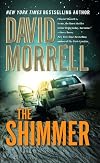
⭐ 4.5 – David Morrell bends reality instead of breaking it
The Shimmer starts as a straightforward small-town mystery—lights over the desert, a shooter, an investigation—and then quietly mutates into something stranger and more intimate. It’s science fiction built from mood rather than machinery.
Morrell balances multiple timelines with precision, letting each orbit the others like frequencies in the same field. What looks like a thriller about weaponized light becomes an examination show more of perception, grief, and the cost of knowing too much. The prose is clean, methodical, and surprisingly tender. You can feel the research, but for once it never outweighs the emotion; it anchors the impossible instead of explaining it away.
The book’s greatest strength is restraint. The violence lands hard but briefly, the dread grows from silence and absence, and even the so-called “cover-up” feels like a human reflex—officialdom trying to wallpaper over something that can’t be contained.
If The Totem was Morrell’s biological horror, The Shimmer is his metaphysical one: reality itself as contagion. It’s not a story about aliens or soldiers—it’s about what happens when truth and illusion blur, and everyone sees a different world.
Morrell keeps the spiral turning until the last page, leaving you uncertain whether the light revealed something divine or just burned our eyes. show less
The Shimmer starts as a straightforward small-town mystery—lights over the desert, a shooter, an investigation—and then quietly mutates into something stranger and more intimate. It’s science fiction built from mood rather than machinery.
Morrell balances multiple timelines with precision, letting each orbit the others like frequencies in the same field. What looks like a thriller about weaponized light becomes an examination show more of perception, grief, and the cost of knowing too much. The prose is clean, methodical, and surprisingly tender. You can feel the research, but for once it never outweighs the emotion; it anchors the impossible instead of explaining it away.
The book’s greatest strength is restraint. The violence lands hard but briefly, the dread grows from silence and absence, and even the so-called “cover-up” feels like a human reflex—officialdom trying to wallpaper over something that can’t be contained.
If The Totem was Morrell’s biological horror, The Shimmer is his metaphysical one: reality itself as contagion. It’s not a story about aliens or soldiers—it’s about what happens when truth and illusion blur, and everyone sees a different world.
Morrell keeps the spiral turning until the last page, leaving you uncertain whether the light revealed something divine or just burned our eyes. show less
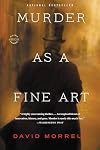
It's 1850s London and a mysterious murderer is committing murders that parallel the infamous (and bloody) Ratcliffe Highway Murders that occurred ~40 years earlier. Enter Thomas de Quincey, author of "Murder as a Fine Art" (also the better known "Confessions of an Opium-Eater"), which the murderer seems to be using as source material for his crimes. de Quincey finds himself pitted not only against a murderer who seems intent on destroying him, but also his own demons: his opium addiction, show more his checkered past. He's assisted in his investigations by a Scotland Yard inspector, an ambitious constable, and his precociously spunky daughter Emily.
What I enjoyed about the novel: Morrell's in-depth research about Victorian London, de Quincey's career, and especially the complicated, generally abhorrent role that the East India Company played in global politics of the 19th century. Most historical novels of this genre (the "famous person solving a mystery" genre) get the surface details right but stop there. Appreciate that Morrell has obviously spent the time to develop an intimate understanding of the period. Also, Morrell has de Quincey solving the crime using theories of human subconscious that are drawn from de Quincey's actual writings and that predate Freud by decades, which is clever.
However, there were other elements that distracted from my overall enjoyment. Morrell's writing is brusque and business-like, his characters unconvincing (his detectives display little cunning, his street people are a bit too lovably quirky, and Emily is way too perfect), his plotting is over-complicated and over-contrived, and his use of 3rd person omniscient occasionally took me out of the story. Mostly, however, I was irked by his Lord Palmerston subplot, which promises all sorts of intrigue that it never delivers.
In summary, I'd call this a step above the average historical mystery, and well worth reading for the history alone, but not without flaws that keep it from being as good as it might have been. show less
What I enjoyed about the novel: Morrell's in-depth research about Victorian London, de Quincey's career, and especially the complicated, generally abhorrent role that the East India Company played in global politics of the 19th century. Most historical novels of this genre (the "famous person solving a mystery" genre) get the surface details right but stop there. Appreciate that Morrell has obviously spent the time to develop an intimate understanding of the period. Also, Morrell has de Quincey solving the crime using theories of human subconscious that are drawn from de Quincey's actual writings and that predate Freud by decades, which is clever.
However, there were other elements that distracted from my overall enjoyment. Morrell's writing is brusque and business-like, his characters unconvincing (his detectives display little cunning, his street people are a bit too lovably quirky, and Emily is way too perfect), his plotting is over-complicated and over-contrived, and his use of 3rd person omniscient occasionally took me out of the story. Mostly, however, I was irked by his Lord Palmerston subplot, which promises all sorts of intrigue that it never delivers.
In summary, I'd call this a step above the average historical mystery, and well worth reading for the history alone, but not without flaws that keep it from being as good as it might have been. show less
While I was in college, I read Thomas De Quincey's Confessions of an English Opium Eater. When I recently learned that David Morrell had written a mystery with him as a sleuth, I thought back to De Quincey's Confessions and knew what a marvelous character he could be. To my delight, Morrell has done him justice. And then some.
During this investigation, Scotland Yard detectives Ryan and Becker do the hard work while De Quincey is the ideas man. De Quincey was saying things about dreams and show more the subconscious (he even coined the word) many decades before Freud, so it is a definite battle of wills between this frail, brilliant, and odd little man and the detectives who are used to a more physical style of investigation. Ryan and Becker also have to get used to the bloomer-wearing Emily De Quincey who has been raised to think and speak for herself. As much as she shocks the two young men, she isn't the hindrance they're convinced she'd be. Quite the opposite in fact, and one of the pleasures of reading this book was watching the two men begin to admire her. Is there a budding romance in Emily's future? And with which of the detectives will it be? This is only one of the many reasons why I look forward to reading the next book in this series.
Morrell brought Victorian London to life, and the action sequences were excellent. (Any time I read an action sequence and become worried or frightened, I know it's good.) We are treated to excerpts from Emily's diary throughout, and although these entries bring a needed break from tension, I have to admit that Emily's eye for detail had me wondering if she had a photographic memory.
Occasionally Morrell would change to a third person omniscient point of view to share facts about Victorian England that were important to the plot. As interesting as these passages were, I found that they took me out of the story, although I haven't got a clue how the author could've imparted this information in a less intrusive way.
With a hair-raising story, excellent action sequences, perfect period detail, and a marvelous cast of characters, I can't wait to get my hands on the next Thomas De Quincey book, Inspector of the Dead. show less
During this investigation, Scotland Yard detectives Ryan and Becker do the hard work while De Quincey is the ideas man. De Quincey was saying things about dreams and show more the subconscious (he even coined the word) many decades before Freud, so it is a definite battle of wills between this frail, brilliant, and odd little man and the detectives who are used to a more physical style of investigation. Ryan and Becker also have to get used to the bloomer-wearing Emily De Quincey who has been raised to think and speak for herself. As much as she shocks the two young men, she isn't the hindrance they're convinced she'd be. Quite the opposite in fact, and one of the pleasures of reading this book was watching the two men begin to admire her. Is there a budding romance in Emily's future? And with which of the detectives will it be? This is only one of the many reasons why I look forward to reading the next book in this series.
Morrell brought Victorian London to life, and the action sequences were excellent. (Any time I read an action sequence and become worried or frightened, I know it's good.) We are treated to excerpts from Emily's diary throughout, and although these entries bring a needed break from tension, I have to admit that Emily's eye for detail had me wondering if she had a photographic memory.
Occasionally Morrell would change to a third person omniscient point of view to share facts about Victorian England that were important to the plot. As interesting as these passages were, I found that they took me out of the story, although I haven't got a clue how the author could've imparted this information in a less intrusive way.
With a hair-raising story, excellent action sequences, perfect period detail, and a marvelous cast of characters, I can't wait to get my hands on the next Thomas De Quincey book, Inspector of the Dead. show less
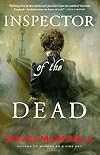
In a follow-up to “Murder as a Fine Art,” this historical mystery tells the story of murder, corruption and conspiracy among Britain’s upper echelon during the Crimean War. The book begins with a family tragedy as poverty drives a family of recent arrivals from Ireland into a conflict with the law. Attempting to gain their mother's release from prison, the whole family, with the exception of son Colin, are destroyed by an indifferent legal system and hostile people who cast them aside. show more Fifteen years later, as failures of leadership in handling the war threaten the stability of the monarchy, a series of brutal murders of high-level government officials and their families terrify the upper class. The first of the killings starts with a spectacular murder during a church service. Each murder is carefully staged to indicate the revival of a vendetta against the monarchy, particularly Queen Victoria, and the intended assassination of the queen.
The book focuses on the main characters: Thomas De Quincey, a notorious essayist who chronicled his ongoing opium addiction in the real life Confessions of an Opium Eater, his daughter Emily, and two London detectives, Sean Ryan and Joseph Becker. The murders’ common denominator, other than status, is their connection to a long-standing secret society called Young England. In hopes of protecting the Queen, De Quincey, Emily and the detectives set out to discover who is behind the deaths, and how they are connected to Young England before it’s too late.
I really loved the first book in this series and felt this was quite good too. The book alternates points of view between the murderer and the third person narrator, and contains excerpts from Emily's journal so you get a feel for what's going on at multiple levels. The major characters are wonderfully crafted and the author's excellent research on Victorian London really captures incredible details, political feelings, and a darkly atmospheric feel. show less
The book focuses on the main characters: Thomas De Quincey, a notorious essayist who chronicled his ongoing opium addiction in the real life Confessions of an Opium Eater, his daughter Emily, and two London detectives, Sean Ryan and Joseph Becker. The murders’ common denominator, other than status, is their connection to a long-standing secret society called Young England. In hopes of protecting the Queen, De Quincey, Emily and the detectives set out to discover who is behind the deaths, and how they are connected to Young England before it’s too late.
I really loved the first book in this series and felt this was quite good too. The book alternates points of view between the murderer and the third person narrator, and contains excerpts from Emily's journal so you get a feel for what's going on at multiple levels. The major characters are wonderfully crafted and the author's excellent research on Victorian London really captures incredible details, political feelings, and a darkly atmospheric feel. show less
Lists
1970s (1)
Page Turners (1)
Awards


You May Also Like


Associated Authors
Statistics
- Works
- 137
- Also by
- 65
- Members
- 12,925
- Popularity
- #1,808
- Rating
- 3.6
- Reviews
- 366
- ISBNs
- 841
- Languages
- 21
- Favorited
- 23

