Douglas Preston
Author of Relic
About the Author
Douglas Jerome Preston was born on May 20, 1956 in Cambridge, Massachusetts. He received a B.A. in English literature from Pomona College in 1978. His career began at the American Museum of Natural History, where he worked as an editor and writer from 1978 to 1985. He also was a lecturer in English show more at Princeton University. He became a full-time writer of both fiction and nonfiction books in 1986. Many of his fiction works are co-written with Lincoln Child including Relic, Riptide, Thunderhead, The Wheel of Darkness, Cemetery Dance, and Gideon's Corpse. His nonfiction works include Dinosaurs in the Attic; Cities of Gold: A Journey Across the American Southwest in Pursuit of Coronado; Talking to the Ground; and The Royal Road. He has written for numerous magazines including The New Yorker; Natural History; Harper's; Smithsonian; National Geographic; and Travel and Leisure. He became a New York Times Best Selling author with his titles Two Graves and Crimson Shores which he co-wrote with Lincoln Child, and his titles White Fire, The Lost Island Blue Labyrinth and The Lost City of the Monkey God. (Bowker Author Biography) show less
Disambiguation Notice:
This author is Douglas Preston. DO NOT COMBINE THIS PAGE WITH ANY JOINT PAGES OF DOUGLAS PRESTON AND LINCOLN CHILD Douglas Preston and Lincoln Child are two different people, who have written books collaboratively and separately. Their author pages should not be combined with each other, or with any of the variants using both their names. Please see "Who Should/Shouldn't Get combined" on the Author wiki page. Thank you.
Series
Works by Douglas Preston
Dinosaurs in the Attic: An Excursion into the American Museum of Natural History (1986) 332 copies, 11 reviews
The Lost Tomb and Other Real-Life Stories of Bones, Burials, and Murder (2023) 287 copies, 9 reviews
The Diogenes Trilogy: Brimstone, Dance of Death, and The Book of the Dead (2012) 31 copies, 1 review
Old Bones – Der Fluch der Wüste: Der 5. Band der Action-reichen Cold-Case-Reihe (Ein Fall für Nora Kelly und Corrie Swanson, Band 5) (2026) 5 copies
Who is Gideon Crew? 3 copies
The Lost Island [First 11 Chapters] 3 copies
Origines 2 copies
Two Graves [First 9 Chapters] 2 copies
Lost City of Monkey God, The 2 copies
Pendergast The Beginning 1 copy
Strangers 1 copy
Turmeluksen joki 1 copy
Desperation 1 copy
By The Sword 1 copy
Extinction Cash & Colcord #1 1 copy
Gideon's Child 1 copy
Associated Works
The Lineup: The World's Greatest Crime Writers Tell the Inside Story of Their Greatest Detectives (2009) — Contributor — 239 copies, 5 reviews
Reader's Digest Select Editions 1999 v06 #246: The Devil's Teardrop / Lake News / Thunderhead / A Walk to Remember (1999) 55 copies, 1 review
Reader's Digest Condensed Books: The Last Juror • The Various Haunts of Men • The Codex • Life and Limb (2004) 15 copies
Australian Reader's Digest Select Editions: The Ambler Warning • True Believer • Tyrannosaur Canyon • Quite Honestly (2006) 12 copies, 1 review
Livros Condensados: Sorriso Assassino | Comam Bolos! | O Códice | A Morte e a Vida de Charlie St. Cloud (2005) 6 copies
Livros Condensados: O Martelo do Paraíso | És Minha | A Ilha Maldita | Amy e os Gansos Bravos (1999) — Author — 5 copies
Reader's Digest Select Editions: The Last Juror | The Various Haunts of Men | The Codex | The Curious Incident of the Dog in the Night-Time (2004) — Author — 5 copies
Livros Condensados: Terreno Minado | O Homem dos Sete Ofícios | Frente de Tempestade | Um Raio de Luz (2001) — Author — 4 copies
Australian Reader's Digest Select Editions: Tripwire • Thunderhead • Lake News • Flight of Eagles (2000) 4 copies
Válogatott könyvek 2001/5 Ken Follett - Visszaszámlálás; Rosamunde Pilcher - Téli napforduló; Michael Palmer - A beteg; Douglas Preston és Lincoln Child - Viharfelhő (2001) — Contributor — 2 copies
Het Beste Boek 237: De codex / De eerste gast / Voltreffer / De pianist — Author — 2 copies, 1 review
Contracorrente / O bebê de alguém / A espiã improvável / Luz das estrelas — Contributor — 1 copy
Advogado de porta de cadeia / Os anjos de Morgan Hill / O vale do tiranossauro / Sobrevivendo com lobos — Contributor — 1 copy
Det Bästas Bokval (2005) vol 240 : Nattväktarna; Nätterna vid havet; Kodex; Damernas detektivbyrå — Author — 1 copy
Reader's Digest Auswahlbücher, Bestseller-Sonderband - Der Codex. Das Wunder der Liebe. April in Paris (2010) — Author — 1 copy
Kirjavaliot - Suden läheisyys / Kuu paistaa haudallesi / Kirottu kuilu / Kolme toivomusta (1999) 1 copy
Reader's Digest Auswahlbücher 278 - Der Canyon. Die Heideärztin. Gambling. Die Sturmfängerin (2008) — Author — 1 copy
Reader's Digest Select Editions: The Eleventh Commandment | The Currency Lads | Riptide | Firebird (1999) — Author — 1 copy
Tagged
Common Knowledge
- Legal name
- Preston, Douglas J.
- Birthdate
- 1956-05-26
- Gender
- male
- Education
- Pomona College
Cambridge School of Weston - Occupations
- editor
writer
manager of publications
professor
research associate
School of American Research (Boardmember) - Organizations
- American Museum of Natural History
The Atlantic Monthly
Smithsonian
The New Yorker
Laboratory of Anthropology (Santa Fe)
PEN New Mexico - Agent
- Eric Simonoff (Janklow & Nesbit Associates)
Matthew Snyder - Relationships
- Preston, Richard (brother)
Dickinson, Emily (Ancestor)
Preston, Aletheia (daughter) - Short biography
- Douglas Preston is the author of thirty-five books, both fiction and nonfiction, twenty-two of which have been New York Times bestsellers, with several reaching the number 1 position. He has worked as an editor at the American Museum of Natural History in New York and taught nonfiction writing at Princeton University. His first novel, RELIC, co-authored with Lincoln Child, was made into a movie by Paramount Pictures, which launched the famed Pendergast series of novels. His recent nonfiction book, THE MONSTER OF FLORENCE, is also in production as a film. His latest book, THE LOST CITY OF THE MONKEY GOD, tells the true story of the discovery of a prehistoric city in an unexplored valley deep in the Honduran jungle. In addition to books, Preston writes about archaeology and paleontology for the New Yorker, National Geographic, and Smithsonian. He is past co-president of International Thriller Writers and serves on the board of the Authors Guild. He is the recipient of numerous writing awards in the US and Europe, including an honorary Doctor of Letters degree from Pomona College.
- Nationality
- USA
- Birthplace
- Cambridge, Massachusetts, USA
- Places of residence
- Wellesley, Massachusetts, USA
New York, New York, USA
Santa Fe, New Mexico, USA
Round Pond, Maine, USA - Map Location
- Massachusetts, USA
- Disambiguation notice
- This author is Douglas Preston. DO NOT COMBINE THIS PAGE WITH ANY JOINT PAGES OF DOUGLAS PRESTON AND LINCOLN CHILD Douglas Preston and Lincoln Child are two different people, who have written books collaboratively and separately. Their author pages should not be combined with each other, or with any of the variants using both their names. Please see "Who Should/Shouldn't Get combined" on the Author wiki page. Thank you.
Members
Reviews
I just about love lost cities, hidden artefacts and jungle adventures – whether fact or fiction – more than any other topic you could name. Like David Grann's excellent 2009 history/memoir/adventure-journalism The Lost City of Z, Douglas Preston's 2017 book The Lost City of the Monkey God relates its author's pursuit of the story of a lost city in South America, the source of such legends as La Ciudad Blanca and El Dorado. Like Grann, he combines legend, history, archaeology, show more anthropology and personal impressions (during his own expedition into the rainforest) into a compelling, readable crowd-pleaser.
For the layman, this is excellent. Modern archaeologists sneer at the Indiana Jones stuff, the stories of lost cities and buried treasure, but in truth this thirst from the public is just the most overt and populist manifestation of the natural desire to delve into a mysterious and often inaccessible past. We all desire to commune with our ancestors, to think with wonder on what the past was like, when the Americas were untapped by the West and home to the vast stone cities of the Maya, Inca and the people of Preston's titular lost city, a culture we know so little about that it hasn't even received a formal name (pp205-6). For all that we know of the conquistador period, the "pre-Columbian history" of great civilizations, with populations of tens if not hundreds of thousands, remains an enigma (pg. 288). War, disease, nature and the passage of time have conspired to such an extent that Preston can stand in Mosquitia, one of the most remote and isolated regions of the world, where humans have not set foot for hundreds of years, and discover that the stones laid there, even the very shape of the land, had been manipulated by human hands (pg. 147). Though he hardly ever waxes lyrical, preferring a functional, journalistic approach, Preston successfully evokes this wonder.
Like Grann's book, Preston commendably does not shy away from the unromantic truths of exploration, even in the modern era: the diseases, the snakes, the jungle camp floor which is "carpeted with glistening cockroaches – thousands of them, rushing in frantic activity, looking like a greasy, jittering flow" (pg. 140). Though the expedition he is a part of is high-tech, employing helicopters, drones and – groundbreakingly – LiDAR to map the jungle floor with laser beams, it does not stop the people involved from contracting leishmaniasis or coming face-to-face with deadly six-foot snakes.
Nor does it mean they can uncover the lost city's secrets. Even leaving aside the problems of understanding a past culture solely from archaeological finds, Preston relates some of the more banal roadblocks on the expedition, such as lack of funds and interest. The timeframe of the archaeological dig is determined by how long they can secure an expensive helicopter or the LiDAR equipment itself; the parameters are set by Honduran politics and, back in the States, public apathy and, infuriatingly, petty academic bickering. Even after the Herculean effort of organising and carrying out the fascinating expedition, a bunch of stay-at-home academics back on campus begin organising petitions, dismissing the archaeologists as colonialist 'treasure hunters', and accusing the participants of normalising 'hypermasculinity', 'white supremacy' and 'engaging in racist dialogue' (pp274-6). If this were a simple but misguided attempt at advocacy of native tribes – sorry, indigenous populations – it would be understandable, but still irritating; the fact that Preston raises the credible speculation that many of the pious petitioners are backers of the previous Honduran regime, or were merely peeved that they hadn't been invited themselves, makes you marvel that anything ever gets done, especially in the painstaking and poorly-funded discipline of archaeology. While it seems at times like such insufferable people are as flies on an elephant's back, we must remember that it is such flies which are carriers for catastrophic and civilization-debilitating diseases.
Speaking of which, an unexpected but thought-provoking aspect of Preston's book, which becomes much more prominent towards the end, is the role disease pandemics played in the fate of the lost city, and of the New World in general. We all know of the role of the conquistador pathogens, of course, and the smallpox-infected blankets given to the North American Indians, but Preston really communicates the frightening reality of this. He gives well-sourced estimates that the deluge of 'Old World' diseases killed off 90% of the indigenous New World population in the fifty years after Columbus' arrival, even among those (like the 'lost city' Preston's expedition uncovers) which had no direct contact with the Old World. Apply that same imagination I mentioned earlier, about our desire to learn of forgotten peoples and untouched cities of wonder, to the following scenario:
"When the city at T1 was swept by epidemics, and the people felt they had been abandoned by their gods, I wondered what ceremonies they might have performed in a desperate effort to restore the cosmic order. Whatever they did, it failed; feeling cursed and rejected by the gods, they left the city, never to return." (pg. 284)
A 90% percent mortality rate, Preston tells us, is apocalyptic; for comparison, the Black Death was between 30% to 60% in Europe at its worst, whilst the Spanish Flu killed about 5% of the world's population (pp294, 301). At time of writing, the Covid-19 pandemic has killed about a million people worldwide, and its mortality rate, which is highly-disputed and politically contentious, ranges from less than 0.1% to, even in the highest estimates, about 1%. Considering how impactful Covid-19 (or the reaction to it) has been to world civilization, one cannot even conceive of the wrecking ball of a 90% mortality rate, let alone in a society with no understanding of disease science.
I've always been interested by the immediacy of history, those links between old and new which are not always apparent but which connect us to the people of the past, whether our immediate national descendants, our primordial ancestors, or the disparate and vanished indigenous people of the far-flung Americas. Preston's book draws heavily on this sense of wonder, the thrill of discovering that the New World had "cities, temples and colossal antiquities that rivalled those of the Old World, equal to the pyramids of Egypt and the glories of ancient Rome" (pg. 14). Preston, of course, could not even know of Covid-19 when he published The Lost City of the Monkey God in 2017, but the prescience and continued relevance of his book further proves his remark that "archaeology is thick with cautionary tales that speak directly to the twenty-first century" (pg. 204). That immediacy of history we feel when we wonder, as Preston noted above, what desperate ceremonies they might have performed, returns to us in 2020. With our porous cotton masks, our proposed vaccines and our media-driven hysteria, we can think about what rituals we are performing, and will perform, to restore the cosmic order, and wonder: will they too fail? A discomforting thought, but perhaps one response is to be found in our fascination with the past: that yearning to understand and preserve can lead us to identify what elements of our own civilization would deserve to survive. show less
For the layman, this is excellent. Modern archaeologists sneer at the Indiana Jones stuff, the stories of lost cities and buried treasure, but in truth this thirst from the public is just the most overt and populist manifestation of the natural desire to delve into a mysterious and often inaccessible past. We all desire to commune with our ancestors, to think with wonder on what the past was like, when the Americas were untapped by the West and home to the vast stone cities of the Maya, Inca and the people of Preston's titular lost city, a culture we know so little about that it hasn't even received a formal name (pp205-6). For all that we know of the conquistador period, the "pre-Columbian history" of great civilizations, with populations of tens if not hundreds of thousands, remains an enigma (pg. 288). War, disease, nature and the passage of time have conspired to such an extent that Preston can stand in Mosquitia, one of the most remote and isolated regions of the world, where humans have not set foot for hundreds of years, and discover that the stones laid there, even the very shape of the land, had been manipulated by human hands (pg. 147). Though he hardly ever waxes lyrical, preferring a functional, journalistic approach, Preston successfully evokes this wonder.
Like Grann's book, Preston commendably does not shy away from the unromantic truths of exploration, even in the modern era: the diseases, the snakes, the jungle camp floor which is "carpeted with glistening cockroaches – thousands of them, rushing in frantic activity, looking like a greasy, jittering flow" (pg. 140). Though the expedition he is a part of is high-tech, employing helicopters, drones and – groundbreakingly – LiDAR to map the jungle floor with laser beams, it does not stop the people involved from contracting leishmaniasis or coming face-to-face with deadly six-foot snakes.
Nor does it mean they can uncover the lost city's secrets. Even leaving aside the problems of understanding a past culture solely from archaeological finds, Preston relates some of the more banal roadblocks on the expedition, such as lack of funds and interest. The timeframe of the archaeological dig is determined by how long they can secure an expensive helicopter or the LiDAR equipment itself; the parameters are set by Honduran politics and, back in the States, public apathy and, infuriatingly, petty academic bickering. Even after the Herculean effort of organising and carrying out the fascinating expedition, a bunch of stay-at-home academics back on campus begin organising petitions, dismissing the archaeologists as colonialist 'treasure hunters', and accusing the participants of normalising 'hypermasculinity', 'white supremacy' and 'engaging in racist dialogue' (pp274-6). If this were a simple but misguided attempt at advocacy of native tribes – sorry, indigenous populations – it would be understandable, but still irritating; the fact that Preston raises the credible speculation that many of the pious petitioners are backers of the previous Honduran regime, or were merely peeved that they hadn't been invited themselves, makes you marvel that anything ever gets done, especially in the painstaking and poorly-funded discipline of archaeology. While it seems at times like such insufferable people are as flies on an elephant's back, we must remember that it is such flies which are carriers for catastrophic and civilization-debilitating diseases.
Speaking of which, an unexpected but thought-provoking aspect of Preston's book, which becomes much more prominent towards the end, is the role disease pandemics played in the fate of the lost city, and of the New World in general. We all know of the role of the conquistador pathogens, of course, and the smallpox-infected blankets given to the North American Indians, but Preston really communicates the frightening reality of this. He gives well-sourced estimates that the deluge of 'Old World' diseases killed off 90% of the indigenous New World population in the fifty years after Columbus' arrival, even among those (like the 'lost city' Preston's expedition uncovers) which had no direct contact with the Old World. Apply that same imagination I mentioned earlier, about our desire to learn of forgotten peoples and untouched cities of wonder, to the following scenario:
"When the city at T1 was swept by epidemics, and the people felt they had been abandoned by their gods, I wondered what ceremonies they might have performed in a desperate effort to restore the cosmic order. Whatever they did, it failed; feeling cursed and rejected by the gods, they left the city, never to return." (pg. 284)
A 90% percent mortality rate, Preston tells us, is apocalyptic; for comparison, the Black Death was between 30% to 60% in Europe at its worst, whilst the Spanish Flu killed about 5% of the world's population (pp294, 301). At time of writing, the Covid-19 pandemic has killed about a million people worldwide, and its mortality rate, which is highly-disputed and politically contentious, ranges from less than 0.1% to, even in the highest estimates, about 1%. Considering how impactful Covid-19 (or the reaction to it) has been to world civilization, one cannot even conceive of the wrecking ball of a 90% mortality rate, let alone in a society with no understanding of disease science.
I've always been interested by the immediacy of history, those links between old and new which are not always apparent but which connect us to the people of the past, whether our immediate national descendants, our primordial ancestors, or the disparate and vanished indigenous people of the far-flung Americas. Preston's book draws heavily on this sense of wonder, the thrill of discovering that the New World had "cities, temples and colossal antiquities that rivalled those of the Old World, equal to the pyramids of Egypt and the glories of ancient Rome" (pg. 14). Preston, of course, could not even know of Covid-19 when he published The Lost City of the Monkey God in 2017, but the prescience and continued relevance of his book further proves his remark that "archaeology is thick with cautionary tales that speak directly to the twenty-first century" (pg. 204). That immediacy of history we feel when we wonder, as Preston noted above, what desperate ceremonies they might have performed, returns to us in 2020. With our porous cotton masks, our proposed vaccines and our media-driven hysteria, we can think about what rituals we are performing, and will perform, to restore the cosmic order, and wonder: will they too fail? A discomforting thought, but perhaps one response is to be found in our fascination with the past: that yearning to understand and preserve can lead us to identify what elements of our own civilization would deserve to survive. show less
You can smell the farmland and hear the Kansas winds rustling through fields of corn as the erudite FBI agent with a touch of the supernatural about him, Pendergast, brings to the heartland his dark suit, 1959 Rolls-Royce Silver Wraith, and seemingly endless knowledge of the strange and otherworldly.
Squeezed between The Cabinet of Curiosities and Brimstone, two of the best in the series, Douglas Preston and Lincoln Child created another terrific novel that is part mystery, part thriller, and show more part horror story. Other than Relic/Reliquary and Dance of Death/Book of the Dead, which are best read in conjunction with each other, the series can basically be read as stand-alone novels. Readers who had, however, been following this intriguing series since the first one, had very high expectations because of the prior efforts. Fortunately those expectations are met in Still Life With Crows.
Pendergast is solo this time out, with only allusions to Wren, an ill-gotten inheritance, and his urgent need to return to New York connecting in any way to the incredible amount of history readers of the series know so well. Though I recommend reading from the beginning, Still Life With Crows makes an adequate introduction to the series because the focus here is mainly on Pendergast himself, who you need to know the most about to "get" the series.
Pendergast shows up in Kansas shortly after a ritual killing in a cornfield, and immediately we are immersed in a story as gripping as it is enjoyable. Though on vacation, Pendergast unofficially looks into a case with supernatural aspects dating back to a Cheyenne massacre by "ghost warriors" in the late nineteenth century. Immediately at odds with Sheriff Hazen, Pendergast investigates in his own unorthodox style -- which includes something akin to remote viewing -- as things become evermore gruesome on the Plains.
A new type of corn for which the town is competing in an effort to remain alive, and a serial killer unlike any Pendergast has encountered create urgency and tension. Humor abounds as well; albeit dark at times, but hilarious nonetheless. Pendergast enlists a blue-haired outcast named Corrie as his secretary. Scenes of her driving Pendergast around in her beat up Gremlin bring a smile to the reader's face. A deadly chase through caverns goes terribly wrong and gruesomely bloody, leading to an exciting and horrific conclusion. Like all the entries in this incredibly entertaining series, it is obvious some of the relationships will linger and spill over into other books.
Atmospheric, exciting, horrific, and with more character-driven humor than readers of a novel about dark and horrific crimes in America's heartland have any right to expect, this is a great read, and can be enjoyed even if you have not read any prior entries. However, this recommendation comes with a caveat. Still Life With Crows is a very unusual entry in the series (up to this point) in that all the characters readers had come to love, from Margo to D'Agosta, are nowhere to be found. Usually, at least a couple of the main planets orbiting the world of Pendergast are involved in the enthralling stories, if not all.
While I enjoyed this one a great deal, this eventually became the norm for the series and I stopped reading it. Unlike many, who complained about keeping track of so many characters and divergent things going on, this was one of the aspects I liked best about the series. As the cast was trimmed, possibly to accommodate those readers -- and probably make the books less involved to write -- some characters seemed to disappear into the woodwork, others only occasionally making a cameo appearance. The series eventually lost some of that which I loved about it. There are several books before this happens, however, and I highly recommend this one. The final scene will remind readers with a knowledge of such things, of a pulp story of weird menace. A great read! show less
Squeezed between The Cabinet of Curiosities and Brimstone, two of the best in the series, Douglas Preston and Lincoln Child created another terrific novel that is part mystery, part thriller, and show more part horror story. Other than Relic/Reliquary and Dance of Death/Book of the Dead, which are best read in conjunction with each other, the series can basically be read as stand-alone novels. Readers who had, however, been following this intriguing series since the first one, had very high expectations because of the prior efforts. Fortunately those expectations are met in Still Life With Crows.
Pendergast is solo this time out, with only allusions to Wren, an ill-gotten inheritance, and his urgent need to return to New York connecting in any way to the incredible amount of history readers of the series know so well. Though I recommend reading from the beginning, Still Life With Crows makes an adequate introduction to the series because the focus here is mainly on Pendergast himself, who you need to know the most about to "get" the series.
Pendergast shows up in Kansas shortly after a ritual killing in a cornfield, and immediately we are immersed in a story as gripping as it is enjoyable. Though on vacation, Pendergast unofficially looks into a case with supernatural aspects dating back to a Cheyenne massacre by "ghost warriors" in the late nineteenth century. Immediately at odds with Sheriff Hazen, Pendergast investigates in his own unorthodox style -- which includes something akin to remote viewing -- as things become evermore gruesome on the Plains.
A new type of corn for which the town is competing in an effort to remain alive, and a serial killer unlike any Pendergast has encountered create urgency and tension. Humor abounds as well; albeit dark at times, but hilarious nonetheless. Pendergast enlists a blue-haired outcast named Corrie as his secretary. Scenes of her driving Pendergast around in her beat up Gremlin bring a smile to the reader's face. A deadly chase through caverns goes terribly wrong and gruesomely bloody, leading to an exciting and horrific conclusion. Like all the entries in this incredibly entertaining series, it is obvious some of the relationships will linger and spill over into other books.
Atmospheric, exciting, horrific, and with more character-driven humor than readers of a novel about dark and horrific crimes in America's heartland have any right to expect, this is a great read, and can be enjoyed even if you have not read any prior entries. However, this recommendation comes with a caveat. Still Life With Crows is a very unusual entry in the series (up to this point) in that all the characters readers had come to love, from Margo to D'Agosta, are nowhere to be found. Usually, at least a couple of the main planets orbiting the world of Pendergast are involved in the enthralling stories, if not all.
While I enjoyed this one a great deal, this eventually became the norm for the series and I stopped reading it. Unlike many, who complained about keeping track of so many characters and divergent things going on, this was one of the aspects I liked best about the series. As the cast was trimmed, possibly to accommodate those readers -- and probably make the books less involved to write -- some characters seemed to disappear into the woodwork, others only occasionally making a cameo appearance. The series eventually lost some of that which I loved about it. There are several books before this happens, however, and I highly recommend this one. The final scene will remind readers with a knowledge of such things, of a pulp story of weird menace. A great read! show less
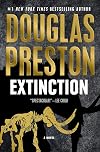
Take an ingenious mystery and marry it to a near-future science fiction plot so plausible it feels more like a prediction than an invention and you'll have Extinction by Douglas Preston.
Erebus Resort is nestled in the mountains of Colorado where scientists have de-extincted woolly mammoths and other large animals from the same era. They have been genetically modified to remove aggression (sounds foolproof) and left to roam. The resort is a top draw for the very wealthy. Newlyweds Mark and show more Olivia Gunnerson are two such park visitors. Until they disappear, leaving behind only a tent that has been slashed open and very large pools of blood.
Frankie Cash of the Colorado Bureau of Investigation is called in. This is her first case as agent in charge and she sets about the investigation in an efficient and no-nonsense manner. She is also dealing with the uber-wealthy, an old-school sheriff complete with cowboy hat, and a large corporation that has untold millions at stake. Initially suspecting eco-terrorists, evidence begins to point to a different and more frightening threat. The Resort and its large security staff appear to be open and helpful, but there are hints that they might not be as forthcoming as they appear. It isn't long before the danger reaches truly terrifying levels.
Extinction wears its homage to Jurassic Park on its sleeve, but clever plot twists take this story in unexpected directions and it is in no way derivative. Characters such as the bellicose billionaire father of one of the missing couple, a CBI boss who is as concerned with PR as he is with answers, and a competent head of security who seems to be hiding secrets behind a face of cooperation all make this story that much more intriguing. Frankie Cash's competence and stubbornness add complexity to a character you love to root for.
The plot is quick-moving from the start and combines the awe-inspiring with de-extincted creatures, clever twists, and some shocks that will send chills down your spine. Douglas Preston has delivered another great book that will have his own fans as well as fans of writers like Michael Crichton begging for more!
I was provided a copy of this book by the publisher. show less
Erebus Resort is nestled in the mountains of Colorado where scientists have de-extincted woolly mammoths and other large animals from the same era. They have been genetically modified to remove aggression (sounds foolproof) and left to roam. The resort is a top draw for the very wealthy. Newlyweds Mark and show more Olivia Gunnerson are two such park visitors. Until they disappear, leaving behind only a tent that has been slashed open and very large pools of blood.
Frankie Cash of the Colorado Bureau of Investigation is called in. This is her first case as agent in charge and she sets about the investigation in an efficient and no-nonsense manner. She is also dealing with the uber-wealthy, an old-school sheriff complete with cowboy hat, and a large corporation that has untold millions at stake. Initially suspecting eco-terrorists, evidence begins to point to a different and more frightening threat. The Resort and its large security staff appear to be open and helpful, but there are hints that they might not be as forthcoming as they appear. It isn't long before the danger reaches truly terrifying levels.
Extinction wears its homage to Jurassic Park on its sleeve, but clever plot twists take this story in unexpected directions and it is in no way derivative. Characters such as the bellicose billionaire father of one of the missing couple, a CBI boss who is as concerned with PR as he is with answers, and a competent head of security who seems to be hiding secrets behind a face of cooperation all make this story that much more intriguing. Frankie Cash's competence and stubbornness add complexity to a character you love to root for.
The plot is quick-moving from the start and combines the awe-inspiring with de-extincted creatures, clever twists, and some shocks that will send chills down your spine. Douglas Preston has delivered another great book that will have his own fans as well as fans of writers like Michael Crichton begging for more!
I was provided a copy of this book by the publisher. show less
If you're in the mood for a book that's flat-out fun to read, by all means, get your hands on a copy of The Scorpion's Tail. Preston and Child's story of treasure and obsession had my eyes glued to the page, and when life intruded and I had to put the book down, my mind kept wandering back to it, wondering what was going to happen next.
These two authors pushed so many of my WOW buttons that I don't think I can list them all. I learned several interesting tidbits of New Mexico history such show more as the Pueblo Revolt. I was taken to the White Sands Missile Range. The trip to a remote ghost town reminded me of so many similar trips my husband and I made here in Arizona. Ones where the trails were so bad I thought my kidneys and spine would never be the same-- but so much fun! Then there was the fabulous lost Spanish treasure, the white-knuckle night escape from the bad guys, a little Army-Navy joke, and of course, the archaeology.
There's so much "wonderfulness" in The Scorpion's Tail that I think the brief appearance made by Preston and Child's Agent Pendergast was completely unnecessary. This book's adventure, its marvelous setting, its mystery are all taken to the next level by the authors' characters. Corrie Swanson's backstory is slowly being revealed, and it's an interesting one. She's going to make an excellent agent, but she can be impulsive and does need Agent Morwood's mentoring. Nora Kelly is my kind of archaeologist who's learning about the politics of promotion at the Santa Fe Archaeological Institute, and her brother Skip is the perfect person to bring along on a dig. There's the smart, handsome sheriff of Socorro who wears two six-shooters strapped to his hips, but don't let the theatricality fool you. When you've got a cast like this, it makes the mystery and the adventure shine even brighter.
If you can't tell that I loved this book, I have to say that I'm worried about you. I'll also worry about you if you like this sort of book and decide not to read it. The Scorpion's Tail is a fantastic, fun read. What are you waiting for? show less
These two authors pushed so many of my WOW buttons that I don't think I can list them all. I learned several interesting tidbits of New Mexico history such show more as the Pueblo Revolt. I was taken to the White Sands Missile Range. The trip to a remote ghost town reminded me of so many similar trips my husband and I made here in Arizona. Ones where the trails were so bad I thought my kidneys and spine would never be the same-- but so much fun! Then there was the fabulous lost Spanish treasure, the white-knuckle night escape from the bad guys, a little Army-Navy joke, and of course, the archaeology.
There's so much "wonderfulness" in The Scorpion's Tail that I think the brief appearance made by Preston and Child's Agent Pendergast was completely unnecessary. This book's adventure, its marvelous setting, its mystery are all taken to the next level by the authors' characters. Corrie Swanson's backstory is slowly being revealed, and it's an interesting one. She's going to make an excellent agent, but she can be impulsive and does need Agent Morwood's mentoring. Nora Kelly is my kind of archaeologist who's learning about the politics of promotion at the Santa Fe Archaeological Institute, and her brother Skip is the perfect person to bring along on a dig. There's the smart, handsome sheriff of Socorro who wears two six-shooters strapped to his hips, but don't let the theatricality fool you. When you've got a cast like this, it makes the mystery and the adventure shine even brighter.
If you can't tell that I loved this book, I have to say that I'm worried about you. I'll also worry about you if you like this sort of book and decide not to read it. The Scorpion's Tail is a fantastic, fun read. What are you waiting for? show less
Lists
Books Read in 2023 (23)
2010s (1)
Page Turners (1)
To Read (1)
True Crime (1)
May Books (1)
Awards
You May Also Like
Associated Authors
Statistics
- Works
- 114
- Also by
- 31
- Members
- 85,658
- Popularity
- #128
- Rating
- 3.8
- Reviews
- 2,660
- ISBNs
- 1,917
- Languages
- 25
- Favorited
- 181