
Michael Crichton (1942–2008)
Author of Jurassic Park
About the Author
John Michael Crichton, known as Michael Crichton, was born on October 28, 1942 in Chicago, Illinois. He wrote novels while attending Harvard University and Harvard Medical School to help pay the tuition. One of these, The Andromeda Strain, which was published in 1969, became a bestseller. After show more graduating summa cum laude, he was a postdoctoral fellow at the Salk Institute in California before becoming a full-time writer and film director. His carefully researched novels included Eaters of the Dead, The Terminal Man, The Great Train Robbery, Congo, Sphere, Jurassic Park, Rising Sun, Disclosure, The Lost World, Airframe, and Micro. He also wrote non-fiction works including Five Patients: The Hospital Explained, Jasper Johns, and Travels. In the late 1960s, he also wrote under the pen names Jeffrey Hudson and John Lange. He has received several awards including Writer of the Year in 1970 from the Association of American Medical Writers and two Edgar Awards in 1968 and in 1979. Many of his novels have been made into highly successful films, six of which he directed. He was also the creator and executive producer of the Emmy Award-winning television series ER. In addition to his writing and directorial success, his expertise in information science enabled him to run a software company and develop a computer game. He died of cancer on November 4, 2008 at the age of 66. (Bowker Author Biography) show less
Disambiguation Notice:
Michael Crichton also wrote under the pseudonyms John Lange and Jeffery Hudson, during his medical studies. He also co-authored one book with his brother Douglas under the pen name Michael Douglas.
Series
Works by Michael Crichton
Wolfen / Body Snatchers / Coma / Bad Moon [film] — Director — 6 copies
Michael Crichton 4 copies
Michael Douglas Collection: Coma, Disclosure, Falling Down, A Perfect Murder (2011) — Director — 4 copies
Blood Doesn't Come Out — Author — 4 copies
Jurassic Park: Screenplay 2 copies
A Murder in Hollywood 1 copy
Erupce 1 copy
Congo / Next / Prey / Sphere / The Terminal Man — Author — 1 copy
[Title missing] 1 copy
Reader's Digest Condensed Books - Disclosure/The Fist Of God/The Hills Are Lonely/Diamond Solitaire 1 copy
Michael Crichton Set 1 copy
Jurassic Park / Congo 1 copy
A Captain of the Gate 1 copy
Jurassic Park - Tome 1 1 copy
The Terminal Man 1 copy
Free Lost World A1 Poster 1 copy
Associated Works
Reader's Digest Condensed Books 1976 v01: The Great Train Robbery / I Take Thee, Serenity / Bill W. / A Town Like Alice (1976) 32 copies
Reader's Digest Condensed Books 1994 v05: Daybreak / Disclosure / St. Agnes Stand / The Fist of God (1994) 31 copies
Reader's Digest Condensed Books 1972 v04: The Waltz Kings / The Terminal Man / The Dwelling Place / A World to Care For / The Hessian (1972) — Contributor — 31 copies
Reader's Digest Condensed Books: The Vanished Man • Don't Look Back • Prey • Street Boys (2003) 12 copies
Het Beste Boek 174: Onthulling / De Meilinghoeve / Verborgen rijkdommen / Oscar (1995) 8 copies, 1 review
Reader's Digest Condensed Books: The Great Train Robbery • Blind Love • Brown on Resolution • Where are the Children? • Among the Elephants (1974) 6 copies
Reader's Digest Auswahlbücher 200 : Der Klient. Spiel des Schicksals. Enthüllung. Das Glück hat sanfte Pfoten. (1995) 6 copies
Selecciones Reader's Digest: (libros condensados) El Gran Robo del Tren. Un Hombre Contra un Crucero. La Canción de Bernadette. Habla la Tierra (1977) — Contributor — 6 copies
Reader's Digest Auswahlbücher 124 - Vogelfrei. Wettlauf mit dem weißen Tod. Mein linker Fuß. Expedition Kongo. (1982) 6 copies
Reader's Digest Condensed Books: The Terminal Man • Captain Bligh and Mr. Christian • The Sunbird • A Falcon for a Queen (1973) 6 copies
Reader's Digest Select Editions: Airframe • Birds of Prey • The Partner • The Falconer (1997) 4 copies
The Doomsday Conspiracy / Blackwater / The Masks of Rome / Airframe / The Simple Art of Murder (1997) 4 copies
Australian Reader's Digest Condensed Books: Lie Down with Lions / Julie / Congo / The Wild Children (1987) — Author — 2 copies
Kirjavaliot - Kongo / Tohtori Gibsonin vastaanotto / Kohtaaminen Firenzessä / Oikeuden voitto (1984) 2 copies
Het Beste Boek 77: De baby en het slagschip / De grote treinroof / De gevaarlijke erfenis / De patiënten — Author — 2 copies, 1 review
Tom Selleck Triple Feature : Runaway/Shadow Riders/Ike: Countdown to D-Day — Director — 2 copies
Kirjavaliot - Verkossa (Disclosure) / Ihmeiden aika (St. Agnes' stand) / Tuhon siemenet (Growth) / Piinaava pelko (Death penalties) (1995) 2 copies
Readers Digest Auswahlbücher: Endstation / Bischu, der Jaguar / Der alte Mann und ich / Haus in Angst (1974) 1 copy
Det stora tågrånet/Emily/En amerikan i Gulag/De vilda elefanterna (Det bästas bokval, sammandrag) 1 copy
Readers Digest Condensed Books: A Falcon for a Queen • Event 1000 • The Waltz Kings • The Sea of Grass • The Terminal Man (1973) 1 copy
Det bästas bokval - Ett barn försvinner, Kongo, Kampen om Mary Deare, Mrs Pollifax i Hongkong — Author — 1 copy
Reader's Digest Condensed Books: Disclosure • The Fist of God • The Hills Are Lonely • Diamond Solitaire — Author — 1 copy
Tagged
Common Knowledge
- Legal name
- Crichton, John Michael
- Other names
- Lange, John (pseudonym)
Hudson, Jeffrey (pseudonym)
Douglas, Michael (shared pseudonym with his brother Douglas) - Birthdate
- 1942-10-23
- Date of death
- 2008-11-04
- Gender
- male
- Education
- Harvard University (MD|1969)
Harvard College (AB|1964) - Occupations
- screenwriter
director
producer
novelist
physician - Organizations
- Jonas Salk Institute for Biological Studies
Authors Guild
Writers Guild of America
PEN America Center
Directors Guild of America
Academy of Television Arts and Sciences (show all 7)
Academy of Motion Picture Arts and Sciences - Awards and honors
- Phi Beta Kappa
Association of American Medical Writers Award (1970)
Academy of Motion Picture Arts and Sciences (Technical Achievement Award ∙ 1995)
The American Association of Petroleum Geologists Journalism Award (2006) - Relationships
- Martin, Anne-Marie (former wife)
Crichton, Douglas (brother) - Short biography
- Michael Crichton was born in Chicago in 1942. His novels include Next, State of Fear, Prey, Timeline, Jurassic Park, and The Andromeda Strain. He was also the creator of the television series ER. One of the most popular writers in the world, his books have been made into thirteen films, and translated in thirty-six languages. He died in 2008.
- Cause of death
- lymphoma
- Nationality
- USA
- Birthplace
- Chicago, Illinois, USA
- Places of residence
- Chicago, Illinois, USA
New York, USA
Los Angeles, California, USA
Cambridge, Massachusetts, USA - Place of death
- Los Angeles, California, USA
- Burial location
- Los Angeles, California, USA
- Disambiguation notice
- Michael Crichton also wrote under the pseudonyms John Lange and Jeffery Hudson, during his medical studies. He also co-authored one book with his brother Douglas under the pen name Michael Douglas.
- Associated Place (for map)
- USA
Members
Discussions
Boardroom biz meets Mummy man and the wrecked vacation house in Good Show Sir! — bad science fiction and fantasy covers (February 12)
Chricton's Sphere Arrived in Easton Press Collectors (July 2023)
Jurassic Park - Folio edition in Folio Society Devotees (September 2021)
Reviews

On the question of global warming/climate change, the theme that dominates Michael Crichton's 2004 thriller State of Fear, I'll try to keep it mercifully brief for anyone who might be reading this review. Suffice to say that the people who give this book 1-star, and those who give it 5-stars, are both wide of the mark, and reveal their ideological allegiances. Crichton is a sceptic but not a 'denialist', that loaded term which has become all the rage in the two decades since State of Fear show more was published and which has always seemed to me an underhand attempt to provoke connotations to Holocaust denial.
Crichton's appeal is for scientific scepticism and independent inquiry, endeavouring to be free from bias, ideology, financial influence or peer pressure. Whatever one's opinions on Crichton's specific stance or his conclusions, that's a worthy aim for any piece of fiction. His commentary on media manipulation and the politicization of science remains timely, and has perhaps become even more so in the years since State of Fear's publication. One can only imagine what Crichton, who earned a medical degree from Harvard, would have written of our approach to the Covid pandemic and lockdown.
Contentious themes aside – and it seems a lot of Crichton's books possess such taboo themes, and it's a shame that honest contrarians and dissenters have been harried out of mainstream art and culture – the inconvenient truth is that State of Fear is not a great thriller. Crichton is a good storyteller, and his pages flow by easily, but the plot was very synthetic. Kenner, the spy with an answer to everything, lacks the flaws to make him interesting, and the fact that the plot sees him bring along our everyman cast of lawyers and 9-to-5-ers across dangerous continents and into perilous gunfights and outlandish action set-pieces becomes increasingly absurd. The threat from the environmental terrorists in the book (which is made weaker by the lack of a central villain) would in a common-sense book be dealt with by spies and special forces, not by one spy and the have-a-go heroes he picks up along the way.
It's clear that State of Fear was a polemic of environmental scepticism first, and a thriller a distant second. The plot and characters are thinly adorned around the powerful and controversial theme and exist solely to justify it. Or at least, they justified it in 2004, when the book was published; in 2023, the reverse is true. The plot and characters are no reason at all for State of Fear to retain value or interest. But its expression of a minority viewpoint, a view that has become verboten in the years since, gives it a transgressive value in a Western culture that has become increasingly slavish to the cultural complacency, under-informed debate and scientific hubris that Crichton always railed against in his novels, regardless of their particular topics. His are novels that, for all their pessimism, now seem like a time capsule of a healthier age. show less
Crichton's appeal is for scientific scepticism and independent inquiry, endeavouring to be free from bias, ideology, financial influence or peer pressure. Whatever one's opinions on Crichton's specific stance or his conclusions, that's a worthy aim for any piece of fiction. His commentary on media manipulation and the politicization of science remains timely, and has perhaps become even more so in the years since State of Fear's publication. One can only imagine what Crichton, who earned a medical degree from Harvard, would have written of our approach to the Covid pandemic and lockdown.
Contentious themes aside – and it seems a lot of Crichton's books possess such taboo themes, and it's a shame that honest contrarians and dissenters have been harried out of mainstream art and culture – the inconvenient truth is that State of Fear is not a great thriller. Crichton is a good storyteller, and his pages flow by easily, but the plot was very synthetic. Kenner, the spy with an answer to everything, lacks the flaws to make him interesting, and the fact that the plot sees him bring along our everyman cast of lawyers and 9-to-5-ers across dangerous continents and into perilous gunfights and outlandish action set-pieces becomes increasingly absurd. The threat from the environmental terrorists in the book (which is made weaker by the lack of a central villain) would in a common-sense book be dealt with by spies and special forces, not by one spy and the have-a-go heroes he picks up along the way.
It's clear that State of Fear was a polemic of environmental scepticism first, and a thriller a distant second. The plot and characters are thinly adorned around the powerful and controversial theme and exist solely to justify it. Or at least, they justified it in 2004, when the book was published; in 2023, the reverse is true. The plot and characters are no reason at all for State of Fear to retain value or interest. But its expression of a minority viewpoint, a view that has become verboten in the years since, gives it a transgressive value in a Western culture that has become increasingly slavish to the cultural complacency, under-informed debate and scientific hubris that Crichton always railed against in his novels, regardless of their particular topics. His are novels that, for all their pessimism, now seem like a time capsule of a healthier age. show less
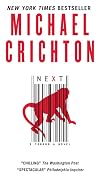
This is, decidedly, not the book I was looking for. Next feels like an early draft of something that could have ended up being an interesting scientific thriller, but it’s a mess. And even saying that much is kind.
Where Next starts to dive a little into genetics, it struggles to find footing on an exact aspect of the science it wants to target. There’s corporate policy, ownership, patents, ending, morality in extraction, morality in experimentation… that’s the tip of the iceberg. show more While Crichton can be a bit preachy at some times, he’s often more balanced than he was in Next.
Every character in this book is the worst example of humanity. Male characters consistently belittle female character. All characters are incredibly greedy, going sideways outside the law in any way they can to get what they want. Every character is extreme and there’s so. many. POVs. I don’t think I saw a POV repeat until about page 100. There’s so many dramatic character interactions. This includes children trying to kill one another, animal testing, and a woman who was hired to frame a man for statutory rape (that whole scene… I have so many issues). While I don’t want to belittle these things, because they happen in real life and they are tragic and terrible, Crichton just went for all the most depraved aspects of humanity as though to say “genes will destroy humanity”. … Which is just… a little too conspiracy theory for me.
The storytelling itself almost entirely missing. There’s almost no consistent storyline, and the end of he book feels very much like a quick “oh shit” wrap up where most of the storylines come together. Of course, some characters and storylines were abandoned in the first half of the book and there’s no closure. Each chapter is one screenshot after another of some way gene therapy or genetic experimentation has ruined the lives of the character.
Overall I wouldn’t recommend Next to anyone. Not only is it an unimpressive story content-wise, it’s such a hot mess as a novel. It feels like a first draft more than a finished book and it’s a little surprising that it got all the way to publication in this state, because it’s such a mess? But bestselling authors do tend to get some leeway on these things. Crichton has a lot of a better books than this, and I suggest picking up one of those instead. show less
Where Next starts to dive a little into genetics, it struggles to find footing on an exact aspect of the science it wants to target. There’s corporate policy, ownership, patents, ending, morality in extraction, morality in experimentation… that’s the tip of the iceberg. show more While Crichton can be a bit preachy at some times, he’s often more balanced than he was in Next.
Every character in this book is the worst example of humanity. Male characters consistently belittle female character. All characters are incredibly greedy, going sideways outside the law in any way they can to get what they want. Every character is extreme and there’s so. many. POVs. I don’t think I saw a POV repeat until about page 100. There’s so many dramatic character interactions. This includes children trying to kill one another, animal testing, and a woman who was hired to frame a man for statutory rape (that whole scene… I have so many issues). While I don’t want to belittle these things, because they happen in real life and they are tragic and terrible, Crichton just went for all the most depraved aspects of humanity as though to say “genes will destroy humanity”. … Which is just… a little too conspiracy theory for me.
The storytelling itself almost entirely missing. There’s almost no consistent storyline, and the end of he book feels very much like a quick “oh shit” wrap up where most of the storylines come together. Of course, some characters and storylines were abandoned in the first half of the book and there’s no closure. Each chapter is one screenshot after another of some way gene therapy or genetic experimentation has ruined the lives of the character.
Overall I wouldn’t recommend Next to anyone. Not only is it an unimpressive story content-wise, it’s such a hot mess as a novel. It feels like a first draft more than a finished book and it’s a little surprising that it got all the way to publication in this state, because it’s such a mess? But bestselling authors do tend to get some leeway on these things. Crichton has a lot of a better books than this, and I suggest picking up one of those instead. show less

Michael Crichton’s Eaters of the Dead: The Manuscript of Ibn Fadlan Relating His Experiences with the Northmen in AD 922 purports to translate an historic account from a Muslim emissary who’s driven off-track on his ambassadorial mission and joins a Viking quest. The story loosely follows Beowulf, though Crichton changes just enough details to craft a plot that would serve as the “historical” inspiration for the 10th- to 11th-century Old English epic poem. Though Ibn Fadlan never show more addresses them as such, the “monsters” the Vikings encounter are a band of Neanderthals that have survived past the last Ice Age, raiding the local Norse on occasion and becoming the inspiration for Grendel with their method of carrying torches resembling a dragon in the mist. The work handily demonstrates Crichton’s ability to adopt whatever style he needs to immerse the reader in his narrative while creating a sense of verisimilitude. He succeeds to the point that those unfamiliar with the premise could mistake it for an academic translation, though Crichton ensures that the narrative will entertain. It particularly works well for those familiar with Beowulf. show less
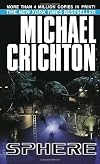
This is a serious study in how to keep a reader on edge. Maybe I'm just easily scared, but I find surprising that such a simple concept can generate such a strong reaction from me.
Four scientists are called to a crash site. It turns out to be the site of a spaceship that has been there for more than three hundred years. As they explore, mysterious events and messages begin to appear around the site of their habitat. The mission becomes a race to discover who or what is causing these attacks show more and why, before it kills them all.
For me, Sphere derives a great deal of its power from the veneer of science that it layers over the entire experience. We're placed among a group of intellectuals who knife away at the problems using the tools they are normally accustomed to. The origin of the ship, the nature of the codes, their mutual behaviours - I could spot no obvious, immersion breaking discrepancies and I was consequently quite vulnerable to the feelings that the book generates. Crichton uses Sphere as a way to indicate the issues surrounding alien contact, caricatured somewhat but still a real indicator to someone who is not aware of the situation. I think it would be best not take his novels too seriously, though. Not everything is quite as clear cut as he makes it out.
The other issue I would mention is the relative lack of feelings that the characters have. The main character is a psychologist, but I don't think that you can explain the weird reactions of the scientists to deaths and inexplicable events as just hiding from the reality. I think most people would have some kind of more extreme reaction than that. It makes Beth and Harry, in particular, feel like constructions more than people.
The "message" of the book then, if there is one, would probably go something like this. We're looking at a clash between the soft and the hard sciences, and their ways of interpreting problems. Norman ends up proving that the hard scientists that ignore psychology and their own psychological problems are a danger to themselves and others (although the sequence of deductions that he generates is enough to make any reader feel inadequate). The other topic is the power of the human imagination. Norman decides that the ability to control our thoughts and maintain self-control is the factor being tested by the sphere. As a species, we have to learn this kind of restraint if we are going to explore the stars.
Highly recommended if you have a little time on your hands. No literary masterpiece, but thoroughly enjoyable and it will get you thinking hard about a great deal of increasingly relevant issues. show less
Four scientists are called to a crash site. It turns out to be the site of a spaceship that has been there for more than three hundred years. As they explore, mysterious events and messages begin to appear around the site of their habitat. The mission becomes a race to discover who or what is causing these attacks show more and why, before it kills them all.
For me, Sphere derives a great deal of its power from the veneer of science that it layers over the entire experience. We're placed among a group of intellectuals who knife away at the problems using the tools they are normally accustomed to. The origin of the ship, the nature of the codes, their mutual behaviours - I could spot no obvious, immersion breaking discrepancies and I was consequently quite vulnerable to the feelings that the book generates. Crichton uses Sphere as a way to indicate the issues surrounding alien contact, caricatured somewhat but still a real indicator to someone who is not aware of the situation. I think it would be best not take his novels too seriously, though. Not everything is quite as clear cut as he makes it out.
The other issue I would mention is the relative lack of feelings that the characters have. The main character is a psychologist, but I don't think that you can explain the weird reactions of the scientists to deaths and inexplicable events as just hiding from the reality. I think most people would have some kind of more extreme reaction than that. It makes Beth and Harry, in particular, feel like constructions more than people.
The "message" of the book then, if there is one, would probably go something like this.
Highly recommended if you have a little time on your hands. No literary masterpiece, but thoroughly enjoyable and it will get you thinking hard about a great deal of increasingly relevant issues. show less
Lists
Carole's List (11)
Jarett's Books (1)
SF - To Read (1)
DVD Movies (1)
Overdue Podcast (1)
Africa (1)
1990s (1)
Page Turners (1)
Read in 2016 (1)
Read in 2014 (1)
mom (1)
Already read (1)
Read in 2008 (1)
1960s (1)
Favourite Books (1)
To Read - Horror (1)
Ranking (8)
Very Very Bad (2)
Unread books (2)
Latin America (2)
um actually (1)
BitLife (1)
Best Audiobooks (1)
Thrillers (1)
Edgar Award (1)
Latin America (1)
Parallel Novels (1)
1980 great books (1)
1970s (1)
Awards


You May Also Like


Associated Authors
Statistics
- Works
- 143
- Also by
- 53
- Members
- 171,884
- Popularity
- #31
- Rating
- 3.6
- Reviews
- 2,637
- ISBNs
- 2,077
- Languages
- 38
- Favorited
- 478

