
Max Allan Collins
Author of Road to Perdition
About the Author
Max Allen Collins was born in 1948 in Muscatine, Iowa. He is a two-time winner of the Private Eye Writer's of America's Shamus Award for his Nathaniel Heller historical thrillers "True Detective" and "Stolen Away". Collins also wrote the Dick Tracy comic strip begining in 1977 and ending in the show more early 1990s. He has contributed to a number of other comics, including Batman. Collins created his first independent feature film, Mommy, following a nightmarish experience as screenwriter on the cable movie The Expert. Collins has been contracted by DC Comics to write three tie-ins to his critically acclaimed graphic novel "The Road to Perdition", which was adapted into the feature film. Author of other such move tie-in bestsellers as "In the Line of Fire" and "Air Force One", he is also the screenwriter/director of the cult favorite suspense films "Mommie" and "Mommie's Day". (Publisher Provided) Max Allen Collins was born in Muscatine, Iowa on March 3, 1948. His graphic novel Road to Perdition, published in 1998, is the basis of the Academy Award-winning 2002 film starring Tom Hanks, Paul Newman and Daniel Craig. His other works include Road to Purgatory, Road to Paradise, Return to Perdition, Bye Bye, Baby, and Target Lancer. He won the Shamus awards for True Detective in 1983 and Stolen Away in 1991. He is completing a number of Mike Hammer novels begun by the late Mickey Spillane. He has collaborated with his wife Barbara Collins on three novels and numerous short stories. Their Antiques Flee Market won the Romantic Times Best Humorous Mystery Novel award in 2009. His comics credits include the syndicated strip Dick Tracy (1977-1993), Ms. Tree, Batman; and CSI: Crime Scene Investigation, based on the hit TV series for which he has also written ten novels. He has written tie-in books for several movies including Saving Private Ryan, Air Force One, and American Gangster, which won the Best Novel Scribe Award in 2008 from the International Association of Tie-in Writers. His non-fiction works include The History of Mystery and Men's Adventure Magazines, which won Anthony Award. He is also an independent filmmaker. He has written and directed five features and two documentaries, including the Lifetime movie Mommy and the sequel, Mommy's Day. (Bowker Author Biography) show less
Image credit: Max Allan Collins on July 9, 2002 at the Ziegfeld Theater in New York City
Series
Works by Max Allan Collins
Men's adventure magazines in postwar America : the Rich Oberg collection (2004) 216 copies, 3 reviews
Scarface and the Untouchable: Al Capone, Eliot Ness, and the Battle for Chicago (2020) 123 copies, 5 reviews
Eliot Ness and the Mad Butcher: Hunting America's Deadliest Unidentified Serial Killer at the Dawn of Modern Criminology (2020) 116 copies
A Century of Noir: Thirty-two Classic Crime Stories (2002) — Editor; Contributor — 84 copies, 3 reviews
Flesh & Blood: Dark Desires: Erotic Tales of Crime and Passion (2002) — Editor & Contributor — 13 copies
Elvgren Girls I 8 copies
Batman Vol. 1 #410 8 copies
Flesh & Blood: Guilty as Sin: Erotic Tales of Crime and Passion (2003) — Editor & Contributor — 7 copies
The New Adventures of Mickey Spillane's Mike Hammer, Vol. 2: The Little Death (2009) — Author — 6 copies
Batman Vol. 1 #411 6 copies
Batman Vol. 1 #408 6 copies
Johnny Dynamite: Explosive Pre-Code Crime Comics - The Complete Adventures of Pete Morisi's Wild Man of Chicago (2020) 4 copies
Die, Lover, Die! 3 copies
Quarry 3 copies
The Sound of One Hand Clapping 2 copies
Ms. Tree 3-D 2 copies
Robber's Roost 2 copies
Wild Dog #2 2 copies
Mommy [1995 film] — Director — 2 copies
ESTRADA PARA PERDICAO - VOL 3 2 copies
Mike Danger (1995) #11 1 copy
Mike Danger (1995) #10 1 copy
Mike Danger (1995) #09 1 copy
Mike Danger (1995) #08 1 copy
Mike Danger (1995) #07 1 copy
I Had Bigfoot's Baby! 1 copy
Mike Danger (1995) #06 1 copy
Fallout {short story} 1 copy
Mike Danger (1995) #05 1 copy
Batman - Os Intocáveis 1 copy
Tracy's Wartime Memories 1 copy
The Last Quarry 1 copy
Skim Deep 1 copy
Hunger 1 copy
Killing Quarry 1 copy
Two for the Money 1 copy
Quarry in the Black 1 copy
Quarry's Vote 1 copy
Wild Dog #3 1 copy
Quarry's Ex 1 copy
Quarry's Choice 1 copy
No One Will Hear You 1 copy
The Wrong Quarry 1 copy
Quarry's Cut 1 copy
Quarry's List 1 copy
Mike Mist Minute Mist-Eries 1 copy
Quarry's Deal 1 copy
Quarry in the Middle 1 copy
Quarry's Climax 1 copy
The First Quarry 1 copy
Antibody [VHS] 1 copy
Big Bang, The — Author — 1 copy
Quarry s Climax 1 copy
CSI: Serial #2 1 copy
CSI: Serial #3 1 copy
CSI: Serial #4 1 copy
CSI: Serial #5 1 copy
CSI: Serial #1 1 copy
Puzzle of Bones 1 copy
The Night Of Their Lives 1 copy
Batman n. 01 1 copy
Batman n. 02 1 copy
Batman n. 03 1 copy
Guest Services 1 copy
A Matter of Principal 1 copy
A Pebble For Papa 1 copy
The Cold Case 1 copy
Batman 1/1988 1 copy
Batman 3/1989 1 copy
Sand's War (A Sand Shocker) 1 copy
Ms Tree Quarterly Volume 4 1 copy
The Black Mountain 1 copy
デイライト (二見文庫 ザ・ミステリ・コレクション) 1 copy
The Bloody Spur 1 copy
A Good Head on His Shoulders 1 copy
CSI: Demon House Issue #3 1 copy
Wild Dog #4 1 copy
Ms. Tree Vol. 6: Fallen Tree 1 copy
Road to Purgatory 1 copy
Chicago Mob Wars 1 copy
Killing Town: Mike Hammer — Author — 1 copy
Masquerade for Murder — Author — 1 copy
Kiss Her Goodbye — Author — 1 copy
King of the Weeds — Author — 1 copy
Kill Me, Darling — Author — 1 copy
Murder Never Knocks — Author — 1 copy
Associated Works
Books to Die For: The World's Greatest Mystery Writers on the World's Greatest Mystery Novels (2012) 277 copies, 10 reviews
Bibliomysteries: Crime in the World of Books and Bookstores, Volume One (2013) — Contributor — 242 copies, 14 reviews
The Complete Chester Gould's Dick Tracy Dailies & Sundays, Volume 01: 1931-1933 (2006) — Introduction, some editions — 110 copies, 2 reviews
The Further Adventures of Batman, Volume 2: Featuring the Penguin (1992) — Contributor — 100 copies, 1 review
By Hook or By Crook and 30 More of the Best Crime and Mystery Stories of the Year (2010) — Contributor — 87 copies
In Pursuit of Spenser: Mystery Writers on Robert B. Parker and the Creation of an American Hero (2012) — Contributor — 81 copies, 6 reviews
Writing the Private Eye Novel: A Handbook by the Private Eye Writers of America (1997) — Contributor — 60 copies
Chicago Blues: A Collection of Crime Stories about the Real Windy City (2007) — Contributor, some editions — 60 copies, 2 reviews
At the Scene of the Crime: Forensic Mysteries from Today's Best Writers (2008) — Contributor — 36 copies, 3 reviews
Top Suspense: 13 Classic Stories by 12 Masters of the Genre (2011) — Contributor — 30 copies, 1 review
Greatest Hits: Original Stories of Hitmen, Hired Guns, and Private Eyes (2005) — Contributor — 18 copies
The Eyes Have It: The First Private Eye Writers of America Anthology (1984) — Contributor — 17 copies
The Year's 25 Finest Crime and Mystery Stories: First Annual Edition (1992) — Contributor — 16 copies
The Year's 25 Finest Crime and Mystery Stories: Second Annual Edition (1993) — Contributor — 12 copies
Pop the Clutch: Thrilling Tales of Rockabilly, Monsters, and Hot Rod Horror (2019) — Contributor — 8 copies
The Year's 25 Finest Crime and Mystery Stories: Fifth Annual Edition (1996) — Contributor — 7 copies
Encore for Murder (The New Adventures of Mickey Spillane's Mike Hammer, Vol. 3) (2011) — Author, some editions — 4 copies, 2 reviews
Tagged
Common Knowledge
- Other names
- Culhane, Patrick
Allan, Barbara - Birthdate
- 1948-03-03
- Gender
- male
- Education
- University of Iowa
- Occupations
- mystery writer
- Organizations
- Private Eye Writers of America (past president)
Western Fictioneers - Awards and honors
- Herodotus Lifetime Achievement Award for Excellence in Historical Mysteries (2002)
Shamus Award (The Eye for Lifetime Achievement, 2006)
Scribe Award (Grandmaster, Faust Award, 2021) - Agent
- Ross Harris
- Nationality
- USA
- Birthplace
- Muscatine, Iowa, USA
- Places of residence
- Muscatine, Iowa, USA
- Associated Place (for map)
- Muscatine, Iowa, USA
Members
Reviews
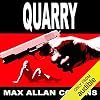
'Quarry' is the story of an amoral, emotionally distant man who became acquainted with killing in Vietnam and carried on the habit when he returned home and found his wife had taken a lover. After he kicks away the jacks holding up the car his wife's lover is working under, he discovers two things: that he lost no sleep over it and that he got away with it. So he lets himself be recruited by The Broker as an assassin for hire.
We first meet Quarry five years later, killing a man in the show more airport of a small town on the Mississippi. He does this with dispassionate efficiency and then returns on foot to his airport hotel and takes a swim. A woman approaches him and we learn that she's been sleeping off an early session of sex with Quarry and is now wants to fit in a second session before her husband returns. Quarry obliges, as much to consolidate his alibi as for the sex itself.
Quarry makes Reacher look like a sensitive guy with a White Knight complex. Quarry is just as deadly as Reacher but he doesn't believe in rescuing anyone but himself. He's a man who knows that he's hollow inside. He kills because it pays well and he's good at it. He swims because when he swims he doesn't have to think. He has sex with women who he sees primarily as what he describes as accessories for his own self-abuse.
Then things go wrong for Quarry. He loses faith in The Broker. He has doubts about his partner that he's been working with for five years. His latest killing goes bad and he goes looking for... well he's not entirely sure. Answers? Revenge? Money? A way out of his present life?
Watching Quarry unravel his life and deal with the people he feels have let him down is like watching a shark tear through prey.
The plot is linear but compelling, with bits clicking into place for Quarry as if he were reassembling a gun in the dark. The writing is muscular, direct and cliché-free and yet delivers a strong sense of place and time. What I admired most about the book was the way Collins uses Quarry's direct to camera thoughts to draw a clearer and more complex picture of him for the reader than Quarry is capable of seeing for himself.
Quarry's relationship with the ex-bunny-girl owner of a bar and club shows him at his most human. This is a woman who says that, for her, a long-term relationship is one that lasts a week and who is attracted to Quarry because she felt that when he looked at her he saw a woman and not a piece of meat. Quarry seems to feel protective towards her. He even fantasises about making a life with her. At the same time, he uses her to get what he wants and is willing to walk away from her if it becomes necessary.
For me, what makes 'Quarry' is much more than an entertaining piece of pulp fiction is its honesty about how people behave How they deceive themselves. What they are willing to do to hold on to what they have. How they let their subconscious make their decisions and spend time later rationalising them.
I think that I can only take Quarry in small doses - being in his company is like constantly having an itch - but I'm also sure I'll be back for more.
I picked up 'Quarry' after watching the TV series from Cinemax. I can see that the series draws upon multiple books about Quarry and that it has gone onto a path of its own. much as the Trueblood series diverged from the Sookie Stackhouse books. I've never understood the point of that. Why buy the rights to something and then make it into something else?
Even so, the TV series was fun - dark, violent and depressing - but fun. show less
We first meet Quarry five years later, killing a man in the show more airport of a small town on the Mississippi. He does this with dispassionate efficiency and then returns on foot to his airport hotel and takes a swim. A woman approaches him and we learn that she's been sleeping off an early session of sex with Quarry and is now wants to fit in a second session before her husband returns. Quarry obliges, as much to consolidate his alibi as for the sex itself.
Quarry makes Reacher look like a sensitive guy with a White Knight complex. Quarry is just as deadly as Reacher but he doesn't believe in rescuing anyone but himself. He's a man who knows that he's hollow inside. He kills because it pays well and he's good at it. He swims because when he swims he doesn't have to think. He has sex with women who he sees primarily as what he describes as accessories for his own self-abuse.
Then things go wrong for Quarry. He loses faith in The Broker. He has doubts about his partner that he's been working with for five years. His latest killing goes bad and he goes looking for... well he's not entirely sure. Answers? Revenge? Money? A way out of his present life?
Watching Quarry unravel his life and deal with the people he feels have let him down is like watching a shark tear through prey.
The plot is linear but compelling, with bits clicking into place for Quarry as if he were reassembling a gun in the dark. The writing is muscular, direct and cliché-free and yet delivers a strong sense of place and time. What I admired most about the book was the way Collins uses Quarry's direct to camera thoughts to draw a clearer and more complex picture of him for the reader than Quarry is capable of seeing for himself.
Quarry's relationship with the ex-bunny-girl owner of a bar and club shows him at his most human. This is a woman who says that, for her, a long-term relationship is one that lasts a week and who is attracted to Quarry because she felt that when he looked at her he saw a woman and not a piece of meat. Quarry seems to feel protective towards her. He even fantasises about making a life with her. At the same time, he uses her to get what he wants and is willing to walk away from her if it becomes necessary.
For me, what makes 'Quarry' is much more than an entertaining piece of pulp fiction is its honesty about how people behave How they deceive themselves. What they are willing to do to hold on to what they have. How they let their subconscious make their decisions and spend time later rationalising them.
I think that I can only take Quarry in small doses - being in his company is like constantly having an itch - but I'm also sure I'll be back for more.
I picked up 'Quarry' after watching the TV series from Cinemax. I can see that the series draws upon multiple books about Quarry and that it has gone onto a path of its own. much as the Trueblood series diverged from the Sookie Stackhouse books. I've never understood the point of that. Why buy the rights to something and then make it into something else?
Even so, the TV series was fun - dark, violent and depressing - but fun. show less
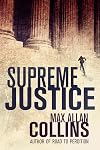
Joseph Reeder was a Secret Service Agent when he took a bullet for President Gregory Bennett. He lasted a month on a desk job until he decided to retire on disability and lead his own command. As CEO of ABC Security headquartered in Georgetown Reeder’s agency has a high profile with law enforcement. It is no surprise when DC Homicide Detective Carl Bishop calls and asks Reeder for a favor as ABC handles the security for Verdict Chophouse. It is the same restaurant where ultraconservative show more Associate Justice Henry Venter was shot and killed during a robbery the prior evening. Beyond Reeder’s Secret Service training and experience he is an expert in the field of kinesics and has a different opinion about the shooting. It is essential that a multi-agency law enforcement investigation team determine the motive and arrest those responsible. It is an isolated event, isn’t it?
I was riveted from the 1st sentence! It quickly became eerie on page 2 to read the overturning of the Roe v. Wade decision had already occurred as I knew this was a 3-book series. Even then I had to immediately stop and check the copyright date that revealed ©2014. Adrenaline-pumping, compelling reading that in the polarized political arena of the current day is taut and relevant. The selection of the epigraphs, identification, and format style was thoughtful and meaningful not only to the theme of the story but helped to set the mood including the connection to where Reeder takes walks.
I didn’t recognize the author’s name until I began reading About the Author and realized his work has previously captured my attention. Regardless of the format, Collins selects he is a master storyteller. show less
I was riveted from the 1st sentence! It quickly became eerie on page 2 to read the overturning of the Roe v. Wade decision had already occurred as I knew this was a 3-book series. Even then I had to immediately stop and check the copyright date that revealed ©2014. Adrenaline-pumping, compelling reading that in the polarized political arena of the current day is taut and relevant. The selection of the epigraphs, identification, and format style was thoughtful and meaningful not only to the theme of the story but helped to set the mood including the connection to where Reeder takes walks.
I didn’t recognize the author’s name until I began reading About the Author and realized his work has previously captured my attention. Regardless of the format, Collins selects he is a master storyteller. show less
Fancy Anders Goes to War: Who Killed Rosie the Riveter?: The Fancy Anders Series, Book 1 by Max Allan Collins
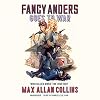
Today, I wanted some light entertainment to get me through a disappointingly rainy August afternoon so I spent three and a half hours listening to an 'enhanced audio' performance of Max Allen Collins' 'Fancy Anders Goes To War: Who Killed Rosie The Riveter?'. It was exactly what I'd been looking for.
It's a delightful confection that sets an improbable story of murder and sabotage involving a cast of characters finely balanced to respect early Twenty-First Century sensibilities, against what show more seemed to be a reasonably accurate portrayal of women working in a warplane factory in California in late 1942.
Almost all of the interesting characters, good or bad, are women. Almost all the women are exceptionally good-looking, with comparisons being drawn to well-known film stars of the period. They also come from ethnically and socio-economically diverse backgrounds and are comfortable climbing on gantries and riveting and bucking metal together to make warplanes.
The main character, Fancy Anders, (who is, of course, very good-looking) is a twenty-something rich, white, college-educated socialite who wants to work as an investigator in her father's well-connected Confidential Investigations company. He recruits her as a secretary but leaves her in charge when he's recalled to military service setting up an intelligence unit in DC.
When the CEO of Amalgamated Aircraft, a man she's known all her life and who she calls uncle, needs someone to investigate the allegedly accidental death in his factory of the worker selected to be the real-life model for the Rosie The Riveter propaganda campaign, Fancy jumps at the chance to go undercover at his factory.
What follows is a fast, fun, uncomplicated but engaging romp as Fancy, who is not very good at being undercover, tries to find out what happened to Rosie and in the process gets herself into a great deal of trouble.
This was popcorn but the good kind of popcorn with just the right amount of melted butter and salt.
The 'enhanced audio' turned out to mean that appropriate background noises were added to the narration. To my surprise, the sound effects lifted the story by adding a retro Saturday Morning Matinee At The Cinema ambience that I enjoyed.
Gabrielle de Cuir's narration was perfect. Click on the SoundCloud link below to hear a sample.
https://soundcloud.com/skyboat_audiobooks/fancy-anders-goes-to-war show less
It's a delightful confection that sets an improbable story of murder and sabotage involving a cast of characters finely balanced to respect early Twenty-First Century sensibilities, against what show more seemed to be a reasonably accurate portrayal of women working in a warplane factory in California in late 1942.
Almost all of the interesting characters, good or bad, are women. Almost all the women are exceptionally good-looking, with comparisons being drawn to well-known film stars of the period. They also come from ethnically and socio-economically diverse backgrounds and are comfortable climbing on gantries and riveting and bucking metal together to make warplanes.
The main character, Fancy Anders, (who is, of course, very good-looking) is a twenty-something rich, white, college-educated socialite who wants to work as an investigator in her father's well-connected Confidential Investigations company. He recruits her as a secretary but leaves her in charge when he's recalled to military service setting up an intelligence unit in DC.
When the CEO of Amalgamated Aircraft, a man she's known all her life and who she calls uncle, needs someone to investigate the allegedly accidental death in his factory of the worker selected to be the real-life model for the Rosie The Riveter propaganda campaign, Fancy jumps at the chance to go undercover at his factory.
What follows is a fast, fun, uncomplicated but engaging romp as Fancy, who is not very good at being undercover, tries to find out what happened to Rosie and in the process gets herself into a great deal of trouble.
This was popcorn but the good kind of popcorn with just the right amount of melted butter and salt.
The 'enhanced audio' turned out to mean that appropriate background noises were added to the narration. To my surprise, the sound effects lifted the story by adding a retro Saturday Morning Matinee At The Cinema ambience that I enjoyed.
Gabrielle de Cuir's narration was perfect. Click on the SoundCloud link below to hear a sample.
https://soundcloud.com/skyboat_audiobooks/fancy-anders-goes-to-war show less
Rating: 4.5* of five
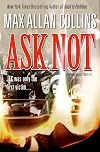
The Publisher Says: Chicago, September 1964. Beatlemania sweeps the nation, the Vietnam War looms, and the Warren Commission prepares to blame a “lone-nut” assassin for the killing of President John F. Kennedy. But as the post-Camelot era begins, a suspicious outbreak of suicides, accidental deaths, and outright murders decimates assassination witnesses. When Nathan Heller and his son are nearly run down on a city street, the private detective wonders if he himself show more might be a loose end...
Soon a faked suicide linked to President Johnson’s corrupt cronies takes Heller to Texas, where celebrity columnist Flo Kilgore implores him to explore that growing list of dead witnesses. With the blessing of Bobby Kennedy—former US attorney general, now running for Senator from New York—Heller and Flo investigate the increasing wave of violence that seems to emanate from the notorious Mac Wallace, rumored to be LBJ’s personal hatchet man.
Fifty years after JFK’s tragic death, Collins’s rigorous research for Ask Not raises new questions about the most controversial assassination of our time.
My Review: I am a big believer in Occam's Razor. The simplest explanation that fits the facts is almost always the correct one. In the case of the JFK assassination, the simplest explanation isn't the Warren Report one, it's the conspiracy theory. I suspect we'll all be dead before the truth comes out, and even then it most likely won't be the whole truth, but eventually the zombies of the facts will rise and stink up the Body Politic. Usually I think conspiracy theories are silly, for one major reason: The Gummint can't keep secrets it *wants* to keep very well. So all the leaks and the murders and deaths surrounding the assassination, in my mind, make it more not less likely that they're still trying to keep a lid on whatever really happened.
Okay, so that's out of the way. This novel is the third by Max Allan Collins, an incredibly prolific writer, dealing with JFK's assassination. (As a side note, it's extremely weird to me that the publisher AND Amazon do not make it easy to find the other two titles, and not one database groups the titles in a convenient, easy-to-reference way.) It's amazing to me that Nate Heller, Collins' Forrest-Gump-esque PI character of what, thirteen or fourteen novels so far, who is at every single important crime anywhere ever, isn't the star of a movie serial franchise a la Bond or TV series by now. In a world that gobbles up Mad Men it would seem to me to be a no-brainer.
Go know from this.
As I read along, I realized that I was being fed an angled view of the motivations and purposes of the assassins, a slant on the facts that brought certain facets and shapes into sharper relief than the Official Version would have us look at. As any actor can tell you, lighting matters. The same face, the same lumps and bumps, look very different seen from an angle and spotlit as opposed to head-on and strobed. I kept looking stuff up. I mean to tell you, my Google history is causing fantods at the NSA data farm even as we speak. I am amazed at the sheer breadth of Collins' scope. I am impressed at his precise eye for which piece of what conspiracy theory to use in weaving his tale. This is some intricate construction, folks, and deserves its own round of applause separate from any other praise merited by the book.
Does the book itself merit some praise? Yes. It's a given that Nate Heller will be a self-deprecating wisecracking noir hero. You like that trope or you don't, and I do. What's not a given is the way that the fictional exploits of Nate Heller enhance and augment the historical record of the day and time under discussion. Collins does that job very well.
The book is a beaut. The story is one central to our country's image of itself. The long, long tail of conspiracy theories proves that. And now, fifty years after that hideous, agonizing day, the perspective of a people who went through Watergate, the Iraq and Afghanistan wars, and the sheer passage of time provide us with a new angle from which we can view the idea that our government can lie, cheat, steal, and kill in our names while pursuing selfish, disgusting, wrong, and venal aims.
Will Nate Heller bring to mind Edward Snowden or Pope Francis? No, more likely he'll bring to mind Bond and company. He's got a lot of knowledge about stuff that scares powerful people. He's willing to trade silence for comfort (his and ours). But that's not a surprise. This isn't a character whose morals we're in doubt about at this late date in the series. But he's our eyes and ears on the scene, and he's invaluable to us as readers because he's got no illusions at all. So he blows our comfy little illusions all to hell.
Where they belong, and where clinging to them will lead us. Go on this trip. Collins takes us to the heart of one of the most important moments in twentieth-century US history very very plausibly.
This work is licensed under a Creative Commons Attribution-NonCommercial-ShareAlike 3.0 Unported License. show less
The Publisher Says: Chicago, September 1964. Beatlemania sweeps the nation, the Vietnam War looms, and the Warren Commission prepares to blame a “lone-nut” assassin for the killing of President John F. Kennedy. But as the post-Camelot era begins, a suspicious outbreak of suicides, accidental deaths, and outright murders decimates assassination witnesses. When Nathan Heller and his son are nearly run down on a city street, the private detective wonders if he himself show more might be a loose end...
Soon a faked suicide linked to President Johnson’s corrupt cronies takes Heller to Texas, where celebrity columnist Flo Kilgore implores him to explore that growing list of dead witnesses. With the blessing of Bobby Kennedy—former US attorney general, now running for Senator from New York—Heller and Flo investigate the increasing wave of violence that seems to emanate from the notorious Mac Wallace, rumored to be LBJ’s personal hatchet man.
Fifty years after JFK’s tragic death, Collins’s rigorous research for Ask Not raises new questions about the most controversial assassination of our time.
My Review: I am a big believer in Occam's Razor. The simplest explanation that fits the facts is almost always the correct one. In the case of the JFK assassination, the simplest explanation isn't the Warren Report one, it's the conspiracy theory. I suspect we'll all be dead before the truth comes out, and even then it most likely won't be the whole truth, but eventually the zombies of the facts will rise and stink up the Body Politic. Usually I think conspiracy theories are silly, for one major reason: The Gummint can't keep secrets it *wants* to keep very well. So all the leaks and the murders and deaths surrounding the assassination, in my mind, make it more not less likely that they're still trying to keep a lid on whatever really happened.
Okay, so that's out of the way. This novel is the third by Max Allan Collins, an incredibly prolific writer, dealing with JFK's assassination. (As a side note, it's extremely weird to me that the publisher AND Amazon do not make it easy to find the other two titles, and not one database groups the titles in a convenient, easy-to-reference way.) It's amazing to me that Nate Heller, Collins' Forrest-Gump-esque PI character of what, thirteen or fourteen novels so far, who is at every single important crime anywhere ever, isn't the star of a movie serial franchise a la Bond or TV series by now. In a world that gobbles up Mad Men it would seem to me to be a no-brainer.
Go know from this.
As I read along, I realized that I was being fed an angled view of the motivations and purposes of the assassins, a slant on the facts that brought certain facets and shapes into sharper relief than the Official Version would have us look at. As any actor can tell you, lighting matters. The same face, the same lumps and bumps, look very different seen from an angle and spotlit as opposed to head-on and strobed. I kept looking stuff up. I mean to tell you, my Google history is causing fantods at the NSA data farm even as we speak. I am amazed at the sheer breadth of Collins' scope. I am impressed at his precise eye for which piece of what conspiracy theory to use in weaving his tale. This is some intricate construction, folks, and deserves its own round of applause separate from any other praise merited by the book.
Does the book itself merit some praise? Yes. It's a given that Nate Heller will be a self-deprecating wisecracking noir hero. You like that trope or you don't, and I do. What's not a given is the way that the fictional exploits of Nate Heller enhance and augment the historical record of the day and time under discussion. Collins does that job very well.
The book is a beaut. The story is one central to our country's image of itself. The long, long tail of conspiracy theories proves that. And now, fifty years after that hideous, agonizing day, the perspective of a people who went through Watergate, the Iraq and Afghanistan wars, and the sheer passage of time provide us with a new angle from which we can view the idea that our government can lie, cheat, steal, and kill in our names while pursuing selfish, disgusting, wrong, and venal aims.
Will Nate Heller bring to mind Edward Snowden or Pope Francis? No, more likely he'll bring to mind Bond and company. He's got a lot of knowledge about stuff that scares powerful people. He's willing to trade silence for comfort (his and ours). But that's not a surprise. This isn't a character whose morals we're in doubt about at this late date in the series. But he's our eyes and ears on the scene, and he's invaluable to us as readers because he's got no illusions at all. So he blows our comfy little illusions all to hell.
Where they belong, and where clinging to them will lead us. Go on this trip. Collins takes us to the heart of one of the most important moments in twentieth-century US history very very plausibly.
This work is licensed under a Creative Commons Attribution-NonCommercial-ShareAlike 3.0 Unported License. show less
Lists
Awards


You May Also Like


Associated Authors
Statistics
- Works
- 418
- Also by
- 93
- Members
- 17,209
- Popularity
- #1,291
- Rating
- 3.6
- Reviews
- 503
- ISBNs
- 1,383
- Languages
- 21
- Favorited
- 19


