

Mickey Spillane (1918–2006)
Author of I, the Jury
About the Author
Mickey Spillane was born Frank Morrison Spillane in Brooklyn, New York on March 9, 1918. He briefly attended Fort Hays State College in Kansas, but dropped out, moved back to New York, and began his writing career in the mid-1930s. His first stories were published mostly in comic books and pulp show more magazines. He created Mike Danger, a private detective, and also wrote for Captain America, Captain Marvel, and The Human Torch. During World War II, he worked as a flying instructor for the U.S. Army Air Force. His first novel, I, the Jury, featured Mike Hammer and was published in 1947. His other novels include Vengeance Is Mine; My Gun Is Quick; The Big Kill; Kiss Me, Deadly; The Long Wait; and The Deep. Between 1952 and 1961 Spillane stopped writing full-length novels after converting to a Jehovah's Witness. In 1962, he brought Hammer back with The Girl Hunters, which was followed by Day of the Guns, The Death Dealers, The Twisted Thing, and Body Lovers. He also wrote two children's books, The Day the Sea Rolled Back, which won a prize from the Junior Literary Guild, and The Ship That Never Was. In 1995, he received the Grand Master award from the Mystery Writers of America. In the mid-1990s, he returned to comic books, by co-creating a futuristic Mike Danger. He died following a long illness on July 17, 2006 at the age of 88. (Bowker Author Biography) show less
Image credit: Courtesy of Allison and Busby
Series
Works by Mickey Spillane
The Mike Hammer Collection, Volume 1: I, the Jury, My Gun is Quick, Vengeance is Mine! (2001) 423 copies, 3 reviews
The Mike Hammer Collection, Volume 2: One Lonely Night, The Big Kill, Kiss Me Deadly (2001) 218 copies, 2 reviews
The Mike Hammer Collection, Volume 3: The Girl Hunters, The Snake, The Twisted Thing (2010) 102 copies, 2 reviews
A Century of Noir: Thirty-two Classic Crime Stories (2002) — Editor; Contributor — 84 copies, 3 reviews
Mickey Spillane: Five Complete Mike Hammer Novels: I, The Jury; Vengeance Is Mine: The Big Kill; My Gun Is Quick; Kiss Me, Deadly (1987) 50 copies
Marvel Masterworks, Volume 071: Golden Age All-Winners Comics Volume 2 [#5-8] (2006) — Author — 22 copies
Marvel Masterworks, Volume 088: Golden Age Human Torch Volume 2 [#5B-8] (1941) — Author — 15 copies, 1 review
Marvel Masterworks, Volume 183: Golden Age Marvel Comics Volume 7 [Marvel Mystery Comics #25-28] (1750) — Author — 11 copies
Mickey Spillane's From the Files of...Mike Hammer: The complete Dailies and Sundays Volume 1 (Mickey Spillane from Files of Mike Hammer) (2013) 9 copies
Encore for Murder (The New Adventures of Mickey Spillane's Mike Hammer, Vol. 3) (2011) 4 copies, 2 reviews
Mickey Spillane's Mike Hammer: The Comic Strip, Volume 1: The Sudden Trap and Other Stories (1982) 4 copies
Mickey Spillane's Mike Hammer: The Comic Strip, Volume 2: The Dark City and Other Stories (1985) 4 copies
I, the Jury My Gun Is Quick Vengeance Is Mine The Big Kill One Lonely Night Kiss Me, Deadly (MIKE HAMMER COLLECTION, 6 Volume Matched Set) (2005) 2 copies
Gangster : [2 Kriminalerzählungen mit Ryan] / Mickey Spillane. [Übers. von Robert E. Maass] (1965) 2 copies
La gran jugada 1 copy
La víbora 1 copy
Mía es la venganza 1 copy
HUna Iragazza e una pistola 1 copy
℗Il ℗morso del serpente 1 copy
Supervivencia ¡Cero! 1 copy
Cacería de mujer 1 copy
Qualcosa sul fondo 1 copy
Dubbel hämnd 1 copy
Geen parels voor de zwijnen 1 copy
Complex 1 copy
Caceria de mujeres 1 copy
Three Novels 1 copy
Mannen fra graven 1 copy
mulheres nylon e crime 1 copy
Νύχτα γιά φόνο 1 copy
Βίπερ 1159: Νύχτα γιά φόνο 1 copy
O Assassino Implacável 1 copy
Il patto di sangue 1 copy
Je suis venu te tuer 1 copy
Super omnibus 1 copy
The veiled woman 1 copy
Derini Yüzeceðim 1 copy
Caniler Uyumaz 1 copy
Slangen 1 copy
Má je pomsta 1 copy
Hot Cat 1 copy
HOOD, O VINGADOR 1 copy
The Girl Behind the Hedge 1 copy
Tiger Mann 1 copy
בלילה אפל 1 copy
Fallout {short story} 1 copy
Associated Works
All I Did Was Ask: Conversations with Writers, Actors, Musicians, and Artists (2004) — Contributor — 603 copies, 13 reviews
Bibliomysteries: Crime in the World of Books and Bookstores, Volume One (2013) — Contributor — 241 copies, 14 reviews
By Hook or By Crook and 30 More of the Best Crime and Mystery Stories of the Year (2010) — Contributor — 87 copies
City Sleuths and Tough Guys: Crime Stories from Poe to the Present (1989) — Contributor — 32 copies, 1 review
Tagged
Common Knowledge
- Canonical name
- Spillane, Mickey
- Legal name
- Spillane, Frank Morrison
- Birthdate
- 1918-03-09
- Date of death
- 2006-07-17
- Gender
- male
- Education
- Kansas State Teachers College (Now Fort Hays State University)
- Occupations
- short story writer
comic book writer
novelist
screenwriter
tampoline artist
fighter pilot - Organizations
- United States Army Air Corps
- Awards and honors
- Edgar Award (Grand Master ∙ 1995)
MWA Grand Master (1995)
Shamus Award (The Eye for Lifetime Achievement ∙ 1983)
The Eye (Lifetime Achievement Award, PWA 1983) - Relationships
- Rand, Ayn (Significant Other)
- Cause of death
- pancreatic cancer
- Nationality
- USA
- Birthplace
- Brooklyn, New York, New York, USA
- Places of residence
- Elizabeth, New Jersey, USA
Greenwood, Mississippi, USA - Place of death
- Murrell's Inlet, South Carolina, USA
- Burial location
- cremated, ashes scattered
- Associated Place (for map)
- USA
Members
Reviews

"You're a deadly man, Mike."
So says Gorgeous Lily, and of course, she's right.
Perhaps I've read too much Hammer lately, having finished six of the Spillane novels in the past few months. Or maybe Spillane was running Mike in the ground by the sixth Hammer installment. Either way, I've had enough of Spillane for the time being. This book was just so over-the-top nonsensical, I couldn't take any of it seriously. It got a little easier to take when I started reading it as comedy. What else show more could I do when Spillane sends our hero off after the Mafia without a rod? This after he was almost killed in the first chapter (anyone else would have been in such a situation). So, I started thinking that maybe Superman is not Clark Kent, but really Mike Hammer. But, that was a big leap over a tall building, too, because I don't think Superman would make all the bone-headed decisions that Mike did, as he ran around without a weapon, making sure the bad guys who were trying to snuff him out, knew exactly where he was. Fortunately for Mike, all of them were dumber than him.
And, what of Velda? Would Superman send Lois Lane on such a dangerous mission? Even if she isn't the absolute dish that Velda is, I wouldn't think so.
OK, forget Superman (even though Mike does seem indestructible).
On second thought, though, Mike does seem to have his own form of kryptonite, which takes the form of the female mouth. He's so obsessed with the lips on these babes, that he has to tell us about it every few pages. I'm on the edge of my seat, wondering if one of these dames is gonna kiss him deadly. Thus the weird title. If this didn't wear me out enough, I also had to hear how perfect and beautiful Velda is, over and over between the rest of the dolls who are falling for Mike, and enticing him with their lips. After six books, that's getting rather old. I'm the farthest thing from a wall-flower you're likely to find, and it still drove me nuts.
The ending was just weird and abrupt, like Spillane got tired of what he was doing. If I didn't know there were more Mike Hammer books, I would think this would be a good place to just let Mike die, and get him out of his misery, and mine, too. If I were in my right mind, I would say I probably wouldn't read any more Mike Hammer, but I'm not, and Spillane's writing is sometimes like watching a train wreck. It's not good for you to see such a thing, but you can't force yourself to look away.
I just reread that weird ending again to make sure I understood it. I did. It was unbelievably stupid. I think I'll stay away from Spillane for a while. But still I'm left with the image of Mike wearing a red cape, salivating over a woman's lips while he smokes a Lucky, and grimaces. show less
So says Gorgeous Lily, and of course, she's right.
Perhaps I've read too much Hammer lately, having finished six of the Spillane novels in the past few months. Or maybe Spillane was running Mike in the ground by the sixth Hammer installment. Either way, I've had enough of Spillane for the time being. This book was just so over-the-top nonsensical, I couldn't take any of it seriously. It got a little easier to take when I started reading it as comedy. What else show more could I do when Spillane sends our hero off after the Mafia without a rod? This after he was almost killed in the first chapter (anyone else would have been in such a situation). So, I started thinking that maybe Superman is not Clark Kent, but really Mike Hammer. But, that was a big leap over a tall building, too, because I don't think Superman would make all the bone-headed decisions that Mike did, as he ran around without a weapon, making sure the bad guys who were trying to snuff him out, knew exactly where he was. Fortunately for Mike, all of them were dumber than him.
And, what of Velda? Would Superman send Lois Lane on such a dangerous mission? Even if she isn't the absolute dish that Velda is, I wouldn't think so.
OK, forget Superman (even though Mike does seem indestructible).
On second thought, though, Mike does seem to have his own form of kryptonite, which takes the form of the female mouth. He's so obsessed with the lips on these babes, that he has to tell us about it every few pages. I'm on the edge of my seat, wondering if one of these dames is gonna kiss him deadly. Thus the weird title. If this didn't wear me out enough, I also had to hear how perfect and beautiful Velda is, over and over between the rest of the dolls who are falling for Mike, and enticing him with their lips. After six books, that's getting rather old. I'm the farthest thing from a wall-flower you're likely to find, and it still drove me nuts.
The ending was just weird and abrupt, like Spillane got tired of what he was doing. If I didn't know there were more Mike Hammer books, I would think this would be a good place to just let Mike die, and get him out of his misery, and mine, too. If I were in my right mind, I would say I probably wouldn't read any more Mike Hammer, but I'm not, and Spillane's writing is sometimes like watching a train wreck. It's not good for you to see such a thing, but you can't force yourself to look away.
I just reread that weird ending again to make sure I understood it. I did. It was unbelievably stupid. I think I'll stay away from Spillane for a while. But still I'm left with the image of Mike wearing a red cape, salivating over a woman's lips while he smokes a Lucky, and grimaces. show less

It goes on my list of the Best Books I've Read (and the only mystery on the list.) Goodness knows you don't normally think of pulp fiction and hard-boiled detectives when you want to be awed by the writing. But if you can read the opening of this and not rear back in your chair and go, "Holy S***, you don't know amazing writing when you come across it. Could I ever write like this? Probably not. Do I wish I could. Yes, definitely. Not for the faint of heart this book is Violent. Pulpy. Raw. show more Honest. Hammer winds up fighting American Communists with a vengeance. He fights for himself, and for Velma, and the end is as amazing as the opening. show less
[This was from back in 2013, but for some reason I never posted my review anywhere other than my blog.]
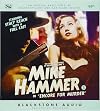
Encore for Murder is a noir thriller that is, from my understanding, based on Mickey Spillane's notes for an unwritten novel. I had never read/listened to anything by Mickey Spillane before, but the audio sample sounded interesting, so I gave it a shot.
The story: Mike Hammer is hired to act as Rita Vance's bodyguard. Rita, a old flame of Hammer's, is making an acting comeback and has been show more receiving death threats. Hammer sticks close by her, but Rita doesn't seem to be taking the situation seriously. Then things get a little more complicated, Rita disappears, and Hammer has to find and rescue her.
This did not turn out to be a good pick for me. The best thing I can say is that the story was sort of interesting and I enjoyed the full-cast, radio drama feel of it. Otherwise, though, I kind of hated Mike Hammer.
I don't think I've read a lot of noir fiction at all, nor watched many noir movies. It may just be that the genre isn't for me. Although some attempts were made to update this story (mentions of cell phones, the sex offender registry, and the reluctance of restaurants to serve meat cooked rare), it still felt pretty old school. Nearly every woman Hammer encountered was an enormous flirt – the only exception was maybe Velda, Hammer's secretary and partner, but even she had moments when she acted liked Hammer's girlfriend-in-waiting.
I might just have rolled my eyes at Hammer's very male gaze when it came to women, until I got to the torture scene.Rita was tied naked to a chair and was being threatened with a blow torch. I was a little uncomfortable with some of the almost sexual phrasing used in this scene, such as the description of the blowtorch as “a terrible flame ready to lick her flesh.” Also, post-torture, there was this from Hammer: “I've had a better time with a naked woman.” His lover had been stripped naked, beaten, and almost burned, and his first thought after rescuing her was about sex? Eww. Just eww. Other than feeling a little shaky, Rita barely seemed affected her own kidnapping and torture, which bothered me, too.
Prior to listening to this, I checked out a few reviews and noticed at least one mention of Hammer killing a lot of people. I read and listen to a lot of things with violence in them, so I just noted this and moved on. He really does kill a lot of people, though, and sometimes he kills them very violently. If I remember correctly, at one point he almost decapitated a guy with a car trunk door. I think it was his reaction, or non-reaction, to killing people that bothered me the most. At least one of the other characters even commented on the amount of killing he did, and he just brushed them off.
It was short and most of the acting was okay, but if this is what Mike Hammer stories are generally like, they are very much not for me. It's funny, I can root for and even kind of like characters like Jeff Lindsay's Dexter, and yet Mike Hammer just made me feel kind of icky. Maybe it's because Dexter makes it very clear that he is a sociopath, while Hammer seems to have zero recognition of the fact that some of the things he does are not okay?
(Original review posted on A Library Girl's Familiar Diversions.) show less
Encore for Murder is a noir thriller that is, from my understanding, based on Mickey Spillane's notes for an unwritten novel. I had never read/listened to anything by Mickey Spillane before, but the audio sample sounded interesting, so I gave it a shot.
The story: Mike Hammer is hired to act as Rita Vance's bodyguard. Rita, a old flame of Hammer's, is making an acting comeback and has been show more receiving death threats. Hammer sticks close by her, but Rita doesn't seem to be taking the situation seriously. Then things get a little more complicated, Rita disappears, and Hammer has to find and rescue her.
This did not turn out to be a good pick for me. The best thing I can say is that the story was sort of interesting and I enjoyed the full-cast, radio drama feel of it. Otherwise, though, I kind of hated Mike Hammer.
I don't think I've read a lot of noir fiction at all, nor watched many noir movies. It may just be that the genre isn't for me. Although some attempts were made to update this story (mentions of cell phones, the sex offender registry, and the reluctance of restaurants to serve meat cooked rare), it still felt pretty old school. Nearly every woman Hammer encountered was an enormous flirt – the only exception was maybe Velda, Hammer's secretary and partner, but even she had moments when she acted liked Hammer's girlfriend-in-waiting.
I might just have rolled my eyes at Hammer's very male gaze when it came to women, until I got to the torture scene.
Prior to listening to this, I checked out a few reviews and noticed at least one mention of Hammer killing a lot of people. I read and listen to a lot of things with violence in them, so I just noted this and moved on. He really does kill a lot of people, though, and sometimes he kills them very violently. If I remember correctly, at one point he almost decapitated a guy with a car trunk door. I think it was his reaction, or non-reaction, to killing people that bothered me the most. At least one of the other characters even commented on the amount of killing he did, and he just brushed them off.
It was short and most of the acting was okay, but if this is what Mike Hammer stories are generally like, they are very much not for me. It's funny, I can root for and even kind of like characters like Jeff Lindsay's Dexter, and yet Mike Hammer just made me feel kind of icky. Maybe it's because Dexter makes it very clear that he is a sociopath, while Hammer seems to have zero recognition of the fact that some of the things he does are not okay?
(Original review posted on A Library Girl's Familiar Diversions.) show less

The first chapter is some of Spillane's best writing, and it starts the story off with a bang. Throughout the tale, we get a better picture of the character of Hammer than we got in the first three Hammer novels. In this one, he's up against the Communists of the early 1950s, and to say he hates them is a huge understatement. Spillane understood the harm socialism causes a society, and makes no bones about telling it like it is. Of course, here in 21st century America, at least half the show more country is clueless to the evils of this corrupt system, as many reviewers of this book display by calling it dated. One such reviewer wrote that it was too anti-communist. If you like the freedoms you enjoy in your pursuit of happiness in this country, you might want to pull your head out of the sand, and recognize that socialism in all its forms is bad, and we're almost up to our necks in it now. Well, off the soap box now. This is supposed to be a review. If you're PC, you won't like this book. Mike Hammer doesn't see gray areas. There's good, and there's bad, and he battles against the bad, making a thrilling read. show less
Lists
Catalog (1)
Awards


You May Also Like


Associated Authors
Statistics
- Works
- 177
- Also by
- 30
- Members
- 8,020
- Popularity
- #3,019
- Rating
- 3.6
- Reviews
- 251
- ISBNs
- 926
- Languages
- 14
- Favorited
- 21