
John D. MacDonald (1916–1986)
Author of The Deep Blue Good-by
About the Author
John D. MacDonald was born in Sharon, Pennsylvania on July 24, 1916. He received a B.S. from Syracuse University in 1938 and an M.B.A. from the Harvard Graduate School of Business Administration in 1939. During World War II, he served in the Army. His first novel, Brass Cupcake, was published in show more 1950. He wrote about 70 books during his lifetime including the Travis McGee series, Condominium, No Deadly Drug, Nothing Can Go Wrong, and A Friendship: The Letters of Dan Rowan and John Dann MacDonald. A Flash of Green was adapted into a movie by the same name and The Excuse was adapted into a movie entitled Cape Fear. He received numerous awards including the Ben Franklin Award for the best American short story in 1955, the Grand Prix de Litterature Policiere for A Key to the Suite in 1964, the Mystery Writers of America's Grand Master Award in 1972, the American Book Award for The Green Ripper in 1980. He died from complications of an earlier heart bypass surgery on December 28, 1986 at the age of 70. (Bowker Author Biography) show less
Disambiguation Notice:
Please do not combine this page with that of John D. McDonald. Note the different spelling of the last name. These are two different people. Thanks.
Series
Works by John D. MacDonald
Travis McGee Omnibus: Quick Red Fox | Deadly Shade of Gold | Bright Orange for the Shroud (1982) 22 copies, 3 reviews
Best of Travis McGee: Darker Than Amber | The Girl in the Plain Brown Wrapper | Dress Her In Indigo (1985) 7 copies
Flaw 4 copies
5 Novels: The French Connection | The Last Place God Made | A Kiss Before Dying | The Analog Bullet | A Bullet for Cinderella (1984) — Author — 3 copies
Redbook (Vol 123: 4, August 1964) 3 copies
The Annex [short fiction] 3 copies
Game for Blondes 3 copies
Half-Past Eternity 2 copies
Linda 2 copies
Flight of the Tiger 2 copies
Hangover (short story) 2 copies
College-cut Kill 2 copies
The Big Contest (short story) 2 copies
Tausend blaue Tränen / Alptraum in Rosarot / Tod in der Sonne. 3 Travis McGee- Thriller in einem Band. (1990) 2 copies
A Child Is Crying 2 copies
Plane of the Dreamers 1 copy
"Colpo" jellato 1 copy
Ring Around the Redhead 1 copy
Kitten on a Trampoline 1 copy
Hole in None (short short) 1 copy
Murder For Hire 1 copy
Chuva de prata 1 copy
This Week (22 February 1953) 1 copy
Night Watch 1 copy
This Week (12 August 1951) 1 copy
This Week (15 March 1964) 1 copy
This Week (7 March 1954) 1 copy
This Week (29 August 1965) 1 copy
This Week (29 March 1964) 1 copy
This Week (24 May 1964) 1 copy
This Week (19 December 1965) 1 copy
This Week (19 July 1964) 1 copy
Three Grand Complete Books in One: Fear Is the Key, Do You Know This Voice? & The Crossroads (1959) 1 copy
This Week (20 October 1963) 1 copy
The Night of the Hunter | The Executioners | What Ever Happened to Baby Jane? (2004) — Author — 1 copy
Amphiskios 1 copy
A Trap for the Careless 1 copy
Triple Cross 1 copy
What Makes Sammy Laugh? 1 copy
Fatal Accident 1 copy
Crime of Omission 1 copy
Heritage of Hate 1 copy
Betrayed 1 copy
The Bear Trap 1 copy
Das John D. MacDonald Lesebuch. Miranda; Noch mal davongekommen; Der Hippie im Indigo-Dreß; Das Champagner-Mädchen (1987) 1 copy
Nor Iron Bars 1 copy
The Miniature 1 copy
Cosmetics 1 copy
Coppolino Revisited 1 copy
Hit and Run 1 copy
Mystery Scene Reader 1 copy
Triangle 1 copy
Dead on the Pin 1 copy
Double Hannenframmis 1 copy
They Let Me Live 1 copy
Murder in Mind 1 copy
Miranda 1 copy
Noose for a Tigress 1 copy
Dear Old Friend 1 copy
The Random Noise of Love 1 copy
The Willow Pool 1 copy
Looie Follows Me 1 copy
Quarrel 1 copy
Woodchuck 1 copy
The Trouble with Erica 1 copy
The Fast Loose Money 1 copy
The Trap of Solid Gold 1 copy
Blurred View 1 copy
Afternoon of the Hero 1 copy
The Straw Witch 1 copy
Long Shot 1 copy
The Big Blue 1 copy
Associated Works
Alfred Hitchcock Presents: Stories to Be Read with the Door Locked (1975) — Contributor — 188 copies, 4 reviews
The Arbor House Treasury of Detective and Mystery Stories from the Great Pulps (1983) — Contributor — 51 copies, 3 reviews
The Mammoth Book of Short Spy Novels: Twelve Espionage Masterpieces (1986) — Contributor — 36 copies
City Sleuths and Tough Guys: Crime Stories from Poe to the Present (1989) — Contributor — 32 copies, 1 review
Tricks and Treats: An Anthology of Mystery Stories by the Mystery Writers of America (1976) — Contributor — 16 copies
The Crime of My Life: Favorite Stories by Presidents of the Mystery Writers of America (1984) — Contributor — 13 copies
Science Fiction Omnibus: The Best Science Fiction Stories: 1949, 1950 (1952) — Contributor — 11 copies
Crimes and Misfortunes: The Anthony Boucher Memorial Anthology of Mysteries — Contributor — 5 copies
Amazing Stories Vol. 40, No. 9 [December 1966] — Author — 5 copies
Exciting Short Stories ; The Unstoppable Man ; The Most Dangerous Game ; The Homesick Buick ; Leiningen Versus the Ants ; The Monkey's Paw ; Remember the Night ; The Baby in… (1960) — Contributor — 4 copies
The Best from Cosmopolitan — Contributor — 4 copies
The Saturday Evening Post Stories 1962 — Contributor — 3 copies
Super Science Stories (UK): No. 4 — Contributor — 1 copy
Super Science Stories (UK): No. 6 — Contributor — 1 copy
Ellery Queen's Mystery Magazine - 1967/10 — Contributor — 1 copy
Free Fall in Crimson | Curse of the Pharaohs | Murder on Martha's Vineyard (1981) — Contributor — 1 copy
Tagged
Common Knowledge
- Legal name
- MacDonald, John Dann
- Other names
- Farrell, John Wade
Henry, Robert
Lane, John
O'Hara, Scott
Reed, Peter
Reiser, Henry - Birthdate
- 1916-07-24
- Date of death
- 1986-12-28
- Gender
- male
- Education
- Syracuse University
Harvard University Business School (MBA)
Wharton School of the University of Pennsylvania - Occupations
- author
army officer - Organizations
- United States Army
Office of Strategic Services - Awards and honors
- MWA Grand Master (1972)
American Book Award (1980)
Ben Franklin Award (1955)
Guest of Honor: Bouchercon (1983) - Short biography
- Married to Dorothy Prentiss, with one son, Maynard.
- Cause of death
- complications from heart surgery (coronary artery bypass)
- Nationality
- USA
- Birthplace
- Sharon, Mercer County, Pennsylvania, USA
- Places of residence
- Sharon, Pennsylvania, USA (birth)
Utica, New York, USA
Sarasota, Florida, USA
Piseco, New York, USA (summer cottage on Piseco Lake)
Milwaukee, Wisconsin, USA (death) - Place of death
- West Milwaukee, Milwaukee County, Wisconsin, USA
- Burial location
- Pine Grove Cemetery, Poland, New York, USA
- Disambiguation notice
- Please do not combine this page with that of John D. McDonald. Note the different spelling of the last name. These are two different people. Thanks.
- Associated Place (for map)
- USA
Members
Reviews
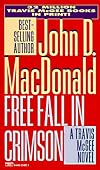
“People who become legends in their own time usually have very little time left.” — Travis McGee, Free Fall in Crimson
There is a reason John D. MacDonald is the favorite novelist of Dean Koontz, and Sue Grafton calls him a dominant influence on writers crafting a series character. There’s a reason Stephen King, Jonathan Kellerman and Mary Higgins Clark sing praises about his storytelling. It’s understandable why he’s the idol of Donald Westlake. Who could blame Ed McBain for show more being overjoyed when the Travis McGee series was once again back in print? It would have been shocking had Robert B. Parker not written that John D. MacDonald’s Travis McGee series was one of the greatest sagas in American fiction. They’re terrific writers, and they recognized the good stuff when they read it.
While MacDonald’s career goes much farther back than the Travis McGee series, and include some really outstanding pre-McGee crime fiction, the Travis McGee novels are most certainly the zenith of his legacy. In many ways, this fabulous series is the polar opposite of Robert B. Parker’s Spenser series. Whereas the Spenser series eventually settled for being great entertainment as it moved forward through the years, Travis McGee just got better. When John D. MacDonald burned out, and wrote what he considered a clunker in the Travis McGee series, he took a break from it. When he returned to it, it was what I call a Sinatra moment. It is much like the famous story of Sinatra in Mexico, his smooth voice hemorrhaging, his career as a singer in jeopardy. When he recovered, the smoothness his voice had during the Big Band era was but an echo, replaced by a wonderful rich resonance. And that’s what happened to MacDonald’s McGee novels, which had always been terrific reads. McGee himself had matured to some degree, and MacDonald began dealing with life and mortality, and the price McGee had paid for living life on his own terms. The resonance would reach its zenith in The Lonely Silver Rain, which turned out to be goodbye for one of the great writers, and one of the greatest series protagonists in American fiction.
If you’re unfamiliar with McGee, or the basic premise of the series, McGee was not a detective, but a tarnished white knight, a tall, muscular beach bum who loved the beach bunnies, and lived on a houseboat in Fort Lauderdale he’d won in a card came — thus the boat’s name, Busted Flush. His adventures involved two types, but there were always women, remaining true to the genre. From time to time McGee did salvage work, recovering something which involved great danger or risk, and was generally believed lost without McGee’s help. His fee was exorbitant, and kept him solvent for long periods so that he could play the beach bum, live off the grid, on his own terms. The second type was helping out a friend. Sometimes the friend was male, a victim of some con or other, usually involving a woman somewhere underneath. Often, however, the catalyst was female, a wounded, damaged bird who needed McGee’s help. This gave birth to many tender moments, as well as some pulse-pounding action.
To hear the uber-sensitive PC knocks on this classic series, you’d think McGee was a lout, and a misogynist, because, you know, he appreciates the fairer sex, and doesn't act like a monk in a monastery when he sees one. That’s utterly ridiculous, especially considering the element is a very integral part of a genre MacDonald was being absolutely true to. If anything, MacDonald wrote McGee as too moralizing in regard to his intimate couplings, despite the fact that he was single, and residing on a boat moored in Lauderdale. These were real women, ones men could recognize from experience. They were good, bad, and everything in between, just like the men. They were not modern-day snowflakes. There were memorable women of low character, and strong and vital women like Gretal and Chookie and Anne. The good ones passed through McGee’s life all too briefly, for one reason or another. One of those women, in fact, hangs over this entry like a sad fog:
“Once in a great while, like once every fifty miles, I even got a look at a tiny slice of the Gulf of Mexico, way off to the right. And remembered bringing the Flush down this coast with Gretal aboard. And wished I could cry as easily as a child does.”
One of the most poignant moments in the series was a letter written to him by a long lost love and it reverberated back through many books in the series. It was terrific writing, and from a feminine viewpoint MacDonald was sensitive enough to tell it from. McGee enjoyed the opposite sex, but it was always mutual. Because the series began in the 1960s and endured until MacDonald died in the 1980s, there is some mild sexism, but that is all. MacDonald occasionally, in the early books especially, perhaps overemphasized McGee's ability to restore a wounded bird with his maleness. But that was the character, and the genre. McGee also grew as a human being over time as the series became more and more resonant.
Travis McGee was the prototype for Jack Reacher, who is a stripped down version of him. McGee lamented all the connections society tries to hoist upon us. He couldn’t live off the grid entirely, but he kept as much distance between himself and conformity, a paper trail, as he could, while still remaining a part of the world. The series is laced with social commentary, some of it concerning Florida, or Mexico, but often the world as a whole. Once the teddy bear-like economist, Meyer, became an integral part of the series, it became smarter, the observations on society and human nature more pointed — and deadly accurate in many cases. There was violence, even brutality, but not in your face, or there for shock value. When violence came, it was deadly and realistic, but not blood and guts. MacDonald, like Parker, had lines he wouldn’t cross. You’d never find a graphically described brutalization and rape of a child, told from three different viewpoints, as you might in crime fiction written by women nowadays — yes, women — whose victims are nearly always women or children, and the perpetrator invariably, of course, a man. When the story on occasion did lead to a horrific act, as it did in one particular entry in the series (Bright Orange for the Shroud) it was written in such a way that the reader felt agonizing sympathy and deep sadness, not horror and shock. MacDonald’s writing and stories had class, they weren’t crass. The same could be said of Robert B. Parker.
Free Fall in Crimson is one of the best books of the series, in my opinion, despite it being a bit more free-wheeling narratively than other entries. I wanted to review a few favorites first, before going back to the early ones and moving forward, so I began here. Free Fall in Crimson begins on an April night aboard the Busted Flush, as Ron Easterland asks McGee to help him look into the death of his father, Ellis Easterland. Riddled with cancer, he was beaten to death in Citrus City, apparently meeting someone. But who? There is a lot of money involved, an ex-wife — he had a string of them — and a young woman named Anne Renzetti, with whom the older Easterland had taken up. While Meyer sails off with lady friend Aggie Sloane for a romantic liaison, McGee pokes around and discovers that outlaw bikers who starred in a couple of low budget films may or may not be involved. That leads him to the director of those films, who is now shooting a film about hot air balloons in Iowa.
Anne Renzetti is quite different from what McGee thought, and their interaction is classic McGee. She’s just been embarrassingly jilted before she even got to first base, and decides to use McGee to get over it. He feels uneasy about it, not wanting to turn her down and hurt her further on the one hand, but not really wanting to go through with it on the other. So he shows up, and breathes a sigh of relief when the very nice Anne comes to her senses and changes her mind. Of course, once they spend a little time together, eating, talking, she changes her mind again, for different reasons, and McGee is much more amenable to the idea. Anne is only one of three strong females in this particular entry — four, if you count Lysa Dean. McGee’s initial encounter with Anne is the type of situation for which the series is frequently knocked by a few. However, if the same situation, the exact same circumstances, were told from Anne’s perspective, the same group knocking it would be completely cool with it. But we don’t hear it from Anne’s head, we hear it from McGee’s, who understands exactly what’s going on with her, and within limits, tries to do the right thing.
A lot happens before we get to Iowa and the really stellar part of this Travis McGee novel. McGee looks up old pal Ted Blaylock, who runs a biker joint. He’s a paraplegic running out of time, and he and McGee have a connection going back to their time in the war. This is where the second excellent female character enters the narrative, as a skinny half-Seminole girl named Mitt is very much in love with Ted, and has been taking care of him, helping run his place. There are some poignant moments derived from the situation, both Ted and Mitt wonderfully written by MacDonald. What happens and its aftermath, the fallout, connect later in the narrative when McGee needs backup.
Next we get to revisit the beautiful sex-pot, Lysa Dean, from The Quick Red Fox. If you’ve read the series like many of us, we last saw Lysa sliding across the floor on her keister where McGee put her, spurning the actress's aggressive advances — yep, McGee turned down more than a few in this series, but you never hear about that. In Free Fall, in fact, McGee laments that he’s always wanted more than just the fleeting connections, facing up to the wide swath he’s cut through the opposite sex over the years.
It’s like old times for Travis and Lysa — almost — but MacDonald has improved as a writer in the books between Quick Red Fox and Free Fall, and I find the Lysa Dean here a much better character now that she’s a bit older. She’s still Lysa, and you never know if she’s being real or playing a part, but she’s more mature, and you get a sense she’s more self-aware. MacDonald’s description of the Mexican designed house she lives in, and Lysa Dean herself, as she gets out of the pool and greets him after all those years, is a terrific piece of writing. It is a single paragraph that takes up the entire page in the version with the fabulous introduction by Carl Hiaasen. It’s marvelous, worth reading twice! And there are lovely passages later about the hot air balloons:
“We moved in silence, looking at the flat rich country. We heard the birdsongs, heard a chain saw in the woodlot, heard horses whinny. Children ran and waved at us. We crossed small country roads and once saw our reflection in a farm pond.”
Armed with a sham letter of introduction from Lysa, McGee heads to Rosedale Station, Iowa. He meets hostility, because the town is angry about director Kesner’s film, and how it’s affecting the town. But there is far more to it than that. McGee meets another great female character in Joya. She is the woman in charge of the hot air balloons. Mistaking McGee for a Fed, she reveals to McGee the horrific reason everyone is so hostile toward the film crew. McGee also discovers a formidable enemy, in one of the bikers who may or may not have been involved in Ellis Easterland’s death. But it may be what he’s involved in now that will be the catalyst for one of the best endings of the entire series.
The conclusion to Free Fall in Crimson to the main story-line is not a conclusion at all, but only a prelude to a brutal and sad ending for a lot of people we hoped would stay around. The prelude involves the hot air balloons, and a mob more frightening than the folks with torches in Frankenstein. The chase, some through the air, some on foot, and the casualties, is exciting, nearly heart-pounding. That sequence is some of the finest writing of the entire series. And that’s no easy feat, considering how many wonderful moments there are in the series — or how many there are just in Free Fall in Crimson. But if that’s the quake, then what happens next is the aftershocks. They keep coming, until Meyer’s life is forever changed.
Perhaps only Boone Waxwell in Bright Orange for the Shroud is a more dangerous adversary in the series. But even that’s not a sure call. McGee reflects on lost chances, poignant goodbyes, and MacDonald gives us some breathtakingly written passages of description. Plus Free Fall is a terrific story, with great movement within the narrative. As a minor caveat, it’s probably best not to ponder the plausibility of someone using the Krugerrand to broker a drug deal, and just enjoy the ride. It’s a ride on the wings of one of the greatest writers of fiction during the twentieth-century. I know friends who prefer his standalone novels, but some of John D. MacDonald’s best moments as a writer came in the Travis McGee series. It’s the kind of series that has a cumulative effect. Each entry is like a tile in a mosaic, each additional one adding color and story until the picture was complete. The picture is as complete as it will ever be, because unlike current trends, it ended with The Lonely Silver Rain. Someone had the class, and maybe the good sense, to realize no one could ever duplicate MacDonald’s voice. At least so far…
“Okay. Okay. Okay. But, by God, it seemed that an awful lot of people were into dying. The ‘in’ thing this year, apparently. No chance for practice. You had to do it right the first and only time you got to do it. And you were never quite certain when your chance was coming. Stay braced at all times.” show less
There is a reason John D. MacDonald is the favorite novelist of Dean Koontz, and Sue Grafton calls him a dominant influence on writers crafting a series character. There’s a reason Stephen King, Jonathan Kellerman and Mary Higgins Clark sing praises about his storytelling. It’s understandable why he’s the idol of Donald Westlake. Who could blame Ed McBain for show more being overjoyed when the Travis McGee series was once again back in print? It would have been shocking had Robert B. Parker not written that John D. MacDonald’s Travis McGee series was one of the greatest sagas in American fiction. They’re terrific writers, and they recognized the good stuff when they read it.
While MacDonald’s career goes much farther back than the Travis McGee series, and include some really outstanding pre-McGee crime fiction, the Travis McGee novels are most certainly the zenith of his legacy. In many ways, this fabulous series is the polar opposite of Robert B. Parker’s Spenser series. Whereas the Spenser series eventually settled for being great entertainment as it moved forward through the years, Travis McGee just got better. When John D. MacDonald burned out, and wrote what he considered a clunker in the Travis McGee series, he took a break from it. When he returned to it, it was what I call a Sinatra moment. It is much like the famous story of Sinatra in Mexico, his smooth voice hemorrhaging, his career as a singer in jeopardy. When he recovered, the smoothness his voice had during the Big Band era was but an echo, replaced by a wonderful rich resonance. And that’s what happened to MacDonald’s McGee novels, which had always been terrific reads. McGee himself had matured to some degree, and MacDonald began dealing with life and mortality, and the price McGee had paid for living life on his own terms. The resonance would reach its zenith in The Lonely Silver Rain, which turned out to be goodbye for one of the great writers, and one of the greatest series protagonists in American fiction.
If you’re unfamiliar with McGee, or the basic premise of the series, McGee was not a detective, but a tarnished white knight, a tall, muscular beach bum who loved the beach bunnies, and lived on a houseboat in Fort Lauderdale he’d won in a card came — thus the boat’s name, Busted Flush. His adventures involved two types, but there were always women, remaining true to the genre. From time to time McGee did salvage work, recovering something which involved great danger or risk, and was generally believed lost without McGee’s help. His fee was exorbitant, and kept him solvent for long periods so that he could play the beach bum, live off the grid, on his own terms. The second type was helping out a friend. Sometimes the friend was male, a victim of some con or other, usually involving a woman somewhere underneath. Often, however, the catalyst was female, a wounded, damaged bird who needed McGee’s help. This gave birth to many tender moments, as well as some pulse-pounding action.
To hear the uber-sensitive PC knocks on this classic series, you’d think McGee was a lout, and a misogynist, because, you know, he appreciates the fairer sex, and doesn't act like a monk in a monastery when he sees one. That’s utterly ridiculous, especially considering the element is a very integral part of a genre MacDonald was being absolutely true to. If anything, MacDonald wrote McGee as too moralizing in regard to his intimate couplings, despite the fact that he was single, and residing on a boat moored in Lauderdale. These were real women, ones men could recognize from experience. They were good, bad, and everything in between, just like the men. They were not modern-day snowflakes. There were memorable women of low character, and strong and vital women like Gretal and Chookie and Anne. The good ones passed through McGee’s life all too briefly, for one reason or another. One of those women, in fact, hangs over this entry like a sad fog:
“Once in a great while, like once every fifty miles, I even got a look at a tiny slice of the Gulf of Mexico, way off to the right. And remembered bringing the Flush down this coast with Gretal aboard. And wished I could cry as easily as a child does.”
One of the most poignant moments in the series was a letter written to him by a long lost love and it reverberated back through many books in the series. It was terrific writing, and from a feminine viewpoint MacDonald was sensitive enough to tell it from. McGee enjoyed the opposite sex, but it was always mutual. Because the series began in the 1960s and endured until MacDonald died in the 1980s, there is some mild sexism, but that is all. MacDonald occasionally, in the early books especially, perhaps overemphasized McGee's ability to restore a wounded bird with his maleness. But that was the character, and the genre. McGee also grew as a human being over time as the series became more and more resonant.
Travis McGee was the prototype for Jack Reacher, who is a stripped down version of him. McGee lamented all the connections society tries to hoist upon us. He couldn’t live off the grid entirely, but he kept as much distance between himself and conformity, a paper trail, as he could, while still remaining a part of the world. The series is laced with social commentary, some of it concerning Florida, or Mexico, but often the world as a whole. Once the teddy bear-like economist, Meyer, became an integral part of the series, it became smarter, the observations on society and human nature more pointed — and deadly accurate in many cases. There was violence, even brutality, but not in your face, or there for shock value. When violence came, it was deadly and realistic, but not blood and guts. MacDonald, like Parker, had lines he wouldn’t cross. You’d never find a graphically described brutalization and rape of a child, told from three different viewpoints, as you might in crime fiction written by women nowadays — yes, women — whose victims are nearly always women or children, and the perpetrator invariably, of course, a man. When the story on occasion did lead to a horrific act, as it did in one particular entry in the series (Bright Orange for the Shroud) it was written in such a way that the reader felt agonizing sympathy and deep sadness, not horror and shock. MacDonald’s writing and stories had class, they weren’t crass. The same could be said of Robert B. Parker.
Free Fall in Crimson is one of the best books of the series, in my opinion, despite it being a bit more free-wheeling narratively than other entries. I wanted to review a few favorites first, before going back to the early ones and moving forward, so I began here. Free Fall in Crimson begins on an April night aboard the Busted Flush, as Ron Easterland asks McGee to help him look into the death of his father, Ellis Easterland. Riddled with cancer, he was beaten to death in Citrus City, apparently meeting someone. But who? There is a lot of money involved, an ex-wife — he had a string of them — and a young woman named Anne Renzetti, with whom the older Easterland had taken up. While Meyer sails off with lady friend Aggie Sloane for a romantic liaison, McGee pokes around and discovers that outlaw bikers who starred in a couple of low budget films may or may not be involved. That leads him to the director of those films, who is now shooting a film about hot air balloons in Iowa.
Anne Renzetti is quite different from what McGee thought, and their interaction is classic McGee. She’s just been embarrassingly jilted before she even got to first base, and decides to use McGee to get over it. He feels uneasy about it, not wanting to turn her down and hurt her further on the one hand, but not really wanting to go through with it on the other. So he shows up, and breathes a sigh of relief when the very nice Anne comes to her senses and changes her mind. Of course, once they spend a little time together, eating, talking, she changes her mind again, for different reasons, and McGee is much more amenable to the idea. Anne is only one of three strong females in this particular entry — four, if you count Lysa Dean. McGee’s initial encounter with Anne is the type of situation for which the series is frequently knocked by a few. However, if the same situation, the exact same circumstances, were told from Anne’s perspective, the same group knocking it would be completely cool with it. But we don’t hear it from Anne’s head, we hear it from McGee’s, who understands exactly what’s going on with her, and within limits, tries to do the right thing.
A lot happens before we get to Iowa and the really stellar part of this Travis McGee novel. McGee looks up old pal Ted Blaylock, who runs a biker joint. He’s a paraplegic running out of time, and he and McGee have a connection going back to their time in the war. This is where the second excellent female character enters the narrative, as a skinny half-Seminole girl named Mitt is very much in love with Ted, and has been taking care of him, helping run his place. There are some poignant moments derived from the situation, both Ted and Mitt wonderfully written by MacDonald. What happens and its aftermath, the fallout, connect later in the narrative when McGee needs backup.
Next we get to revisit the beautiful sex-pot, Lysa Dean, from The Quick Red Fox. If you’ve read the series like many of us, we last saw Lysa sliding across the floor on her keister where McGee put her, spurning the actress's aggressive advances — yep, McGee turned down more than a few in this series, but you never hear about that. In Free Fall, in fact, McGee laments that he’s always wanted more than just the fleeting connections, facing up to the wide swath he’s cut through the opposite sex over the years.
It’s like old times for Travis and Lysa — almost — but MacDonald has improved as a writer in the books between Quick Red Fox and Free Fall, and I find the Lysa Dean here a much better character now that she’s a bit older. She’s still Lysa, and you never know if she’s being real or playing a part, but she’s more mature, and you get a sense she’s more self-aware. MacDonald’s description of the Mexican designed house she lives in, and Lysa Dean herself, as she gets out of the pool and greets him after all those years, is a terrific piece of writing. It is a single paragraph that takes up the entire page in the version with the fabulous introduction by Carl Hiaasen. It’s marvelous, worth reading twice! And there are lovely passages later about the hot air balloons:
“We moved in silence, looking at the flat rich country. We heard the birdsongs, heard a chain saw in the woodlot, heard horses whinny. Children ran and waved at us. We crossed small country roads and once saw our reflection in a farm pond.”
Armed with a sham letter of introduction from Lysa, McGee heads to Rosedale Station, Iowa. He meets hostility, because the town is angry about director Kesner’s film, and how it’s affecting the town. But there is far more to it than that. McGee meets another great female character in Joya. She is the woman in charge of the hot air balloons. Mistaking McGee for a Fed, she reveals to McGee the horrific reason everyone is so hostile toward the film crew. McGee also discovers a formidable enemy, in one of the bikers who may or may not have been involved in Ellis Easterland’s death. But it may be what he’s involved in now that will be the catalyst for one of the best endings of the entire series.
The conclusion to Free Fall in Crimson to the main story-line is not a conclusion at all, but only a prelude to a brutal and sad ending for a lot of people we hoped would stay around. The prelude involves the hot air balloons, and a mob more frightening than the folks with torches in Frankenstein. The chase, some through the air, some on foot, and the casualties, is exciting, nearly heart-pounding. That sequence is some of the finest writing of the entire series. And that’s no easy feat, considering how many wonderful moments there are in the series — or how many there are just in Free Fall in Crimson. But if that’s the quake, then what happens next is the aftershocks. They keep coming, until Meyer’s life is forever changed.
Perhaps only Boone Waxwell in Bright Orange for the Shroud is a more dangerous adversary in the series. But even that’s not a sure call. McGee reflects on lost chances, poignant goodbyes, and MacDonald gives us some breathtakingly written passages of description. Plus Free Fall is a terrific story, with great movement within the narrative. As a minor caveat, it’s probably best not to ponder the plausibility of someone using the Krugerrand to broker a drug deal, and just enjoy the ride. It’s a ride on the wings of one of the greatest writers of fiction during the twentieth-century. I know friends who prefer his standalone novels, but some of John D. MacDonald’s best moments as a writer came in the Travis McGee series. It’s the kind of series that has a cumulative effect. Each entry is like a tile in a mosaic, each additional one adding color and story until the picture was complete. The picture is as complete as it will ever be, because unlike current trends, it ended with The Lonely Silver Rain. Someone had the class, and maybe the good sense, to realize no one could ever duplicate MacDonald’s voice. At least so far…
“Okay. Okay. Okay. But, by God, it seemed that an awful lot of people were into dying. The ‘in’ thing this year, apparently. No chance for practice. You had to do it right the first and only time you got to do it. And you were never quite certain when your chance was coming. Stay braced at all times.” show less
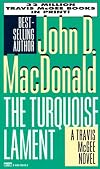
“Remember, there is a very cold and strange entity that hides inside Howie Brindle. It is the imposter. He is the stage effect.” — Meyer to McGee
It’s early December as this unusual Travis McGee novel begins. Whereas most of the McGee novels have mystery and suspense laced with resonating observations about life and society, with MacDonald casting a cloud on the sunshine of Florida with his insightful pondering of the misled, this one has those observations and insights front and show more center, with the mystery and suspense the underscore. While it makes this an atypical Travis McGee novel in some ways, it does not make it a bad one. It is in fact, a very good read, with many worthwhile moments. It’s not surprising that it’s one of the books in the series that he dedicated to his wife, Dorothy.
Coming just before the excellent Dreadful Lemon Sky, this was the first Travis McGee published in hardback, however, and just for a moment, perhaps less than a moment, MacDonald blinked. There is no way to give an accurate portrayal of a book so misrepresented at times without getting into great detail, so if you have a problem with basic plot spoilers for a book that’s been around for almost fifty years, you might want to stop reading here.
MacDonald was at heart a pulp writer — elevated so high most don’t recognize it as such, but a pulp writer nonetheless. He realized his readers were paperback readers, and knowing this one would be marketed toward people who might not have read a Travis McGee before, you can almost feel him taking the pulp edges off McGee, softening his hero just a tad to make him a bit more vulnerable — and fallible. The basic plot of a likable, affable sociopath who fools both McGee and Meyer would be used again — and in a more resonating way — in MacDonald’s next to last Travis McGee novel, Cinnamon Skin.
Each entry in any great series has its own atmosphere and value, however, and Turquoise Lament stands alone quite nicely. While Cinnamon Skin is a near masterpiece, The Turquoise Lament is very, very good when you don’t compare the two — or pit it against more stellar entries in the series. At MacDonald’s level, it is a matter of mere degrees between good and memorable. We are, after all, talking about one of the greatest series in American fiction, lauded by one great noteworthy writer after another. Over two decades, Travis McGee became a household name because readers couldn’t wait to get their hands on the next novel. This one is a solid four stars, as opposed to the solid five for Cinnamon Skin. That is all.
It begins in lovely Hawaii during early December. With great economy MacDonald places us there, and we’re soon hip to why taxi fares are so outrageous in Honolulu. McGee has made the trip from Florida at the request of Pidge Brindle, and the Travis McGee devotee can already sense this one is going to be a bit different from the others. McGee remembers how lovely Pidge was at seventeen, stowing aboard his boat to offer herself to him. Not the lech some over the years have misleadingly portrayed MacDonald’s hero as, McGee of course emphatically declines, taking Pidge back to her father, Ted. MacDonald, however, understood the wistfulness of what might have been, that twinge of regret every man feels at perhaps passing up something wonderful — even when it’s the right thing to do. There is nothing harder to resist than someone completely in love with you. Pidge is definitely no longer seventeen, however, and she is just as lovely. But she’s also an emotional mess. Whether the mess is real, or imagined, is for McGee to figure out.
A year ago, Pidge married Howie Brindle, a big, uncomplicated and easygoing giant who may not be the brightest bulb in the cupboard, but works hard and is very likable. Pidge’s almost neurotic story doesn’t jibe with anything he knows about Howie. Nor does it jibe with the evidence, which includes photographs. Though McGee cares about her, he needs to get the lay of the land, to discover if something diabolical is going on, or whether Pidge is having issues. So he talks to Howie and gets his version. With readers’ sympathy firmly in Pidge’s court, in a brilliantly written scene, we meet Howie, and begin to have the same doubts as McGee:
“He let go and spun away. His voice had broken. He started walking slowly back out the jetty toward the Trepid. It was a listless and dejected walk. A big dumpy giant, sad in the Christmas-coming sunshine.” — McGee describing the heartbroken and confused Howie.
But if Howie isn’t trying to kill Pidge, and there wasn’t another woman hiding on the boat while they were at sea — and all evidence suggests he isn’t, and there wasn’t — what’s going on with Pidge? Is she cracking up? So McGee drinks and talks to her, and they drink and talk some more, until finally, Pidge breaks down. Everything is psychologically sound in what transpires next. McGee doesn’t plant ideas, it is Pidge who realizes she doesn’t love Howie, no matter how much she wants to, and she’s created this elaborate ruse to explain why. This of course leads to an intimacy not planned by McGee, but firmly orchestrated by Pidge. As she tells McGee, explaining how it took her three hours to work up courage for her planned seduction: “You never had a chance, McGee.” And she’s right. It’s impossible for McGee to turn her down now, and there’s really no reason to:
“That and other memories of her were strangely merged with the sweet and immediate realities of her, the here-and-nowness of her, so that I seemed to live in the past and the present all at once. — She was a temptation out of the past, served up on some kind of eternal lazy Susan so that it had come by once again, and this time we had taken it.”
Later, Pidge explains:
“It’s too scary. I can’t go through all that again. Not ever. So there’s just one thing that would keep me from going back to him. And we just finished that one thing, and it was really beautiful. I wanted to do it with you a thousand years ago and you wouldn’t. You were pretty stuffy about it.”
Somewhere along the way, however, what might have been becomes what is:
“There may be better ways of spending the middle part of a Friday in Hawaii or anywhere else. If so, I find it very hard to think of any. It made a fine Friday. And Saturday. And Sunday.” — McGee in his thoughts
Much later, after Meyer collapses and is in the hospital, and after a couple of suicides by lonely friends, McGee ponders his future:
“Would I, Travis McGee, bring thee, Linda Lewellen Brindle, aboard this houseboat to live herein and hereon, with me, happily, so long as we shall all remain afloat?”
But before Meyer makes McGee think long and hard about his own mortality, McGee has to tell Howie that Pidge doesn’t want to be with him:
“He looked down. I thought it was a snort of sour laughter, and then realized it was a sob. I saw tears run down his round ruddy cheek. I felt like a coconspirator in a very rotten plan. This was a very simple decent guy. So like a coward, I tiptoed offstage.”
For a while, McGee goes through women, trying to shake off Pidge, but he can’t. Soon McGee realizes that he loves Pidge, then he gets her letter. Here is MacDonald the writer at his absolute best. Written from Pidge’s viewpoint, he perfectly captures her female voice, her thoughts and feelings, her excitement about the future she plans with McGee. It goes on for four pages, and will ring absolutely true to any man who has ever received a love letter. It’s a terrific piece of writing that offsets a later pretentious flourish when MacDonald has McGee interrogate himself during a mock trial. Also offsetting it is an insightful rumination on modern arrogance in regard to ancient civilizations. The mock trial in McGee's head is just a minor blip on the radar.
It’s Meyer who, when he begins recovering, realizes exactly what McGee's running from, and points him in the right direction. As McGee finally admits to his best friend, and one of the great sidekicks in mystery fiction:
“I keep thinking that other people have friends, and they talk about ball games and the weather and laugh a lot. What have I got? Ann Landers.”
Sounds like a great romance, doesn’t it? Well, finally we get to the Travis McGee part of the novel with which we’re more familiar. There is sunken treasure, and a lot of money left to Pidge by her father, Ted. There’s a guy named Collier, some blackmail, and Pidge somewhere out there on the big blue ocean with Howie Brindle, making one last trip to sell a boat before she returns to be McGee’s love. Then McGee has noticed something off in the photos that he needs to have an expert look at. It gives McGee a chill when he realizes he’s read it all wrong. This is the one where McGee almost buries someone alive. But mostly he just backtracks Howie, which reveals a very startling picture:
“Remember, there is a very cold and strange entity that hides inside Howie Brindle. It is the imposter. He is the stage effect.” — “An almost casual impulse. Irritation plus opportunity plus slyness, plus a total absence of human warmth and feeling.” — Meyer
It is also Meyer's belief that Pidge can stay alive longer at sea because of what transpired in Honolulu; simply because she believes she imagined it all the first time out, and Howie will not feel the impulse quite so quickly. With no hope of finding her on the water — MacDonald makes it startlingly clear just how difficult it is to locate a boat on the open sea — all McGee can do is wait for the boat in American Samoa. It gives McGee a chance to make observations about that part of the world which ring very true.
What finally transpires is violent and exciting, and leads to a true reversal of roles, and a bittersweet ending. The mystery and suspense is the underscore here, the soft strings rather than the driving horns. Had a reader never picked up a McGee book, this would seem marvelous. Having read them all many times over the decades, it’s only a good, solid entry where McGee was written a bit softer, the broad shoulders rounded in McGee’s version of a mid-life crisis. A great ending makes up for a lot, but this one is best enjoyed by those who love the ongoing commentary about society and the observations about living, and humanity. A book certainly misunderstood and sometimes misrepresented. A solid four stars as a McGee novel.
“The blackness was there in Howie Brindle, and then it was gone.” — McGee show less
It’s early December as this unusual Travis McGee novel begins. Whereas most of the McGee novels have mystery and suspense laced with resonating observations about life and society, with MacDonald casting a cloud on the sunshine of Florida with his insightful pondering of the misled, this one has those observations and insights front and show more center, with the mystery and suspense the underscore. While it makes this an atypical Travis McGee novel in some ways, it does not make it a bad one. It is in fact, a very good read, with many worthwhile moments. It’s not surprising that it’s one of the books in the series that he dedicated to his wife, Dorothy.
Coming just before the excellent Dreadful Lemon Sky, this was the first Travis McGee published in hardback, however, and just for a moment, perhaps less than a moment, MacDonald blinked. There is no way to give an accurate portrayal of a book so misrepresented at times without getting into great detail, so if you have a problem with basic plot spoilers for a book that’s been around for almost fifty years, you might want to stop reading here.
MacDonald was at heart a pulp writer — elevated so high most don’t recognize it as such, but a pulp writer nonetheless. He realized his readers were paperback readers, and knowing this one would be marketed toward people who might not have read a Travis McGee before, you can almost feel him taking the pulp edges off McGee, softening his hero just a tad to make him a bit more vulnerable — and fallible. The basic plot of a likable, affable sociopath who fools both McGee and Meyer would be used again — and in a more resonating way — in MacDonald’s next to last Travis McGee novel, Cinnamon Skin.
Each entry in any great series has its own atmosphere and value, however, and Turquoise Lament stands alone quite nicely. While Cinnamon Skin is a near masterpiece, The Turquoise Lament is very, very good when you don’t compare the two — or pit it against more stellar entries in the series. At MacDonald’s level, it is a matter of mere degrees between good and memorable. We are, after all, talking about one of the greatest series in American fiction, lauded by one great noteworthy writer after another. Over two decades, Travis McGee became a household name because readers couldn’t wait to get their hands on the next novel. This one is a solid four stars, as opposed to the solid five for Cinnamon Skin. That is all.
It begins in lovely Hawaii during early December. With great economy MacDonald places us there, and we’re soon hip to why taxi fares are so outrageous in Honolulu. McGee has made the trip from Florida at the request of Pidge Brindle, and the Travis McGee devotee can already sense this one is going to be a bit different from the others. McGee remembers how lovely Pidge was at seventeen, stowing aboard his boat to offer herself to him. Not the lech some over the years have misleadingly portrayed MacDonald’s hero as, McGee of course emphatically declines, taking Pidge back to her father, Ted. MacDonald, however, understood the wistfulness of what might have been, that twinge of regret every man feels at perhaps passing up something wonderful — even when it’s the right thing to do. There is nothing harder to resist than someone completely in love with you. Pidge is definitely no longer seventeen, however, and she is just as lovely. But she’s also an emotional mess. Whether the mess is real, or imagined, is for McGee to figure out.
A year ago, Pidge married Howie Brindle, a big, uncomplicated and easygoing giant who may not be the brightest bulb in the cupboard, but works hard and is very likable. Pidge’s almost neurotic story doesn’t jibe with anything he knows about Howie. Nor does it jibe with the evidence, which includes photographs. Though McGee cares about her, he needs to get the lay of the land, to discover if something diabolical is going on, or whether Pidge is having issues. So he talks to Howie and gets his version. With readers’ sympathy firmly in Pidge’s court, in a brilliantly written scene, we meet Howie, and begin to have the same doubts as McGee:
“He let go and spun away. His voice had broken. He started walking slowly back out the jetty toward the Trepid. It was a listless and dejected walk. A big dumpy giant, sad in the Christmas-coming sunshine.” — McGee describing the heartbroken and confused Howie.
But if Howie isn’t trying to kill Pidge, and there wasn’t another woman hiding on the boat while they were at sea — and all evidence suggests he isn’t, and there wasn’t — what’s going on with Pidge? Is she cracking up? So McGee drinks and talks to her, and they drink and talk some more, until finally, Pidge breaks down. Everything is psychologically sound in what transpires next. McGee doesn’t plant ideas, it is Pidge who realizes she doesn’t love Howie, no matter how much she wants to, and she’s created this elaborate ruse to explain why. This of course leads to an intimacy not planned by McGee, but firmly orchestrated by Pidge. As she tells McGee, explaining how it took her three hours to work up courage for her planned seduction: “You never had a chance, McGee.” And she’s right. It’s impossible for McGee to turn her down now, and there’s really no reason to:
“That and other memories of her were strangely merged with the sweet and immediate realities of her, the here-and-nowness of her, so that I seemed to live in the past and the present all at once. — She was a temptation out of the past, served up on some kind of eternal lazy Susan so that it had come by once again, and this time we had taken it.”
Later, Pidge explains:
“It’s too scary. I can’t go through all that again. Not ever. So there’s just one thing that would keep me from going back to him. And we just finished that one thing, and it was really beautiful. I wanted to do it with you a thousand years ago and you wouldn’t. You were pretty stuffy about it.”
Somewhere along the way, however, what might have been becomes what is:
“There may be better ways of spending the middle part of a Friday in Hawaii or anywhere else. If so, I find it very hard to think of any. It made a fine Friday. And Saturday. And Sunday.” — McGee in his thoughts
Much later, after Meyer collapses and is in the hospital, and after a couple of suicides by lonely friends, McGee ponders his future:
“Would I, Travis McGee, bring thee, Linda Lewellen Brindle, aboard this houseboat to live herein and hereon, with me, happily, so long as we shall all remain afloat?”
But before Meyer makes McGee think long and hard about his own mortality, McGee has to tell Howie that Pidge doesn’t want to be with him:
“He looked down. I thought it was a snort of sour laughter, and then realized it was a sob. I saw tears run down his round ruddy cheek. I felt like a coconspirator in a very rotten plan. This was a very simple decent guy. So like a coward, I tiptoed offstage.”
For a while, McGee goes through women, trying to shake off Pidge, but he can’t. Soon McGee realizes that he loves Pidge, then he gets her letter. Here is MacDonald the writer at his absolute best. Written from Pidge’s viewpoint, he perfectly captures her female voice, her thoughts and feelings, her excitement about the future she plans with McGee. It goes on for four pages, and will ring absolutely true to any man who has ever received a love letter. It’s a terrific piece of writing that offsets a later pretentious flourish when MacDonald has McGee interrogate himself during a mock trial. Also offsetting it is an insightful rumination on modern arrogance in regard to ancient civilizations. The mock trial in McGee's head is just a minor blip on the radar.
It’s Meyer who, when he begins recovering, realizes exactly what McGee's running from, and points him in the right direction. As McGee finally admits to his best friend, and one of the great sidekicks in mystery fiction:
“I keep thinking that other people have friends, and they talk about ball games and the weather and laugh a lot. What have I got? Ann Landers.”
Sounds like a great romance, doesn’t it? Well, finally we get to the Travis McGee part of the novel with which we’re more familiar. There is sunken treasure, and a lot of money left to Pidge by her father, Ted. There’s a guy named Collier, some blackmail, and Pidge somewhere out there on the big blue ocean with Howie Brindle, making one last trip to sell a boat before she returns to be McGee’s love. Then McGee has noticed something off in the photos that he needs to have an expert look at. It gives McGee a chill when he realizes he’s read it all wrong. This is the one where McGee almost buries someone alive. But mostly he just backtracks Howie, which reveals a very startling picture:
“Remember, there is a very cold and strange entity that hides inside Howie Brindle. It is the imposter. He is the stage effect.” — “An almost casual impulse. Irritation plus opportunity plus slyness, plus a total absence of human warmth and feeling.” — Meyer
It is also Meyer's belief that Pidge can stay alive longer at sea because of what transpired in Honolulu; simply because she believes she imagined it all the first time out, and Howie will not feel the impulse quite so quickly. With no hope of finding her on the water — MacDonald makes it startlingly clear just how difficult it is to locate a boat on the open sea — all McGee can do is wait for the boat in American Samoa. It gives McGee a chance to make observations about that part of the world which ring very true.
What finally transpires is violent and exciting, and leads to a true reversal of roles, and a bittersweet ending. The mystery and suspense is the underscore here, the soft strings rather than the driving horns. Had a reader never picked up a McGee book, this would seem marvelous. Having read them all many times over the decades, it’s only a good, solid entry where McGee was written a bit softer, the broad shoulders rounded in McGee’s version of a mid-life crisis. A great ending makes up for a lot, but this one is best enjoyed by those who love the ongoing commentary about society and the observations about living, and humanity. A book certainly misunderstood and sometimes misrepresented. A solid four stars as a McGee novel.
“The blackness was there in Howie Brindle, and then it was gone.” — McGee show less

[[John D. MacDonald]] is not known for science fiction, and this collects maybe the only three such works he wrote. It's a shame he didn't write more because these were all imaginative and extremely readable. The best of the lot is The Girl, The Gold Watch, and Everything, which focuses on a rather awkward hero who is bequeathed a watch that slows time down for everyone except the holder. It's been awhile since I laughed aloud while reading a book, and I did often with this particular novel. show more The other two are well-written and solidly sci-fi, each dealing with the consequences of aliens dabbling on Earth, controlling the fate of man.
PS - I was turned on to these wonderful books by none other than Uncle Stevie, from his classic non-fiction treatise on horror, [Danse Macabre].
4 bones!!!!
Recommended!!!! show less
PS - I was turned on to these wonderful books by none other than Uncle Stevie, from his classic non-fiction treatise on horror, [Danse Macabre].
4 bones!!!!
Recommended!!!! show less

This is an unremittingly dark and cynical look at life in modern (at least in MacDonald's time) Florida, where money is king, legal boundaries are just suggestions, and people have little hesitation to act out their darkest wishes. And I'm not talking about McGee himself. He is behaving better than average in this book, although his presence is still quite deadly. Two women he refuses to sleep with wind up dead pretty quickly. Other people die in odd, sometimes gruesome ways, or sometimes show more just for the hell of it. There's still five pages left - why not kill off someone else? Here, McGee and Meyer travel up the Florida Atlantic Coast in the Busted Flush to investigate the death of another of McGee's one night stands, a woman who only a couple of days previously came to the Busted Flush at 4 AM to drop off a large amount of money for safekeeping. Why the urgency? She wouldn't say. But she did want to sleep with McGee again. However, wary of some sort of trap, he refused. Or maybe it was because although she was only 30 and it had been six years since he had seen her, she now looked like she was 40. There is really no getting into McGee's mind. Luckily, Meyer is along for the ride and he proves invaluable in helping to sort out a very tangled web. It is a satisfying read along the way, because there is an ample amount of mystery to go along with McGee's and MacDonald's preaching. After finishing it, however, the plot seems a bit cartoonish. Of course, McGee does find a woman to sleep with during the course of the book, giving us a chance to read more than one of MacDonald's incredibly badly written sex scenes. He was a much better writer when describing boats or how development was ravaging Florida. Seeing blurbs on the cover calling him "the best novelist in America" is enough to make me laugh--or wonder about the state of 1970s American fiction. show less
Lists
Catalog (1)
Page Turners (1)
Awards


You May Also Like


Associated Authors
Statistics
- Works
- 231
- Also by
- 129
- Members
- 32,021
- Popularity
- #610
- Rating
- 3.8
- Reviews
- 614
- ISBNs
- 1,153
- Languages
- 17
- Favorited
- 89


