
Robert B. Parker (1) (1932–2010)
Author of The Godwulf Manuscript
For other authors named Robert B. Parker, see the disambiguation page.
About the Author
Robert Brown Parker is an American fiction writer of mysteries. He was born in Springfield, Massachusetts and earned his BA degree from Colby College in Waterville, Maine. He went on to earn his master's degree in English literature from Boston University. He started his career working in show more advertising. After some years, he went back to school to earn his PhD in English from Boston University in 1971. He then began his writng career while teaching at Northeastern University. He decided to become a full-time writer in 1979. His most popular works were the 40 novels written about the private detective Spenser. The ABC Television Network developed the television series "Spenser: For Hire", based on the character in the mid-1980s. Parker also wrote nine novels based on the character Jesse Stone and six novels based on the character Sunny Randall. On January 18, 2010, Robert Parker died suddenly of a heart attack at his home in Cambridge Massachusetts. (Bowker Author Biography) show less
Image credit: Robert B. Parker, at home in Cambridge, Massachusetts, on 11 février 2008
Series
Works by Robert B. Parker
The Spenser Collection: Volume II: Back Story and Widow's Walk (Spenser Novels) (2006) 11 copies, 1 review
For the Love of Books; 115 Celebrated Writers on the Books They Love Most -- Parker's contribution 3 copies
Spenser Novel Collection: Now and Then, School Days, Hugger Mugger, Hush Money, Sudden Mischief, Small Vices, Double Play (A Spenser novel) (2011) 2 copies
Spenser Novel Collection: Dream Girl, Cold Service, Bad Business, Back Story, Widow's Walk, Potshot (A Spenser novel) (2011) 2 copies
Robert B Parker Collection: The Professional, Night and Day, Rough Weather, Stranger in Paradise (2011) 1 copy
Mortal Stakes 1 copy
Jesse Stone: Night Passage 1 copy
Snuff 1 copy
Cold Case 1 copy
Wild Swams 1 copy
The Spenser Novels 22-27 1 copy
Pale Horse and Rider 1 copy
Bullet 1 copy
Associated Works
For the Love of Books: 115 Celebrated Writers on the Books They Love Most (1999) — Contributor — 479 copies, 4 reviews
The Lineup: The World's Greatest Crime Writers Tell the Inside Story of Their Greatest Detectives (2009) — Contributor — 239 copies, 5 reviews
In Pursuit of Spenser: Mystery Writers on Robert B. Parker and the Creation of an American Hero (2012) — Contributor — 81 copies, 6 reviews
A Taste of Murder: Diabolically Delicious Recipes from Contemporary Mystery Writers (1999) — Contributor — 48 copies, 1 review
Great Mysteries Great Writers: Lucky Day / Trapped / Pastime / Snagged / Dealer's Choice (1994) — Contributor — 4 copies
The Best American Mystery Stories 2002 [Audio Book, abridged] (2002) — Contributor — 3 copies, 1 review
Tagged
Common Knowledge
- Canonical name
- Parker, Robert B.
- Legal name
- Parker, Robert Brown
- Birthdate
- 1932-09-17
- Date of death
- 2010-01-18
- Gender
- male
- Education
- Colby College (BA | 1954)
Boston University (M.A. | 1957 | Ph.D | 1971 | English) - Occupations
- technical writer
advertising
professor
novelist - Organizations
- United States Army
Northeastern University
Pearl Productions - Awards and honors
- MWA Grand Master (2002)
Gumshoe Award (Lifetime Achievement ∙ 2007)
Shamus Award (The Eye for Lifetime Achievement ∙ 1995)
Bouchercon Lifetime Achievement Award (2006) - Agent
- Helen Brann
- Relationships
- Parker, Joan H. (wife)
- Short biography
- Robert B(rown) Parker (1) was born September 17, 1932, in Springfield, MA. He earned a B.A. in English from Colby College in Maine in 1954, served as infantryman in Korea, and earned an M.A. in English from Boston University in 1957. He held several jobs before enrolling in Boston University's PhD program, and then taught English at various colleges until 1978. He is married to the former Joan Hall; they have two sons. Parker has created private detectives Spenser, and Sunny Randall, and Police Chief Jesse Stone, each of whom is featured in an ongoing series. Their story lines occasionally intersect. He also writes an American Western series featuring Hitch and Cole, and has contributed to the Wyatt Earp saga with the novel Gunman's Rhapsody. Recently, he has written some young adult fiction as well. He died unexpectedly at home in Cambridge, MA, on January 18, 2010.
- Cause of death
- heart attack
- Nationality
- USA
- Birthplace
- Springfield, Massachusetts, USA
- Places of residence
- Boston, Massachusetts, USA
- Place of death
- Cambridge, Massachusetts, USA
- Associated Place (for map)
- Massachusetts, USA
Members
Discussions
Any Robert B. Parker fans? Just read that he passed away today. in Crime, Thriller & Mystery (October 2011)
Reviews
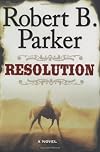
A fine successor to Appaloosa, Robert B. Parker's sharp and rapid Western adventure. It is a dream to read – mostly dialogue and with punchy prose, you can burn through it in no time. The dialogue is honest and sparkling, and Parker can cut to the heart of each of his characters in just a line, or even a word. Indeed, Parker's characters say more with a one-word answer, or even with just a nod or a glance, than most writers could manage in pages of dialogue. The plot, whilst show more stereotypically Western (greedy landowners vs. honest homesteaders; honourable gunmen vs criminal mercenaries), does have life breathed into it simply by virtue of the great storytelling ability of Parker. He really carries you along.
In fact, the stereotypical Western tropes actually become a virtue as our familiarity with them allows Parker to speculate on themes of natural law and man's law, and whether a man's right to administer justice comes from being good with a gun, without becoming ponderous. This spirals into a discussion of natural imbalance and inequality; just witness the following – a masterclass – where the main characters talk about sticking to their principle of calling out opponents in a duel rather than shooting them in the back:
""We're all good at this," Rose said. "Most fellas go up against any one of us in a fair fight, they ain't got much of a chance."
"So the fight ain't exactly fair anyway," Virgil said.
"No," I said. "It ain't. Never was." (pg. 271)
The implications of this, especially in light of earlier discussions about who decides whether something is law, or whether something is upheld, are profound. But it's not the hard-boiled philosophy or the storytelling – great as they are – which makes Resolution, and Appaloosa before it, so remarkable. It's the sheer joyous brevity of it all. When Virgil says he tracked down runaway Allie to where she was working in a saloon, his one-word answer to Everett's query whether she was playing piano – "No." – says more than pages and pages of exposition could. Parker generates and resolves plot points faster than a quick-draw, dispatching dozens before many writers would have finished setting the scene. Lead is dispatched before anything can become leaden. There's a moment early on when Everett guns down a braggart who fancies himself a gunslinger. Now, most writers would drag this early antagonist out for 100+ pages. Like Everett, Parker just gets it done. Then reloads. show less
In fact, the stereotypical Western tropes actually become a virtue as our familiarity with them allows Parker to speculate on themes of natural law and man's law, and whether a man's right to administer justice comes from being good with a gun, without becoming ponderous. This spirals into a discussion of natural imbalance and inequality; just witness the following – a masterclass – where the main characters talk about sticking to their principle of calling out opponents in a duel rather than shooting them in the back:
""We're all good at this," Rose said. "Most fellas go up against any one of us in a fair fight, they ain't got much of a chance."
"So the fight ain't exactly fair anyway," Virgil said.
"No," I said. "It ain't. Never was." (pg. 271)
The implications of this, especially in light of earlier discussions about who decides whether something is law, or whether something is upheld, are profound. But it's not the hard-boiled philosophy or the storytelling – great as they are – which makes Resolution, and Appaloosa before it, so remarkable. It's the sheer joyous brevity of it all. When Virgil says he tracked down runaway Allie to where she was working in a saloon, his one-word answer to Everett's query whether she was playing piano – "No." – says more than pages and pages of exposition could. Parker generates and resolves plot points faster than a quick-draw, dispatching dozens before many writers would have finished setting the scene. Lead is dispatched before anything can become leaden. There's a moment early on when Everett guns down a braggart who fancies himself a gunslinger. Now, most writers would drag this early antagonist out for 100+ pages. Like Everett, Parker just gets it done. Then reloads. show less

Perchance to Dream is Robert B. Parker’s authorized sequel to Raymond Chandler’s incredibly complex novel, The Big Sleep. Parker takes most of the same characters (at least those who were still alive) of Chandler’s epic novel, and spins another (not quite so complicated) tale that captures the style and mood of the original. The sequel opens with long quotations from the original to set the scene and remind readers of the original.
It is now a few years after the end of The Big Sleep, show more and General Sternwood has just died. His older daughter Vivian still lives in the family manse, but the younger sister, Carmen, has been sent off to live at a psychiatric rehab facility—think insane asylum with more luxurious accouterments. When the younger sister mysteriously disappears, the butler (who has been handsomely compensated by the General), calls in Philip Marlowe to find her.
Philip Marlowe, the knight errant private eye, returns in all his depravity and taciturnity. Parker’s own favorite private eye (Spenser, with an “s”) was probably based somewhat on Marlowe. Both are big—Spenser is bigger—and tough, and neither uses his first name very often (in Spenser’s case, never). Parker allows the older sister to call Marlowe “Philip” once, but it comes as quite a surprise to the detective.
Marlowe encounters a few very tough characters (“hard men” in his usage), whom Parker delights in describing. One Mexican in particular is uniquely formidable. As Parker describes him:
“The Mexican had no gun. He’d probably gotten hungry one day and eaten it.”
Or
“I could see my gun in his [the Mexican’s] belt. At least he hadn’t tied a knot in the barrel.”
Parker describes the smile of another character as having “all the warmth of a pawnbroker examining your mother’s diamond.”
While Parker is a master of the light(er) crime fiction genre, this is still a fitting tribute to one of the pioneers of noir crime fiction.
(JAB) show less
It is now a few years after the end of The Big Sleep, show more and General Sternwood has just died. His older daughter Vivian still lives in the family manse, but the younger sister, Carmen, has been sent off to live at a psychiatric rehab facility—think insane asylum with more luxurious accouterments. When the younger sister mysteriously disappears, the butler (who has been handsomely compensated by the General), calls in Philip Marlowe to find her.
Philip Marlowe, the knight errant private eye, returns in all his depravity and taciturnity. Parker’s own favorite private eye (Spenser, with an “s”) was probably based somewhat on Marlowe. Both are big—Spenser is bigger—and tough, and neither uses his first name very often (in Spenser’s case, never). Parker allows the older sister to call Marlowe “Philip” once, but it comes as quite a surprise to the detective.
Marlowe encounters a few very tough characters (“hard men” in his usage), whom Parker delights in describing. One Mexican in particular is uniquely formidable. As Parker describes him:
“The Mexican had no gun. He’d probably gotten hungry one day and eaten it.”
Or
“I could see my gun in his [the Mexican’s] belt. At least he hadn’t tied a knot in the barrel.”
Parker describes the smile of another character as having “all the warmth of a pawnbroker examining your mother’s diamond.”
While Parker is a master of the light(er) crime fiction genre, this is still a fitting tribute to one of the pioneers of noir crime fiction.
(JAB) show less
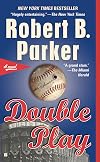
While fighting at Guadalcanal, Joseph Burke is hit by five 25 caliber bullets from a Japanese light machine gun on the first page of Robert B. Parker’s Double Play. Though obviously badly wounded, he survives. His recuperation is harrowing (among other things, his cherished wife leaves him for another man), but Burke is tough—really, really tough, both physically and mentally.
Burke gradually regains his strength and tries professional boxing. Although he punches like a sledge hammer, he show more is not much of a boxer, and decides there are better ways of earning a living. He is very successful as a debt collector—his menacing appearance usually obviates resorting to violence. He gets a job as a sort of body guard for the daughter of a well connected but shady politician. His position becomes untenable when he becomes sexually, if not romantically, involved with his ostensible ward. Nevertheless, he has established his chops as a fearless, though not always wise, tough guy.
Burke’s reputation enables him to land a job in 1947 working for Branch Rickey as a body guard for the Brooklyn Dodgers’ rookie first baseman and first black major league baseball player, Jackie Robinson. Burke and Robinson are wary of each other at first, but they draw close as Burke shields the rookie from some of the worst behavior of white America.
The book is pure fiction, but plausible fiction. Parker writes movingly and realistically about Robinson’s ability and dignity in the face of racial insults. Both the real Robinson and fictional Burke achieve genuine heroism in Parker’s skillful hands.
One aspect of the book is a bit implausible. No real person, not even Jack Reacher (oh wait, he isn’t real either), is as tough as Burke. But that’s OK with me because Parker writes about macho confrontations about as well as anyone.
The book contains several chapters, all labeled “Bobby,” that are narrated by a young boy born in 1932. Bobby tells us what it was like for a pre-teen during the war growing up in all white Massachusetts. He also tells us what it was like for a young Dodger fan to follow the exploits of their talented, brave, and dignified rookie first baseman during the watershed 1947 season. Those chapters are undoubtedly autobiographical, and they add an extra dimension to a finely crafted novel.
(JAB) show less
Burke gradually regains his strength and tries professional boxing. Although he punches like a sledge hammer, he show more is not much of a boxer, and decides there are better ways of earning a living. He is very successful as a debt collector—his menacing appearance usually obviates resorting to violence. He gets a job as a sort of body guard for the daughter of a well connected but shady politician. His position becomes untenable when he becomes sexually, if not romantically, involved with his ostensible ward. Nevertheless, he has established his chops as a fearless, though not always wise, tough guy.
Burke’s reputation enables him to land a job in 1947 working for Branch Rickey as a body guard for the Brooklyn Dodgers’ rookie first baseman and first black major league baseball player, Jackie Robinson. Burke and Robinson are wary of each other at first, but they draw close as Burke shields the rookie from some of the worst behavior of white America.
The book is pure fiction, but plausible fiction. Parker writes movingly and realistically about Robinson’s ability and dignity in the face of racial insults. Both the real Robinson and fictional Burke achieve genuine heroism in Parker’s skillful hands.
One aspect of the book is a bit implausible. No real person, not even Jack Reacher (oh wait, he isn’t real either), is as tough as Burke. But that’s OK with me because Parker writes about macho confrontations about as well as anyone.
The book contains several chapters, all labeled “Bobby,” that are narrated by a young boy born in 1932. Bobby tells us what it was like for a pre-teen during the war growing up in all white Massachusetts. He also tells us what it was like for a young Dodger fan to follow the exploits of their talented, brave, and dignified rookie first baseman during the watershed 1947 season. Those chapters are undoubtedly autobiographical, and they add an extra dimension to a finely crafted novel.
(JAB) show less
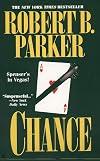
Of the numerous Robert B. Parker novels that I have read featuring his literate and tough (but soft-hearted) Boston detective, Spenser (with an “s”), this is my favorite.
It all begins when Spenser is retained by a Boston mafia boss to find his daughter’s missing husband. The mafia boss isn’t willing to tell him much about his business or about anything else, so Spenser has little to work with. Nonetheless, Spenser is able to track down the missing man in Las Vegas.
Things then get show more very complicated because Spenser is not the only one looking for the errant husband, and Spenser is left at a loss to figure out what is going on. By the time the “case” is closed, Spenser has taken on two branches of the Italian mob and dealt with the black, Chinese, and Russian mobs as well as solving a murder that happens along the way.
Although the plot is pretty convoluted and interesting, it (as in most Spenser novels) is just a side show for the snappy dialog and interplay of fascinating characters. Parker is adept at reproducing mafia tough guy talk and tough guy posing. Spenser and his faithful companion, Hawk are as tough as they come, but much more articulate than their Mafioso antagonists. For example, the following is a colloquy between Spenser and the baddest bad guy in the story:
[Bad Guy]: “You, asshole? You just delivered me the three people on the fucking planet I want to kill most.” [Spenser]: “Killing isn’t comparative,” I said. “I think you mean the three people you most want to kill.”
Spenser’s girlfriend is the Harvard educated psychoanalyst, Susan Silverman. In some of the other books in the series, Parker can be a bit boring in his portrayal of her and too reliant on her near omniscience (as a psychoanalyst) to deduce important elements of the case at hand. In this book, however, she comes off as merely stimulating and exciting, even a bit flakey. I like her better this way.
Parker’s detective novels are hard to put down. Although it took me two days to read this one, I could easily have completed it one.
(JAB) show less
It all begins when Spenser is retained by a Boston mafia boss to find his daughter’s missing husband. The mafia boss isn’t willing to tell him much about his business or about anything else, so Spenser has little to work with. Nonetheless, Spenser is able to track down the missing man in Las Vegas.
Things then get show more very complicated because Spenser is not the only one looking for the errant husband, and Spenser is left at a loss to figure out what is going on. By the time the “case” is closed, Spenser has taken on two branches of the Italian mob and dealt with the black, Chinese, and Russian mobs as well as solving a murder that happens along the way.
Although the plot is pretty convoluted and interesting, it (as in most Spenser novels) is just a side show for the snappy dialog and interplay of fascinating characters. Parker is adept at reproducing mafia tough guy talk and tough guy posing. Spenser and his faithful companion, Hawk are as tough as they come, but much more articulate than their Mafioso antagonists. For example, the following is a colloquy between Spenser and the baddest bad guy in the story:
[Bad Guy]: “You, asshole? You just delivered me the three people on the fucking planet I want to kill most.” [Spenser]: “Killing isn’t comparative,” I said. “I think you mean the three people you most want to kill.”
Spenser’s girlfriend is the Harvard educated psychoanalyst, Susan Silverman. In some of the other books in the series, Parker can be a bit boring in his portrayal of her and too reliant on her near omniscience (as a psychoanalyst) to deduce important elements of the case at hand. In this book, however, she comes off as merely stimulating and exciting, even a bit flakey. I like her better this way.
Parker’s detective novels are hard to put down. Although it took me two days to read this one, I could easily have completed it one.
(JAB) show less
Lists
Awards


You May Also Like


Associated Authors
Statistics
- Works
- 126
- Also by
- 24
- Members
- 73,052
- Popularity
- #173
- Rating
- 3.6
- Reviews
- 1,425
- ISBNs
- 1,538
- Languages
- 24
- Favorited
- 29


